
It’s July 20th of your application year. You and your partner are on the couch with a shared Google Sheet open, 90 tabs of program websites, and one big unanswered question:
“How many programs are we actually going to apply to as a couple?”
You know solo applicants in your specialties apply to 40–60 programs. Someone on Reddit said couples need “like 200+ combinations.” Your mentor shrugged and said, “Just apply broadly.” None of that helps you decide what to click on this week.
You do not decide your couples match numbers in one night. You build them—on a calendar.
I’m going to walk you month by month and then week by week through the application season, and at each point I’ll tell you:
- What your solo program numbers should look like
- What your joint combinations should look like
- What decisions you absolutely must lock in that week
Big Picture: Target Numbers for Couples Match
Let’s put rough numbers on the table before we go chronologically.
| Scenario | Per Person Programs | Joint Pairs (Combinations) |
|---|---|---|
| Less competitive + Less competitive | 30–50 each | 80–120 |
| Competitive + Less competitive | 50–70 each | 120–180 |
| Competitive + Competitive | 70–100 each | 180–250+ |
| Geographic must-have constraints | Add 10–20 each | +40–60 pairs |
These are not fixed rules. But if you’re planning to couples match with 25 programs each and 40–50 joint pairs, you’re playing on hard mode. You might still match, but you’re deliberately shrinking your safety net.
Now, the calendar.
12–9 Months Before ERAS Submission (Oct–Dec, MS3 / early MS4): Reality Check Phase
At this point you should not be counting programs. You should be defining the universe you’re allowed to count from.
By December You Should Have:
Your risk profile defined as a couple
- Step/COMLEX taken? Any fails?
- Research-heavy vs clinical-heavy?
- Red flags (LOA, remediation, late Step 2)?
This will drive how aggressive your numbers need to be.
Your geographic rules written down
Not vibes. Rules.
- “We will not be farther than X hours apart if we end up in separate cities.”
- “We will / will not consider being in different states.”
- “These 3 cities are non-negotiable no-go zones for personal reasons.”
If you don’t do this now, you’ll end up with 60 joint pairs built on arguments and guilt instead of clear criteria.
A rough competitiveness map for your specialties
Use simple buckets:
- Specialty A (e.g., Internal Medicine, Peds): less competitive
- Specialty B (e.g., Derm, Ortho, ENT): highly competitive
- Both mid-tier (e.g., Anesthesia + EM, Psych + IM)
That determines where on the earlier table you probably land.
8–7 Months Before Submission (Jan–Feb): Early Program Universe Phase
Now we start touching numbers, but only at a very high level.
At this point you should:
Build two separate “dream lists” of programs
- Each of you picks 30–40 programs you like based on:
- Reputation tier (reach / reasonable / safety)
- Location
- Personal fit (community vs academic, call schedule, whatever matters to you)
Don’t worry about joint overlap yet. These lists are for you as if you weren’t coupled.
- Each of you picks 30–40 programs you like based on:
Overlay geography
Drop your lists into a map, even if it’s crude.
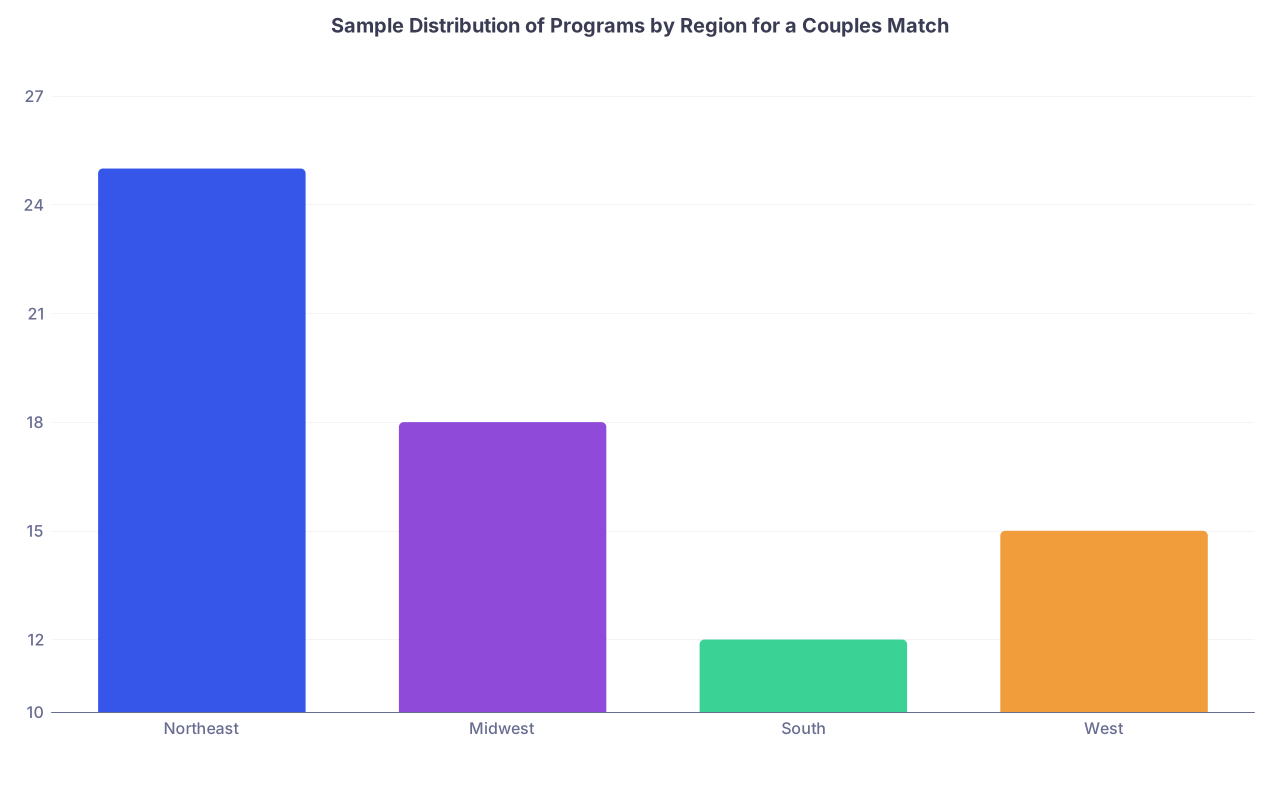
| Category | Value |
|---|---|
| Northeast | 25 |
| Midwest | 18 |
| South | 12 |
| West | 15 |
If nearly everything is in one region, good, your joint combinations will be denser. If one of you is East Coast–heavy and the other is all West Coast, you either fix that now or accept you’ll need way more total programs to get enough overlapping cities later.
Agree on your “minimum solo list size”
By the end of February, I want you to be able to say:
- “No matter what, each of us will apply to at least X programs.”
- X should be:
- 30–40 for less competitive
- 50–70 for competitive
- 70–100 for very competitive or with red flags
You’re not committing to joint numbers yet. You’re setting the floor.
6 Months Before Submission (March): Hard Conversations Month
This is where couples who match well separate from couples who play fantasy football with their lists.
At this point you should:
Decide your “apart vs together” priority
There are only three honest answers:
- “We would rather be together at almost any program than apart at great programs.”
- “We want strong programs but still together if at all possible.”
- “We’re willing to be apart for a year rather than both end up somewhere we hate.”
That answer changes your numbers:
- If “we must be together,” you need more joint pairs and can sometimes trim solo “independent” programs.
- If “we’re OK being apart,” you can afford fewer pairs, but both of you need healthier solo lists.
Set your joint pair target range
By the end of March, your couple should have a range like:
- “We’re aiming for 140–180 joint pairs.”
- Or, “We’re OK with 90–120 because our specialties are both less competitive and geography is broad.”
You are not filling the pairs yet—but you’ve chosen the stadium you’re playing in.
5–4 Months Before Submission (April–May): Drafting the Solo Lists
ERAS is not open yet, but the lists can’t wait.
At this point you should:
Lock in v1.0 of each solo list
- Less competitive: 35–45 programs
- More competitive: 60–80 programs
- Very competitive + red flags: 80–100+
These are not final, but they are real enough to start pairing.
Tag programs by “priority tier”
For each person:
- Tier 1: Must apply (top 10–15)
- Tier 2: Strongly want (next ~20)
- Tier 3: More optional / safety
You need this tiering for later when you decide which non-overlapping programs are truly worth keeping.
Start a joint master spreadsheet
Minimum columns:
- City
- Program A name
- Program B name
- Distance between them (same hospital, same city, 1 hour, 3 hours, etc.)
- Status: both on list / A only / B only
3 Months Before Submission (June): ERAS Opens – Numbers Get Real
The switch flips here. Decisions start costing money.
Early June – Week 1–2: Commit to Solo Program Counts
At this point you should:
Finalize your per-person application count ceiling
Example agreement:
- Partner 1: “I will not go above 70 programs.”
- Partner 2: “I’m capping at 80.”
- Total solo programs: 150 maximum.
This stops scope creep when anxiety hits in August.
Mark “mandatory include” programs for each
These are programs that:
- You will apply to even if they don’t create a strong pair.
- Usually home programs, clear safeties, or strong geographic anchors (family, visa, etc.).
Try to keep this list small: 10–15 per person.
Late June – Week 3–4: First Joint Pair Skeleton
Now we touch joint numbers in a structured way.
At this point you should:
List all overlapping cities
You’ll usually see something like:
- City 1: Both have 3 programs each
- City 2: Both have 2
- City 3: One has 1, other has 2
- City 4: Only one partner
Overlapping cities are the backbone of your pair list.
Estimate how many pairs per overlapping city
Example:
- City with 3 programs for A and 3 for B: up to 9 possible pairs
- Realistically, maybe you use 4–6 of those (you don’t need every permutation)
Do a first pass math check
You should be able to get a rough number like:
- “From overlapping cities alone, we can probably generate 90–110 pairs.”
- If your target is 150, you know you’ll need 40–60 more “regional but not identical city” pairs.
At the end of June you don’t need exact joint numbers, but you should know:
- “We are on track to reach our target range”
or - “We are nowhere close; one of us needs more programs, or we must open more regions.”
2 Months Before Submission (July): Concrete Joint Number Decisions
July is where couples tend to procrastinate and then panic. Don’t.
Early July – Week 1–2: Lock the Target Joint Pair Number
At this point you should:
Pick an exact minimum and stretch joint pair goal
Example:
- Minimum acceptable: 130 pairs
- Stretch goal: 170 pairs
- Realistic expectation: land around 150
Or, a less competitive pair might settle on 90–120.
Decide your “separate city” radius rules
You must define what counts as an acceptable “non-same-city” pair:
- Same metro area only?
- Within 1 hour drive?
- Up to 3 hours if on train/major highway?
Then annotate your spreadsheet so you actually know which pairs meet your rules.

| Step | Description |
|---|---|
| Step 1 | Program A on list |
| Step 2 | Create high priority pair |
| Step 3 | Create medium priority pair |
| Step 4 | Create low priority pair |
| Step 5 | Do not pair |
| Step 6 | Program B nearby? |
| Step 7 | Willing to live apart? |
Mid–Late July – Week 3–4: Build the Actual Pair List
This is grunt work, but it’s the heart of your couples strategy.
At this point you should:
Create all “same-hospital or same-city” pairs first
These are your highest yield:
- Less negotiation with the algorithm
- Most realistic for both happiness and logistics
Count them. If you already hit your minimum goal (e.g., 120 pairs), you’re in good shape. If you’re at 60 and need 150, you have a problem and need to adjust solo lists.
Then build “acceptable distance” pairs
Based on your radius rule, generate those 1–3 hour pairs. Prioritize:
- Tier 1 + Tier 1
- Tier 1 + Tier 2
- Avoid too many Tier 3 + Tier 3 pairs; they add numbers but don’t necessarily improve your actual chance of a good match.
Recalculate per-person counts
As you add pairs you’ll notice some programs barely appear and some appear constantly. This is the moment to cut dead weight.
- If a program appears in 0–1 pairs, ask if it’s worth applying at all.
- If adding 1–2 more programs in a city gives you 10–15 more pairs, that’s usually worth the extra fees.
By July 31, you want:
- Each solo list at least 80–90% final
- A real, counted joint list that’s at least within shouting distance of your minimum target
Submission Month (August / September): Finalizing and Hitting “Apply”
Most people hit submit in September, sometimes late August.
4 Weeks Before You Plan to Submit: Final Number Check
At this point you should:
-
Sit down and say out loud:
- “We will not exceed 75 programs for Partner A and 85 for Partner B.”
- “We will not go above 160 joint pairs.”
Anxiety without limits will blow your budget and your sanity.
Mark low-value solo programs for potential cutting
These are:
- Programs that create no or almost no pairs
- Programs in locations you’re not actually excited about
- Programs that are vastly below your training goals just to bump numbers
Plan to cut some of these if you overshoot your joint pairs.
2 Weeks Before Submission: Lock the Lists
At this point you should:
Confirm final solo numbers
You want to be in or near your planned range from earlier:
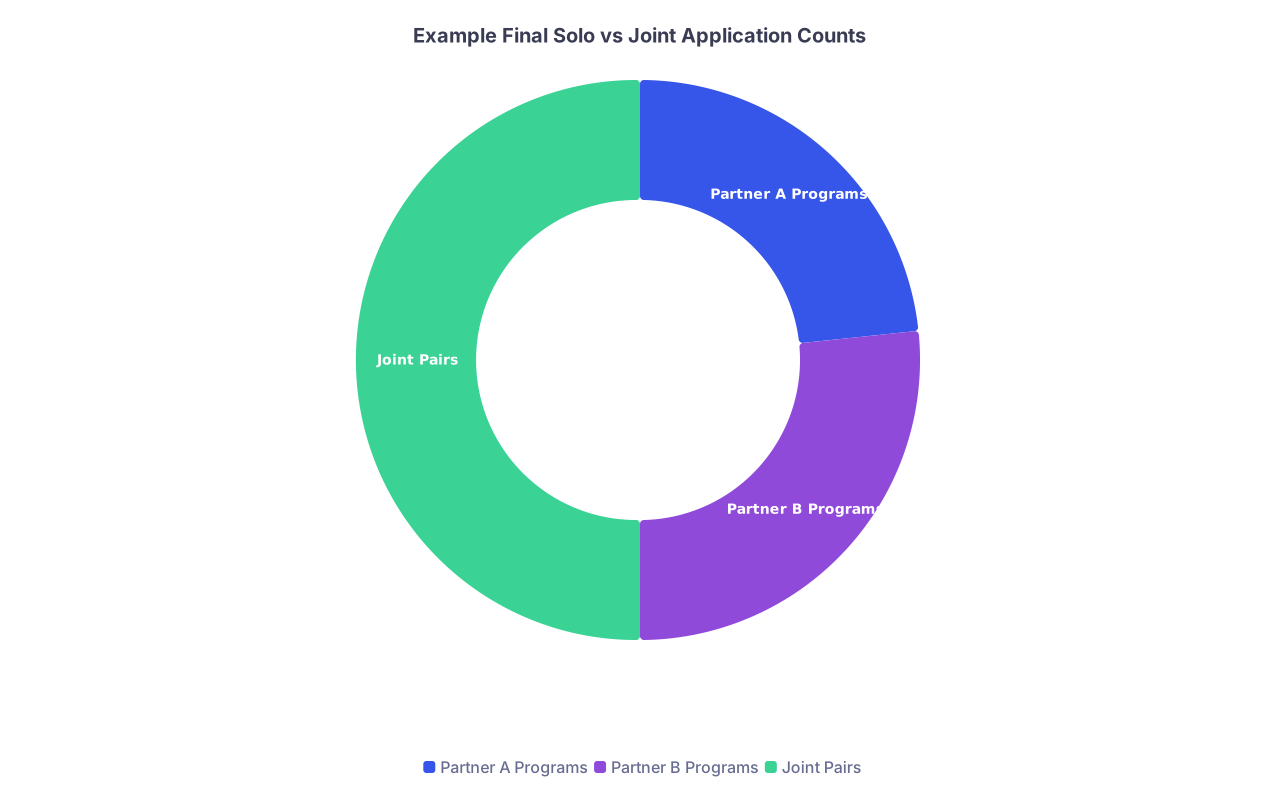
| Category | Value |
|---|---|
| Partner A Programs | 70 |
| Partner B Programs | 80 |
| Joint Pairs | 150 |
Confirm final joint pair count and composition
Look at your pair list and check:
- At least 1/3 of pairs are in places you’d genuinely be happy living
- You have some geographic diversity (not 140 pairs in one high-cost city that hates couples)
- Your “safety” cities have a healthy number of pairs, not just your dream cities
Do a stress test conversation
Ask each other:
- “If we matched at our most likely pair (not the best, not the worst), would we both be okay?”
- “If the algorithm fails us and we match separately, do our individual lists still look safe enough?”
If yes, submit. If no, tweak—but do not melt down and add another 50 programs in one night.
After Submission, Before Interviews: Resist the Panic-Add
Once applications are out, you’ll see classmates talking about “adding more programs” in late September.
As a couple, late adds are almost always inefficient because:
- You rarely have time to create new meaningful pairs
- You’re usually adding solo programs that don’t change your overall joint probability much
At this point you should:
- Only add programs if:
- A brand-new program in your overlapping city appears
- A PD or advisor explicitly recommends specific places given your application profile
Do not blow another $300 for 4 more low-yield solo programs each that create two mediocre pairs.
Interview Season and Rank List: Joint Numbers Shift From Programs to Ranks
Once interviews start, your question flips from:
- “How many programs should we apply to?”
to
Different fight. Similar math.
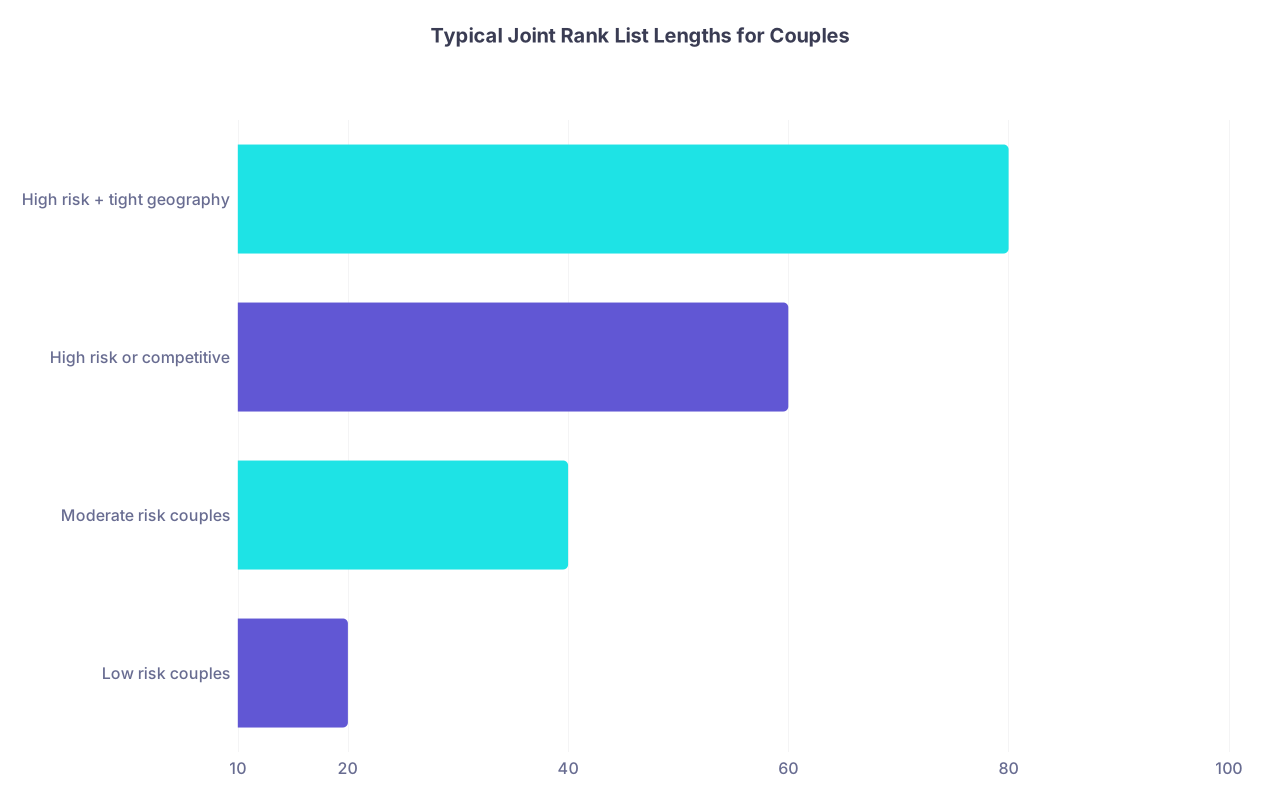
| Category | Value |
|---|---|
| Low risk couples | 20 |
| Moderate risk couples | 40 |
| High risk or competitive | 60 |
| High risk + tight geography | 80 |
Very short version of that phase:
- Most couples end up with 20–60 joint ranks
- Competitive + competitive with tight geography often need 50–80+
- You keep some solo ranks at the end if you’ve agreed you’d rather match apart than go unmatched
Quick Visual: Year Timeline for Couples Match Numbers
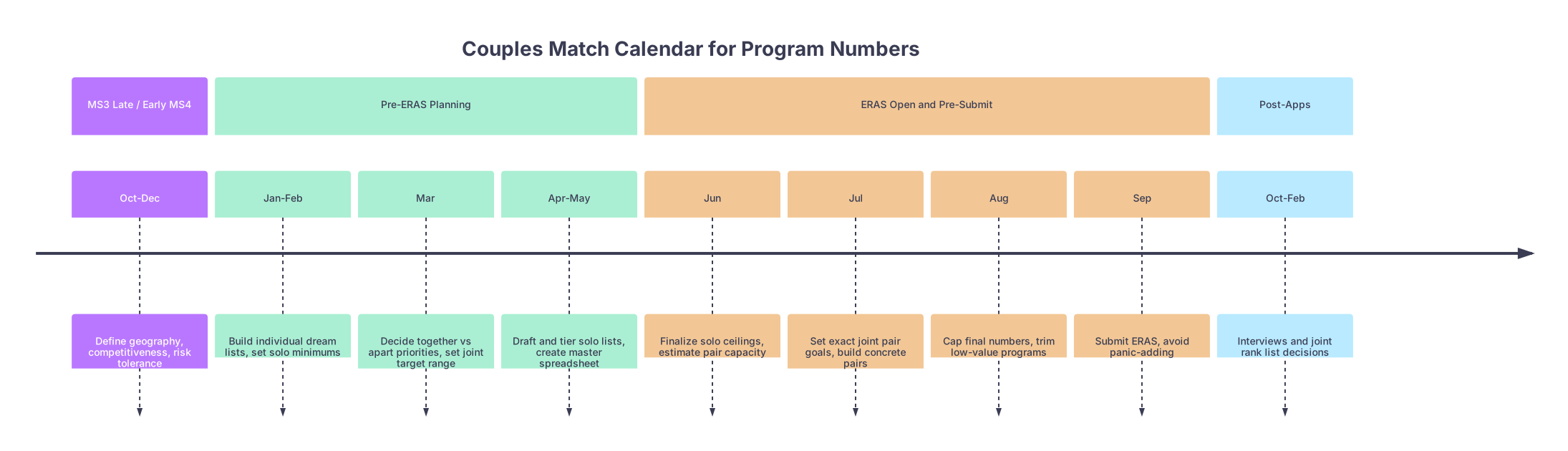
| Period | Event |
|---|---|
| MS3 Late / Early MS4 - Oct-Dec | Define geography, competitiveness, risk tolerance |
| Pre-ERAS Planning - Jan-Feb | Build individual dream lists, set solo minimums |
| Pre-ERAS Planning - Mar | Decide together vs apart priorities, set joint target range |
| Pre-ERAS Planning - Apr-May | Draft and tier solo lists, create master spreadsheet |
| ERAS Open and Pre-Submit - Jun | Finalize solo ceilings, estimate pair capacity |
| ERAS Open and Pre-Submit - Jul | Set exact joint pair goals, build concrete pairs |
| ERAS Open and Pre-Submit - Aug | Cap final numbers, trim low-value programs |
| ERAS Open and Pre-Submit - Sep | Submit ERAS, avoid panic-adding |
| Post-Apps - Oct-Feb | Interviews and joint rank list decisions |
Three Things to Walk Away With
- You decide how many programs to apply to as a couple months before ERAS opens, not the week you’re submitting.
- Your joint pair target range (e.g., 130–170) should be set by July, and your solo ceilings should be fixed before you ever see the ERAS payment screen.
- Any program—solo or joint—that doesn’t meaningfully change your chance of a good match is usually not worth the money or the mental bandwidth.