The worst mistake after a failed Match is drifting into another application cycle with the same profile and “more hope.” Hope did not get you in last year. A structured, ruthless 12‑month rebuild might.
You got rejected as an IMG last cycle. That hurts. But it is also data. Programs told you—loudly—what did not work. Your job now is to turn that into a different CV and a different strategy, not just a recycled ERAS with a new date.
Here is the comeback plan I use when IMGs show up to me after a failed cycle: 12 months, broken down, with specific targets, timelines, and non-negotiables.
Step 0: Stop Guessing – Do a Brutal Post‑Mortem (Weeks 1–2)
Before you “work harder,” you need to work smarter. That starts with an unsentimental assessment of why you did not match.
1. Pull your actual numbers and facts
Write these on one page. No stories. Just data:
- USMLE / COMLEX scores (or OET/IELTS where relevant)
- Number of:
- Programs applied
- Interview invites received
- Interviews attended
- YOG (year of graduation)
- Current clinical experience in the US (type, dates)
- Research output (posters, abstracts, pubs)
- Gaps: months not in clinical or academic work
- Visa status and needs (J‑1, H‑1B, GC, citizen)
Now compare that to realistic benchmarks for IMGs in the specialties you applied to.
| Specialty | Step 2 CK Target | USCE (US Clinical Experience) | YOG Preference |
|---|---|---|---|
| Internal Med | ≥ 235 | 3–6 months | Within 5–7 years |
| Family Med | ≥ 225 | 2–3 months | Within 7–10 years |
| Pediatrics | ≥ 235 | 3–6 months | Within 5–7 years |
| Psychiatry | ≥ 230 | 2–3 months | Within 5–7 years |
| Neurology | ≥ 235 | 3–6 months | Within 5–7 years |
If your numbers are clearly below the left column, then you already know the first problem.
2. Identify your primary failure category
Every unsuccessful IMG I have worked with falls mainly into one or two of these:
- Score problem
- Step 2 CK <225 for competitive IM specialties, or outright fails
- No Step 2 CK at all for programs that now require it
- Experience problem
- Little or no recent USCE
- Long gap after graduation with nothing structured
- Targeting problem
- Applied mostly to malignant / IMG‑unfriendly programs
- Applied to an unrealistic specialty (e.g., Derm, Ortho) with weak stats
- Story / communication problem
- Weak personal statement and bad interview performance
- No coherent narrative: why this specialty, why now, why you
- Logistics / timing problem
- Late ERAS submission
- Delayed LOR uploads
- Missing Step 2 CK by interview season
Circle your top two. That is what this 12‑month plan has to attack first. Not everything. Not “improve all things.” The 1–2 biggest defects.
Step 1: Design Your 12‑Month Framework (Weeks 2–4)
You are not just “doing observerships and some research.” You are building a coordinated year that solves your main deficits and creates a new story: “Here is how I responded after not matching.”
A. Lock in your primary goal for this year
Choose one as your central objective:
- Fix low scores → structured CK (or Step 3) prep and strong pass/improvement
- Fix weak USCE → 3–6 months of meaningful, recent US clinical experience
- Fix gaps and weak profile → 12 months of continuous clinical + research engagement
Write this at the top of your planning doc. It will decide what you say “yes” and “no” to.
B. Choose your specialty and backup strategy—now, not in September
Harsh truth: some of you need to change specialties.
- If you applied IM → Cardiology goal, with CK 218 and no USCE, and got 0 interviews, applying IM again without major changes is delusional.
- If you applied to 80 programs of Neurology with CK 225, YOG 2014, and no USCE, you may need to pivot to Family / Psych or accept a long multi‑year grind.
Make a hard call:
- Stay in same specialty if:
- Your scores are ≥ bench and your main problem is USCE/targeting/story
- Consider step‑down specialty if:
- You were far below interview thresholds and cannot realistically move your scores now
- Dual apply (e.g., IM + FM, Peds + FM, Psych + IM prelim) if:
- You are borderline and willing to train in the less competitive one but want to try
Month‑by‑Month 12‑Month Comeback Plan
Think of this in 3 phases:
- Repair (Months 1–4) – Scores, exams, applications for USCE/research
- Build (Months 5–8) – USCE, research, networking, concrete output
- Deploy (Months 9–12) – ERAS prep, letters, targeted application, interviews
To make the time demands clear:
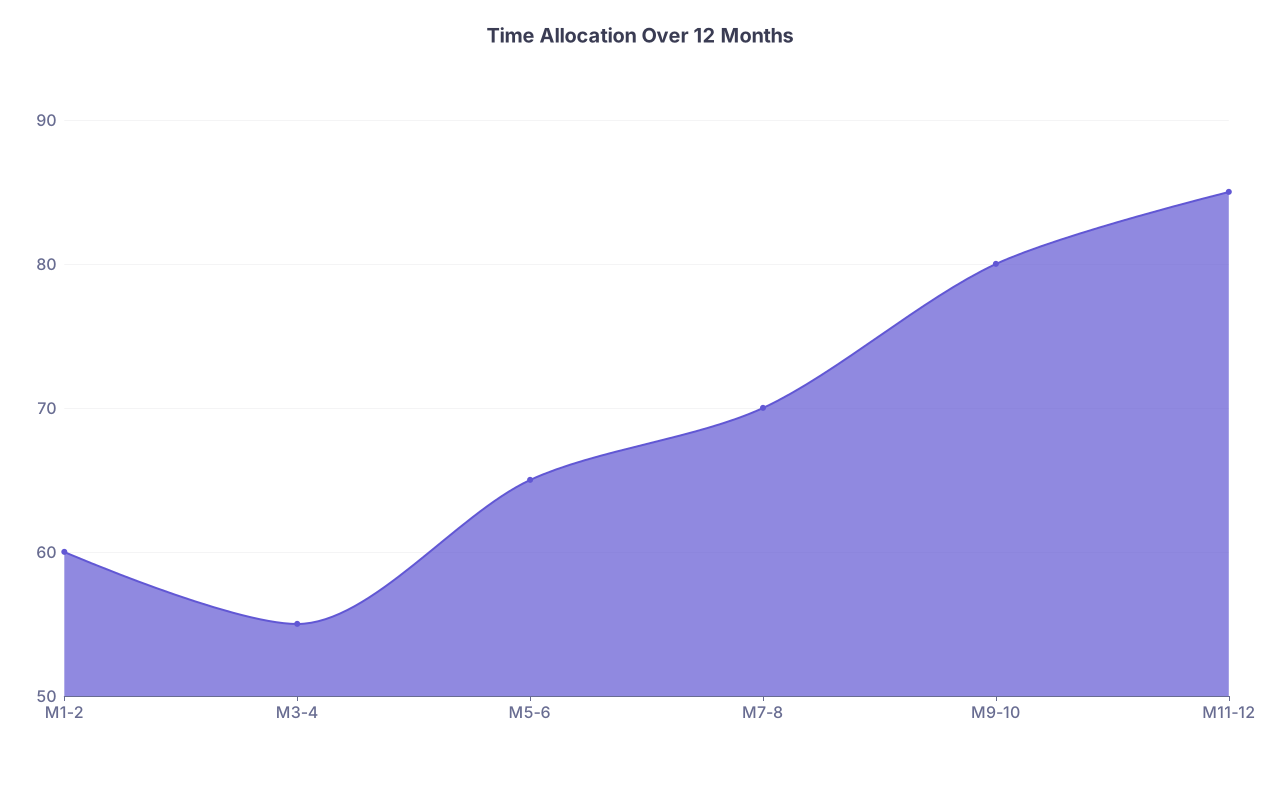
| Category | Value |
|---|---|
| M1-2 | 60 |
| M3-4 | 55 |
| M5-6 | 65 |
| M7-8 | 70 |
| M9-10 | 80 |
| M11-12 | 85 |
Numbers are “effort intensity” out of 100. The back half of the year is heavier.
Months 1–2: Fix the Foundation and Build Your Calendar
1. If you have not taken Step 2 CK (or have a weak score)
You cannot be competitive without a strong Step 2 CK. Period. Even for “less competitive” specialties.
- If Step 2 CK not taken:
- Book exam 4–6 months from now
- Start a dedicated 4‑month prep pipeline
- If Step 2 CK < 220:
- Seriously consider:
- Step 3 with a strong pass, or
- A retake if allowed and strategically sound (check your home country licensing and program preferences)
- Seriously consider:
Build a CK/Step 3 prep schedule:
- Daily:
- 40–60 UWorld questions, full timed, random
- Weekly:
- 1 self‑assessment or 1 long mixed block with detailed review
- Monthly:
- NBME / UWSA for progress check and test‑date adjustment
2. Start hunting USCE like a job, not a hobby
Your days now:
- 2–3 hours: exam prep / reading
- 3–4 hours: USCE/research/job search and outreach
Targets:
- Aim for:
- 2–3 months hands‑on if possible (externship, T‑32 position, research assistant with clinic time)
- Minimum 2–3 months observership if hands‑on unavailable
You are competing with thousands of IMGs spamming the same generic email: “Dear Sir/Madam, I am very interested in your observership.” That does not work.
Do this instead:
- Create a simple one‑page CV (US‑style, no 5‑page nonsense)
- Identify targets:
- Community hospitals that already take IMGs
- Private clinics run by IMGs in your specialty
- University departments with “visiting scholar” or “observer” listed online
- Send personalized emails:
- Mention their clinic / paper / work specifically
- Explicit subject line:
- “Prospective IMG observer – available May–August 2026 – self‑funded”
- Offer:
- Reliable schedule, help with QI projects, no visa sponsorship needed for observerships
You will send 100+ emails. That is normal.
Months 3–4: Commit to One Exam and Nail It
By now, you should have:
- A scheduled Step 2 CK / Step 3 date (or at least a target month)
- Some leads or confirmed USCE / research months for the upcoming months
1. Make the exam your #1 priority in this window
If you fail again or put out another mediocre score, your chances sink.
- Daily:
- 60–80 UWorld questions
- Review every question (correct and incorrect)
- Every 2–3 weeks:
- Full NBME / UWSA, simulate test day
- Score targets (ballpark):
- If you want IM/Peds/Neuro: aim for ≥ 235
- If you aim FM/Psych: do not settle for < 225
If your NBMEs are:
- Consistently < 215 → postpone. You are not ready.
- Around 220–225 → borderline, consider adjusting test date and pushing harder.
- ≥ 230 and trending up → stay the course.
2. Solidify USCE / research positions
Use this period to close opportunities:
- Confirm:
- Exact dates
- Location
- Supervisor’s name and title
- Potential for letters at the end if performance is strong
- Aim:
- 2–3 letters from US physicians in your specialty or close to it
If you do not have something by the end of Month 4, widen your scope:
- Consider:
- Rural / smaller hospitals
- Telemedicine shadowing (less ideal but better than nothing)
- Research roles with clinic exposure for note‑writing or data collection
Months 5–6: Start USCE and Build Real Relationships
Assuming you secured something, now you stop being “the observer in the corner” and start behaving like a future resident.
1. How to act during USCE so attendings want to write for you
Every attending I know writes hundreds of letters. They remember maybe five observers a year. You need to be one of them.
Daily behavior:
- Show up early. Leave late.
- Be the person who:
- Knows every patient’s name and basic story
- Offers to pre‑round, collect vitals, prep notes (within legal limits)
- Asks focused, intelligent questions, not constant broad ones
- Never:
- Argue schedules
- Disappear without telling someone
- Be glued to your phone
At week 3–4 of each rotation, ask directly:
“Dr. X, I am reapplying for residency this cycle. If you feel you know my work well enough, would you be comfortable writing a strong letter of recommendation for me?”
Emphasis on strong. If they hesitate, accept that gracefully and ask another attending who seems more impressed with you.
2. Start low‑burden research / QI work
Tell your supervising doc:
- “I would like to contribute to a quality improvement or small research project while I am here. Is there something ongoing that needs help with data collection or chart review?”
You are not chasing a New England Journal paper. You need:
- 1–2 posters
- Maybe a case report
- 1–2 abstracts to put in ERAS
This shows productivity and engagement, especially if you have a YOG > 5 years.
Months 7–8: Convert Experience into a Strong Application
Now you have some USCE months and an exam score (ideally improved). This stretch is where you convert raw work into application assets.
1. Lock in all letters
By now you should have:
- 3–4 LORs planned or requested:
- 2–3 US physicians in or near your specialty
- 1 research / academic mentor if strong
Remind letter writers:
- Send them:
- Your CV
- Your personal statement draft
- A bullet list of specific things you did with them (cases, projects, responsibilities)
Do not write “Please write about how I am hardworking and passionate.” Everyone is. Instead, highlight:
- “Led data collection for ___ QI project.”
- “Presented on X topic at case conference.”
- “Followed through consistently on patient follow‑up tasks.”
2. Build a coherent personal statement and narrative
Your failed cycle is actually useful. It gives you a story:
- “I applied last year and did not match. Here is how I responded.”
Take this structure:
- Short clinical vignette that shows you functioning in your chosen specialty
- One paragraph: Why this specialty – specific, not cliché
- One paragraph: What went wrong last cycle and what you did about it
- One paragraph: What you bring to a residency program now
- One sentence closing: Forward‑looking, specific to type of program you seek
Avoid:
- Wording like “I have always been passionate” and “ever since childhood”
- Over‑explaining your failure as if you are making excuses
- Emotional overshare about the rejection itself
You show growth without self‑pity.
Month 9: Build a Ruthless, Targeted Program List
This is where most IMGs sabotage themselves. They either:
- Apply to 200+ programs randomly, or
- Fixate on 10 dream university programs that barely interview IMGs
You will do neither.
1. Use data, not feels
Create a spreadsheet with columns:
- Program name
- Specialty
- State
- Takes IMGs (yes/no)
- % IMGs in program (estimate from resident list)
- Step 2 CK minimum / typical if stated
- Visa policy (J‑1 only, J‑1/H‑1B, no visas)
- Recent graduates from your region / school (yes/no)
Sources:
- Program websites
- FREIDA
- Current resident rosters
- Past match lists from IMG forums (cross‑check, many are unreliable but useful)
Prioritize:
- Community programs with many IMGs
- Programs known to sponsor visas consistent with your needs
- Geographic regions with historically more IMG‑friendly culture (NY, NJ, MI, parts of FL, TX—though saturated; midwest community IM programs etc.)
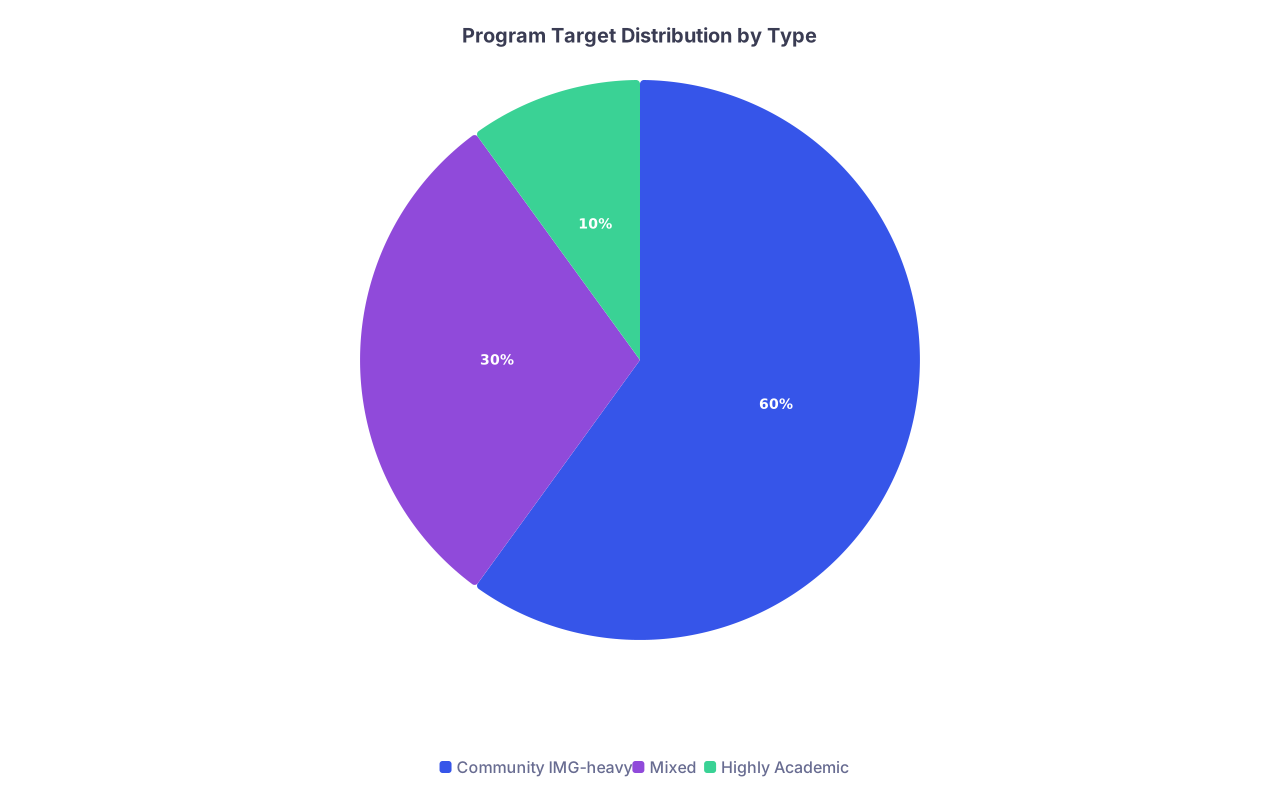
| Category | Value |
|---|---|
| Community IMG-heavy | 60 |
| Mixed | 30 |
| Highly Academic | 10 |
For many reapplicant IMGs, a 60/30/10 split like this is reasonable.
Month 10: ERAS, Statements, and Final Polishing
ERAS opens. Do not repeat last year’s laziness and send a half‑baked application.
1. Personalize program signaling where possible
If your specialty uses signals or preference forms (e.g., some pilot programs), use them surgically:
- Top signals → programs that:
- Are IMG‑friendly
- Fit your visa needs
- Have some link (geography, alum, your USCE site)
Do not waste signals on dream programs with 0 interest in your profile.
2. Clean up your CV
Your ERAS experience sections should show:
- Dates that fill the entire year (no unexplained gaps)
- Clear roles:
- “Clinical observer, Internal Medicine – 4 months – Community Hospital X”
- “Research assistant – Neurology – University Y”
- Bullet points that indicate responsibility, not just presence:
- “Prepped daily patient summaries for attending”
- “Collected and analyzed data for QI project on ___”
No fluff like “attended rounds and enhanced my communication skills.” Everyone writes that.
Month 11: Interview Preparation (and Getting the Invites at All)
If your reworked application is substantially better, you should start seeing invites. Not a flood. But some.
1. Make it easy for programs to invite you
- Submit early, complete all supplemental questions immediately
- Keep phone and email monitored during business hours U.S. time
- Respond to interview invites within minutes if possible
2. Prepare to talk about your failed cycle without sounding broken
You will get this question:
“I see you applied last year and did not match. What changed?”
Here is the template I recommend:
- Briefly acknowledge:
- “Yes, I applied last year and did not match.”
- Own one or two weaknesses:
- “Looking back, my main deficits were limited US clinical experience and a weak narrative about why internal medicine.”
- Show concrete actions:
- “Since then, I completed 4 months of USCE, took on a QI project, and secured letters from attendings who saw me closely on the wards.”
- Link to now:
- “This year I am bringing a much clearer understanding of the U.S. system, stronger letters, and a focused commitment to internal medicine.”
Then stop. Do not spiral.
Practice this answer aloud until it is clean and calm.
3. Fix your classic IMG interview mistakes
The patterns I see:
- Overly formal, stiff communication
- Rambling 5‑minute answers
- Not asking any questions or asking generic ones (“What do you look for in residents?”)
Your practice:
- Mock interviews with:
- Friends already in residency
- IMG mentorship programs
- Paid services if you can afford them and they are reputable
- Focus on:
- 60–90 second answers
- Direct structure: “Situation → Action → Result → Reflection”
- A small set of program‑specific questions prepped in advance
Month 12: Contingency Planning and Long‑Game Thinking
You must be realistic: even with a much better year, some people will still not match. The system is biased and competitive. Your job is to maximize your current cycle and build a fallback.
1. If interview numbers stay low (0–2)
By late in the interview season, if you are seeing almost nothing, start planning:
- Another 6–12 months of:
- Research with clinical interface
- Extended USCE where possible
- Possibly Step 3 if not done
- Consider:
- Expanding specialty scope (Psych, FM, prelim positions)
- Clinical jobs like scribe, research coordinator, hospitalist assistant—anything that keeps you inside the system
You are not “giving up.” You are shifting from a 12‑month to a 24‑month comeback plan.
2. If you do get interviews
Now your only job is not to blow them:
- Maintain:
- Current involvement in USCE / research (programs like to see continuity)
- Mentors who can advocate by email or phone if needed
- After interviews:
- Send brief, specific thank‑you notes (no essays)
- Rank programs based on:
- Visa support
- Resident happiness and workload
- Fit with your long‑term goals
A Simple Visual: Your 12‑Month Flow

| Step | Description |
|---|---|
| Step 1 | Rejected Cycle |
| Step 2 | Post-mortem & Goal Setting (M1-2) |
| Step 3 | Exam Focus & Secure USCE (M3-4) |
| Step 4 | Active USCE & Relationships (M5-6) |
| Step 5 | Convert to Letters & CV Output (M7-8) |
| Step 6 | Targeted ERAS & Program List (M9-10) |
| Step 7 | Interviews & Narrative Control (M11) |
| Step 8 | Match Outcome & Next Steps (M12) |
The Non‑Negotiables for a Real Comeback
Let me cut through the noise and give you the spine of this plan. If you ignore everything else, do not ignore this:
You must change at least 2–3 major elements of your profile.
Same scores + same CV + same program list = same result. Improve exam results, add meaningful USCE, shift your targeting, rewrite your narrative. Preferably all four.You need continuous, explainable activity on your CV for the entire 12 months.
No six‑month black holes of “I was at home studying but did not take an exam.” If you are studying full‑time, then show a score outcome. If you are not testing, you should be in a clinic, lab, or QI project.You must stop treating this as a solo sport.
Get at least two things:- A U.S. attending who will advocate strongly for you
- A peer or mentor network (even online) that has recently matched as an IMG and knows current patterns
You got rejected last cycle. That is a fact. What matters now is whether your next application looks like the same person who got rejected, or someone who took that failure, dissected it, and rebuilt themselves into a clearly stronger candidate.
If you are willing to do the unpleasant, disciplined work of this 12‑month plan, you give yourself a real shot at a different outcome. Not a guaranteed Match—no one can promise that. But a profile that programs actually have to think about, instead of instantly filtering out.