
The Match doesn’t care about your childcare, your lease, or your in-laws. It just drops a city on you and starts the clock.
If your stomach just clenched reading that, same. This is the scenario that keeps a lot of us up at 2 a.m.: what if you match somewhere far, with almost no time, and you have to uproot your entire family — kids, spouse, aging parents — and move your whole life on a deadline you didn’t choose?
You’re not overreacting. This is a real risk. Especially as an IMG, where you might be juggling visas, international moves, or being the only breadwinner. So let’s talk about it like adults who are a little bit freaking out.
Because there is a way to be scared and still be ready.
How Little Time Do I Actually Have After Match? (The Ugly Truth)
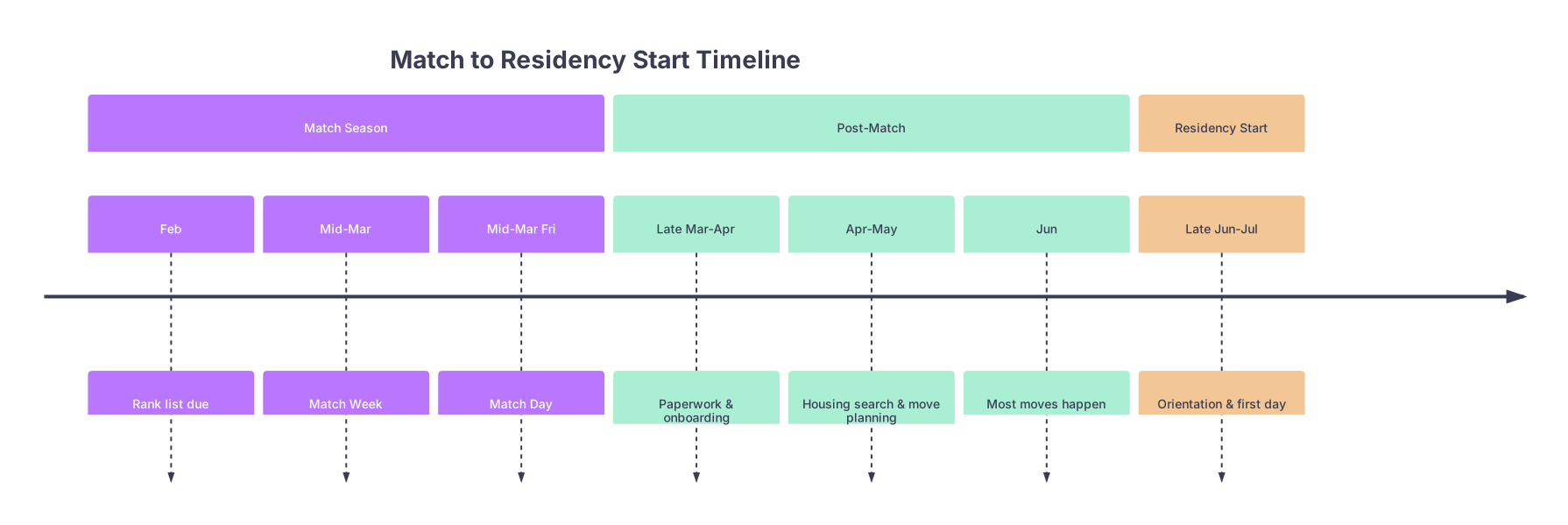
The Match timeline is brutal because your emotions spike right when the logistics hit.
| Period | Event |
|---|---|
| Match Season - Feb | Rank list due |
| Match Season - Mid-Mar | Match Week |
| Match Season - Mid-Mar Fri | Match Day |
| Post-Match - Late Mar-Apr | Paperwork & onboarding |
| Post-Match - Apr-May | Housing search & move planning |
| Post-Match - Jun | Most moves happen |
| Residency Start - Late Jun-Jul | Orientation & first day |
That gives you roughly 3–3.5 months from “You matched in [City You Forgot You Ranked]” to “Please report to orientation at 6:30 a.m.”
Now add real-life chaos:
- You might not get your contract immediately.
- International or J-1/H-1B processing can eat weeks.
- School-year issues if you’ve got kids.
- Spouse needing a new job or license.
- You’re still on rotations or working full-time somewhere else.
And unlike your single, 25-year-old classmates with one suitcase and no dependents, you might be trying to move:
- A spouse who doesn’t speak the language.
- A baby who has a feeding schedule and 3 am meltdowns.
- Parents who depend on your income or physical presence.
The part that makes me nervous? Programs mostly act like everyone is mobile and flexible and fine. They’re not going to redesign orientation because your moving truck is late.
So yeah, the short notice thing is not paranoia. It’s part of the system.
Worst-Case Scenario: Let’s Actually Say It Out Loud
This is the nightmare loop that plays in my head:
- I match somewhere far.
- Visa processing is slow.
- My spouse can’t quit their job fast enough.
- Kids finish school late.
- We can’t find housing that allows kids / pets / our budget.
- I end up starting residency alone in some Airbnb, exhausted, broke, and guilty.
Or even worse:
We physically can’t move in time. And I’m terrified the program will think I’m irresponsible or, in the worst-case IMG fear, that they’ll pull the position or report something to the board or ECFMG.
Here’s the blunt reality: programs expect some chaos. They know people are moving cross-country, cross-border, and sometimes cross-continent. They do not expect perfection.
What they care about:
- Are you communicating early?
- Are you showing that you’re trying to solve problems?
- Are you going to show up ready to work by day one — even if your life is still in boxes?
They’re not sitting there hoping to punish you for logistical problems. They just need a functioning resident on July 1.
As an IMG, Is This Going to Be Worse for Me?
Short answer: possibly, yes. But not necessarily unmanageable.
Here’s where IMGs get hit harder:
- Visas: J-1 or H-1B adds a whole extra layer of timing stress.
- Distance: If you’re overseas, you can’t just fly in for a weekend to sign a lease.
- Credit history: US landlords might not like your lack of credit score or US job history.
- Support system: You might not know a single person in that city. Or country.
But I’ve watched IMGs do absolutely wild, impressive things in tiny time windows:
- One applicant matched in New York from Pakistan and had her family there, kids in school, and furniture delivered by mid-June. She did everything virtually, with help from co-residents she’d never met.
- Another matched in a small Midwestern town, brought his spouse and toddler from abroad, and lived in a tiny furnished sublet for 3 months before finding a long-term place. It wasn’t glamorous. It was survival mode. But it worked.
Are these stories stressful? Yes.
Are they impossible? No.
The people who get through this with fewer scars usually have one thing in common: they pre-plan before Match Day, even while they’re convinced they might not match at all.
What You Can Do Now, Before You Even Know Where You’ll Match
This is the part everyone avoids because it feels like “jinxing it” or “wasting effort if I don’t match.” I get it. I’ve sat there thinking, “Why plan a move to a place I’ll never rank high enough to get?”
But here’s the thing: doing a bit of prep reduces the anxiety. It gives your brain something to do besides catastrophize.
Start with this: look at your rank list and pick your top 5 realistic programs. Not dream programs. Realistic ones.
For each of those 5:
- Look up rental websites in that city: Zillow, Apartments.com, local Facebook housing groups, even hospital classifieds.
- Find the main neighborhoods near the hospital and how long the commute is.
- Check rough rent prices for the size you’d need with your family.
- Check school districts (if you’ve got kids) and whether enrollment is rolling or fixed.
- Look up if there are big immigrant or cultural communities that match your background or language.
You’re not signing a lease. You’re just building a mental “if I match here, I’d probably try X, Y, Z first.”
If you’re the type who needs structure (hi, same), put together a mini cheat-sheet for yourself:
| City/Program | Est. Rent (2BR) | Commute Area | School Notes | First Housing Step |
|---|---|---|---|---|
| NYC - Program A | $2300 | Queens/Astoria | Overcrowded, enroll early | Join resident FB group |
| Chicago - Program B | $1600 | Near West Side | Several public schools | Email GME for housing list |
| Houston - Program C | $1400 | Med Center area | Good districts nearby | Search Zillow & Padmapper |
Takes maybe 1–2 hours per city. And then, if the Match throws you into one of them, you’re not starting from zero.
The “Oh No, We Actually Matched There” Plan: First 7 Days
Let’s say it happens. You match. You’re staring at an email that says “Congratulations!” and all you can think is, “How the hell are we going to move?”
Here’s what you tackle in those first 7 days — in order. Even if you’re crying through half of it.
1. Email the Program Coordinator
This is your lifeline. Coordinators are usually the unsung heroes of residency.
Subject line: “New PGY-1 – Relocation and Family Questions”
Say clearly:
- You’re thrilled to match there.
- You’ll be relocating with [spouse/kids/parents].
- You’d appreciate any housing resources residents commonly use.
- Ask if there’s a WhatsApp/Signal/FB group for incoming or current residents.
- If international: mention your visa category and ask about typical timeline/next steps.
They’ve seen this movie before. They’ll usually send:
- HR/onboarding timeline
- Contact information for current residents
- Maybe a list of nearby apartments/complexes that residents commonly use
- Any hospital-sponsored housing or discounts (rare but worth asking)
2. Connect With Current Residents Immediately
Not after two weeks. Now.
Ask them:
- Where do most residents with families live?
- Which buildings are kid-friendly or safe?
- Any landlords who are familiar with IMGs / J-1s / no US credit?
- Whether you really need a car or can survive with public transport.
- What the on-call schedule is like (so you can plan around nights/weekends).
This is how people actually find housing. Not fancy websites. Other exhausted residents.
Housing on Short Notice With a Family: What People Actually Do
You’re probably imagining you need to show up in May, tour 15 apartments in person, debate features, then sign a lease.
That’s not how it goes for most residents under time pressure.
Common workaround patterns I keep seeing:
Short-term furnished rental first, then long-term
1–3 months in an Airbnb, extended-stay hotel, or short sublet near the hospital.
Use that time to find proper housing once you’re physically there.Resident hand-me-downs
Taking over a lease from a graduating resident who’s desperate not to pay double rent. Timing can actually work well because they leave in June and you start July.Prioritizing proximity over perfection
First year: “We just need somewhere safe, close-ish, and not bankrupting us.”
Later years: move to a “better” place once you know the city.One-person advance move
You go first for 4–8 weeks, live small/cheap, start residency and housing search. Spouse and kids follow once you’ve secured something that actually works.
Is that last one emotionally brutal? Yeah. I hate that it’s common. But it’s also the difference between chaos and partial stability for some families.
Money Panic: What If I Can’t Afford a Big, Sudden Move?
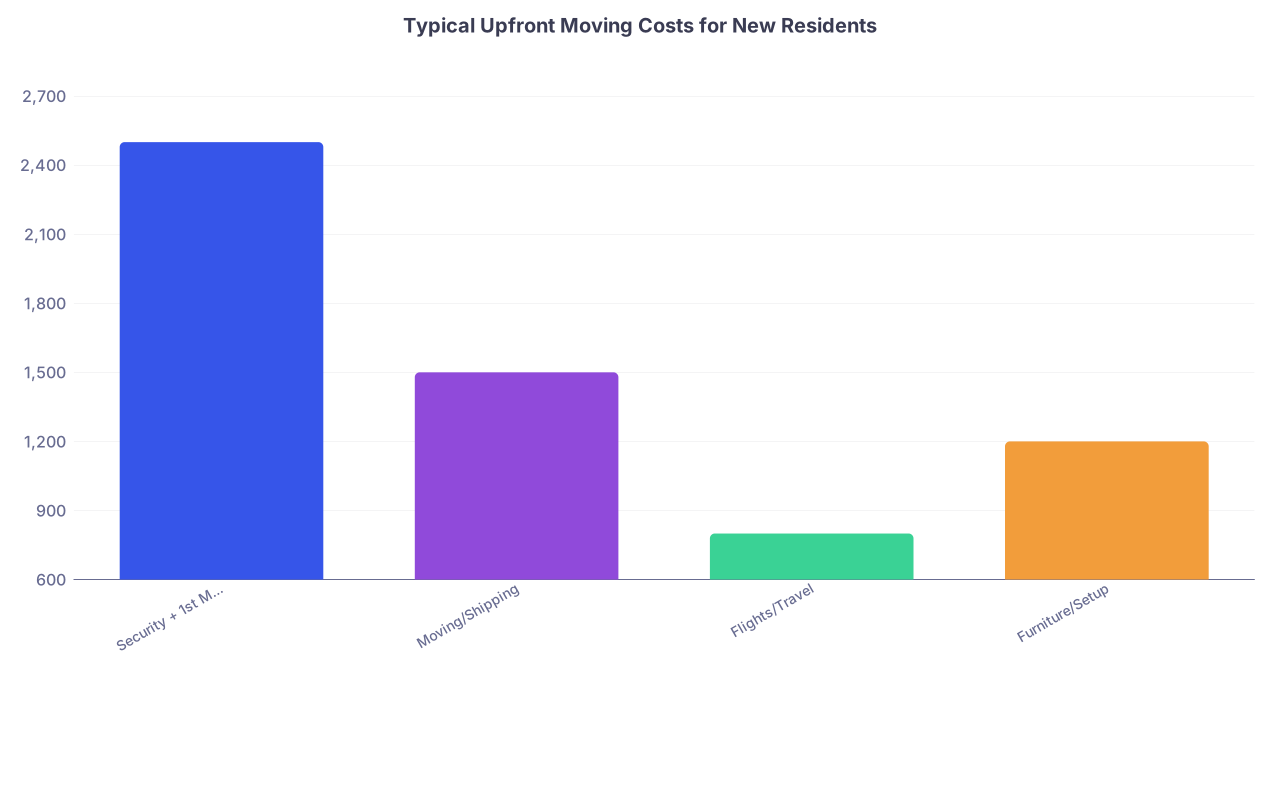
You’re not alone if your brain immediately jumps to: “We can’t afford deposit + moving truck + plane tickets + setting up a new place.”
Let’s quantify it a bit before we spin out completely:
| Category | Value |
|---|---|
| Security + 1st Month | 2500 |
| Moving/Shipping | 1500 |
| Flights/Travel | 800 |
| Furniture/Setup | 1200 |
Rough total people run into: $5,000–$6,000+. Sometimes more. It’s awful.
Options people quietly use (that no one advertises):
- 0% interest credit cards for 12–18 months just for move expenses. Risky, but sometimes necessary.
- Borrowing from family with a clear “I’ll pay you back over the first year” plan.
- Taking only essentials and buying cheap, secondhand locally (Facebook Marketplace, thrift stores, resident hand-me-downs).
- Using hospital relocation stipends — some programs offer $500–$2000. Ask explicitly.
- Driving a car packed to the roof instead of renting a big moving truck, then buying large items after.
And yeah, it’s normal to show up with a mattress on the floor, 3 plates, and a coffee maker and call it “home” for the first few months.
What About Kids? School, Daycare, and Guilt
This piece hurts, because it’s where the “doctor” part of your identity collides with “parent” or “caregiver.”
Let me say this bluntly: lots of residents move kids mid-year, late, or on awkward timelines. It’s not ideal. It’s also survivable.
For school-age kids:
- Many public schools allow rolling enrollment — they don’t require you to start in August.
- Your address usually determines school; once you’ve got a lease, you enroll.
- Some parents delay the family move so kids can finish the school year, then move during summer. That might mean you solo for a while.
Daycare is usually worse than school:
| Category | Value |
|---|---|
| Work | 55 |
| Sleep | 15 |
| Family/Childcare | 20 |
| Everything Else | 10 |
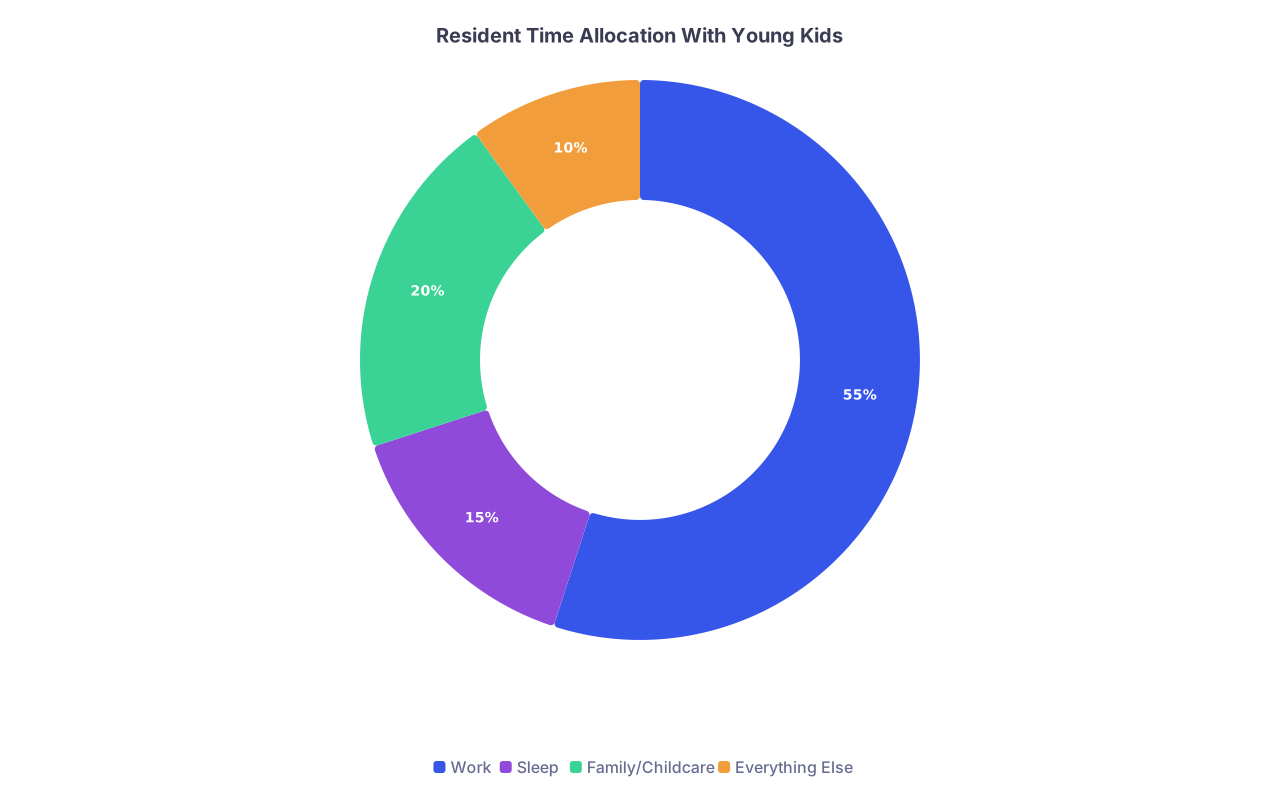
What that chart feels like in reality: you’re constantly short on time and always guilty.
Strategies I see families use:
- In-home daycare near hospital instead of fancy centers (cheaper, more flexible hours sometimes).
- Nanny-shares with other residents or hospital staff.
- Grandparents visiting for the first 2–3 months to buffer the chaos.
- Accepting a temporary downgrade in schooling or environment for PGY-1 with the plan to move or upgrade later.
Does it suck to compromise on what you imagined for your kids? Absolutely. But your residency is temporary. Their entire life is not going to be defined by this 3–7 year window.
Visas + Short Notice = Extra Nightmares (But People Do It Every Year)
If you’re an IMG with a visa, your fear is probably dialed up to 11.
Common extra worries:
- DS-2019 or H-1B petition delays
- Consulate appointment backlogs
- Administrative processing
- Needing to move countries in weeks
Programs that routinely take IMGs generally know how to handle this. They often:
- Start visa paperwork quickly after Match Day
- Tell you what timeline they usually see
- Sometimes adjust your start date slightly if there are genuine, documented delays
What saves people here is aggressive communication and documentation:
- Follow up (politely but consistently) with both GME office and any legal/visa contact they give you.
- Keep scans of everything: passport, med school diploma, ECFMG cert, previous visas.
- Respond to any document requests within 24 hours when possible.
Is it still nerve-wracking? Horrible. But not hopeless.
Emotional Reality: You Might Start Residency While Your Life Is Still a Mess
This is the part no one puts on the brochure.
You might:
- Start intern year while your spouse is still in another city/country tying up loose ends.
- Commute from a hotel or temporary housing for weeks.
- Work 80 hours while trying to enroll your kid in school on your single post-call day.
- Feel like a terrible parent/partner/child for dragging everyone into this.
I’ve seen residents crying in stairwells not because of a bad night on call, but because:
- The moving truck was delayed.
- Their child was sick and they couldn’t get home.
- Their spouse just said, “I hate it here” on FaceTime.
And still — those same residents eventually found a rhythm. Not a perfect work-life balance. But a survivable pattern.
What If It All Feels Impossible?
Here’s the fear beneath all this:
“What if I can’t handle it? What if my family can’t handle it? What if this breaks us?”
Let me answer with something more honest than “You’ll be fine.”
You might not handle it gracefully. You might scrape by. You might be exhausted, snappy, and less patient than you want to be. Your relationship might take hits. Your kids might be clingier or more unsettled for a while.
But you don’t have to do it all perfectly for it to still work out.
What actually prevents disaster:
- You tell your program early if something major is going off the rails (visa delay, serious illness, housing emergency).
- You accept imperfect, short-term solutions instead of holding out for the “right” one you can’t afford or can’t find in time.
- You let your support system — even if it’s just one or two people — actually support you. That might be family back home or a co-resident you barely know yet.
And if you’re truly stuck — like, genuinely can’t move in time or can’t bring your family yet — it doesn’t automatically mean you failed. It means this system was designed without people like you in mind, and you’re surviving it anyway.
A Concrete Step You Can Take Today
Do one small thing to make this less terrifying and more manageable.
Right now, open a note on your phone or laptop and write this title:
“Emergency Relocation Plan – [Your Name]”
Under it, list your top 3 ranked programs.
For each, add:
- City name
- Rough rent for the size apartment your family needs
- Names of 1–2 neighborhoods you’d consider living in
- A space to later add: “Resident contact / housing leads”
You don’t have to fill it all in today. Just start it.
That way, if Match Day throws you into the deep end, you won’t be starting with a blank page — you’ll be starting with a plan you were scared to make but brave enough to begin.