
The worst financial mistake new doctors make is waiting until they’re “finally an attending” to start investing. By then, you’ve already burned the most valuable asset you’ll ever have: time.
You do not need attending money to build attending wealth. You need a timeline and a system. So let’s walk from MS4 to PGY2 and spell out what you should be doing at each point, step by step.
Big-Picture Timeline: How Your Investing Focus Shifts
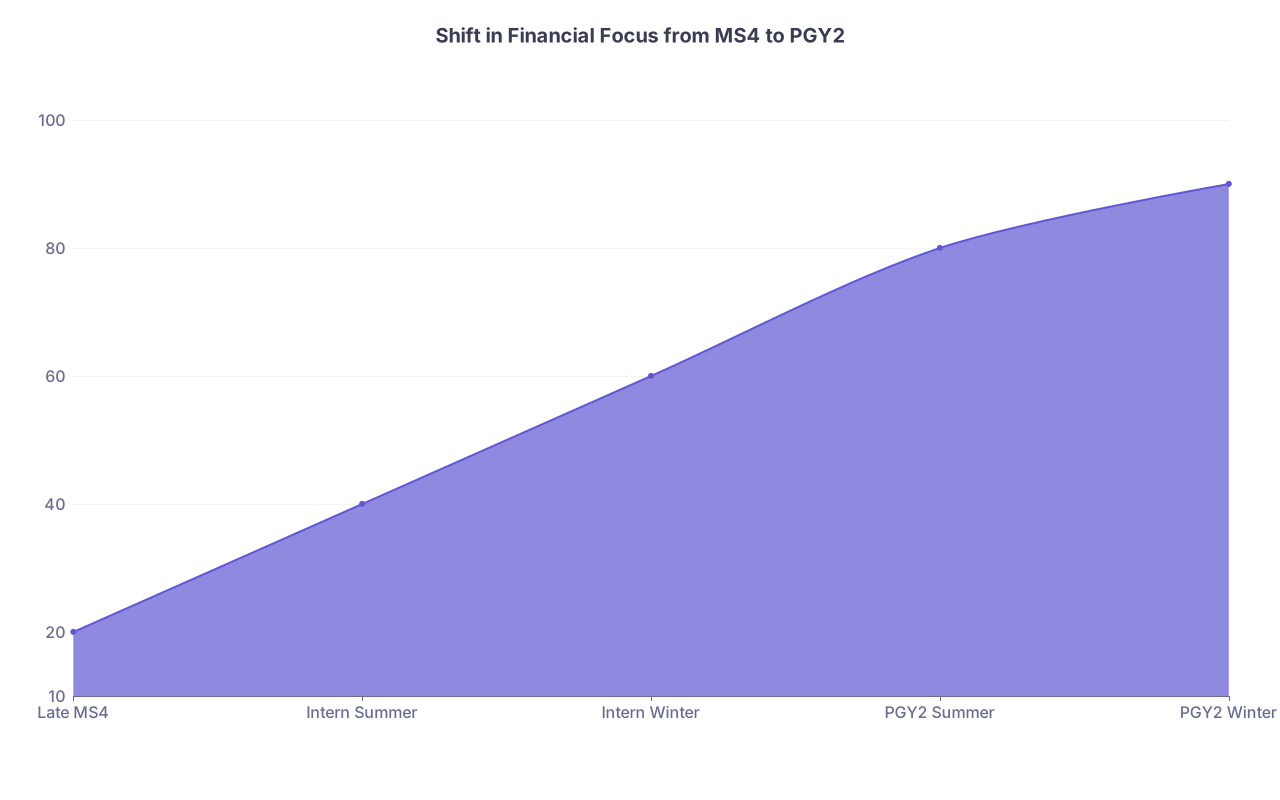
| Category | Value |
|---|---|
| Late MS4 | 20 |
| Intern Summer | 40 |
| Intern Winter | 60 |
| PGY2 Summer | 80 |
| PGY2 Winter | 90 |
Here’s the pattern I see over and over:
- MS4: Get infrastructure in place. Protect against catastrophe. Learn just enough to not get fleeced.
- Intern year (PGY1): Build habits with tiny amounts of money. Kill high-risk debt. Avoid lifestyle creep.
- PGY2: Scale investments. Solidify your strategy. Automate as much as humanly possible.
If you do that, your attending self will silently thank you every day.
Now let’s go chronologically.
Late MS4 (3–6 Months Before Graduation): Set the Foundation
At this point you should not be obsessing over stock picking. You should be doing boring, basic setup so you can actually invest later without chaos.
1. Month-by-Month Prior to Graduation
3–4 months before graduation
At this point you should:
- Clean up your financial mess:
- List every debt: credit cards, undergrad loans, med school loans, car loans.
- Write down interest rate, balance, and whether each is federal/private.
- Pull your credit report (free) and know your credit score.
- If you have credit card debt above ~10% interest:
- Stop pretending it’s “manageable.”
- Make a payoff plan. This matters more than investing right now.
2–3 months before graduation
At this point you should:
- Learn the absolute minimum about investing:
- What an index fund is.
- Difference between Roth vs traditional.
- Why single-stock gambling is dumb for residents.
- Decide who won’t manage your money:
- Any “advisor” who:
- Sells whole life insurance as a “retirement” solution.
- Won’t tell you exactly how they’re paid.
- Pushes loaded mutual funds.
- Any “advisor” who:
- If parents already have you with their “guy,” ask direct questions:
- “Are you a fiduciary 100% of the time?”
- “Do you earn commissions on products you recommend to me?”
You’re not firing people yet. You’re just waking up.
1–2 months before graduation
At this point you should:
- Open the right accounts (even if you put $0 in them for now):
- A Roth IRA at a low-cost brokerage (Fidelity, Vanguard, Schwab).
- A plain taxable brokerage account (for future use).
- Set your Roth IRA investment default:
- Choose a broad index fund as the default (example: Vanguard Total Stock Market Index, Fidelity ZERO Total Market, Schwab Total Market).
- Or a target-date fund close to age 65–70 if you want hands-off.
Do not overcomplicate it. One or two funds is fine.
Final 4–6 Weeks of MS4: Prepare for Residency Money
You’re about to go from $0 to a paycheck. Small paycheck, but still. At this point you should make sure that first month doesn’t wreck you.
2. 4–6 Weeks Before Intern Year Starts
At this point you should:
- Build a bare-minimum emergency buffer:
- Goal: $1,000–$2,000 in a high-yield savings account.
- Not forever. Just so a flat tire doesn’t end up on a 25% APR card.
- Map your incoming expenses:
- New rent, moving costs, deposits, exam fees (Step 3, licensing).
- Roughly what’s left for investing: probably not much yet. That’s fine.
3. 2–3 Weeks Before Orientation
Now you get into systems mode. Internship will wipe your brain. You cannot rely on “future me” to manually transfer money on post-call days.
At this point you should:
- Collect residency benefits info:
- 403(b) or 401(k) plan? Is there a match? When are you eligible?
- Is there a 457(b)?
- Does the plan allow Roth contributions? (Many hospital 403(b)s do.)
- Decide your first investing priority:
- If you have high-interest credit card debt: priority is debt + Roth IRA.
- If you’re clean of high-interest debt: 403(b)/401(k) + Roth IRA combo.
Orientation Month (PGY1, Month 1): Make Automatic Decisions
This is where most residents blow it. They tell HR, “I’ll enroll later when things calm down.” Things never calm down.
4. Week-by-Week in Orientation Month
Week 1: HR packet week
At this point you should:
- Elect your retirement contribution on day one if allowed:
- Even 3–5% of your paycheck into the 403(b)/401(k) is fine to start.
- Choose Roth contributions if your resident income is your lifetime low (it usually is).
- Pick a simple investment option:
- Default to a low-cost target-date fund in your hospital plan, or
- If you know what you’re doing, choose a broad index fund (US + maybe international).
Do not leave money sitting in a “stable value” or “money market” by default unless you want 7 years of zero growth.
Week 2–3: First paychecks hit
At this point you should:
- Set up automatic transfers from checking to:
- Your high-yield savings (emergency fund).
- Your Roth IRA (even $50–$100/month is good).
- Confirm that:
- Your 403(b)/401(k) deduction actually came out of your paycheck.
- The money was invested, not just sitting in cash.
You’d be shocked how often someone “set it up” and the funds are still in cash two years later.
Week 4: Reality check
At this point you should:
- Look at your actual spending for the month:
- If your checking balance is bleeding out, dial down spending, not the tiny retirement contribution.
- If you’re drowning, reduce contribution to 1–2%, but don’t drop to zero unless you truly cannot pay rent.
The habit is the win this year. The dollar amount ramps later.
PGY1, Months 2–6: Build Habits and Kill Bad Debt
Now you’re in the grind. Busy, tired, and very likely to ignore money completely.
5. Monthly Focus During Early Intern Year
Month 2
At this point you should:
- Tighten your setup:
- Roth IRA auto-transfer date: day after each paycheck.
- Emergency fund auto-transfer: small recurring amount.
- List high-interest debts in attack order:
- Anything above ~7–8% is a priority.
- Credit cards get top billing. Personal loans second.
Month 3–4
At this point you should:
- Shift from “survival” to “optimization”:
- If you’re comfortably covering expenses:
- Increase your Roth IRA contribution.
- Or bump your 403(b)/401(k) from, say, 3% to 5–6%.
- If you’re comfortably covering expenses:
- Decide your primary savings vehicle:
- If your hospital offers a match: aim to at least get the full match first.
- If no match: I usually like maxing Roth IRA before overfunding a no-match retirement plan, because you’ll have more control and lower fees.
Month 5–6
At this point you should:
- Hit your first “investment checkpoint”:
- Do you have:
- Automatic retirement contributions?
- Roth IRA funded at least something?
- A written order of operations for extra money?
- Do you have:
- Revisit asset allocation:
- Early in training, you can afford to be aggressive:
- 80–100% stocks, mostly broad index funds.
- You do not need bonds yet unless you’re extremely risk-averse.
- Early in training, you can afford to be aggressive:
PGY1, Months 7–12: Refine and Avoid Lifestyle Creep
This is when residents often upgrade apartments, cars, or vacations. Easy trap.
6. Second Half of PGY1: Concrete Targets
Months 7–9
At this point you should:
- Have at least:
- 1–2% of income going into your 403(b)/401(k) (ideally more).
- Some amount going into a Roth IRA (even if not maxed).
- Build your emergency fund up to:
- 1–2 months of bare-bones living expenses. Not ideal, but good for a resident.
If you get a tax refund:
- Do not let it evaporate:
- First: pay down any remaining credit card debt.
- Second: top up Roth IRA.
- Third: add to emergency fund.
Months 10–12
At this point you should:
- Review your accounts once:
- 403(b)/401(k) contributions year-to-date.
- Roth IRA contributions.
- Savings account balance.
- Loan status (are payments on track? any changes you need to plan for?).
- Decide what changes (if any) to make for PGY2:
- Slight increase in retirement percentage?
- Extra payments toward high-interest private loans?
- Start planning for relocation if PGY3+ is at a different program.
This is also the right time to question any “advisor” you got pushed into as a med student. If all they’ve done is sell you an expensive insurance product, get out.
PGY2, Early (Months 13–18): Scale Up and Simplify
PGY2 is where you go from “just doing something” to “doing the right things in the right order.”
7. The PGY2 Switch: From Survival to Strategy
At this point you should:
- Know your own numbers:
- Net worth (assets minus debts) even if it’s negative.
- Total loan balance and interest rates.
- How much you contributed last year to retirement accounts.
| Priority Order | Action |
|---|---|
| 1 | Build 1–3 months emergency fund |
| 2 | Get full employer retirement match |
| 3 | Max Roth IRA if possible |
| 4 | Pay down high-interest debt |
| 5 | Invest extra in 403(b)/401(k) or 457(b) |
Months 13–15
At this point you should:
Lock in your “order of operations”:
- Minimum payments on all loans.
- Retirement plan up to the employer match (if any).
- Fund Roth IRA (aim to max by tax deadline).
- Pay extra on any loan over ~6–7% interest.
- If you still have extra: add more to 403(b)/401(k) or start taxable investing.
Simplify investments:
- If you have random funds from past advice:
- Consolidate within accounts into 1–3 index funds.
- Example core:
- US total market index
- International index
- Optional small bond or REIT slice (not required at this stage)
- If you have random funds from past advice:
Months 16–18
At this point you should:
- Automate yearly goals:
- Divide your Roth IRA target (e.g., $7,000) by number of paychecks.
- Set that as an automatic transfer.
- Increase percentage contributions instead of fixed dollars:
- When you get any PGY2 pay bump, raise your retirement contribution by 1–2% before you see the new money.
PGY2, Mid to Late (Months 19–24): Position Yourself for Attending Life
This is where investing during training really starts to matter. You’re close enough to attending income that compounding plus habit can get serious.
8. Use PGY2 to Stop Future Financial Fires
At this point you should:
- Extend your emergency fund:
- Target: 3 months of essential expenses.
- If you’re single with low fixed costs, 2–3 months is fine.
- Clarify your post-residency timeline:
- Fellowship? Staying in same city? Moving across the country?
- These decisions shape what you do with cash vs investments.
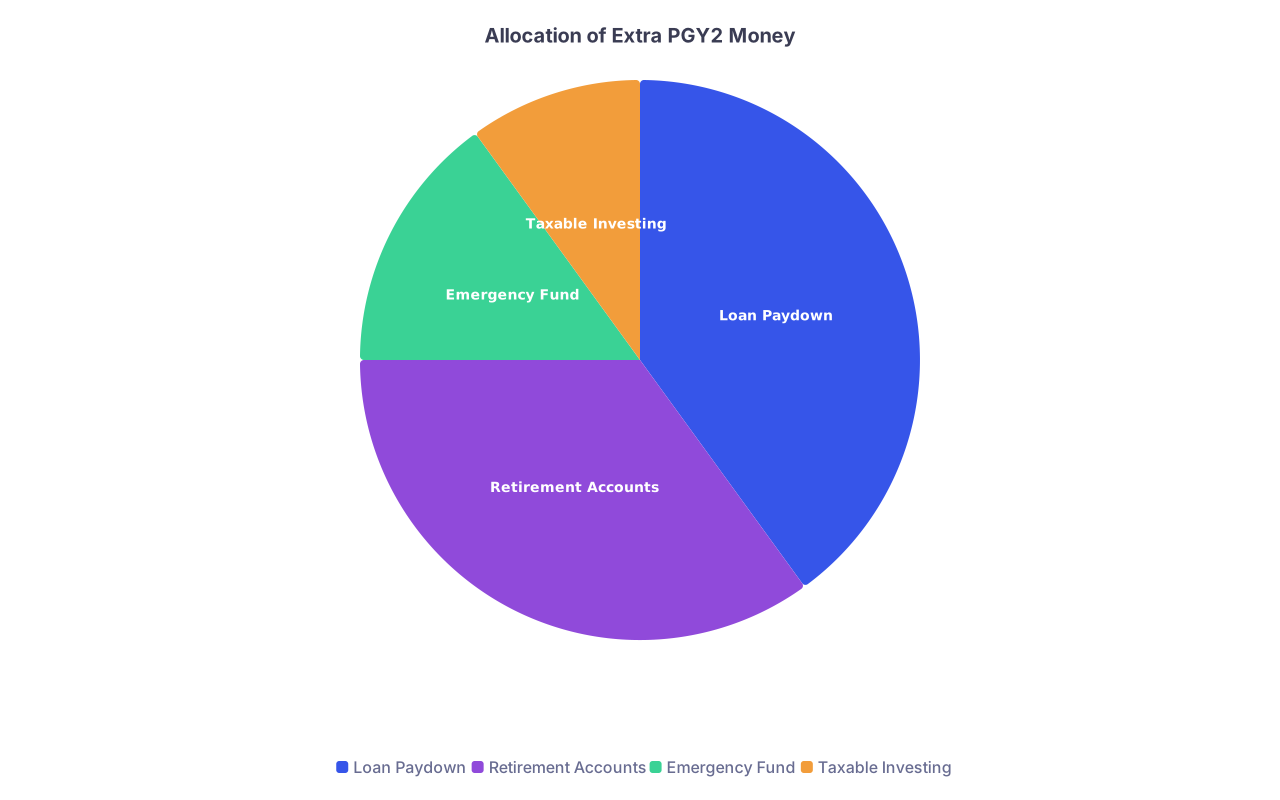
| Category | Value |
|---|---|
| Loan Paydown | 40 |
| Retirement Accounts | 35 |
| Emergency Fund | 15 |
| Taxable Investing | 10 |
Months 19–21
At this point you should:
- Get ruthless about insurance:
- Own-occupation disability insurance at an appropriate benefit level.
- Term life insurance if anyone depends on your income (spouse, kids).
- If you were sold whole life “as an investment,” seriously reconsider and understand surrender values and ongoing costs.
Not directly “investing,” but this protects your ability to ever invest.
Months 22–24
At this point you should:
- Make sure your accounts are streamlined before attending chaos:
- Bank accounts: 1 main checking, 1–2 savings (short term + emergency).
- Investment accounts:
- Roth IRA (yours, and spouse’s if applicable).
- Workplace retirement (403(b)/401(k)/457).
- Maybe a taxable brokerage if you’re already doing the above.
You don’t need 5 random brokerage accounts with $300 each. Pick a primary.
- Start thinking about your future taxable investing approach:
- Same index funds as retirement accounts.
- Prioritize tax-efficient options:
- Broad stock index funds in taxable.
- Keep bonds mostly in retirement accounts.
“When Should I Start Investing?” – The Real Answer
You should start investing as soon as both of these are true:
- You can pay your bills and minimum loan payments without going into new debt.
- You can set up a small, repeatable contribution (even $50/month) without pulling it back every time you’re on nights.
For most people:
- That’s late MS4 / early PGY1 for a Roth IRA (modest amounts).
- That’s early PGY1 for work retirement accounts.
- Serious scaling usually happens PGY2+.
The exact dollar amount is less important than this pattern:
- MS4: You set the stage.
- Intern year: You prove you can be consistent.
- PGY2: You turn the dial up.
Quick Stage-by-Stage Checklist
Here’s your condensed “at this point you should…” run-through.
Late MS4
- List all debts with interest rates.
- Pull your credit report.
- Open:
- Roth IRA at a low-cost brokerage.
- High-yield savings account.
- Learn basic index fund investing.
- Avoid commission-based “advisors” pitching products.
Pre-Intern (4–6 weeks pre-start)
- Build $1,000–$2,000 mini-emergency fund.
- Estimate residency budget (rent, food, transport, loans).
- Gather residency benefits info.
Orientation Month (PGY1 Month 1)
- Enroll in 403(b)/401(k) during orientation.
- Choose Roth contributions if income is low.
- Pick a low-cost target-date or index fund.
- Set up:
- Automatic transfers to savings.
- Automatic contributions to Roth IRA.
PGY1 Months 2–6
- Prioritize killing high-interest debt (esp. credit cards).
- Maintain at least small retirement contributions (1–5%).
- Increase Roth IRA contributions as able.
- Keep investment choices simple: 1–3 index funds.
PGY1 Months 7–12
- Build 1–2 months of emergency fund.
- Recheck workplaces contributions and allocations.
- Use any windfalls (tax refund, bonus) for:
- Debt paydown,
- Roth IRA,
- Emergency fund.
PGY2 Months 13–18
- Write down your net worth.
- Decide and commit to your “order of operations” for dollars.
- Consolidate scattered funds into a simple index-fund portfolio.
- Automate reaching Roth IRA and minimum retirement goals.
PGY2 Months 19–24
- Grow emergency fund toward 3 months.
- Clean up insurance (disability, term life).
- Streamline accounts and prepare to scale investing as an attending.
Bottom Line: Three Things That Actually Matter
- Starting early beats starting big. A PGY1 investing $100/month is doing more right than an attending who’s “waiting to figure it out.”
- Automation wins. If you rely on willpower and free time in residency, you’ll lose. Set everything on autopilot.
- Simplicity compounds. A couple of index funds, steady contributions, and protection from catastrophic risk will carry you from MS4 to wealthy attending far more reliably than hot tips or clever strategies.