
The biggest investment mistake private practice owners make is doubling down on their own business and ignoring everything else.
You’ve finally got your practice funded. Lines of credit squared away, equipment leases set, some cash buffer in the bank. Now what? Because if your answer is “reinvest every spare dollar into the practice forever,” you’re setting yourself up to be asset-rich on paper, cash-poor in reality, and utterly dependent on one fragile income source.
Let me walk you through what actually works once the practice is no longer starving.
Step 1: Lock in a Personal Safety Net Before You Get Fancy
You’re a business owner, which means your income is less stable than an employed doc’s, no matter how busy you are. Before you think “real estate empire” or “angel investing,” your first job is boring but critical: make sure you and your family can survive a bad year.
Target this in order:
Emergency fund for your household
Not the business. Your personal life.I like:
- 6 months of essential expenses if your practice is reasonably stable
- 9–12 months if:
- You’re in a highly competitive market
- You’re still building patient volume
- A single payer (like one big hospital or network) dominates your referrals
Park it in:
- High-yield savings account or
- Money market fund at a major brokerage
This money is not for “opportunities.” It’s for “the landlord and your kids’ groceries.”
Separate practice buffer
You probably already did this, but if not, fix it now.- Aim for at least 1–2 months of practice operating expenses in a business savings or money market.
- Think rent, payroll, malpractice, utilities, EMR, not owner draws.
And keep it mentally walled off from your personal accounts. If you’re moving money back and forth casually, that’s a red flag.
Minimum insurance and legal shields
Not glamorous, but this is the foundation you build the rest of your investing on.At a minimum:
- Adequate malpractice (obvious)
- Umbrella liability policy on your personal side (often $2–5M)
- Correct entity structure for the practice (PC/PLLC/PA plus possibly an S-corp election where appropriate)
- Operating agreement / shareholder agreement that actually addresses buyout, disability, and death
Why this matters for investing: if you’re one lawsuit or partner conflict away from financial chaos, no investment strategy can fix that.
Step 2: Max Out the “Doctor Tax Shelters” First
Before you chase real estate, private deals, or whatever your colleagues are hyping at conferences, you attack the tax-advantaged buckets. These are stupidly powerful for high earners, and practice owners often underuse them.
1. Practice retirement plan: where most of your wealth should build
If you own the practice, you control the retirement plan design. That’s a huge advantage if you stop outsourcing the decision to the payroll company rep.
Common structures:
| Plan Type | Typical Owner Limit | Staff Cost | Complexity |
|---|---|---|---|
| SIMPLE IRA | Up to $16k–$19k | Low | Low |
| 401(k) only | Up to $22.5k–$30k | Moderate | Moderate |
| 401(k) + Profit Share | Up to $66k | Higher | Higher |
| 401(k) + PS + Cash Balance | $100k+ | Higher | High |
Rough playbook:
If you’re still small, mostly you plus 1–2 staff:
- Consider a solo 401(k) if it’s literally just owners and spouse.
- As soon as you have non-owner employees, shift to a group 401(k) with profit sharing.
If you’re mid-sized (say 5–25 FTE employees):
- 401(k) + profit sharing, possibly a “new comparability” design so you and partner physicians can get larger allocations than staff—totally legal if designed right.
If your income is high (mid-six figures+) and you’re 40+:
- Look hard at adding a cash balance plan on top of a 401(k).
- I’ve seen practice owners put $100k–$250k per year into these, pre-tax, while still keeping staff contributions manageable.
What to actually invest in inside the plan:
Keep it simple. You’re a doctor, not a day trader.
- Broad US stock index fund (e.g., total market or S&P 500)
- International stock index fund
- Bond fund (intermediate-term or total bond)
You can split something like:
- 70–90% stocks / 10–30% bonds if you’re <50 and can handle volatility
- 60–70% stocks / 30–40% bonds if you’re more conservative or closer to retirement
But the exact percentages matter less than “pick something reasonable and stick with it.”
2. Backdoor Roth IRA (yes, even with high income)
As a practice owner, you’re almost certainly over the direct Roth IRA income limits. Use the backdoor:
- Contribute to a non-deductible traditional IRA
- Convert to Roth IRA
- Avoid the “pro-rata rule” problem by not having large pre-tax IRAs in your name (roll those into your practice 401(k) first if needed)
Your Roth bucket becomes your flexible, tax-free weapon later. Early retirement, practice sale proceeds, or just “I don’t want every withdrawal taxed at ordinary income.”
3. HSA (if you have a high-deductible health plan)
If you’re on a high-deductible plan already, the HSA is a triple-tax-advantaged account. Stop using it like a checking account.
The better move:
- Contribute the max
- Pay current medical costs from regular cash
- Invest the HSA balance in stock index funds
- Let it grow for decades and use it later for tax-free medical spending in retirement
This stuff is not original. It’s just often ignored because it’s not sexy, and nobody brags about “I maxed my 401(k)” at conferences.
Step 3: Decide How Much Still Goes Back Into the Practice
This is where owners get stuck. There’s always “one more” piece of equipment, “one more” staff member, “one more” expansion idea. Some of those are truly investments. Some are ego or FOMO.
You need a framework, or every dollar gets sucked back into the machine.
Think in buckets: Personal vs. Practice
One simple rule I’ve seen work well:
- For every $1 you reinvest into the practice beyond normal operating needs,
dedicate $1 (or more) to your personal long-term investments.
So if you:
- Upgrade imaging equipment for $300k (debt or cash)
- Expand to a second location with a $100k buildout
You also:
- Make sure you’re hitting your max 401(k) / cash balance contributions
- Keep adding to taxable brokerage or real estate on your personal side
This keeps your wealth from being 90% tied to a single asset: your practice.
When practice reinvestment makes sense
Reinvest aggressively when:
- You’re in growth mode with proven patient demand
- You can realistically raise owner comp within 12–24 months as a result
- You’re improving practice durability (e.g., adding partner, diversifying payers, adding services patients already want)
Be skeptical when:
- The main benefit is your ego (“we’ll look more high-end”)
- The return is vague (“brand awareness,” “prestige”)
- It relies heavily on being busier in a market that’s already saturated
You don’t need a “best-looking lobby in town” to retire.
Step 4: Build a Simple, Boring, Taxable Investment Engine
Once you’ve:
- Funded emergency reserves
- Maxed tax-advantaged accounts (or are close)
- Set a rational policy for practice reinvestment
Then you start pouring the surplus into taxable investments outside the practice.
This is where long-term flexibility and exit options come from.
Core: Broad, low-cost index funds
Open a taxable brokerage account at Vanguard, Fidelity, or Schwab.
Invest in:
- Total US stock market index fund
- Total international index fund
- Possibly a municipal bond fund if you’re in a high-tax state and want some fixed income
Do not overcomplicate it. You’re not trying to “beat the market.” You’re trying to own it, while the market works 24/7 and never calls in sick or demands a raise.
You can automate:
- Monthly transfers from your personal checking
- Or quarterly, timed around your draws from the practice
Even $5k–$10k/month consistently will sneak up on you in a decade.
Step 5: Real Estate – Don’t Start with the Sexy Stuff
Most private practice owners already touch real estate in some way—your office lease, maybe your building. The problem is getting overconfident quickly.
If you want to expand beyond office space for your own practice, here’s a sane progression.
First: Own the building you practice in (if it pencils out)
Often the most logical first real estate investment:
- You control your landlord. Seriously underrated.
- You separate the operating business (practice) from the real estate (owning entity/LLC).
- You can pay yourself rent, create an additional equity stream, and still eventually sell the building separately from the practice if needed.
Watch out for:
- Overbuying: don’t get locked into a trophy building that hurts your cash flow.
- Concentration risk: your business is your tenant. If the practice fails or has to move, you’re stuck with a very specific kind of vacancy.
Then: Simple, boring rentals (if you must)
If your bandwidth allows and you actually like the idea of landlording (many don’t once they try it):
- Start with a small number of doors in a local market you understand.
- Do not go straight to syndications or out-of-state properties you never see. That’s where I see docs get burned.
Or, if you don’t want any part of that management drama:
- Buy a REIT index fund in your brokerage account.
- You get real estate exposure without late-night plumbing calls or shady operators.
Step 6: The Temptations: Angel Deals, Private Equity, Side Companies
This is where physician money goes to die if you’re not disciplined.
Some rules I’d give you as if we were having coffee and you asked what really happens:
If you can’t explain the investment on a napkin, don’t write the check.
“It’s a roll-up strategy in a fragmented market with multiple arbitrage levers” is not an explanation. It’s sales copy.Never put more than 5–10% of your investable net worth into all high-risk, illiquid deals combined.
That includes:- Angel investments
- Private equity in someone else’s business
- Startup labs, medtech ideas, “doctor-founded platforms”
- Crypto, if you’re so inclined
Assume you’ll never see the money again.
If you’re still ok wiring the funds, fine. But mentally file it under “probably gone.”Don’t mix staff/patient-related ventures with your core practice too early.
Example: Offering to invest in a med spa with your lead MA as co-owner before your core practice is even consistently profitable. You’re adding complexity before you’ve stabilized the main engine.
You’re not obligated to take every “doctor-only opportunity” you’re pitched. Most aren’t that special.
Step 7: Sequence Your Priorities Over 5–10 Years
You don’t need to do everything at once. In fact, trying to do everything at once is how people burn out and make sloppy decisions.
Here’s a realistic sequence for a practice owner, assuming you’re somewhere in your first 5–10 years of ownership:

| Step | Description |
|---|---|
| Step 1 | Fund Emergency Reserves |
| Step 2 | Max Tax-Advantaged Accounts |
| Step 3 | Stabilize Practice Cash Flow |
| Step 4 | Buy or Optimize Office Space |
| Step 5 | Build Taxable Index Portfolio |
| Step 6 | Optional Real Estate Expansion |
| Step 7 | Selective Private Deals |
Rough timeline (varies by specialty and market):
Years 1–3:
- Get practice out of survival mode
- Build both personal and business cash buffers
- Implement or upgrade retirement plan
- Clear high-interest personal or business debt
Years 3–7:
- Consistently max 401(k)/cash balance/backdoor Roth
- Consider buying your office building if appropriate
- Start building a solid taxable investment portfolio
Years 7–15:
- Dial in work–life balance now that the practice is stable
- Focus on growing your outside-the-practice net worth
- Very cautious, strategic use of private deals or extra real estate, if at all
You’ll notice “trade actively,” “time the market,” and “crypto mining farm” never show up. That’s intentional.
Step 8: Legal and Structural Stuff You Can’t Ignore
This is supposed to be about investing, but if you neglect structure, you’re playing with fire.
Keep these clean and separate
Entity separation
- Practice entity (clinical activity)
- Real estate entity (if you own your building)
- Possibly separate IP/brand entity if you develop something significant
Formal agreements
If you have partners, your buy-sell agreement should spell out:- How the practice is valued
- What happens if someone becomes disabled
- How buyouts are funded (hint: insurance often plays a role)
Estate planning
If you have kids or dependents and a practice, and you don’t have:- A will
- Powers of attorney
- Healthcare proxies
- Some plan for who runs or sells the practice if you’re gone
…you’re leaving your family a mess.
None of this directly “earns” you a return. But it prevents your investments from being shredded by chaos.
Step 9: A Realistic Cash Flow Example
Let’s put numbers to this so it’s not all theory.
Say:
- You’re a 42-year-old practice owner
- After staff, overhead, and taxes, you can reliably take home $450k/year
- You’ve already funded:
- 6 months personal emergency fund
- 2 months practice buffer
A sane annual allocation might look like this:
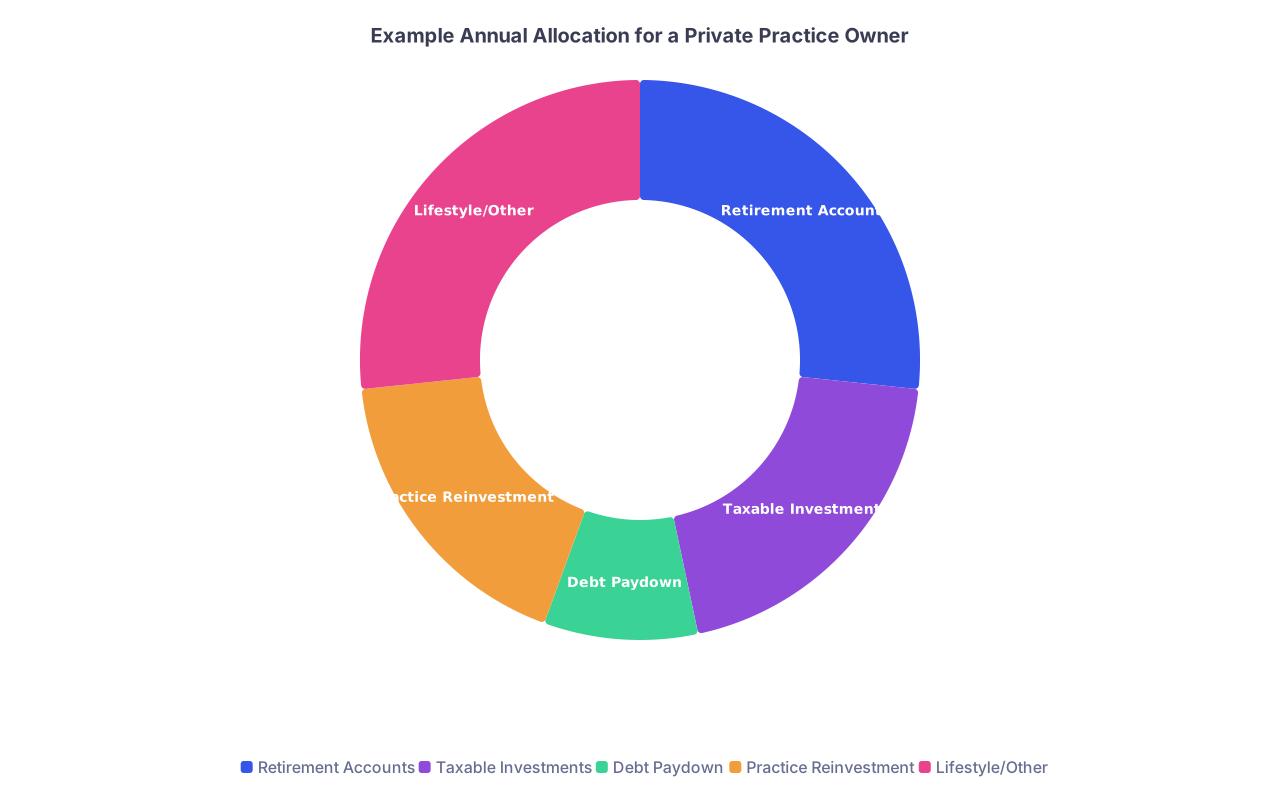
| Category | Value |
|---|---|
| Retirement Accounts | 120 |
| Taxable Investments | 90 |
| Debt Paydown | 40 |
| Practice Reinvestment | 80 |
| Lifestyle/Other | 120 |
Translated:
- $120k → 401(k) + cash balance
- $90k → taxable brokerage (index funds)
- $40k → extra toward practice loan / mortgage / student loans
- $80k → specific, high-ROI practice investments (expansion, new service line)
- $120k → personal lifestyle, vacations, home projects, etc.
You’ll tweak the numbers based on your own situation, but the principle is consistent:
You are deliberately building wealth outside your practice while still growing the practice intelligently.
Step 10: How to Know You’re On Track (Without Building a Spreadsheet Empire)
You do not need a 40-tab Excel model. You do need basic visibility.
At least once a year, I’d want you to know:
Personal net worth:
- Practice estimated value (rough guess is fine)
- Retirement accounts
- Taxable accounts
- Real estate equity
- Debts
Liquidity:
- How many months of personal expenses you have in cash or near-cash
- How many months of practice expenses are in reserve
Savings rate:
- What percentage of your gross personal income is going toward long-term investments (retirement + taxable).
- For your income level, 25–35% is excellent. 15–20% is workable. Under 10% long term? You’re likely under-saving unless you sell the practice for a big number later.
You can track this with:
- One net worth snapshot per year
- Retirement statements
- A simple note of how much you move into investments each month
That’s it. You don’t need to become a hobbyist financial analyst.

The Short Version: Where You Actually Invest After Funding Your Practice
If you’ve made it this far, you don’t need fluff. You need clarity.
Here it is:
First, shore up your defenses.
Personal emergency fund, practice buffer, correct entity/insurance/agreements. Without that, every investment is built on sand.Then, abuse every tax-advantaged tool you control.
Practice retirement plan (401(k), profit share, cash balance), backdoor Roth, HSA. Boring accounts, big impact.Simultaneously, build wealth outside your practice.
Systematic investing into a simple taxable portfolio of index funds, possibly your office building if it makes financial sense, and only a small allocation to high-risk private deals if you truly understand them.
You are not just a doctor anymore. You’re a business owner. Your real “asset allocation” is your time, energy, and capital across your practice, your portfolio, and your life. Treat your practice as one powerful asset—not the only one—and your future options multiply fast.