
The real reason older partners push you into buying practice real estate is simple: they want an exit, not your financial freedom.
They’ll dress it up in “wealth-building” language, talk about “owning instead of renting,” throw around phrases like “this is how real doctors get rich.” But behind closed doors, in partner meetings you’re not invited to yet, the conversation is very different.
I’ve sat in those rooms. I’ve heard the phrases:
“We need fresh capital in.”
“Let’s get the juniors to buy in at the new appraised value.”
“This will help the senior guys de-risk before retirement.”
Let’s walk through what’s really going on when your older partners suddenly become your personal real estate coaches.
What’s Actually Happening Behind the Scenes
Here’s the part no one explains to you in residency.
Most established practices with real estate have two businesses under the hood:
- The operating practice (the actual medical group)
- The real estate entity (the LLC or partnership that owns the building and leases it to the practice)
They are related, but they are not the same. And that separation is very intentional.
Older partners often own a huge share of the real estate entity, even after they’ve started quietly cutting back their clinic time. That ownership is where a shocking amount of their net worth sits. Not in the practice. In the walls, the land, and the rent checks.
So when they push you to “buy in,” they’re usually doing at least three things at once:
- Creating a liquidity event for themselves
- Locking you into the practice (golden handcuffs)
- Transferring risk from their balance sheet to yours
They’ll never say that outright. Instead you’ll hear:
- “This is how we all build equity here.”
- “You don’t want to be just paying someone else’s mortgage.”
- “You’ll thank us in 10–15 years.”
What they mean: “We need someone younger to hold the bag for the next 10–15 years.”
How the Money Really Flows
Let me strip the emotion out of this and show you the mechanics.
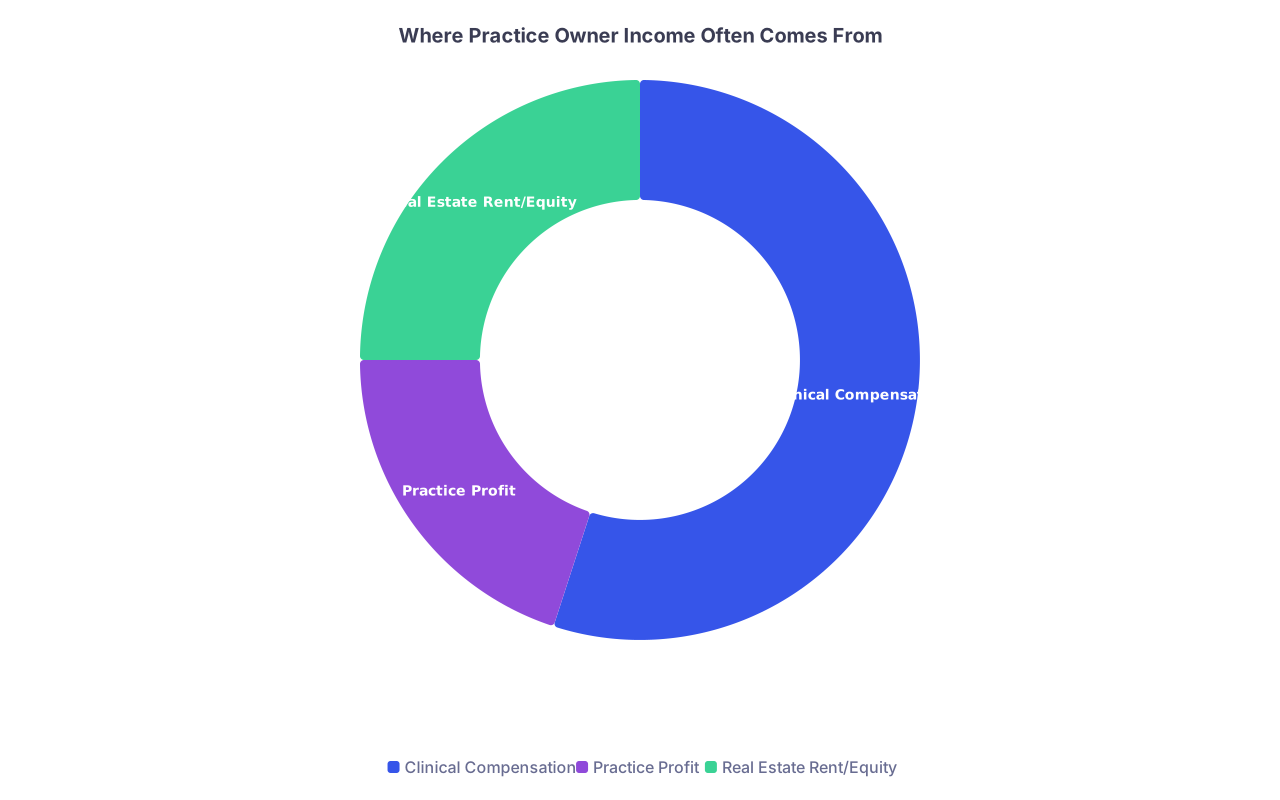
| Category | Value |
|---|---|
| Clinical Compensation | 55 |
| Practice Profit | 20 |
| Real Estate Rent/Equity | 25 |
That doughnut is not hypothetical. That split is very close to what I’ve seen in a lot of private practices: a full quarter of senior partners’ effective “income” is coming from real estate rent and equity growth.
Here’s the usual playbook:
Years ago, the founders bought or built the office building on the cheap. Sometimes they overbuilt, sometimes they got a steal. Either way, their basis (what they paid) is low.
Time passes. They expand, grow, maybe add an imaging center or surgery center next door. The building gets reappraised “based on income” — meaning on how much rent the practice is paying.
Surprise: the appraisal is now 2–4x what the founders originally paid. Their equity on paper looks fantastic.
They want to “give juniors the opportunity” to buy into the real estate at the current appraised value. That usually means: you pay a premium price for an asset they acquired cheaply. They lock in their gains, you lock in the debt.
If they’re really aggressive, the practice is paying above-market rent to the real estate entity. So the building’s value is juiced by rent that only makes sense because it’s being paid by…your own work.
You produce RVUs, the practice generates revenue, the practice cuts a big rent check, and that rent check props up the building’s value that your seniors are about to sell you a chunk of. Clean. Legal. And absolutely tilted in their favor if you’re not paying attention.
The Exit Strategy You Are Funding
Older partners think in 3–10 year windows. You’re thinking 20–30 years out. That mismatch is where you get hurt.
Here’s the line I heard from a 64-year-old orthopedic partner in a closed meeting:
“If we can get the new guys to buy in over the next 3 years, I’m out of my personal guarantee and I can retire clean.”
That’s your “opportunity.”
They’re not monsters. They’re just doing what makes sense…for them. They’re:
- Reducing their exposure to any future drop in commercial real estate
- Getting off the loan guarantees before Medicare or payor chaos hits
- Locking in their big asset at a high valuation while they still control the narrative
You, on the other hand, are:
- Taking on new debt tied to a single property
- Concentrating risk in the same location as your job
- Buying at a price and time you did not choose
You know what that’s called in any other industry? A liquidity event for one generation, and a leveraged recap for the next. Only here it’s dressed up as “the privilege of ownership.”
The Three Real Motives They Won’t Say Out Loud
Let’s put the cards on the table. When older partners push you to buy practice real estate, their real motives are usually a mix of these.
1. They Want Out of the Loan and Guarantees
There’s often a big commercial loan sitting behind that building. When it was signed, the bank demanded personal guarantees from the senior docs. Your name was nowhere near it because you weren’t there.
Now you are.
The bank loves a growing practice. They’re more than happy to “refresh” guarantees and slowly rotate the old names off as new high-income docs come on. That transition can be done quietly unless you read the documents carefully.
Senior partner logic: “Why should I be on the hook for this building when I’ll be retired soon?”
Your logic should be: “Why should I personally guarantee an asset I had no say in buying, at a price I didn’t negotiate, with partners who may be gone in 5 years?”
2. They Want to Crystallize Their Gains
Remember the low basis they have? If the building has doubled and they get you to buy 10–20% at today’s value, they’ve effectively cashed out a chunk of their gains without “selling the building.”
They’ll present this as a “fair valuation process” with third-party appraisers. That part might be true. But the fairness is in the eyes of the person getting the check, not the one taking the loan.
Think of it this way:
- Founders bought the building for $2M.
- Now the appraised value is $4M.
- They sell you a 10% share for $400k.
Their effective return is based on what they paid, not what you’re paying. You are not “joining them as equals.” You’re buying into their upside at retail prices.
3. They Want You Tied to the Practice
Real estate ownership is the ultimate golden handcuff. You can change employers pretty easily. You can’t change who co-owns a fixed building with you as easily.
Senior partners know this instinctively. A junior who owns 5–10% of the building is less likely to leave, less likely to rock the boat on governance, less likely to push for a merger or sale that could hurt the stability of the rent stream.
Owning the building turns you from “talent” into “infrastructure.” That’s more valuable to them than to you, especially early in your career.
When Practice Real Estate Is a Good Idea
Now, let me be clear: practice real estate is not always a trap. I’ve seen doctors become legitimately wealthy from well-structured real estate deals tied to their practices.
But the deals that work for the junior docs have very specific features:
- The purchase price and appraisal are conservative, not stretched.
- The rent is at or below local market, not above it.
- There’s a clear, written policy for how people buy in and how they get bought out.
- The real estate entity isn’t just a disguised retirement fund for the founders.
| Feature | Healthy Structure | Predatory Structure |
|---|---|---|
| Rent level | At/below market | Above market |
| Appraisal timing | Regular, independent, not rushed | Timed when seniors want out |
| Buy-in pricing | Transparent formula, gradual | One-time, high valuation |
| Loan guarantees | Shared, proportionate | Shifted heavily to juniors |
| Exit/buyout rules | Written, predictable | Vague, negotiable at seniors’ discretion |
When those healthy features are present, buying in can make sense, especially if:
- You already know you’re staying put for 10+ years
- The building is in a strong, diversified medical corridor
- The ownership is aligned across generations, not concentrated in the retirees
The problem is that by the time most young docs get offered a slice, the structure is already baked. And it was not baked with your best interests in mind.
Red Flags in the Pitch You’re Hearing
You know you’re being set up for their exit if you start hearing these patterns in the conversation.
“This is how we’ve always done it.”
Translation: “We designed this system when we had all the leverage and no transparency. Don’t look too hard at it.”“We had to buy in at this level too.”
Usually false. They bought at a far lower valuation, with different financing, often when commercial real estate was cheaper and reimbursement was higher.“The appraiser said this is the fair market value.”
For what? For a single-tenant building whose only tenant is you, paying above-market rent? Of course the value looks high. The question is whether that value is sustainable if payors cut rates or the practice shrinks.“Everyone else is on board, you don’t want to be the only one out.”
Classic pressure tactic. I’ve seen partners go out of their way to tell juniors “everyone is buying in” when, behind closed doors, at least one senior doc has already decided they’re done putting new money into the building.“Real estate is always a good hedge against inflation.”
Not if it’s concentrated risk in a specialty building tied to a single practice, with no alternate tenants lined up if your group implodes or moves.
The Questions You Should Demand Answers To
You want to sound like a rookie? Nod, smile, sign the subscription documents, and let their lawyer “explain the basics” to you.
You want to sound like a serious partner? Start asking the questions that make people shift in their seats a little.
Here’s a core list that separates the naive from the informed:
- What is the current rent compared to typical medical office space nearby, per square foot?
- Has the rent been increased above inflation to support the valuation?
- What percentage of the real estate entity do physicians within 5 years of retirement own?
- How are buyouts handled when someone retires? Is there a formula, or is it “to be negotiated”?
- Who is on the loan as a guarantor today, and how does that change with new partners?
- Has the property ever been listed or shopped on the open market to third-party buyers?
- Are there any upcoming capital expenditures (roof, HVAC, parking lot) that will require capital calls?
When you start asking about guarantees and capital calls, you quickly separate the honest groups from the ones who are using you as their parachute.
The Hidden Risk: Concentration and Correlation
The problem isn’t real estate itself. It’s correlation.
Your human capital is already tied to medicine. Your main income is tied to this specific practice. If you now pile a big chunk of your net worth into the building that only makes money if the practice stays healthy, you are stacking risk on risk.
And this is exactly what I’ve watched play out:
- Multi-specialty group in a mid-sized city.
- Hospital system moves in with an aggressive employment model.
- Over a decade, the private group slowly bleeds volume.
- New hospital outpatient center opens half a mile away with shiny everything.
- Referring docs shift loyalties.
The older partners retire. They’ve already sold chunks of the building to successive waves of younger docs. The pension for the seniors is the rent stream.
The final wave of junior partners ends up:
- Trying to fill half-empty space
- Renegotiating the loan
- Arguing with each other about whether to sell at a loss or hold and pray
The seniors? They’re in Florida. Their downside was capped by the timing of when they got you to buy in.
How to Push Back Without Getting Blacklisted
You don’t have to be the martyr who “takes a stand” and gets quietly sidelined. There’s a smarter way to handle this.
You start with respect and curiosity, not combat. Something like:
“I’m very interested in ownership, but I want to fully understand the structure and risks before I commit. Can we review the following information together?”
Then you ask for:
- The real estate entity’s last 3–5 years of financials
- The current loan documents
- The operating agreement, especially sections on buyouts and capital calls
- The most recent appraisal, including rent comps
If they resist sharing any of that, that’s your answer. They don’t see you as a real partner; they see you as liquidity.
Second, you propose alternatives. For example:
- Gradual buy-in over several years instead of a single giant purchase
- A pricing formula tied to a multiple of rent, with a cap on valuation growth for new buy-ins
- A clear schedule for senior partners to reduce their ownership over time, not just dump it whenever they feel like retiring
You’ll see quickly who’s serious about fairness and who just wants to cash out on the next generation.
Where This Actually Fits in Your Overall Strategy
Here’s the blunt truth: for most young physicians, their first priorities are:
- Paying off high-interest student loans
- Building a diversified investment base (index funds, maybe some private deals)
- Building optionality — the ability to leave a bad practice or city without a financial anchor chained to their ankle
Practice real estate comes later, if at all.
If your partners are asking you to skip that foundational phase and jump straight into a leveraged, concentrated bet on one building that they already own — that’s not mentorship. That’s extraction.
And let me say the quiet part out loud: you can be a fully respected partner in the practice without owning a single brick of the building. That “two-class citizen” talk is social pressure, not a legal reality. There are plenty of groups where younger docs said no to the real estate and continued to thrive clinically and financially.
The difference is whether you have the backbone to say, “Not yet,” instead of “Yes, sir.”
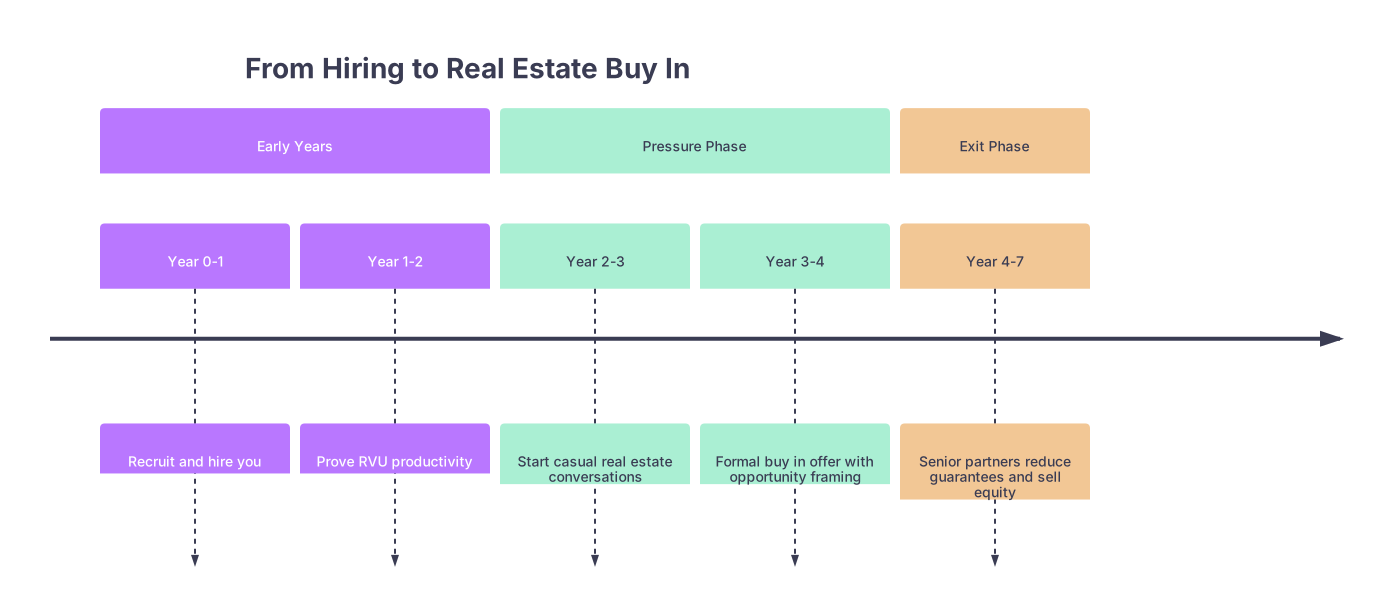
| Period | Event |
|---|---|
| Early Years - Year 0-1 | Recruit and hire you |
| Early Years - Year 1-2 | Prove RVU productivity |
| Pressure Phase - Year 2-3 | Start casual real estate conversations |
| Pressure Phase - Year 3-4 | Formal buy in offer with opportunity framing |
| Exit Phase - Year 4-7 | Senior partners reduce guarantees and sell equity |