
Last week, a PGY-2 emailed me at 1:13 a.m. from the call room. She’d just read some “If you’re not investing by 25 you’re doomed” thread and was spiraling. Her exact words: “I’m 29, drowning in residency, and can’t afford to invest. Did I already screw up the rest of my financial life?”
If that sounds uncomfortably familiar… yeah, you’re not the only one lying awake doing compound interest math in your head instead of sleeping.
The Fear: “If I Start Late, I’m Done… Right?”
Let me just say the scary thought out loud:
“I won’t be able to invest during residency. Everybody says start early or you’ll never catch up. I’m going to be the 55‑year‑old attending with no retirement, still paying loans, watching my colleagues coast.”
That fear usually has a few ingredients:
- You’ve seen those charts: “If you start at 22 vs 32, you’ll have millions less.”
- You’re looking at a resident paycheck that barely covers rent, food, and maybe laundry.
- You’ve got 200–400k of loans hanging over you like a storm cloud.
- Every “finance for doctors” blog seems written by a unicorn who had no debt and maxed out a Roth at 19.
So it’s very easy to think: “If I can’t invest until after residency, what’s the point? The compounding window is gone.”
I’m going to be blunt: that narrative is exaggerated, and in some cases, just wrong for physicians.
Does starting earlier help? Yes. Obviously. But is starting after residency some kind of death sentence for your financial future? No. Not even close.
Let’s walk through this with real numbers. Not vibes. Not Twitter fear-mongering.
What “Catching Up” Actually Looks Like For Doctors
Here’s the thing no one on Instagram likes to admit: doctors have a weird financial life. Late start, heavy debt, but a very high and very stable income later.
That changes the math completely.
Let’s compare two people:
- Early Investor: starts at 25 with a modest income, invests for 40 years.
- Doctor: can’t invest until 32 (after residency/fellowship), but then has attending money and can invest a lot more per year.
Ignore your feelings for a second. Look at the numbers.
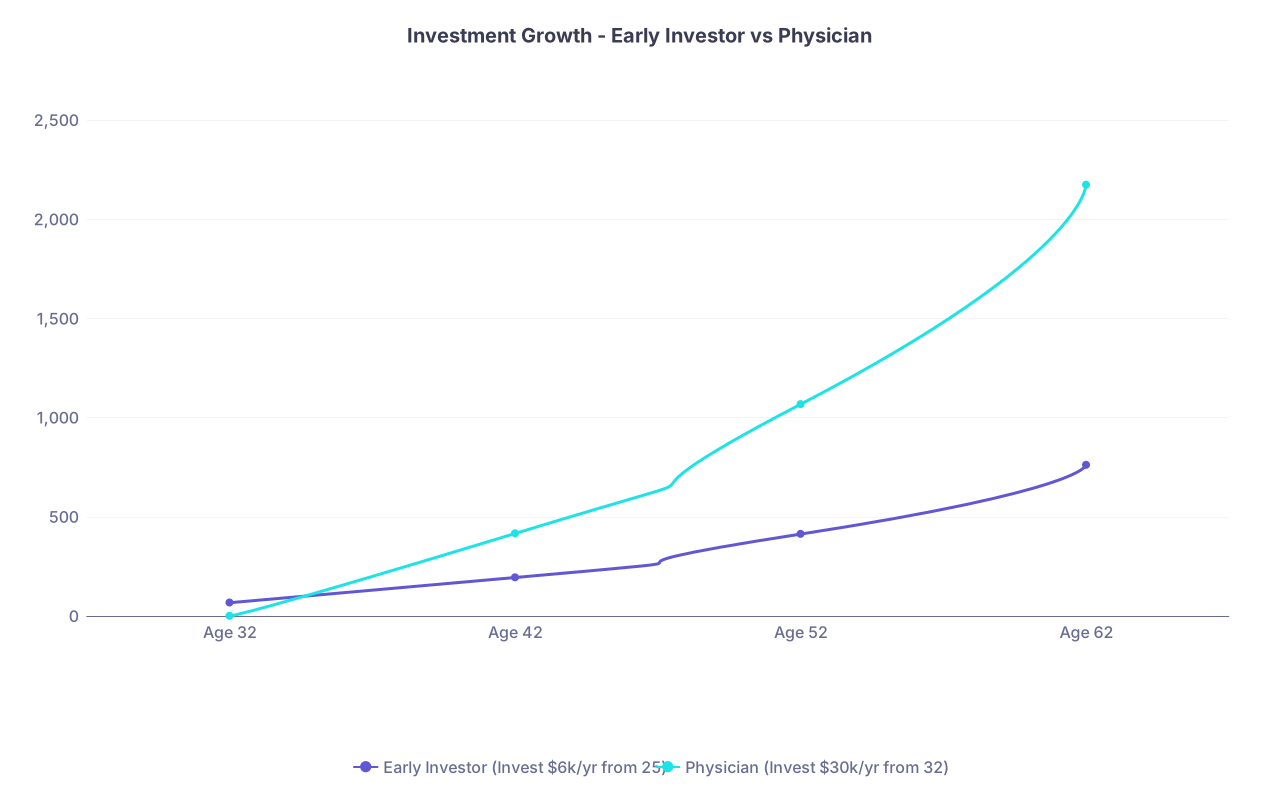
| Category | Early Investor (Invest $6k/yr from 25) | Physician (Invest $30k/yr from 32) |
|---|---|---|
| Age 32 | 67 | 0 |
| Age 42 | 194 | 416 |
| Age 52 | 413 | 1067 |
| Age 62 | 761 | 2173 |
Assumptions:
- 7% annual return
- Early Investor: $6,000/year from age 25 to 65
- Physician: $30,000/year from age 32 to 65 (roughly 15–20% of a typical attending income)
By 62, the “late” doctor crushes the early investor. Why?
Because contribution size beats starting a few years earlier. A resident scraping together $100/month just can’t compete with an attending comfortably investing $2,000–3,000/month.
The point isn’t “don’t invest early.” The point is: not being able to invest during residency is not fatal if you’re willing to be intentional once you’re earning attending money.
You are playing a different game than your non‑medical friends. Stop comparing your 28‑year‑old resident self to a 28‑year‑old engineer maxing a 401k with no debt. Compare your 40‑year‑old attending self to that same engineer, and the picture flips.
Your Real Constraints During Residency (You’re Not Imagining It)
Let’s be honest: the reason you’re not investing right now isn’t because you’re lazy or “behind.” It’s because your life is structurally insane.
Your reality probably looks like:
- 60–80 hour weeks
- 55–75k pretax salary
- HCOL city because that’s where the hospital is
- Loan payments (or at least the threat of them)
- Rotations that destroy your ability to plan anything, including a budget
The common advice—“Just invest something, even $50/month!”—feels like a guilt trip when you’re choosing between Uber home vs waiting 30 minutes for the bus post-call.
So here’s my take, and some people won’t like it:
If the only way you can “invest during residency” is by underfeeding your body, living in unsafe housing, or adding high‑interest credit card debt? Then you should not be investing right now.
Survival first. Basic stability second. Investing comes after that.
Residents aren’t failing at finance. The system is failing residents. Don’t let some random Reddit thread convince you that you’re irresponsible because you’re not buying VTSAX in between codes.
What Actually Matters More Than Investing During Residency
If you truly can’t invest until after training, here’s what does move the needle while you’re still in the trenches.
1. Not Digging a Deeper Hole
This is the unsexy one, but it matters more than you think.
Things that quietly wreck future-you:
- 20k+ of credit card debt accumulated over training
- Car loans at stupid interest rates for cars you don’t need
- Lifestyle creep you can’t reverse (luxury apartment you “get used to,” etc.)
If all you do in residency is:
- Keep high-interest debt minimal or zero
- Avoid lifestyle traps you’ll be stuck with later
- Learn basic money vocabulary (Roth IRA, 401k, PSLF, index fund)
…you have preserved your future ability to catch up.
Think of residency as “damage control mode,” not “wealth building mode.” You’re plugging leaks so your future higher income has somewhere to go besides bailing out past mistakes.
2. Setting Yourself Up For Loan Strategy (Especially PSLF)
If you’re in the US and working at a nonprofit hospital, not investing during residency might even be smart if you’re prioritizing Public Service Loan Forgiveness (PSLF).
What actually matters there:
- Getting on the right income-driven repayment plan
- Certifying employment annually
- Keeping payments as low as legally allowed during residency (which increases the amount forgiven later)
That’s not “doing nothing.” That’s making a six‑figure decision with future-you’s name on it.
Missing PSLF eligibility because you didn’t fill out some forms? That’s way more damaging than not investing $100/month in a Roth for a few years.
3. Protecting Your Future Income (Insurance Stuff)
Another quiet heavy hitter: if disability strikes and you can’t work as a doctor, compounding is dead no matter how early you started.
During residency and early attending years, two boring but critical moves:
- Disability insurance (own-occupation, strong policy, especially before any medical conditions show up)
- Basic term life if someone depends on your income
You worrying about not putting money in an IRA while walking around with zero disability coverage is like stressing about the color of your car while driving without brakes.
The “After Residency” Plan That Actually Lets You Catch Up
Ok, let’s fast forward. You’re an attending. Maybe 32, 35, 38. You didn’t invest a dime during residency. You’re terrified you’re late to the party.
Here’s how you make up for lost time.
Step 1: Decide That the First 3–5 Attending Years Are “Catch-Up” Mode
Not forever. Just at the beginning.
That means:
- No automatic jump to the doctor house + doctor car + doctor vacations.
- Maybe you live like a well‑paid fellow rather than a TV‑doctor for a few years.
- You intentionally channel the gap between “what I could spend” and “what I actually spend” straight into investments and loans.
I’ve seen attendings go from net worth –$300k to +$500k in 5–7 years with this mindset. The math works if you’re willing to not inflate your life immediately.
Step 2: Use Your Big-Gun Tools
You’ll have access to things residents don’t, like:
- 401k / 403b (often with higher limits)
- 457b in some systems
- Backdoor Roth IRA
- HSA if you have a high-deductible plan
- Defined benefit or cash balance plans in some private groups
| Account Type | Annual Limit (Approx) | Tax Benefit |
|---|---|---|
| 401k/403b | $23,000 | Pre-tax or Roth |
| 457b | $23,000 | Pre-tax or Roth |
| Roth IRA | $7,000 | Tax-free growth |
| HSA | $4,150–$8,300 | Triple tax-advantaged |
| Cash Balance | Varies (high) | Pre-tax, for high earners |
That’s easily $50k+ per year of potential investing space, sometimes much more. You don’t have to max every single one right away, but this is why “starting late” as a doctor is not the same as starting late at a normal salary.
Step 3: Aim for a Savings Rate, Not a Magic Number
Forget “I didn’t start at 25, so I have to save $X million by 65.” That thinking paralyzes people.
Instead, focus on this question: “What percent of my gross income can I consistently invest?”
Rough rules of thumb if you’re starting around:
- Age 30–35: Invest 20% of gross and you’re probably fine.
- Age 35–40: 25–30% is more realistic to fully “catch up.”
- Age 40–45: You may need 30%+, but again — physician incomes make that possible if lifestyle is controlled.
The earlier in attending life you crank this up, the less painful it is later.
Step 4: Automate Like a Maniac
You’re not going to turn into a budgeting wizard magically when you sign an attending contract. You’ll be just as tired, maybe more responsible, and still very capable of ignoring money out of stress.
So:
- Automate contributions straight from your paycheck to 401k/403b.
- Auto‑transfer to taxable or Roth on payday.
- Treat this like another bill, not a “if there’s anything left” decision.
“Catching up” is 80% automated systems, 20% willpower.
Worst-Case Scenarios (And Why They’re Still Not As Bad As Your Brain Thinks)
Let’s lean into your nightmares for a second.
Scenario A: You Don’t Start Until 40
You do residency, fellowship, then a few years of “I deserve this” spending. No investing. Then at 40, you panic.
Is it ideal? No. Is it over? Also no.
Even then, if you invest, say, $50k/year from 40 to 65 at 7%:
- At 65: ~2.7 million
- At 67–70: more, obviously
Is your retirement as cushy as if you started at 30? Probably not. Are you broke and destitute? Also no.
Scenario B: You Start at 35 But “Only” Manage 15–20% Savings
Let’s say you make 350k, save 20% (~70k/year) from 35–65 at 7%:
- That gets you in the 4–5 million ballpark.
Again, not a tragedy. And yes, that assumes you keep at it. But that’s the point: your future is built on the next 30 years of choices, not the last 5.
Scenario C: Disability, Job Change, Life Messiness
Fine, let’s go dark. You get partially disabled at 50. Your income drops. Markets have a bad decade. All the scary things.
The safeguards here are:
- Having some stash built up from those strong earning years
- Protecting your income with disability insurance
- Living below your means enough that you can adjust
You can’t bulletproof everything. But the worst‑case “I never get to retire because I didn’t invest as a resident” story? That’s not how this works.
The people who end up screwed are usually the ones who:
- Inflate lifestyle instantly as attendings
- Never save more than 5–10% of income even in peak years
- Ignore loans and let them balloon
- Never learn the basics and outsource everything mentally
That’s not you—because you’re literally here worrying about this.
A Simple Mental Reframe (So You Can Sleep Tonight)
You’re not behind.
You’re in a delayed‑start, high‑power game.
Your “investment career” doesn’t really start until:
- You have a stable attending income
- You’ve chosen a loan strategy
- You’ve decided to delay full lifestyle inflation
If you truly can’t invest a cent until after residency, your actual job right now is:
- Don’t blow yourself up with debt.
- Don’t miss big structural opportunities (PSLF, disability insurance).
- Decide, now, that you’ll use your first 3–5 attending years to be aggressive about saving.
That’s it. You don’t need a Robinhood account in the call room to be “on track.”
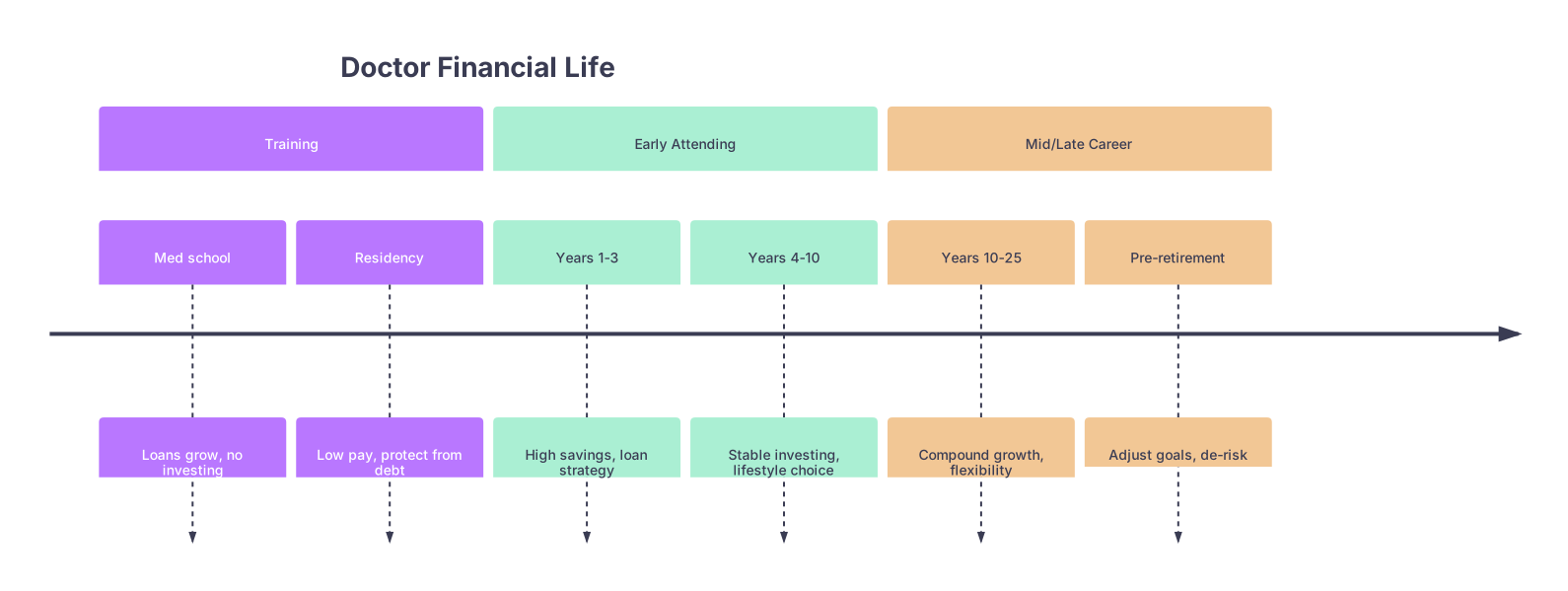
| Period | Event |
|---|---|
| Training - Med school | Loans grow, no investing |
| Training - Residency | Low pay, protect from debt |
| Early Attending - Years 1-3 | High savings, loan strategy |
| Early Attending - Years 4-10 | Stable investing, lifestyle choice |
| Mid/Late Career - Years 10-25 | Compound growth, flexibility |
| Mid/Late Career - Pre-retirement | Adjust goals, de-risk |

FAQs
1. Should I force myself to invest a tiny amount during residency just to “start”?
If you can do it without using credit cards, skipping essentials, or stressing constantly, sure, it’s fine. But $50–100/month for a few years is not going to make or break you as a future attending. It’s a nice-to-have, not a must-have. Don’t torture yourself to check a psychological box.
2. Is it smarter to pay loans or invest once I’m an attending?
Depends on your loan rate and whether you’re going for PSLF. If you’re on track for PSLF, investing aggressively while making minimum qualifying payments makes sense for many. If your interest rates are high and PSLF isn’t an option, a hybrid approach (some extra to loans, some to investments) is usually better than “all or nothing.” You don’t need it perfectly optimized on day one—just avoid doing nothing.
3. How much should I be saving as an attending if I didn’t invest in residency?
If you start in your early 30s, 20% of gross income is a good baseline. If you’re mid‑30s or later or want more flexibility (earlier retirement, partial retirement, big life goals), 25–30% is safer. The exact number isn’t as important as getting into a consistent, automated habit quickly.
4. What if I genuinely hate finance and just want someone else to deal with it?
You can get help, but you still need basic literacy so you don’t get exploited. Learn just enough to: recognize conflicts of interest, understand what an index fund is, and tell if you’re being sold expensive junk. If you hire an advisor, look for fee‑only, fiduciary planners who charge flat or hourly fees—not commission-based product pushers.
5. I’m already an attending and haven’t started investing. Is it too late?
No. It’s uncomfortable, but not too late. The worst thing you can do now is avoid it out of shame. Start with: knowing your net worth (even if it’s deeply negative), picking a savings rate you can maintain, and opening/using your available retirement accounts. Your past delay matters far less than what you do in the next 5–10 years.
Key takeaways:
- Not investing during residency is not a life-ruining mistake for a future attending.
- Your power move is using your early attending years intentionally—high savings, controlled lifestyle, clear loan strategy.
- Worry less about when you started and more about how consistently and aggressively you’ll invest once you finally have the income to do it.