
You are in the workroom at 3:15 p.m. An upper-level just asked, “So what are you thinking for residency?” You mumbled something about “quality of life” and “probably one of the less competitive specialties.” Now you are on your phone, between pages, trying to answer the real question:
If you pick a so‑called “least competitive” specialty, what does your actual day‑to‑day life look like? How bad is call? What does a “typical” week really mean in family medicine vs psych vs peds vs neurology vs path vs PM&R?
Let me break this down the way residents talk about it when applicants are not in the room.
We will focus on commonly lower‑competition fields in the U.S. (varies slightly by year/program, but this is the general tier):
- Family Medicine
- Internal Medicine (categorical, non-elite programs)
- Pediatrics
- Psychiatry
- Pathology
- Physical Medicine & Rehabilitation (PM&R)
- Neurology
I am not going to give you brochure-speak. I am going to give you how the call and workload actually feel during residency – patterns, rotations, and “this is what your phone will be doing at 2 a.m.”
1. Ground Rules: How Call Really Works Now
Before specialty specifics, a quick reality check.
Most residencies now are some mix of:
- Traditional in-house 24‑hour (or 24+4) call
- Night float systems (1–2 weeks at a time of nights)
- Home call (primary or backup – matters a lot)
- Shift-based schedules (ED, psych emergency, some inpatient services)
And everyone lives under the ACGME work-hour cap: 80 hours/week averaged over 4 weeks; max shift length 24 hours of direct care (with 4 “transition” hours tacked on).
Two things students consistently misunderstand:
Low competition does not mean low workload in residency.
Family med at a busy county hospital can run you just as hard as a mid-tier surgery program, just with different types of pain. Volume, social complexity, and floor work can be brutal.Lifestyle differentiation is much more in attending life than in residency.
During residency, accreditation and service needs dictate a lot. Yes, psych and path are usually better. But a malignant medicine program can be worse than a chill general surgery program. Local culture matters.
So I will give you typical patterns, but understand: specific programs can be major outliers.
2. Family Medicine: Broad, Busy, and Often Undersupported
Family medicine is “low competition” on paper. Not because it is easy, but because reimbursement and prestige are terrible compared to the responsibility and scope.
Typical Call Structure
Most FM residencies look something like this:
- Intern year heavy inpatient + OB
- Mix of:
- Inpatient FM service (sometimes co-run with hospitalist group)
- OB nights and L&D call
- ICU month or two (often alongside internal medicine residents)
- ED rotations (shift-based)
- Clinic blocks (mostly day shifts, some late evenings)
Inpatient and OB are where the call hurts.
Common structure:
- In-house call q4–q6 on inpatient blocks
- Night float 1–2 weeks at a time on inpatient
- OB: 12–24‑hour L&D shifts, mix of days/nights; some programs require a certain number of overnight OB shifts per month
During clinic months, call may shift to:
- Home call for continuity clinic patients (triage calls, refills, urgent issues) – often filtered by a nurse line
- Some programs: one weekend day per month of “Saturday clinic” or urgent care with 8–12‑hour shifts
Actual Workload Feel
Family med inpatient at a medium-volume community program:
- Hours: 60–80/week on inpatient months
- Admissions: 4–10 per 24 hours for an intern, depending on cap and census
- Nights: You will be called for:
- Chest pain rule-outs
- DKA, COPD exacerbations, CHF volume overload
- Social crises (no place to go, cannot afford meds)
- Cross-cover calls about pain meds, agitation, hypotension
OB rotations are variable. At programs that still push strong maternity training, nights can be intense: you may be catching several babies overnight plus dealing with triage, preeclampsia, and postpartum hemorrhage at 3 a.m. At weaker OB sites, nights can be boring until they are not, with long stretches of nothing and then a shoulder dystocia.
Clinic months can feel mentally exhausting:
- 20–25 patients/day, 15–20 minute visits
- Refill requests, in-basket messages, paperwork spilling past 5 p.m.
- Call: rare true emergencies, but lots of constant low-grade work
Big Picture for Family Med
- Call intensity: Moderate to high, especially inpatient + OB months.
- Work pattern: Front-loaded in PGY‑1, mellows gradually.
- Upside: Attending life can be shaped into decent hours if you avoid inpatient-heavy jobs and OB.
- Downside: Residency can be as tiring as any major field, and the compensation at the end is not generous compared to effort.
3. Internal Medicine (Non-elite): Variable, Often Grueling Early
Internal medicine sits in an odd place: not “hyper-competitive” except at top-tier academic programs, but certainly not bottom of the barrel. The mismatch is that many IM residents do not actually want inpatient-heavy careers, yet IM residency is still very inpatient-centered.
Call and Night Systems
Most IM programs in 2020s are night-float based, with some holdover of 24‑hour call systems.
A very common pattern:
Day inpatient rotations:
- 6 days/week (one golden weekend every 4–6 weeks)
- 10–13-hour days
- No 24‑hour in-house call, but “long call” days where you admit until 7–9 p.m.
Night float:
- 1–4 weeks at a time
- 6 or 7 nights/week, usually ~12 hours (e.g., 7p–7a)
- Cross-cover on 60–90 patients, plus 3–8 admissions per night
- PGY‑2 or PGY‑3 may supervise PGY‑1s or NPs/PAs
ICU:
- Often more intense: 24‑hour shifts still present in some places, or dedicated night shifts
- Admissions, vents, codes, procedures
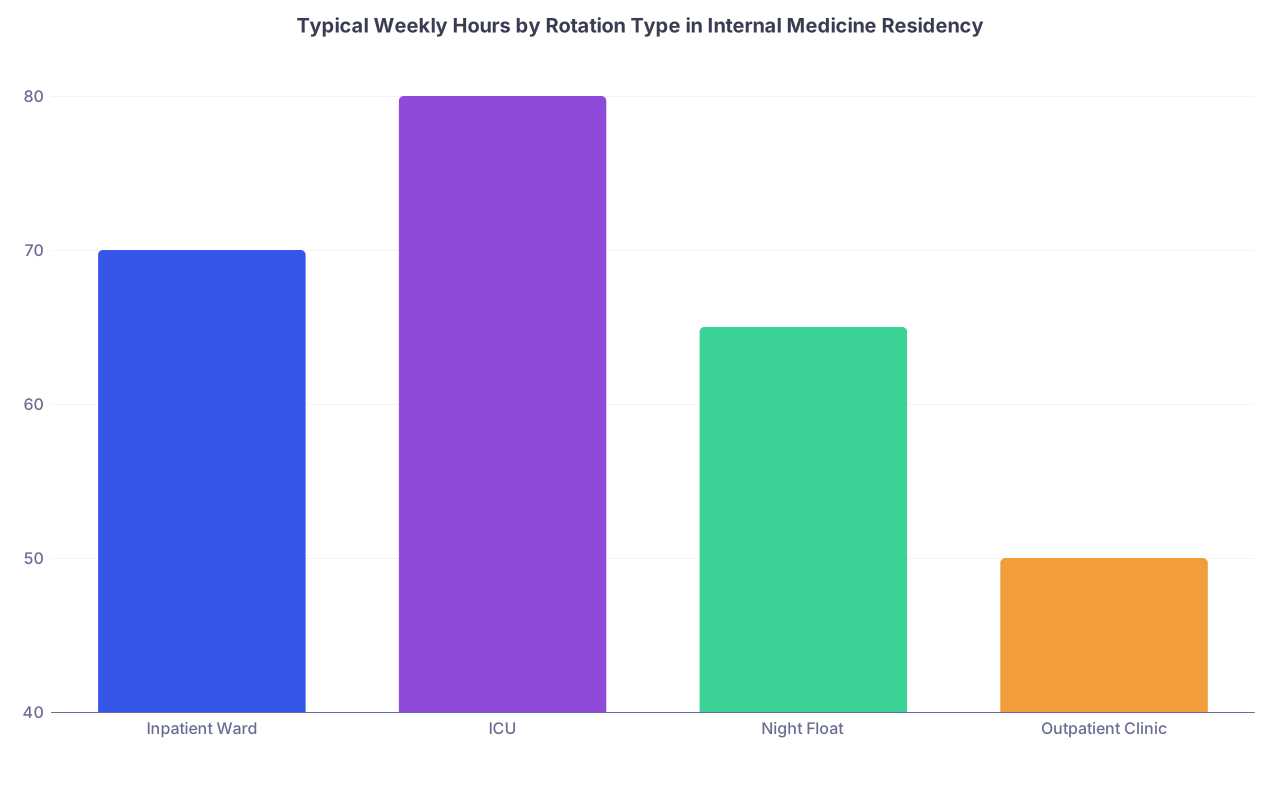
| Category | Value |
|---|---|
| Inpatient Ward | 70 |
| ICU | 80 |
| Night Float | 65 |
| Outpatient Clinic | 50 |
Actual Workload Feel
Intern year IM at a mid-tier academic program commonly feels like:
- Ward months: 60–80 hours/week, heavy scut and note writing
- ICU months: 70–80+ hours, emotionally and cognitively draining
- Clinic months: 45–55 hours, but with very little true “call”; usually home-work (notes, in-basket)
Nights are rough. You are doing:
- Cross-cover pages: pain, hypotension, hypoxia, “patient pulled out IV,” acute delirium, code blues
- Admissions at 2–4 a.m.: pneumonia, CHF, GI bleed, DKA, sepsis
- Lots of talking to ED, hospitalists, and families overnight
Compared to Other “Low-Competition” Fields
IM is, on average, more intense on call than psych, path, PM&R, most peds programs, and most FM programs without heavy OB. It is about comparable to the worst FM and peds inpatient programs.
4. Pediatrics: “Soft” Image, Real Hours
Pediatrics is relatively low competition across many programs. People think kids = easier. The reality is: lower pay, high emotional load, and solid hours.
Call and Shifts
Peds residents usually rotate through:
- General inpatient pediatrics (wards)
- NICU
- PICU
- Newborn nursery
- ED / urgent care
- Subspecialty inpatient and outpatient
- Continuity clinic
Call setups:
- Wards: Combination of day teams and night float; some programs still have 24‑hour calls q4–q6 on weekend days.
- NICU/PICU: Shift-based or 24‑hour call, depending on institution; these blocks are usually the hardest.
- ED/urgent care: Shift-based, including plenty of evenings and weekends.
How It Feels
General inpatient pediatrics:
- 10–12 hour days, 6 days/week on many services
- Census usually smaller per resident than adult IM, but every kid has a parent (or 2–3) with intense questions and anxieties
- Night float: 12-hour nights with cross-cover on bronchiolitis, asthma, fever in infants, sickle cell crises, etc.
NICU/PICU:
- High stress, even if volume is not insane
- If call is q4 24‑hour, your life is: go home, sleep, come back. Repeat.
- Long family meetings, high stakes decisions, codes that are emotionally rough
Clinic and outpatient months are significantly lighter: close to “normal” working hours, aside from occasional late clinics.
| Rotation Type | Typical Hours/Week | Call Type |
|---|---|---|
| Wards | 60–75 | Night float / q4-6 |
| NICU | 70–80 | 24-hr or shifts |
| PICU | 70–80 | 24-hr or shifts |
| Outpatient/Clinic | 45–55 | Minimal / home call |
Net Assessment for Pediatrics
- Call intensity: Moderate to high on NICU/PICU; moderate on wards; low outpatient.
- Work pattern: Front-loaded PGY‑1/2, improves PGY‑3 as more electives.
- Lifestyle vs competition: Honestly not great; you work hard for lower compensation long-term. You pick peds because you like kids and the culture, not because you want pure lifestyle.
5. Psychiatry: The “Lifestyle” Field That Actually Delivers (Mostly)
Psychiatry is one of the few less competitive fields where the stereotype about lifestyle is fairly accurate, especially past PGY‑1.
Call Setup
Psych residencies are highly variable, but the pattern tends to be:
PGY‑1: Split year – several months on internal medicine and/or neurology, several months on inpatient psych.
- On medicine months, your call looks like IM: nights, wards, etc.
- On psych months, call is a mix of:
- In-house overnight on psych units / psych ED
- Evening/weekend shifts for consult-liaison or ED coverage
PGY‑2: Heavy inpatient psych, consults, ER psych.
- Night float or q4–q6 psych call, sometimes paired with home backup attending.
PGY‑3 and PGY‑4: Mostly outpatient; call lightens considerably.
- One weekend of call per month, sometimes less
- Many programs: home call only with telepsychiatry or phone consults
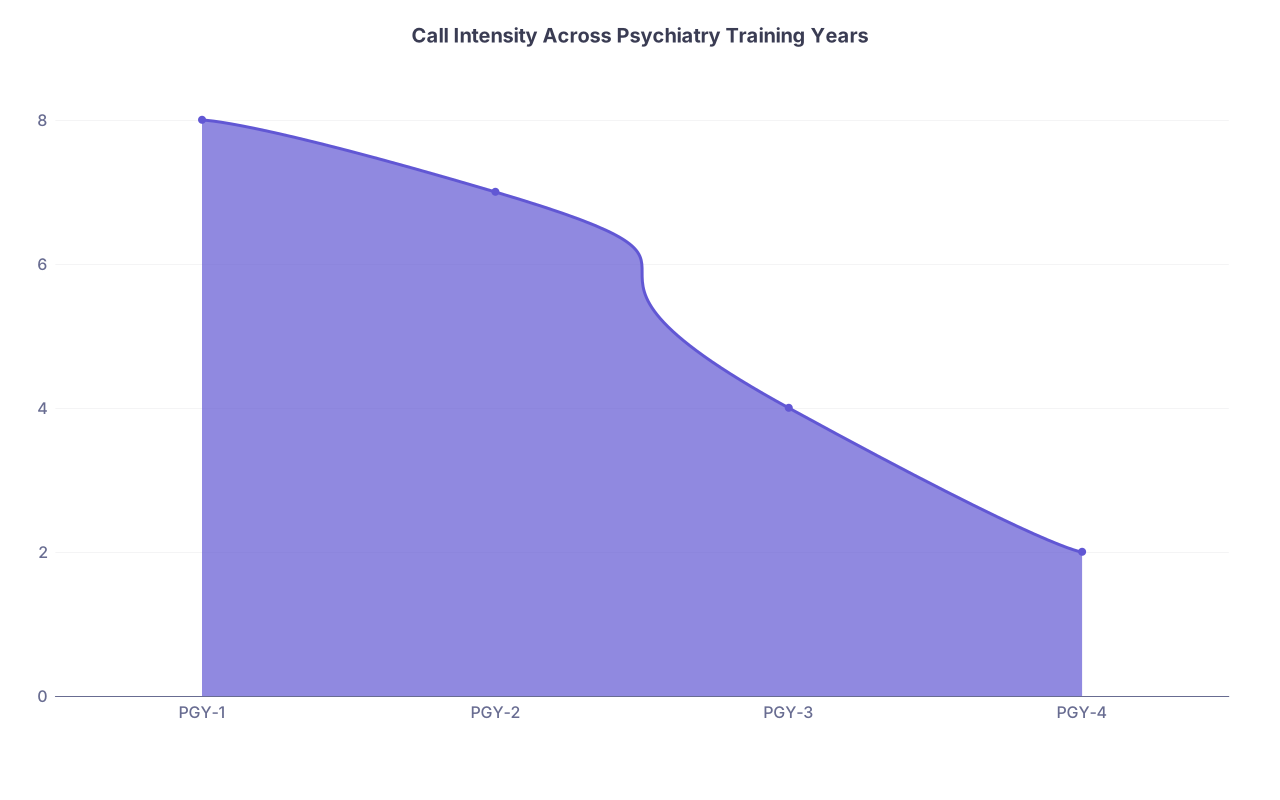
| Category | Value |
|---|---|
| PGY-1 | 8 |
| PGY-2 | 7 |
| PGY-3 | 4 |
| PGY-4 | 2 |
(Think of “intensity” here as a rough relative score: more nights, higher stress, more in-house time.)
What Nights Are Actually Like
On psychiatry nights, your problems are different:
- New psych admissions from ED
- Acute agitation, restraints, seclusion decisions
- Management of suicidal ideation, self-harm attempts
- Capacity evaluations in the ED or medical floors
- Cross-cover issues: insomnia, agitation, worsening psychosis
Compared to surgical/IM nights:
- You are much less likely to be dealing with codes, intubations, or crashing vital signs.
- You are much more likely to be dealing with unpredictable behavior, staff safety issues, and legal/ethical constraints (involuntary holds, police involvement).
Hours-wise, psych nights are often similar on paper to IM nights (12 hours or 24 hours), but the intensity per unit time is usually lower, and many nights actually have genuine downtime to read or rest.
Outpatient years (PGY‑3/4) are where psych pulls away from the pack. Think:
- 8–5 clinics, maybe one late evening
- 1 weekend of call/month or less
- Many calls are home call with relatively few true emergencies
Call Reality for Psychiatry
- PGY‑1: Could be as rough as IM/FM because of off-service months.
- PGY‑2: Some intense psych nights, but not physically punishing.
- PGY‑3/4: Among the lightest call loads in all of residency if you pick the right program.
6. Pathology: The Hidden Lifestyle Giant
Pathology is consistently low competition and consistently misunderstood. For call and workload, it is basically the opposite of surgery.
Work Hours and Call
Most anatomic/clinical pathology (AP/CP) residencies look like:
Daytime:
- 7:30–5:30 or 8–5, depending on service
- Mix of surgical pathology sign-out, frozen sections, lab medicine, autopsy, cytology, etc.
Call:
- Almost always home call, not in-house
- Frequency: anywhere from q3–q7 nights for short blocks, or 1 week of home call every 1–2 months
- Typical volume overnight: low; you are not being called every 10 minutes
Calls are usually for:
- Transfusion medicine (massive transfusion protocol decisions, compatibility issues)
- Critical lab result interpretation
- Frozen section issues after hours
- Occasionally autopsy issues or unusual lab problems
There are very few true middle-of-the-night emergencies from a path perspective. You may get zero calls some nights.
Emotional and Cognitive Load
Path is not easy. The learning curve is steep, the responsibility for diagnosis is enormous, and the volume of cases in some programs is very high. But in terms of:
- Physical exhaustion
- Night frequency
- Constant paging
…it is simply better than almost all inpatient-heavy specialties.
You will have some later nights before sign-out deadlines and during heavy grossing days, but 70–80 hour weeks are unusual in decent pathology programs. More common: 45–60 hours.
Pathology Residency Lifestyle Verdict
If you want a genuinely more predictable schedule with minimal brutal call, pathology delivers that more reliably than most other “least competitive” specialties.
7. PM&R (Physiatry): Moderate Hours, High Variability by Program
Physical Medicine & Rehabilitation (PM&R) is not ultra-competitive at most places, but spots at top programs (e.g., Kessler, Spaulding, RIC/Shirley Ryan) are more sought after. Lifestyle is generally good, but not zero call.
Structure and Call
PM&R residencies usually involve:
- Inpatient rehab units (stroke, spinal cord injury, TBI, general rehab)
- Consult services in acute hospitals
- Outpatient MSK, sports, pain, EMG clinics
- Off-service months early on (medicine, neurology, ortho, maybe ICU)
Call patterns:
Inpatient rehab:
- Home call at many programs; you carry a pager at night and may rarely have to come in
- At some safety-net/university programs: in-house call q4–q6, but still generally lighter than IM or surgery nights
- Nights: spasticity issues, pain, falls, autonomic dysreflexia (SCI), neuro status changes
Consult rotations:
- Usually no distinct overnight call beyond general PM&R schedule; mainly day work.
Off-service:
- Your call is whatever that department uses (medicine nights, etc.), which can temporarily worsen your life.
Average weekly hours are often:
- 55–65 on heavy inpatient months
- 45–55 on outpatient months
Unique Features
The intensity depends heavily on:
- Whether your inpatient unit is in a free-standing rehab hospital vs embedded in a big tertiary center
- Patient mix: SCI/TBI with medically complex patients can generate more real overnight calls; ortho rehab less so
In many programs, PM&R call is described by residents as “annoying but not soul-crushing.” Paging is intermittent; truly emergent calls are not every night.
8. Neurology: Better Than IM, Worse Than Psych/Pathology
Neurology has crept up in competitiveness at top programs, but across the board it is still less competitive than dermatology, radiology, ortho, etc. Lifestyle is a mixed bag.
Residency Setup
Most categorical neurology programs:
- PGY‑1: Internal medicine intern year (your call = IM call)
- PGY‑2–4: Neurology core years
Rotations include:
- Inpatient general neurology service
- Stroke service
- Epilepsy monitoring unit
- Neuro ICU (at some programs, shared with critical care)
- Consults (ward and ED)
- Outpatient clinics (general and subspecialty)
Call patterns:
- PGY‑1: See the IM section. It is IM.
- PGY‑2: This is the roughest neurology year.
- Night float or q4–q6 call for stroke / neuro consults
- Lots of ED work: stroke codes, seizure evaluation, acute weakness, headaches, altered mental status
- PGY‑3/4: More electives and outpatient; call tends to lighten some, but stroke and ICU coverage persists.
How Neurology Call Feels
Neurology nights are disproportionately:
- Stroke codes every few hours at busy centers
- “Change in mental status” on every possible floor
- “New seizure” or “first-time seizure”
- Headache r/o SAH, dizziness, neuro deficits where everyone is anxious
You are fielding pages from ED, ICU, hospitalists, sometimes outside hospitals. Decision-making can be high-stakes, especially around tPA / thrombectomy and ICU transfers.
Compared to IM nights:
- Fewer patients under your direct cross-cover, but higher intensity per consult; more acute decision-making.
- More phone calls and tele-consults in some systems.
Work hour wise, neurology often lines up with IM: 60–80 on bad months, 50–60 on better months, mid-40s on outpatient blocks.
9. Comparing the “Least Competitive” Fields Head-to-Head
Let us distill the call + workload experience across these specialties in residency. Rough simplification, but directionally accurate.
| Specialty | Call Intensity (Residency) | Typical Call Type | Night Burden Trend PGY-1 → PGY-3/4 |
|---|---|---|---|
| Family Med | Moderate–High | In-house + some home | High → Moderate |
| IM | High | In-house / night float | High → High-Moderate |
| Peds | Moderate–High | In-house / night float | High → Moderate |
| Psych | Low–Moderate | In-house early, home late | Moderate → Low |
| Pathology | Low | Mostly home call | Low → Very Low |
| PM&R | Low–Moderate | Mostly home, some in-house | Moderate → Low-Moderate |
| Neurology | Moderate–High | In-house / night float | High → Moderate |
And a quick mental model:
If you want truly lighter call in residency among “less competitive” fields, the better bets are:
- Psychiatry
- Pathology
- Many PM&R programs
If you choose:
- Family medicine
- Pediatrics
- Internal medicine
- Neurology
…you are signing up for substantial inpatient and night work, especially PGY‑1 and PGY‑2.
10. How to Interrogate Call Schedules When You Interview
The smartest applicants do not just ask, “What is the call schedule like?” Program directors will just give you the sanitized script.
You ask:
- “On a typical inpatient month, what time do interns/residents actually leave?”
- “How often do residents hit the 80-hour cap?”
- “How many 24‑hour calls do interns have per month, and in which years do they go away?”
- “Is ICU call in-house or home, and is it night float or q4?”
- “On path/PM&R/psych home call – realistically, how many nights per week do you get called and how often do you have to come in?”
- “What changed after the last ACGME site visit about work hours?” (If they look nervous, that is data.)
Also listen to the unscripted asides:
- “We are pretty busy on nights, but it is manageable.” → Usually means very busy.
- “We are working on limiting documentation burden.” → Everyone is drowning in notes.
- “You will learn to be efficient.” → Translation: we rely on residents to do a lot of scut to keep the place functioning.
11. Pulling It Together: Matching Specialty to Your Tolerance
If your main question is “How painful is call going to be if I pick a ‘low competition’ field?” here is the blunt summary.
If you want the lightest call in residency itself among common low-competition specialties:
- Pathology
- Psychiatry (after PGY‑1)
- Many PM&R programs
If you can tolerate a rougher residency because you care more about broad generalism or outpatient long-term:
- Family medicine
- Pediatrics
- Internal medicine (non-elite)
If you are attracted to brains and acute decision-making and can handle real nights and consult chaos:
- Neurology
The trap is thinking “low competition = chill residency.” That is wrong. Competition tracks perceived prestige and pay far more than call schedule. Some of the hardest-working residents I have seen are in community family med and peds programs where they are the safety-net for an entire region.
You should be picking based on:
- Whether you enjoy the patient population and pathology enough to tolerate the worst call rotations
- Your long-term lifestyle goals as an attending, which diverge much more sharply between these fields than the residency years do
- How much overnight chaos you can genuinely handle without burning out or becoming dangerous
Key Takeaways
- Among the “least competitive specialties,” psychiatry, pathology, and many PM&R programs offer genuinely lighter and more predictable call during residency; IM, FM, peds, and neurology do not.
- Residency workload is front-loaded in almost every field: PGY‑1 and PGY‑2 are where call and nights are worst, even in the “lifestyle” specialties.
- Do not rely on labels like “low competition” to predict your life. Ask granular, uncomfortable questions about hours, nights, and true call volume at each individual program.