
Why do so many students quietly believe this: “If I pick a less competitive specialty, I’ll automatically get better hours and more work–life balance”?
Let me ruin that fantasy up front: competitiveness and lifestyle are not the same variable. They intersect sometimes. But they don’t map neatly, and if you treat “less competitive” as a lifestyle shortcut, you’re setting yourself up to be disappointed and possibly miserable.
Let’s go through what the data actually show instead of what Reddit repeats.
The “Least Competitive = Chill Life” Myth
The usual narrative in MS2/MS3 hallways goes something like this:
- Derm, plastics, ortho = impossible to match but amazing lifestyle.
- IM, FM, psych, peds = “backup” and automatically more chill.
- If you are an “average” applicant, pick something less competitive and you’ll have evenings free and maybe a hobby.
Reality check: lifestyle is driven more by practice setting, call structure, and local workforce supply/demand than by NRMP competitiveness.
Look at the NRMP’s “Results and Data” reports and AAMC workforce data and you notice three uncomfortable truths:
- Some “least competitive” fields have brutal hours in many settings.
- Some “most competitive” fields have surprisingly controllable lifestyles after training.
- Within a single specialty, lifestyle can swing wildly based on how and where you practice.
Competitiveness is basically a measure of supply vs. demand for residency spots, filtered through Step scores and applicant behavior. It’s not a lifestyle rating.
What Counts as “Least Competitive” – And What Do Their Lives Look Like?
Let’s anchor this with actual categories. Based on recent NRMP data, US MD seniors face relatively lower match competitiveness (higher match rates, more positions per applicant) in fields like:
- Family Medicine (FM)
- Psychiatry
- Pediatrics
- Pathology
- Physical Medicine & Rehabilitation (PM&R)
- Internal Medicine (categorical, not subspecialties)
- Neurology (adult)
Are these “lifestyle specialties” by default? Sometimes. Depends where and how you practice, and what you compare them to.
| Specialty | Relative Match Competitiveness (US MD) | Typical Lifestyle Reputation |
|---|---|---|
| Family Medicine | Low | Mixed (bad in residency, variable after) |
| Psychiatry | Low–Moderate | Often good, but call can be rough |
| Pediatrics | Low–Moderate | Long hours, lower pay, emotionally heavy |
| Pathology | Low–Moderate | Generally good, but RVU and staffing pressure rising |
| PM&R | Moderate | Generally good, clinic-based, some call |
Not an official ranking, but you get the idea. Lower competition to enter does not consistently translate to “easy life” on the other side.
What the Hours Data Actually Show
You’ll hear: “FM and peds work less than surgeons.” Broadly true. But the differences aren’t always as dramatic as people think, and there’s huge internal variation.
Surveys like Medscape’s Physician Lifestyle & Compensation Reports and specialty society surveys paint a more nuanced picture.
Let’s sketch rough weekly work hour ranges for attendings (not residents), from multiple reports over the last few years:

| Category | Value |
|---|---|
| Family Med | 50 |
| Psychiatry | 45 |
| Pediatrics | 50 |
| Pathology | 45 |
| PM&R | 45 |
| Orthopedic Surg | 55 |
| Dermatology | 40 |
You’ll notice two things:
- Some “less competitive” fields like FM and peds are not wildly different from surgical fields in raw hours, especially in under-served areas where demand is high.
- Pathology, psych, PM&R — often less competitive than derm/ortho — can have decent hours, but that’s an on-average statement. Not a guarantee.
FM in an academic clinic with no inpatient responsibility? Could be 40–45 hours, relatively predictable. FM in a rural setting, covering clinic plus inpatient plus OB? You’re looking at 60+ and unpredictable nights. Same specialty, different planet.
Residency vs Attending: Stop Confusing the Two
A big trap: students look at attending lifestyle anecdotes and assume residency reflects that. Wrong.
Residency hours are driven by:
- ACGME caps (80-hour reported limit)
- Service needs (translation: how many residents vs. how many patients)
- Call structure (night float vs. 24h vs. home call)
- Culture of a given program
You can do “least competitive” peds or FM at a malignant program and work just as many hours as gen surg residents down the hall, just with fewer laparotomies. I’ve seen FM residents at community programs do 24h in-house call for unfiltered ED admits, managing ICU-lite, barely sleeping.
On the flip side, I know an ENT resident at a well-staffed program whose actual hours stay in the 60s most weeks. Hard work, yes, but controlled chaos, not constant drowning.
Point: do not pick (or avoid) a specialty based purely on average post-training lifestyle if you haven’t actually looked at resident schedules at the programs you’d consider.
Pay, Power, and “Lifestyle”: The Tradeoff Nobody Likes to Admit
Another ugly truth: part of why some “lifestyle” specialties feel easier is because you can say no. You have negotiating leverage. That usually comes from either:
- Scarce expertise (derm, rads, anesthesia, GI, etc.)
- Control over procedures and revenue streams
- Ability to easily switch practice sites or build niche clinics
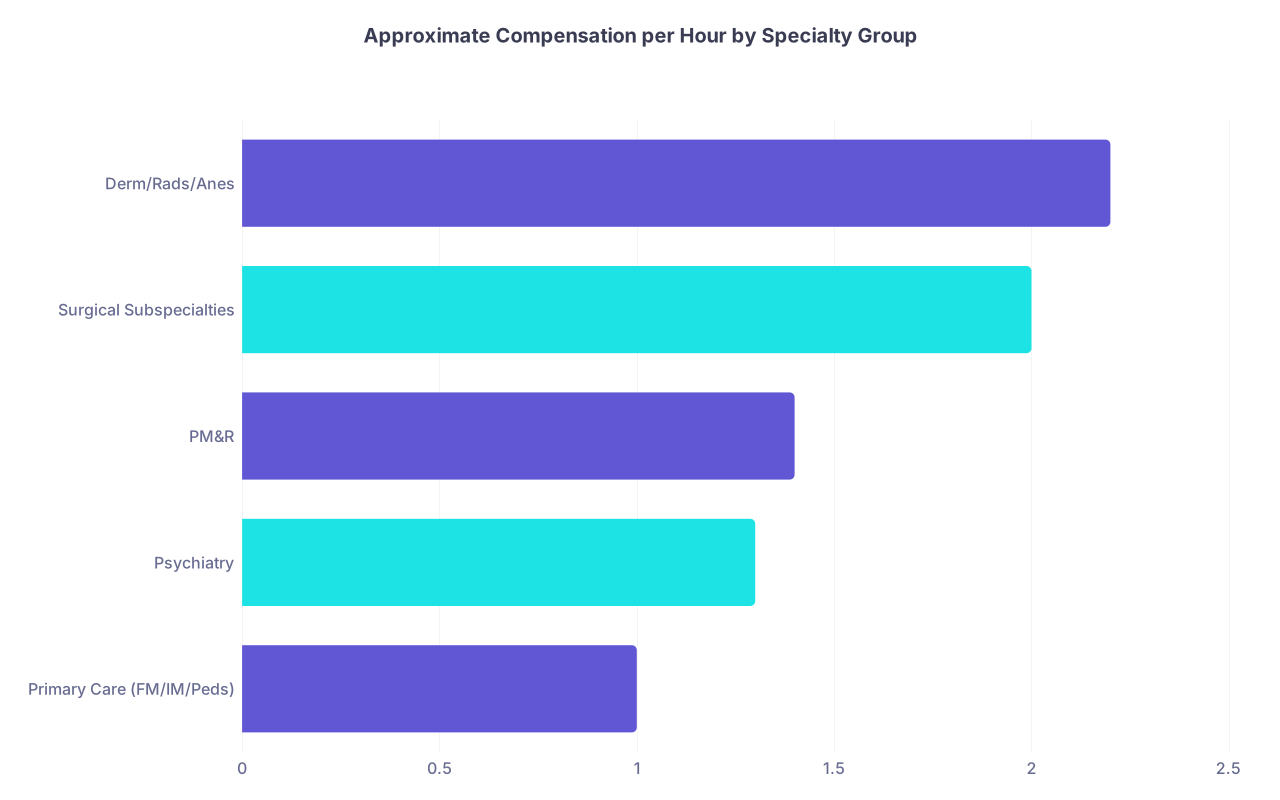
A lot of the “least competitive” specialties are underpaid relative to their workload and responsibility. That’s not my opinion; look at compensation vs. hours.
| Category | Value |
|---|---|
| Primary Care (FM/IM/Peds) | 1 |
| Psychiatry | 1.3 |
| PM&R | 1.4 |
| Surgical Subspecialties | 2 |
| Derm/Rads/Anes | 2.2 |
Indexing primary care as 1. Roughly, you work similar or slightly fewer hours in psych or PM&R, but get somewhat better pay per hour. Surgical subs and lifestyle-competitive fields (derm, rads, anesthesia) tend to pay much more per hour, which gives them more room to cut back sessions or negotiate part-time work without financial panic.
So yes, you might get more flexibility in some highly competitive fields precisely because the market values their procedures or scarcity more.
Least competitive does not mean you gain that leverage automatically. Often the opposite.
Specialty-by-Specialty Reality Check
Let’s quickly run through a few “least competitive = easy life” assumptions and tear them apart.
Family Medicine
Myth: “FM is low-stress and flexible. Great lifestyle backup.”
Reality: Completely dependent on practice setting and region.
- Rural FM with inpatient, nursing home, and possibly OB: high call burden, nights/weekends, and emotionally heavy work with little backup.
- Urban FQHC: high panel complexity, productivity metrics, constant admin burden, burnout risk high.
- Direct primary care or concierge: fewer patients, more time, much better lifestyle — but you’re in a niche that requires business skills and sometimes risk tolerance.
I’ve met FM docs working 70+ hours because they cannot recruit colleagues. “Least competitive” on paper. But in many regions, they’re the most overextended physicians in the system.
Psychiatry
Myth: “Psych is super chill and low hours. Great for work–life balance.”
Reality: Better than average for many, yes. But still highly variable.
Many outpatient psych jobs are 40–45 hours with little to no nights. That’s why interest in psych has skyrocketed.
But:
- Inpatient psych and C/L can involve rough weekends, nights, crises, and assaults.
- Rural or under-resourced systems lean heavily on the few psychiatrists they have.
- Admin, prior auths, and documentation are massive time sinks.
The field is moving toward better lifestyle, but if you walk into a safety-net hospital psych job thinking it’s gentle private practice, you’ll be shocked.
Pediatrics
Myth: “Peds is softer and therefore easier.”
Reality: Lower pay, high emotional load, and not automatically fewer hours.
Peds hospitalists and intensivists work substantial nights/weekends. General peds in busy clinics sees endless volumes, vaccine schedules, worried parents, and often lower reimbursement for similar complexity compared to adult medicine.
It can be meaningful work. But “least competitive = lifestyle” is not how most peds attendings I know would describe their day.
Pathology
Myth: “Path is a hidden lifestyle gem. No patients, no call, good hours.”
Reality: Historically pretty good lifestyle, but the ground is shifting.
- Many pathologists do have stable 40–50 hour weeks and no night shifts (home call at worst).
- But increasing case volumes, understaffing, and RVU pressure are changing that in many systems.
- Subspecialties and academic roles can involve long days in the lab plus tumor boards, teaching, and research.
Better average lifestyle than many direct-care fields? Often yes. A guaranteed “easy life” because it’s less competitive? No.
PM&R
Myth: “PM&R is like ortho-lite with better lifestyle and easier match.”
Reality: Generally reasonable lifestyle, but not a free pass.
PM&R residents I’ve worked with had manageable hours compared to gen surg or OB, but still:
- Inpatient rehab units run 7 days a week; weekend rounding is a thing.
- Call varies wildly: some places home call only, others more intense.
- Outpatient MSK/spine practices can look like any other high-volume clinic.
It’s one of the better “controllable” fields overall, but you can absolutely end up in a sweatshop pain clinic if you are not careful.
The Real Drivers of Lifestyle (That Students Ignore)
If you care about lifestyle — and you should — focus less on “least competitive” and more on these variables:
Inpatient vs Outpatient vs Hybrid
Inpatient-heavy = more nights, weekends, holidays. Outpatient-only = more predictable, but high-volume clinics can be soul-crushing if mismanaged.Call Type and Frequency
In-house nights vs. home call vs. “be available for phone questions.” These are wildly different experiences. Same specialty, different life.Practice Setting
- Academic: more teaching/research/admin, sometimes less pay, sometimes more support.
- Private group: RVU pressure but often better pay; lifestyle varies by group culture.
- Employed by system: corporate metrics, but you can sometimes hide in a big machine if you hit targets.
Region and Workforce
Scarcity = more leverage if you’re in a competitive specialty.
But scarcity for primary care often leads to overwork, not better terms, because systems just dump more on you.Your Boundaries and Risk Tolerance
Physicians who say “no” and are willing to change jobs have better lifestyles. Regardless of specialty. It’s not talked about enough.
When “Least Competitive” Actually Helps Your Life
There is one lifestyle angle where least competitive can secretly help you: it can lower your anxiety and overinvestment in the match itself.
If you’re a solid applicant choosing between:
- Pushing for a hypercompetitive field that demands extreme Step scores, research, and away rotations
- Or a less competitive field you genuinely like that doesn’t require selling your soul for two years
You might have a better life during medical school by not entering an arms race. Less research-for-the-sake-of-research, fewer away rotations, fewer games.
But that’s about the path to residency, not the day-to-day of your eventual career.
How to Actually Evaluate Lifestyle for a Specialty
Skip the folklore. Here’s how to get real intel.
Ask residents and attendings specific, boring questions:
- “What time did you leave this Tuesday?”
- “How many nights did you work last month?”
- “How many weekends did you work in the last 8 weeks?”
Look for variance, not averages.
If one outpatient psych doc works 32 hours and another works 60, same specialty, you know lifestyle is practice-dependent, not specialty-guaranteed.Study job ads the way you study UpToDate.
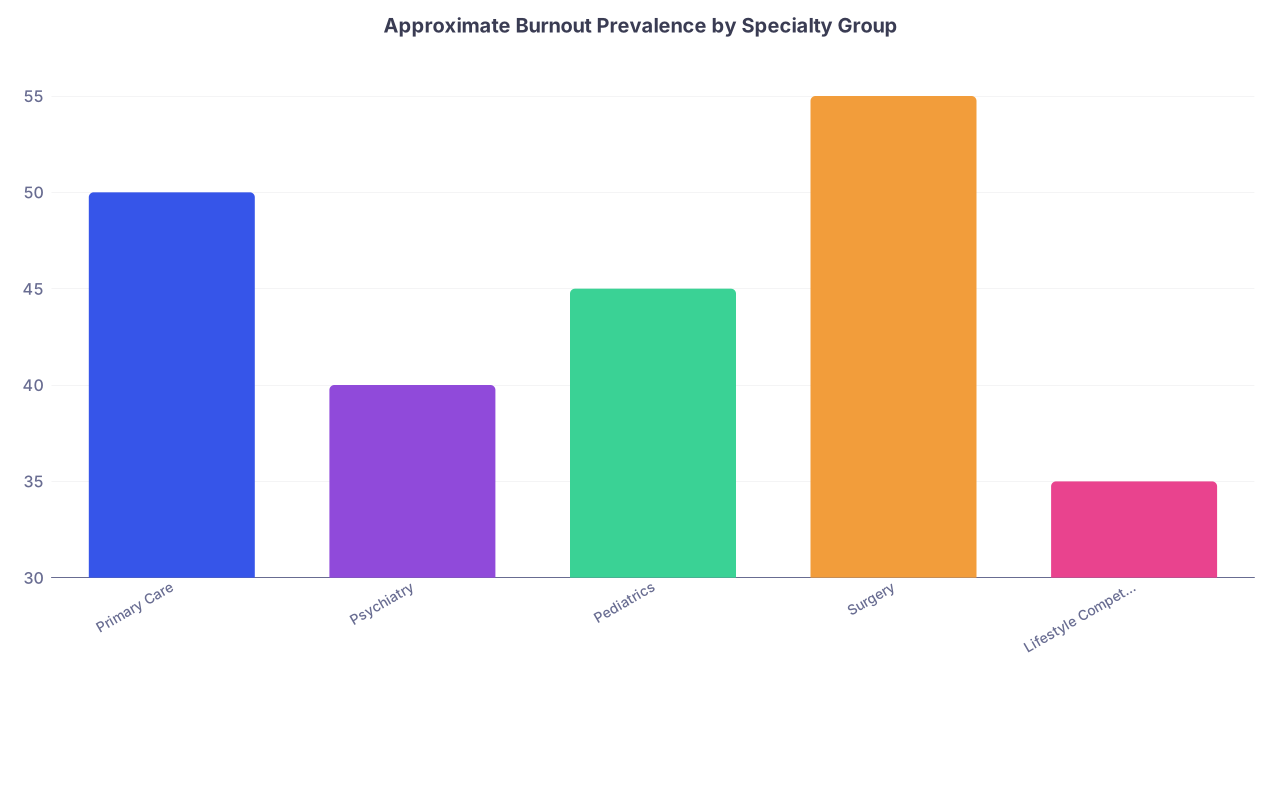
Count call expectations, weekend coverage, panel size, RVU expectations. You’ll learn more about lifestyle from those details than from any NRMP match report.Track burnout and satisfaction data, not just hours.
| Category | Value |
|---|---|
| Primary Care | 50 |
| Psychiatry | 40 |
| Pediatrics | 45 |
| Surgery | 55 |
| Lifestyle Competitive (Derm/Rads/Anes) | 35 |
These are ballpark percentages from multiple studies: note that “less competitive” primary care fields have high burnout, and “highly competitive” lifestyle fields frequently have lower burnout, even when hours are not wildly different.
That should kill the idea that “less competitive = happier.”
One More Myth: “If I Don’t Get Derm, I’ll Be Doomed to a Miserable Life”
No. That’s the other side of the same bad thinking.
You can have a fantastic lifestyle as:
- A hospitalist doing 7-on/7-off and actually taking your 7 off
- A part-time outpatient internist or pediatrician
- A psych doc who caps their patient panel and refuses to overbook
- A PM&R physician in a well-run outpatient practice
- A pathologist in a reasonably staffed group
And you can have a terrible lifestyle in any of those if you ignore red flags and accept every demand.
Competitiveness doesn’t protect you from bad systems. It just might give you better exit options.
Bottom Line: What You Should Take Away
Three things:
Least competitive specialties do not automatically offer better lifestyle. Hours, burnout, and satisfaction are driven by practice setting, call structure, and workplace culture more than NRMP match competitiveness.
Even “lifestyle” fields vary wildly inside the same specialty. Your actual life will depend on the specific job you take and how willing you are to set boundaries, not on a one-word label from an online competitiveness chart.
Choose specialty by fit, then be ruthless about job selection. If you like psych, FM, peds, path, PM&R — great. But do not treat them as lifestyle guarantees. Learn to interrogate schedules, call, staffing, and expectations. That’s where lifestyle is actually decided.