
27% of applicants who thought “I’ll just aim for community programs, they’re easier” still went unmatched in 2024.
That’s not a typo. Over a quarter of the people who explicitly bank on the “community = safety net” myth still eat an unmatched email on Monday of Match Week. I’ve watched that happen in real time in advising meetings and on panicked group chats.
Let’s pull this apart like adults instead of running on Reddit folklore.
The Myth: Community = Easy, University = Hard
The hallway version of this story goes like this:
- Academic/university programs = ultra-competitive, Step 260s, research robots.
- Community programs = backup, safety, “they’ll take anyone who passes Step 1.”
- Least competitive specialties + community programs = automatic match.
Reality: program type is a terrible shortcut for “competitiveness.” Some community programs are brutal to get into. Some university-affiliated programs are desperate for warm bodies. And the specialty you pick matters far more than whether the hospital has a med school attached.
Let me show you why with actual numbers, not vibes.
What the Match Data Actually Shows
First, zoom out to the big picture: specialty competitiveness. The NRMP doesn’t care if a program is “community” or “academic” when it reports match stats. It cares about supply and demand.
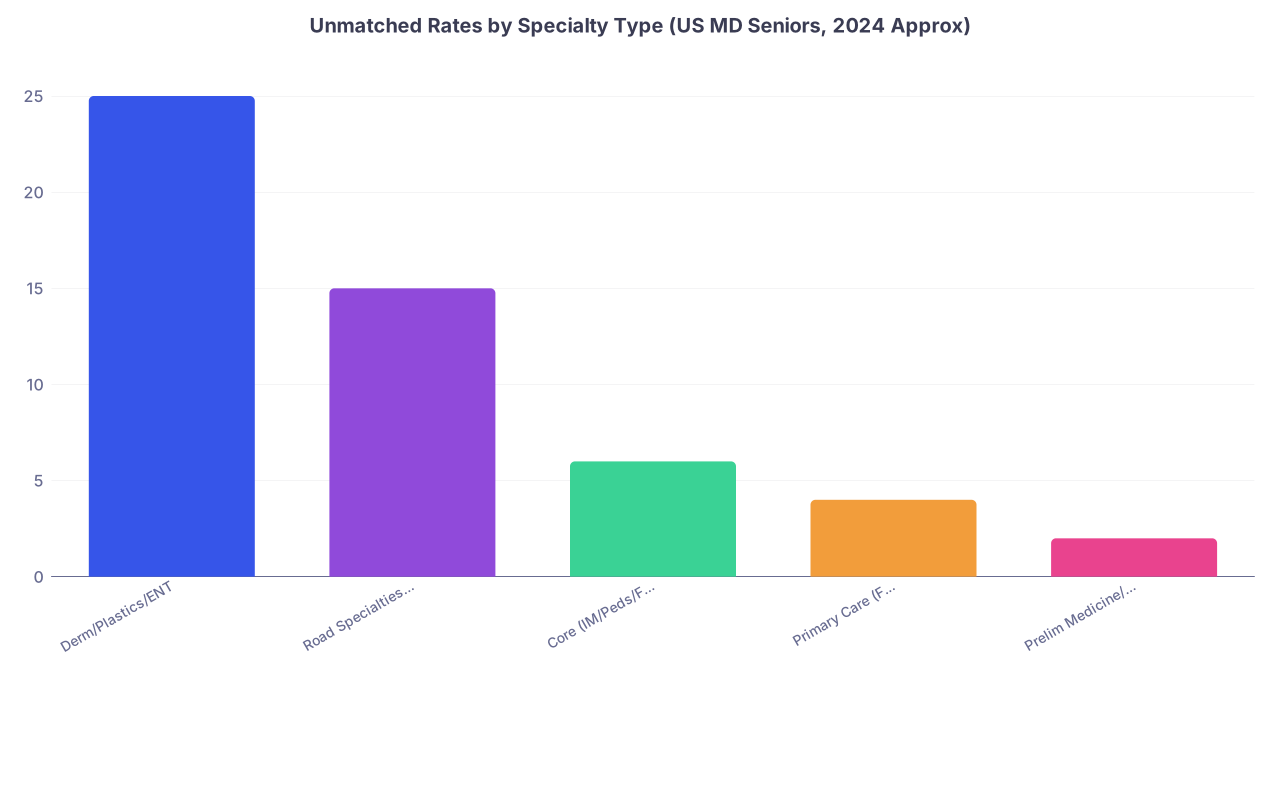
| Category | Value |
|---|---|
| Derm/Plastics/ENT | 25 |
| Road Specialties (Rads/Anes/EM) | 15 |
| Core (IM/Peds/FP/Path/Psych) | 6 |
| Primary Care (FM/IM-P/F-Med) | 4 |
| Prelim Medicine/Transitional | 2 |
Look at the low end:
- Family Medicine
- Internal Medicine (categorical) at lower-tier programs
- Pediatrics
- Psychiatry
- Pathology
- Some prelim medicine / transitional year spots
These are your least competitive specialties overall. And yes, many of those positions are at community or community-heavy institutions.
But here’s the problem: once you zoom in to individual program behavior, “community = easy” falls apart fast.
Community vs Academic: The Hidden Filters
If you sit in on rank meetings, you hear the same phrases over and over:
- “We don’t want to remediate again this year.”
- “No more visa hassles if we can avoid it.”
- “We got burned on low board scores before.”
Community programs, especially in IM, FM, and prelim medicine, often use stricter cutoffs because they do not have the faculty depth or educational infrastructure to rescue struggling residents.
| Factor | Many Community IM Programs | Many Academic IM Programs |
|---|---|---|
| USMLE Step 2 cutoff | 220–230 hard screen | 210–220 soft screen with holistic review |
| Required attempts | Usually no failures tolerated | Some tolerate 1 fail with context |
| Visa sponsorship | Often limited or none | More likely to sponsor |
| Research expectation | Not required, rarely valued highly | Expected/valued for certain tracks |
| Letters | Heavy weight on US clinical letters | Mix of US letters and academic letters |
So yes, they may not care if you have five first-author publications on CRISPR.
But they very much care that:
- You passed boards on the first try
- You will not call out of every third night
- You can function on day 1 with minimal hand-holding
That leads to a different style of competitiveness: less about prestige, more about minimum competence and reliability.
The Paradox of “Least Competitive” Specialties
Let’s talk about the “easy” specialties that pack a lot of community positions.
1. Family Medicine
FM is supposedly “the backup” for everyone. Look at NRMP data and you’ll see:
- US MD seniors match rate in FM is very high (>90%).
- But unmatched FM applicants still exist. Every. Single. Year.
Who are these?
- People with multiple Step failures
- Very late applicants or SOAP-reliant strategies
- Applicants who only applied to a handful of desirable urban community FM programs and ignored the dozens of midwestern or rural ones
- People with red-flag professionalism issues in MSPE/Dean’s letter
The competitive part is not getting into FM. It is getting into:
- Urban, lifestyle-friendly, 8-8-8 community FM programs in California, the Pacific Northwest, or the Northeast
- FM programs with strong OB or sports medicine pipelines
Those spots have 500+ applications for 6–8 positions. That’s not “easy,” that’s “quietly popular.”
2. Internal Medicine (Community)
There are more IM positions than almost anything else. But once you filter by:
- Location (big city, coastal states)
- Visa-friendly
- Reasonable Q3 call, decent fellowship placement
…you find yourself in a pile of heavily applied-to community IM programs that absolutely do not take everyone.
I’ve seen average US MDs with 235 Step 2, minor research, and normal evals get rejected from multiple “plain” community IM programs in New York and New Jersey simply because 2,000 people applied and they screened at 240+.
3. Psychiatry
Psych is a trap for people who still think it’s 2010. It’s been trending more competitive for a decade. Tons of new community psych programs opened, sure. Many of them:
- Are in less desirable locations
- Have real service burdens (locked units, forensic patients)
- Need residents who can manage chaos with minimal backup
Those programs do not chase Step 260s. But they also do not accept everyone with a pulse. Red flags, repeated failures, or “psych is my backup if derm doesn’t work out” essays get tossed.
Where Community Really Is Easier – And Where It’s Not
There are situations where community programs are meaningfully easier to match than university programs. Let’s be precise.
Easier (on average):
- A mid-tier US MD/DO with 220–230 Step 2, no research, applying broadly in IM or FM, including rural and smaller-city community programs.
- An applicant who is a solid worker with good clinical comments but limited academic firepower, targeting community-heavy specialties (FM, IM, psych, peds) in non-hotspot states.
Not reliably easier:
- Competitive specialties (radiology, anesthesia, EM, ortho, ENT) at community sites in large metros. Those “community” names still get flooded.
- Any community program in California, major coastal cities, or highly desirable lifestyle regions.
- Brand-new community programs with no track record, where PDs are terrified of the first few classes failing boards and tanking accreditation.
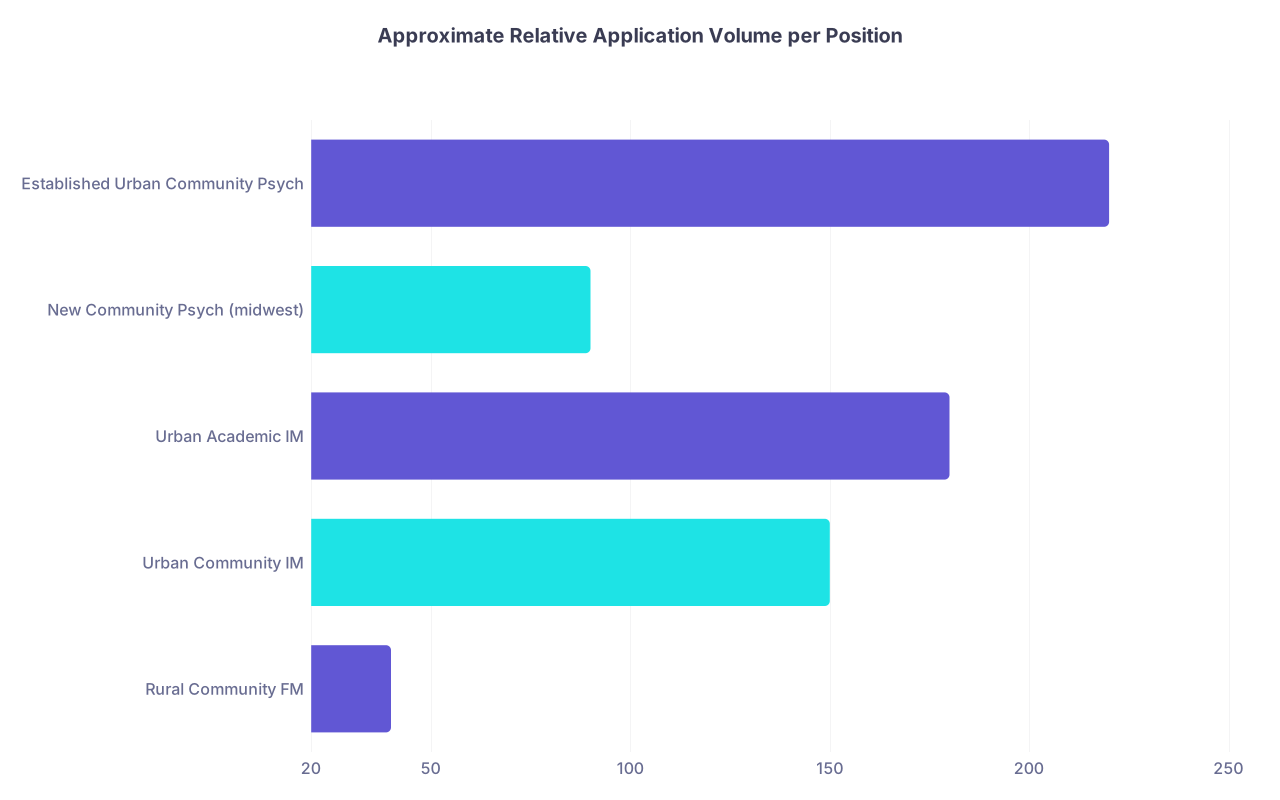
| Category | Value |
|---|---|
| Rural Community FM | 40 |
| Urban Community IM | 150 |
| Urban Academic IM | 180 |
| New Community Psych (midwest) | 90 |
| Established Urban Community Psych | 220 |
You can guess which bars are full of applicants who thought “I’ll just apply community, that’ll be simpler.”
The Big Miss: You’re Competing With Different People
Another myth: “If I go community, I avoid the 260-gunner crowd.”
Sometimes true. Often not.
Here’s what actually happens:
- Top applicants cluster at academic programs first, yes.
- But they also hedge with a few “good” community programs in attractive cities.
- IMGs with strong scores flood community programs that sponsor visas.
- DO grads locked out of certain university “no-DO” biases apply heavily to community slots.
Result: you’re now in a pool with:
- High-scoring IMGs clawing for any foothold in the US
- DOs with strong clinical skills and decent scores
- US MDs who swung and missed at academic places and are now over-applying to community ones
The bar isn’t “did you pass?” It’s “are you clearly less risky than the other 200 people we could rank instead of you?”
How Community Programs Actually Screen You
Let me be very concrete. Here’s how a typical community IM or FM program in a mid-sized city does its first pass:
- Filter out Step 2 below a cutoff (say 220–225).
- Exclude anyone with more than one failure or serious red-flag language in MSPE.
- Prioritize:
- US grads with strong clinical comments
- DO/IMGs with ties to region or hospital
- People with US clinical experience at similar community sites
- Quick scan for obvious “bad fit”:
- Personal statement clearly aimed at another specialty
- Pure “backup” tone: “I discovered FM in December of fourth year after my ortho dreams changed.”
Notice what’s missing:
- They don’t care if you discovered a new cytokine in undergrad.
- They do care if your medicine sub-I comments say “slow, needs frequent prompting, trouble prioritizing.”
The competitiveness lives in those details, not just the labels.
The Role of Geography: The Real Killer Variable
If you want a single variable that matters more than “community vs academic,” it is this: location.
Programs in these buckets are routinely tougher, regardless of community vs university:
- California (almost anything)
- NYC / Boston / DC / Chicago / Seattle
- Attractive suburban programs near big cities with good schools
- Coastal, high-cost-of-living regions with strong fellowship networks
Meanwhile, programs in:
- Rural Midwest
- Deep South non-metro areas
- Rust Belt smaller cities
- Less famous parts of the Mountain West
…often struggle to fill, even when they’re clinically strong and resident-friendly.
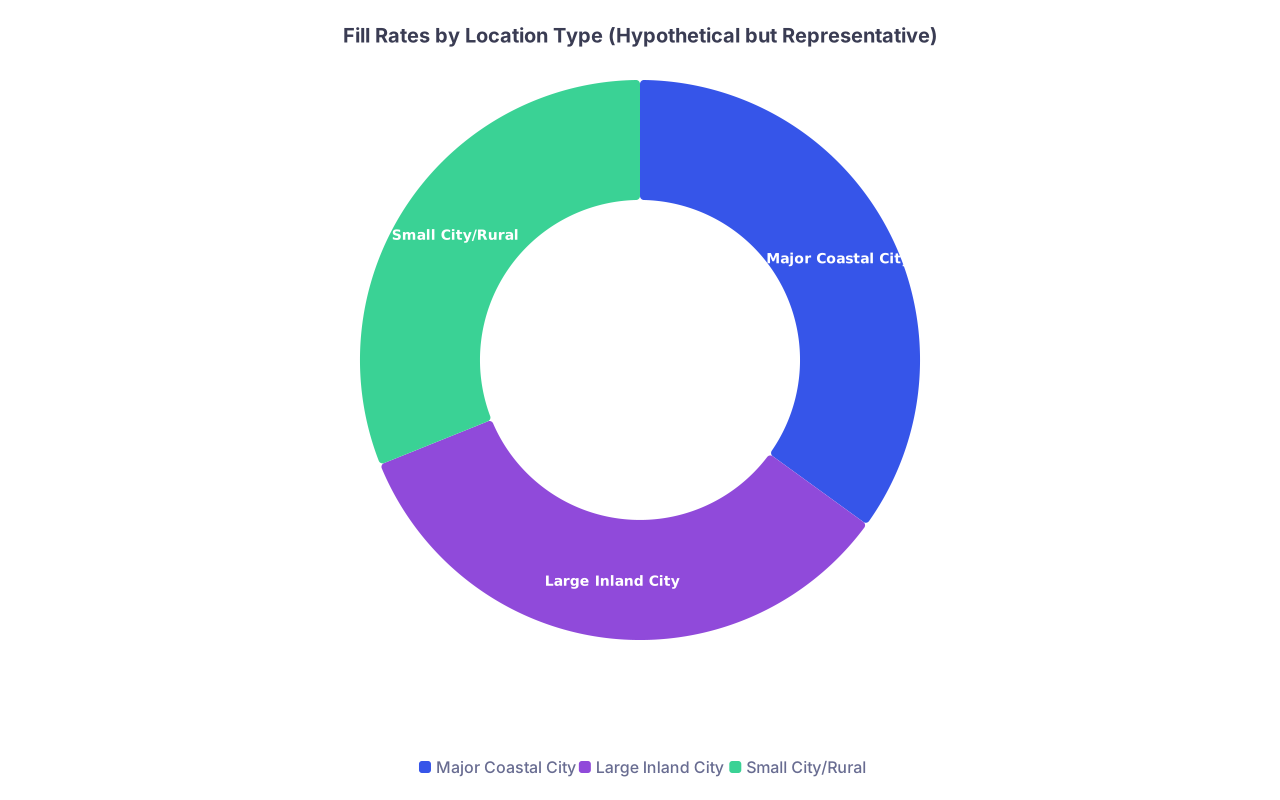
| Category | Value |
|---|---|
| Major Coastal City | 99 |
| Large Inland City | 96 |
| Small City/Rural | 88 |
So the real “easier to match” move is not “go community.” It is “be flexible on geography and prestige at the same time.”
Plenty of academic-affiliated programs in lower-demand regions are actually less competitive than big-name community programs in NYC.
Where the Rumor Comes From
You’re not hallucinating this myth; it has roots.
Historically:
- Academic centers chased research productivity and prestige.
- Community programs were more service-oriented, less picky about CVs as long as you could work.
- Step 1 scores weren’t pass/fail, and a 260 could paper over a lot of other weaknesses at academic places.
Then things shifted:
- Step 1 went pass/fail.
- More schools, more graduates, same number of positions in some specialties.
- A flood of new community programs opened, especially in IM and psych—but accreditation standards got stricter.
- Program directors got more conservative about any sign of risk.
So now you’ve got community PDs thinking: “We’re small. If even one intern fails Step 3 or can’t handle admissions, we’re in trouble.” That’s not a recipe for being “easy.”
How to Use This Information Without Lying to Yourself
If you’re aiming for a least competitive specialty and thinking about community programs, here’s how to be strategic instead of superstitious:
Stop treating “community” as synonymous with “backup.” Rank programs by:
- Location desirability
- Service load vs education
- Visa/IMG friendliness (if relevant)
- Historical fill rates (check NRMP and FREIDA patterns)
Be brutally honest about your risk profile:
- Multiple failures? You’re not “community safe”; you’re “needs massive list expansion + flexible geography.”
- Mid scores but clean record? Community IM/FM/peds in less popular regions probably are a good fit.
- Strong scores but no research? Academic programs outside the hyper-elite are still in play; don’t under-aim.
Build two parallel lists:
- A set of stable, established community programs in lower-demand areas.
- A set of mid-tier academic programs that aren’t in top-10 cities or specialties.
Do that, and the “least competitive specialties” actually behave like they’re supposed to: high overall match rates, low drama, good odds—if you’re realistic.
Cling to “community = easy” as your main heuristic, and you’re setting yourself up to be the person on Match Week saying, “But I thought these were my safeties.”
The Bottom Line
Community programs are not automatically easier to match. They’re just competitive on different axes:
- Specialty and geography drive competitiveness more than “community vs academic.”
- Community programs often have stricter minimum cutoffs and less tolerance for risk, especially in IM/FM/psych.
- The real “easy” path is broad, geographically flexible applications in least competitive specialties, not blind faith in the word “community.”