
What if the thing everyone tells you is “least competitive” is actually your best launchpad to a fellowship—while the supposedly prestigious specialty quietly bottlenecks you later?
Let me be blunt: the idea that choosing a “low-competition” specialty automatically limits your fellowship options is lazy thinking. It sounds intuitive. It’s also wrong in most of the ways that actually matter.
The truth is more uncomfortable: some of the best fellowship odds in medicine are hiding in specialties that gunners love to look down on.
Let’s go myth hunting.
The Core Myth: “If I Choose a Less Competitive Specialty, I’ll Be Stuck There”
This is the story you’ve probably heard:
- “If you want a cardiology or GI-type lifestyle, you must go into internal medicine at a big-name academic program.”
- “If you pick family medicine, you’re basically locking yourself out of serious subspecialty.”
- “Path, psych, peds, FM—those are endpoints, not springboards.”
It’s repeated so often that people stop asking a very basic question:
Where’s the data?
When you actually look at match statistics, NRMP reports, fellowship positions vs applicants, and what individual programs do, the picture is very different:
- Most fellowships recruit from a mix of “competitive” and “less competitive” core specialties.
- In several niches, “low-competition” residencies are a privileged pipeline into subspecialty training.
- The real gatekeepers are:
- Accreditation rules (which base specialties are eligible)
- Program reputation and letters
- Research and networking
Not the Step score percentile that got you into your residency in the first place.
Let’s get specific.
Where “Low-Competition” Actually Means “More Doors”
Some specialties people label as “less competitive” are quietly dominating fellowship pipelines. I’ll walk through a few that are routinely misunderstood.
1. Family Medicine: “Dead End” or Underrated Fellowship Factory?
Family medicine gets dismissed as “broad but shallow.” Reality: there are a ton of fellowships that love FM grads and sometimes prefer them over others.
FM graduates can (and do) match into:
- Sports medicine
- Geriatrics
- Hospice & palliative medicine
- Addiction medicine
- Sleep medicine
- Obesity medicine
- Pain medicine (in some programs)
- Clinical informatics
- Lifestyle medicine
- Women’s health / reproductive health tracks
- Academic medicine and leadership fellowships
And they’re not scraping for leftovers. Check the applicant-to-position ratios in ACGME data: many of these fellowships are less saturated than the classic IM subspecialties. They’re hungry for applicants with strong outpatient, continuity, and whole-patient experience—exactly what FM produces.
I’ve watched FM residents who weren’t “top of the class” stroll into sports medicine or palliative spots because:
- Their program director picked up the phone.
- They had 1–2 decent projects and a strong personal statement.
- They were the only applicant who had actually done longitudinal care with these patient populations.
Meanwhile, some IM residents at mid-tier programs are fighting to get a single interview for cards or GI with near-perfect Step 2 scores and heaps of research.
2. Psychiatry: “Chill Lifestyle” with Serious Subspecialty Options
Psych is considered easier to match into than derm or ortho. That doesn’t mean it’s a cul-de-sac.
Psych residents routinely match into:
- Child & adolescent psychiatry
- Addiction psychiatry
- Forensic psychiatry
- Consultation-liaison (psychosomatic) psychiatry
- Sleep medicine (yes, again)
- Geriatric psychiatry
Here’s the twist: in several institutions, child and adolescent psych and addiction psych regularly go unfilled or are under-applied relative to positions.
The bottleneck isn’t competitiveness. It’s interest and geography.
So if you’re thinking, “Psych is low competition, I’ll have no subspecialty leverage,” you’re ignoring whole fellowships that would be thrilled to take solid, not-superhuman applicants from a psych background.
3. Pathology: Quiet Specialty, Strong Fellowship Culture
Pathology isn’t packed with 260+ Step score gunners. But its entire culture is built around fellowship training.
Path residents often do one or two fellowships as a norm, not an exception:
- Hematopathology
- Cytopathology
- Surgical pathology
- Molecular genetic pathology
- Transfusion medicine
- Forensic pathology
In many path programs, the assumption is almost “Pick your fellowship(s).” The question is which advanced training, not if you can get any. Sure, some top-name academic fellowships are competitive. But the baseline probability of “doing a fellowship at all” is extremely high.
Low-competition core specialty does not equal low access to advanced training.
4. Pediatrics: Less Competitive Core, Vital Subspecialties
Peds is less competitive than derm, ophtho, radiology, or plastics. Yet look at the peds subspecialty landscape:
- Pediatric cardiology
- Pediatric critical care
- Neonatology
- Pediatric GI
- Pediatric heme/onc
- Pediatric ID, endo, nephro, rheum
Here’s the thing most people don’t realize: several peds subspecialties have trouble filling in certain cycles or specific regions. The compensation is often not great relative to years of training, so fewer residents want them.
If you’re willing to choose a less saturated subspecialty or a less popular city, your chances as a solid but not superstar peds resident are very good.
Where the Doors Actually Do Close: Eligibility Rules
Now the part students almost never ask: which base specialties are actually eligible for which fellowships?
You can’t do interventional cardiology out of family medicine. You can’t do vascular surgery from psychiatry. Those doors are structurally closed by the ACGME and ABMS, not by “competitiveness.”
Here’s a simplified snapshot.
| Fellowship | Primary Eligible Residencies |
|---|---|
| Cardiology | Internal Medicine |
| Gastroenterology | Internal Medicine |
| Pulmonary/Critical Care | Internal Medicine |
| Neonatology | Pediatrics |
| Sports Medicine | FM, IM, EM, Peds, PM&R |
| Hospice & Palliative | FM, IM, EM, Psych, Neuro, others |
If your dream is one of the “big three” IM fellowships (cards, GI, heme/onc), and you choose family medicine because it’s easier to match, then yes—you closed a specific set of doors. Not because FM is low competition, but because the rules literally don’t allow that path.
But here’s the flip side nobody emphasizes:
If your interests are in:
- Sports
- Palliative
- Addiction
- Sleep
- Geriatrics
then family medicine, psych, peds, and even EM can be excellent feeders. Sometimes better than IM because your training aligns more clearly with the fellowship’s focus.
Data Reality Check: Competition at Residency ≠ Competition at Fellowship
Residency competitiveness and fellowship competitiveness correlate loosely at best.
Let me show you why with rough conceptual numbers.
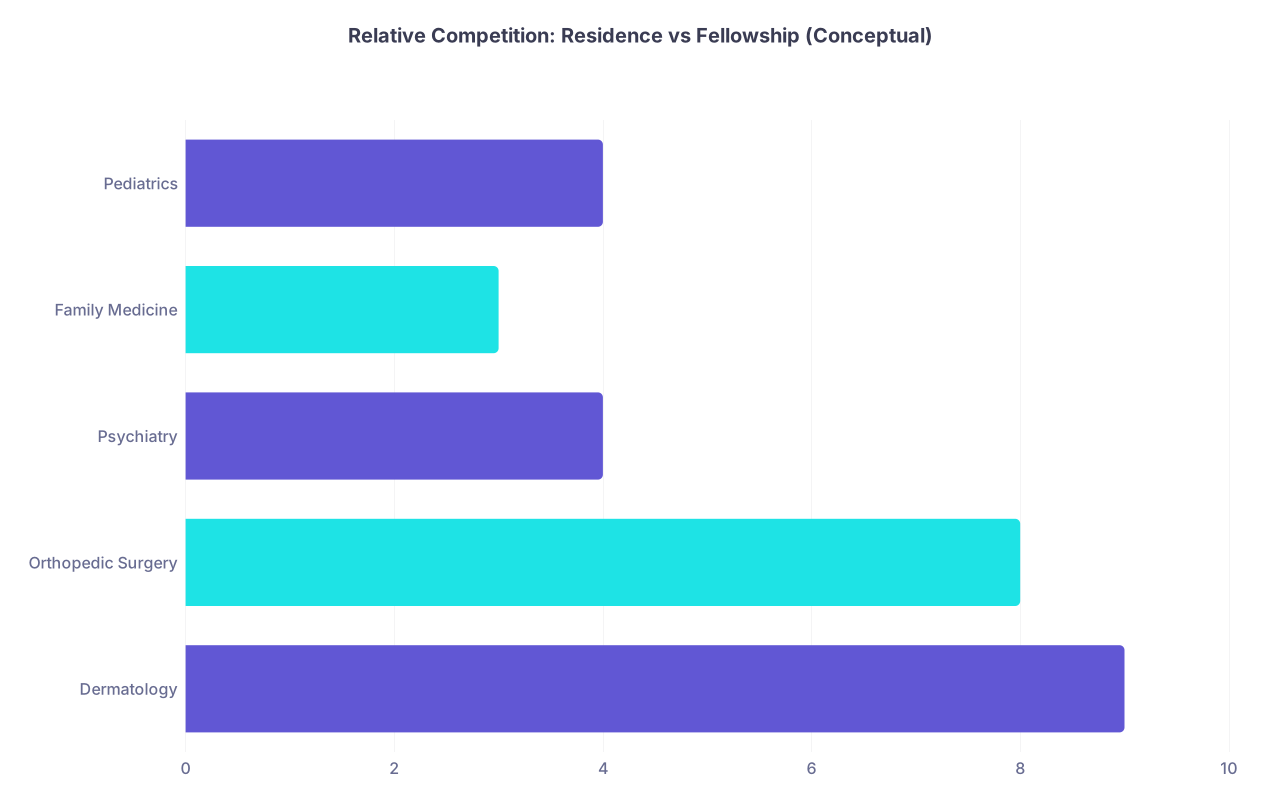
| Category | Value |
|---|---|
| Dermatology | 9 |
| Orthopedic Surgery | 8 |
| Psychiatry | 4 |
| Family Medicine | 3 |
| Pediatrics | 4 |
The above could roughly represent perceived residency competitiveness on a 1–10 scale. Now look at how fellowship competition plays out for options actually available from those bases:
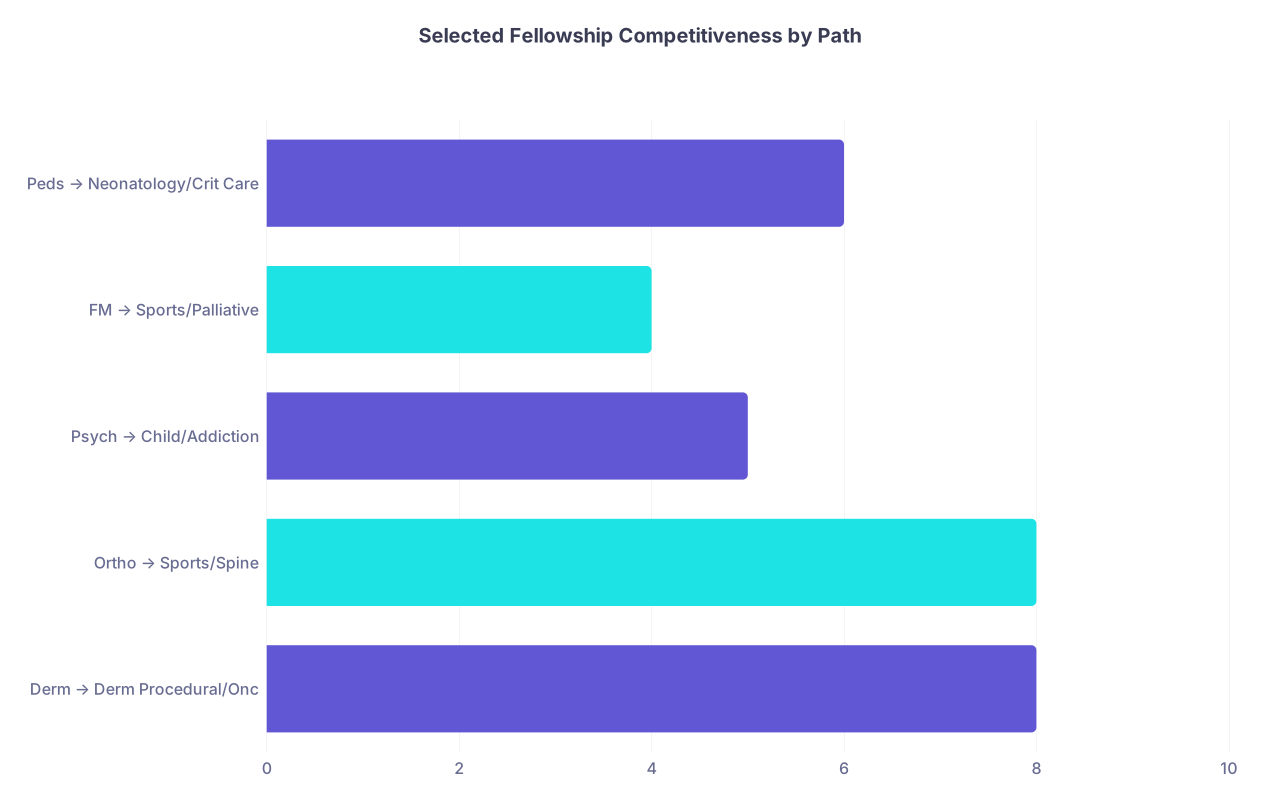
| Category | Value |
|---|---|
| Derm → Derm Procedural/Onc | 8 |
| Ortho → Sports/Spine | 8 |
| Psych → Child/Addiction | 5 |
| FM → Sports/Palliative | 4 |
| Peds → Neonatology/Crit Care | 6 |
Notice what’s going on:
- High-competition residencies feed into high-competition fellowships. You’re not “done” competing. You’ve just signed up for another round.
- “Lower-competition” residencies feed into fellowships with moderate competition that often have:
- Fewer total applicants
- Strong preference for their own base specialty
- Programs actively recruiting good candidates.
I’ve seen family medicine residents with average scores end up in phenomenal sports medicine fellowships while IM residents with stronger paper stats are stuck because they chose a much more saturated target like cards.
The idea that going “more competitive now” unlocks an easier path later is often backward.
Reputation, Not Raw Competitiveness, Drives Fellowship Doors
Here’s the part residents whisper about but rarely say outright to students:
Fellowship directors care far more about:
- Your residency program’s reputation in their niche
- How well they know your PD and faculty
- Whether you did meaningful work in their field
- How you performed clinically
than they care about whether your specialty was “low-competition” in MS4 ranking lists.
An average applicant from a respected but “less sexy” specialty program can beat a high-score applicant from a more competitive specialty at a weaker or unknown program.
I’ve seen:
- A solid but unspectacular peds resident from a strong children’s hospital beat out IM residents for certain critical care or palliative training spots that cross disciplines.
- FM residents from highly academic departments walk into sports medicine and palliative slots at their own institutions with minimal fuss.
- Psych residents match into child psych early-commit tracks where the only real filter was “Do we think you’re not a walking disaster?”
The “doors” are built around relationships, program quality, and niche fit. Not whether your core specialty is on some Step-score-obsessed competitiveness ranking.
The Real Dangerous Mistake: Confusing “I Don’t Know Yet” with “I Must Choose IM”
Medical students who “like everything” often default to internal medicine because it “keeps the most doors open.”
Sometimes that’s true. If you’re genuinely torn between:
- Cardiology
- GI
- Pulm/CCM
- Heme/Onc
then yes, IM is your only gate. No argument there.
But I’ve talked to plenty of students who really meant something else when they said “I want to keep doors open”:
- They liked sports and MSK, but worried PM&R or FM wouldn’t be prestigious.
- They were drawn to end-of-life care, but thought palliative from FM or psych was “settling.”
- They enjoyed whole-family care but were spooked by talk that “FM locks you out of real procedures or fellowships.”
So they go IM “to keep options open,” then discover 2–3 years later they:
- Don’t actually like inpatient ward medicine
- Don’t want the lifestyle of heavy ICU, cards, or GI call
- But now feel they “should” chase a competitive IM fellowship to justify the path
That’s not optionality. That’s drifting.
If you already suspect:
- You love outpatient more than inpatient
- You prefer longitudinal relationships over organ-based sub-sub specialization
- You’re interested in things like sports, behavioral health, addiction, lifestyle, palliative
then a “less competitive” core like FM, psych, or peds may increase your realistic fellowship options in the spaces you actually care about.
So Does Choosing a Low-Competition Specialty Close Doors?
Sometimes. But not in the way people think.
Here’s the unvarnished version:
Yes, you close doors when:
- You choose a base specialty that’s simply not eligible for specific fellowships you truly want (e.g., FM if you’re dead-set on interventional cardiology).
- You pick a weak, unknown residency program with no track record in the fellowship type you’re chasing.
No, you do not inherently close doors just because the specialty is “less competitive” at the MS4 level, when:
- The fellowships you want actively recruit your base specialty.
- The applicant pool is small and not cutthroat.
- Your program has strong connections and prior grads in those fellowships.
In many cases, a “low-competition” specialty can expand your realistic options, because:
- You’ll train in exactly the populations those fellowships want.
- You’re competing in a narrower, more aligned pool.
- You’re not stuck fighting 200 IM residents for 10 cards slots at every prestigious program.
To hammer it home with one last visual:

| Step | Description |
|---|---|
| Step 1 | Start - Interest in Fellowship Later |
| Step 2 | Choose Internal Medicine |
| Step 3 | Consider FM, Psych, Peds, PM&R |
| Step 4 | Match specialty to day to day you enjoy |
| Step 5 | Focus on program with subspecialty strength |
| Step 6 | Ask which fellowships recruit from that base |
| Step 7 | Specific high-profile IM subspecialty? |
| Step 8 | Interested in outpatient, broad care, or niche fields? |
And because people always ask about fill pressure:
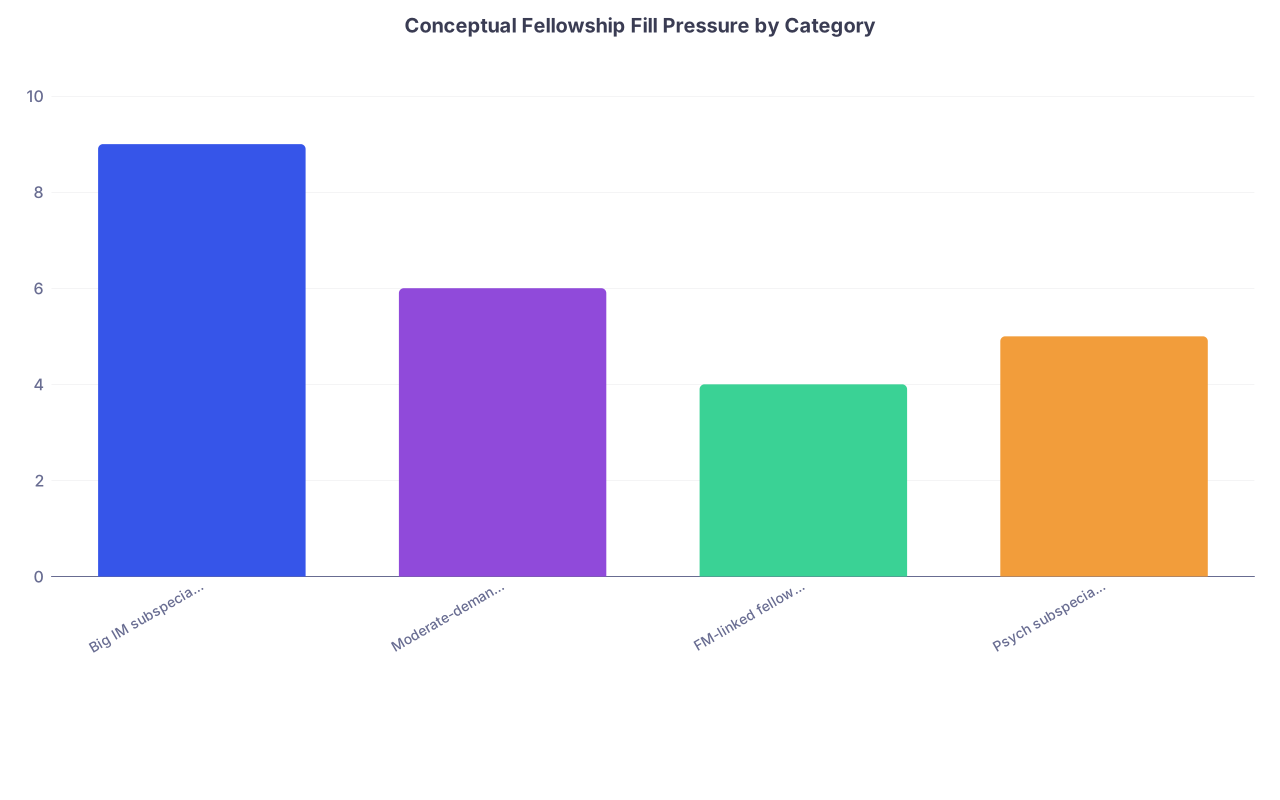
| Category | Value |
|---|---|
| Big IM subspecialties | 9 |
| Moderate-demand peds subs | 6 |
| FM-linked fellowships | 4 |
| Psych subspecialties | 5 |
Those “low-competition” cores? Often feeding into the 4–6 range. Hard work required, yes. Life-or-death Step score games, no.
Bottom Line
Two or three key takeaways, and you can go back to pretending Reddit knows everything:
- “Low-competition” specialty ≠ closed fellowship doors. The main limiters are eligibility rules, program strength, and your actual niche interests, not MS4 match stats.
- If you know you want a specific IM-only subspecialty, choose IM. If you’re more interested in outpatient, palliative, sports, addiction, or behavioral health, so-called “less competitive” specialties can be a smarter, more direct path to fellowships.
- Stop asking, “Which specialty keeps the most doors open?” and start asking, “Which specialty aligns with the kind of patients and problems I actually want—and what fellowships recruit from there?”