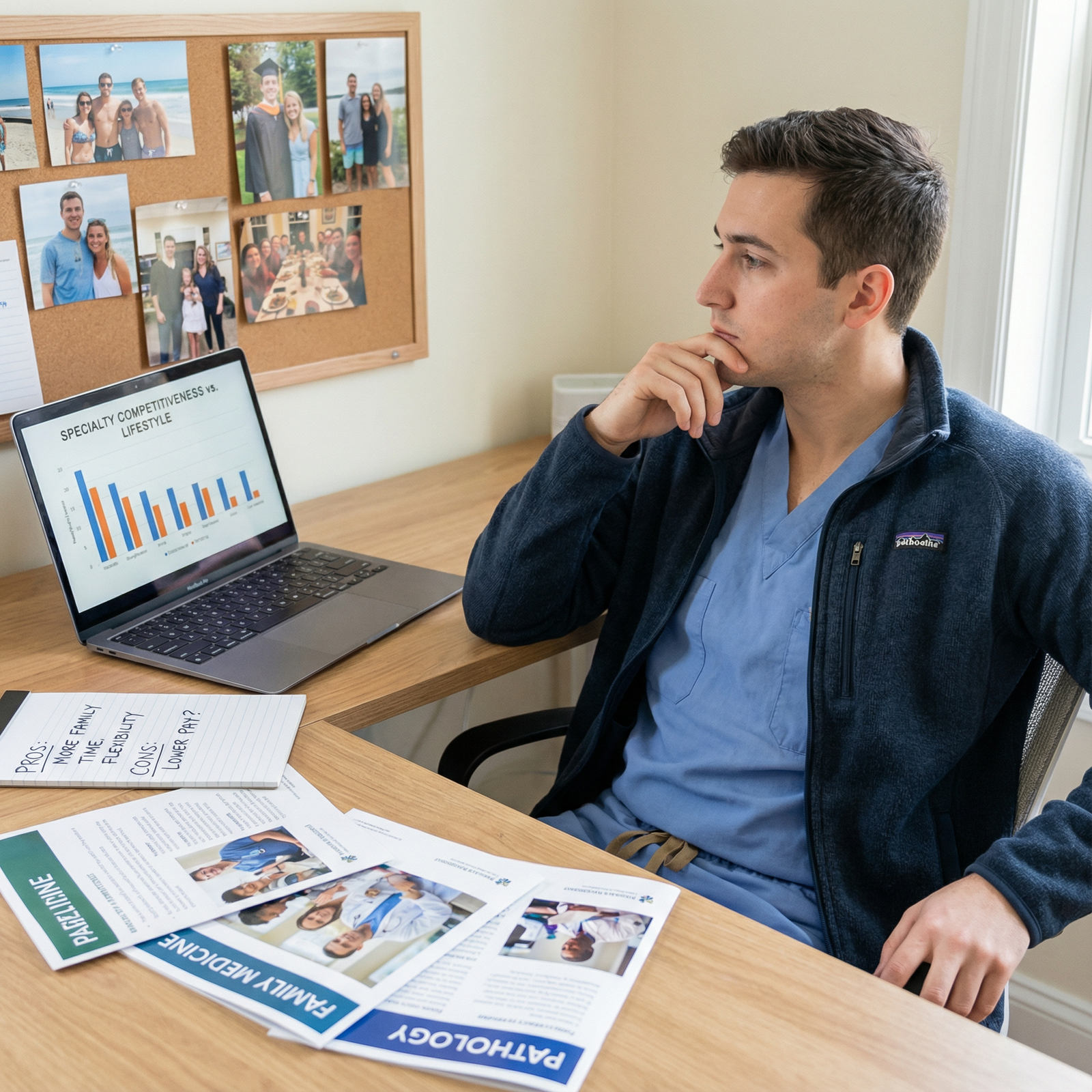
The lack of a home department is not a quirky inconvenience. It is a handicap in the residency game, and if you pretend otherwise, you’ll get burned.
If your med school does not have a full department in your chosen (less competitive) specialty—think Family Medicine, Pediatrics, Psychiatry, Internal Medicine, Pathology, PM&R, etc.—you’ll be tempted to relax. “It’s not derm or ortho, I’ll be fine.” That mindset is how people end up in March with a thin interview list and no backup plan.
You can absolutely match. Into good programs. But you can’t play by the same rules as the student who has an entire department lobbying for them. You have to be more intentional and more aggressive, especially with community programs.
Let’s walk through how.
Step 1: Accept the Two Things You Do NOT Have
First, clarity. If your home institution lacks a department in your specialty, you’re missing two big assets:
- Built-in mentorship and advocacy – No chair who can call PDs for you. No “we’ve sent them great residents before” pipeline.
- Home-based clinical exposure in that field – No default rotation where you shine in front of your future letter writers.
Pretending these gaps do not matter is delusional. They do. Community program directors in even the “least competitive” specialties still want proof you can do the job and that someone in their field has seen you work.
You can replace both assets. Just not by sitting back and waiting.
Step 2: Get Real About What Community Programs Actually Want
Community programs are not “backup hospitals.” They’re training centers with specific needs.
I’ve heard community PDs say variants of the same thing:
- “We do not care if you’re from a top-10 school if your letters are generic.”
- “I’d rather take the student who crushed it on a month with us than the 250 scorer we’ve never seen.”
- “If your school doesn’t even have our specialty, I need to see that you’ve actually done it.”
So what do they really look for, especially when you lack a home department?
- Documented performance in the specialty – Strong evals and letters from rotations in that field.
- Fit with their environment – Team player, no drama, willing to work hard in a community setting.
- Stability and reliability – No professionalism red flags, no ghosting on emails, show up prepared.
- Some demonstration of interest – Electives, a project, maybe a small QI undertaking. Not “I picked this last minute.”
You’re going to supply all of that by strategically targeting community programs.
Step 3: Map Your Situation Honestly
Before you do anything else, you need a snapshot of where you stand. Grab a piece of paper or open a doc and write:
- Step 1 (if applicable) and Step 2 scores / COMLEX scores
- Preclinical fail/remediation? Y/N
- Any clinical clerkship failures, marginal passes, or professionalism issues?
- Core clinical grades: Honors / HP / Pass breakdown
- Specialty exposure so far:
- Shadowing? Y/N
- Any rotations in that field? Where? Length?
- Any research/quality improvement even loosely related?
Now look at it like a program director. If you were them, what would you worry about?
- “No home department”
- “No major letters in the specialty”
- “Weak core clerkships”
- “Borderline scores”
Your plan will aim directly at those red flags.
Step 4: Build Your “Home Department” Out of Community Programs
If your school didn’t give you a department, you’re going to build one—piece by piece—out of community sites.
A. Identify anchor programs
You want 2–3 anchor community programs where you will:
- Do an away/sub-I
- Get at least one strong letter
- Hopefully be known by more than one faculty member
How to find them:
- Start local: Any affiliated community hospital with your specialty? Ask the dean’s office or clinical coordinator, not just Google. Often there’s a hidden affiliated residency you’ve never heard of.
- Check FREIDA for your specialty and search by region.
- Filter for:
- Programs that take lots of IMGs/DOs or non-traditional paths – they’re used to applicants without classic pipelines.
- Programs that list “medical student rotations welcome” or similar language on their website.
Now you want to rank them in terms of:
- Travel cost / housing possibility
- Perceived friendliness to outside rotators
- Match list outcomes of their recent grads (if they place people into fellowships, etc.)
B. Secure 1–2 strong away rotations early
You are not in a position to casually “see how next year goes.” You need aways in this specialty.
Timeline-wise, you should aim for:
- One rotation at a community program you’d be happy to match at
- One more at a solid community or hybrid community-academic program (if possible)
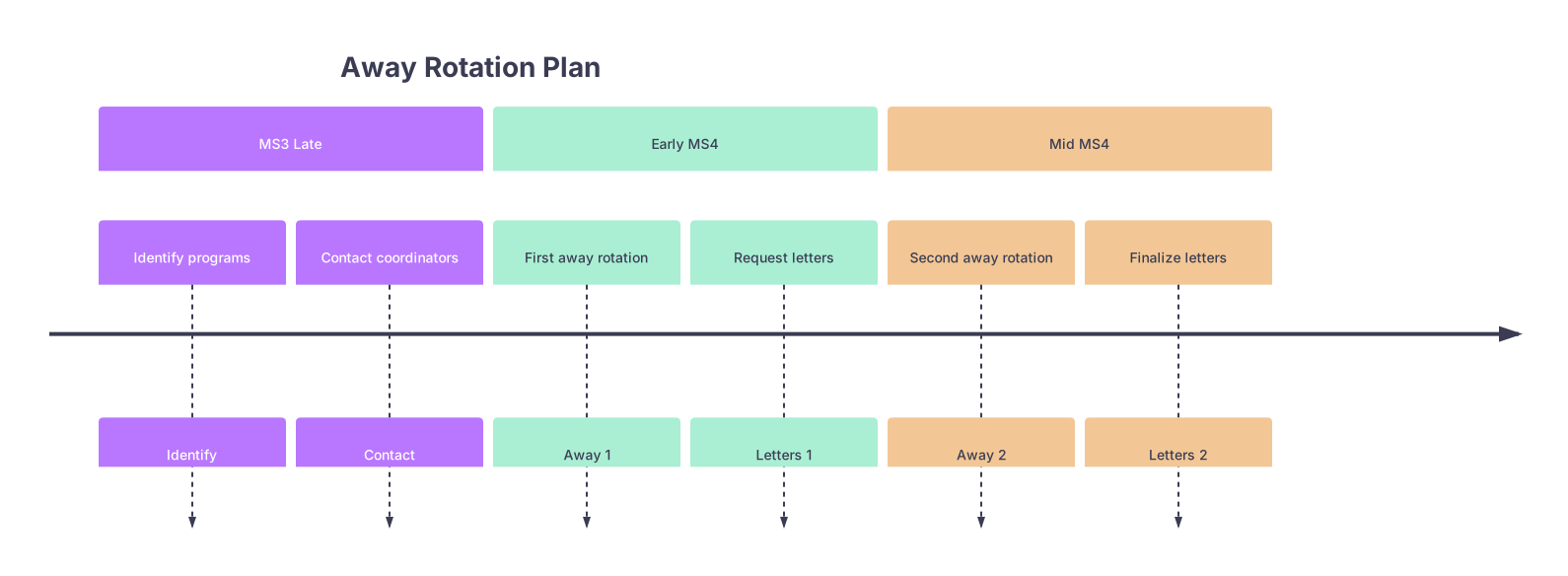
| Period | Event |
|---|---|
| MS3 Late - Identify programs | Identify |
| MS3 Late - Contact coordinators | Contact |
| Early MS4 - First away rotation | Away 1 |
| Early MS4 - Request letters | Letters 1 |
| Mid MS4 - Second away rotation | Away 2 |
| Mid MS4 - Finalize letters | Letters 2 |
Be direct in your email to coordinators and PDs:
- State your school and that you lack a home department in this specialty
- Explain you’re strongly interested in the field and want solid clinical exposure and mentorship
- Attach CV and transcript
- Offer dates but say you’re flexible
You’re not begging. You’re making it easy for them to help you.
Step 5: Use Those Rotations Like Auditions, Not Observerships
On a community away, you’re not just “learning.” You’re trying out for a spot.
Here’s how you behave differently when you know that:
Show up like a resident, not a visiting student tourist.
Learn the EMR in week 1. Pre-round without being told. Know your labs and plans. Anticipate common issues (pain control, discharge planning, basic orders).Target at least two potential letter writers.
Early in the month, quietly identify:- One attending who sees you consistently
- One chief resident or senior who might advocate for you to faculty
End of week 2, tell the attending:
“I don’t have a home department in [specialty], so this is a key rotation for me. If by the end of the month you feel you know my work well enough, I’d be very grateful for a strong letter.”Yes, say “strong letter.” You want them to be honest about whether they can deliver that.
Ask for specific feedback and fix it fast.
If someone says:
“Your notes are a little long” → Shorten them by the next day.
“Be more proactive with follow-up labs” → Come in next day ready with lab trends on every patient.Community attendings care a lot about teachability. If you change quickly, they notice.
Engage with the program culture.
Show up to resident conference, journal club, whatever they have. Eat the bad pizza. Ask real questions.
You want residents walking into the PD’s office later saying, “That visiting student would fit here.”
Step 6: Letters of Recommendation When You Have No Department
Your letter mix has to be deliberate. You don’t get automatic “home department chair” support, so you compensate with:
- 2 letters from the specialty (ideally both from community or hybrid programs where you rotated)
- 1 strong letter from a core clerkship (IM, Surgery, or Pediatrics showing you’re solid clinically)
- Optional: 1 from research or longitudinal mentor if they know you well
| Letter Type | Source |
|---|---|
| Specialty Letter #1 | Community residency rotation |
| Specialty Letter #2 | Second community/hybrid site |
| Core Clinical Letter | IM/Surgery/Peds at home school |
| Optional Extra Letter | Research or longitudinal mentor |
If your school “requires” an internal letter from some generic dean’s office person, fine, that’s extra. Programs know those are boilerplate.
What matters:
- Letters are specific: describe your actual patients, your initiative, your reliability.
- Letters show that people in the specialty have seen you do the work.
If an attending offers a lukewarm comment like, “I’d be happy to write you a letter” but they barely worked with you—do not rely on that as one of your primary specialty letters. You’re better off with fewer, stronger writers.
Step 7: Make Your Application Explain the Lack Without Sounding Weak
You do not want PDs wondering why you never did a “home” rotation or never got a “department” letter. Spell it out once, cleanly.
In your experiences section or a brief line in your personal statement, you can say something like:
“My medical school does not have a department of [specialty], so I sought out rotations at community programs where I could work directly with [specialty] faculty and residents.”
That’s it. No long apology, no self-pity. Just a factual explanation followed by how you addressed it.
Your personal statement should then focus on:
- How you discovered and confirmed your interest in that specialty through these community rotations
- Exposure to bread-and-butter cases and the realities of community practice
- Evidence that you understand the work and like it, not just the lifestyle branding
For “least competitive” specialties, PDs are allergic to the vibe: “I picked this because it’s easier to match.” Your narrative must show you actively chose it.
Step 8: Target Programs Strategically, Not Desperately
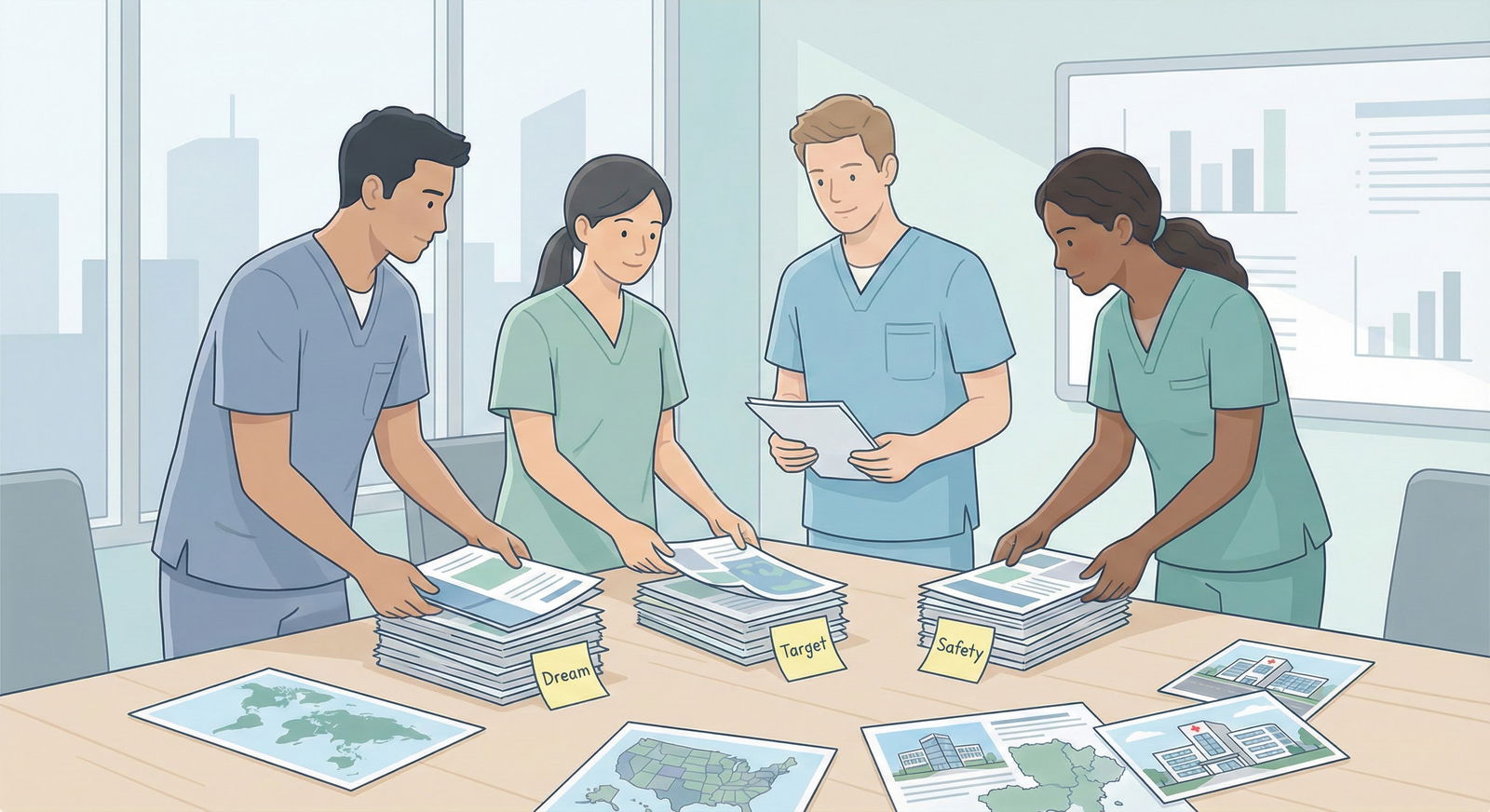
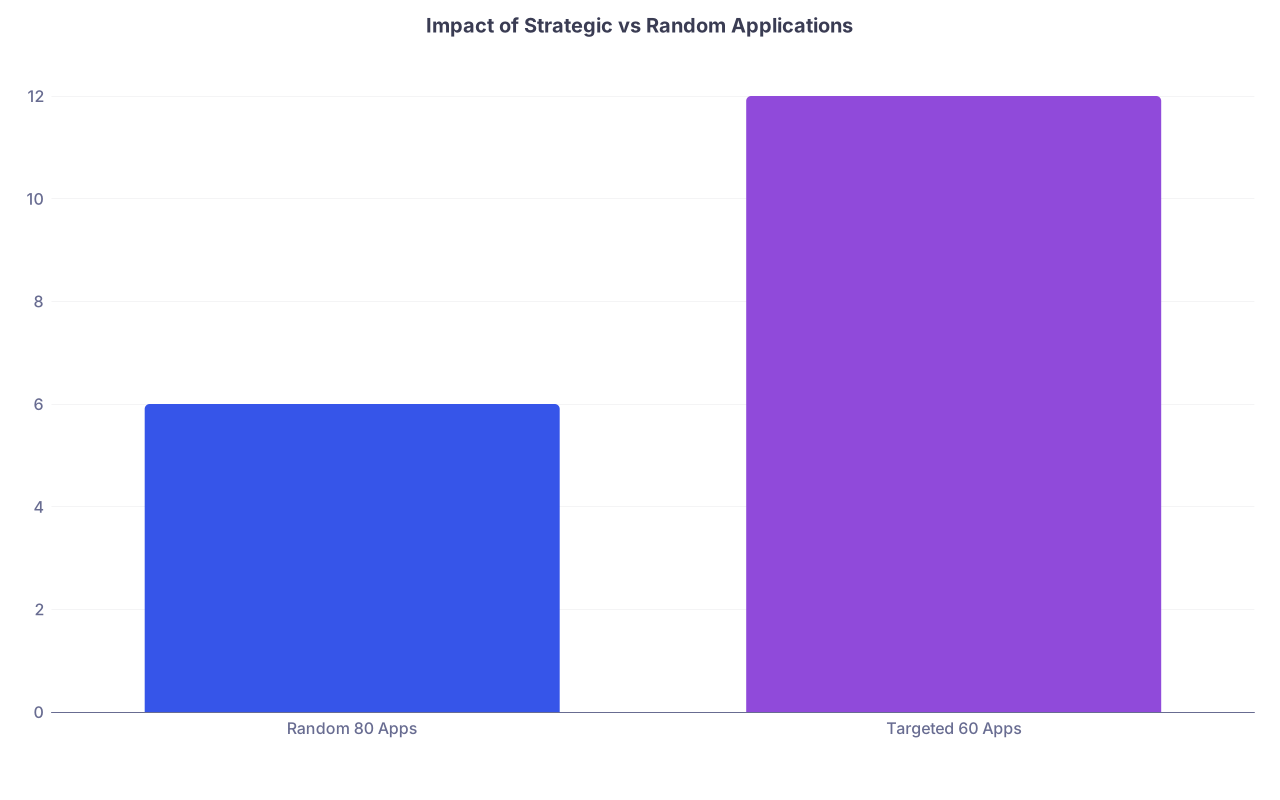
Here’s where people blow it. They shotgun 100+ applications without a plan and then act shocked when their interviews are random and thin.
You have to segment:
Programs where you rotated or have a clear connection
- These get personalized emails.
- They go high on your list even if they’re not glamorous.
Programs with histories of taking applicants from non-traditional or under-resourced schools
- Look at resident bios. If you see a variety of schools, IMGs, DOs, Caribbean grads—good sign.
- These programs are used to applicants without home departments.
Geographic areas where you can plausibly see yourself living and working
- Community programs care if you’re likely to stay.
- If you have ties, say it clearly: family, prior work, partner’s job.
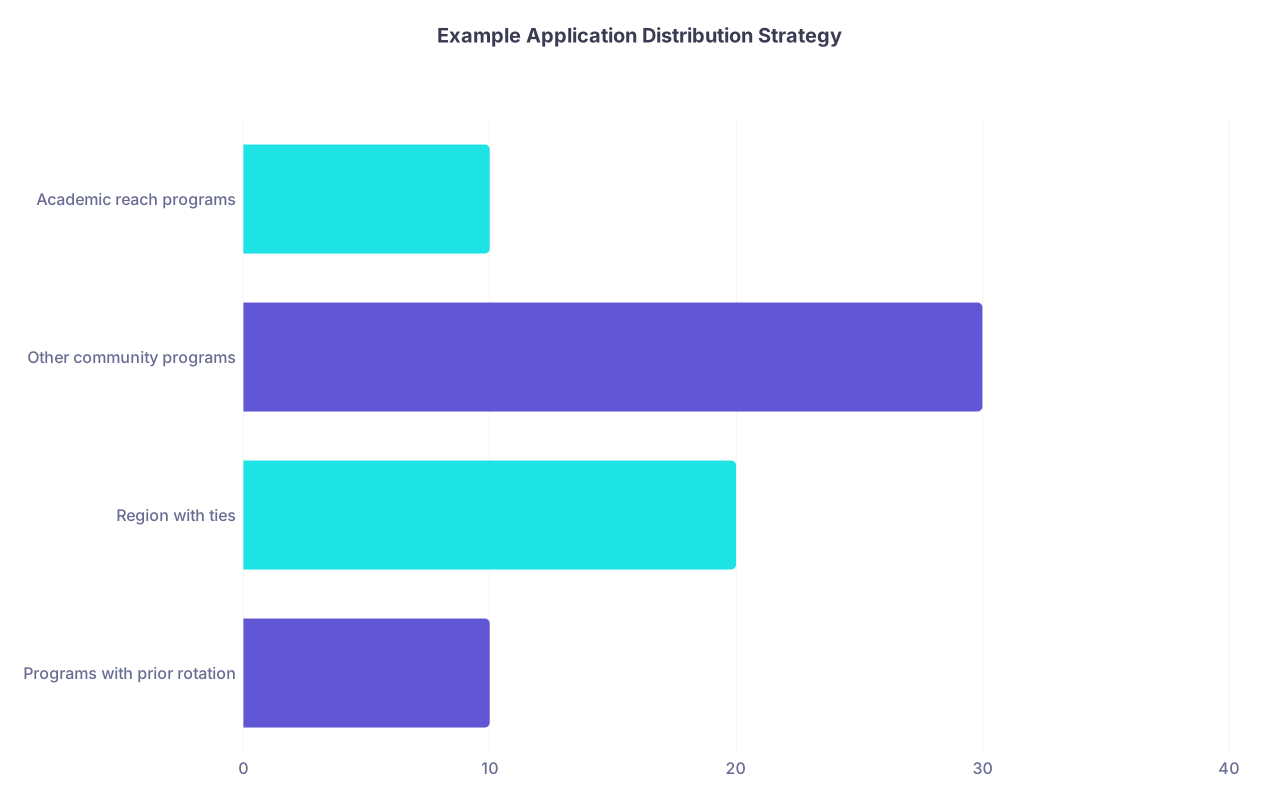
| Category | Value |
|---|---|
| Programs with prior rotation | 10 |
| Region with ties | 20 |
| Other community programs | 30 |
| Academic reach programs | 10 |
Do not waste half your applications on academic powerhouses that only occasionally sniff at students without strong home department backing unless your scores and grades are stellar.
If your specialty is truly among the least competitive and your app is average, your best odds are:
- Small-to-mid-size community programs
- Community programs affiliated with big-name systems but not at the flagship site
- Places outside major East/West coast urban bubbles
Step 9: Communicate Directly with Community PDs (Without Being Annoying)
Here’s the thing about community PDs: a surprising number actually read their email. Short, clear messages can tilt the scale.
You should email:
- Before or during your away rotation – to thank them for the opportunity and express interest.
- Around ERAS submission time – especially programs where you rotated or have some tie.
Example structure (keep it tight):
- Who you are (name, school, year)
- One sentence acknowledging lack of home department and how you addressed it
- One sentence showing specific interest in their program (something real, not generic website fluff)
- One sentence saying you applied and would be grateful for consideration
- Signature with AAMC ID
Do not send weekly follow-ups. Once or twice at key times is enough.
Step 10: On Interviews, Lean Into the Community Angle
When you do get interviews, you’re going to get a version of:
- “Why [specialty]?”
- “Why our program?”
- “Tell me about your exposure to [specialty] given your school situation.”
Do not be defensive. Own it.
You might say:
“Because my school didn’t have a department of [specialty], I knew I’d need to be deliberate. I sought out rotations at community programs where I could see the full spectrum of patients and work closely with residents. That experience confirmed for me that I like the pace, the continuity, and the team environment of community training.”
For “Why us?”, avoid the fluff. Show you did actual homework:
- Their patient population (safety net, rural, underserved urban)
- Specific clinic setups (FQHC, Hep C clinic, perinatal mood clinic, etc.)
- Their graduates’ career paths (hospitalist-heavy, primary care, fellowship, etc.)
Community PDs hear “I like your strong clinical training” 50 times a day. Show one detail that proves you paid attention.
Step 11: Extra Credit – Low-Burden Ways to Show Commitment
You don’t need a massive research portfolio in a less competitive specialty. That said, a couple of small, realistic moves can quietly separate you from the crowd:
- Join the specialty’s national student group (e.g., AAFP for Family, AACAP for Child Psych interest, etc.).
- Attend one virtual grand rounds or webinar and mention it if relevant.
- Do a small QI project during your away rotation:
- “We standardized the discharge instructions for [common condition].”
- “We created a checklist for [clinic workflow].”
These are not resume padding if you actually did them. They tell PDs: this person doesn’t just show up; they improve the system, even a little.
Specialty-Specific Quick Hits (For “Least Competitive” Fields)
Let me hit a few common ones where lack of home department plus community programs is a very common combo.
Family Medicine
- Community FM programs love students who’ve actually done continuity clinic and can talk about following patients over time.
- If your aways are inpatient-heavy, try to at least shadow or clinic-half-day with someone doing outpatient primary care.
- Emphasize comfort with broad age range and social complexity, not just “I like variety.”
Psychiatry
- Psych without a home department is common in smaller schools.
- Community psych programs want to know you can tolerate chaos and maintain boundaries.
- On aways, be the person who writes thorough notes, follows up collateral, and shows up to group sessions even if not mandatory.
Pediatrics
- Many community peds programs sit in hospitals that look “cute” from the outside but see real pathology.
- Show that you’re not just in this because of a vague “I like kids,” but because you enjoy talking with parents, explaining plans, and managing common pediatric issues.
Internal Medicine
- Yes, IM is “less competitive” globally, but good community IM programs can be picky.
- They want to see that you handled a real inpatient service, not just shadowed.
- On your application, highlight high-responsibility roles: managing cross-cover calls, running family meetings (with supervision), etc.
Common Mistakes That Kill Applicants in Your Situation
I’ve watched these in real time:
Applying as if you had a home department.
No aways, generic letters from unrelated fields, zero explanation in the app.Doing aways but treating them like vacation electives.
Late arrivals, leaving early, not knowing patients well. PDs will absolutely remember.Writing a personal statement that sounds like you randomly landed in the specialty.
Especially deadly in “less competitive” fields. They’ve heard every “I wanted derm but discovered I like people” variation.Overreaching on program list and under-applying to solid community sites.
Then blaming “bad luck” in March.Not using your lack of department to your advantage.
You actually have a built-in story: you had to chase your specialty down, not have it handed to you. If you can’t spin that into evidence of initiative, you’re missing a free narrative.
| Category | Value |
|---|---|
| Random 80 Apps | 6 |
| Targeted 60 Apps | 12 |
If You’re Late in the Game
If you’re reading this late MS4 and thinking, “I did none of this,” you still have moves:
- Ask for a late elective or sub-I at even a nearby community hospital, then immediately ask that attending for a letter.
- Email PDs at programs in regions where you have ties, explain your situation concisely, attach your CV, express genuine interest.
- Expand your geographic range quickly. The smaller and more rigid your map, the higher your risk.
If all else fails and you end up unmatched:
- Look for prelim or transitional spots in your least competitive area that might set you up for re-application.
- Ask your dean’s office specifically: “Which community programs have historically taken our grads after a gap year or SOAP?” Schools know this but rarely advertise it.
Final Takeaways
- No home department doesn’t doom you, but it does mean you cannot be passive. You need targeted community rotations, strong specialty letters, and a clear narrative.
- Community programs are your best allies if you respect them as primary targets—not “backup plans”—and show up like a future resident during your aways.
- Your job is to make it impossible for a PD to say, “I don’t know if this person can actually do the work in this specialty.” Every rotation, letter, and email should answer that question with a loud yes.