
The biggest mistake students make in “least competitive” specialties is acting like letters of recommendation are optional. They are not. Weak or generic LORs will sink you in family medicine just as efficiently as in dermatology. The bar is lower on paper, not in professionalism.
You are going to treat letters like a longitudinal project, not a last‑minute scramble. Month by month.
This guide assumes:
- You are a US MD or DO student
- Planning for family medicine, internal medicine (non‑hospitalist / community), pediatrics, psychiatry, or prelim/transitional years at non‑top‑tier programs
- Applying in the upcoming ERAS cycle (July submit, September “real” open)
Adjust the exact months if your timeline is shifted, but keep the order.
Big‑Picture Timeline: When LORs Must Be Ready
Before we go month‑by‑month, you need the endpoints clear.
- ERAS opens for you to start working: mid‑June
- You can assign/upload LORs: mid‑June onward
- Programs start viewing applications: mid‑September
You want 3 strong letters uploaded by August 15, plus a 4th in progress as backup.
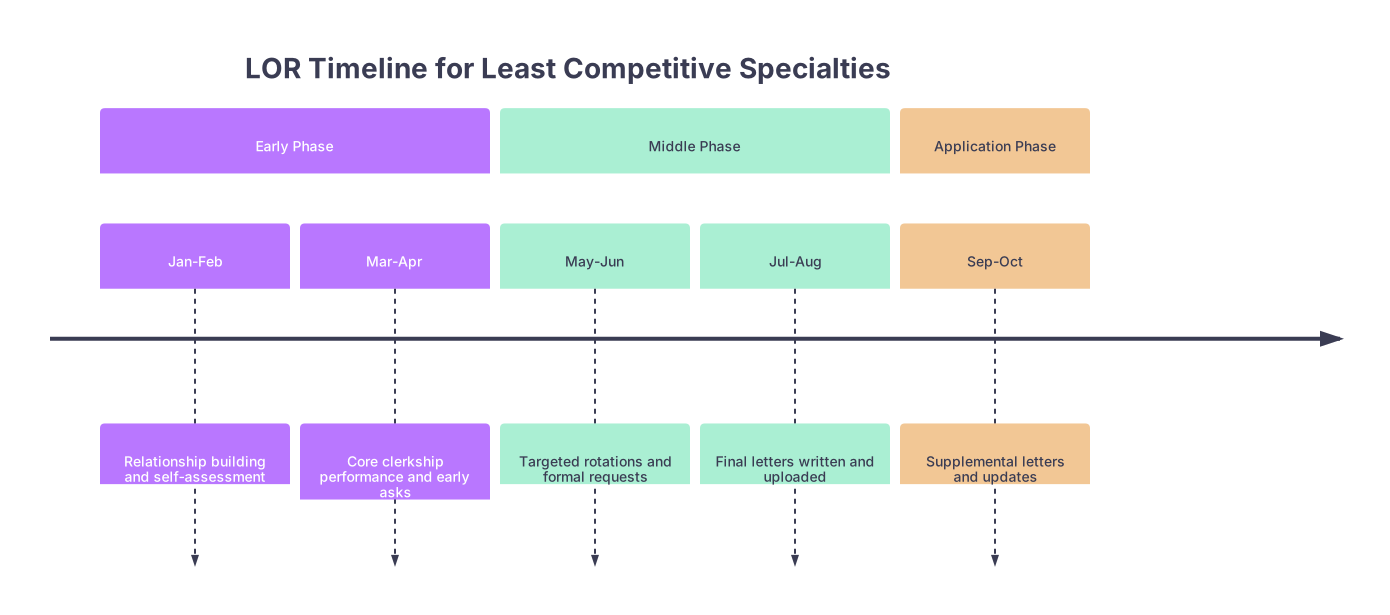
| Period | Event |
|---|---|
| Early Phase - Jan-Feb | Relationship building and self-assessment |
| Early Phase - Mar-Apr | Core clerkship performance and early asks |
| Middle Phase - May-Jun | Targeted rotations and formal requests |
| Middle Phase - Jul-Aug | Final letters written and uploaded |
| Application Phase - Sep-Oct | Supplemental letters and updates |
Now we will walk from January through October as if you are applying this upcoming cycle.
January–February: Foundation and Quiet Positioning
At this point you should stop thinking “least competitive” and start thinking “easy to screen out.” Because that is what these specialties do with bland applicants.
January: Reality check and target list
Focus:
- Decide on 1–2 realistic target specialties
- Map where letters should come from
At this point you should:
Choose your primary specialty
- Family medicine, psych, peds, IM, or prelim/TY.
- If you are wavering between two (say IM vs FM), your letters can usually serve both. But your personal statement and experiences will slant one way.
Define your letter mix goal
For most least competitive specialties, a strong mix looks like:Family Medicine
- 2 clinical letters from FM or primary care (FM, IM, med‑peds)
- 1 from another core (peds, psych, OB, EM) or research / leadership
Internal Medicine (community/non‑academic)
- 2 medicine letters (ward or ICU)
- 1 from another clinical area or research
Pediatrics
- 2 peds (ward, NICU, PICU, clinic)
- 1 from IM, FM, or another child‑facing context
Psychiatry
- 1–2 psych letters
- 1 IM/FM/neurology or similar “medical” letter
Prelim/TY
- 2 solid IM/FM letters
- 1 from any major rotation where you shined
Aim for 3 strong letters and a 4th optional.
Identify likely letter writers by name
Go through your past and upcoming rotations:- Who actually watched you see patients, present, write notes?
- Who gave you mid‑rotation praise or pulled you aside with feedback?
- Which departments are known for supporting students?
Make a list with specific names, not just “IM attending.”
| Specialty | Clinical Letters (Same Specialty) | Other Clinical/Research Letters | Total Target |
|---|---|---|---|
| Family Medicine | 1–2 | 1–2 | 3–4 |
| Internal Med | 2 | 1–2 | 3–4 |
| Pediatrics | 2 | 1–2 | 3–4 |
| Psychiatry | 1–2 | 1–2 (IM/FM/Neuro, etc.) | 3–4 |
| Prelim/TY | 2 (IM/FM) | 1–2 | 3–4 |
February: Relationship‑building on current rotations
Now you stop being anonymous on rotations.
At this point you should:
- Pick one attending on your current rotation and decide:
“I am going to be memorable to this person in a good way.”
How:
- Show up early. Present prepared. Follow up on labs and plans.
- Ask 1–2 content‑level questions per day (not “what specialty should I choose?”).
- At the midpoint, ask for feedback explicitly:
- “I am aiming to be in the top tier of students you have worked with. What is one thing I could do this week to get closer to that?”
The point is not to ask for a letter yet. You are building the case.
March–April: Core Rotations and First Asks
This is where most people blow it: they wait until after grades come out. Do not.
March: End‑of‑rotation micro‑asks
If you are finishing a strong rotation with an attending you impressed:
At this point you should:
Use the “would you be comfortable” language at the end of rotation:
- “I am planning to apply to family medicine this fall. Would you be comfortable writing me a strong letter of recommendation if I follow up by email closer to application season?”
Track responses:
- If they say “of course, happy to” – that is a green light.
- If they say “sure, I can write one” in a flat tone, or talk about “describing your performance” – that is a yellow / red flag. Do not rely on that letter.
Record everything in a simple tracking sheet:
- Name, specialty, rotation, month, response, strength (green/yellow/red).
You are not asking them to write it now. You are locking in willingness and enthusiasm.
April: Strategically front‑load key rotations
If you still have scheduling control for 3rd/4th year:
At this point you should:
Schedule at least one rotation in your target specialty between April–July with strong letter‑writers:
- For example, a reputable community FM program with residents and engaged attendings.
- Or an inpatient psych service known to write detailed letters.
If you are targeting psych or peds and you have not had those cores yet, push to complete them by June. Late cores = late letters.
On each of these important rotations, your internal goal:
- Be in the top 10–20% of students by effort, reliability, and teachability.
- Make it obvious that you are future residency‑ready, even in a “less competitive” field.
May–June: Formal Requests and Letter Packet Prep
This is the workhorse phase. No more vague intentions.
May: Prepare your “letter packet” and talking points
By this point you should have:
- At least 2 attendings verbally committed
- A plan for your 3rd and 4th letters
At this point you should:
Build a clean, concise LOR packet you can send to any writer:
- 1‑page CV (max 2 pages; nobody wants a novella)
- Step scores and transcript (unofficial is fine unless they ask)
- Draft personal statement or, at minimum, a 1‑paragraph “why this specialty” summary
- Bullet list: 3–5 specific patients/cases you managed with them, plus what you did
Clarify what you want emphasized for each writer:
- FM: continuity, communication, broad clinical thinking, underserved interest
- IM: thoroughness, reasoning, ownership of patients
- Peds: family communication, patience, advocacy
- Psych: rapport, interviewing, safety awareness
- Prelim/TY: reliability, work ethic, ability to function like an intern
You are making it easy for them to write a narrative that programs will actually read.
Early June: Convert verbal yes → formal request
ERAS usually opens for applicants mid‑June, but you do not wait to ask.
In the first half of June, you should:
Email each previously enthusiastic attending something like:
- Subject: “LOR request for family medicine residency – [Your Name]”
- Body (short, not a novel):
- Remind them who you are, when you worked together, one specific patient or project
- State your specialty target and why
- Ask: “Would you still be comfortable writing a strong letter of recommendation for my residency application?”
- Attach packet
Offer specifics on logistics:
- Mention that ERAS will generate a link.
- Clarify that letters should be addressed generically (“Dear Program Director”) unless for a specific program later.
Ask for a soft deadline:
- “If possible, I am aiming to have all letters uploaded by August 15. Let me know if that timing works for you.”
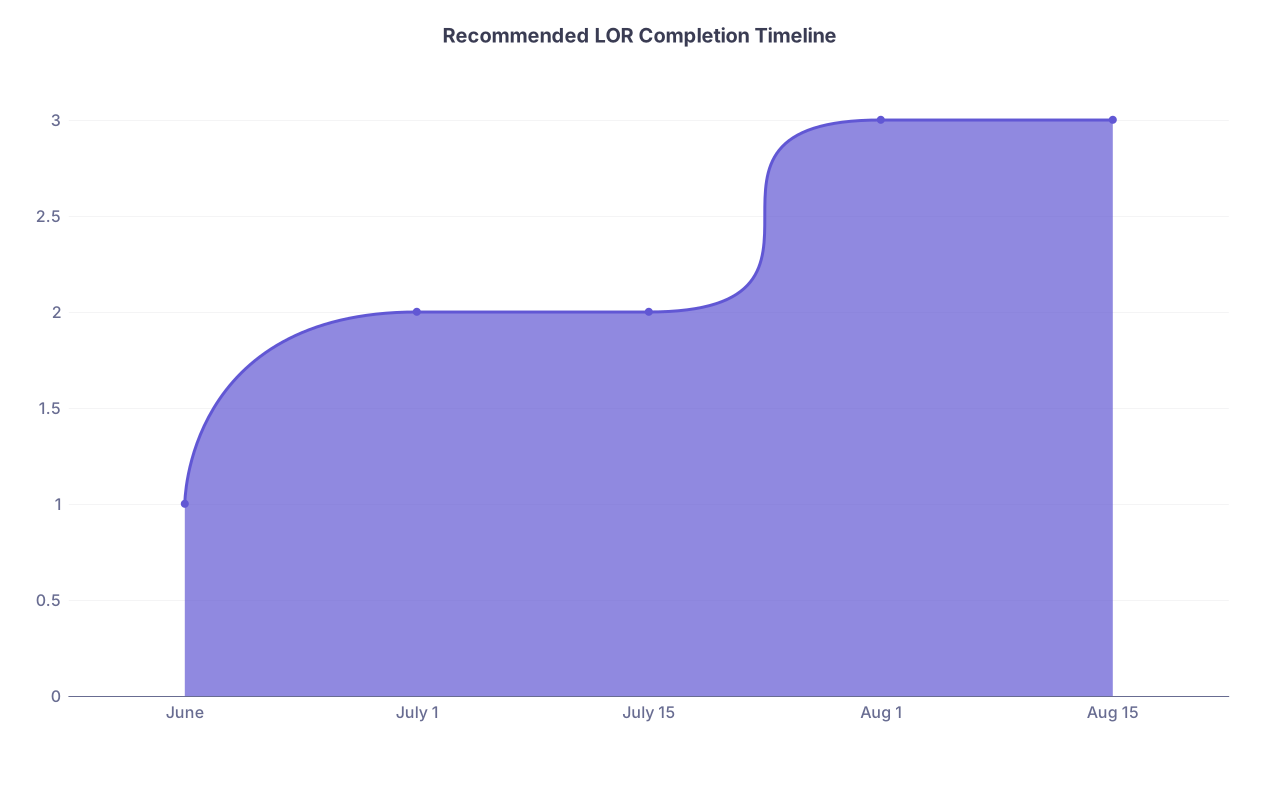
| Category | Value |
|---|---|
| June | 1 |
| July 1 | 2 |
| July 15 | 2 |
| Aug 1 | 3 |
| Aug 15 | 3 |
1 letter solid by early June, 2 by July, 3 final by mid‑August. That is the trajectory.
Late June: Lock in your specialty‑specific letter(s)
If your best letter is not from your target field yet, fix that.
At this point you should:
- Prioritize getting at least one letter from your specialty:
- For psych: from an attending psychiatrist on an inpatient unit or consultation service.
- For peds: from inpatient wards, NICU/PICU, or a busy clinic where you were actually seeing patients.
- For FM: from a clinic‑heavy or community FM rotation, not just inpatient “FM” that functioned like IM.
If you do not have that rotation until July:
- Tell the attending from the upcoming rotation early:
- “I plan to apply to pediatrics and this is my key rotation. I want to work at a level that would justify a strong letter from you. I would appreciate any feedback along the way to help me get there.”
You are not begging. You are setting a professional expectation.
July–August: Execution and Quality Control
Now programs are getting ready to read applications. Your letters need to exist, not be hypothetical.
July: Final rotation‑based letters + follow‑ups
July is busy. Students get tired and sloppy here. Do not.
At this point you should:
Finish your last key rotation strong
- Especially if this is your dedicated “audition” in FM, psych, peds, or IM.
Ask for the letter in person during the final week (if you have not already):
- “I have really valued working with you this month, and I am applying to psychiatry this cycle. Would you be comfortable writing a strong letter of recommendation based on my work here?”
Immediately follow with an email containing:
- Thank‑you
- Reminders of specific cases where you stood out
- Your packet attached
Check ERAS letter portal weekly
- Track which letters are uploaded and which are pending.
If a writer is late:
- Polite nudge at 2 weeks, another at 4 weeks.
- If still nothing by early August, you quietly promote another letter writer to your top 3 and downgrade this one to “nice if it shows up.”
August: Finalize, triage, and assign
By August 1, you should have:
- At least 2 letters uploaded
- A 3rd clearly in progress with a reliable writer
At this point you should:
Aim to have all 3–4 letters uploaded by August 15
- This gives you cushion before programs start their first wave of reviews.
Choose which 3–4 letters to use per specialty:
- For FM: use your FM and primary‑care‑flavored letters first. Save a research or IM letter as 4th.
- For psych: prioritize psych and then an IM/FM/neurology letter that proves you are a safe physician, not just a good listener.
- For peds: peds + child‑relevant others.
Assign letters strategically per program:
- Community FM program: 2 FM, 1 IM or peds.
- Academic IM: 2 IM, 1 research or core clerkship with strong narrative comments.
- Psych program with strong C/L service: psych letter from C/L rotation > random outpatient clinic letter.
You are curating a narrative: “This person works hard, gets along with teams, and fits our field.”

September–October: Application Live, Supplemental Letters, Damage Control
Applications release to programs mid‑September. The LOR story is mostly set by now, but you still have moves.
September: Confirm completeness and avoid silent disasters
At this point you should:
Double‑check every program has 3 assigned letters
- It is amazing how many people assign 2 and assume that is fine. It is not, unless a program explicitly says so.
If a critical letter never came:
- Do not hold your entire application for one missing letter.
- Use your best 3 available and apply on time.
- Email the delinquent letter writer one last time, thanking them again and noting you have already applied but would still value their letter as an addition.
If you add a late away rotation (e.g., psych elective in September):
- Consider asking that attending for a targeted letter for a subset of programs, especially reach programs that might care more about a very strong psych letter than early timing alone.
October: Optional update letters (used sparingly)
Most least competitive specialties are not obsessed with elaborate updates, but occasionally it helps.
At this point you should:
If you receive a particularly glowing late letter (e.g., from a psych away at a big‑name site):
- Add it to ERAS and assign it to programs that are slow to respond or that you strongly favor.
- You do not need to email programs saying “I added a new LOR” unless they explicitly invite updates.
If your original letter mix was weak for your true interest (e.g., too much IM, not enough psych):
- One strong specialty‑specific letter in October can still help for mid‑tier and lower‑tier programs that read applications later.

Red Flags and How to Avoid Them (By Time Point)
Let me be blunt. These are the patterns that get people quietly filtered out even in “easy” fields.
January–April:
- You are on autopilot on rotations, no one remembers your name.
- You never ask for feedback, so attendings have nothing specific to say.
May–June:
- You send vague emails: “Can you write a letter?” with no context, no CV.
- You do not specify specialty, so your letter sounds like it could be for ophthalmology.
July–August:
- You assume every “sure, happy to” means a strong, on‑time letter.
- You never follow up, then panic in September with 1 letter uploaded.
September–October:
- You delay submitting your entire application because “one more letter is coming.”
- You spam programs with update emails about every new letter.
You avoid all of this by treating LORs like a project with milestones, not like a favor you hope materializes.
Final Compressed Timeline Checklist
January–February
- Decide on primary specialty and ideal LOR mix
- Identify 4–6 potential writers by name
- Start intentionally standing out on rotations
March–April
- Ask end‑of‑rotation, in‑person micro‑asks about willingness
- Log responses and enthusiasm level (green/yellow/red)
- Schedule key specialty rotations between April–July if possible
May–June
- Build your LOR packet (CV, scores, statement, case list)
- Email formal requests to earlier attendings
- Start specialty‑specific rotations and signal your interest early
July–August
- Ask for letters during final week of key rotations, then email
- Track uploads weekly; send polite follow‑ups at 2 and 4 weeks
- Have 3 letters uploaded by August 15 and assign strategically
September–October
- Ensure each program has 3 assigned letters
- Add any high‑impact late specialty letters as they arrive
- Do not delay applications waiting for the “perfect” LOR
If you remember nothing else:
- Least competitive does not mean lazy letters.
- Strong LORs come from months of visible, reliable work, not a single flattering email.
- By August 15, your LOR story should be complete; September is for applying, not begging.