
It is April 1. You are a rising M4, leaning toward an “easier match” specialty—family medicine, pediatrics, internal medicine (categorical, not elite academic tracks), psych, maybe PM&R or pathology. Your classmates gunning for derm and ortho are already stressed beyond reason. You are thinking, “My specialty is not that competitive. I have time.”
This is where people get burned.
Even the least competitive specialties have applicants who are organized, polished, and early. Program directors still toss sloppy ERAS applications. Weak letters still sink you. Poor Step 2 timing still bites.
So here is your six‑month, point‑by‑point timeline to build a strong ERAS for less competitive specialties—so interview season actually feels manageable, not desperate.
Big Picture: Six Months at a Glance
ERAS typically opens for editing in early June and can be submitted in early-to-mid September. Count back six months from that September date.
Let us define:
- Month –6: March
- Month –5: April
- Month –4: May
- Month –3: June
- Month –2: July
- Month –1: August
- ERAS Release / Program Download: Mid‑September
The exact months will shift slightly by year, but the sequence does not.
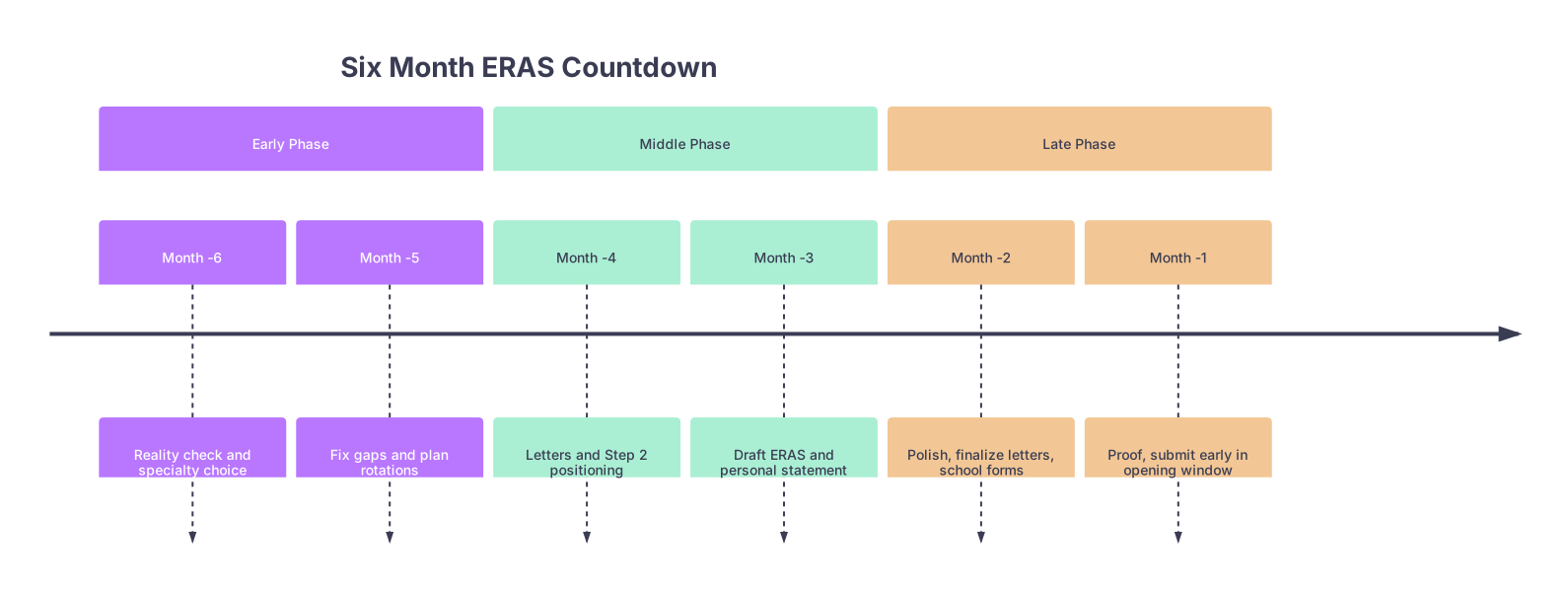
| Period | Event |
|---|---|
| Early Phase - Month -6 | Reality check and specialty choice |
| Early Phase - Month -5 | Fix gaps and plan rotations |
| Middle Phase - Month -4 | Letters and Step 2 positioning |
| Middle Phase - Month -3 | Draft ERAS and personal statement |
| Late Phase - Month -2 | Polish, finalize letters, school forms |
| Late Phase - Month -1 | Proof, submit early in opening window |
Now let us go month by month.
Month –6: Reality Check and Direction (e.g., March)
At this point you should stop telling yourself “least competitive” means “no planning.”
1. Pick a primary specialty and a backup level
You need a clear answer to, “What am I applying to?”
- Decide your primary specialty:
- Family medicine, internal medicine, pediatrics, psychiatry, pathology, PM&R, neurology—these are usually in the “easier match” bucket (community programs especially).
- Decide your ambition level:
- Are you targeting:
- Mostly academic programs in big cities?
- Mostly community programs and smaller cities?
- A blend?
- Are you targeting:
If you are a marginal applicant (low scores, red flags, leaves of absence), your “easy specialty” still needs a smart strategy—more programs, more community-heavy.
2. Honest profile audit
At this point you should sit down with:
- Your Step 1 (P/F) and Step 2 CK (or projected)
- Transcript and clinical eval comments
- Rough CV (even if messy)
Ask a faculty advisor who actually matches students in your chosen specialty. Not the random cardiologist you worked with once. Someone who knows current match trends.
Have them answer clearly:
- Are you on track, borderline, or concerning for:
- Academic programs?
- Community programs?
You want a blunt assessment. I have seen too many “You’ll be fine, it’s just family” conversations end badly.
| Specialty | Very Competitive Academic | Solid Academic | Community / Broadly Competitive |
|---|---|---|---|
| Family Medicine | 240+ | 230–239 | 215–229 |
| Pediatrics | 245+ | 235–244 | 220–234 |
| Psychiatry | 240+ | 230–239 | 215–229 |
| Internal Med | 245+ | 235–244 | 220–234 |
These are rough, not rules. But if you are far below these bands, you make it up with number of applications, strong letters, and being early.
3. Decide how many programs you will likely need
Not today to the exact number, but ballpark:
- Strong candidate: 20–35 programs
- Average candidate: 35–60 programs
- Below average / red flags: 60–80+ programs (heavier on community)
Write that down. It shapes how aggressive you must be with everything else.
Month –5: Fix Gaps and Line Up Rotations (e.g., April)
At this point you should be cleaning up obvious weaknesses before anyone sees your file.
1. Schedule “home” rotations in your chosen specialty
For easier‑match specialties, you often do not need a ton of away rotations. But you do need time with people who will write letters.
Aim to have:
- 1–2 rotations (home or away) in your specialty between now and August
- Preferably one in late spring/early summer and one early M4 if needed
During scheduling:
- Prioritize rotations where:
- You will work closely with attendings (not just fellows or residents)
- There is a known “letter writer” who supports students
2. Identify your letter writer targets
You want 3–4 strong letters:
- 2 letters in your specialty (non-negotiable)
- 1 additional clinical letter (primary care, medicine, surgery—depending on specialty)
- Optional: 1 research or “extra” letter if it is actually strong
Start a list with names and when you will work with them. If you already rotated with someone who loved you, flag them now and plan to circle back.
3. Patch the CV holes you can still fix
For easier‑match specialties, you do not need a publication list like a PhD. But you should not present a completely empty ERAS either.
Look at your application with a PD’s eyes. Find the obvious holes you can still realistically patch in 3–4 months:
- No leadership at all → grab 1–2 roles you can document (clinic lead, interest group officer, QI project lead)
- Zero exposure to your chosen specialty → shadow or join a specialty clinic day
- No service / volunteer continuity → pick a recurring thing (monthly clinic, tutoring) and commit
Do not overthink this. Pick a few and start now. Even 4–6 months of consistent activity looks much better than nothing.
Month –4: Letters, Step 2 CK, and Specialty‑Specific Positioning (e.g., May)
At this point you should be installing the foundation: Step 2 timing and letter game plan.
1. Lock in your Step 2 CK timeline
For less competitive specialties, Step 2 CK is often the main objective score PDs see now that Step 1 is P/F.
Your target: Score in time for it to appear in ERAS by when programs really start reviewing (late September to early October).
Best‑case options:
- Take Step 2 by late June–mid July
- That usually gets scores back before mid‑September or shortly after
If you are weak on standardized tests and need extra prep, fine. But decide now and build your study plan around rotations.
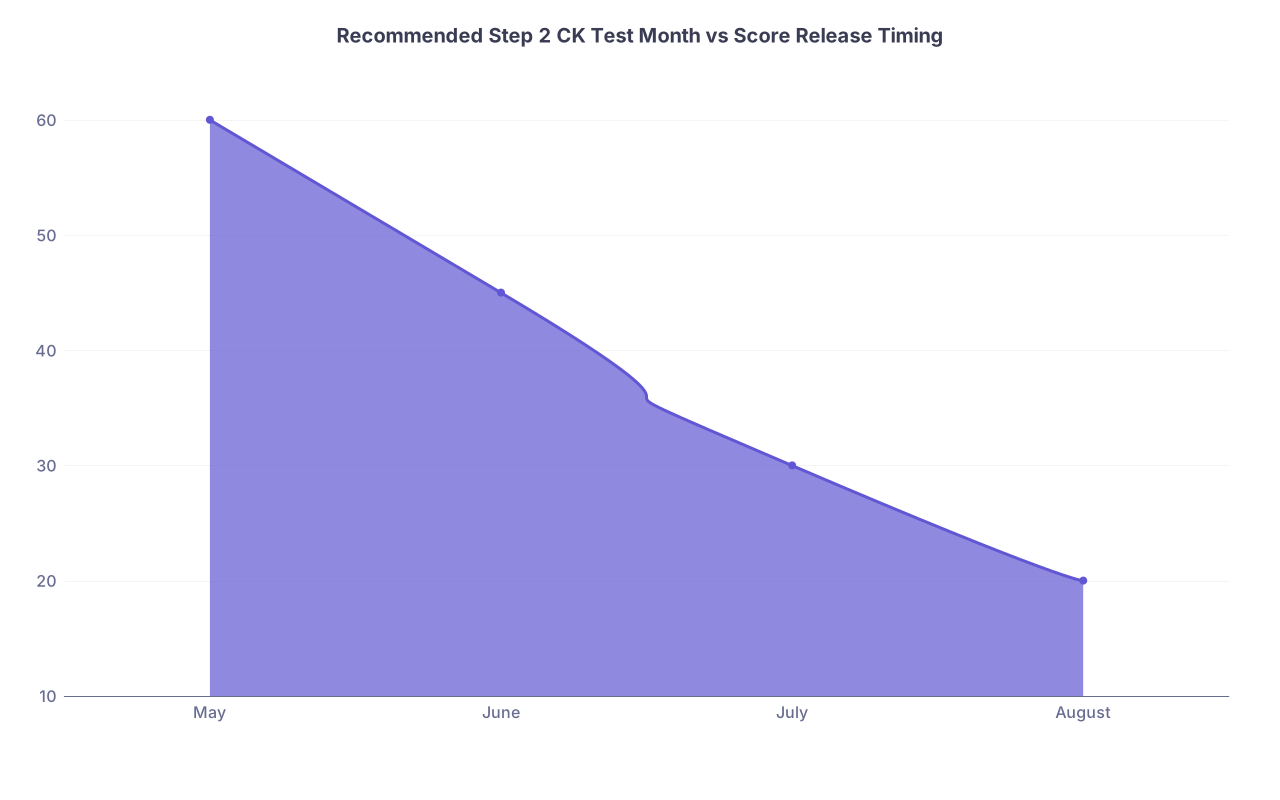
| Category | Value |
|---|---|
| May | 60 |
| June | 45 |
| July | 30 |
| August | 20 |
Here, lower days to score release (i.e., earlier test) makes your life easier. Testing in August is still possible, but programs may see your file late.
2. Start acting like a letter hawk on current rotations
On your current rotation (especially if it is your chosen specialty or medicine/psych/peds):
- Show up early, be reliable, read about your patients
- Ask for mid‑rotation feedback: “What can I do better to be at the level of a strong residency applicant?”
- Then actually fix what they mention. Quickly.
End of rotation (if you performed well):
“Dr. Smith, I am applying to psychiatry this fall and really enjoyed working with you. Would you feel comfortable writing a strong letter of recommendation for my residency applications?”
If there is any hesitation, move on. You want enthusiastic letters, not lukewarm paragraphs.
3. Specialty‑specific positioning
You are not doing ortho, but you still need a narrative.
Examples:
- Family medicine: Longitudinal clinic, community work, primary care interest group, OB exposure if possible
- Pediatrics: Peds rotations, camp/teaching/tutoring kids, NICU or PICU exposure
- Psychiatry: Inpatient psych, consult‑liaison, addiction clinic, mental health advocacy
- Internal medicine: Strong medicine clerkship, sub‑I scheduled, maybe a small QI or case report
Pick 2–3 specialty‑linked experiences you already have or can still add. That becomes the backbone of your personal statement and ERAS experiences.
Month –3: Drafting ERAS Content and Personal Statement (e.g., June)
ERAS typically opens this month for you to start entering info. At this point you should be turning raw experiences into written content.
1. Build your experience list early
Sit down and write a “master CV dump”:
- Every activity since college: jobs, clubs, research, volunteering, leadership, teaching, languages, hobbies
- Jot rough dates and time commitments
Then start mapping to ERAS categories:
- Work
- Volunteer
- Research
- Extracurricular / leadership
- Teaching / tutoring
You will not list everything. Cut anything trivial or one‑off if you have enough stronger items.
2. Choose your three “most meaningful” experiences
For less competitive specialties, this section still matters. Program directors actually read it. More than your random club membership.
Pick 3 that:
- Show you are reliable over time (longitudinal)
- Connect naturally to your chosen specialty or to being a good resident (work ethic, service, teamwork)
Then:
- Write a first draft of each description:
- 1–2 sentences of what the thing is
- 2–4 sentences of what you did, what changed, or what you learned that matters for residency
Do not try to sound poetic. Sound like you understand patient care, systems, and your role.
3. Draft your personal statement
For “easier match” specialties, PDs hate two things:
- Generic, copy‑paste essays: “Ever since childhood, I knew I loved [specialty]…”
- Trauma monologues that never talk about actual residency work
A simple structure that works:
- Brief opening story or moment that pushed you toward the specialty (one paragraph, not half the essay)
- 2–3 paragraphs on:
- Clinical experiences that cemented your interest
- What you value in patient care within this specialty
- Skills / traits you bring (reliability, communication, curiosity, etc.)
- Closing paragraph:
- What you are looking for in a program
- How you see your future in the field (even if vague: community, academic, underserved, etc.)
By the end of Month –3, you want:
- A full draft of the personal statement
- Drafts of most ERAS experiences
- A rough list of programs you may apply to (you can refine later)
Month –2: Letters Finalized, ERAS Almost Complete (e.g., July)
At this point you should have the skeleton of your application built. Now you make it real.
1. Confirm Step 2 CK is done or imminent
If you have not taken Step 2 yet, this is tight. Make sure:
- You have an actual test date on the calendar
- Your practice scores are in the range you can live with
For less competitive specialties, a slightly lower Step 2 is not the end. But a very low score or fail this late becomes a real problem.
If you already tested:
- Confirm expected score release date
- Plan to release your score to programs. Hiding it looks worse than a slightly low number for most easier specialties.
2. Lock in your letters
By now, you should:
- Have asked all planned letter writers
- Enter them in ERAS as LoR authors
- Send them:
- Your CV
- Draft personal statement
- A short summary of your goals (e.g., “Applying mostly to community psychiatry programs in the Midwest, interested in severe mental illness and addiction”)
Politely give them a deadline:
“ERAS will allow me to assign letters in early September. I would be very grateful if your letter could be uploaded by the end of August.”
Track who has uploaded and who has not. You do not need to remind every week, but you absolutely should follow up if August is ending and the letter is missing.

3. Tighten ERAS experience entries
This is cleanup time:
- Convert rough notes to concise, impact‑focused bullets or short paragraphs
- Kill filler like “I gained valuable insight...” unless it adds something specific
- For each entry, ask: “Does this show something useful about me as a resident?”
Make sure:
- Dates are accurate and consistent
- You do not exaggerate time commitments—PDs can smell nonsense
4. Start tailoring for specialty vibe
Even in less competitive fields, there is a “type” programs like:
- FM / Peds / Psych: Emphasis on communication, empathy, teamwork, continuity
- IM: Clinical reasoning, complexity, responsibility, interest in either primary care or subspecialty
- Pathology / PM&R / Neuro: Curiosity, patience, pattern recognition, team‑based care
Align your descriptions and statement to match the field you chose. Not forced, just targeted.
Month –1: Final Polish and Submission Strategy (e.g., August)
At this point you should be transitioning from “building” to “polishing and sending.”
1. Program list: rough to real
Use a combination of:
- Your advisor’s recommendations
- Program websites
- Past match lists from your school
- Your own geography and lifestyle constraints
Create three columns:
- Reach (for your stats): a few nicer academic or urban programs
- Realistic: majority of your list
- Safety: solid community programs in less saturated locations
Then assign approximate numbers based on your risk tolerance:
| Applicant Type | Reach | Realistic | Safety | Total |
|---|---|---|---|---|
| Strong | 5–8 | 15–20 | 5–8 | 25–35 |
| Average | 5–10 | 20–30 | 10–20 | 35–60 |
| Red Flags / Low CK | 5–10 | 20–30 | 30–40 | 55–80 |
You do not need to be perfect. You do need to avoid applying to 15 total programs and assuming “it’s just family medicine, I’ll be fine.”
2. Personal statement: final edits
At this point, your statement should:
- Be 1 page, not 2–3
- Have at least one faculty reader and one non‑medical reader for clarity and typos
- Actually sound like you, not a ChatGPT clone or a generic textbook
Do a final pass for:
- Overly dramatic language
- Repetition
- Anything you would cringe reading out loud to a PD
3. ERAS proofreading
You want this done by the end of August, not the night before you submit.
Checklist:
- Name, contact info, AAMC ID correct
- All experiences filled in and sensible
- Awards and honors accurate (no invented stuff, obviously)
- LoR assignments ready (even if some are still uploading)
- Photo: professional, neutral background, not a graduation shot
Get one person who has done this before (recent graduate, resident, advisor) to glance at your full application PDF. They often catch small but embarrassing issues.

ERAS Opening and Submission: First Two Weeks of September
ERAS opens for program submission in early-to-mid September. Programs can start downloading later in the month, but you should not be waiting for the last minute.
At this point you should be thinking about clean, early, not perfect.
1. When to submit
Your goal: Submit within the first 3–5 days of the submission opening date.
For least competitive specialties, applying on Day 1 vs Day 5 is not life or death. But applying 3 weeks late? That absolutely costs interviews at smaller or more popular programs.
2. Letter timing anxiety (and how to not let it paralyze you)
Common mistake: waiting to submit ERAS until every single letter is uploaded.
Do this instead:
- Submit your ERAS application once it is complete, even if 1 letter is still pending
- Assign letters as they arrive (you can change which letters go to which programs later)
Programs understand letters trickle in. A missing letter in late September is not great, but it is better than a late ERAS plus missing letters.
3. USMLE score release and updates
If Step 2 results post after you submit:
- Make sure they are released to all programs promptly
- You do not need to email every PD in an easier‑match field unless it is something they are clearly waiting on
If your Step 2 is lower than you hoped but not catastrophic, do not spiral. For family, psych, peds, general IM, the interview invites depend heavily on:
- Being early
- Clean application
- Decent letters
- No giant professionalism red flags
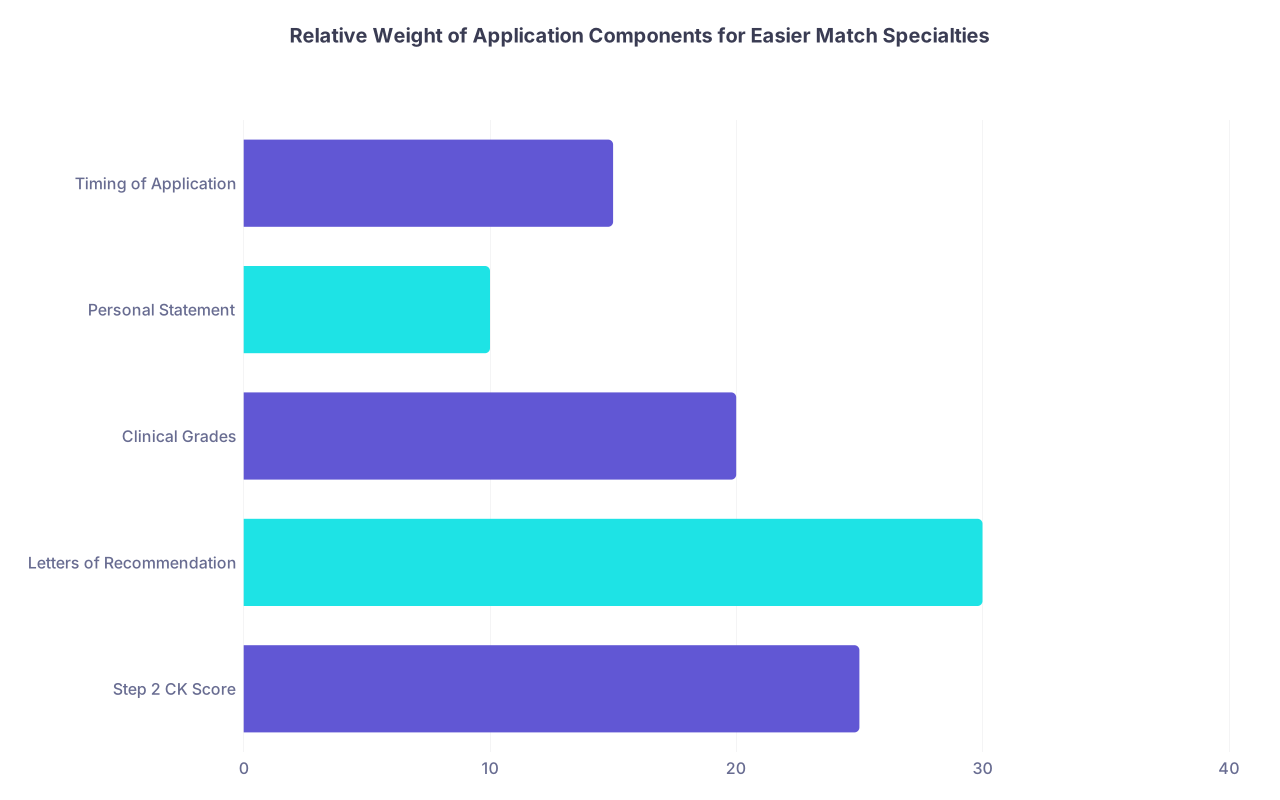
| Category | Value |
|---|---|
| Step 2 CK Score | 25 |
| Letters of Recommendation | 30 |
| Clinical Grades | 20 |
| Personal Statement | 10 |
| Timing of Application | 15 |
After Submission: Weeks 1–4 Post‑ERAS
You are done with the build phase. Now you switch to maintenance and prep.
At this point you should:
- Keep your email and ERAS messages monitored daily
- Respond quickly but professionally to any:
- Interview offers
- Supplemental requests
- Preference signaling forms (if your specialty uses them)
Use this time to:
- Draft answers to common interview questions for your specialty
- Review your own ERAS and statement so you do not contradict yourself
- Keep clinical performance solid—residents talk, and PDs sometimes ask around about current rotations

Three Things to Remember
- “Least competitive” is not the same as “effortless.” Weak, late, or sloppy ERAS applications get ignored in every specialty.
- Step 2 CK, timely letters, and a coherent specialty story carry far more weight than another random bullet point on your CV. Get those right early in the six‑month window.
- Submit early, not perfectly. A clean, on‑time ERAS with solid letters and a clear narrative will make even the easier‑match specialties feel genuinely low‑stress.