
The last two weeks before ERAS submission will not “transform” your application. But they can absolutely tilt the odds in your favor—especially for the least competitive specialties where basic execution beats brilliance.
You are not trying to become a new person in 14 days. You are trying to:
- Avoid disqualifying mistakes.
- Signal clearly that you understand the specialty.
- Exploit every small, realistic lever that still moves.
I will walk you through that, day by day and week by week.
First, understand what “least competitive” really means this late
Before I get into the timeline, you need a blunt framing.
Least competitive specialties (in the ERAS context, historically):
- Family Medicine
- Internal Medicine (categorical, non-physician scientist tracks)
- Pediatrics
- Psychiatry (trending up, but still accessible at many programs)
- Pathology
- Neurology
- Some community-based prelim and transitional year slots
Not “easy.” Just more forgiving if:
- You are slightly below average on scores.
- Your school is not top tier.
- Your research is thin.
Two weeks out, your priorities change:
- You will not create new publications.
- You will not rewrite your entire life story.
- You can dramatically improve targeting, clarity, professionalism, and volume of applications.
At this point, you should stop chasing fantasy programs and start engineering a safe floor.
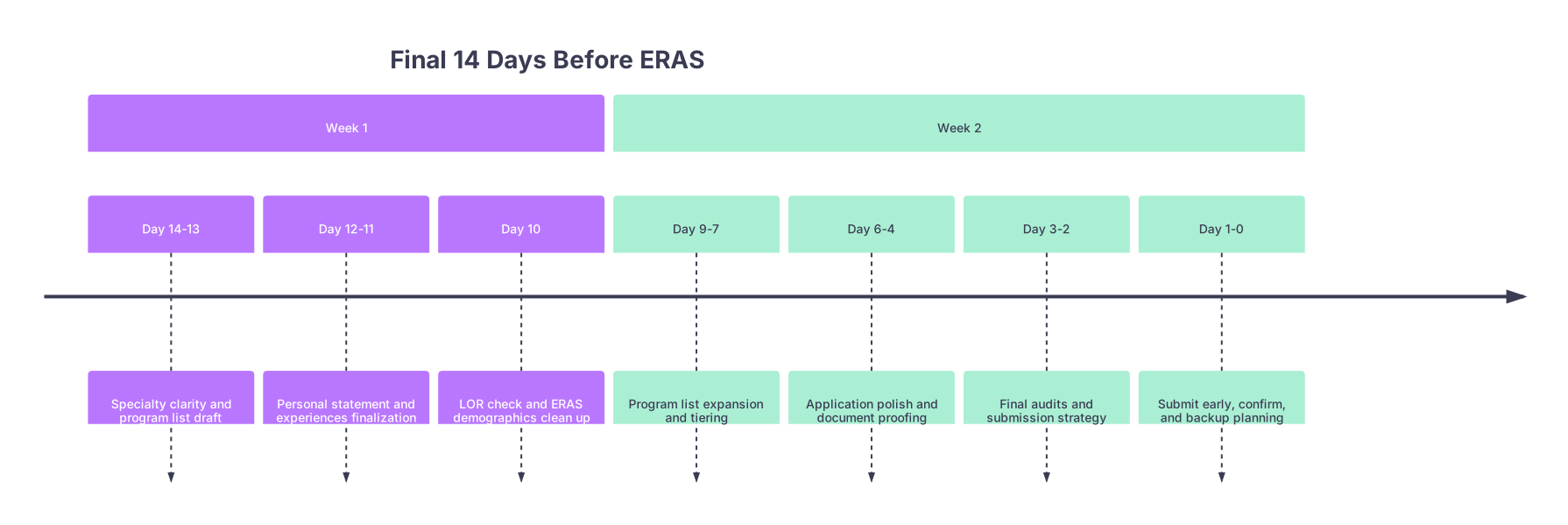
Overview: 14-Day ERAS Optimization Timeline
| Period | Event |
|---|---|
| Week 1 - Day 14-13 | Specialty clarity and program list draft |
| Week 1 - Day 12-11 | Personal statement and experiences finalization |
| Week 1 - Day 10 | LOR check and ERAS demographics clean up |
| Week 2 - Day 9-7 | Program list expansion and tiering |
| Week 2 - Day 6-4 | Application polish and document proofing |
| Week 2 - Day 3-2 | Final audits and submission strategy |
| Week 2 - Day 1-0 | Submit early, confirm, and backup planning |
We will go phase by phase. Within some days I will give you hour-by-hour structure if you are really in crunch mode.
Week 1: Lock the Foundation (Days 14–8)
At this point you should stop adding new experiences and start sharpening how you present what you already have.
Day 14–13: Commit to specialty and risk tolerance
You cannot optimize if you are not decisive.
Morning (3–4 hours): Reality check on competitiveness
Pull up:
- Your Step 1 (pass/fail) and Step 2 CK (or projected)
- Class rank / quartile if you know it
- Any major red flags (LOA, failures, professionalism notes)
Then compare yourself—honestly—to typical matched applicants in the least competitive specialties.
| Specialty | Step 2 CK Range* | Research (mean # pubs/abstracts) | AOA/Common? |
|---|---|---|---|
| Family Medicine | 220–235 | 1–3 | Rare |
| Pediatrics | 225–240 | 2–4 | Uncommon |
| Psychiatry | 225–240 | 2–4 | Uncommon |
| Pathology | 220–235 | 3–6 | Uncommon |
| Neurology | 225–240 | 2–5 | Uncommon |
*Approximate, recent-cycle style ranges; individual programs vary.
Ask yourself:
- Am I roughly in range for my chosen specialty?
- If not, is there a plan B specialty that is more forgiving (e.g., FM, IM, Path)?
Afternoon (2–3 hours): Decide your structure
Decide one of these tracks:
Single least competitive specialty only
Example: 70 FM programs, all-in.Dual-apply strategy
Example: Psych + FM, Peds + FM, Neuro + IM.Primary + true backup
Example: 40 Psych + 50 FM. You would actually attend either.
Make this decision today. Waffling kills time you do not have.
Day 12–11: Personal statement and experiences – specialty signaling
If your personal statement reads like it could apply to surgery, radiology, or law school, you are doing it wrong.
At this point you should optimize for clarity and alignment, not poetry.
Day 12: Primary specialty personal statement
Goal: One polished PS for your main least competitive specialty.
Focus structure:
Opening 4–5 lines:
- Brief clinical moment in that specialty.
- Not dramatic, just specific. “On my family medicine rotation, I watched Dr. Patel manage three generations of one family in a single clinic session…”
Middle paragraphs (2–3):
- Concrete experiences that show fit: continuity, communication, team-based care, underserved work, behavioral health, etc.
- For pathology: pattern recognition, diagnostics, lab work, systems thinking.
- For psychiatry: longitudinal relationships, interviewing, multidisciplinary teams.
Closing paragraph:
- What you want from residency (teaching, community focus, academic vs community is fine but do not over-specify).
- What you bring: reliability, work ethic, team function, adaptability.
Checklist before you stop editing:
- Does the specialty appear explicitly by name multiple times?
- Is there at least one specific patient scenario or rotation story grounded in that field?
- Are there any generic clichés you can cut (“It was at that moment I knew…”, “I have always wanted to be a doctor”)?
You are not trying to impress a novelist. You are trying not to be forgettable or off-target.
Day 11: Backup specialty statement (if dual-applying)
For dual applicants to another least competitive specialty, you have two options:
- Two separate PS (ideal if time permits).
- One adaptable core PS with specialty-specific tweaks (acceptable if you are overwhelmed).
Recommendation:
- If the backup is FM or IM, you can reuse 60–70% of psych/peds/neuro content and reframe it around continuity, breadth of medicine, outpatient or inpatient focus.
At this point you should:
- Finish both statements to the level you would not be embarrassed reading them aloud to a PD on an interview day.
- Lock them. No more major rewrites next week.
Day 10: Experiences section and ERAS “story spine”
Now clean up your experiences so they tell the same story as your PS.
Morning (2 hours): Prune and rank
Go to ERAS Experiences:
- Remove fluff positions that add nothing (1-month volunteering with no real duties, generic club membership without leadership).
- Keep 10–15 real entries:
- 2–4 clinical jobs/volunteering
- 2–4 leadership/teaching roles
- 2–4 research / scholarly
- A few meaningful extracurriculars
Rank your “most meaningful” to match your specialty:
- FM/Peds/Psych: continuity clinics, community service, primary care, mental health experiences, teaching.
- Pathology: lab, research, case-based work, QA projects.
- Neurology: neuro rotations, stroke service, neuro research.
Afternoon (3 hours): Rewrite 4–6 key entries
For your top experiences (especially the 3 “most meaningful”), structure bullets like this:
- 1 line: what you did (your responsibility).
- 1–2 lines: what you learned or the impact (preferably linked to your specialty skills).
Example for Family Medicine:
- “Conducted preliminary patient histories in a continuity clinic, focusing on chronic disease management and preventive care.”
- “Learned to track progress over several months, coordinating care plans with attending physicians and social workers for patients with limited access to healthcare.”
No grandiosity. Just competence and alignment.
Day 9–8: Letters and logistics
You are almost out of time to fix letters, but you are not out of time to deploy them wisely.
- Aim for 3–4 total in your primary specialty lane:
- 1–2 from core rotations in that field
- 1 from IM/FM if you are psych/peds/neuro
- 1 from research or a strong, longitudinal mentor if needed
At this point you should:
- Confirm every letter is uploaded (or will be within a few days).
- For least competitive specialties, a well-known community physician who loves you often beats a famous academic who barely knows you.
If one letter is weak or generic but you suspect it, do not obsess. Just make sure strengths are front-loaded in your other three.
Week 2: Targeting, Volume, and Polish (Days 7–1)
Now your application “content” is mostly fixed. This week is about where and how you send it.
Day 7–6: Build and tier your program list for least competitive fields
You win or lose many matches right here. Program list construction is underrated.
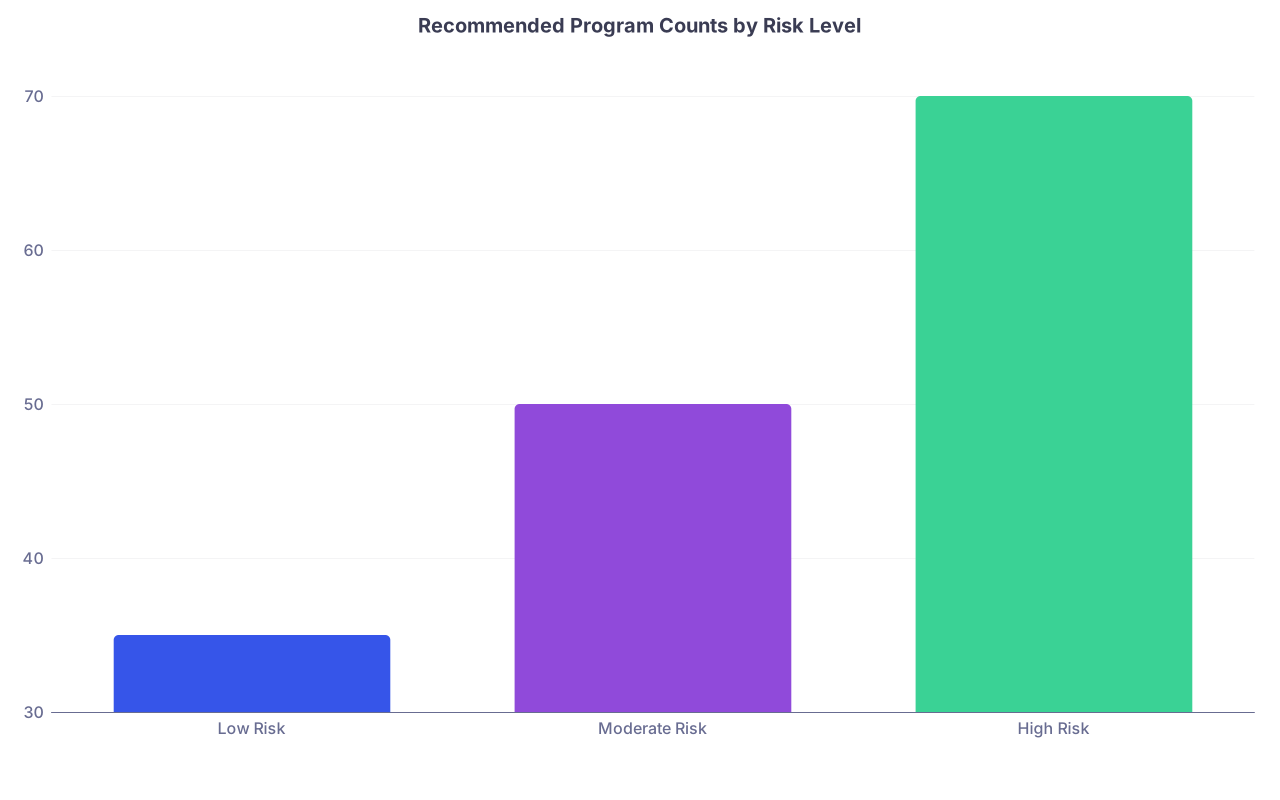
Step 1: Determine target volume
More competitive applicants can play lean. You are optimizing for safety.
A reasonable range:
- FM / IM / Peds: 40–70 programs
- Psych / Neuro / Path: 40–60 programs
If you have:
- A fail, LOA, or score below ~215–220: lean toward the upper end and strongly consider FM or Path as primary or backup.
| Category | Value |
|---|---|
| Low Risk | 35 |
| Moderate Risk | 50 |
| High Risk | 70 |
Step 2: Tiering
Create three tiers for your primary least competitive specialty:
Tier 1 (Reach but realistic)
- University-affiliated, desirable cities, moderate Step averages.
Tier 2 (Target)
- Community/university-affiliated, mid-sized cities, stable fill rates.
Tier 3 (Safety)
- Community-heavy, smaller cities or rural locations, historically fill with IMGs/ DOs/ lower scores.
You should:
- Spend more time selecting Tier 2 and Tier 3.
- Intentionally overweight Tier 3 if you are high risk.
Practical approach (3–4 hours):
- Use FREIDA and program websites.
- For each program, quickly tag: “Prefer”, “Neutral”, “Only if needed”, “No”.
- Fill your target number mostly from “Prefer” and “Neutral,” then plug gaps with “Only if needed.”
Day 5: Backup specialty integration (for dual applicants)
If you are dual applying:
- Decide how many applications go to your backup least competitive specialty.
Example:
- Psych primary, FM backup
- 45 Psych programs
- 45 FM programs
- Peds primary, FM backup
- 40 Peds
- 40 FM
Split depends on your risk:
- If your primary specialty score profile is very marginal, tilt heavier to FM/IM/Path.
At this point you should:
- Make sure your personal statements and LOR assignments match these lists logically.
- You do not want a psych-heavy letter set going to Path, or vice versa.
Day 4–3: Application polish – zero unforced errors
This is where a lot of applicants get lazy. Do not.
Day 4: Line-by-line ERAS audit
Block 2–3 hours with no phone.
Go through:
- Demographics and contact info – no mistakes.
- Education entries – dates correct, degrees correct.
- USMLE/COMLEX – all scores entered correctly.
- Experiences – no duplicate entries, no obvious typos.
- Publications – consistent citation style, no inflated authorship.
Ask yourself:
- If a PD glanced for 90 seconds, would anything look off, exaggerated, or sloppy?
If English is not your first language, ask one trusted native speaker (friend, advisor) to scan:
- Personal statement
- Experience descriptions (at least the top 3–5)
Do not crowd-source this with 10 opinions. Two max.
Day 3: Specialty signaling final pass
You are applying to least competitive specialties. That means your biggest threat is blending into a massive pile.
Make sure:
- Your Top 3 Experiences + PS + LORs all point to the same coherent story.
- You are not sending a research-heavy, cardiology-obsessed narrative to Family Medicine programs.
- For Psych/FM/Peds: make your interest in continuity care, communication, complex psychosocial factors loud and clear.
- For Pathology: highlight analytic work, attention to detail, pattern recognition, exposure to lab or case-based diagnostics.
- For Neurology: neuro rotations, cognitive / stroke interest, longitudinal follow-up.
Day 2: Submission timing and last risk checks
ERAS is not a race by the minute, but for less competitive specialties, being in the first batch helps. Programs often review in waves.
Aim to submit:
- Morning of opening day (or at least on that day) – not days later.
Day 2 tasks (2–3 hours):
Re-check program list
- Remove any obvious mismatches (insanely competitive academic programs if you are a clear long-shot and already have a deep list).
- Verify you did not forget strong community programs that historically like your school / region / DOs / IMGs.
Backup plan sanity check
- If you are borderline for your primary least competitive specialty, is your backup list large enough?
- If you had to match into only the backup, would you tolerate that outcome?
Letters assignment audit
- Psych applications get their psych letters.
- FM/Peds get FM/Peds/Internal letters appropriately.
- Pathology gets at least one path letter if possible, plus strong clinical letters.
Day 1–0: Submit, confirm, and then start interview-phase prep
On submission day, your job is not to tinker. Your job is to execute cleanly.
Morning: Final 60-minute pass
- Skim personal statements (no major edits).
- Skim experiences for glaring typos.
- Quick mental check: “Does this clearly present me as a future [specialty] resident?”
Submit by midday if possible.
After submission:
- Take screenshots or export confirmation pages.
- Save a local copy of your PS and experiences. You will reuse phrasing for:
- Future emails.
- Interview prep.
- Thank-you notes.
Late Day 0 / Day +1: Start low-level interview prep
For least competitive specialties, you will still interview. Under-prepared applicants blow easy chances.
Start a simple document:
- 4–5 “Why this specialty?” talking points consistent with your PS.
- 3–4 patient stories that demonstrate your fit: continuity, teamwork, communication, resilience.
- 2–3 questions to ask every program that show you understand the field (e.g., for FM: “How does your program structure longitudinal continuity clinics?”).
Strategic Notes Specific to Least Competitive Specialties
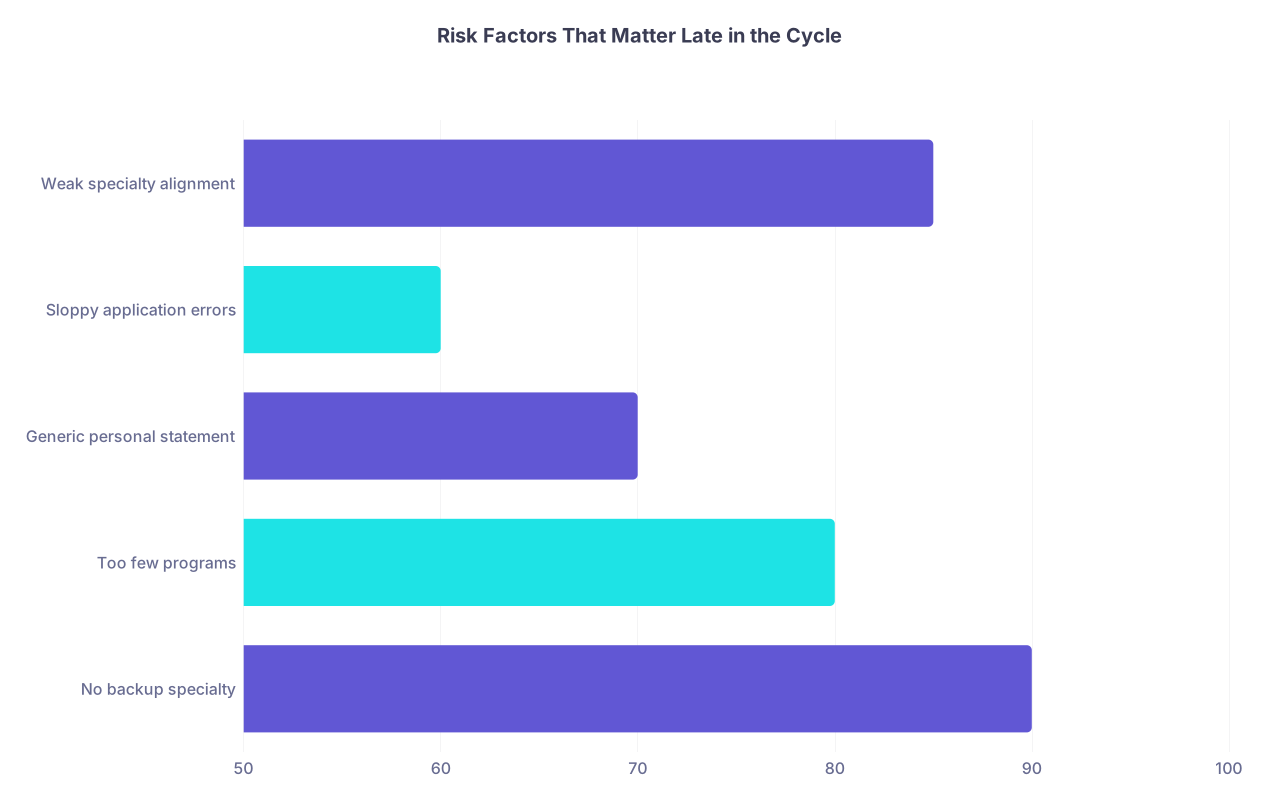
Sprinkling in a few specialty-specific realities that should guide your decisions in these two weeks:
| Category | Value |
|---|---|
| No backup specialty | 90 |
| Too few programs | 80 |
| Generic personal statement | 70 |
| Sloppy application errors | 60 |
| Weak specialty alignment | 85 |
Family Medicine / Community IM:
- Value: reliability, communication, commitment to primary care, underserved work.
- Programs notice: any sign you actually like outpatient medicine and continuity.
- Red flag: PS that sounds like “I wanted something else but settled.”
Pediatrics:
- Value: patience, team orientation, family communication.
- Programs notice: any real longitudinal pediatrics exposure, teaching, advocacy.
Psychiatry:
- Value: genuine interest in mental health, comfort with ambiguity, good interviewing.
- Programs notice: psychotherapy exposure, crisis lines, community psych experiences.
- Watch: avoid overselling personal trauma as your only reason for choosing psych.
Pathology:
- Value: detail orientation, academic curiosity, ability to work behind the scenes.
- Programs notice: any lab, research, or pathology elective you did, no matter how small.
Neurology:
- Value: clinical reasoning, patience, interest in complex differential diagnoses.
- Programs notice: neuro sub-I, stroke service, neuro research, or close mentoring.
If two weeks before ERAS you suddenly pivot to one of these fields, your only job is to:
- Make your existing experiences read like a coherent path toward that specialty.
- Avoid implying: “I picked this because it is less competitive.”
What absolutely does NOT belong in these two weeks
To keep you from wasting time:
- Writing a completely new research-based CV narrative when you have almost no research.
- Obsessively micromanaging adjectives in your PS while your program list is still half-finished.
- Trying to cold-email dozens of program directors begging for interviews. (One or two very targeted emails later, after submission, maybe. Not now.)
- Panicking and adding a third or fourth specialty. Dual applying is enough. Triple applying screams lack of direction and makes your messaging incoherent.
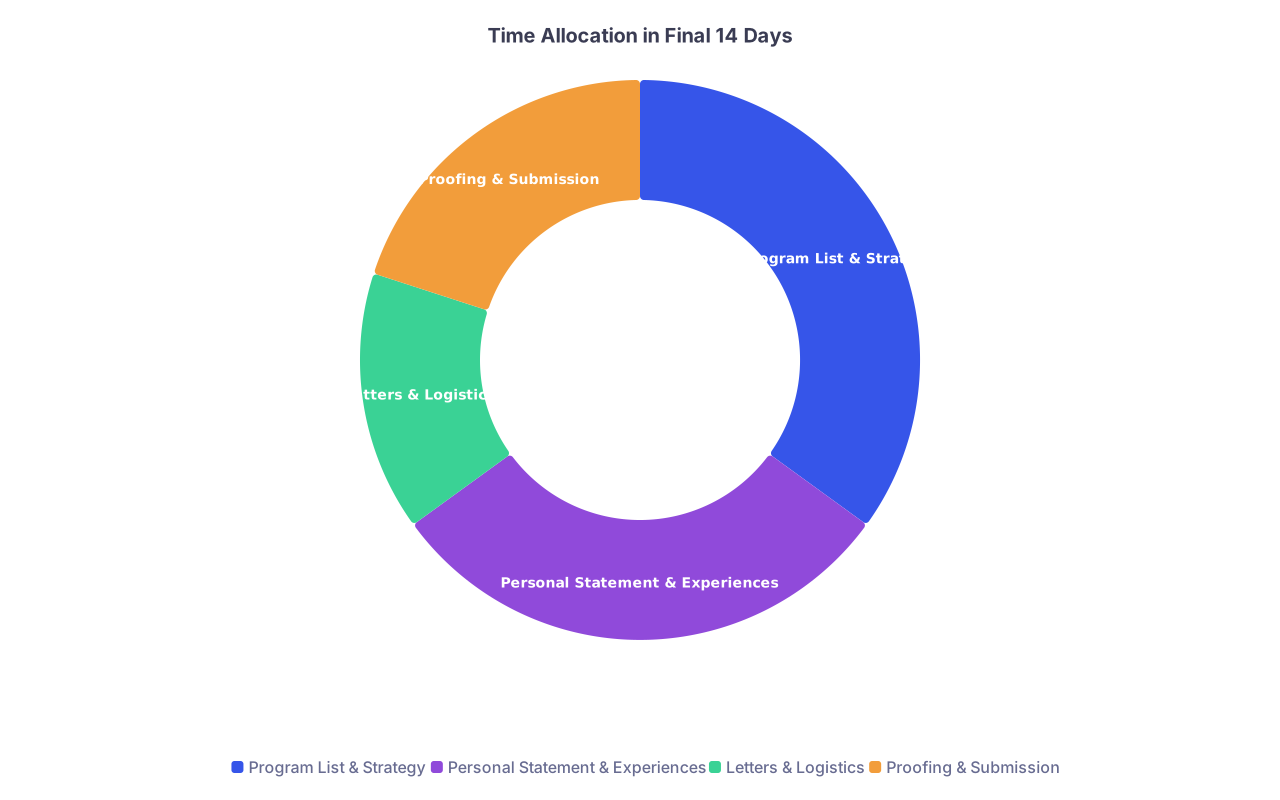
Visual Summary: Final 14-Day Task Emphasis
| Category | Value |
|---|---|
| Program List & Strategy | 35 |
| Personal Statement & Experiences | 30 |
| Letters & Logistics | 15 |
| Proofing & Submission | 20 |
Quick closing summary
Three things you should walk away with:
- The last two weeks before ERAS are about execution, not reinvention. You refine your story, you align it with a least competitive specialty, and you remove sloppy errors.
- Your program list and specialty signaling matter more than another half-page tweak to your personal statement. Depth in one or two less competitive specialties beats scattered applications to five.
- A strong floor beats a fragile dream. Build enough Tier 2 and Tier 3 programs—and a real backup specialty if needed—so that, come Match Day, you are opening an envelope, not an email saying “You did not match.”