
The belief that “least competitive specialties are automatic backups” is wrong—and dangerous. If you treat them like a safety net, they’ll treat you like an afterthought on Match Day.
Here’s the real play: you target these specialties early, you plan like someone aiming for derm, and you leverage the fact that you don’t need a 270 to match. You need consistency, timing, and receipts that you actually want this field.
I’ll walk you from early MS2 all the way to Match Day, step by step, with a bias toward the commonly less competitive specialties:
- Family Medicine (FM)
- Internal Medicine (IM, categorical, non-elite academic)
- Pediatrics
- Psychiatry
- Pathology
- PM&R (depends on year, but often middle-to-lower tier)
- Neurology (non-elite programs)
You’re not coasting. You’re aiming for a solid, drama-free match.
Big Picture: What “Least Competitive” Actually Buys You
Before we slice this up by month, you need a realistic frame.
| Specialty | General US MD Competitiveness | Typical Step 2 Aim | Research Pressure |
|---|---|---|---|
| Family Med | Lower | 220–230+ | Low |
| Pediatrics | Lower–Moderate | 225–235+ | Low–Moderate |
| Internal Med | Broad range | 225–240+ | Moderate |
| Psychiatry | Lower–Moderate, rising | 225–235+ | Low–Moderate |
| Pathology | Lower | 220–230+ | Low |
| Neurology | Moderate | 230–240+ | Moderate |
“Least competitive” does not mean:
- You can bomb Step 2 and be fine
- You can have mediocre clinical evals and still match easily
- You don’t need a story for why this field
What it does mean:
- You can afford a couple of blemishes
- You don’t need Ivy-level research or insane Step scores
- You can match well if you look like a normal, competent, reliable human being who understands the specialty
Now: timeline.
MS2: Foundation and Board-Score Insurance Year
MS2, Fall (Aug–Dec): Set Up Your Floor
At this point you should be:
- Focusing on passing your courses cleanly—no remediations if you can avoid it
- Deciding a probable direction: cognitive (psych, neuro), primary care (FM, peds, IM), lab-based (path)
You do not need to lock anything in. But by late fall, aim to know:
- “I probably want outpatient-heavy vs inpatient-heavy”
- “I like kids vs I really don’t want to talk to parents daily”
- “I could see myself never touching a procedure again” (path/psych)
Action list (Aug–Dec):
Step/Level Strategy
- Confirm if your school pushes Step 1 early or late MS2. Plan Step 2 target: mid–220s or higher if you’re leaning least-competitive fields.
- If you’re weaker test-wise, start light UWorld or question bank early—20–40 Qs a few days a week.
Early Exposure
- Shadow 1–2 half-days in likely fields:
- FM clinic
- Psych inpatient unit or outpatient
- General peds clinic
- Path lab sign-out if you’re even mildly curious
- Shadow 1–2 half-days in likely fields:
Basic CV Moves
- Join the relevant specialty interest groups (Family Medicine SIG, Psych SIG, Peds SIG).
- Go to at least one talk per field you’re considering. Not for content—just to see who shows up, how the attendings think, and who feels like your people.
MS2, Spring (Jan–May): Early Commitment & Step 1
At this point you should be:
- Narrowing to 1–2 likely specialties
- Making sure you don’t destroy your board foundation
If Step 1 is still scored for you (or your COMLEX equivalent is high-stakes), your goal—even for “less competitive” specialties—is to avoid red flags, not chase hero scores.
Action list (Jan–May):
Step 1 / COMLEX 1 Prep
- Set a hard test date.
- 6–8 weeks out:
- 40–80 questions per day
- One NBME every 2 weeks, fix your worst 1–2 systems each time
- Your bar: safe pass + not obviously bottom tier within your class.
Light Specialty Signaling
- For FM/peds/psych/IM: ask your student affairs office:
- “Who are the program directors or clerkship directors in these areas?”
- Email once or twice:
- “I’m an MS2 interested in [X]. Is there a resident or faculty member you’d recommend I talk to about the field?”
- One or two conversations now can become letters later.
- For FM/peds/psych/IM: ask your student affairs office:
Low-Lift Research (Optional)
- You don’t need a R01-level project. But a simple:
- Case report
- Chart review
- QI project in clinic
- …with your likely specialty helps. If you’re gunning for academic IM or neuro, push harder here.
- You don’t need a R01-level project. But a simple:
MS2 Summer → Early MS3: Board Scores and Clinical Launch
MS2 Summer (May–Jul): Between Boards and Clinics
At this point you should be:
- Taking Step 1 / COMLEX 1 (if not already done)
- Refreshing core clinical knowledge so you don’t look lost on day 1 of clerkships
Action list (May–Jul):
Finish Step 1 / Level 1
- Take it. Be done. If you underperform or barely pass, least-competitive fields buy you breathing room—but you must bounce back on Step 2.
Pre-Clinical Skills for Target Fields
- For FM, peds, IM, psych:
- Practice quick histories with friends: chief complaint → focused questions → quick A/P
- For path:
- Basic lab medicine reading, maybe a short intro text on surgical pathology (if you’re really sure).
- For FM, peds, IM, psych:
Schedule MS3 Wisely
- If your school allows, line up early rotations in:
- FM
- IM
- Psych or peds (depending on your front-runner)
- If your school allows, line up early rotations in:
Order suggestion (if you think FM/peds/psych):
- Early: IM or FM (so you learn bread-and-butter medicine)
- Middle: Peds or Psych (to test your fit)
- Save very competitive fields you might fantasize about (ortho, ENT) for mid-late year if you’re still curious, but don’t tank your evals chasing a field you won’t apply into.
MS3: The Year That Actually Decides Your Match
Here’s where students aiming “easy” specialties screw up. They think, “I’m not going for ortho, so my clerkship honors don’t matter as much.” Wrong. Program directors in FM/Peds/Psych care a lot about:
- Clinical performance
- Professionalism
- Whether residents liked working with you
Let’s split this into quarters.
MS3, Q1 (Jul–Sep): Set the Tone
At this point you should be:
- Starting with 1–2 core rotations
- Learning how to be useful and not annoying
On any rotation, regardless of specialty interest:
- Show up early
- Know your patients cold
- Volunteer for notes and simple tasks
- Be coachable and low-drama
Specific moves if you’re leaning:
FM/IM/Peds:
- Ask for feedback by week 2: “Is there anything I can adjust to be more helpful to the team?”
- Start a running list of cases and stories—these are your future personal statement fodder.
Psych:
- Get comfortable doing full psych histories and mental status exams. Do them well.
- Read 1–2 classic psychopharm references (even a good review article).
Pathology:
- On surgery/IM rotations, talk to path during consults. Ask if you can shadow a sign-out half-day.
MS3, Q2 (Oct–Dec): First Direct Signals
At this point you should be:
- Doing at least one rotation in a likely specialty
- Getting on the radar of 1–2 letter writers
On your first likely specialty rotation:
Identify a Letter Writer
- Someone who:
- Works with you regularly
- Gives you direct feedback
- Sees you with patients (or at the scope, for path)
- Around week 3 or 4:
- “I’m very interested in [FM/Peds/Psych/etc.] and I’ve really appreciated working with you. If things continue to go well, would you consider writing me a strong letter for residency next year?”
- Yes, you say “strong letter” out loud. You want them to self-filter.
- Someone who:
Show Specialty-Specific Traits
- FM/Peds: broad knowledge, communication with families, primary care mindset
- Psych: patient rapport, patience with long interviews, non-judgmental attitude
- Path: attention to detail, comfort with long focus sessions, curiosity about disease mechanisms
MS3, Q3 (Jan–Mar): Confirm and Consolidate
At this point you should be:
- 80–90% sure of your specialty
- Lining up at least two potential letter writers in that field
- Preparing for Step 2 CK / Level 2
Action list:
Second Experience in Your Field
- Another FM clinic, a different psych service (e.g., inpatient vs outpatient), another peds block—anything that shows repeated commitment.
- Get one more potential letter writer.
Step 2 Planning
- For least-competitive specialties, Step 2 is your chance to:
- Erase doubts from a weak Step 1
- Show you’re “average-plus” clinically
- Target score ranges:
- 220–230+: solid for FM, path, many community IM
- 230–240+: comfortable for peds, psych, neurology, stronger IM
- For least-competitive specialties, Step 2 is your chance to:
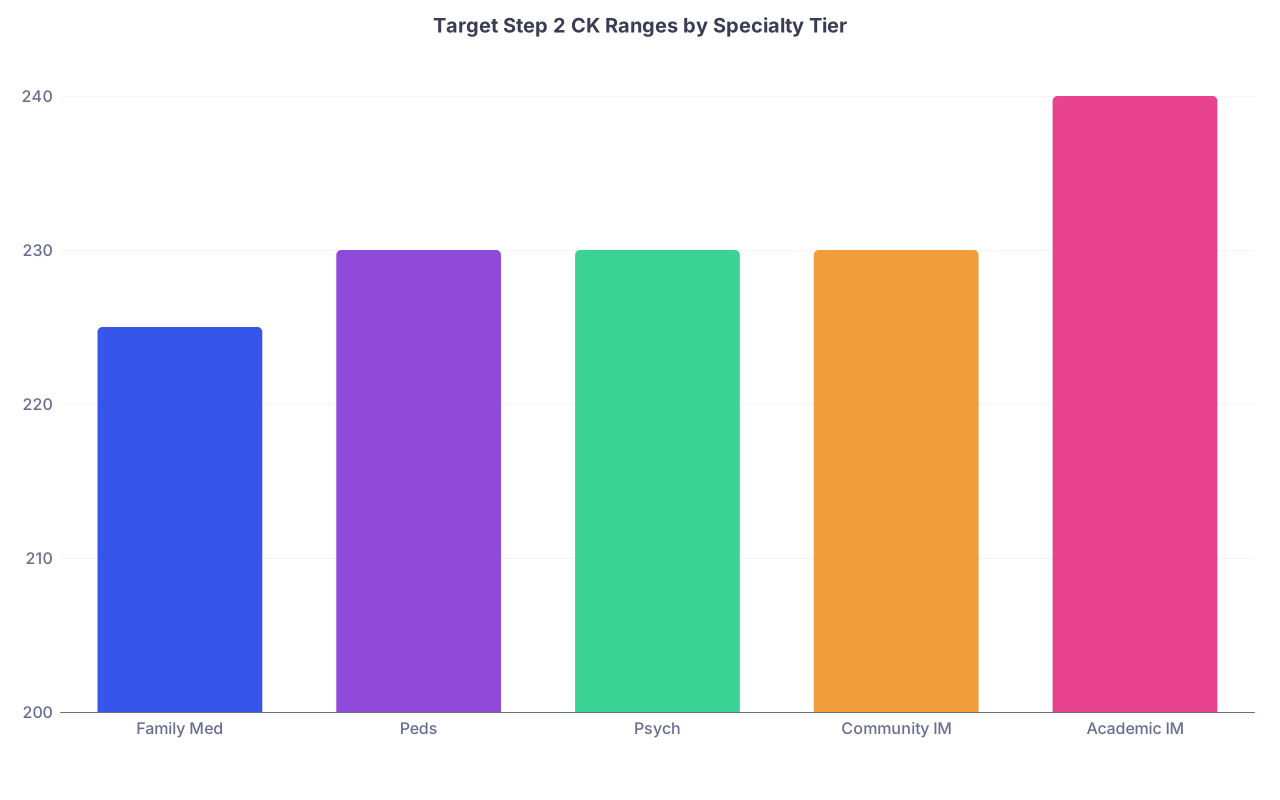
| Category | Value |
|---|---|
| Family Med | 225 |
| Peds | 230 |
| Psych | 230 |
| Community IM | 230 |
| Academic IM | 240 |
- Early Specialty Meeting
- By March, email your school’s advisor in that specialty:
- “I’m an MS3 planning to apply in [FM/Psych/etc.] this fall. Can we meet to review my CV and talk about away rotations, Step 2 timing, and program range?”
- By March, email your school’s advisor in that specialty:
MS3, Q4 (Apr–Jun): Lock the Plan and Take Step 2
At this point you should be:
- Finalizing specialty choice
- Scheduling Step 2 CK / Level 2
- Planning fourth-year rotations
Action list:
Step 2 CK / Level 2 Date
- Take by late July at the latest if possible, so scores are back when ERAS opens.
- 4–6 week dedicated period:
- UWorld / question bank heavy
- Weekly practice exams
- Do not neglect psych/peds/FM sections—these fields want to see you’re comfortable with bread-and-butter outpatient issues.
Fourth-Year Schedule Skeleton
- For least-competitive specialties, away rotations are nice but not always essential. Still helpful for:
- Psych at academic centers
- PM&R / Neuro for specific programs
- Rough MS4 schedule:
- Jul–Aug: Home specialty sub-I / acting internship
- Sep: Away (if doing one) or another home elective in the field
- Oct–Jan: Interviews + easy electives
- For least-competitive specialties, away rotations are nice but not always essential. Still helpful for:
MS4, Pre-ERAS (Jul–Aug): Build the Application While Staying Sane
At this point you should be:
- Doing at least one sub-I or audition rotation in your chosen specialty
- Gathering letters and polishing the paper version of yourself
July: Sub-I + Letters
On a sub-I in FM/IM/Peds/Psych/Neuro:
- Operate like a junior intern:
- Own 3–6 patients (depending on service)
- Pre-round, write complete notes, call consults with supervision
- You want your attending note to say: “Functions at or near intern level.”
- 3–4 letters total, usually:
- 2 in your chosen specialty
- 1–2 in core fields (IM, surgery, etc.) or a research mentor
- Confirm each letter writer:
- Knows your specialty choice
- Has your updated CV and short “brag sheet” of cases, projects, and what you’re proud of
August: ERAS Assembly Line
At this point you should be:
- Finalizing personal statement
- Completing ERAS entries
- Making your program list
Personal statement for “less competitive” fields:
- Show:
- You understand the day-to-day reality of the specialty
- You’ve seen hard, unglamorous cases and still want it
- Avoid:
- “I want to do FM because I like everything.” Lazy and overused.
- Psych clichés: “In third grade I liked listening to friends.”
Program list size (US MD, average risk profile):
| Specialty | Lower Risk (solid scores) | Higher Risk (low scores/red flags) |
|---|---|---|
| Family Med | 15–20 | 25–30+ |
| Pediatrics | 15–20 | 25–30+ |
| Psych | 15–20 | 25–30+ |
| Community IM | 20–25 | 30–35+ |
| Pathology | 15–20 | 25–30+ |
Application Season: ERAS to Rank List
Early September: Submit ERAS Early
At this point you should be:
- Hitting “submit” within the first week applications open
- Making sure Step 2 scores are in or imminent
Why early matters even for less competitive fields:
- Some programs start offering interviews as soon as apps come in
- Early apps look organized; late apps sometimes look like a backup scramble
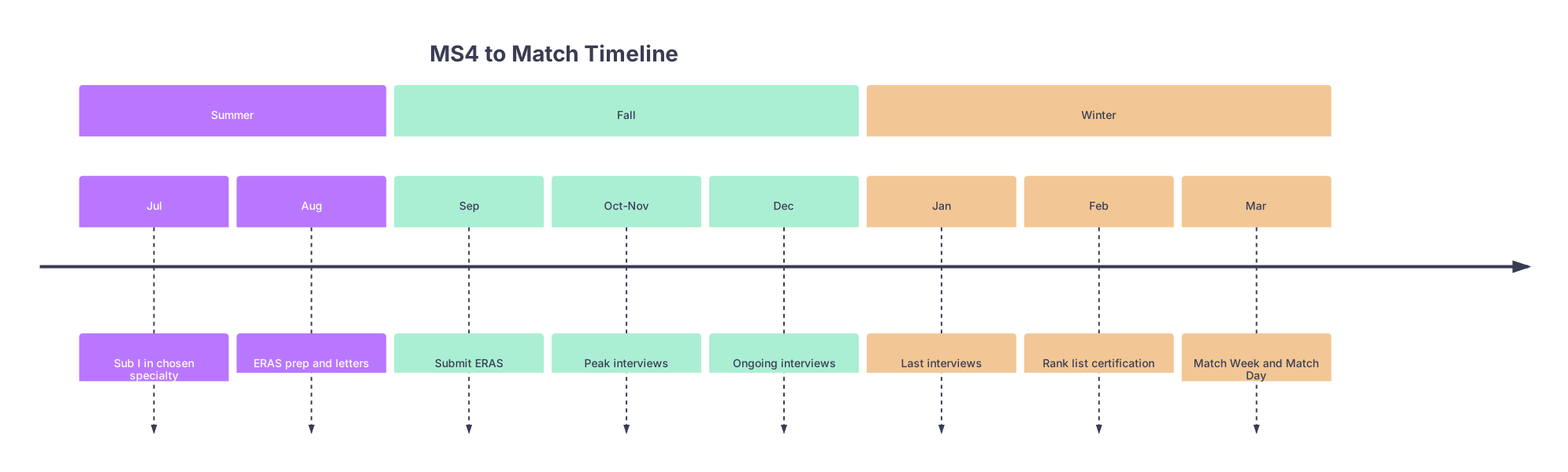
| Period | Event |
|---|---|
| Summer - Jul | Sub I in chosen specialty |
| Summer - Aug | ERAS prep and letters |
| Fall - Sep | Submit ERAS |
| Fall - Oct-Nov | Peak interviews |
| Fall - Dec | Ongoing interviews |
| Winter - Jan | Last interviews |
| Winter - Feb | Rank list certification |
| Winter - Mar | Match Week and Match Day |
Oct–Jan: Interview Block
At this point you should be:
- On the interview circuit
- Showing programs you actually want their specialty, not just a spot
On interviews for least-competitive specialties:
- They’re screening hard for:
- Red flags (professionalism, weird social vibe)
- People who will stay in the field and not burn out in 2 years
On the trail:
Have 2–3 solid stories ready
- A challenging patient encounter in that specialty
- A time you handled conflict on a team
- A mistake you learned from on the wards
Ask field-specific questions that show you get it:
- FM: “How is continuity clinic structured across three years?”
- Psych: “How much exposure is there to integrated care or consult-liaison?”
- Peds: “What’s the mix of inpatient vs outpatient by PGY year?”
Track Impressions right after each interview:
- Residents happy or exhausted?
- Faculty engaged or absent?
- Could you live in that city on an intern salary?
February: Rank List Reality Check
At this point you should be:
- Finalizing your rank list
- Avoiding the trap of over-ranking a few shiny programs and under-ranking safe ones
For least-competitive fields, you still need depth on your rank list. Do not:
- Rank only 8 FM programs and expect the universe to love you back
- Drop solid community programs because they’re “not exciting enough”
Use a simple 3-bucket system:
- Bucket A: Dream/aspirational (top academics, best cities)
- Bucket B: Solid fits (places you’d be content)
- Bucket C: Safety-ish (less desirable location, but training is fine)
Your final rank list should have all three buckets represented.
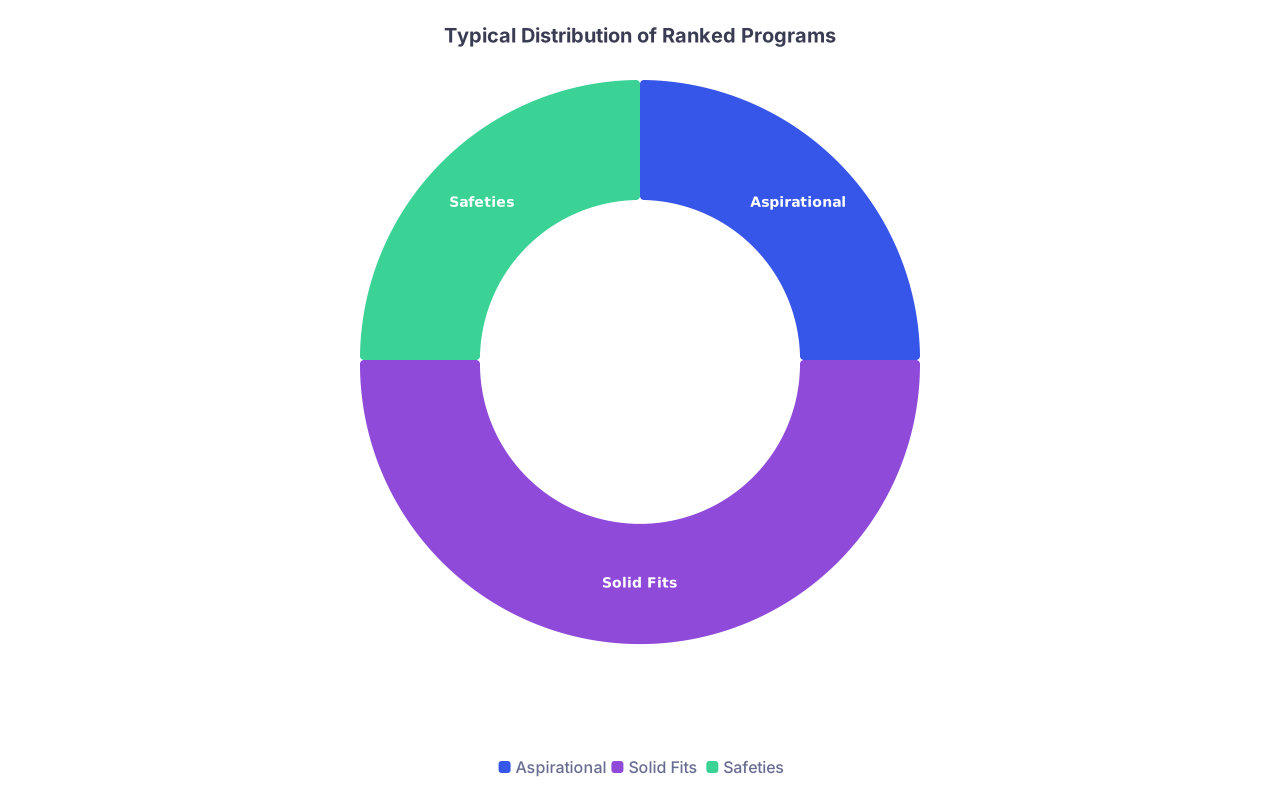
| Category | Value |
|---|---|
| Aspirational | 25 |
| Solid Fits | 50 |
| Safeties | 25 |
Match Week and Match Day: What Actually Matters Now
At this point you should be:
- Trusting the process if you matched
- Having a contingency plan if you didn’t
If you match:
- Celebrate. Then quickly:
- Send thank-you emails to key mentors and letter writers
- Ask if they have advice for starting residency strong in that field
If you do not match in a least-competitive specialty:
- Do not spiral into shame. I’ve seen strong applicants miss purely from poor lists or geography constraints.
- Scramble (SOAP) strategy:
- Look at related fields (FM vs IM, psych vs neuro or vice versa)
- Strongly consider prelim/transition year plus reapply with a better strategy
- Lean heavily on your school’s dean’s office and PDs—they know which doors can still open
Visual Overview: MS2 to Match Day

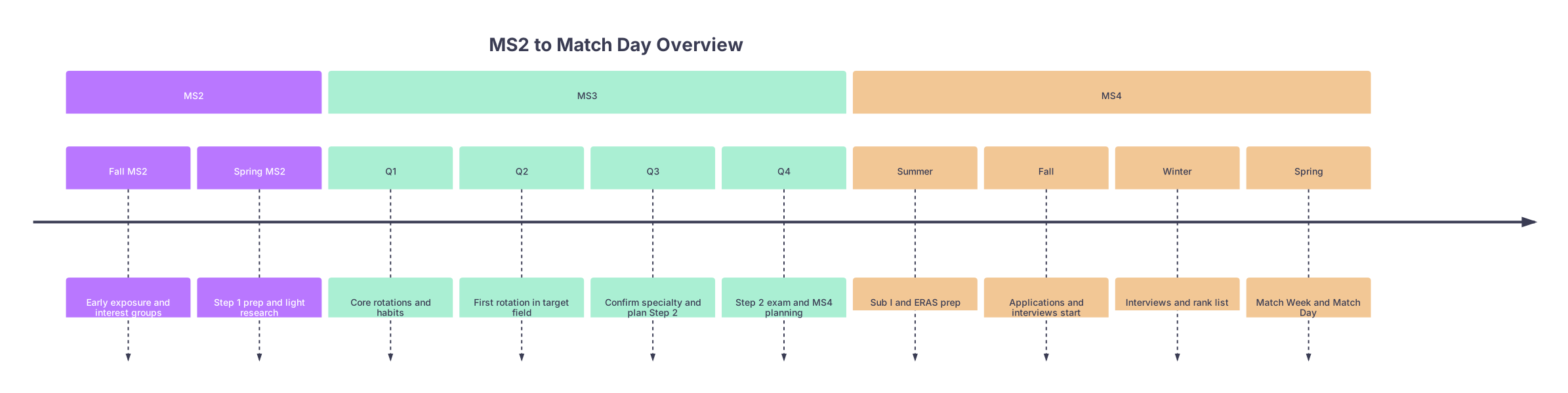
| Period | Event |
|---|---|
| MS2 - Fall MS2 | Early exposure and interest groups |
| MS2 - Spring MS2 | Step 1 prep and light research |
| MS3 - Q1 | Core rotations and habits |
| MS3 - Q2 | First rotation in target field |
| MS3 - Q3 | Confirm specialty and plan Step 2 |
| MS3 - Q4 | Step 2 exam and MS4 planning |
| MS4 - Summer | Sub I and ERAS prep |
| MS4 - Fall | Applications and interviews start |
| MS4 - Winter | Interviews and rank list |
| MS4 - Spring | Match Week and Match Day |

Final Takeaways
- Least competitive specialties are not backup plans; they’re careers that still demand steady performance and thoughtful timing.
- Your MS3 clinical year and Step 2 score carry more weight than you think—especially if Step 1 or preclinical years were shaky.
- If you start in MS2 with a rough direction, build relationships, and treat your application with the same seriousness as any competitive specialty, you’ll walk into Match Day with options—and probably a lot less stress.