
It’s late. You’re on call, scrolling on your phone between pages. Your scrubs are wrinkled, your coffee’s cold, and your brain is stuck on one terrifying thought:
“I matched into an ‘easier’ specialty… and I think I made a mistake.”
Maybe you picked family medicine, psych, peds, pathology, PM&R, or another so‑called “less competitive” field because:
- Step score wasn’t what you wanted
- You were scared of not matching
- Everyone told you to “be realistic”
- You just needed a match, any match
And now you’re watching co‑interns go into cards, derm, ortho, gas, EM… and your stomach drops. You feel like you took the “safe” route and now you’re stuck forever.
Let me be brutally honest first: this is a common fear, and you’re not crazy. I’ve seen this exact spiral in interns at community programs, at big-name academic centers, in literally every “less competitive” field.
So let’s pull this apart.
First: Are You Sure You Hate The Specialty… Or Do You Hate Being An Intern?
Before we talk transfers, reapplying, do‑overs, or blowing up your life, you have to answer one question:
Do you actually dislike the specialty… or do you dislike being a resident?
Because those are very different problems.
Intern year in many of the “easier to match” specialties still absolutely sucks:
- Family med: endless notes, social chaos, under-resourced clinics
- Psych: safety issues, staffing crises, emotionally draining cases
- Peds: parents, chronic illness, nights with RSV and bronchiolitis
- Path: steep learning curve, isolation, impostor syndrome
- PM&R: fragmented services, fighting for respect from other teams
And on top of that, you're tired, broke, and constantly feeling behind. It’s really easy to project “I hate my life right now” onto “I picked the wrong field.”
Ask yourself some brutally specific questions:
- On your best days, when you’re not drowning, do you find the work even mildly interesting?
- When an attending is doing real specialty-level work (not intern scut), do you think, “That’s what I want”? Or “I never want to do that?”
- If the lifestyle and pay were exactly the same between your field and the one you “wish” you picked, would you still want to switch?
If your answers are:
- “I hate everything about this content,”
- “I literally dread clinic/rounds/cases even when I’m rested,”
- “I feel like I’m totally in the wrong movie,”
…then yeah, this might be a true mismatch, not just burnout.
But if your answers are more like:
- “I hate notes and EMR and call and being yelled at,”
- “I kind of like the patients but I’m so exhausted I can’t tell,”
- “It might get better but I’m too tired to imagine that,”
…then you’re probably dealing more with early residency misery than a catastrophic specialty error.
You don’t have to solve that tonight. But be honest with yourself about which problem you actually have.
Can You Change Specialties After Matching? Yes. But It’s Messy.
Let’s answer the fear directly:
No, you’re not permanently imprisoned in your matched specialty for life.
But is it easy to switch from an “easier” specialty into a more competitive one after you’ve already matched? No. Not even a little.
Here’s how this usually goes in real life, not in Reddit fantasy-land:

| Step | Description |
|---|---|
| Step 1 | Realize mismatch |
| Step 2 | Talk to trusted mentor |
| Step 3 | Clarify new target specialty |
| Step 4 | Decide on path |
| Step 5 | Apply as PGY1/2 |
| Step 6 | Find open PGY2/3 |
| Step 7 | Interview and hope to match |
| Step 8 | Start new residency |
| Step 9 | Continue current specialty or reassess |
There are basically two paths:
- Reapply through the Match into a new specialty
- Find an out‑of‑Match transfer spot (open PGY2/PGY3 position somewhere)
Neither path is guaranteed. Both are emotionally brutal. But they’re not impossible.
I’ve seen:
- A PGY‑1 FM resident match into anesthesiology after doing a research year and reapplying
- A psych intern pick up an open neurology PGY‑2 spot at the same institution
- A transitional year resident get EM after a year of insane networking
- A peds resident move into radiology after reapplying with strong letters and some luck
And I’ve also seen:
- People reapply and not match, ending up with a gap, burned bridges, and starting over
- People realize mid‑process they actually don’t like their “dream” specialty once they shadow more
- People stick with their original field, later subspecialize, and are very glad they didn’t nuke everything
So yes, movement is possible. But it’s not like swapping shifts. It’s more like a second, higher‑stakes application cycle while working 60–80 hours a week.
The Big Ugly Fears (And How True They Actually Are)
Let’s hit the worst‑case scenarios you’re probably rehearsing in your head at 2 a.m.
“I’ll be stuck in this specialty forever.”
False.
You might:
- Stick with it and grow to like it
- Stick with it and later pivot via fellowship (pain, sports, addiction, hospitalist, informatics, etc.)
- Switch specialties via reapplying
- Switch via a mid‑residency transfer slot
You are not signing a blood oath to family med or psych or peds or path forever. Medicine is full of people who pivoted.
Is there risk? Yes. But “forever stuck” is almost never accurate.
“Program directors will hate me for wanting to leave.”
Sometimes they’re annoyed. Sometimes they’re incredibly supportive. I’ve seen both.
Reality:
- Some PDs will quietly be relieved to help you leave if you’re miserable
- Some will advocate for you, make calls, write strong letters
- Some will be offended or cold about it
But your career is longer than one PD’s opinion.
You do need to be strategic and not burn bridges unnecessarily. But you’re not morally obligated to stay in a specialty that feels completely wrong just to avoid awkward conversations.
“No competitive specialty will ever take me once they see I matched into an ‘easy’ one.”
Wrong.
Do they get suspicious if you suddenly say, “I was always passionate about neurosurgery,” after matching into psych? Yes.
But:
- If your boards, evaluations, and letters are strong
- If you have a coherent narrative for why you changed your mind
- If you’ve taken concrete steps (electives, research, shadowing) in the new field
…you have a shot. Is it guaranteed? Absolutely not. But you’re not automatically blacklisted because you didn’t roll the dice on ortho as an M4.
How “Easy” Specialties Can Actually Help You Pivot
Here’s the part no one talks about when they’re ranking “easiest specialties to match” like it’s a video game.
Less competitive fields can give you:
- A matched spot (you’re not scrambling SOAP, which is huge)
- Time and income to regroup instead of disappearing post‑grad with no plan
- Clinical experience that can count toward PGY requirements in another field
- Opportunities to moonlight, do research, and build a stronger reapplication
In some cases, having finished one residency makes you more attractive to certain programs later:
- A boarded internist going into anesthesia
- A psych grad going into pain or addiction fellowships that cross specialties
- A peds grad going into allergy/immunology or critical care
I’m not sugarcoating this. It’s still an uphill climb. But being in the system is almost always better than being locked out of it.
Here’s what this can look like in practice:
| Starting Specialty | Later Path | How It Usually Happens |
|---|---|---|
| Family Medicine | Anesthesiology | Reapply, research, networking |
| Psychiatry | Neurology | Open PGY2, same institution |
| Pediatrics | Radiology | Reapply during PGY1 |
| Pathology | Internal Med | Categorical PGY1/2 transfer |
| PM&R | Pain/Anes | Pain fellowship, dual board |
Does everyone succeed? No. Do some people regret even trying? Yes. But your current specialty can be a bridge, not a prison.
If You Think You Want to Switch, What Should You Actually Do?
Not six months from now. Not “someday.” This year.
Here’s the calm, non‑Reddit version of what to do.
1. Stop announcing your crisis to everyone.
Do not start by telling 4 co‑interns and your chief that you “hate psych and want to do radiology instead.” That’s how rumors get to your PD before you’ve even decided.
First step: one trusted person.
- A mentor from med school
- A faculty member in your current program you genuinely trust
- A previous resident who successfully switched
Keep the circle very small at first.
2. Get brutally clear on what you actually want.
“Something more competitive” is not a specialty.
You need to know:
- What field you’re targeting
- Why that field, specifically
- What you bring to that field that’s actually credible
So you need exposure. Real exposure. Not YouTube.
That means:
- Shadow on elective time (or days off if you have to)
- Talk to at least 2 attendings and 1 resident in that specialty
- Ask what they’d honestly want to see from a switcher
You may discover you don’t like the day‑to‑day at all. Which is actually good — better to find out now than after burning everything down.
3. Quietly assess your competitiveness.
No spin. Just facts.
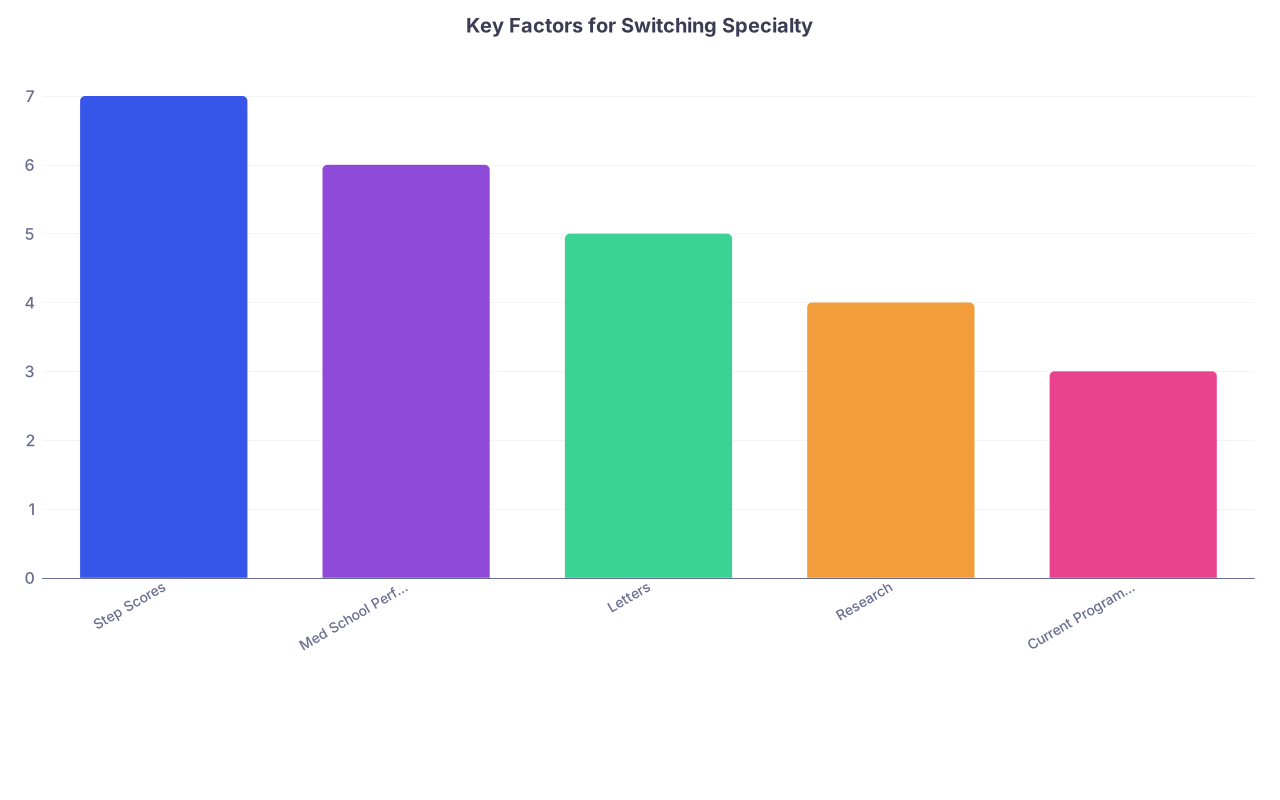
| Category | Value |
|---|---|
| Step Scores | 7 |
| Med School Performance | 6 |
| Letters | 5 |
| Research | 4 |
| Current Program Reputation | 3 |
Look at:
- Step 1/Level 1 (even pass/fail, people still care)
- Step 2/Level 2
- Med school grades / AOA / class rank
- Any research or prior exposure in the new field
- Your current program’s reputation and your evaluations
If you’re aiming for derm, ENT, plastics, ortho from a random community psych program with average scores and no research… I’m not going to lie to you. That’s nearly impossible. Not technically zero, but very close.
But gas from FM? EM from TY? Cards/GI from IM instead of going straight IM? Much more realistic.
You want alignment between:
- Your actual record
- The specialty competitiveness
- Your willingness to grind for a couple years
4. Decide: reapply vs transfer.
Reapply through the Match if:
- You’re early (PGY1)
- You want a complete reset with full training in the new field
- The new field rarely takes mid‑residency transfers
Look for transfer spots if:
- You’ve already completed a year or more of relevant training
- You’re okay entering as PGY2/3
- You have strong internal champions making calls for you
Both options require:
- Updated CV
- New personal statement explaining the switch without trashing your current field
- New letters (ideally from the target specialty and your current PD)
And yes, telling your PD is terrifying. But if you’re serious, it’s inevitable. Most PDs find out either way. Better coming from you, at the right time, with a mature plan.
What If You Stay? Are You Just Settling?
This is the fear under every other fear:
“If I don’t blow everything up and chase something more competitive, does that mean I settled? That I’m less ambitious? That I wasted my potential?”
I’ve watched this play out over and over:
- FM residents who thought they “missed out” on EM… then end up doing urgent care, sports med, or hospitalist IM and actually loving it
- Psych residents who thought they “settled”… then find forensics, addiction, or CL psych and build niche, fascinating careers
- Peds residents who thought about rads or anesthesia… then sub in PICU or heme/onc and never look back
The prestige obsession is loudest in med school and the Match. It calms down later. Your actual life — your schedule, your patients, your coworkers, your ability to see your family — starts to matter more than “was my field top 5 competitive.”
Staying isn’t failure.
Staying mindlessly because you’re too scared to look at other options? That’s a problem.
But staying deliberately, after investigating other paths and deciding this specialty, plus maybe a fellowship, plus a particular practice style, is good enough for you? That’s not settling. That’s being a grown adult.
Concrete Next Steps (So You Don’t Just Keep Spiraling)
You don’t need a five‑year plan tonight. You just need the next two steps.
Here’s a simple way to structure the next 6–12 months in your head:
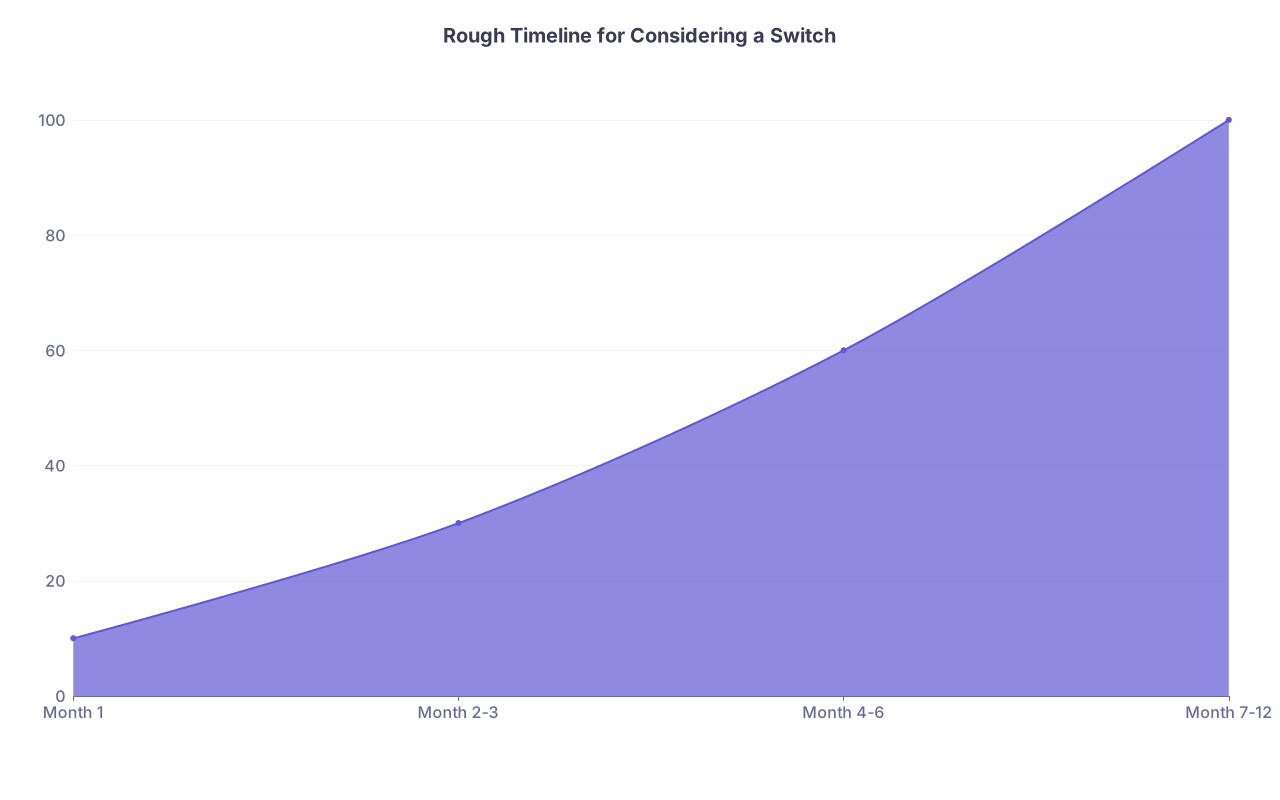
| Category | Value |
|---|---|
| Month 1 | 10 |
| Month 2-3 | 30 |
| Month 4-6 | 60 |
| Month 7-12 | 100 |
Mentally, think:
- Month 1: Clarify whether this is burnout vs true mismatch
- Months 2–3: Get exposure to the alternative specialty, talk to real humans
- Months 4–6: Make a decision: stay and commit vs prepare to reapply/transfer
- Months 7–12: Execute: applications, networking, or fully investing in current field
This isn’t perfect. Life is messy. Rotations change, people leave, programs fold. But having a rough plan helps you feel less like you’re just free‑falling.
FAQ (Exactly The Stuff You’re Afraid To Ask Out Loud)
1. If I reapply to another specialty and don’t match, can I stay in my current residency?
Sometimes yes, sometimes no.
Some programs will:
- Let you stay as if nothing happened
- Be hurt but professional about it
Others will:
- See your reapplication as essentially resigning
- Not renew your contract if they feel you’re not committed
You have to clarify this with your PD before you submit another rank list. This conversation sucks. But guessing is worse.
2. Will future employers find out I tried to switch specialties?
Not usually, unless:
- You leave mid‑residency and it shows as incomplete training
- Your references mention it
If you stay and complete your current residency, and you didn’t blow things up dramatically, most future employers will only really care that you’re board‑certified, competent, and not a nightmare to work with.
3. Is it better to switch early (PGY1) or finish the whole residency then pivot?
If you’re absolutely sure you hate your specialty and your target field needs full training (like going from FM to rads or gas), earlier is usually better — fewer years “lost,” more time to retrain.
If you’re on the fence, or your current field offers good fellowships that might scratch your itch (e.g., FM → sports; psych → addiction; peds → PICU), finishing then pivoting by fellowship can be smarter and less disruptive.
There’s no universal right answer. But “suffer for three years in a field you hate for no reason” isn’t a good plan.
4. Will a “less prestigious” residency forever limit what fellowships I can do later?
It can matter, but it’s not determinative.
Yes, coming from a community FM program vs a big academic IM program will make certain fellowships harder (like cards, GI). Same for peds → competitive subspecialties.
But inside your “easy” specialty, you can still often:
- Land solid fellowships if you have strong letters and maybe some research
- Build a niche practice (sports, palliative, addiction, hospitalist, procedural clinics)
- Work in settings that feel very different from standard clinic (urgent care, ED obs, consult roles)
So your current match might cap certain ultra‑competitive paths, but it doesn’t automatically cap your fulfillment.
5. What if I’m too scared to tell my PD I’m thinking of switching?
That’s normal. Every resident who’s ever switched has had that same fear.
You don’t need to open with, “I hate this specialty and I’m leaving.” Try something more measured:
“I’ve been having some doubts about long‑term fit and I want to talk honestly with you about it and get your perspective. I’m still doing my best here, but I’m trying to figure out what’s right for my career.”
You’ll learn a lot in that conversation:
- Are they supportive?
- Are they immediately defensive?
- Do they see strengths in you that you hadn’t seen?
You’re allowed to explore. You’re allowed to question. You’re allowed to protect your own career and sanity.
Here’s your actionable step for today:
Open your calendar and block off a 30‑minute slot in the next 7 days labeled: “Career reality check.” In that slot, you’re going to do exactly one thing: write down, in plain language, what parts of your current specialty you actually dislike, what parts you could live with, and what you think you want instead. No editing. No performing. Just raw honesty.
That’s your starting point. Everything else — staying, switching, reapplying — builds from knowing that.