Understanding the Letter of Intent for Residency
For an MD graduate navigating the residency match, the concept of a letter of intent (LOI) can feel murky and anxiety‑provoking. You hear rumors that “everyone sends one,” that it can “make or break” your chances, and that you “must declare a #1 program”—but also warnings not to mislead programs or overpromise.
A residency letter of intent is a brief, post‑interview communication sent to a single program you consider your top choice. It communicates:
- Your genuine intention to rank that program #1 on your rank list
- A concise, specific rationale for your strong interest
- A reaffirmation of your fit and what you will bring to the program
The LOI does not replace your ERAS application, interview performance, or letters of recommendation. It is a supplemental professionalism signal that may help at the margins—especially in close decisions.
For an allopathic medical school match candidate, the strategic question is not “Can a letter of intent residency message magically secure my spot?” but rather, “How can I use this tool ethically, professionally, and effectively—if at all?”
This guide will walk you through:
- When and whether to send an LOI
- How to structure and write it
- How it fits with NRMP rules and professional ethics
- Practical examples and a reusable LOI template
- Common pitfalls MD graduates should avoid
The Role of a Letter of Intent in the Match
What a Letter of Intent Can (and Cannot) Do
A well‑crafted LOI may:
- Keep you top of mind with the Program Director (PD) and selection committee
- Provide a clear signal that you see yourself at their program long‑term
- Help in “tie‑breaker” situations where several applicants are similarly ranked
- Demonstrate professionalism, insight, and reflective thinking
However, an LOI cannot:
- Override a weak application or poor interview
- Compel a program to rank you higher than they otherwise would
- Guarantee a match, even if you are sincerely ranking them #1
- Change the outcome if a program has already finalized their rank list
The LOI is best viewed as a polish and signal tool, not a rescue tool.
NRMP Rules and Ethical Boundaries
The NRMP (National Resident Matching Program) allows post‑interview communication but prohibits:
- Any solicitation or requirement that you state how you will rank a program
- Any contractual or coercive language implying a binding commitment before the Match
- Programs or applicants making binding promises about ranking
You are allowed to:
- Tell a program they are your top choice or that you intend to rank them #1
- Express strong interest in several programs as long as you do not misrepresent your ranking intentions
- Ask questions and clarify program details after interviews
Ethically, an MD graduate residency applicant should:
- Send a true letter of intent to only one program (the one you will actually rank #1)
- Avoid using LOI‑style “you are my #1” language with multiple programs
- Keep language accurate: “I plan to rank your program #1” is acceptable if it’s true
Misrepresentation can follow you—faculty talk across institutions, and burning trust before you even start residency is not worth any perceived short‑term edge.
Timing and Strategy: When to Send an LOI
Getting the timing right is critical. Programs finalize rank lists at different times, often weeks before the official deadline. If you send your LOI after they’ve locked their list, it may have little to no impact.
General Timeline and When to Send LOI
For the typical allopathic medical school match cycle (for an MD graduate applying in the fall), consider:
Immediately post‑interview season (Late January – Early February)
- You’ve completed the majority (or all) of your interviews
- You have time to reflect and compare programs thoughtfully
- Many programs are beginning or actively working on rank lists
Ideal window:
- 1–3 weeks before typical program rank list finalization
- For many specialties, that’s late January through mid‑February
- Adjust for your specialty and any known timelines (some competitive fields finalize earlier)
Practical Approach for MD Graduates
Finish most interviews first.
Sending an LOI too early risks changing your mind later—an ethical and strategic problem.Create a provisional rank order.
Ask yourself:- Where could I truly see myself thriving?
- Where do I feel the strongest fit with culture, training, and location?
- What are my life priorities (family, geography, fellowship, research, wellness)?
Have one honest #1.
Once you are reasonably sure, identify the program that you would be happy to commit to as your top rank.Then send the LOI.
Ideally within 7–14 days of making your decision and before the NRMP rank order deadline (and preferably before programs commonly finalize lists).
If you’re uncertain but want to show enthusiasm, you can send strong interest letters (not LOIs) to other programs that you like, without saying they’re #1.

How to Write an Effective Residency Letter of Intent
Overall Structure
A professional LOI is:
- 3–6 concise paragraphs
- 250–450 words (shorter is usually better)
- Personalized to one program—not generic
Core sections:
- Introduction & Purpose
- Statement of Intent (You are my #1)
- Specific Reasons for Fit
- What You Bring to the Program
- Closing & Gratitude
Core Messaging: Clarity and Honesty
Use direct, unambiguous language to signal your intent, but avoid sounding transactional or desperate. For example:
Acceptable clarity:
- “I am writing to let you know that I intend to rank the [Program Name] Internal Medicine Residency as my #1 choice in the Match.”
- “After careful consideration, I have decided that your program will be at the top of my rank list.”
Avoid vague hedging:
- “I am highly interested in your program.”
- “Your program will be very high on my list.”
Programs see many such letters. A true LOI should be plainly clear.
Content to Include (and Avoid)
Include:
- A brief reminder of who you are (school, specialty, interview date)
- Your explicit intention to rank them #1
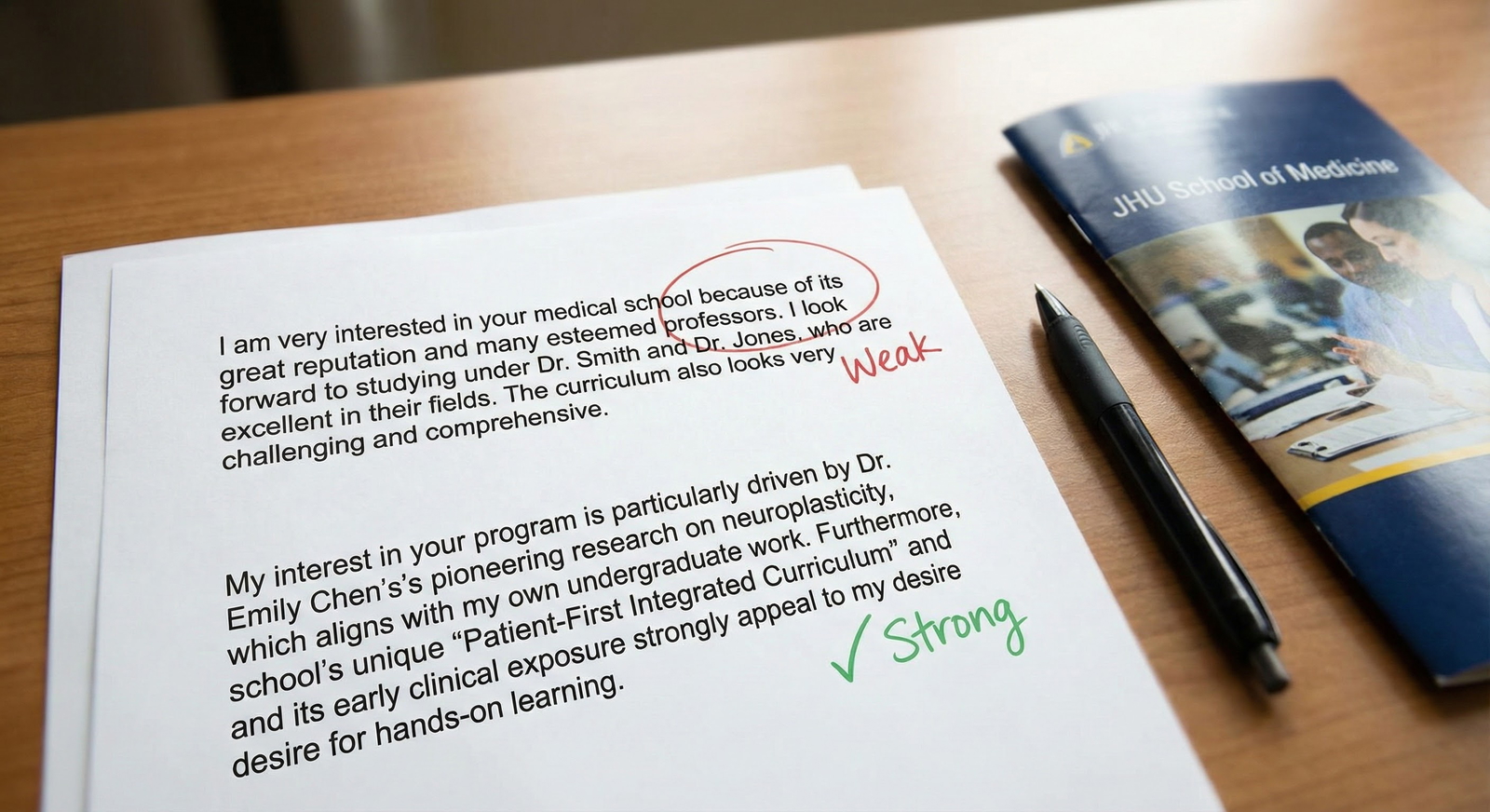
- 2–4 genuinely specific reasons you feel you are a great fit
- Mention of any follow‑up exploration (second look, talking to residents, alumni)
- A concise description of what you will contribute to their residency community
- Professional, appreciative closing
Avoid:
- Exaggeration or false promises (“I will definitely match with you.”)
- Overly emotional language (“This is my lifelong dream and only hope.”)
- Demands or pressure (“Please let me know where I stand on your rank list.”)
- Copy‑pasted generic content used for multiple programs
- Negative comparisons to other programs (“You are better than all the others because…”)
Detailed LOI Template and Example for MD Graduates
Reusable LOI Template
You can adapt the following LOI template for your own use. Fill in bracketed sections with your information.
[Your Name], MD
[AAMC ID (optional but helpful)]
[Your Email Address]
[Your Phone Number]
[Date][Program Director’s Name], MD
[Program Name] [Specialty] Residency Program
[Institution / Hospital Name]Dear Dr. [Last Name] and Members of the Selection Committee,
I am writing to express my sincere appreciation for the opportunity to interview with the [Program Name] [Specialty] Residency on [Interview Date]. After careful reflection on all of my interview experiences this season, I have decided that your program is my top choice, and I intend to rank the [Program Name] [Specialty] Residency #1 on my rank list.
My interest in [Program Name] has only grown since our interview day. I was particularly drawn to [specific program feature #1], as well as [specific program feature #2]. Speaking with [resident/faculty name or role] reinforced my sense that [mention culture, teaching style, mentorship, patient population, or another unique attribute] aligns with the training environment I am seeking.
I believe I would be a strong fit for your program. My experiences at [Your Allopathic Medical School] have prepared me to contribute meaningfully to [clinical care, QI, research, teaching, community service] at [Program Name]. In particular, my work on [briefly mention a project, leadership role, research, or interest area relevant to their strengths] has fostered skills that I look forward to developing further under the mentorship of your faculty. I am especially excited about the opportunity to [mention a specific track, pathway, or resource the program offers that matches your goals].
Thank you again for your time, your commitment to resident education, and for considering my application. It would be an honor to train at [Program Name], and I hope to have the opportunity to contribute to your residency community.
Sincerely,
[Your Full Name], MD
[Medical School Name] Class of [Year]
You can adapt this template to your style, but keep the same core elements of clarity, specificity, and professionalism.
Sample LOI for an Internal Medicine Applicant
Below is an example of how an MD graduate residency applicant might adapt this for a real situation.
Jordan Lee, MD
AAMC ID: 12345678
jordan.lee@email.com | (555) 555‑5555
February 5, 2026Sarah Patel, MD
Program Director, Internal Medicine Residency
University City Medical CenterDear Dr. Patel and Members of the Selection Committee,
Thank you again for the opportunity to interview with the University City Medical Center Internal Medicine Residency on January 18. After careful consideration of all of my interview experiences this cycle, I am writing to let you know that your program is my top choice, and I intend to rank the University City Medical Center Internal Medicine Residency #1 on my rank list.
My interest in your program has only grown since our interview day. I was especially impressed by the way your curriculum combines rigorous inpatient training at a safety‑net hospital with dedicated ambulatory experiences in the community clinic. The resident‑led quality improvement projects we discussed, particularly the transitions‑of‑care initiative, resonated deeply with my own interest in health systems improvement. Speaking with your residents convinced me that UCMC fosters a culture of collegiality, thoughtful supervision, and genuine investment in each trainee’s long‑term goals.
I believe I would be a strong fit for your program. At Eastlake Allopathic Medical School, I have pursued opportunities to care for diverse, underserved patient populations at our county affiliate hospital and through our student‑run free clinic. My work on a QI project aimed at reducing 30‑day readmissions for patients with heart failure has solidified my interest in combining clinical excellence with system‑level thinking. I am particularly excited about the opportunity to further this work within your program’s Health Systems and Leadership Track.
Thank you again for your time on interview day and for the thoughtful consideration of my application. It would be an honor to begin my career in internal medicine at University City Medical Center.
Sincerely,
Jordan Lee, MD
Eastlake Allopathic Medical School, Class of 2026
Use this as a model, but ensure your own LOI is truthfully tailored to your experiences and the specific program.

Advanced Strategy: Integrating LOIs with Your Overall Application Plan
LOI vs. Update Letter vs. Thank-You Email
It’s important to distinguish the LOI from other communication types:
Thank‑You Email:
- Sent within a few days after each interview
- Brief gratitude, maybe a specific detail from the conversation
- No ranking language, no strong promises
Update Letter:
- Sent to one or more programs
- Shares new significant information (publications, awards, leadership roles, Step scores, major updates)
- May include continued interest, but not necessarily ranking information
Letter of Intent Residency (True LOI):
- Sent to one program
- Clear statement: “You are my #1 choice; I intend to rank you first.”
- Focus on fit, not new data (though you can mention major updates briefly)
You may use all three tools strategically in a given cycle, but keep their purpose and frequency distinct.
Communicating with Other Programs After Sending an LOI
A common question is what to say to other programs once you’ve sent a definitive LOI to your top choice.
You can still:
- Express genuine enthusiasm
- Mention they are “high on your list” or that you would be “thrilled to train there”
- Send update letters if you have meaningful new achievements
You must not:
- Tell another program they are #1 or that you “intend to rank them first”
- Copy/paste your LOI language and distribute it widely
Ethical, accurate phrasing examples:
- “Your program remains one of my top choices, and I would be very excited to train there.”
- “I continue to be strongly interested in your residency and believe I would thrive as part of your team.”
Specialty-Specific Considerations
The importance and culture of LOIs can vary by specialty:
- Highly competitive specialties (e.g., Dermatology, Integrated Plastics, ENT):
- Communication is often more carefully scrutinized
- A genuine LOI may help at the margins, but volume of applicants is high
- Moderately competitive (e.g., Internal Medicine at strong academic centers, General Surgery, Anesthesiology):
- LOIs are common; PDs may view them as one of several data points
- Primary care–oriented specialties (e.g., Family Medicine, Pediatrics):
- Emphasis on mission and alignment may make a thoughtful LOI particularly meaningful
For MD graduate residency applicants from an allopathic medical school, programs may already consider your training background “known quantity,” but your LOI can highlight nuance of fit: research vs. community focus, fellowship ambitions, or commitment to underserved care.
Common Pitfalls to Avoid
Sending LOI too early
- Risk: You change your mind later and must either lie or disappoint someone.
- Fix: Wait until you have seen most programs and reflected carefully.
Being vague or non‑committal
- If you do not clearly say “#1,” program leadership may not interpret your letter as a true LOI.
Writing a generic, copy‑and‑paste letter
- PDs can spot this quickly; it undermines the impact of your message.
Sending LOIs to multiple programs
- Ethically problematic, professionally risky, and often counterproductive.
Overly long or emotional letters
- Time‑pressed PDs appreciate brevity, clarity, and professionalism.
Frequently Asked Questions About Residency Letters of Intent
1. Do I have to send a letter of intent to match as an MD graduate?
No. Many applicants from allopathic medical schools match successfully without ever sending a letter of intent. Your application quality, interview performance, and letters of recommendation are far more important. A well‑done LOI may offer a small advantage at the margins, but it is not a requirement.
2. How do I decide when to send LOI and to which program?
Decide after:
- You have completed most of your interviews
- You’ve carefully reflected on your values, goals, and program impressions
- You can honestly say, “If I match here, I will be happy and excited”
Send the LOI to the one program you will definitively rank #1. Aim for late January to mid‑February, or roughly 1–3 weeks before the program is likely to finalize its rank list.
3. What if I change my mind after sending an LOI?
This is a difficult situation and illustrates why you should wait until you are sure. Options are all imperfect:
- If the change is early and major (e.g., life event, family emergency), you could consider contacting the program to explain—but this is generally discouraged and may harm your professional reputation.
- Most often, the best approach is to avoid sending LOIs until you are confident in your top choice.
If you do change your mind and quietly rank another program higher, recognize that this is ethically gray and can have consequences if discovered. Strive to be honest from the start.
4. Can I use the LOI template you provided for multiple programs?
You can reuse the structure of the LOI template, but not the content or intent. A true letter of intent is meant for one program and should clearly state your plan to rank them #1. For other programs, you can use a similar format to send a strong interest or update letter, but you must change the language so it does not misrepresent your ranking intentions.
Used thoughtfully, a letter of intent residency strategy can complement your overall approach as an MD graduate navigating the allopathic medical school match. Focus on honesty, clarity, and meaningful fit, and let your LOI be a polished reflection of the professionalism you will bring to residency.