Understanding Letters of Intent as a Non‑US Citizen IMG
A letter of intent (LOI) can be a powerful strategic tool for a non-US citizen IMG navigating the complex US residency match system. Used correctly, it can clarify your commitment to a program, demonstrate professionalism, and sometimes tip a borderline ranking decision in your favor. Used poorly, it can damage your credibility or even raise ethical concerns.
For a foreign national medical graduate, the stakes are even higher. Your LOI is not just about “I love your program” – it must also reassure programs about visa sponsorship, commitment to US training, and your readiness to transition to a new healthcare system and culture.
This guide breaks down letter of intent strategies for non-US citizen IMG applicants, including timing, content, structure, and ethics, with concrete examples and a practical LOI template you can adapt.
1. What a Letter of Intent Really Is (and Is Not)
1.1 Working Definition
A letter of intent for residency is usually a short, targeted communication sent to a single program after interviews to state:
- That the program is your clear first choice (if true), and
- That you intend to rank them #1.
It is not just another thank-you note. It is a specific statement of intent about your rank list.
For a non-US citizen IMG, an LOI often also clarifies:
- Your visa needs (e.g., J-1 vs. H-1B eligibility)
- Your long-term commitment to practicing in the US
- How your background as a foreign national medical graduate adds value to the program
1.2 LOI vs. Other Post-Interview Messages
It’s helpful to distinguish:
Thank-you emails:
- Sent within 24–72 hours after the interview.
- Express appreciation and briefly reinforce fit.
- Do not usually contain ranking language.
Update letters:
- Sent if you have new achievements (publications, Step scores, new LORs, awards).
- May be sent to multiple programs.
- Are factual and not primarily about rank intentions.
Preference letters (also called “interest letters”):
- Express strong interest (e.g., “I am very interested in your program”).
- Do not say “I will rank you #1.”
- Can be sent to more than one program if carefully worded.
Letter of intent:
- Sent to only one program.
- Clearly states they are your first choice and you intend to rank them #1.
Understanding these distinctions is crucial to staying ethical and credible.
2. Ethical and Strategic Ground Rules for LOIs
2.1 NRMP Rules and Professionalism
The NRMP (National Resident Matching Program) is clear:
- Programs cannot ask you how you plan to rank them.
- You cannot be required to commit to a program before the Match.
- You can voluntarily communicate your interest and intentions, as long as you do not misrepresent your plans.
Ethical principles:
- Never lie about your rank list.
- Only one true LOI (stating “I will rank you #1”).
- Make everything you write consistent with what you would say if asked to explain it later.
As a non-US citizen IMG, your professional reputation matters even more because:
- You are often relying on fewer US mentors and networks.
- Program directors may pay close attention to trustworthiness, particularly with visa cases that require extra institutional effort.
2.2 When to Send LOI vs. Interest Letters
A reasonable strategy:
LOI:
- One program only.
- Your genuine #1 choice.
- Typically sent 2–3 weeks before the rank list deadline, or once you are sure about your preference.
Strong interest letters:
- 2–5 other programs where you would be genuinely excited to match.
- Use language like: “I will rank your program very highly.”
- Avoid language that could be read as multiple contradictory #1 claims.
2.3 Special Considerations for Foreign National Medical Graduates
As a foreign national medical graduate, you often need to address issues that US graduates do not:
Visa feasibility
- Confirm that the program does sponsor the visa you need.
- If you are ECFMG J-1 eligible, say so clearly.
- If you have passed USMLE Step 3 (relevant for H-1B), include this.
Commitment to practicing in the US
- Programs may worry about attrition or long-term plans.
- Briefly reinforce that you intend to complete residency and pursue your career in the US.
Transition to US healthcare system
- Highlight US clinical experience, observerships, or externships.
- Mention any mentoring, courses, or certifications (e.g., ACLS, BLS) that show readiness.
3. Timing: When to Send an LOI as a Non-US Citizen IMG
The question of when to send LOI is one of the most common – and confusing – parts of strategy.
3.1 General Timing Principles
- Do not send an LOI before the interview.
- Do not commit to a program until you have finished the majority of your interviews and can realistically compare programs.
- In most cycles, the sweet spot is:
- Between late January and mid-February,
- Or roughly 2–3 weeks before the NRMP rank list deadline.
This gives you time to:
- Complete your interviews
- Reflect on what matters most to you (location, visa, case mix, fellowship, culture)
- Be confident that your LOI truly reflects your final first choice
3.2 Practical Example: Timing Scenario
Imagine you are a non-US citizen IMG applying to Internal Medicine with:
- 12 interviews
- 5 programs that sponsor J-1
- 3 programs that also sponsor H-1B
- You finished most interviews by January 25
- NRMP rank list deadline is early March
A reasonable plan:
Late January:
- Send polite thank-you notes to all programs.
- Keep track of your evolving preferences.
First half of February:
- After reviewing notes and discussing with mentors, decide on a true #1.
- Prepare your letter of intent residency communication for that program.
Second half of February:
- Send your LOI to your chosen program.
- Send strong interest letters (without #1 language) to a small number of other programs where you would be happy to match.
This timing allows programs to potentially discuss your application in ranking meetings while still feeling your communication is timely and thoughtful.
3.3 Late Cycles or Very Few Interviews
If you have:
- Only 3–4 interviews, or
- Late interviews in mid-to-late February
You may:
- Decide a bit later, even close to the rank deadline.
- Still send your LOI as soon as you’re truly sure of your first choice.
Remember: quality of the letter and genuine commitment usually matter more than sending it extremely early.

4. How to Write a Strong Letter of Intent as a Non‑US Citizen IMG
4.1 Overall Structure (LOI Template Outline)
A simple, effective LOI template structure:
- Greeting
- Clear statement of intent and ranking
- Three focused reasons why this program is your top choice
- Alignment of your background and goals with the program
- Visa and logistical clarity (for non-US citizen IMG)
- Gratitude and professional closing
Length:
- Typically 3–6 short paragraphs,
- Around 250–450 words – concise but specific.
4.2 Opening and Clear Statement
You must be explicit (if it is truly your #1):
“I am writing to express that [Program Name] is my top choice, and I intend to rank your program #1 on my NRMP rank list.”
Avoid vague phrases that could be misinterpreted as multiple first choices, such as:
- “One of my top choices”
- “Among my top programs”
Those are better reserved for interest letters, not your main LOI.
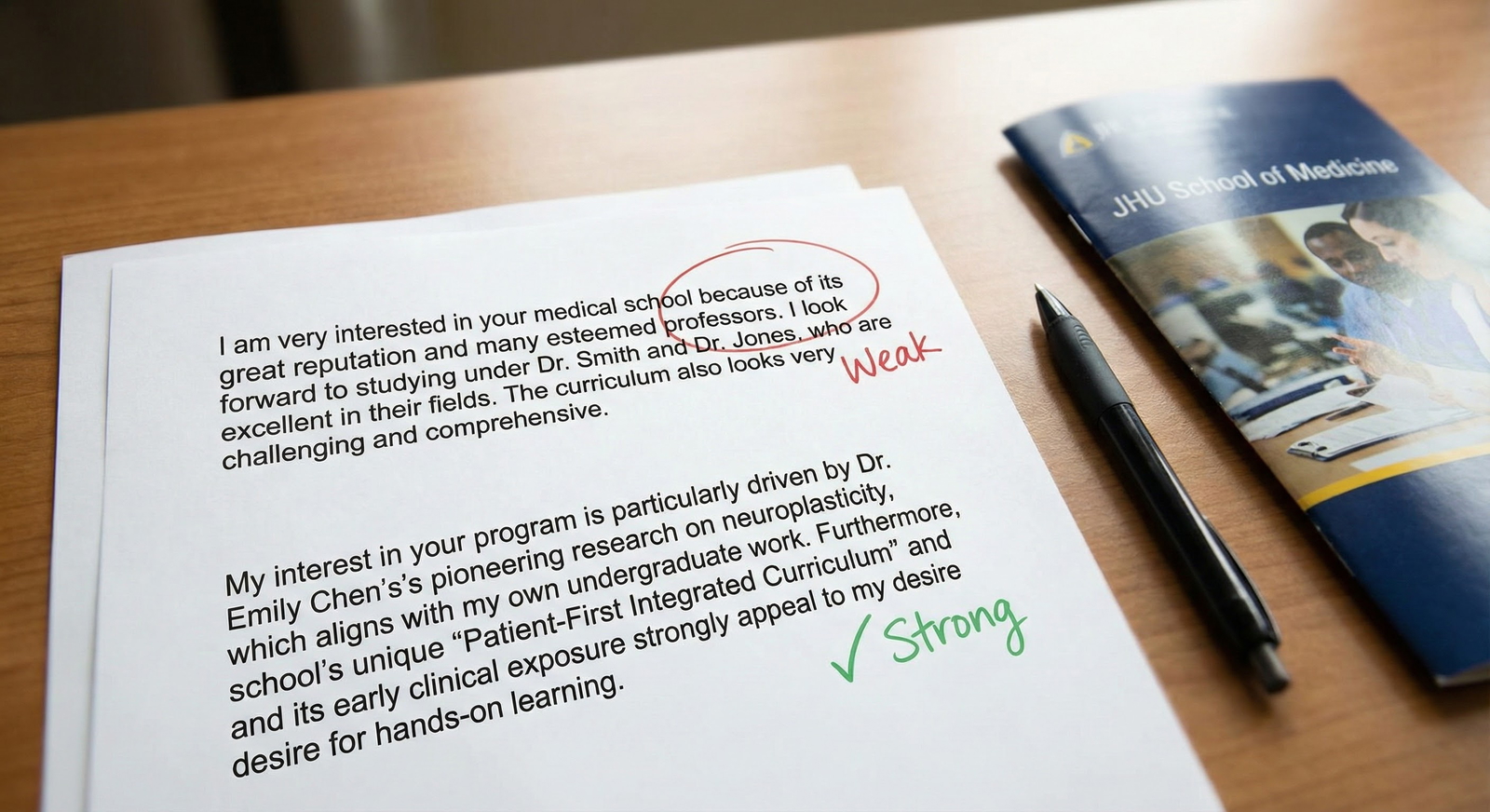
4.3 Giving Specific Reasons (Not Generic Flattery)
To be persuasive, your reasons should be:
- Specific to the program, not generic.
- Clearly based on your interview experience, conversations, and your goals.
Examples of strong, specific reasons:
- “Your program’s strong emphasis on caring for underserved immigrant populations in [city] resonates deeply with my background and my long-term goal to serve diverse communities.”
- “The structured mentorship program, particularly the [name of track or pathway], aligns with my interest in clinical research in [subspecialty].”
- “The opportunity to work closely with physician-scientists at [affiliate hospital or university] supports my plan to pursue a fellowship in [field].”
Avoid empty statements like:
- “Your program is excellent and prestigious.”
- “I was very impressed by your residents and faculty.”
… unless you follow them with concrete examples (“especially Dr. X’s description of…”).
4.4 Highlighting Your Value as a Non-US Citizen IMG
Programs want to know not just that you like them, but also why they should invest in you.
Points to emphasize:
Diversity and language skills
- If you speak multiple languages, especially those common in the program’s patient population.
- Example: “As a fluent Spanish speaker, I am eager to contribute to your care of the large Latino patient population in [region].”
Global perspective and resilience
- Training in a different system, working in resource-limited settings, or adaptability to new environments.
- This can be highly valued in urban, safety-net, and academic programs alike.
US clinical experience and professionalism
- Explicitly mention US electives, observerships, or prior US work (research coordinator, scribe, etc.).
- Emphasize that you are already somewhat familiar with the EHR, rounding culture, and ACGME expectations.
4.5 Addressing Visa Issues Transparently
As a foreign national medical graduate, address visa issues briefly and clearly:
State your visa plan in one or two sentences, for example:
- “I am ECFMG-certified and fully eligible for J-1 sponsorship.”
- “I have already passed USMLE Step 3 and am eligible for H-1B sponsorship.”
If the program clearly states its visa policy (e.g., J-1 only), reinforce that you fit that policy:
- “Given your support for J-1 visas, I am confident that my immigration status aligns well with your program’s policies.”
Do not turn the letter into a long immigration discussion. The goal is reassurance, not complexity.
4.6 Closing Strongly and Professionally
End with:
- A brief reiteration of your enthusiasm.
- Gratitude for the interview and consideration.
- A professional sign-off.
For example:
“Thank you again for the opportunity to interview and for considering my application. I would be honored to train at [Program Name] and am excited about the possibility of contributing to your team.”
5. Sample Letter of Intent for a Non‑US Citizen IMG
Below is a sample LOI you can adapt. Do not copy it verbatim; instead, use it as a model and adjust to your own voice and details.
Subject: Letter of Intent – [Your Name], [Specialty] Applicant
Dear Dr. [Program Director’s Last Name] and the [Program Name] Residency Selection Committee,
I am writing to express my sincere appreciation for the opportunity to interview at the [Program Name] [Specialty] Residency Program on [interview date]. After careful reflection on all of my interviews, I can confidently say that your program is my top choice, and I intend to rank [Program Name] #1 on my NRMP rank list.
Several aspects of your program strongly align with my goals and values. First, the commitment to caring for a diverse, largely immigrant patient population in [city/region] resonates deeply with my own background and experiences. As a physician who completed medical school in [your country] and has worked extensively with underserved communities, I am eager to continue serving patients who often face language, cultural, and access barriers.
Second, I was particularly impressed by the structured mentorship and academic opportunities you described, including the [research track, global health pathway, QI curriculum, etc.]. My prior research in [brief topic] and my interest in pursuing fellowship training in [subspecialty] make this environment an ideal fit for my long-term plans. Speaking with Dr. [Faculty Name] and the residents reinforced my sense that your program fosters growth while maintaining a supportive culture.
As a non-US citizen IMG, I value transparent communication about logistics. I am ECFMG-certified, have passed USMLE Step [1/2 CK/3 as applicable], and am fully eligible for [J-1 sponsorship / H-1B sponsorship, if applicable]. I appreciate that your institution supports [J-1 only / J-1 and H-1B visas], and I am confident that my immigration status aligns with your policies. In addition, my US clinical experience at [institution names] has prepared me to transition effectively into residency training.
Thank you again for considering my application. It would be an honor to train at [Program Name], and I am highly enthusiastic about the opportunity to contribute to your patients, residents, and faculty. Please let me know if there is any additional information I can provide.
Sincerely,
[Your Full Name], MD
AAMC ID: [Your AAMC ID]
ERAS ID: [Your ERAS ID]
[Email] | [Phone]
You can adapt this LOI template to other specialties (Family Medicine, Pediatrics, Psychiatry, etc.) by customizing the clinical focus, patient population, and career goals sections.

6. Common Pitfalls and Smart Strategies for Non‑US Citizen IMGs
6.1 Pitfalls to Avoid
Sending multiple LOIs claiming #1 rank
- This is unethical and risky.
- If program directors talk, your credibility may be damaged.
Making promises about visa or timelines that you cannot keep
- Do not exaggerate visa eligibility or Step 3 status.
- If you plan to take Step 3, say “I plan to take Step 3 in [month/year],” not “I have already passed.”
Overly long, repetitive letters
- Long emotional narratives may weaken your message.
- Be specific, concise, and professional.
Generic or copy‑paste content
- Program names mistakenly left from another letter can be disastrous.
- Customize every letter carefully.
Demanding or presumptive tone
- Never say, “I hope you will rank me to match” or imply that the program owes you anything.
- Maintain humility and professionalism.
6.2 Smart Strategies That Differentiate You
Document your interview impressions in real time
- After each interview, write quick notes about:
- What you liked
- Who you spoke with
- Unique strengths of the program
- These notes become key details in your LOI and interest letters.
- After each interview, write quick notes about:
Align your LOI with your personal statement and ERAS application
- Emphasize themes you have consistently presented (e.g., commitment to underserved care, global health, research).
Use mentors to review your LOI
- Ask a US faculty mentor or advisor to briefly review your letter for tone and clarity.
- They can help you avoid cultural or phrasing issues (e.g., sounding too formal or too casual).
Leverage your identity as a non-US citizen IMG as a strength
- Highlight concrete ways your background enhances the program:
- Language skills
- International perspective
- Experience with different healthcare systems
- Resilience and adaptability
- Highlight concrete ways your background enhances the program:
Maintain professionalism on all communications
- Use a clear email subject line: “Letter of Intent – [Your Name], [Specialty] Applicant.”
- Address the PD properly, proofread carefully, and use a professional email signature.
FAQs: Letters of Intent for Non‑US Citizen IMGs
1. As a non-US citizen IMG, is a letter of intent required to match?
No. Many applicants match without ever sending a letter of intent. An LOI is a strategic option, not a requirement. Its main value is:
- Clarifying to one program that they are your true first choice, and
- Providing a concise summary of why you and that program are an excellent fit.
For a non-US citizen IMG, it can also reassure programs about your visa and long-term commitment.
2. Can I send an LOI if I am still uncertain about my #1 choice?
You should not send a true LOI (stating “I will rank you #1”) if you are uncertain. Instead:
- Wait until your preference is clear, or
- Send interest letters saying “I will rank your program very highly” without claiming #1.
Only once you are truly sure about your first choice should you send a formal letter of intent residency email.
3. Will a letter of intent help overcome my IMG status or visa limitations?
An LOI cannot override institutional visa policies or compensate for major academic issues. However, it can help:
- Make your application more memorable and personal.
- Reassure programs that you understand and fit their visa policies.
- Highlight the added value you bring as a foreign national medical graduate.
Think of it as a small but meaningful nudge, not a magic solution.
4. Should I mention my visa situation directly in the LOI, or is that risky?
For a non-US citizen IMG, mentioning visa status briefly is usually helpful, not risky, if you:
- Keep it factual (“I am eligible for J-1 sponsorship,” “I have passed Step 3 and am eligible for H-1B”).
- Align it with the program’s stated policies.
- Avoid lengthy legal detail.
Programs prefer clarity. A concise statement reduces uncertainty and shows you are proactive and organized.
By understanding the purpose of an LOI, timing it wisely, writing it clearly, and being transparent about your status as a non-US citizen IMG, you can use this tool to communicate genuine interest and strengthen your connection with your top-choice program—while preserving your integrity and professionalism throughout the Match process.