Understanding the Letter of Intent as a US Citizen IMG
As a US citizen IMG or “American studying abroad,” you’re navigating a match process that often feels stacked against you. You may be told that sending a letter of intent (LOI) is “essential” or that it “doesn’t matter at all.” The truth is in between: a well‑crafted, honest letter of intent residency strategy can help at the margins—especially in tight ranking decisions—but only if you understand how programs actually use them and how to avoid common mistakes.
This guide breaks down how US citizen IMGs can use letters of intent strategically, ethically, and effectively. You’ll get:
- A clear definition of what a letter of intent is (and is not)
- Guidance on when to send LOI messages and to whom
- A practical, IMG-focused LOI template and examples
- Do’s and don’ts specific to American students studying abroad
- FAQ answers tailored to your situation as a US citizen IMG
What a Letter of Intent Really Is (And Why It Matters Less Than You Think)
A letter of intent is a brief, post-interview communication to one residency program stating:
“If you rank me, I will rank you #1 and intend to train at your program if matched.”
It is usually sent via email to the program director (PD) and/or program coordinator, and sometimes via an applicant portal. It’s not part of your ERAS application and is not binding legally, but it is an ethical commitment.
What Programs Actually Do With LOIs
Reality check: programs do not completely reorder their rank lists because of a single email. But they may:
- Use it as a tiebreaker among similar applicants
- Revisit your file during final rank meetings
- Factor it into “interest” as one minor part of their decision
- Interpret it as a sign of professionalism, maturity, and clarity of goals
For a US citizen IMG, your letter of intent usually will not overcome major concerns (low Step score, multiple failures, big professionalism red flags). But it can:
- Help distinguish you from other IMGs with similar metrics
- Remind the committee of specific strengths that fit their program
- Reassure them you’re genuinely interested and likely to rank them highly
- Counter their concern about visa issues (as a US citizen IMG, you don’t need a visa, which is a subtle advantage)
Letter of Intent vs. Thank-You Email vs. Interest Update
To use this tool strategically, you must distinguish three types of communication:
Thank-you email (Post-interview)
- Timing: Within 24–72 hours after your interview
- Content: Appreciation, short reflection, 1–2 program-specific points you liked
- Goal: Maintain a positive impression; show professionalism
- No ranking statements
Interest update (Mid/late season)
- Timing: After interview season, before rank lists are finalized
- Content: Concise update on new accomplishments; reaffirm strong interest
- Goal: Gently “ping” the program and remind them of your fit
- You may say “I plan to rank your program highly,” but not “#1”
Letter of intent (Late season)
- Timing: Late January to mid‑February (after interview season, before NRMP rank list deadline)
- Content: Clear statement that this program is your #1 choice
- Goal: Communicate your top choice honestly to one program
- Ethically, you should send only one true LOI stating they are #1
For a US citizen IMG, each of these is an opportunity to show maturity, strong communication skills, and professionalism—traits that can differentiate you among IMGs.

When to Send LOI as a US Citizen IMG
Timing is crucial. Sending a letter too early or too late blunts its impact.
General Timeline for the Match Cycle
For most specialties and programs, the rough US timeline is:
- October–January: Interviews
- Late January–mid February: Programs finalize rank lists
- Late February: Applicant rank list deadline
- March: Match Week
Your letter of intent should land after interview season and before programs lock in their rank lists.
Practical Timing Window
For a typical cycle:
Best window:
- Around late January to the first half of February
- Roughly 2–4 weeks before the NRMP rank list deadline
Too early:
- December or early January, when programs are still interviewing many candidates and haven’t started rank meetings
- Your message gets lost or feels premature
Too late:
- After publicized NRMP rank list deadline for programs
- After you yourself have already certified your rank list (no strategic benefit then)
If you are an American studying abroad with limited US clinical experience, this timing is even more important. You want to:
- Accumulate as many interview experiences as possible
- Reflect honestly on where you fit best
- Send an LOI only once you are certain of your #1 choice
Special Situations for US Citizen IMGs
Limited number of interviews (e.g., 3–5 total)
- You may feel pressure to send multiple LOIs—don’t.
- Instead, send one true LOI to your highest-odds, best-fit program.
- Send strong interest updates (without “#1” language) to the others.
Preliminary vs. Categorical positions
- If you are applying to both, you can ethically send:
- One LOI for your top categorical program, and
- A separate LOI for your top prelim program (clearly specifying role and position type).
- Be explicit so there’s no confusion.
- If you are applying to both, you can ethically send:
Late interview invite (e.g., January)
- If a late interview becomes your clear #1, it’s still okay to send an LOI in early/mid‑February.
- The key is that the letter reaches them before final rank meetings.
How to Write an Effective Letter of Intent as a US Citizen IMG
Core Principles
Your LOI should be:
- Honest – One true #1 program only
- Specific – Program‑tailored, not generic
- Professional and concise – Usually 250–500 words
- Aligned with your application – No contradictions with your ERAS materials
Programs see many vague, copy‑paste emails; being specific and grounded in your actual interview and experiences will set you apart.
Structure: Simple LOI Template You Can Adapt
Here is a practical LOI template you can customize:
Subject line options:
- “Letter of Intent – [Your Name], [Specialty] Applicant”
- “[Your Name] – Letter of Intent for [Program Name]”
Salutation:
- “Dear Dr. [Program Director’s Last Name] and the [Program Name] Residency Selection Committee,”
or - “Dear Dr. [Last Name],”
Paragraph 1 – Clear statement of intent
- 1–2 sentences: state your #1 choice explicitly.
I am writing to express my sincere gratitude for the opportunity to interview with the [Program Name] [Specialty] Residency. After careful reflection, I am pleased to share that your program is my top choice, and I plan to rank [Program Name] #1 on my rank order list.
Paragraph 2 – Why their program (specific)
- 3–5 sentences with detailed reasons linked to:
- Curriculum and training style
- Patient population and setting
- Program culture and mentorship
- Geographic/family reasons (if genuine)
My interview day confirmed that the mission and culture of [Program Name] align strongly with my values and training goals. I was particularly impressed by [specific feature – e.g., your structured ambulatory curriculum and strong emphasis on continuity clinic]. Speaking with Dr. [X] and residents [Y, Z] highlighted the program’s supportive environment and the close mentorship available for residents pursuing [e.g., hospital medicine, community practice, fellowship]. As a US citizen IMG with diverse clinical experiences abroad and in the US, I am especially drawn to your care for [specific patient population or community], where I hope to contribute my background in [relevant experience].
Paragraph 3 – Why you fit (brief narrative)
- 3–4 sentences: highlight 2–3 strengths that match program needs.
I believe my background and skills would allow me to contribute meaningfully to your residency. My experiences completing clinical training at [Your International School/Hospital] and undertaking US clinical rotations at [US hospitals] have prepared me to adapt quickly to new systems and function well in busy clinical settings. Additionally, my involvement in [research, QI, leadership, community service] reflects my commitment to [e.g., quality improvement, teaching, underserved care], which resonates with your program’s focus on [related feature the program values].
Paragraph 4 – Professional close + appreciation
- 2–3 sentences: restate enthusiasm, thank them, and welcome contact.
Thank you again for the opportunity to interview and for considering my application. It would be an honor to train at [Program Name], and I would be thrilled to join your resident team if matched. Please let me know if I can provide any additional information.
Signature block:
Sincerely,
[Your Full Name], MD Candidate
[Medical School Name]
AAMC ID: [#########]
ERAS ID (if applicable): [########]
Email: [email] | Phone: [number]
Tailoring for US Citizen IMGs (American Studying Abroad)
When you adapt the LOI template, you can strategically highlight:
US citizenship, no visa requirement
- Don’t make this the headline, but you can subtly mention it once.
- Example:
As a US citizen IMG, I am excited to return to the US healthcare system long-term and face no visa-related barriers to training or practice.
Your transition back to the US system
- Emphasize completed US rotations, sub‑internships, or electives.
- Example:
My sub‑internship at [US hospital] allowed me to function at the level of an intern, handle cross‑coverage, and receive direct feedback from US faculty, which I am eager to continue building upon at your program.
Adaptability and diverse clinical exposure
- Many PDs appreciate IMGs who bring global perspectives.
- Example:
Training abroad has strengthened my clinical independence, adaptability, and ability to work with resource limitations—skills that I believe will translate well to caring for your diverse patient population.
Commitment to the region or community
- Programs worry about “flight risk” from IMGs.
- If you have ties to the city/state, mention them authentically.
- Example:
Having grown up in [state/city] and with much of my family living in [nearby area], I am committed to building a long-term career in this region.

Common Mistakes US Citizen IMGs Make with LOIs (And How to Avoid Them)
1. Sending LOIs to Multiple Programs
This is the most serious error. Ethically, you should only tell one program they are your #1.
- Programs share information informally, especially within regions or specialties.
- If two PDs compare notes and see you promised both of them your #1 spot, you gain a reputation for dishonesty.
What to do instead:
- Send a single true LOI with “#1” language.
- Send strong interest emails to other programs using phrases like:
- “I remain very interested in your program and plan to rank it highly.”
- “Your residency will be among the highest on my rank list.”
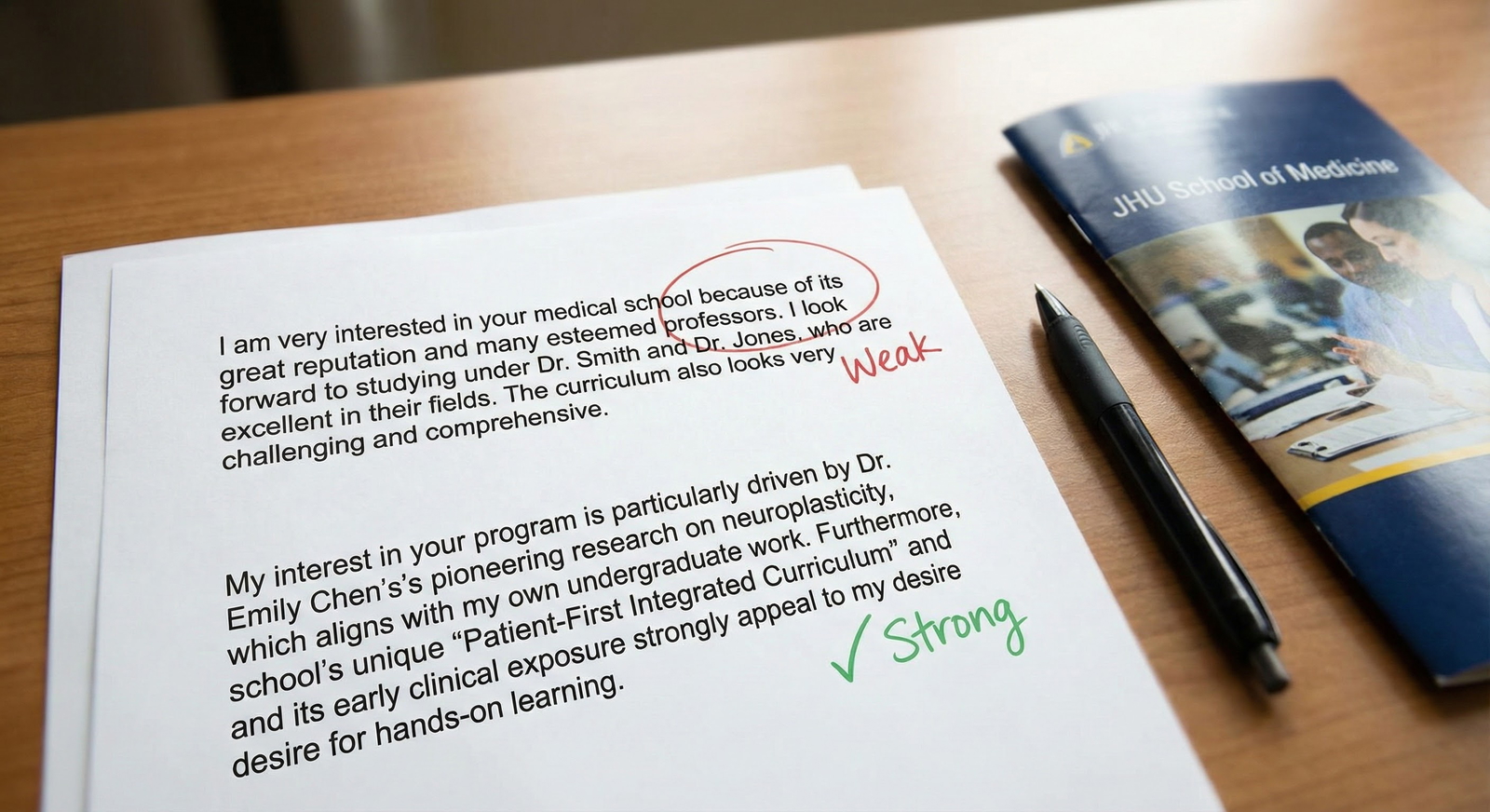
2. Being Vague and Generic
Programs can spot copy-paste emails that could be sent to any program.
Avoid sentences like:
- “Your program has excellent training and a strong reputation.”
- “I was impressed by the faculty and residents.”
These say nothing specific.
Fix it:
Mention program-unique details:
- Specific rotations (e.g., strong ICU time, rural sites, global health track)
- Named faculty or residents you spoke with
- Clear features such as 3+1 schedule, X hospital affiliation, strong fellowship match list, etc.
3. Making It Too Long or Emotional
Overly long, emotional narratives can hurt you—especially if language feels overly dramatic or desperate.
Avoid:
- Multi-page letters
- Overly personal pleas (“This is my only hope to be a doctor”)
- Excessive flattery
Aim for: 250–500 words, professional tone, confident but respectful.
4. Contradicting the NRMP Rules
You may tell programs that they are your #1.
You may not:
- Ask them how they will rank you
- Ask them to reveal their rank list
- Imply any exchange or guarantee
Your letter of intent residency strategy should fully respect NRMP communication guidelines. Keep the message one-way: you sharing your intentions, not probing theirs.
5. Poor Writing, Typos, and Unprofessional Format
As an IMG, some PDs already worry about language and documentation skills. Your LOI is a sample of your written communication.
Avoid:
- Typos, grammatical errors, incorrect program names
- Using casual language or text messaging style
- Copying a LOI template without editing details (wrong program name is a common disaster)
Double-check:
- Program name and city
- PD’s name and title spelling
- Your identifiers (AAMC, ERAS ID)
- Email subject line and attachment (if any; usually LOI is just in the email body)
Putting It All Together: A Strategic LOI Plan for US Citizen IMGs
Here is how you might plan your communication strategy through the season.
Step 1: During Interview Season
For each interview:
- Send a short thank-you email within 24–72 hours.
- Include:
- 1–2 specific positives from the interview day
- A sentence indicating continued interest
This maintains goodwill and signals professionalism.
Step 2: After You’ve Completed Most Interviews
As late January approaches:
Make an honest ranking draft.
- Consider fit, location, support systems, curriculum, and your sense of where you’re most likely to succeed.
- Remember that as a US citizen IMG, you want a program willing to support your development, not just any name-brand institution.
Identify your true #1 program.
- Ask yourself: “If I matched here, would I cancel all other options and be happy?”
- Once the answer is yes for one program, that’s your LOI target.
Identify 3–5 other programs you’re very interested in but will not label #1.
- These will receive interest updates, not LOIs.
Step 3: Drafting and Sending the LOI
- Write your LOI using the template and US citizen IMG‑specific adaptations.
- Have a trusted mentor review it, if possible (US faculty mentor, advisor, or senior resident).
- Send it during that late January–early/mid-February window.
Step 4: Sending Interest Updates to Other Programs
For your other top programs, send brief, tailored interest emails:
- Express strong interest without using “#1” language.
- Mention specific reasons you like the program.
- Example phrasing:
I greatly enjoyed my interview day at [Program Name], and your focus on [specific features] makes your residency one of my top choices. I plan to rank [Program Name] very highly on my rank list.
This keeps you on their radar without making conflicting promises.
Step 5: Certify Your Rank List Based on True Preferences
When finalizing your rank list:
- Rank programs in the genuine order of where you would want to train, not based on where you’re guessing you’re more likely to match.
- The Match algorithm favors the applicant’s true preference.
- If you told a program you’ll rank them #1, follow through ethically.
FAQs: Letters of Intent for US Citizen IMGs
1. I’m a US citizen IMG with only a few interviews. Should I still send a letter of intent?
Yes, but strategically and honestly. Even with 3–4 interviews, you should:
- Pick one program as your true #1 and send a letter of intent there.
- Send strong interest updates (without “#1 language”) to the others.
The LOI may help as a tiebreaker among similar IMG candidates and shows maturity and professionalism, but it is not a magic fix. Your priority is still to rank every program where you would actually be willing to train.
2. Can I tell one categorical program and one preliminary program they are each #1?
Yes, if you are applying to separate tracks:
- You can have a #1 categorical choice and a #1 preliminary choice, since they serve different purposes.
- Be very clear in the LOI:
- “I will be ranking the [Preliminary Internal Medicine] position at [Program Name] as my top choice for a preliminary year.”
- “I will be ranking the [Categorical Internal Medicine] position at [Program Name] as my #1 categorical choice.”
Avoid any ambiguity so programs don’t feel misled.
3. As an American studying abroad, should I mention that I’m a US citizen in my LOI?
You can, and in many cases you should, but keep it concise and professional. For some programs, IMGs raise visa concerns, so clarifying that you’re a US citizen IMG:
- Reassures them there is no visa complexity.
- Signals you plan to build your long-term career in the US.
Example:
As a US citizen IMG, I am excited to return to the US healthcare system for residency and long-term practice, and I face no visa-related barriers to training.
Don’t overemphasize it, but one sentence is appropriate.
4. Will a strong LOI overcome low scores or exam failures?
No. A letter of intent cannot erase major academic concerns, exam failures, or professionalism issues. Programs primarily use LOIs:
- As a minor factor among similar applicants
- As evidence of strong interest and professionalism
However, for a US citizen IMG with borderline metrics, a thoughtful, specific LOI may:
- Encourage the program to take a second look
- Move you slightly upward if they were already considering ranking you
Use your LOI to reinforce your fit, maturity, and commitment, but maintain realistic expectations about its impact.
A letter of intent is not a guarantee, but for US citizen IMGs it’s a valuable tool when used honestly and strategically. Focus on clarity, specificity, and integrity: choose one true #1 program, articulate why it’s the best match, and demonstrate that you are prepared, committed, and ready to contribute as a resident in the US healthcare system.