It is late August. ERAS is about to open. You have a draft of your personal statement, a Step 2 score you can live with, and a spreadsheet of programs that looks more like a CVS receipt than a career plan.
You keep hearing:
“Send interest emails.”
“Show them you are serious.”
“You need a letter of intent.”
But when? To whom? How often before it becomes clingy and weird?
Let me walk you through this the way I wish someone had walked several of my advisees through it: month-by-month, then week-by-week when it gets tight. At each point I will tell you exactly what kind of interest communication belongs there—and what absolutely does not.
Big Picture: What You Send and When
Before we go chronologically, you need the basic structure in your head:
Pre-interview phase (Aug–Oct):
Light-touch interest emails and update letters to get on the radar. No “I will rank you highly” nonsense yet. You do not know them. They do not know you.Active interview phase (Oct–Jan):
- Pre-interview: very short “continued interest” or “I would love to be considered” notes if genuinely indicated.
- Post-interview: targeted thank-you + interest emails. No promises yet.
Post-interview / Pre–rank list (Jan–Feb):
- Refined letters of interest for programs you like but will not rank #1.
- Strategy-ready for your single true letter of intent.
Rank list & post-list phase (Feb–March):
- One honest letter of intent to your #1.
- Very occasional, respectful follow-ups for major updates only.
Keep that skeleton in mind. Now we put dates and actions on top of it.
August: Laying the Groundwork Before ERAS Locks In
At this point you should be:
- Finalizing your program list
- Clarifying your geographic and career priorities
- Drafting templates so you are not writing from scratch in panic mode later
Weeks 1–2 (Early August)
Tasks:
Build three tiers of programs.
Be ruthless.- Tier A: “If I matched here, I would be thrilled.” (10–20 programs)
- Tier B: “Solid fit / realistic targets.”
- Tier C: “Safety or location-only choices.”
You will spend your communication capital mostly on Tier A, selectively on B, almost never on C.
Collect contact information.
For each Tier A program, identify:- Program director (PD) email
- Associate PD(s)
- Program coordinator
- If available: chair or division lead in your specific interest (e.g., cardiology)
Draft your base templates.
Not to send yet. Just to have:- Short pre-interview interest email template (100–150 words)
- Post-interview thank-you + interest template
- Longer letter of interest template (for January)
- Letter of intent skeleton (one you will customize deeply later)
You are not yet sending anything to everyone. You are putting ammo in the belt.
September: Early Interest (Without Looking Desperate)
This is when ERAS opens and programs are flooded. Anything long will not be read. At this point you should be sending short, respectful, targeted interest notes to a very small subset of your list.
Week 1: ERAS Submission Week
Tasks:
- Submit ERAS.
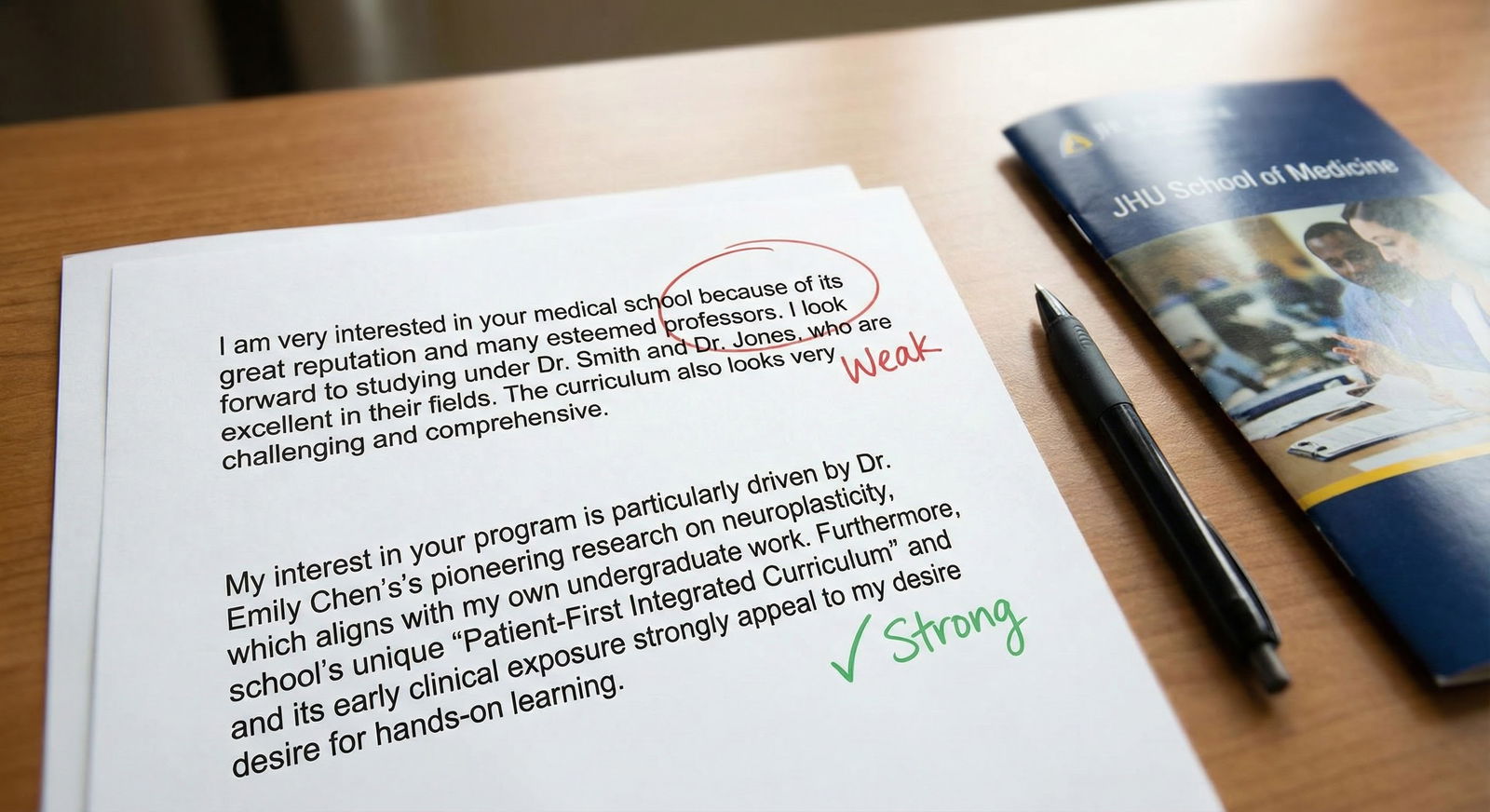
- Do not send a mass blast of “I love your program” emails. Bad look.
Instead:
- Identify 5–10 true top programs (Tier A) where you have:
- A clear geographic tie, or
- Research alignment, or
- A mission / patient population match
Send a brief, specific interest email to the PD or associate PD.
Structure (max 6–7 sentences):
- Who you are (school, specialty, 1–2 relevant highlights)
- Why their program (1–2 specific, non-generic details)
- Clear but humble interest line
- Optional: 1–2 line update (new paper, leadership role, Step 2 score if strong)
- One-line close
Weeks 2–4 (Mid–Late September)
At this point you should:
Stop after one touch.
No follow-up on “Did you see my email?” They saw it. Or they deleted it. You will not fix that with a second attempt.Use the time to:
- Clean up your CV in case programs ask for a PDF.
- Prepare for the interview season that is coming.
No letters of intent. No rank promises. You do not have data yet.
October: Interview Invitations Start – Shift Strategy
Invites start trickling, then streaming. Your goal here is simple: be on the radar of programs you care about but have not heard from—without spamming anyone.

| Step | Description |
|---|---|
| Step 1 | ERAS Submitted |
| Step 2 | No Interview Yet |
| Step 3 | Single Interest Email |
| Step 4 | Update Email |
| Step 5 | Wait |
| Step 6 | Post Interview Thank You |
| Step 7 | Let Go or Single Follow Up |
Early October (Weeks 1–2)
At this point you should:
- Track which Tier A programs have:
- Already invited you
- Not responded at all
For Tier A programs without invites by mid-October, consider one of the following, not both:
- Interest email if you have not contacted them yet.
- Update + continued interest email if:
- You have a major new development (accepted publication, honor, strong Step 2 score released).
Keep the email under 200 words. No attachments unless requested.
Late October
Now you will start attending interviews. After each interview:
- Send a short thank-you email to:
- Individual interviewers (if you have their emails), and/or
- Program coordinator / general program address
This is not a letter of intent. It is:
- Thank you
- One or two specific things you appreciated
- A clear statement of interest (e.g., “I would be very excited to train here.”), but no rank promises
November: Heavy Interview Season – Precision, Not Volume
You will be interviewing, traveling (virtually or in-person), keeping your head above water. At this point you should focus on high-yield, targeted communications only.
Throughout November
After each interview (within 48–72 hours):
- Send:
- One email to the PD or main contact
- Optional: separate shorter email to an interviewer you connected strongly with
Content:
- Thank you for specific parts of the day (morning report, resident social, particular case discussion).
- 1–2 sentence recap of your fit (interests, location, goals).
- Clear enthusiasm: “Your program remains one of my top choices.”
- But no “I will rank you number one” yet. That word “one” is a legal promise in this game.
- Send:
For programs you have not heard from at all:
- You may send one targeted interest/update email to your very top 3–5 programs if:
- You have a meaningful new achievement, and
- You have a legitimate story for why that program is your priority.
Do not send new emails every week. That just gets you filtered.
- You may send one targeted interest/update email to your very top 3–5 programs if:
December: Sorting Your List and Planning Your Letters
By December, patterns are clear. You roughly know:
- Where you have interviewed
- Where you are likely done
- Which programs you truly like vs. “just okay”
This is when you should start drafting letters of interest and planning your single letter of intent.
Early December
At this point you should:
Rank programs in three buckets (for yourself, not ERAS yet):
- Group 1: Serious contenders for top 3–5 spots
- Group 2: Mid-list but would still be happy there
- Group 3: Back-up / acceptable but not ideal
Identify candidates for:
- Letter of intent: Exactly one program that you would be genuinely happy to attend above all others. If you are not sure yet, wait. Better to send later and be honest than early and lie.
- Letters of interest: 3–7 programs (usually in your top 10) where you want to signal strong enthusiasm but will likely not call them #1.
Start drafting:
- One letter of intent template (500–800 words) that you will later customize deeply.
- One letter of interest template (~400–600 words) with:
- 1–2 paragraphs on why them
- 1 paragraph on who you are / what you offer
- 1 paragraph of clear but honest interest (e.g., “I plan to rank your program highly.”)
Late December
Weather is trash, interviews slow down, and you actually have thinking time. Use it to:
- Update your letters with:
- Real examples from interview days (“During morning report, I noticed…”)
- Resident interactions (“Talking with Dr. Smith and Dr. Patel confirmed…”)
You are still not sending letters of intent yet unless a program’s deadline demands it early (rare but happens in some competitive specialties).
January: The Critical Month for Letters of Interest
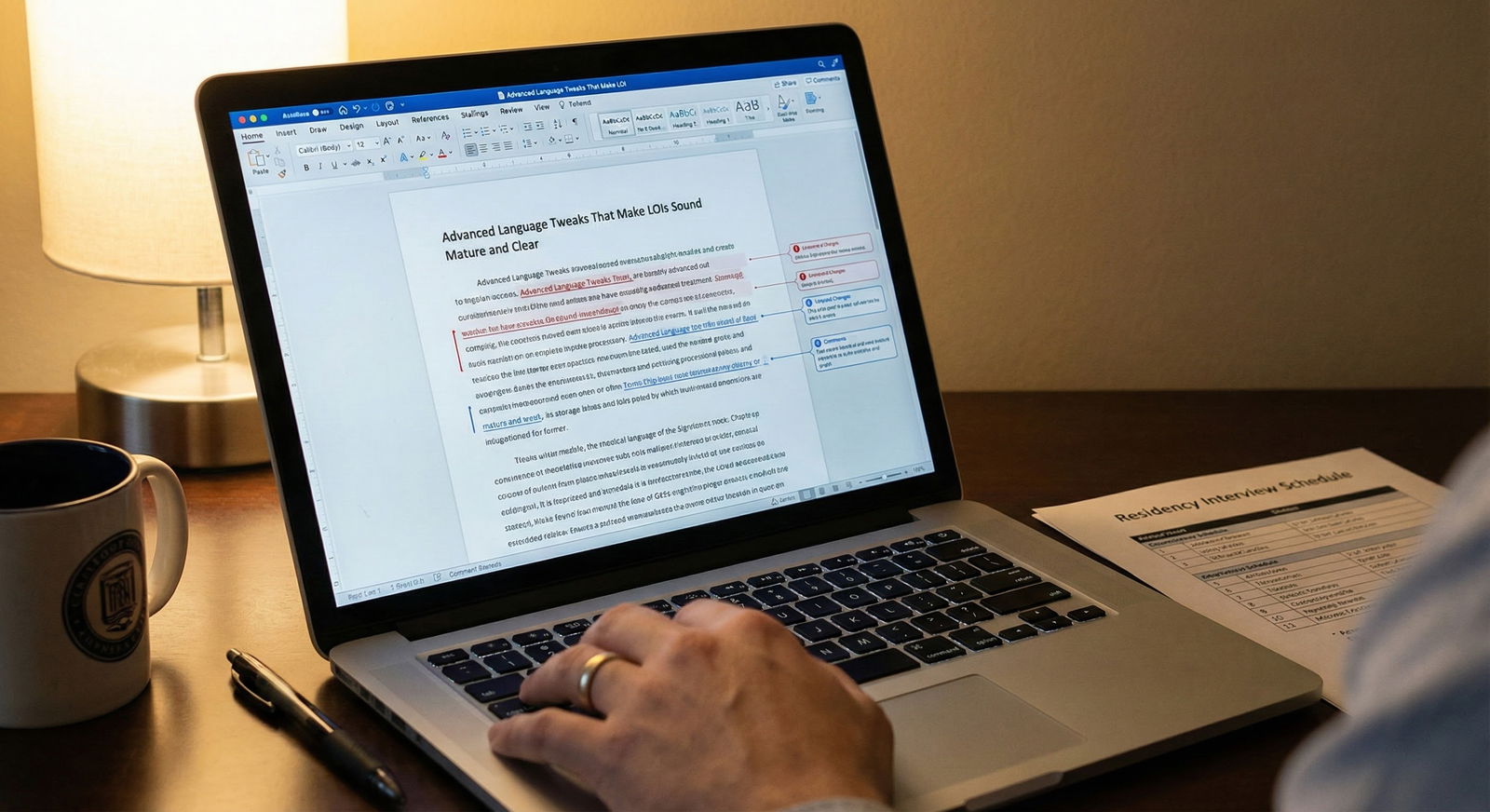
Now we are in the post-interview but pre–rank list submission window. Programs are meeting, discussing, and building their rank lists. This is when carefully timed letters of interest can make a difference.
Early January (First 2 weeks)
At this point you should:
Refine your personal rank list draft.
- Be honest with yourself.
- Identify:
- 1 program for letter of intent (but you may still hold off sending)
- 3–7 programs for letters of interest
Send letters of interest to selected programs.
Who gets a letter of interest?
- Programs you:
- Have interviewed at
- Truly liked
- Will likely rank in your top 3–7
- But are not your undisputed #1
Content of a letter of interest (approx 4–6 paragraphs):
- Opening: who you are and when you interviewed
- Why their program:
- 2–3 specific program features (curriculum, fellowships, unique patient population)
- Concrete moments from your interview day to prove you paid attention
- Why you fit:
- Your clinical, research, or community interests
- Any geographic or personal ties
- Clear, honest closing:
- “I remain extremely interested in your program and plan to rank it very highly.”
You do not say “I will rank you #1.” That is reserved.
Late January
By now, most interviews are done. Programs are finalizing rank meetings.
You should:
- Avoid sending multiple new emails to the same program.
- Consider one follow-up to a program where:
- You sent a letter of interest, and
- You have a significant new update (new publication, major honor, award).
Keep the follow-up short:
- 2–3 sentences:
- Quick reminder that you interviewed
- One-line update
- One-line restatement of interest
February: Rank Lists and the Single Letter of Intent
This is where people screw it up. They send three “you’re my number one” letters, thinking no one will find out. They do. And it is a reputational stain that follows you.
At this point you should be strategic and brutally honest.
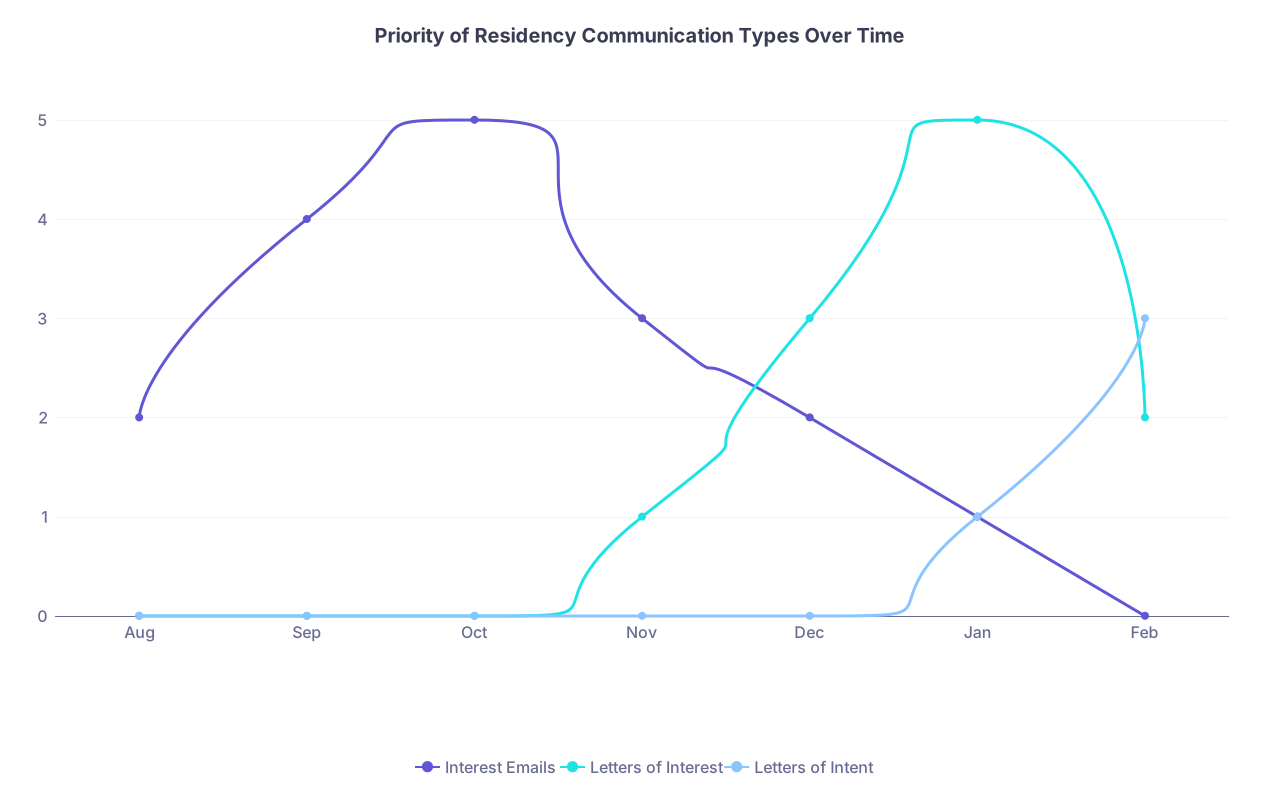
| Category | Interest Emails | Letters of Interest | Letters of Intent |
|---|---|---|---|
| Aug | 2 | 0 | 0 |
| Sep | 4 | 0 | 0 |
| Oct | 5 | 0 | 0 |
| Nov | 3 | 1 | 0 |
| Dec | 2 | 3 | 0 |
| Jan | 1 | 5 | 1 |
| Feb | 0 | 2 | 3 |
Early February: When Rank Lists Open
At this point you should:
Finalize your internal rank list.
Decide, in plain language:“If every program on my list called me with an offer today, I would pick ___.”
That blank is your letter of intent program. Only one.
Send your letter of intent within the first 1–2 weeks of the rank list window.
Who receives it?
- Program director (primary)
- Optionally CC: associate PD or program coordinator
Length: 500–800 words, well structured, no fluff.
Core elements:
- Clear, first-paragraph statement:
“I am writing to let you know that I will be ranking [Program Name] as my first choice for residency.” - Specific reasons (3–5 concrete ones):
- Training style, program culture, faculty, fellowship track record, city, family support, etc.
- Examples from your interview day and conversations.
- Your fit and what you bring:
- Clinical strengths, academic or QI interests, leadership traits.
- Sincere closing:
- Gratitude for the interview and consideration.
- Reaffirmation of your intent.
Do not hedge with “one of my top choices.” For letters of intent, be explicit.
- Do not send more than one letter of intent.
I have sat in meetings where PDs compared notes. They had copies of the same student’s “you are my clear #1” to two different programs. That story made the rounds for years.
Mid–Late February
At this point you should stop active campaigning.
- Rank list is submitted (for you and soon for them).
- The only acceptable emails now:
- Factual updates of major magnitude (new first-author paper in a prominent journal, national award).
- Even those are optional and should be brief.
No new letters of intent. No “just wanted to check where I stand.” That is not how this works.
Quick Comparison: What to Send, When, and to Whom
| Type | Timing Window | Typical Length | Sent To |
|---|---|---|---|
| Interest Email | Sep–Nov (pre / early IV) | 100–200 words | PD / APD |
| Post-IV Thank You | Oct–Dec (48–72h post-IV) | 75–150 words | Interviewers / PD |
| Letter of Interest | Jan (post-IV) | 400–600 words | Top-but-not-#1 PD |
| Letter of Intent | Early–Mid Feb | 500–800 words | Single #1 program PD |
March: After Rank Lists – Let It Go
Once rank lists lock:
- Your job is done.
- There is no persuasive email that will change a locked list.
At this point you should:
- Stop all interest / intent communications.
- Focus on:
- School requirements
- Logistics for moving
- Mental preparation for any outcome
After Match Day:
- If you match, you can send a brief thank-you / excited email to your new PD.
- If you do not match, that is a different playbook (SOAP strategy, targeted outreach), not letters of intent in the classic sense.
A Few Hard Rules I Have Watched People Learn the Hard Way
Scattered through the year, but they really matter:
One letter of intent. Ever.
Not per month. Not per region. One.Every interest email must say something specific.
If your email could be copy-pasted to any other program by changing the name, it is weak.Respect silence.
No answer to your email is an answer. Sending another “bumping this to the top of your inbox” message helps no one.Do not weaponize tragedies or pity.
I have seen applicants write long, emotionally manipulative paragraphs about family illness or personal hardship to “pressure” programs. That usually backfires.Your dean’s office and home PD can send advocacy emails.
Those are separate and often more impactful than your 7th personal email. Use them sparingly and strategically.
Your Move Today
You are somewhere on this timeline right now. So pick the step that matches your phase.
If you are pre-interview (Aug–Oct):
Open your program spreadsheet and mark 10–15 “Tier A” programs. For each, write a single bullet about why them that is more specific than “location” or “reputation.” That becomes the backbone of your first interest emails.
If you are in interview season (Oct–Dec):
Pull up your calendar and pick the last three programs you interviewed at. Draft one tight, specific thank-you + interest email for each, using an actual detail from your interview day.
If you are post-interview (Jan–Feb):
Write down your top three programs in order, no overthinking. Then underline the one that, if they all called with an offer, you would choose. That is your letter of intent program. Open a blank document and type the first line:
“I am writing to let you know that I will be ranking [Program Name] as my first choice for residency.”
Build the rest of the letter around that sentence—then send it when the rank window opens.