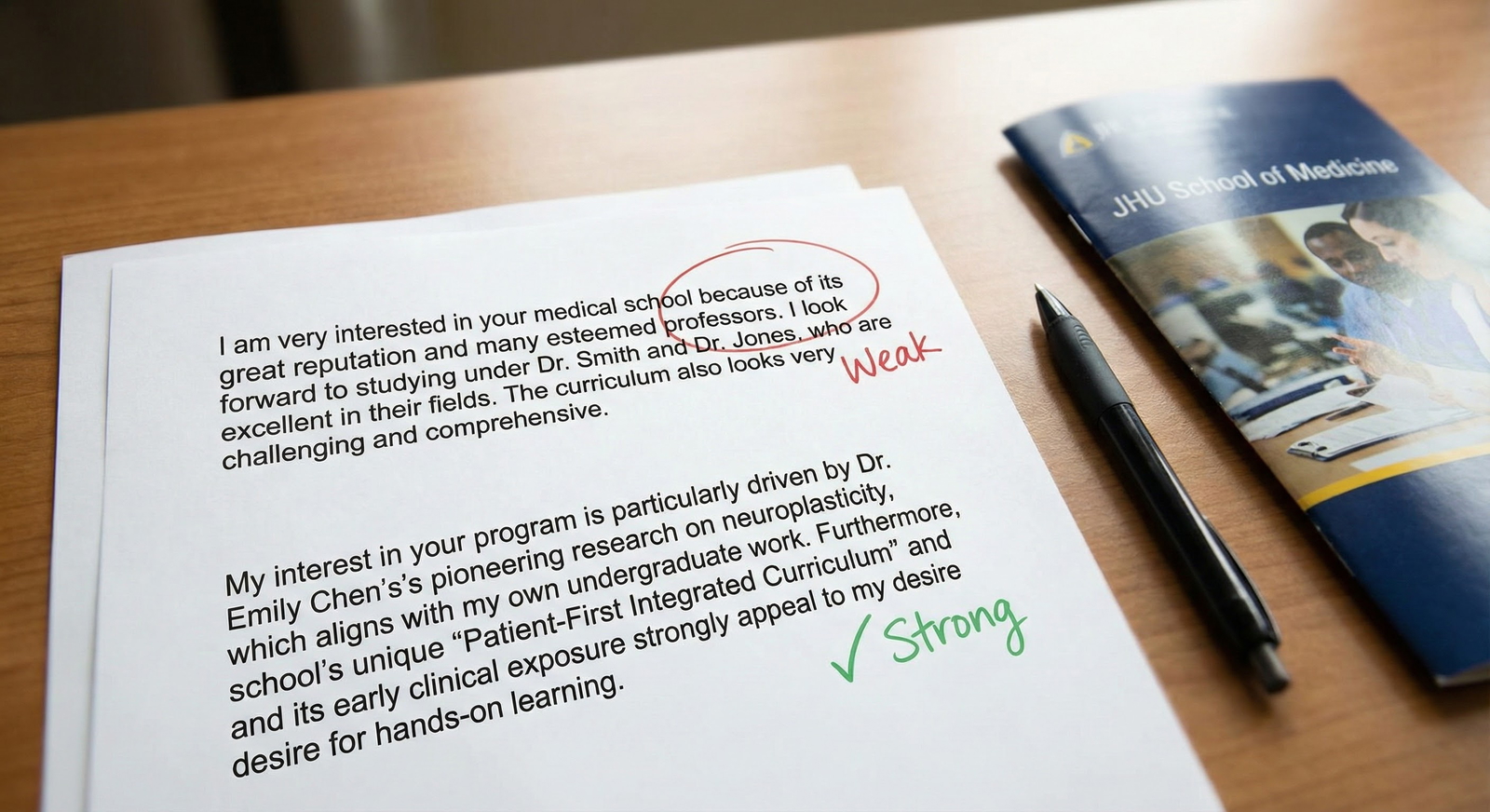
As a Caribbean IMG, you already know the residency match is competitive—and often feels like you’re playing catch‑up compared to U.S. MD students. One of the few tools you have to strategically influence how programs see you late in the season is the letter of intent (LOI).
Used correctly, a letter of intent can:
- Reinforce genuine interest in a program
- Clarify why you’re an excellent fit as a Caribbean medical school residency candidate
- Signal commitment in a way programs take seriously
- Potentially nudge a program to move you higher on their rank list
This guide is written specifically for Caribbean IMGs, including SGU, AUC, Ross, Saba, and others, and will walk you through LOI strategy from start to finish—with examples, timing advice, and a practical LOI template you can adapt.
Understanding the Letter of Intent: What It Is and What It Isn’t
A letter of intent for residency is a brief, formal communication sent to one program after interviews, stating that it is your top choice and that you intend to rank it #1.
What a Letter of Intent Is
- A clear statement of priority: “If I match, I want it to be with you.”
- A professional follow‑up to reinforce genuine interest after interviewing.
- A chance to clarify your fit—especially important as a Caribbean IMG.
- A tool to address subtle concerns that may not have been fully covered on interview day (e.g., why you chose a Caribbean school, red flags in your application, or visa status).
What a Letter of Intent Is Not
- Not a generic “I liked your program” email (that’s a thank‑you note).
- Not something you send to multiple programs—that’s unethical and risky.
- Not a contract; it’s not legally binding, and programs cannot ask you to commit.
- Not a guarantee of ranking you to match; it simply becomes one more positive data point.
For Caribbean IMGs, where programs may have lingering concerns about training quality or board scores, a strong LOI can humanize your application and highlight your strengths.
Why Letters of Intent Matter More for Caribbean IMGs
Caribbean applicants often feel like they don’t have the same leverage as U.S. graduates. However, that’s exactly why the letter of intent can matter more for you than for many others.
1. You’re Competing in a Crowded Category
Programs often see large numbers of applications from Caribbean medical school residency candidates. A personalized LOI helps you:
- Stand out from the “generic IMG” pool
- Turn from “one of many” into a distinct individual with a story and clear alignment
- Show that you understand the program and are not just blanket‑emailing
2. The “Caribbean Question” Needs a Thoughtful Answer
Many programs still have unconscious bias or real concerns about Caribbean schools. Even if you interviewed well, PDs may still wonder:
- Why didn’t this applicant attend a U.S. or Canadian school?
- Did their Caribbean curriculum prepare them adequately?
- How will they perform compared to U.S. MDs?
In your LOI, you can briefly and positively address this:
- Acknowledge your path
- Show you’ve overcome structural challenges (distance, limited academic resources, step exam pressures)
- Emphasize strengths: resilience, adaptability, broad clinical exposure, and patient diversity
Programs know that some SGU residency match outcomes and other Caribbean school matches are strong every year. Your LOI is a place to align yourself with those successful narratives.
3. Programs Value Predictability
Program directors worry about spending time ranking applicants highly who then match elsewhere. A genuine LOI:
- Reduces perceived “risk” of investing in you
- Signals you’re more likely to come, if ranked high enough
- May push you up a few spots in borderline decisions
For a Caribbean IMG with similar stats to another candidate, the LOI can be the tie‑breaker.

Timing Strategy: When to Send a Letter of Intent
The question of when to send LOI is almost as important as how you write it.
General Timing Rules
- Send after you’ve completed your interviews.
You should only send a true LOI once you are confident about your #1 program. - Ideal window:
- Late January to mid‑February for most cycles
- Before programs finalize rank lists (usually late February)
- Do not send it the day after your interview. Programs may see this as impulsive.
Step‑By‑Step Timing Plan
Immediately after each interview
- Send a standard thank‑you email within 24–48 hours.
- Take notes about each program: culture, teaching style, location, call schedule, and vibe.
By late January
- Start ranking your programs based on fit, visa support (if needed), Caribbean IMG history, and your personal priorities.
- Research each program’s track record with Caribbean medical school residency graduates (many publish class lists; for example, you can often see SGU residency match outcomes that list programs, and reverse‑search those programs’ IMG patterns).
Early to mid‑February
- Identify your true #1 program.
- Draft and refine your LOI (using the template below).
- Send the LOI to the program director (PD) and optionally CC the program coordinator.
Late February (just before rank list lock)
- You may send brief interest updates to 2–4 other programs (not LOIs, and never claiming they are #1).
- Example language: “Your program remains one of my top choices.”
Key Ethical Rule
You should send only one letter of intent that clearly states a program is your #1 choice.
Sending two LOIs with that language is unethical and, if discovered, can severely damage your reputation. The medical education community is small.
How to Write a Strong Letter of Intent as a Caribbean IMG
You don’t need to be a professional writer. You do need to be:
- Clear
- Honest
- Specific
- Professional
Below is a breakdown of structure, followed by a detailed LOI template you can adapt.
Core Components of a Residency Letter of Intent
Formal Header and Greeting
- Use program director’s name and title.
- Include your AAMC/ERAS ID for easy identification.
Opening Paragraph: Clear Statement of Intent
- State that you are writing to express your strong interest.
- Explicitly state they are your top choice and you intend to rank them #1.
Body Paragraph 1: Why This Program
- Highlight 3–4 specific reasons based on your interview day:
- Educational structure
- Patient population
- Faculty mentorship
- Culture and wellness
- Track record with IMGs or Caribbean graduates
- Show you did your homework.
- Highlight 3–4 specific reasons based on your interview day:
Body Paragraph 2: Why You’re a Strong Fit (as a Caribbean IMG)
- Address your background succinctly:
- School (e.g., SGU, Ross, AUC, etc.)
- Strong points: exam scores, clinical performance, research, leadership
- Briefly and positively frame your Caribbean path: resilience, adaptability, diverse clinical experience.
- Address your background succinctly:
Body Paragraph 3: Alignment and Future Goals
- Connect your career goals with what the program offers (e.g., community medicine, hospitalist track, fellowship interest).
- Show you want to build a long‑term relationship with the institution or region.
Closing Paragraph: Gratitude and Reaffirmation
- Thank them for interviewing you.
- Reaffirm your intent to rank them #1.
- Provide contact information.
LOI Template (Adaptable for Caribbean IMGs)
You can use this LOI template as a starting point and personalize it:
Subject: Letter of Intent – [Your Full Name], [Specialty] Residency Applicant
[Date]
[Program Director’s Full Name, Degree]
Program Director, [Specialty] Residency Program
[Institution Name]
[City, State]
Dear Dr. [Last Name],
I am writing to express my sincere gratitude for the opportunity to interview with the [Institution Name] [Specialty] Residency Program on [interview date]. I very much enjoyed meeting you and the residents and learning more about your program.
After reflecting on all of my interviews, I am certain that [Institution Name] is my top choice, and I intend to rank your program #1 on my NRMP rank list.
I am particularly drawn to your program because of [2–3 specific, concrete reasons]. During my interview day, I was impressed by [examples: the collegial atmosphere among residents, the emphasis on hands‑on teaching, the diversity of the patient population at [Hospital Name], and the strong mentorship in [specific area/focus]]. The way residents described their autonomy, support, and preparation for independent practice confirmed that your program aligns closely with the kind of training I am seeking.
As a fourth‑year medical student at [Your Caribbean School, e.g., St. George’s University], I have been fortunate to train in diverse clinical settings that have strengthened my adaptability, clinical reasoning, and communication skills. Navigating the challenges of studying abroad, preparing for the USMLE exams, and rotating at multiple hospital sites has made me resilient and highly motivated. I believe these experiences have prepared me well to thrive in your fast‑paced, academically rigorous environment.
I am particularly excited about [mention any program‑specific features: your focus on underserved communities, your robust inpatient training, your commitment to resident wellness, your track record of supporting international medical graduates, etc.]. In the long term, I hope to [brief career goal: become a hospitalist in a similar community, pursue a fellowship in X, contribute to medical education, or work in primary care serving diverse populations], and I believe the training and mentorship at [Institution Name] will be the ideal foundation.
Thank you again for considering my application and for the time you and your colleagues invested in my interview day. I would be honored to train at [Institution Name] and to contribute to your team. Please feel free to contact me if I can provide any additional information.
Sincerely,
[Your Full Name], MD Candidate
[Caribbean Medical School Name]
AAMC/ERAS ID: [Your ID]
Email: [Your Email]
Phone: [Your Phone Number]
Customize this letter of intent residency template carefully; generic letters are easy to spot and less impactful.

Caribbean‑Specific Strategies to Strengthen Your LOI
Being from a Caribbean school changes what you must emphasize. You’re not just selling yourself; you’re sometimes also indirectly reassuring programs about your training background.
1. Briefly and Positively Frame Your Caribbean Education
Do not apologize for attending a Caribbean school. Instead:
- Acknowledge it factually: “As a student at [School], I have…”
- Emphasize positives:
- Experience working with diverse patient populations
- Adaptability to different clinical systems and cultures
- Strong clinical productivity due to high patient volume
- Maturity from managing housing, visas, and transitions abroad
Example line for your LOI:
“As a student at St. George’s University, I’ve trained in multiple healthcare systems, which has honed my flexibility, cultural competence, and ability to quickly integrate into new teams.”
2. Highlight Objective Strengths
Programs often look for objective metrics to feel more comfortable with Caribbean applicants. Without re‑listing your entire ERAS, you can selectively highlight:
- USMLE Step scores (if strong) or consistent improvement
- Honors rotations, especially at U.S. teaching hospitals
- Strong letters of recommendation from U.S. faculty
- Research, QI projects, or leadership roles
Example:
“During my core clerkships at [U.S. Hospital], I consistently received strong evaluations for my work ethic, clinical reasoning, and teamwork, which I believe are aligned with the expectations of your residents.”
3. Emphasize Your Commitment and Reliability
Programs are sometimes wary that IMGs may:
- Transfer if unhappy
- Seek a different specialty later
- Be less likely to stay in the community
Calm these concerns by emphasizing:
- Long‑term interest in the region or institution
- Personal or family ties to the area, if applicable
- Prior work or volunteer experience in similar communities
- Your genuine interest in building your career where you train
Example line:
“I have strong ties to [region] and hope to build my long‑term career here, making your program not only my top training choice but also the community where I hope to practice after graduation.”
4. Use the Right Tone: Confident but Not Entitled
As a Caribbean IMG, be especially careful to be:
- Respectful of the program’s selectivity
- Confident in your strengths
- Grateful for the interview opportunity
Avoid sounding demanding or transactional (e.g., “If you rank me highly, I will definitely rank you #1”). Instead, state your intent clearly and leave the decision to them.
Advanced Questions: Multiple Interests, Updates, and Other Scenarios
Your situation may not be straightforward. Here are common scenarios Caribbean IMGs face with LOIs and how to handle them.
Scenario 1: You’re Not Sure Which Program Is Truly #1
If you’re torn between two programs:
Revisit your priorities:
- Visa support
- IMG‑friendliness
- Fellowship opportunities
- Geographic ties
- Resident happiness
Talk to trusted mentors or recent grads from your school.
Once you decide, commit to that program in your LOI and accept that uncertainty is normal.
Do not send a “you are my top choice” LOI to multiple programs.
Scenario 2: You Have a Late Interview at Your Dream Program
What if your dream program interviews you very late in the season, after you’ve already mentally chosen a different #1 and maybe even drafted a letter?
Options:
- Delay sending any LOI until after that dream interview, if timing allows.
- If you already sent an LOI to another program calling them your #1, you should not send a second LOI claiming a different program is now #1. You may write a strong interest letter without claiming they are #1, but be transparent to yourself about your priorities.
Ethically, you should live with the commitment you made in your first LOI.
Scenario 3: Can You Send Updates with New Publications or Scores?
Yes—especially for Caribbean IMGs, meaningful updates can be valuable:
- New publication or accepted abstract
- Improved Step 2 CK score
- New leadership or QI involvement
You can add a brief update paragraph to your letter of intent or send a separate “Update and Continued Interest” email.
Example:
“Since we last spoke, my co‑authored abstract on [topic] was accepted for presentation at [conference]. This experience has further reinforced my interest in [specialty focus] and my desire to pursue residency training at your program.”
Scenario 4: You’re Worried About “Over‑Communicating”
Reasonable communication:
- 1 thank‑you email per interviewer
- 1 LOI to your #1 program
- 1 short update email (if truly substantive)
Excessive communication:
- Multiple LOIs claiming #1 status
- Frequent “just checking in” emails
- Repeatedly calling the coordinator to ask where you stand
Aim to make each communication purposeful and concise.
FAQs: Letters of Intent for Caribbean IMGs
1. Do letters of intent really make a difference for Caribbean medical school residency applicants?
They can. A letter of intent won’t turn a clear “no” into a “yes,” and programs vary in how much they factor them in. But for Caribbean IMGs in the “maybe” category, a strong LOI can:
- Reinforce interest and seriousness
- Distinguish you from similar applicants
- Nudge a program to move you up a few spots on the rank list
Even if it doesn’t change your outcome, it’s a low‑risk, high‑upside strategy when done ethically.
2. I’m an SGU student. Should I mention SGU’s residency match outcomes or statistics in my LOI?
You don’t need to cite data like “SGU residency match rate” directly. Instead:
- Reference your school once or twice in a factual way.
- Highlight your individual performance within that context.
- If the program already has SGU graduates, you can mention that you’re excited to follow in their footsteps.
Example:
“I was encouraged to see that your program has successfully trained graduates from St. George’s University, and I would be honored to contribute to that tradition.”
3. What’s the difference between a letter of intent and a letter of interest?
Letter of Intent:
- Sent to one program
- Clearly states: “You are my top choice; I will rank you #1.”
Letter of Interest (or “update letter”):
- Can be sent to multiple programs
- Expresses strong interest, updates, or fit
- Does not state that they are your #1 choice
As a Caribbean IMG, you should use one LOI and multiple interest/update letters judiciously.
4. Is it okay to change my rank order list after sending an LOI?
Technically, the NRMP doesn’t police what you write in emails to programs, and you are free to change your rank list. However:
- Ethically, your LOI should be honest at the time you send it.
- Changing your mind is human, but deliberately telling a program they are your #1 when they are not is considered unprofessional.
- The medical community is small, and reputations follow you into fellowship and beyond.
Aim to send your LOI after you’ve thought carefully and are genuinely committed to ranking that program first.
Final Thoughts
As a Caribbean IMG, you face real structural challenges in the residency match, but you also bring unique strengths: resilience, adaptability, cultural competence, and often a deep commitment to patient care.
A thoughtful, well‑timed letter of intent residency strategy can:
- Clarify your value
- Show maturity and professionalism
- Give your top program reassurance that choosing you is a good bet
Use the LOI template above, adapt it authentically, and pair it with strong preparation, wide applications, and realistic expectations. You may not control every variable in the Match, but you can absolutely control how clearly and confidently you advocate for yourself.