The way most applicants time their pre- and post-interview messages is backwards.
You should not be “winging it” with thank-you notes, letters of interest, and letters of intent. Programs notice sloppy sequencing. They talk about contradictory emails. I have heard a PD mutter, “So we were their top choice last week… and now we are ‘one of several top choices’?” That applicant dropped on the rank list.
Here is how you avoid that fate—step by step, and on a clear timeline.
Big Picture: What Messages Go Where in the Season
First, anchor the whole cycle. Then we will zoom into month-by-month and week-by-week.
Think of 4 distinct phases:
- Pre-interview interest phase
- Active interview season
- Early post-interview thank-you phase
- Late post-interview commitment phase (letters of intent / strong interest)
At each phase, different messages are appropriate. Sending the right kind of note at the wrong time is how people look disorganized or desperate.
| Message Type | Typical Timing Window |
|---|---|
| Pre-interview outreach | 1–3 weeks before hoped-for interview |
| Interview thank-you | 24–72 hours after each interview |
| Clarification/update email | 1–3 weeks after interview |
| Letter of strong interest | 2–4 weeks after interview |
| Letter of intent (true #1) | 2–3 weeks before rank list deadline |
Now let’s walk through the season chronologically: what you should send, when, and to whom.
Phase 1: Before Interviews – Setting the Stage (Pre-Interview Notes)
Pre-interview messages are not mini-letters of intent. They are brief, strategic nudges that do three things:
- Put your name in front of the coordinator / PD
- Show specific, credible interest
- Offer a concrete reason you are a good fit
You are not promising anything here. You are opening a door.
2–3 Months Before Interviews Ramp Up
At this point you should:
- Finalize your core “why this specialty, why this program profile” talking points.
- Create a list of:
- Home program
- Nearby regionals
- True dream programs
- Safety / solid fit programs
Pre-interview notes are most useful for:
- Home or away rotation sites where they already know your name
- Geographic ties that are not obvious from your application
- Places where there is a clear niche alignment (global health track, physician-scientist pathway, rural program, etc.)
You do not send a mass pre-interview blast. That comes off as spammy.
3–4 Weeks Before You Expect Invites From a Program
At this point you should be thinking: “If they are on the fence about inviting me, what one paragraph would push them over?”
A good pre-interview note is:
- 6–10 sentences
- Addressed to PD and/or APD, cc’ing the coordinator
- Focused on fit, not on begging for an interview
Structure:
- One line: who you are (school, specialty, where you are in training).
- One line: how you are connected to them (home student, rotator, regional tie, research collaboration).
- 2–3 lines: concrete alignment with their program (specific clinic, track, or mission).
- 1–2 lines: brief update if you have something real (new manuscript accepted, leadership role, exam score).
- One line: soft expression of interest in interviewing, without pressure.
Example phrases that work:
- “I am particularly interested in your [X] track and the opportunity to work with [Name, if you have actually read their work].”
- “As someone who grew up in [region] and plans to practice here, I would value the chance to train at a program so embedded in the community.”
Notice what is missing: no “top choice”, no “I would rank you highly”, no “letter of intent” language. That belongs later.
When To Not Send a Pre-Interview Note
Skip pre-interview messaging when:
- You have no real angle and nothing new to say.
- You already have a scheduled interview there.
- The program website explicitly says “Do not send additional materials or communications.”
Sending noise just dilutes your later, more critical messages.
Phase 2: Interview Day and Immediate Aftermath – Thank-You Notes
Once interview season starts, your job shifts: you are now sequencing short, consistent follow-up.
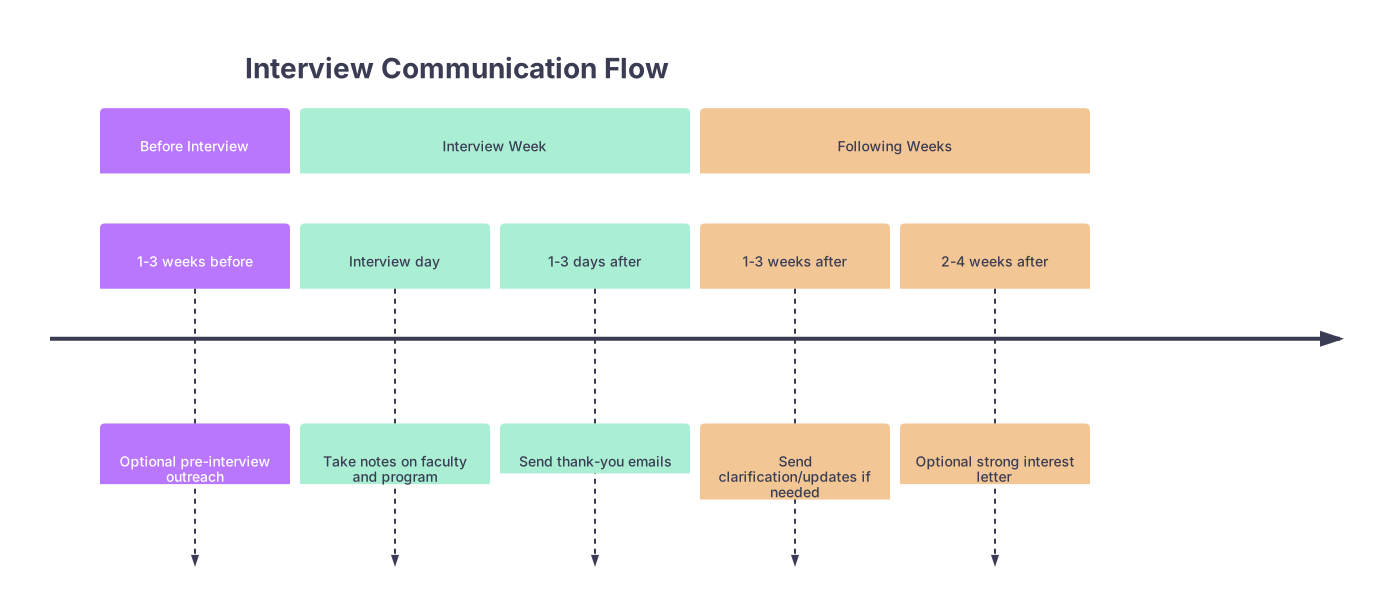
| Period | Event |
|---|---|
| Before Interview - 1-3 weeks before | Optional pre-interview outreach |
| Interview Week - Interview day | Take notes on faculty and program |
| Interview Week - 1-3 days after | Send thank-you emails |
| Following Weeks - 1-3 weeks after | Send clarification/updates if needed |
| Following Weeks - 2-4 weeks after | Optional strong interest letter |
On Interview Day Itself
At this point you should be collecting information for later messages:
- Write down each interviewer’s:
- Name and role
- Clinical / research interests
- One specific thing you discussed
- Jot bullets on:
- Culture themes you noticed (resident dynamics, faculty tone, patient population)
- Any concerns or deal-breakers
This notebook is what prevents you from sending generic, forgettable emails later.
24–72 Hours After Each Interview
Your window for genuine, non-awkward thank-you notes is tight: 1–3 days.
For each interviewer:
- Send a short, specific thank-you email:
- 2–3 sentences acknowledging the time
- 2–3 sentences referring back to something specific you discussed
- 1 closing line expressing ongoing interest in learning more
You are not ranking them yet in these emails. You are also not promising anything. That comes later, once you have seen more programs.
What you are doing:
- Reinforcing your professionalism
- Making it easy for them to remember you positively when they complete their evals
- Seeding the ideas you may reinforce in later letters
Bad move: skipping thank-yous entirely because “some people say they do not matter.” True, some programs ignore them. Others do not. You have no idea which is which.
Phase 3: 1–4 Weeks After an Interview – Clarifications and Strong Interest
Now we are in the gray middle between the politeness of thank-you notes and the commitment of a letter of intent.
1–2 Weeks After Each Interview
At this point you should be:
- Tracking each program on a simple sheet:
- Interview date
- Thank-you sent?
- Outstanding questions?
- Program-specific pros / cons
- “Tier” in your mind (roughly: top, middle, bottom)
If you have legitimate follow-up questions or updates, 1–2 weeks after is the time.
Appropriate reasons to send a short follow-up:
- Clarifying curriculum details that affect your interest (call schedule, rotation locations, research time).
- Informing them of a substantive update:
- Manuscript accepted or published
- Award or leadership position
- Significant Step 2 or in-training improvement
This email is still not a letter of intent. You can, however, begin to use slightly stronger language with true top-tier choices:
- “My visit to your program has further strengthened my interest in training at [Program].”
- “After interviewing at several programs, your emphasis on [X] stands out.”
You still avoid “rank” language here, unless your specialty’s rules are unusually loose and your home program PD has explicitly told you it is acceptable. In most major specialties, you keep it non-committal but positive.
3–4 Weeks After Interview – Letters of Strong Interest
By 3–4 weeks after an interview (and often by late interview season), your personal rank list is starting to form.
At this point you should:
- Revisit your notes and sort programs into:
- True #1
- Serious contenders (top 3–5)
- Solid options
- Backup / low enthusiasm
You are allowed—wise, actually—to send strong interest letters to a very small group of programs you genuinely would be happy to match at.
Key rule: Strong interest ≠ intent.
You are not saying “#1.” You are saying “very serious about you.”
Phrases that work:
- “Your program is one of my top choices for residency training.”
- “I can clearly see myself thriving at [Program] and would be excited to match there.”
- “As rank list season approaches, your program is at the top of my list of places where I hope to train.”
Send these:
- After you have interviewed at a meaningful sample of programs (usually mid-late season).
- Only to a small, honest subset (3–6, not 20).
Sequence matters. If you email one program in November calling them a “top choice,” then email another in January saying the same, that is fine. People understand that more data changes rankings. What looks bad is contradiction close to rank list deadlines, or sending weekly escalating “you are my favorite” emails.
Phase 4: Final Month Before Rank List Deadline – True Letters of Intent
This is where people really mess up the timing.
A letter of intent that lands two days before rank list certification often never gets read. A letter sent in November saying “you are my #1” is not credible when you still have ten interviews left.
The sweet spot is:
- Roughly 2–3 weeks before the rank list deadline, depending on specialty and internal program processes.
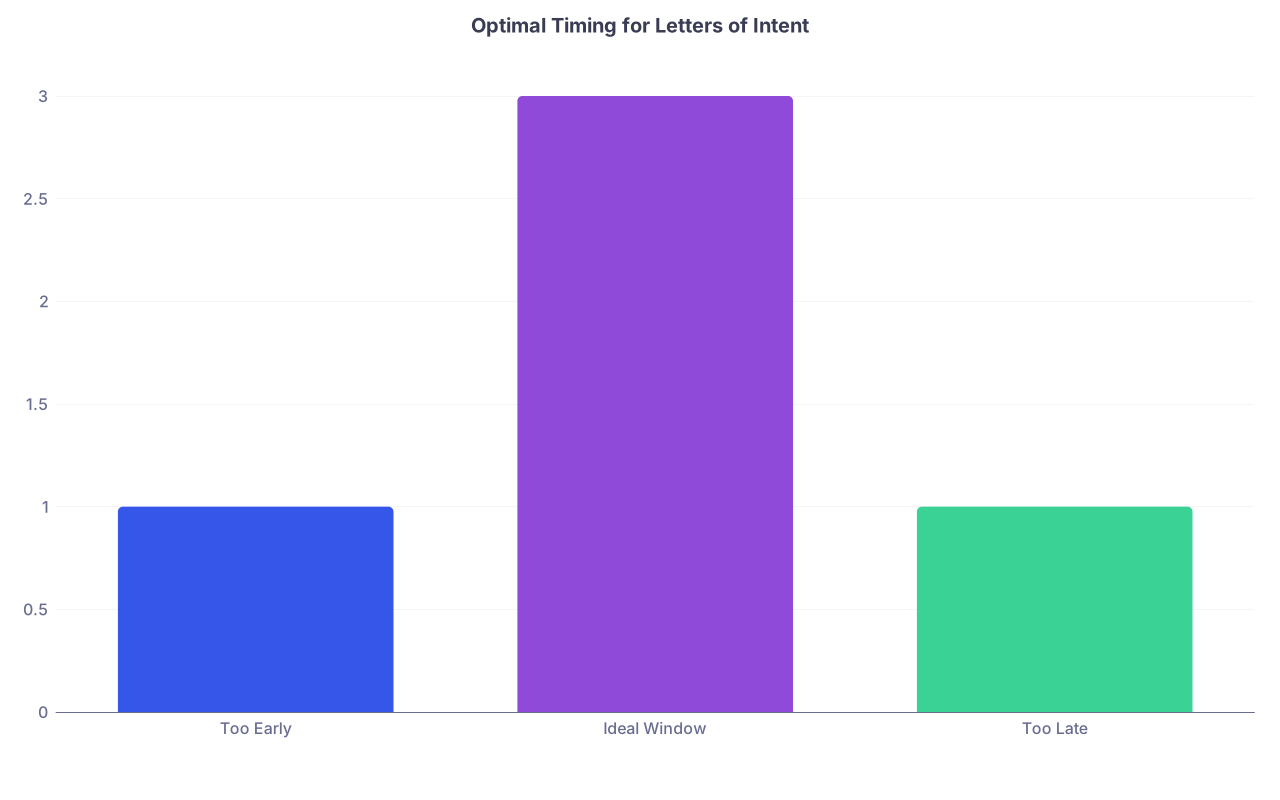
| Category | Value |
|---|---|
| Too Early | 1 |
| Ideal Window | 3 |
| Too Late | 1 |
Interpretation: 1 = low impact, 3 = peak impact.
4–5 Weeks Before Rank List Deadline
At this point you should:
- Have a near-final personal rank order list
- Sit with it for a few days
- Stress-test it with trusted mentors: “Here is why this is my #1. Am I missing anything?”
Only once you are absolutely decided on your top choice do you draft a letter of intent.
Non-negotiable rule: You send a true letter of intent to exactly one program.
If you send multiple, you are lying to at least one PD. They talk. They compare.
2–3 Weeks Before Rank List Deadline – Send Letter of Intent
Structure of a clean, credible letter of intent:
First paragraph – direct statement:
- “[Program] is my first choice for residency, and I will rank your program #1.”
Middle paragraphs – rationale:
- 2–3 concrete reasons tied to specific people, curriculum features, geography, and long-term career goals.
- Some reference back to the interview day (“My conversations with Dr [X] and the residents during noon conference solidified my sense of fit.”).
Final paragraph – professionalism:
- Reaffirm that you will honor this commitment.
- Thank them for their consideration.
- No demands. No “please tell me where I am on your list.”
What not to do:
- Do not send this before you have seen all your major interviews. Premature intent looks naïve.
- Do not follow up weekly asking “Did you see my letter?” One letter is enough. Two if you have a true, significant update.
- Do not change your mind casually after sending an intent. If something catastrophic happens (family crisis, program loses accreditation), you talk to your home PD and handle that delicately.
How Pre-Interview Messages Affect Post-Interview Strategy
All these messages exist in one narrative. Programs remember tone and claims.
At this point you should be thinking about consistency over time:
- If your pre-interview note emphasized research alignment, your thank-you and later letters should organically echo that.
- If you told a program pre-interview, “I have deep ties to this city,” and then send a letter of intent later to a completely different region, that is not fatal—but it had better come with a plausible narrative (partner’s job, family health issues, etc.).
This is why I push applicants to:
- Keep a running log of every outreach:
- Date
- Program
- Type of message (pre-interview, thank-you, update, strong interest, intent)
- Key claims / phrasing
It takes 10 minutes a week. It saves you from sending “top choice” language to four different places in February.
Month-by-Month Sequencing Guide
Let us put it all together on a clean timeline. Assume a typical ERAS cycle for a moderately competitive specialty; you can shift a month for your field.
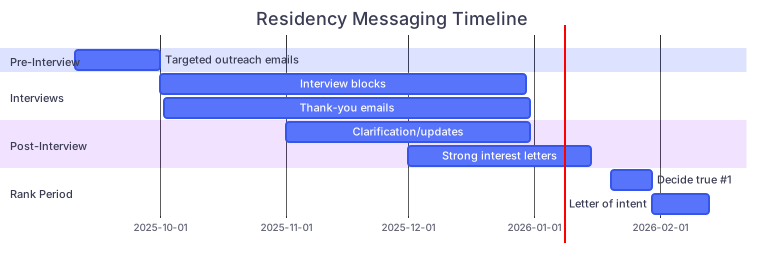
| Task | Details |
|---|---|
| Pre-Interview: Targeted outreach emails | a1, 2025-09-10, 21d |
| Interviews: Interview blocks | a2, 2025-10-01, 90d |
| Interviews: Thank-you emails | a3, 2025-10-02, 90d |
| Post-Interview: Clarification/updates | a4, 2025-11-01, 60d |
| Post-Interview: Strong interest letters | a5, 2025-12-01, 45d |
| Rank Period: Decide true #1 | a6, 2026-01-20, 10d |
| Rank Period: Letter of intent | a7, 2026-01-30, 14d |
September–Early October (Pre-Interview)
At this point you should:
- Send targeted pre-interview emails to:
- Home institution (if interviews are not guaranteed)
- 2–5 dream programs where you have a genuine story
- Any site where you rotated and did strong work
You should not:
- Mass-email 30 programs with a generic paragraph.
- Use “top choice” or ranking language.
October–December (Peak Interview Months)
At this point you should:
- For each interview:
- Take notes on day-of.
- Send thank-you emails within 72 hours.
- Begin rough internal ranking after you have 4–5 interviews under your belt.
Optional but smart:
- If a program quickly rises into your tentative “top tier,” send a short follow-up 1–2 weeks later with a thoughtful question or a small update.
December–January (Interviews Winding Down)
At this point you should:
- Finalize a working rank list.
- Identify:
- True #1
- 3–6 programs that are “strong contenders.”
Then:
- Send strong interest letters (not intent) to the contenders:
- Customized.
- Clear about your enthusiasm, without saying “#1.”
You should not:
- Send a letter of intent yet if you still have major interviews remaining or feel uncertain.
Late January–February (Rank List Approaches)
At this point you should:
- Lock down your true #1.
- Talk with a mentor or PD about your choice and your letter draft.
Then, about 2–3 weeks before your rank list is due:
- Send your single letter of intent.
- Stop tinkering with your story. You have made the commitment.
Two Common Sequencing Mistakes (And How To Fix Them)
The Early Promiser
- Problem: Applicant sends an email in November: “You are my #1 program.” Then gets a dream interview in January and wants to switch.
- Fix: Do not use “#1” language until late season. You can always say “your program stands out as one of my top choices so far” earlier.
The Silent Candidate
- Problem: Applicant never emails anyone. No pre-interview outreach, no thank-yous, no updates. Then panics in February and fires off six “I’m very interested” emails.
- Fix: Build a light but steady cadence:
- Optional pre-interview for a few key places
- Reliable thank-yous
- One well-timed strong interest note
- One clear letter of intent
Programs notice patterns. Consistent, measured communication reads as maturity.
Bottom Line
Three things to keep straight:
Different messages belong at different times.
- Pre-interview: short, targeted interest.
- Immediate post-interview: thank-yous.
- Mid-season: clarifications and strong interest.
- Late season: one honest letter of intent.
You are telling one coherent story over months.
Track what you say, to whom, and when, so your “top choice” language evolves logically instead of contradicting itself.Timing and restraint beat volume.
A few well-placed, specific messages do far more than a barrage of vague, emotional emails sent at random.
Sequence your notes like this, and you will sound like what programs actually want: a thoughtful future colleague who knows how to communicate with intention.