
The worst post‑interview mistake is not silence. It is sending the wrong thing at the wrong time.
You do not have a “communication problem” with programs. You have a sequencing problem: thank‑you vs interest email vs full letter of intent (LOI). Get the order wrong, and you look disorganized or desperate. Get the order right, and you look like a grown professional who understands the game.
Here is how to time it. Week by week, then day by day once rank lists loom.
Step 0: Know What Each Message Is For
Before the timeline, you need clear definitions. Otherwise you will send LOIs where you should send a simple thanks.
Thank‑You Note
- Short, polite, specific.
- Goal: Acknowledge time, signal basic professionalism, lightly reinforce fit.
- Tone: Grateful, low‑pressure.
- Length: 5–10 sentences.
Interest Email (“continued interest” / “update letter”)
- Moderate detail, targeted to the program.
- Goal: Stay on the radar, show genuine interest, share new updates.
- Tone: Positive, confident, still not pushy.
- Length: Short paragraph to half a page equivalent.
Full LOI (Letter of Intent)
- Formal, explicit commitment.
- Goal: Tell one program they are your number one and you will rank them first.
- Tone: Clear, serious, definitive. No hedging.
- Length: ~0.5–1 page equivalent.
Do not blur these. At this point in the process, mixed signals hurt you.
Global Rule: What to Send First (Always)
- First: Thank‑you note
- Then (if you truly love the place): Interest email
- Finally (to your top choice only, and only when you are certain): Full LOI
You do not open with an LOI. You do not send an LOI to every place that smiled at you on interview day. You build the relationship in stages.
Now the actual calendar.
Month‑by‑Month: Big Picture Timeline
Assume a normal US residency cycle. Adjust months if your specialty is shifted, but keep the order.
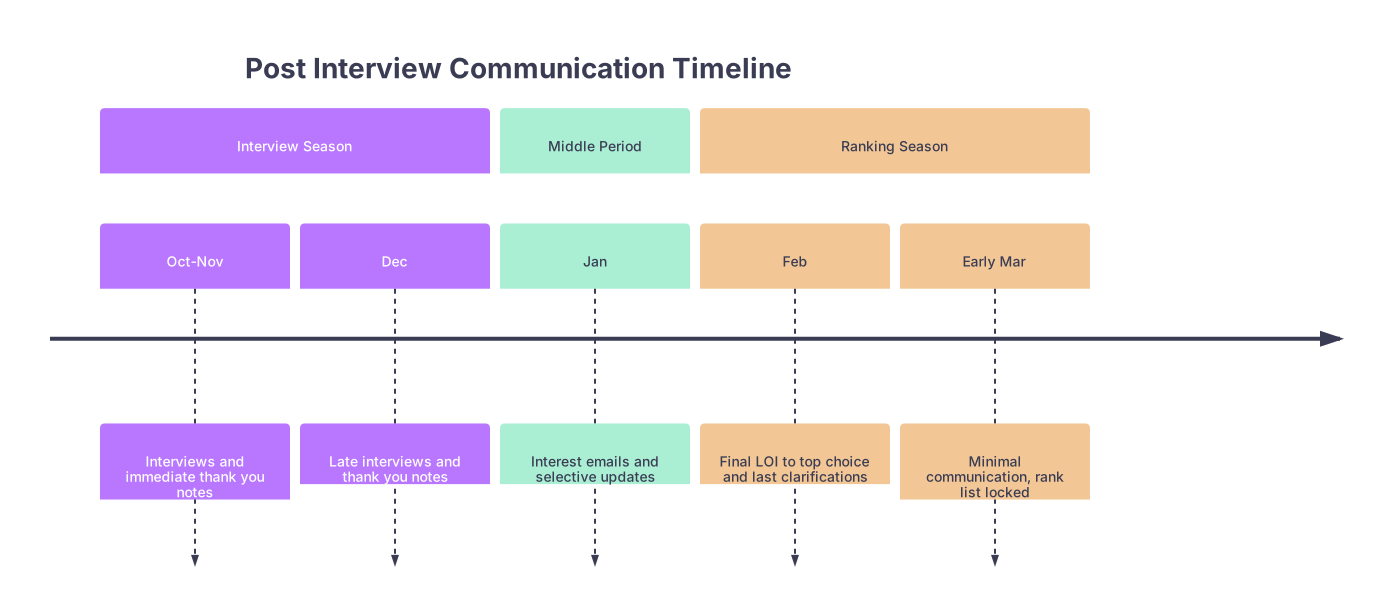
| Period | Event |
|---|---|
| Interview Season - Oct-Nov | Interviews and immediate thank you notes |
| Interview Season - Dec | Late interviews and thank you notes |
| Middle Period - Jan | Interest emails and selective updates |
| Ranking Season - Feb | Final LOI to top choice and last clarifications |
| Ranking Season - Early Mar | Minimal communication, rank list locked |
October–December: Interview Season
At this point you should be:
- Sending thank‑you notes within a few days of each interview.
- Tracking programs in a centralized list.
- Not yet sending LOIs. Too early, feelings are not stable, and programs smell impulsivity.
January: Sorting and Strategic Interest
At this point you should be:
- Reviewing your impressions, notes, and emails.
- Sending interest emails to programs in your realistic top 3–7.
- Possibly sending a second, targeted message to 1–2 “borderline” programs where you could realistically land.
Still no LOI unless your season ended extremely early and you are absolutely certain. Even then, waiting until closer to rank deadlines usually gives stronger data to base your choice.
February: Rank List and LOI Season
At this point you should be:
- Finalizing your rank list.
- Sending one LOI to your true number one.
- Sending a few high‑interest emails (not LOIs) to programs in your next tier.
- Stopping active outreach once rank lists are certified.
After that, more emails rarely help and sometimes irritate.
Immediately After Each Interview: 72‑Hour Micro‑Timeline
Let us get granular. You finished an interview on Tuesday.
Within 0–24 hours: Capture Data
At this point you should:
- Write down:
- Who you spoke with (names + roles).
- Specific things they said (“we are expanding our addiction medicine tracks,” “we let residents moonlight PGY‑3,” etc.).
- Your gut reaction (energized, bored, red flags).
- Update your tracking sheet.
No emails yet if you feel fried. A sloppy 2 a.m. thank‑you is worse than none.
Within 24–72 hours: Send Thank‑You Notes
Now you send your first communication: thank‑you notes.
Who gets a note?
- Program director – almost always.
- Chair (if applicable and you met them).
- Individual interviewers if:
- You had a substantive conversation, and
- You have their email (or program coordinator allows direct contact).
You can:
- Email each person individually, or
- Send one well‑written note to the coordinator asking them to share/forward.
Order:
- Draft once, customize lightly per person.
- Send within 2–3 days.
- Stop. No interest email yet.
Example: What That Thank‑You Should and Should Not Be
Good: Short, specific, low‑pressure.
Dear Dr. Smith,
Thank you for taking the time to speak with me during my interview at City Internal Medicine on Monday. I appreciated your candid description of the program’s emphasis on resident autonomy in the second and third years, especially the night float structure you described.
Our conversation about your primary care track and its graduates working in underserved urban settings reinforced my impression that City IM would be an excellent fit for my interests in community‑based care and medical education.
Thank you again for your time and for sharing your perspective on the program.
Sincerely,
[Name], AAMC ID #######
Bad: Turning the thank‑you into a premature LOI.
I am writing to let you know City IM is now my top choice and I will be ranking it very highly…
Too strong. Too early. You just met.
Building Your Master Tracking Sheet
If you do not track, you will absolutely lose control of this.
Create a simple sheet with columns like:
| Program | Interview Date | Thank-You Sent? | Interest Email Sent? | LOI Sent? | Rank Tier |
|---|---|---|---|---|---|
| City IM | 11/10 | 11/11 | 1/20 | No | Top 3 |
| County IM | 11/22 | 11/23 | 1/28 | No | Mid |
| University Med | 12/05 | 12/06 | No | Yes | #1 |
At this point you should update this the same day you send anything. People who “keep it in their head” always end up double‑emailing the same PD.
December–Early January: Quiet Consolidation Phase
Interviews are winding down. Your instinct will be to start firing off “you’re my favorite” emails everywhere. Do not.
At this point you should:
- Re‑read your notes and thank‑you email threads.
- Roughly sort programs into tiers:
- Tier 1: Realistic top 3–5.
- Tier 2: Strong options you would be happy at.
- Tier 3: “Would rank but not thrilled.”
Still no LOIs. Maybe a rare exception if:
- Your interviews ended in November,
- The program is clearly above all others for you,
- You understand the binding spirit of an LOI and will rank them first even if something else appears “shinier.”
Even then, I usually tell applicants: wait until you have seen everything. Your brain will change after that last unexpectedly great interview.
Mid–Late January: Interest Emails Come First
Now the strategic part: interest emails.
Who gets an interest email?
At this point you should target:
- All programs in your top tier (3–7 total).
- 1–2 programs just below that where you would seriously consider moving them up if things change.
This is not an LOI. You are not promising rank order. You are:
- Reaffirming strong interest.
- Connecting specific program features with your goals.
- Optionally updating them on anything new (publication, award, new leadership role, etc.).
When to send
- 1–4 weeks after your interview, or
- Late January if you interviewed earlier in the season.
You can send a single combined “thank‑you + interest + update” if it has been a few weeks and you never wrote before, but do it once per program.
What to say
A clean structure:
- One sentence reminding them who you are and when you interviewed.
- One–two sentences highlighting what you liked (specific, not generic).
- One–two sentences tying your goals to their program strengths.
- Optional short update on any new achievements.
- One line stating you will rank them highly (if true) without calling them #1.
Example interest email (not LOI):
Dear Dr. Lee,
I interviewed with County Family Medicine on December 14 and wanted to thank you again and express my continued strong interest in your program. Since our conversation, I have reflected further on the curriculum and remain particularly drawn to the longitudinal community clinic experience and the emphasis on behavioral health integration.
These align well with my long‑term goal of working in an underserved outpatient setting with a focus on mental health access. Since my interview, I have had a manuscript accepted for publication on screening for depression in primary care, which has strengthened my interest in programs with robust behavioral health training like County.
County FM remains one of the programs I am most excited about, and I anticipate ranking it very highly. Thank you again for your time and consideration.
Sincerely,
[Name], AAMC ID #######
Notice: strong language, but no “number one” claim. This keeps your options open and your integrity intact.
February: LOI Season – What to Send First, and When
This is where people get tangled. So let us sequence it clearly.
Step 1 (Early–Mid February): Finalize Your Internal Rank Order
At this point you should:
- Force yourself to rank programs privately before telling anyone.
- Ask: “If I match here and nowhere above, will I be comfortable?”
If the answer is no, that program should not be your LOI target.
You cannot send an honest LOI without a locked‑in #1.
Step 2: Decide if an LOI Makes Sense
LOIs are not magic letters that override the match algorithm. But they do matter at some programs. Specifically:
- Programs that openly state they value applicant interest.
- Medium‑competitive programs where you are a plausible but not automatic match.
- Places where you had good rapport but want to stand out among a large pool.
They matter less at:
- Hyper‑competitive, numbers‑driven places with huge applicant volumes.
- Programs that explicitly say “we do not consider letters of intent.”
You can still send a brief “high interest” email to those, but I would not waste emotional energy crafting a long LOI there.
Step 3: Send Only One True LOI, After Interest Emails
Sequence:
- Thank‑you note – already sent.
- Interest email – went to several programs earlier.
- LOI – now goes to exactly one program, your locked‑in #1.
You do not send LOIs and then “interest emails” afterward as a downgrade. That looks like backpedaling if they cross‑reference dates. Interest emails come first. LOI is the final escalation.
When exactly to send the LOI
- Roughly 1–2 weeks before rank lists are due for programs.
- That is often mid–late February, depending on the specialty cycle.
Close enough that your intentions are stable, but not so last‑minute that nobody sees the message.
What a Real LOI Looks Like
A real LOI has three key elements:
- Clear identification and timeframe.
- Explicit “you are my first choice and I will rank you first.”
- Reasoned explanation tied to concrete program features.
Example LOI:
Dear Dr. Patel,
I am writing to express my sincere gratitude for the opportunity to interview at University Med Internal Medicine on January 9 and to share my decision regarding the upcoming rank list certification.
After completing my interviews and reflecting on my priorities for residency, I have decided that University Med is my top choice, and I will be ranking your program first on my rank list.
The combination of strong inpatient training at a large academic center, clear support for resident research, and the primary care track we discussed aligns uniquely well with my goals of becoming a clinician‑educator working with complex urban patient populations. My conversations with you and several residents reinforced my impression of a collegial, supportive environment where I would be challenged and well‑mentored.
Thank you again for your time and consideration. I would be honored to train at University Med and hope to have the opportunity to join your program.
Sincerely,
[Name], AAMC ID #######
That line “I will be ranking your program first” is the entire point. If you are not willing to say that, it is not an LOI. It is an interest email.
What Not to Do: Common Sequencing Mistakes
Here is where applicants shoot themselves in the foot.
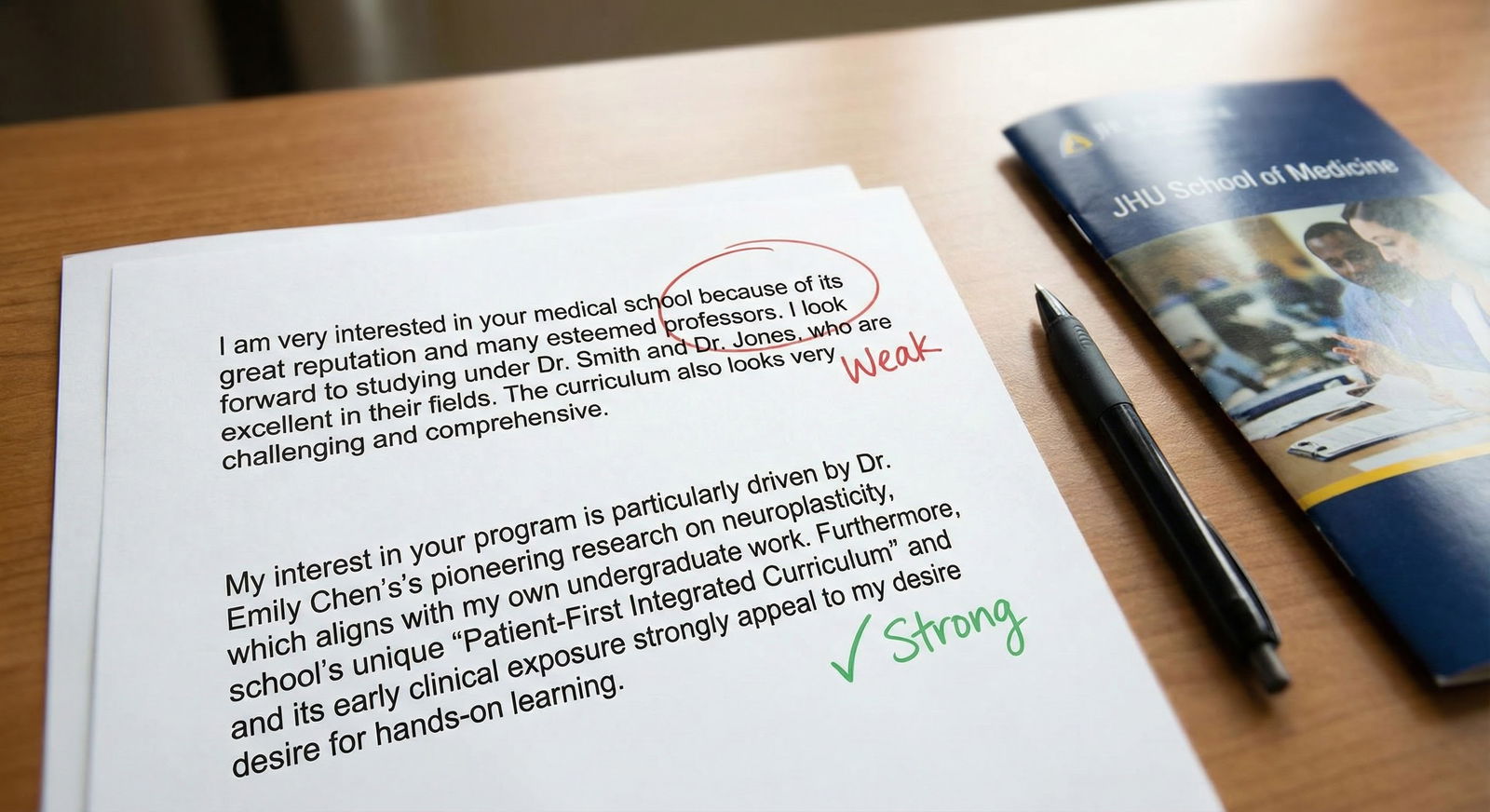
Mistake 1: LOI Too Early
Sending an LOI in November after your second interview:
- Makes you look impulsive.
- Traps you if you later find a better fit.
- Forces you into either lying or breaking your word.
At this point (early season) you should limit yourself to thank‑yous and maybe a mild interest line, nothing more.
Mistake 2: Multiple LOIs
Programs do talk. Faculty move. Coordinators compare stories.
Sending “you are my #1 and I will rank you first” to three programs is dishonest, and occasionally that leaks. I have watched a PD open two LOIs from the same applicant during ranking meetings. That applicant dropped.
Do not play that game. Send one.
Mistake 3: Blending Thank‑You + LOI in the Same Week
You interview on Monday, and by Friday you send:
Thank you again… You are my absolute first choice…
Too fast. It reads as flattery, not a thoughtful decision. Give it weeks. Sometimes your feelings do not survive the plane ride home, much less the comparison to later interviews.
Mistake 4: Interest Email After LOI
Assume you sent a real LOI to Program A.
You should not then send a “continued interest” email to Program B that implies near‑equal preference. Keep post‑LOI messages to others honest:
- “I remain very interested and will be ranking your program highly” is fine.
- But do not hint they are your first if they are not.
Quick Comparison: What to Send When
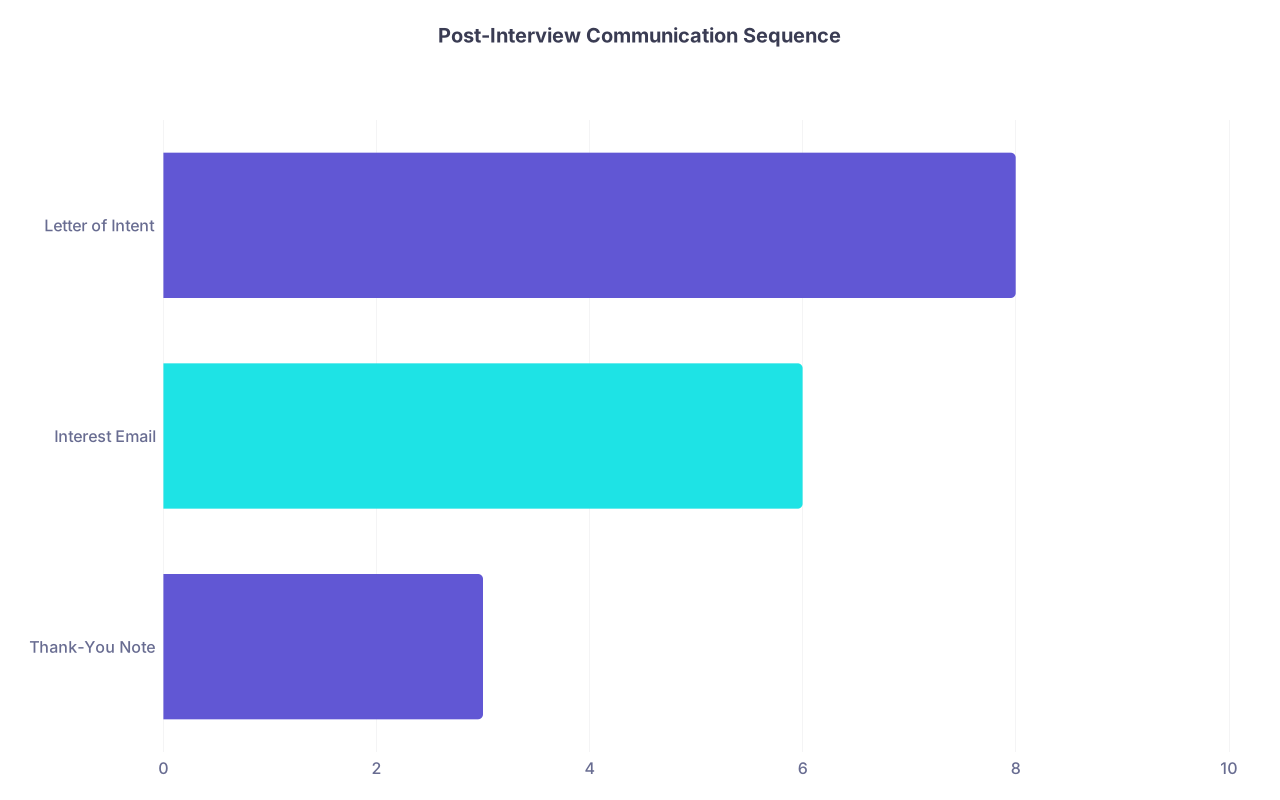
| Category | Value |
|---|---|
| Thank-You Note | 3 |
| Interest Email | 6 |
| Letter of Intent | 8 |
Interpretation (on a rough 1–10 timing scale from interview day to rank deadline):
- Thank‑you: very early.
- Interest email: middle period.
- LOI: late, near ranking.
Final 2 Weeks Before Rank Deadline: Day‑by‑Day Priorities
Here is what the endgame actually looks like.
14–10 Days Before Deadline
At this point you should:
- Lock in your personal rank list draft.
- Confirm your true #1.
- Prepare your LOI draft and have one trusted person skim it for clarity.
No new cold outreach to programs you barely remember. That ship sailed.
9–7 Days Before Deadline
- Send your LOI to your #1 program.
- Optionally send very short “high interest” notes to 1–3 other top‑tier programs (no promises).
6–3 Days Before Deadline
- Certify your rank list once you are comfortable.
- Stop editing emails or second‑guessing your LOI target unless there is major new information (program losing accreditation, leadership collapse, etc.).
2–0 Days Before Deadline
- At this point you should not be sending new LOIs or frantic updates.
- Focus on school, rotations, and your sanity.
PDs can smell panic. Last‑minute flurries of messages rarely change anything.
Two Final Rules You Should Not Break
Sequence matters more than volume.
- First: Thank‑you.
- Second: Interest.
- Last: LOI to a single program when you are certain.
Your credibility is your only leverage.
- Do not over‑promise.
- Do not send multiple LOIs.
- Do not declare a program #1 until your personal rank list says the same.
If you follow that order and stick to honest, specific messages, you will look like what programs actually want: someone thoughtful enough to become a reliable colleague, not just a relentless email machine.