The dirty little secret about letters of intent? Most of them do nothing. Some of them hurt you. And a tiny fraction—maybe 5%—actually move the needle.
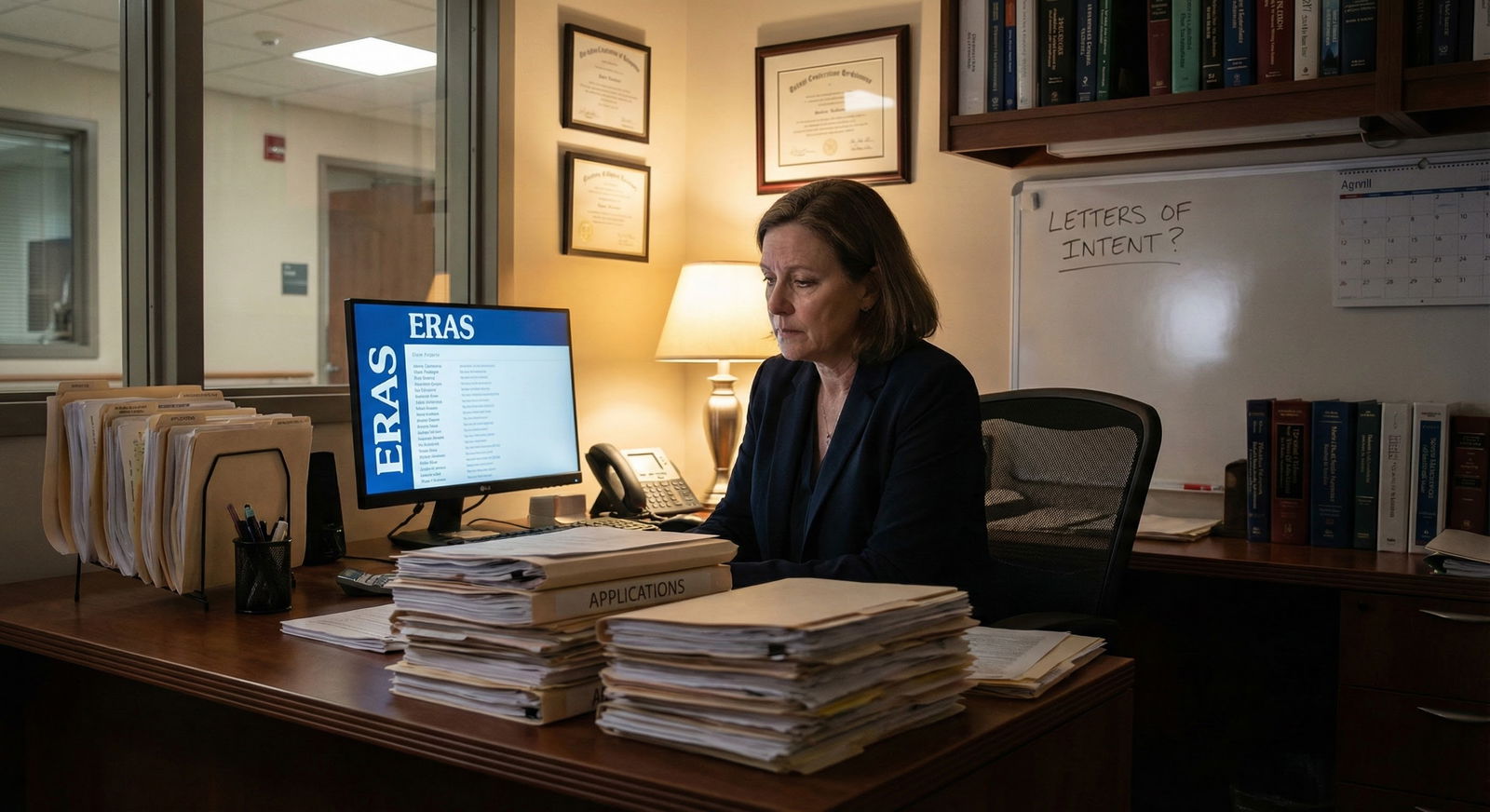
Let me tell you what program directors really say about them. Not what they say on panels. What they say in their offices at 6:30 pm when everyone’s gone and they’re triaging 1200 applications with 14 open slots.
How Letters of Intent Actually Show Up in the Process
First thing you need to understand: your letter of intent is not entering some sacred, carefully curated review pipeline. It’s dropping into chaos.
Here’s what typically happens behind the scenes.
At many programs, there are three “entry points” for letters of intent:
- ERAS message / email to the program coordinator
- Direct email to the PD or APD
- “Forwarded by faculty” when you send it to an attending who then passes it along
In reality, they get handled like this:
- The coordinator’s inbox is a war zone. On heavy interview weeks they’re skimming fast. If your subject line looks like spam (“Update to my application!” “Thank you for the opportunity!”), it may get lightly scanned, maybe dropped in a generic “Applicant Emails” folder, maybe never seen again.
- If you send it directly to the PD, they’ll scan the first 2–3 sentences. That’s it. If you bury the key sentence in paragraph three, you’ve already lost.
- If a faculty member forwards your letter saying, “Strong candidate, we should rank highly,” now it matters. Not because of the letter. Because of the faculty name attached.
That’s the first harsh truth: the route your letter takes often matters more than the content.
| Category | Value |
|---|---|
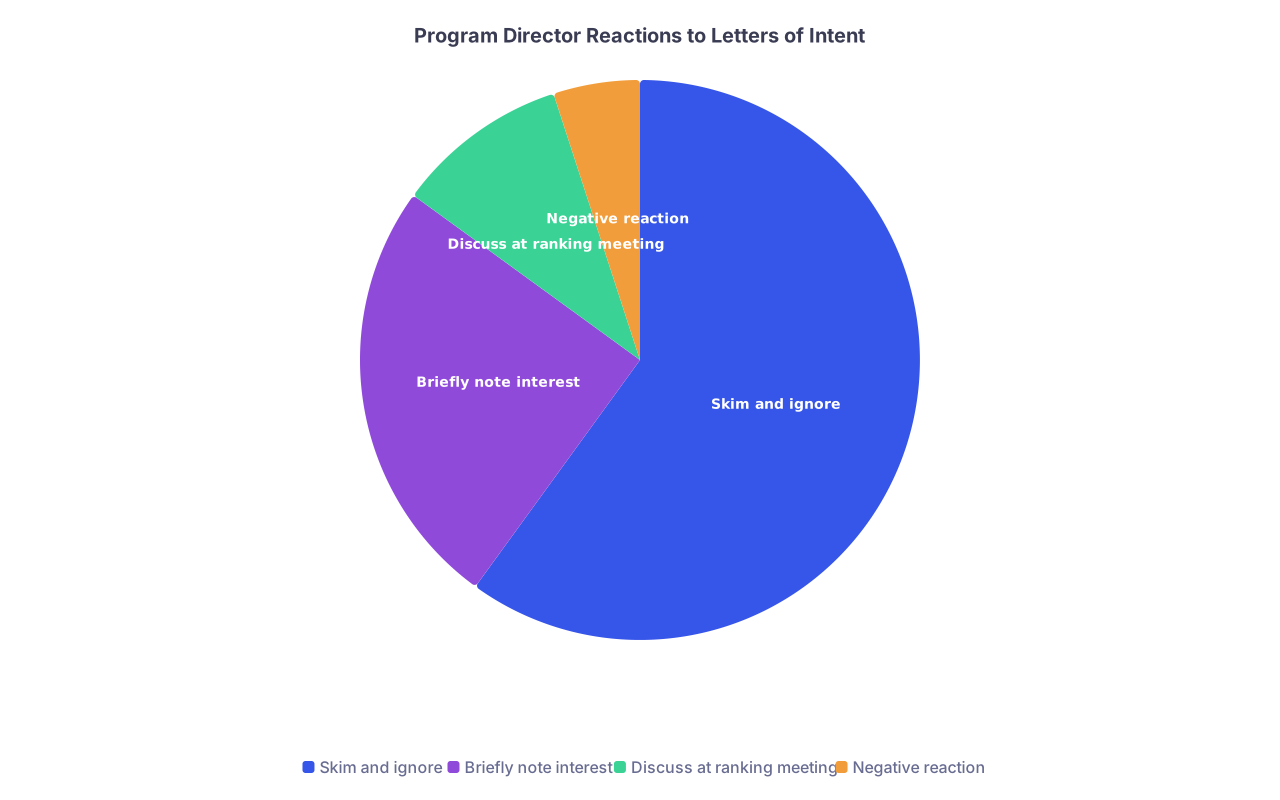
| Skim and ignore | 60 |
| Briefly note interest | 25 |
| Discuss at ranking meeting | 10 |
| Negative reaction | 5 |
Roughly how PDs behave (from conversations in conference rooms, not from surveys):
About 60% of letters are skimmed and forgotten. Around a quarter are mentally noted as “interested.” Maybe 10% get referenced in any formal way at rank meeting. And a small but real 5% trigger annoyance or concern.
Your job is to avoid that 5% and creep into that 10%.
What Program Directors Secretly Use Letters For
Here’s the part no one tells you: letters of intent are not primarily used to like you. They’re used to sort you.
When PDs talk about letters of intent in private, they’re looking for only a few things.
- Are you using this letter to declare us #1?
- Do you sound sane, professional, and consistent with your interview?
- Are you trying to game the system or corner us ethically?
- Are we at risk of looking stupid if we rank you too low and you actually wanted to come here?
That’s it. Not your prose. Not your “updated publications.” Not your “deep alignment with our mission of serving the underserved” copy-paste paragraph you used for every program.
The most honest line I’ve heard from a PD at a major academic IM program:
“Letters of intent are mostly useless, except in two situations: breaking ties and avoiding red flags.”
So how do they really get used?
Tiebreakers
When you’re in that cluster of “good but interchangeable” candidates—say #14–25 on an internal rank discussion—this is where a clear, clean letter of intent can matter.
In a ranking meeting, I’ve seen this exact script:
APD: “We’ve got Patel, Nguyen, Rodriguez, and James all kind of in the same tier.”
PD: “Anyone know if any of them sent interest?”
Chief: “Nguyen sent a pretty clear ‘first choice’ email.”
PD: “Fine. Put Nguyen ahead of the others unless anyone objects.”
Nobody is moved from #50 to #5 because of a letter of intent. But #11 to #8? #16 to #13? That happens.
Risk Management
PDs absolutely fear the optics of missing on people who genuinely wanted to come. Not because they’re sentimental. Because of board slides, institutional reporting, and pressure from above.
No PD wants to explain to the chair why a Harvard AOA who said “you are my top choice” ended up matching down the street instead. So, if they believe you, they may give you a modest bump to avoid that scenario.
This is subconscious half the time. But it’s real.
Red Flag Detection
PDs and APDs are fantastic at sniffing out desperation and dishonesty.
Letters that raise internal alarms:
- “Your program is my top choice” sent to multiple programs in the same city (and yes, faculty share these with each other over beers at conferences).
- Overly emotional pleas: “This is my dream and my only hope…” That’s not charming. It’s concerning.
- Incoherent updates: sudden interest in a subspecialty your application never mentioned, or claiming deep ties to a city you’ve never stepped foot in.
Those do get remembered. Just not the way you want.
The Truth About “You’re My #1” Declarations
Here’s the landmine field you’re walking through.
On paper, NRMP rules say programs cannot solicit statements of intent and cannot ask you for rank list position. True. But PDs live in the gray zone.
They will rarely say, “Tell us if we’re your number 1.”
What they actually say, in slightly different words:
“If you’re seriously considering us, let us know.”
The unspoken rules PDs follow, whether they admit it or not:
- One explicit “you are my #1” letter can help you.
- Two “you are my #1” letters will eventually leak and damage your reputation.
- Vague “I will be ranking you very highly” language is mostly background noise.
In ranking meetings, this is how it gets translated:
- “This applicant said we were their #1” → gets written on a notes column, may bump you a few spots if they already liked you.
- “This applicant said we were among their top programs” → read as “generic template.”
- “No letter at all” → neutral. Absolutely not a negative. The majority send nothing meaningful.
Do programs feel bound by your “#1” declaration? No. You’re not signing a contract. They’re not either. But most PDs do feel a mild ethical pressure not to completely disregard a clear, honest statement of intent—if it aligns with their clinical judgment.
Where people get burned is sending “#1” to the wrong tier. If you’re a mid-tier applicant telling a top-5 national program they’re your #1, that’s just noise. They already know you’d love to come. It doesn’t close the gap.
Strategically, letters of intent are far more powerful when sent to realistic reach or solid match programs where you were clearly liked but not obviously a slam dunk.

What PDs Hate (But Will Never Say on a Panel)
Let’s be blunt. There are certain patterns that irritate PDs and faculty.
They’ll never say it to students. I’ve heard it dozens of times behind closed doors.
1. Copy-paste nonsense
Program directors have spent years reading the same templated garbage:
“I was especially impressed by your strong commitment to research, diverse patient population, and supportive learning environment.”
They know you wrote that sentence 18 times and swapped 3 adjectives.
What they actually think: “This student is following Reddit advice and thinks this matters.”
Does it sink you? No. It just wastes your shot at being memorable.
2. Emotional manipulation
Anything that even lightly smells like guilt-tripping or trauma-baiting tends to backfire.
Examples PDs complain about:
- Recounting extreme personal hardship in a letter of intent that was never in your application or PS, clearly thrown in to trigger sympathy.
- Implying that not matching at their program would be catastrophic for your family, immigration status, or relationship in a “you must pick me” tone.
You want to know what an experienced PD says to that?
“I’m really sorry they’re going through that, but our job is to pick the best residents for our program, not fix the entire universe.”
Cold? Maybe. But that’s reality.
3. Volume spamming
A PD at a strong university EM program once opened her laptop and showed me a folder. Over fifty emails from one applicant: thank-you after every interview day interaction, multiple “updates,” two letters of intent, and a final “just checking in” email the week before rank list certification.
Her exact words: “If they’re this needy now, what are they going to be as a resident?”
Over-communicating does not show passion. It shows poor judgment and lack of insight.
One clean letter of intent and, if appropriate, one concise update from a new, significant achievement. That’s the upper limit before people start rolling their eyes.
How Programs Actually Track Your Letter (If They Do At All)
Here’s the behind-the-scenes infrastructure you never see.
Some programs do nothing. PD reads the letter, thinks “okay,” and that’s the end. No spreadsheet, no annotation. Your intent dies in their inbox.
But more organized programs—and definitely the higher-profile university ones—usually have some system:
- Shared Excel/Sheets with columns like “strong interest,” “regional ties,” “#1 letter”
- Free-text comments section inside ERAS, Thalamus, or whatever system they use
- Chiefs tasked explicitly with noting applicants who expressed strong interest
You don’t see this, but I’ve seen these sheets on screens during ranking:
| Column | What It Actually Means |
|---|---|
| Interview Score | Faculty composite rating |
| Red Flag | Anything from mild to serious |
| Ties / Regional | Family, med school, or prior work |
| LOI / #1 | Clear first-choice statement |
| Faculty Advocate | Specific attending pushing for you |
Notice where your letter lives. One column out of five. Useful. Not decisive.
If two applicants are close in Interview Score, no red flags, similar background, and one has a strong, believable first-choice statement listed under LOI/#1—guess who usually gets the higher spot?
Not always. But often enough that the column exists.
| Category | Value |
|---|---|
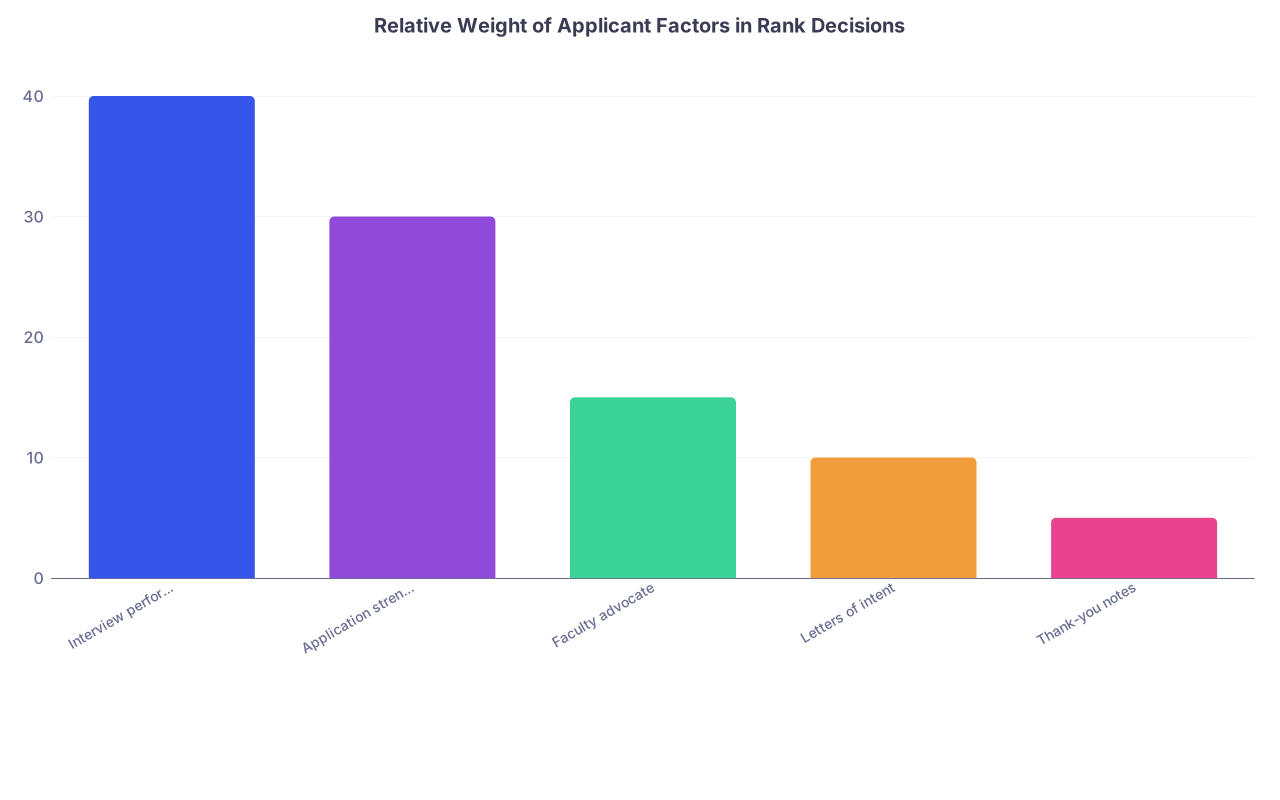
| Interview performance | 40 |
| Application strength | 30 |
| Faculty advocate | 15 |
| Letters of intent | 10 |
| Thank-you notes | 5 |
Letters of intent are not top-tier factors. They’re second-tier modifiers.
If you interviewed poorly, your letter won’t fix that. If a well-known faculty member loves you and is willing to go to bat for you, their advocacy matters more than any letter you write.
The Future of Letters of Intent: More Noise, More Skepticism
Every year, more students send more letters. Because social media, Reddit, and group chats convince them they have to.
Programs are responding the only way they can: they’re devaluing them.
Here’s what’s quietly changing:
- More PDs openly say in meetings, “I’m not changing our rank based on letters unless someone has a strong advocate.”
- Chiefs are starting to filter: “We got 60 ‘you’re my top choice’ emails; I only flagged the genuinely compelling ones.”
- Some programs internally discourage over-weighting any self-reported intent because of bias and equity concerns.
The other shift: with virtual interviews, geographic “tie” signals have blurred. PDs rely more on clear, honest expressions of interest to figure out who’s actually willing to move across the country and who just clicked “apply all” on ERAS.
So no, letters of intent are not going away. But they’re settling into their real role: weak but occasionally meaningful tiebreakers—not golden tickets.

| Step | Description |
|---|---|
| Step 1 | Submit ERAS |
| Step 2 | Interview Invite |
| Step 3 | Interview Day |
| Step 4 | Initial Rank Impressions |
| Step 5 | Rank High Regardless of LOI |
| Step 6 | Check LOI and Interest |
| Step 7 | Unlikely to Move Up |
| Step 8 | Use LOI as Tiebreaker |
| Step 9 | Finalize Rank List |
| Step 10 | Competitive Tier? |
That diagram is what actually happens. Letters live in that “middle cluster” decision node. Nowhere else.
How to Write the Kind of Letter PDs Don’t Hate
You want an edge, not a delusion. So write the letter with a clear goal in mind:
“I want this PD to know I am serious about their program and that ranking me highly is low risk.”
You’re not writing literature. You’re writing a risk signal.
Here’s the internal checklist PDs unconsciously use when scanning:
- Is it short?
- Is the intent unambiguous?
- Does it ring true with what I remember from their interview?
- Are they overstepping (“I hope you will rank me to match” – cringe)?
- Do I care enough about this applicant for this to matter?
So you write something like this (conceptually, not to copy word-for-word):
Subject line that makes the point:
“Letter of Intent – [Your Name], [Specialty] Applicant”Opening that hits fast:
“I’m writing to let you know that [Program Name] is my first choice, and I would be thrilled to train there if given the opportunity.”One or two concrete, specific reasons that clearly distinguish this program from others you might be emailing. Not “diverse patient population.” Something real, like a particular clinic, a rotation structure, a niche research group, or multiple personal interactions with residents.
A line that reassures them you actually understand what you’re signing up for. Not “I will work hard.” Something like: “After seeing your residents’ autonomy in the ICU and the emphasis on early responsibility, I’m confident I would thrive in that environment.”
Then you stop. You don’t attach your entire CV again. You don’t wax poetic about your life story.
Send it once. A couple weeks before rank list certification is ideal—close enough they remember, not so late that they’ve basically locked the list.

Hard Truths You Need to Accept About Letters of Intent
Let me strip the last illusions:
- Not sending a letter will not sink you. Many matched applicants never send one.
- A perfect letter will not rescue a bad interview. PDs don’t forget awkwardness because you wrote a nice email.
- Overplaying your hand—begging, spamming, or lying—can hurt you.
Use letters of intent like a precision tool, not a fire hose.
Aim them where:
- You had a good, not transcendent, interview.
- The program is realistically attainable.
- You’d actually go if you matched there.
And accept that a big chunk of PD reaction is out of your control. They might be exhausted. They might never see it. They might have 30 “#1” emails already.
Your letter doesn’t guarantee anything. It just nudges probability in your favor—if you’re already in the conversation.