
You are here
It’s mid-February. You’re refreshing your email like it’s a treatment. The interview trail is basically done. Rank list certification is staring you in the face.
And you’re suddenly thinking:
“Should I send a letter of intent? …Is it already too late for it to matter?”
Here’s the blunt truth: a letter of intent is only meaningful when it intersects with the program’s actual decision-making timeline. Miss that window, and you’re just adding to someone’s inbox guilt.
I’m going to walk you week-by-week through when a letter still has teeth—and when it’s just noise.
We’ll anchor this around a typical ACGME residency timeline (ERAS / NRMP), but I’ll flag where fellowships, SF Match, and EM-specific processes shift things a bit.
Big Picture: When Your Letter Still Moves the Needle
Let’s lock down the real decision points first.
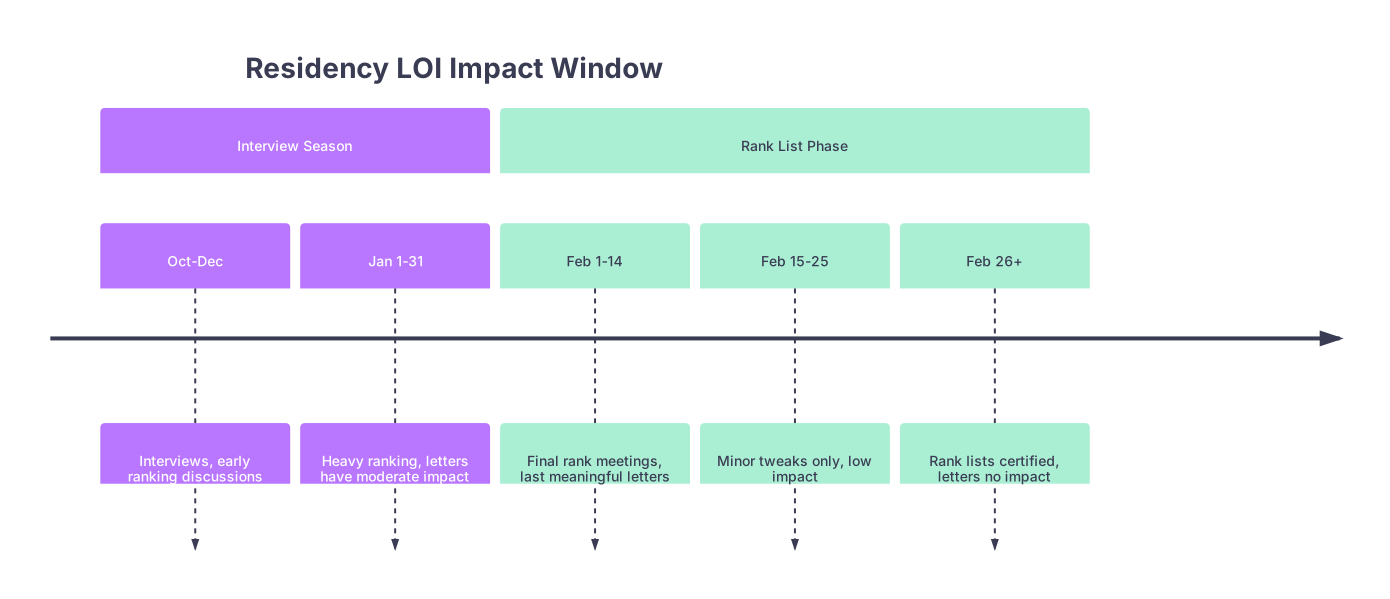
| Period | Event |
|---|---|
| Interview Season - Oct-Dec | Interviews, early ranking discussions |
| Interview Season - Jan 1-31 | Heavy ranking, letters have moderate impact |
| Rank List Phase - Feb 1-14 | Final rank meetings, last meaningful letters |
| Rank List Phase - Feb 15-25 | Minor tweaks only, low impact |
| Rank List Phase - Feb 26+ | Rank lists certified, letters no impact |
At a high level:
- High-impact window:
From your interview until about 2–3 weeks before rank list certification - Diminishing-return window:
~2 weeks before certification up until programs submit their rank lists - Point of no return (officially too late):
Once program rank lists are certified in NRMP (or equivalent matching system)
Let’s translate this into actual phases with “at this point, you should…” guidance.
Phase 1: Interview Season (Late October – Late January)
This is when most programs are interviewing and starting preliminary rank discussions.
From your interview day to 2 weeks post-interview
Impact: High, if you do it right.
At this point you should:
Decide if this program is even a contender.
Do not send intent letters to 6 places. That’s not strategy; that’s desperation.- Letter of Intent = “You are my #1. I will rank you first.”
- Letter of Interest/Update = “You are high on my list. I really like you.”
If they’re your true #1 and you already know it (rare this early, but it happens):
- Send a clear, honest LOI within 1–2 weeks of the interview.
- Concrete timing:
- Interviewed Nov 15 → LOI between Nov 20–30 is perfect.
- This hits before most programs start serious ranking meetings.
If you’re still unsure:
- Do not rush an LOI.
- Send a strong interest/update letter instead:
- Thank them, reference specific things from the day, add meaningful updates.
- Save the “you’re my #1” language until you’re sure.
Why this window works:
- PDs and coordinators remember your face and interview.
- Early committee conversations are often soft: “Who stood out? Who seemed genuinely excited about us?”
- A well-timed, specific letter can bump you from “fine” to “let’s keep an eye on them.”
At this point you should not:
- Mass-send templated “you’re my top choice” to multiple programs.
Yes, PDs talk. More than you think. - Write vague fluff with no program-specific details. That screams copy-paste.
Phase 2: Early Ranking Season (Late January – Early February)
This is where most people screw up the timing.
Reality check: By late January, many programs are:
- Holding formal rank meetings.
- Creating a preliminary list.
- Arguing about the middle of the list where letters actually matter.
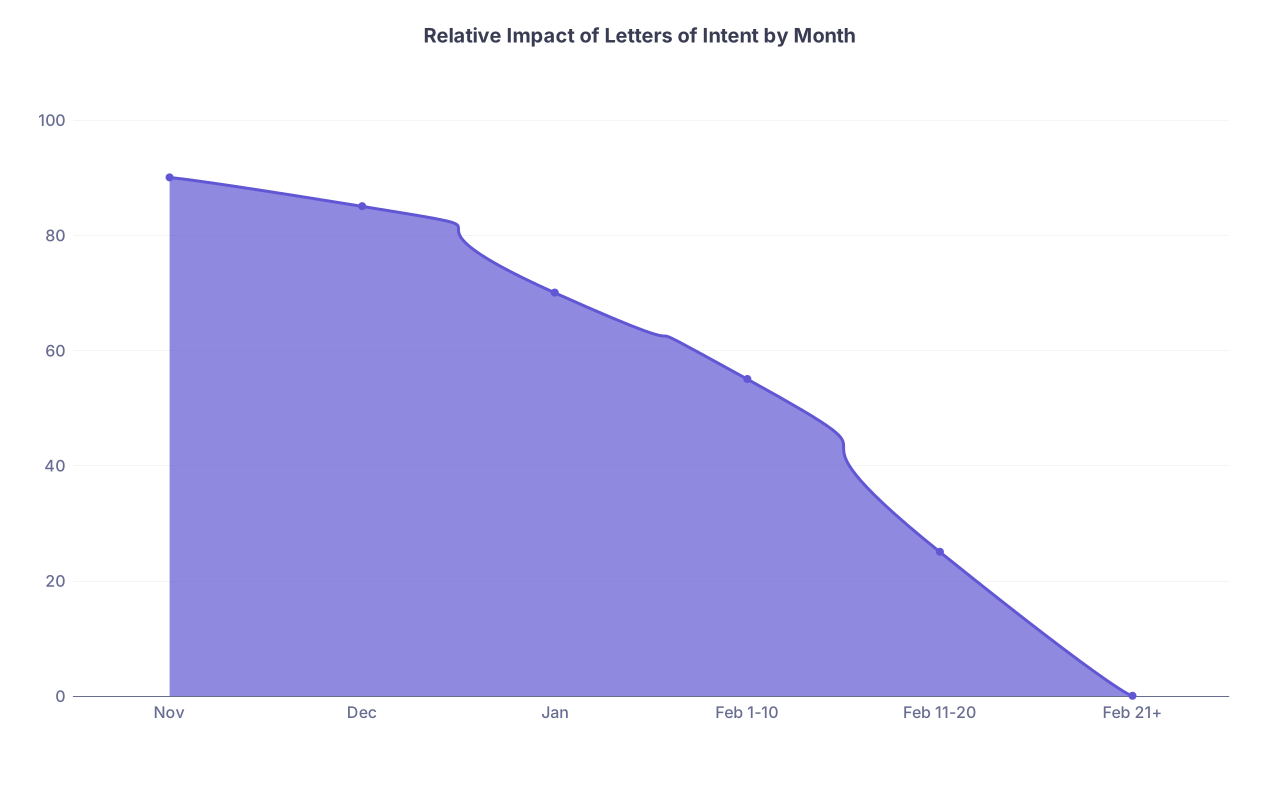
| Category | Value |
|---|---|
| Nov | 90 |
| Dec | 85 |
| Jan | 70 |
| Feb 1-10 | 55 |
| Feb 11-20 | 25 |
| Feb 21+ | 0 |
Numbers are conceptual, but the pattern is accurate: impact decays.
Late January (around Jan 20–31)
At this point you should:
Have chosen your true #1.
If you’re still “keeping options open” on Jan 25, you’re behind.Send your one true LOI no later than the last week of January if you want full strength.
- Something like: “I will be ranking [Program] first in the NRMP Match.”
- Be explicit. Hints do not count.
Send tailored interest/fit letters to a few other high-priority programs if:
- You interviewed there already, and
- You can say something specific about fit.
- But do not lie about rank position.
Why this still matters:
- Many programs have a preliminary rank list but are very open to tweaks, especially in:
- The middle of the list
- The “do we rank this person at all?” zone
- Strong, specific LOIs can move you up a band or prevent you from being lost in the mid-pack.
At this point you should not:
- Sit and “wait to see interview outcomes” you already know are not coming.
Act on the data in front of you.
Phase 3: Final Rank List Meetings (Early–Mid February)
This is where the “too late” line starts to appear.
NRMP rank list certification usually lands around late February / early March. Exact date moves year to year, but programs typically:
- Start serious finalization Feb 1–15.
- Have at least one big rank meeting where they:
- Group applicants
- Set tiers
- Resolve disputes
- Lock in the top and bottom edges
Feb 1–10: Last Meaningful Window
At this point you should:
Assume programs are either:
- About to have their final rank meeting, or
- In the middle of finalizing tiers.
If you have not sent an LOI and truly have a #1:
- Send it now. You’re late, but not dead.
- Ideal: before their final rank meeting. Coordination email subject lines often say “Rank meeting on X date”—if you know it, aim days before.
If you already sent a clear LOI earlier:
- Stop. Do not pester.
- At most, a brief update if something genuinely major happened (new AOA, big publication, huge award).
If you’re thinking about sending a “late LOI” to a new #1 (changing your mind):
- Ask yourself if you’re about to lie to someone.
- You get one honest LOI in this process. Break that, and you’re the untrustworthy applicant PDs complain about years later.
Impact reality:
Letters right before final rank meetings can:
- Move you within a tier.
- Decide ties.
- Nudge a “borderline rank” applicant safely onto the list.
They rarely:
- Take you from “barely remembered” to “top 5.”
Feb 11–20: Diminishing Return Zone
This is the gray area everyone stresses about.
At this point you should:
Assume most programs have already held their final rank meeting.
Some will do small follow-up tweaks, but the heavy lifting is done.If you send an LOI now:
- It might get read.
- It might make someone feel mildly guilty for not moving you.
- It might lead to a tiny adjustment if your list spot was still fluid.
Honestly classify what you’re doing:
- Strategic communication?
- Or anxiety-driven email firing?
Be blunt with yourself: The further you get into this window, the more your letter becomes for your own peace of mind, not an actual strategic move.
At this point you should not:
- Expect big movement based on a letter alone.
- Fire off multiple follow-ups to “confirm they saw it.”
Phase 4: After Programs Submit Rank Lists (Officially Too Late)
Here’s the line you were asking about.
Once programs certify their rank lists in NRMP (or SF Match, or similar), your letter is 0% meaningful for this cycle.
Zero. Not “maybe a little.” Zero.
| Timeline Phase | Typical Dates | LOI Impact Level |
|---|---|---|
| Post-interview (early) | 0–14 days post-IV | High |
| Early ranking season | Late Jan | Moderate–High |
| Final rank meetings | Feb 1–10 | Moderate |
| Diminishing return window | Feb 11–20 | Low |
| After rank list certification | Late Feb / early Mar | None |
How do you know it’s officially too late?
At this point, you should assume it’s too late if:
- NRMP’s program rank list certification deadline has passed.
- You see PDs on Twitter talking about “rank list certified, good luck everyone.”
- Your coordinator reply changes tone to something like:
- “Our rank list has already been submitted, but thank you for your interest in our program.”
Once the list is certified:
- PDs cannot legally alter it for NRMP programs.
- They literally do not have the ability in the system to bump you up.
- Any LOI you send is now either:
- A thank you / expression of appreciation, or
- Background noise.
At this point you should:
- Stop sending intent letters for this cycle.
- If you must send anything, send thank-you notes without any rank-pressure language.
At this point you should not:
- Try to negotiate, beg, or imply they “owe” you consideration because you wrote.
That’s the fastest way to be remembered for the wrong reason.
Special Cases: EM, Fellowships, SF Match, and Outliers
Not every specialty runs exactly on the standard NRMP rhythm.
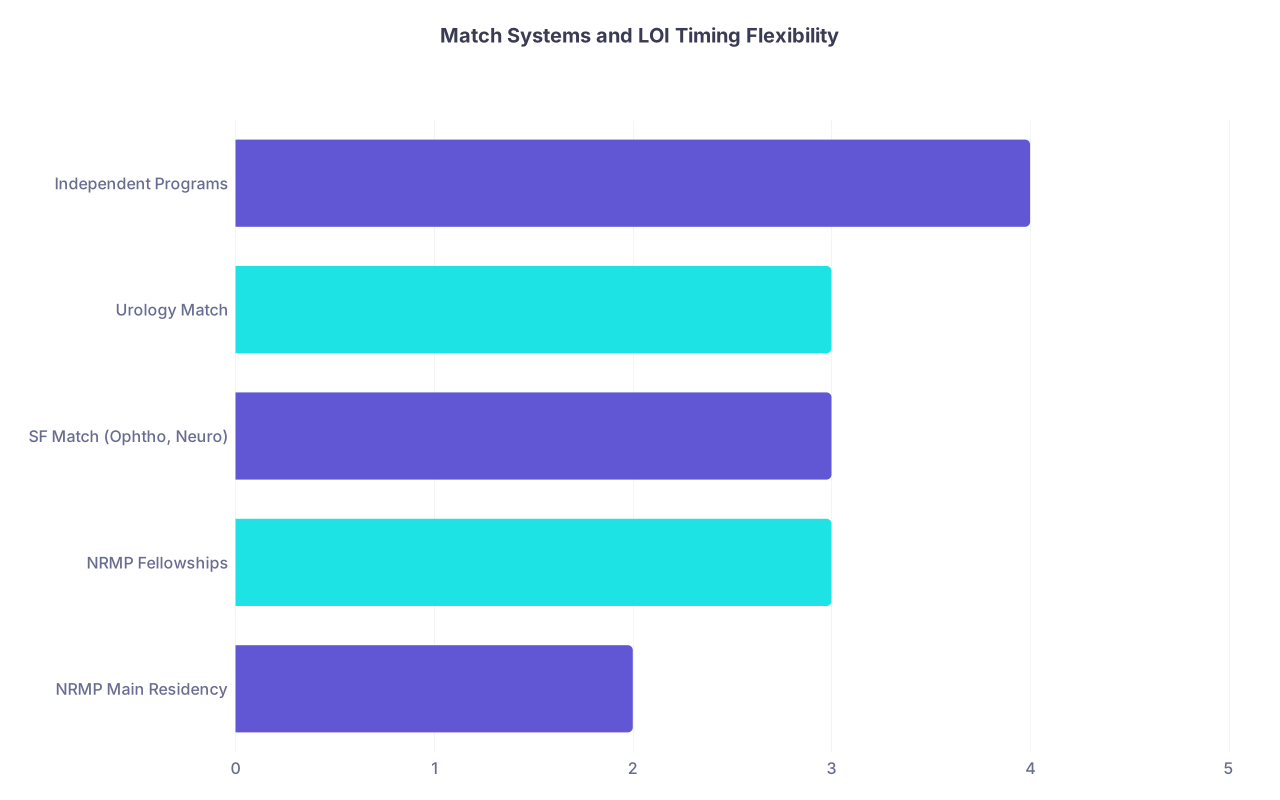
| Category | Value |
|---|---|
| NRMP Main Residency | 2 |
| NRMP Fellowships | 3 |
| SF Match (Ophtho, Neuro) | 3 |
| Urology Match | 3 |
| Independent Programs | 4 |
(Scale 1–5: 1 = very rigid timing, 5 = most variable. Higher = more need to confirm specific program timelines.)
Emergency Medicine & others with SLOEs culture
- EM PDs are often more data-driven on SLOEs, less swayed by emotional letters.
- LOIs can still help, but:
- They matter most right after interview.
- By the time rank meetings start, SLOEs > words in most committees.
Fellowships
- Often smaller programs, smaller committees.
- Timelines can be earlier or later than residency; many use NRMP subspecialty match with their own deadlines.
- Because teams are smaller, well-timed, genuine LOIs often have more weight, but the same principle holds:
- After they certify rank lists, your LOI is dead on arrival.
SF Match (Ophtho, Neuro, etc.) and Urology Match
- Different match dates and list deadlines.
- Do not guess.
At this point you should look up the exact applicant and program rank list deadlines for your match system and count backwards the same way:- High impact: up to ~3 weeks before program list deadline.
- Diminishing: last 1–2 weeks before.
- None: after program list certification.
Red Flags: When Your Letter Is Functionally Too Late Even Before Certification
Here’s something no one tells you:
Your letter can be “officially” on time and still practically useless if certain things are true.
At this point, your LOI is functionally too late if:
You never interviewed at the program.
- LOI does not override “no interview.”
- For 99.9% of programs, no interview = no rank, period.
You’re sending your first real contact in mid-February.
- No thank-you note. No update. No prior interest.
- Then a big “you’re my #1” email on Feb 18.
- Committees are not reshaping tiers around someone who just remembered they exist.
Your letter is generic enough to apply to 10 programs.
- “I love your dedication to patient care and education.”
- Translation: you haven’t done your homework.
- Late + generic is worse than nothing.
You’re contradicting something you said earlier.
- You told Program A on Jan 5 they were your #1.
- Program B gets a “you’re my #1” letter on Feb 10.
- Assume they’ll hear about it. Residents talk. PDs talk. Emails get forwarded.
At this point you should focus less on “can I still send” and more on “am I protecting my reputation.”
How to Time Your LOI If You’re Reading This Early
If you’re a future applicant reading this months before you apply, good. That’s how adults do it.
Here’s the clean, no-drama schedule:
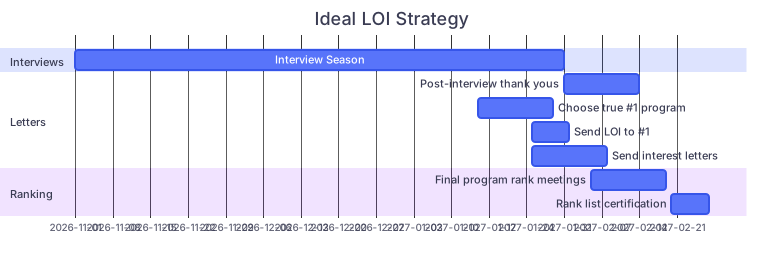
| Task | Details |
|---|---|
| Interviews: Interview Season | a1, 2026-11-01, 13w |
| Letters: Post-interview thank yous | b1, after a1, 2w |
| Letters: Choose true #1 program | b2, 2027-01-15, 2w |
| Letters: Send LOI to #1 | b3, 2027-01-25, 1w |
| Letters: Send interest letters | b4, 2027-01-25, 2w |
| Ranking: Final program rank meetings | c1, 2027-02-05, 2w |
| Ranking: Rank list certification | c2, 2027-02-20, 1w |
At these points in the year, you should:
During interviews (Nov–Jan)
- Keep a running “top 3” list, update it after each interview.
- Jot specific notes: names, cases discussed, vibe, resident quotes.
Mid-January
- Force yourself to pick a tentative #1.
- If you’re still truly torn between 4 places, go back to your notes; something’s off.
Late January
- Send one honest LOI to your #1.
- Send 2–4 genuine, specific interest letters to other programs you’d be thrilled to attend.
February
- Stop tweaking your LOI plan. Focus on your own rank list and your own sanity.
If You’re Already Past the Deadline This Year
So you checked the NRMP site, or your coordinator’s email, and the program lists are locked. You missed it.
At this point you should:
Stop trying to influence this year’s rank lists. That door is closed.
Decide why you still want to write:
- Gratitude?
- Future prelim/transition year interest?
- Fellowship interest down the line?
If you do write:
- Make it a clean thank-you / appreciation letter, nothing about “hoping to be ranked highly” or “I will rank you first.” That’s all already done anyway.
- Keep it short. They are done with decision pressure.
If you do not match and plan to reapply:
- Archive your old letters.
- Next cycle, at this point you should design a real timeline for communication:
- Post-interview thank-you within 3–5 days.
- LOI by late January.
- No desperate emails after the certification deadline.
Your move today
Look up the exact program rank list certification deadline for your current or future match cycle.
Then:
If it’s more than 3 weeks away:
Draft a shortlist of programs and decide where a true LOI and where an interest/update letter makes sense.If it’s 1–3 weeks away:
Open your draft for your true #1 program and finish it today. Hit send within 24 hours.If the deadline has already passed:
Close the LOI tab. Open your own rank list instead and refine it—because at this point, that’s where your effort actually matters.