
The worst LOI strategy is the one you decide in October and never touch again.
You’re not writing a constitution. You’re running a season-long campaign. And campaigns adjust. Your letter of intent (LOI) plan should look very different at your first interview than it does in the last two weeks before rank lists lock.
Let me walk you through how this evolves, step by step, across the entire season.
Big Picture: How LOIs Change Over Time
At the start of interview season, you don’t know your top program. You barely know what a “top” program feels like for you. By the end, you should know exactly one place you’re willing to stake your LOI on – and several others you’ll communicate with in more nuanced ways.
Here’s the arc:
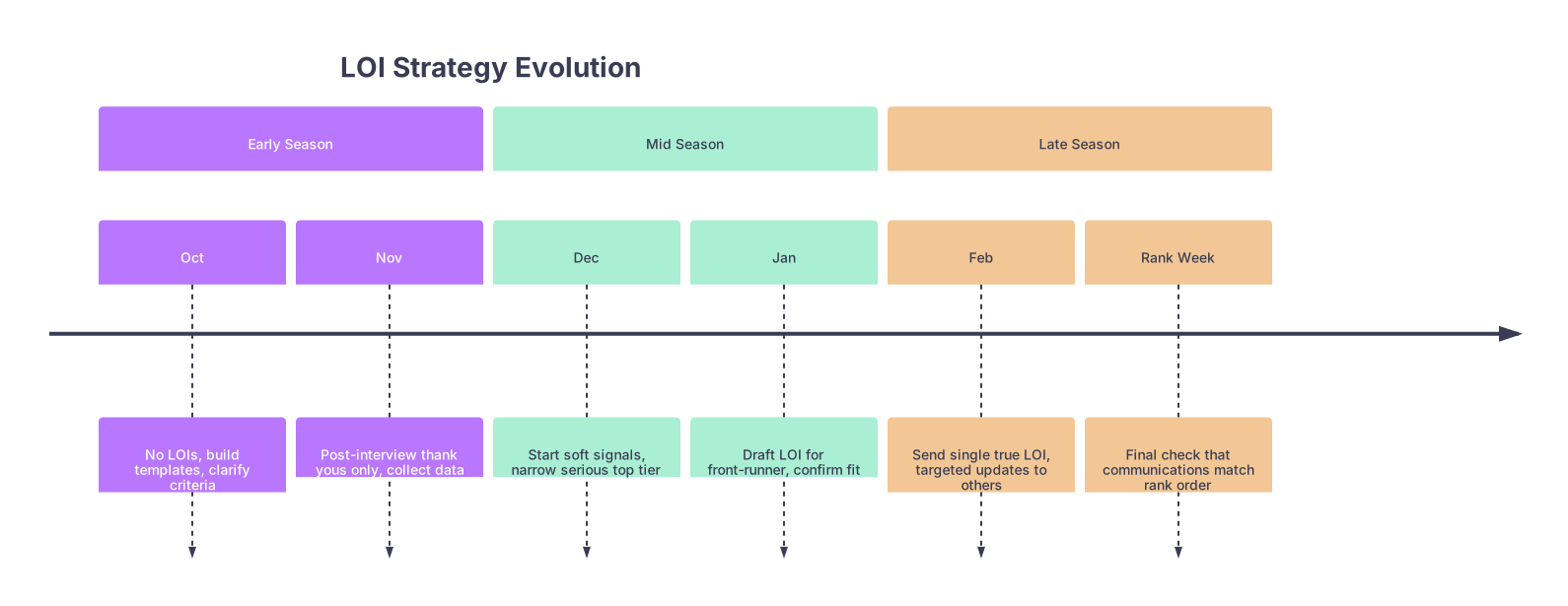
| Period | Event |
|---|---|
| Early Season - Oct | No LOIs, build templates, clarify criteria |
| Early Season - Nov | Post-interview thank yous only, collect data |
| Mid Season - Dec | Start soft signals, narrow serious top tier |
| Mid Season - Jan | Draft LOI for front-runner, confirm fit |
| Late Season - Feb | Send single true LOI, targeted updates to others |
| Late Season - Rank Week | Final check that communications match rank order |
That’s the structure. Now I’ll break it down week-by-week and show you what you should actually be writing, and when.
Before Interviews Start: Build Your LOI Infrastructure
At this point you should not be sending any LOIs. You’re laying the groundwork.
4–6 Weeks Before First Interview
Your goals:
- Define what would make a program your #1
- Build communication templates
- Decide your ethics and boundaries around “I will rank you #1”
Do this now:
Set your personal LOI rules
- You will send exactly one true LOI that says “I will rank you #1.”
- You will not hint at #1 to more than 2–3 others (and you won’t lie).
- You’ll keep every email consistent with your actual rank list later.
Draft three templates
- General post-interview thank you (no rank language).
- “Very high on my list” / strong interest email.
- True LOI template.
You’ll customize every time, but starting from templates saves you when you’re tired in January.
Clarify your evaluation criteria Write down 6–10 program features that actually matter to you, not what you think you’re supposed to say:
- Geography / family needs
- Fellowship placement in X
- Call schedule, culture, wellness
- Operative volume (for surgical fields)
- Research infrastructure
- Support for non-traditional interests (AI, advocacy, global health)
You’ll use this to compare programs later before committing your LOI.
Early Interview Season: Observe, Don’t Promise
Think October to early November (or the first 4–6 interviews, for off-cycle folks).
At this point you should be:
- Sending post-interview thank you notes only
- Collecting structured notes after each interview
- Not declaring any #1 yet
After Each Early Interview (Within 48–72 Hours)
Your standard operation:
Send thank-you emails
- To PD, PC, and any faculty/interviewers you actually connected with.
- Content: gratitude, 1–2 specific details from the day, brief restatement of fit.
- No mention of rank lists, “top choice”, or “number one.”
Fill out your program scorecard immediately Create a simple, fast system you’ll actually use.
| Category | Example Scale |
|---|---|
| Culture / Vibes | 1–5 |
| Training Strength | 1–5 |
| Location / Family | 1–5 |
| Fellowships / Jobs | 1–5 |
| Resident Happiness | 1–5 |
| Gut Feeling | 1–5 |
- Start a “Potential LOI Target” list
After 4–5 interviews, mark any program that might be LOI-worthy:
- You’d actually move there.
- You liked the people.
- Training seemed strong enough. Expect this list to have 3–7 names early. That’s fine. It will shrink.
What you don’t do yet:
- No “you’re my top choice” language.
- No LOIs.
- No promises.
You’re still collecting data.
Mid-Season: Narrowing and Soft Signaling
This is usually December through early January. You’ve seen enough places to have a real sense of variation.
At this point you should be:
- Identifying a serious top 3–5
- Starting soft signals of strong interest
- Drafting (but not always sending) your true LOI
Week-by-Week Mid-Season Plan
Week 1–2 of Mid-Season
You’ve completed maybe 8–12 interviews.
Sort your programs into tiers Be ruthless.
- Tier 1: Could realistically be #1 (usually 2–4 programs)
- Tier 2: Very strong fits but not #1 material
- Tier 3: Solid backups
- Tier 4: Only if you absolutely must
Your LOI target must come from Tier 1. If Tier 1 doesn’t exist, you haven’t found your home yet.
Start “strong interest” emails to true Tier 1 This is not an LOI. It’s an escalation:
- Subject: “Continued interest in [Program Name]”
- Body elements:
- One line of thanks for interview day.
- 2–3 specific program features you keep thinking about.
- A clear statement like: “Your program remains one of my very top choices.”
- A brief update if something real has changed (paper accepted, new leadership role, etc.).
Send these about 3–4 weeks after your interview, once you’ve seen a few more places and still feel strongly.
Mid-Season, Week 3–4
This is where people get sloppy and start telling three programs they’re “top choice.” Don’t do that.
Your tasks now:
Re-evaluate Tier 1 with more data After each new interview, force yourself to place it somewhere relative to the others. Don’t leave everything as “tied.”
Draft your LOI for your current front-runner Draft. Not necessarily send.
The draft should:
- Name the program clearly.
- Explicitly say some version of:
“I will be ranking [Program Name] as my number one choice.” - Give 3–4 specific reasons, each anchored to:
- A person you met
- A curricular feature
- A concrete career goal you have
Sit on this draft for at least a week. If you feel relieved, that’s a good sign. If you feel queasy, you’re not ready to commit.
Use “update + interest” emails for strong non-#1 programs For Tier 1 or high Tier 2 that aren’t getting the LOI (or you’re not sure yet):
- Thank them briefly again.
- Provide specific updates.
- Use language like:
- “Your program is very high on my list.”
- “I continue to view [Program] as one of the best fits for my training goals.”
Do not copy-paste the same paragraph to six programs. They can tell.
Late Season: Commit the LOI and Tighten the Story
We’re talking late January through February up to rank list certification.
At this point you should:
- Know your true #1 program
- Send a single LOI to that program
- Send consistent, honest interest emails to others
Final 4–6 Weeks Before Rank Lists Are Due
Here’s the concrete sequence.
Step 1: Lock Your Internal Rank Order (Pre-Communication)
Before sending any final LOIs or heavy interest emails, sit down and:
- Rank your programs honestly on paper or spreadsheet.
- Ask yourself:
“If I match at Program X, will I regret not telling them they were #1?”
If there’s more than one program where the answer is “yes,” you’re not done yet. Go back to your notes. Re-read your post-interview impressions.
Only when you can live with the answer for every program do you move on.
Step 2: Send the True LOI (3–5 Weeks Before Rank Deadline)
Timing sweet spot: roughly 3–5 weeks before rank lists are due. Early enough that it’s meaningful, late enough that it reflects your final thinking.
Your true LOI should:
Go to:
- Program Director
- CC: Program Coordinator
(Optionally: Associate PD if you had a strong connection.)
Include:
Clear first sentence
- “I am writing to let you know that I will be ranking [Program Name] as my number one choice.”
3–4 specific reasons
- Tie to people: “My conversation with Dr X about the [clinic/research area]…”
- Tie to structure: “The X + Y schedule and strong outpatient experience…”
- Tie to your goals: fellowship, location, underserved care, etc.
Evidence you understand their program
- Refer to specific rotations, tracks, or program values.
Tone:
- Confident, respectful, concise (3–5 short paragraphs max).
- No begging. No pressure. Just a clear statement of intent.
And then – and this matters – you follow through. You actually rank them #1.
Step 3: Communicate with Other Top Programs (2–3 Weeks Before Deadline)
You still care about your #2–#5. You just cannot ethically tell them they’re #1.
For your highly-ranked but not #1 programs:
Subject: “Update and continued strong interest in [Program Name]”
Key lines you can use honestly:
- “Your program remains one of my very top choices.”
- “I would be thrilled to train at [Program Name].”
- “I continue to see [Program] as an excellent fit for my goals in [X].”
What you avoid:
- No “top choice.”
- No “rank you to match.”
- No “number one” anything.
If they directly ask your rank position (some do, bluntly), you have choices:
- Answer honestly: “I will be ranking [Program] very highly, in my top few choices.”
- Or don’t answer the rank question and instead reinforce interest. But do not lie.
Step 4: Last 7–10 Days – Align Everything
In the final stretch:
- Don’t send a new LOI.
- You may send:
- One last short update to your #1 if something major changes (new publication, award, leadership role). Keep it under 150 words.
- A brief “thank you again, excited for Match Day” note to a key faculty mentor at a top program.
Main task: make sure your communications align with your final rank list. No last-minute flip where you already told someone else “you’re #1.” That’s how you end up feeling sick to your stomach on Match Day.
How Programs Actually View LOIs (Reality Check)
Here’s the uncomfortable truth: LOIs don’t magically jump you 20 spots. But they’re not useless either.
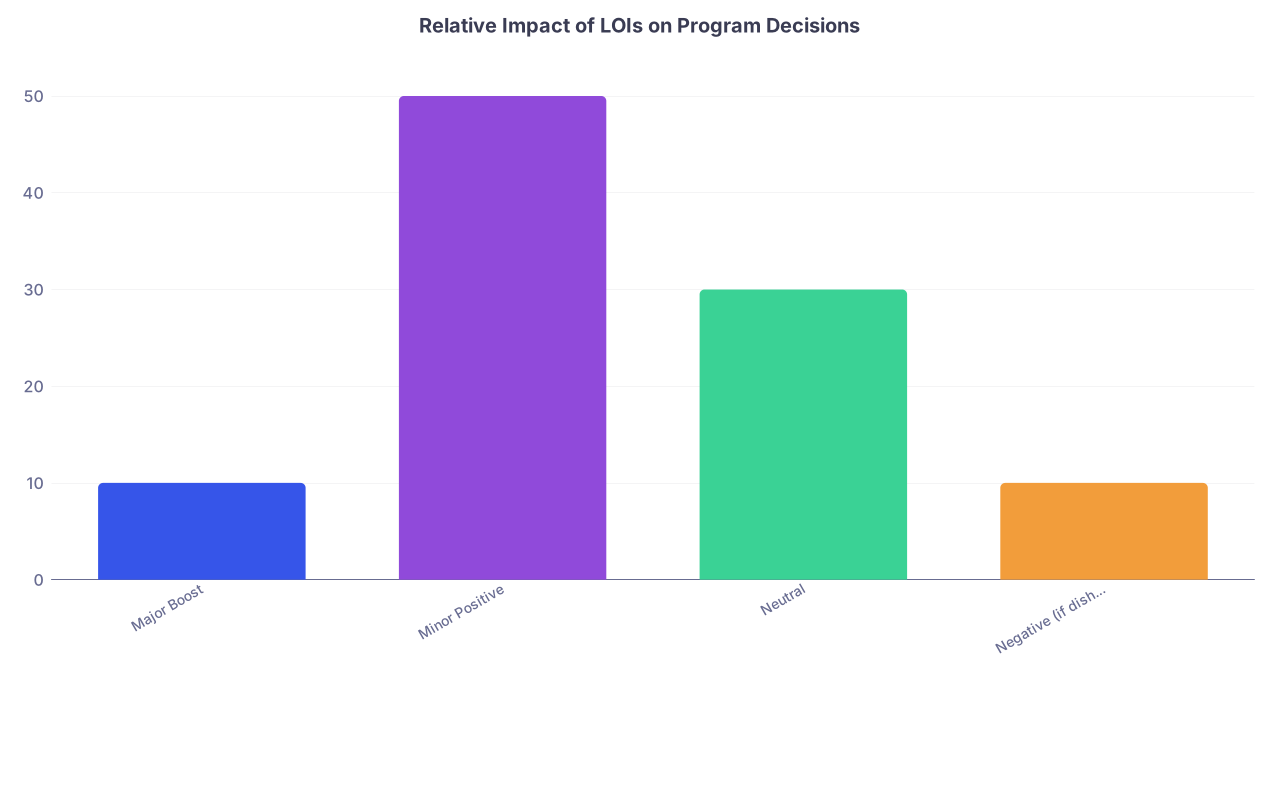
| Category | Value |
|---|---|
| Major Boost | 10 |
| Minor Positive | 50 |
| Neutral | 30 |
| Negative (if dishonest) | 10 |
Roughly how I’ve seen it play out:
- About 10% of the time, a well-timed, sincere LOI to a program that already liked you nudges you higher on the rank list.
- About 50% of the time, it’s a modest positive – they remember you, it confirms mutual interest.
- 30% of the time, it doesn’t change anything; they had already slotted you.
- And 10% of the time, if they later feel you weren’t honest (“you told us #1 but didn’t rank us that way”), it burns a bridge. Sometimes permanently.
Programs vary. Some PDs care a lot about “will you actually come.” Others barely glance at post-interview email. You don’t control that.
What you control is:
- Being honest
- Being clear
- Being consistent with your actual rank list
Example Timeline: How One Applicant’s LOI Plan Evolved
To make this concrete, here’s a simplified example for an internal medicine applicant with 15 interviews from October to January.
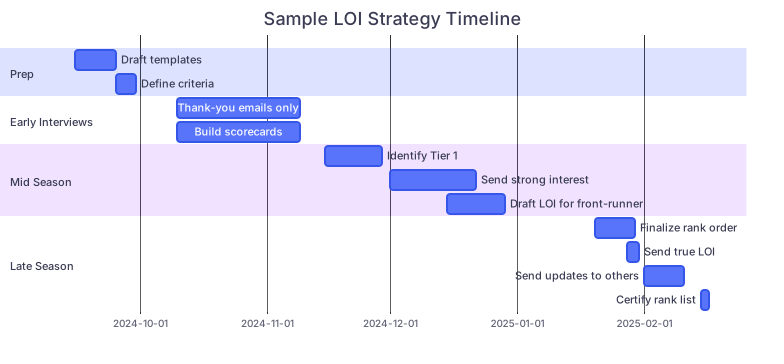
| Task | Details |
|---|---|
| Prep: Draft templates | a1, 2024-09-15, 10d |
| Prep: Define criteria | a2, 2024-09-25, 5d |
| Early Interviews: Thank-you emails only | b1, 2024-10-10, 30d |
| Early Interviews: Build scorecards | b2, 2024-10-10, 30d |
| Mid Season: Identify Tier 1 | c1, 2024-11-15, 14d |
| Mid Season: Send strong interest | c2, 2024-12-01, 21d |
| Mid Season: Draft LOI for front-runner | c3, 2024-12-15, 14d |
| Late Season: Finalize rank order | d1, 2025-01-20, 10d |
| Late Season: Send true LOI | d2, 2025-01-28, 3d |
| Late Season: Send updates to others | d3, 2025-02-01, 10d |
| Late Season: Certify rank list | d4, 2025-02-15, 2d |
Notice the sequencing:
- No LOI before December.
- Draft LOI for the front-runner before sending it.
- True LOI goes out about 3 weeks before rank deadline.
- Updates to other programs follow, but with softer language.
Practical Writing Tips by Phase
To keep you from overthinking:
Early Season Emails (Thank-Yous)
Keep it simple:
- 3–5 sentences
- One specific thing you appreciated
- One sentence on fit
- No rank talk
Mid-Season Strong-Interest Emails
Add:
- Timed about 3–4 weeks post-interview
- A clearer statement of how the program fits your goals
- A line about being “one of my very top choices” if true
Late-Season True LOI
Non-negotiables:
- “I will be ranking [Program] as my number one choice.”
- Examples tied to:
- Residents you met (“talking with Dr A and Dr B…”)
- Specific rotations / tracks / curricula
- Long-term goals
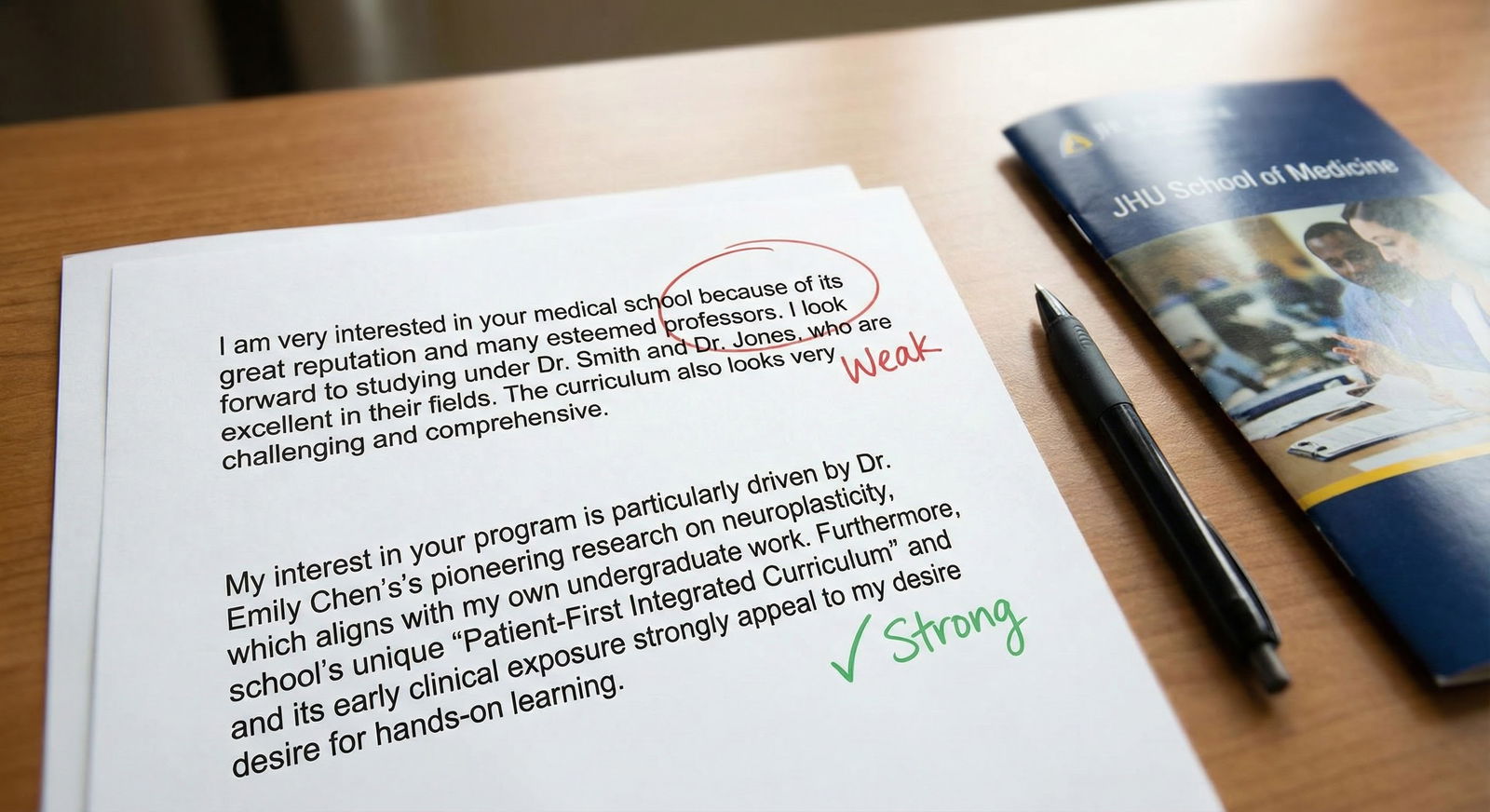
What to avoid in every phase:
- Laundry lists of vague compliments (“amazing,” “prestigious,” “excellent program” repeated 7 times).
- Name-dropping 6 faculty you barely spoke with.
- Copy-paste jobs where only the program name changes.
Common LOI Pitfalls by Timepoint

Too Early
- Sending an LOI after your first or second interview.
- Telling a program they’re your #1 when you haven’t seen enough to mean it.
Mid-Season Sloppiness
- Writing “top choice” to three different programs.
- Over-updating with nothing new to say (they won’t be impressed by minor CV fluff).
Too Late
- LOI sent 48 hours before rank list certification. Many programs have already met and set ranks.
- Changing your mind after you’ve sent an LOI and not adjusting your rank list to match.
Quick Reference: What to Send When
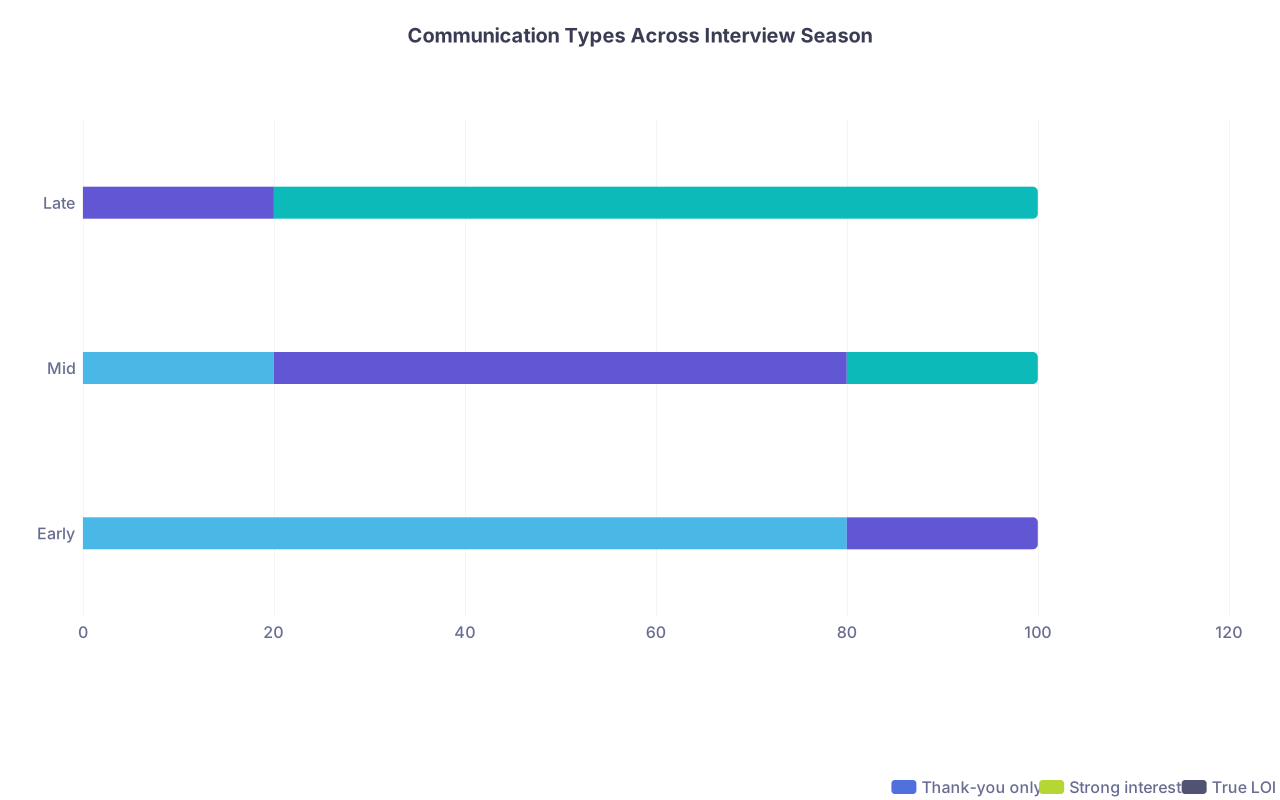
| Category | Thank-you only | Strong interest | True LOI |
|---|---|---|---|
| Early | 80 | 20 | 0 |
| Mid | 20 | 60 | 20 |
| Late | 0 | 20 | 80 |
Early season:
- 90% thank-you only
- 10% very light “I’m excited about your program” language
Mid-season:
- Continue thank-yous
- Introduce strong interest language for top tier
- Draft (not always send) LOI for leading program
Late season:
- Send a single true LOI
- Send honest “very high on my list” + update emails to other top programs
- Stop new heavy communication in the final week; just align with your rank list
FAQs

Q1: What if my #1 program doesn’t send me any signals back after my LOI? Should I change my #1?
No. You rank based on your preferences, not their poker face. Many programs have strict rules about what they can say. An enthusiastic reply is nice; silence does not equal disinterest. Only change your #1 if your assessment of the program changes, not because they didn’t gush over your email.
Q2: Can I send more than one true LOI if I’m applying in multiple specialties or tracks?
You can send one LOI per match list, maximum, and only if it’s truly separate (e.g., a prelim medicine list and a categorical anesthesia list). For most people, that means one. If you’re doing something more complex (dual applications, couples matching with different lists), you still shouldn’t tell two directly competing programs “you are my #1.” That’s how you lose credibility fast.
Key points:
Your LOI strategy is dynamic, not static. Early season is for observation and thank-yous; mid-season is for narrowing and soft signals; late season is for one clear, honest LOI and consistent supporting emails. If your communications always match your real rank list, you’ll sleep better – and programs will actually believe you when it matters.