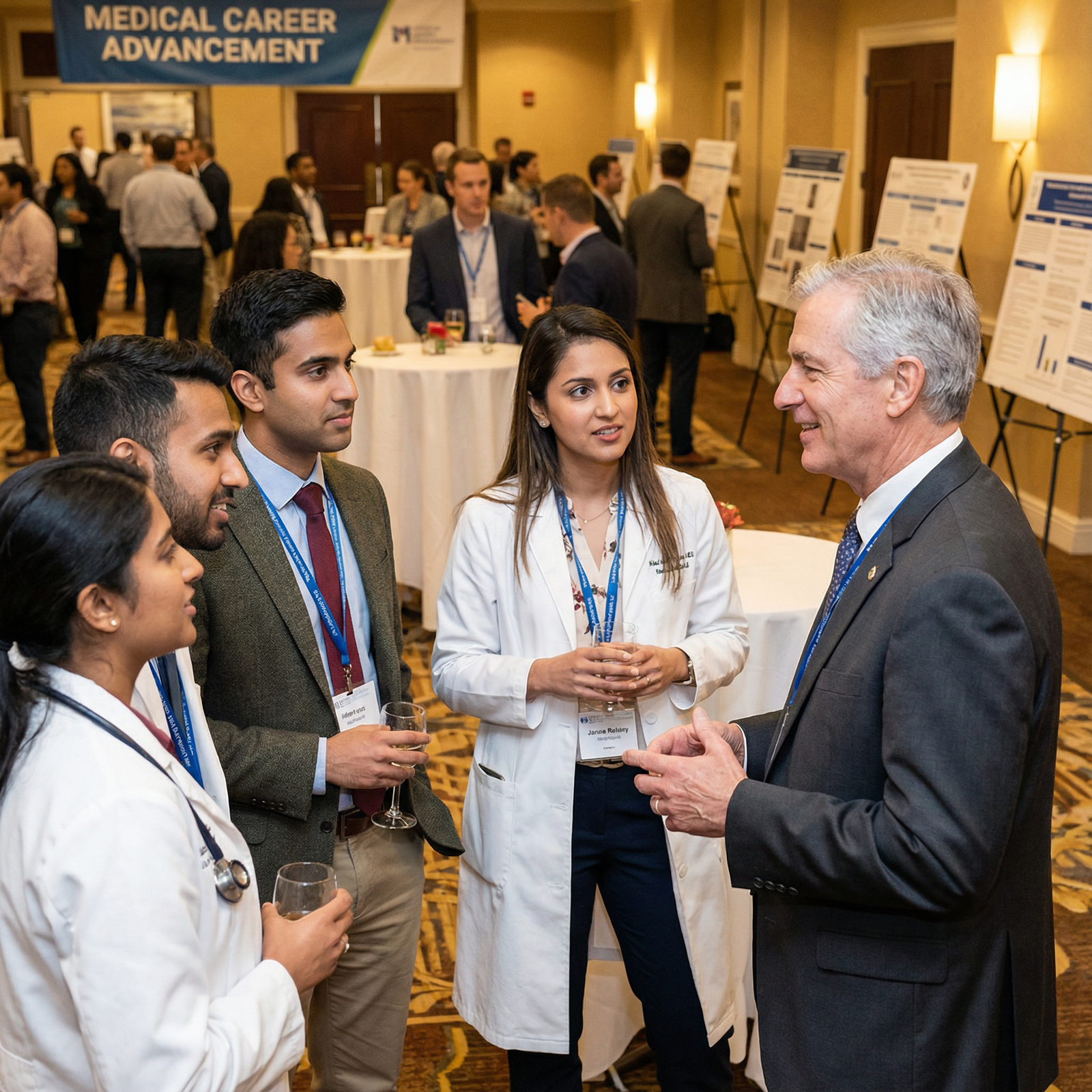
Do You Really Need ‘Big Name’ Mentors? Why Fit Often Beats Fame in LORs
Did someone already tell you, “Make sure one of your letters is from the most famous doctor you can find”?
Let’s dismantle that.
The obsession with “big name” mentors and letters of recommendation is one of the most persistent, quietly harmful myths in premed and early medical training. People waste months chasing chiefs of departments they barely know, while ignoring the mid-level faculty who actually supervised them, taught them, and could describe them in detail.
And then they’re confused when their application lands with a dull thud.
You do not win this game with the longest title or the biggest h‑index stamped at the bottom of your letter. You win it with credibility, specificity, and consistency with the rest of your file. That comes from fit, not fame.
Let me walk through what adcoms actually see, what the data and experience really support, and where “big names” help—and where they absolutely backfire.
What Committees Actually Read For (Not What You Think)
No, committees are not sitting there thinking, “Oh, this is from Dr. Famous, automatic bump.” They are skimming hundreds of letters in compressed time. They’re looking for a few concrete things:
- Does this writer clearly know you?
- Do they provide specific, verifiable examples of your behavior and performance?
- Is the tone genuinely enthusiastic, or politely lukewarm?
- Does the letter align with the rest of your application, or does it feel like a template?
Titles matter only after those boxes are checked. A full professor who barely remembers you will not beat an assistant professor who can recall cases, lab meetings, or patient interactions in convincing detail.
Here is the part most applicants do not want to hear: adcoms can spot “prestige letters with no content” in under 15 seconds. Phrases like:
- “I have known Ms. X in a limited capacity…”
- “He attended my course and performed competently…”
- “She rotated briefly on my service…”
That’s code for: this person is fine, I don’t really know them, I’m doing them a favor by writing something.
Compare that with:
- “I supervised John directly in our cardiology clinic for 10 weeks…”
- “I met Priya during her second year and have interacted with her weekly as part of our research group since then…”
- “On several occasions, I observed Miguel independently take histories from complex patients and then present their cases succinctly…”
Specific time frames. Defined relationship. Direct observation. That’s credibility.
And credibility beats name recognition, every single time.
What The (Limited) Data and Real-World Patterns Show
There is not a randomized controlled trial of “letters from Dr. Famous vs Dr. Knows-You-Well.” But we do have several converging lines of evidence and a lot of consistent observation from admissions committees and program directors.
First, a quick snapshot of what faculty themselves say they value in letters.
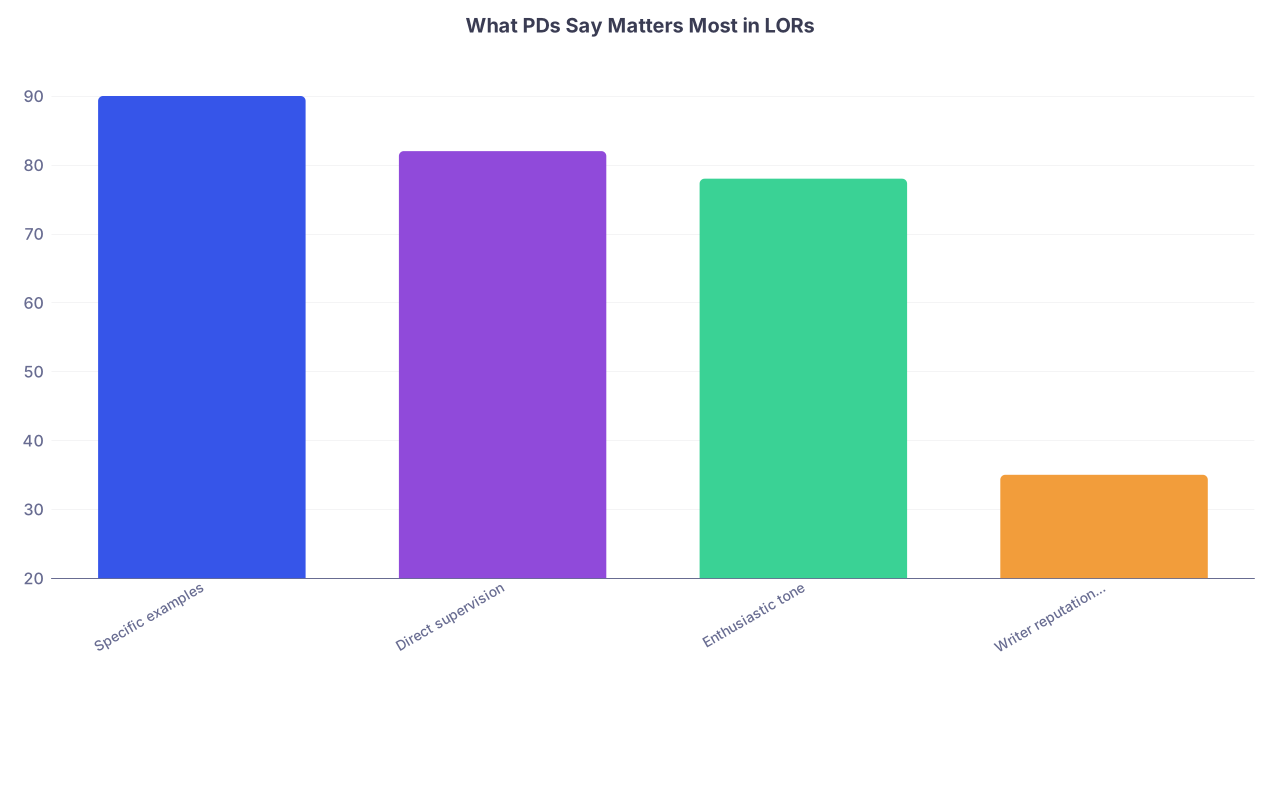
| Category | Value |
|---|---|
| Specific examples | 90 |
| Direct supervision | 82 |
| Enthusiastic tone | 78 |
| Writer reputation/title | 35 |
These are ballpark, blended from multiple surveys and PD commentary, but the pattern is stable:
- Specific examples of performance: overwhelmingly important
- Clear evidence the writer actually supervised you: very important
- Strong, unambiguous positivity: very important
- Fame of the writer: helpful, but not the main driver
Letters from “names” help primarily when:
- The letter is both detailed and enthusiastic, and
- The writer’s reputation is known to that committee as someone who rarely writes strong letters.
So yes, in a narrow subset of cases—like a genuinely close mentorship with a nationally recognized PI—fame can amplify an already strong letter. But it cannot rescue a generic one.
To make this concrete, picture how these two letters land:
| Scenario | Writer | Content Depth | Likely Impact |
|---|---|---|---|
| A | World-famous chair | Vague, generic | Minimal or even negative |
| B | Mid-level attending | Rich, specific, direct supervision | Strongly positive |
| C | Famous PI you worked closely with | Rich, specific | Very positive |
| D | Community physician you shadowed for 3 days | Polite, superficial | Almost ignored |
Scenario C is the ideal. Scenario B still beats Scenario A on actual impact.
Where the “Big Name” Obsession Comes From (And Why It Misleads You)
The myth survives because you only see outcomes, not the internals of the process.
You hear:
“She matched at MGH, and her letter was from the department chair!”
You don’t hear:
“That chair has worked with her for three years, she’s first author on two of his papers, and the letter read like an adoption petition.”
The causal story people tell themselves:
Big name letter → acceptance.
The more accurate causal story:
Sustained high-quality work → close relationship with high-level mentor → very strong, detailed letter → acceptance.
(The “big name” is a correlated byproduct, not the engine.)
There’s also a status component. Applicants want to feel “validated” by someone impressive. So they overvalue impressiveness and undervalue usefulness.
I’ve seen students turn down a long-time PI’s offer to write a detailed letter—because they “need” something from the associate dean they met twice at a networking event. That’s backwards.
If you remember nothing else, remember this:
Admissions committees are trying to predict what you’ll actually be like as a trainee, not how well you collect celebrities.
How Committees Smell a Bad ‘Big Name’ Letter in 10 Seconds
Here’s a quiet secret: “famous name, weak letter” is a negative signal in some rooms.
Why? Because it suggests poor judgment.
If your file includes:
- A generic letter from a big title who clearly doesn’t know you, and
- Only one thin, borderline letter from someone who supervised you directly
the inference is: you chased prestige instead of investing in real mentorship.
There are common red flags:
No concrete anecdotes
“She was a pleasure to have in our lab” with zero specifics? That reads like a template, not an endorsement.Over-focus on CV, under-focus on behavior
If 70% of the letter just recites your CV, that’s not a letter. That’s a poorly written summary. Anyone could have compiled it.Over-hedged language
“Appears to be,” “seems to be,” “I believe she will likely…” That’s not confidence. That’s distance.No clear duration or depth of contact
If the reader doesn’t know how long or how closely the writer worked with you, your letter loses weight immediately.
Now compare that with a “no-name” attending at a community site who writes:
“Over 8 weeks on our inpatient service, I watched Alex arrive early, stay late, and consistently volunteer for the least glamorous tasks (long family meetings, calling outside hospitals). Two examples stand out…”
That hits harder than a world-famous chair writing, “I have had limited opportunities to observe Alex directly, but…”
Committees are not star-struck. They’re pattern-matching. Vague plus famous often equals “favor, not conviction.”
The Fit Formula: What Actually Makes a High-Impact Letter
Strip away the noise and here’s what reliably produces a strong letter, in order of importance:
- Length and depth of relationship
- Direct observation of your work
- Ability to compare you to peers
- Willingness to advocate clearly and strongly
- The writer’s credibility in that specific domain
- Only then: the writer’s fame or title
Notice “fame” is dead last.
You want letter writers who can say things like:
- “Top 5% of students I’ve worked with in 10 years.”
- “I trusted her to run small-group sessions for junior students.”
- “He recovered from early struggles with presentations and by the end of the rotation was leading rounds on complex patients.”
Those are high-yield lines. They anchor you in the writer’s experience, not in their job title.
Here’s a good way to think about your options:
| Potential Writer | Knows You Well? | Directly Supervised You? | Letter Likely Strong? |
|---|---|---|---|
| Famous department chair you met twice | No | No | Weak |
| Mid-level faculty you rotated with 6 weeks | Yes | Yes | Strong |
| Research PI you worked with 1–2 years | Yes | Yes | Very strong |
| Community doc you [shadowed 10 hours](https://residencyadvisor.com/resources/letters-of-recommendation/shadowing-hours-dont-equal-strong-letters-what-matters-more-to-committees) | Barely | Not really | Very weak |
You should not be asking, “Who’s the most famous?” You should be asking, “Who can tell the most convincing story about me as a future physician or scientist?”
When a Big Name Actually Helps—and When It Hurts
Let’s be fair. Fame is not useless. It’s just misused.
A big name helps if:
- They actually know you well and have supervised you over time.
- They’re known for writing honest, differentiated letters, not rubber-stamp fluff.
- Their letter is consistent with a coherent story in your application (e.g., strong research identity with a national PI).
This is where a HHMI PI, department chair, or dean can move the needle: when their detailed, specific praise confirms what the rest of your application is already shouting.
A big name hurts if:
- They barely know you and only interacted with you in group settings.
- You sacrificed better-fit writers just to get the title.
- The letter ends up short, generic, or clearly ghostwritten off your CV.
People hate hearing the last one, but yes—committees can often tell when a letter is basically written by the student and lightly edited. It sounds like a personal statement with random “I observed” statements bolted on. That undermines both you and the writer.
If your “big name” requires you to draft your own letter from scratch because they do not know you well enough to write it themselves, that’s not an asset. That’s a warning sign.
How to Build the Kind of Relationships That Produce Great Letters
You don’t “get” a strong letter in April of your application year. You build it over months and years, with behavior.
A few actual, concrete patterns I’ve seen from applicants who ended up with killer letters—often from non-famous but deeply respected mentors:
They showed up consistently.
To lab. To clinic. To office hours. Not just when they needed something.They made themselves useful.
Took on the annoying tasks (data cleaning, patient callbacks, last-minute slide prep). People remember who bails them out at 6 pm on a Friday.They asked for feedback and then visibly applied it.
That gives writers a story arc: “Initially struggled with X, then improved and now excels at it.”They let mentors see their character under stress.
Deadlines, mistakes, difficult patient encounters. That’s when you demonstrate maturity, not when everything is smooth.
If you do those things with a mid-level faculty member, you’ll get a better letter than someone who floated around the edges of a “prestigious” lab for a year vacuuming pipette tips and never really interacting with the PI.
One more thing: you’re allowed to ask, bluntly, “Do you feel you can write me a strong letter?” A good mentor will tell you if their answer is “not really.” Believe them. Do not push for the letter anyway because their title looks shiny.
Strategy by Phase: Premed vs. Early Med School
Premeds and med students play slightly different games, but the principle holds.
Premeds
For MD/DO admissions, most committees want:
- One strong science faculty letter (ideally someone who taught you and saw you actively engage).
- One other academic letter (could be another science or a non-science with deep interaction).
- One “character/performance” letter (research PI, clinical supervisor, long-term volunteer supervisor).
You’re not expected to have a Nobel laureate. You’re expected to have people who can convincingly answer: “What is this person actually like to teach and work with?”
Early Med Students (thinking ahead to away rotations / residencies)
You’ll eventually need:
- Letters from clinical attendings who watched you on the wards.
- Possibly a research letter if you’re aiming at competitive specialties.
Again, the strongest letters often come from the attending who scrubbed with you for a month and saw you deal with complications, not the chair who nodded at you in grand rounds.
The One Place Title Really Does Matter
There is one narrow, uncomfortable reality: sometimes committees discount letters from people whose judgment they don’t trust.
That is not about fame; it’s about signal quality.
A brief example: a letter from a notoriously grade-inflating faculty member who calls every student “top 1%” will carry less weight, even if they have a high rank. Meanwhile, a mid-level faculty member known for being tough but fair can be massively influential—within that institution or network.
So yes, “who” wrote the letter matters. But not in the simplistic “big name vs nobody” way people imagine. It’s “Is this person known to us as a reliable judge of trainees?”
You can’t fully control that. But you can optimize for mentors who actually invest in teaching and supervising students. Those people tend to write honest, differentiated letters that committees respect.
So What Should You Actually Do?
Boil it down:
- Stop chasing titles. Start cultivating relationships.
- Prioritize people who:
- Supervised you directly
- Saw you over time
- Can compare you to peers
- Actually like working with you
- If one of those people happens to be a big name, great. If not, you’re still in excellent shape.
- Ask explicitly for a strong letter and accept it if someone tells you they cannot provide one.
- Align your letters with the story your application is already telling—research-focused, service-focused, clinically focused, whatever it is.
Years from now, you will not remember whose name was at the bottom of your letters. You will remember which mentors actually picked up the phone, looked someone in the eye, and said, “Yes. Take this one. You’ll be glad you did”—and those aren’t always the people with the fanciest titles.