
Only 17–25% of medical school applicants who submit a research letter actually have that letter described as “strong,” “outstanding,” or “enthusiastic” in committee summaries. The rest get tagged with phrases like “lukewarm,” “generic,” or “knows student minimally.”
And those mediocre PI letters do not just “not help.” They actively hurt.
Let me be blunt: the worship of “get a PI letter at all costs” is one of the more damaging pieces of groupthink in premed culture. I have sat in meetings where a single bland or subtly negative research letter tanked an otherwise competitive file. Not because the student was bad. Because they picked the wrong writer and assumed “big name = big boost.”
You are not just collecting letters. You are giving people permission to define you to strangers behind closed doors.
Let’s dismantle this myth properly.
How Committees Actually Read Research Letters
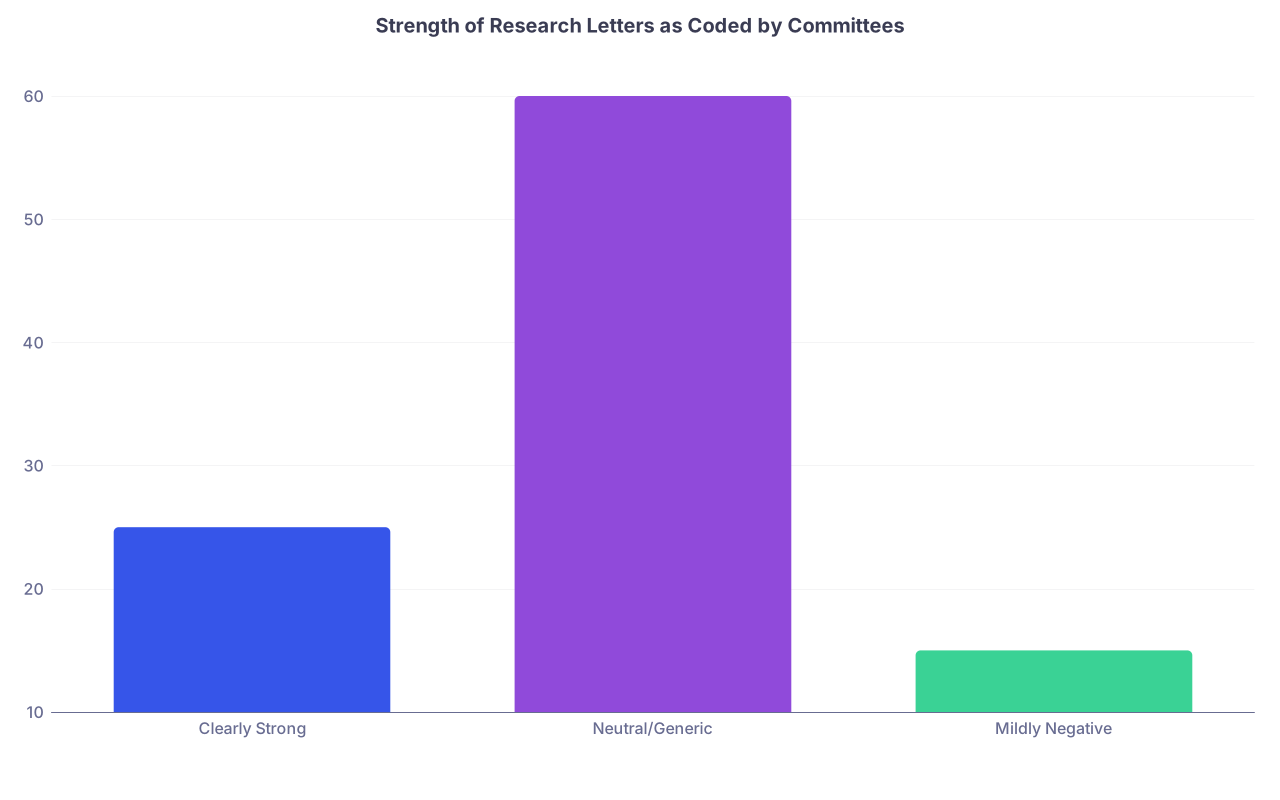
| Category | Value |
|---|---|
| Clearly Strong | 25 |
| Neutral/Generic | 60 |
| Mildly Negative | 15 |
On paper, a letter is a letter. In the room, they are not equal at all.
When admissions or pre-health committees read research letters, they mentally sort them into three buckets:
- Clearly strong – concrete stories, specific contributions, clear enthusiasm.
- Neutral/generic – “hard-working,” “nice to work with,” no real details.
- Subtly or overtly negative – hedged language, faint praise, red-flag phrases.
Here’s what each bucket sounds like in real life.
Strong:
“Alex independently designed and optimized a new image analysis pipeline that cut our processing time by 40%. I have supervised over 50 undergraduates; Alex is in the top 5% in terms of initiative and reliability. I trusted them to present our preliminary data solo at our internal retreat, something I rarely grant to undergraduates.”
Generic:
“Alex was a member of my lab for about a year. They were punctual and completed their assigned tasks. They were pleasant to work with and interacted well with peers. I expect Alex will do well in medical school.”
Subtly negative:
“Alex performed assigned tasks adequately and responded to feedback when given. With additional maturity, I believe Alex has the potential to grow into a more independent learner.”
Translation in committee-speak: “Not ready. Do not stake the class on this person.”
Guess which two types are far more common from PIs who barely know you, run big labs, or are constantly writing dozens of letters?
Exactly the ones you do not want.
The Big Name Trap: Prestige Without Substance

The myth goes like this:
“If my PI is a department chair / HHMI investigator / big NIH name, their letter will be gold. Even if they barely know me.”
Wrong. Committees do not give you bonus points for a famous signature if the contents are thin.
I have seen this specific pattern too many times:
- Student joins giant lab.
- Sees the PI once a month in group meeting.
- Interacts daily with a postdoc or senior grad student who actually trains them.
- At application time, they bypass the person who knows them best and chase the Big Name letter.
Result: a three-paragraph template with your name swapped in and a generic “they contributed to ongoing projects in the lab.” The committee picks this up in about five seconds. They have seen this exact letter format from that PI five times this cycle already.
Here is the harsh part: a detailed letter from a mid-level faculty member at Unknown State University beats a vague letter from a world-famous PI at Fancy Ivy 10 out of 10 times.
Admissions readers are not twelve. They know most big-shot PIs do not pipette or sit at the bench with undergrads. When a big name writes something detailed and personal, that is impressive. But that is rare. You probably already know if you are one of those rare cases; the PI has invested serious time in you, talked about your future, maybe put you on a manuscript, asked you to present.
If you’re unsure whether that describes your relationship… it doesn’t.
When a PI Letter Actively Hurts You
Here’s the part premed Reddit does not like to talk about: some PI letters are soft rejections in disguise.
Common ways a “required” research letter quietly sabotages you:
1. The “damning with faint praise” paragraph
Phrases that committees read as code for “I am not impressed”:
- “Completed all assigned tasks.”
- “Performed adequately for their level of training.”
- “I anticipate they will be successful with continued guidance.”
- “With further development, they could become a strong student.”
Alone, each phrase seems harmless. In context, especially when there are no concrete examples of excellence, it signals hesitation. Admissions knows what enthusiastic letters look like. This is not it.
2. The “I barely know this person” confession
Some PIs will literally write:
“Although I have not worked closely with Alex on a day-to-day basis, I’m pleased to support their application.”
That one line is enough to downgrade the letter from “meaningful evaluation” to “checkbox.” A few schools and committees will explicitly say, “This letter provides limited information” in their internal notes. That is not neutral; it is a wasted slot that could have showcased you.
3. The subtle professionalism concern
I have watched a committee stop flipping pages when they see an off-hand sentence like:
“Alex at times needed reminders about lab schedules, but responded appropriately once expectations were clarified.”
You may remember that as “I was late a few times first semester.” The committee hears: “Professionalism risk.” Some schools are almost paranoid about anything that even smells like unreliability or entitlement. All it takes is one line.
4. The comparison sentence
Many experienced PIs include comparative language:
“Among undergraduates I’ve worked with, Alex is above average…”
(Translation: not outstanding.)“Alex is comparable to other students at this stage…”
(Translation: middle of the pack.)
When your competition has letters saying “top 5% of over 80 undergrads in my lab,” you lose that round. And you chose to enter it.
Who Should Actually Write Your Research Letter?
Let me cut through the noise: the best research letter comes from the person who can tell a compelling, specific story about your work and character. Title is secondary.
Hierarchy of value, in practice:
| Writer Type | Typical Letter Strength |
|---|---|
| PI who knows you very well | Strong |
| Co-PI / faculty collaborator | Strong/Moderate |
| Senior postdoc with co-sign PI | Strong/Moderate |
| PI who barely knows you | Neutral/Negative |
| [Lab manager alone](https://residencyadvisor.com/resources/letters-of-recommendation/the-unwritten-hierarchy-of-letter-writers-from-pi-to-volunteer-supervisor) | Neutral |
The trick that actually works: if your direct supervisor is a postdoc or senior grad who knows you inside out, you have them write the narrative, then the PI co-signs or “endorses” it. Many labs already do this; others will if you ask respectfully and early.
How you ask matters. You do not say, “Can the postdoc write it and you just sign?” That sounds shady. You say something like:
“Since Dr. Kim has worked with me very closely at the bench, would it be possible for them to help draft some of the details for the letter that you would then review and adjust? I want to make sure you have the clearest picture of my contributions.”
Good PIs actually appreciate this. It saves them time and yields a more accurate letter. Bad or indifferent PIs will either refuse or give you a template letter anyway. That’s data. You then decide if this is still a good idea.
Red Flags You’re About to Get a Weak or Harmful Letter
Here’s where you protect yourself. Before you lock in a PI letter, do a reality check.
You are at high risk for a useless or harmful letter if:
- Your PI cannot spontaneously describe one specific thing you did in the lab without checking notes.
- Your one-on-one time with them over a year could fit into a single clinic visit.
- They confuse you with another undergrad. It happens. A lot.
- When you ask, “Do you feel you could write a strong letter for me?” they answer with something like, “I can write you a letter.” Notice what word is missing.
If you get a vague or hesitant response, that is your sign to pivot. You are not obligated to use them. You are not being disloyal by protecting your future.
Worst case, the PI says no or hints the letter would not be great. That slight discomfort beats silently letting them send a half-hearted evaluation to every school on your list.
How to Ask for Letters Without Getting Burned
Here’s a smarter, less self-sabotaging way to handle this whole process.
1. Ask the right question up front
Do not ask: “Can you write me a letter of recommendation?” Almost everyone will say yes, even if they should not.
Ask: “Do you feel you know my work well enough to write a strong, detailed letter for my medical school applications?”
This gives them an opening to bow out gracefully if they can not endorse you strongly. Many conscientious faculty will actually tell you, “I don’t think I’m the best person,” if you give them this framing.
2. Provide actual substance, not a vague packet
If they agree, you stack the deck in your favor. You give them:
- A 1-page summary of your research contributions: experiments you’ve owned, skills you’ve learned, where you showed initiative.
- Concrete episodes: “When X experiment failed, I did Y…”, “I trained two new undergrads in Z.”
- Your personal statement draft or a short paragraph on why you want to do medicine.
No, this is not cheating. You’re refreshing their memory and giving them raw material so they can write something specific instead of generic fluff.
3. Check the timing and logistics
If your PI is writing 20+ letters that season, you’re competing for their attention. Ask early. Follow up with clear deadlines. Disorganized timelines lead to rushed, template-heavy letters.
I’ve seen students get destroyed because a PI hammered out their letter at 1 a.m. the night before the deadline and forgot who was who. You can not control quality, but you can reduce the odds of that.
The Research Letter vs. Other Letters: Stop Overvaluing It
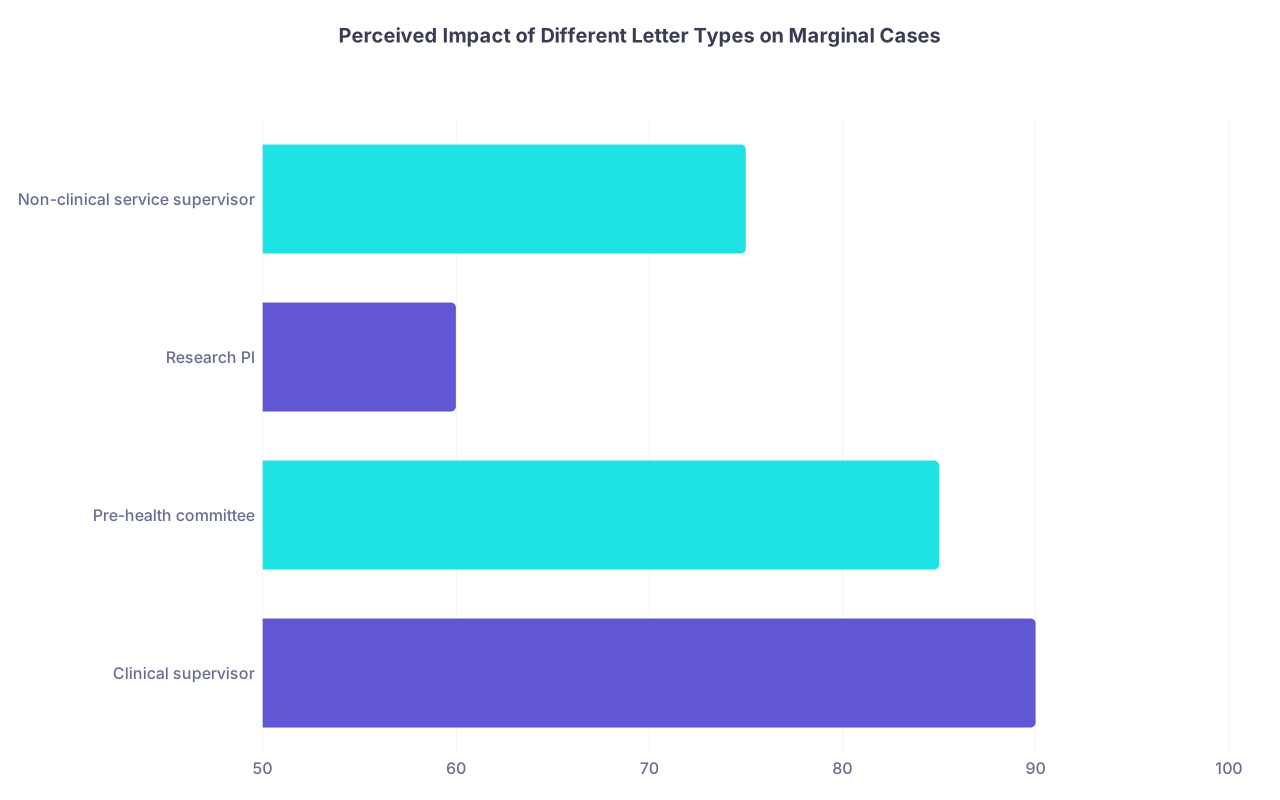
| Category | Value |
|---|---|
| Clinical supervisor | 90 |
| Pre-health committee | 85 |
| Research PI | 60 |
| Non-clinical service supervisor | 75 |
Among borderline applicants, I have seen clinical and service letters save applications far more often than research letters do.
Medical schools are trying to predict:
- Will you show up.
- Will you treat patients decently.
- Will you handle stress without imploding or cutting corners.
A fantastically detailed research letter can help, especially at research-heavy places. But a mediocre or negative one can sink you. Meanwhile, an outstanding clinical or longitudinal service letter that screams “this person is a genuine asset to patients and teams” often does more to tip the scale.
So no, you do not “need” a PI letter at all costs unless a specific school explicitly requires it. Many do not. Some strongly prefer academic science letters, but even then, a detailed letter from a course-based research professor or small-lab supervisor can beat a big-name PI who barely knows you.
Key Takeaways: Use PI Letters Strategically, Not Automatically
Let me distill the reality down, because you do not need more noise.
- A generic or faint-praise PI letter is worse than no PI letter. It wastes a slot and can quietly poison committee discussions about you.
- Choose the writer who knows you best and will be specific, even if they are not the most famous person in the building. Prestige without content does not impress experienced readers.
- Ask explicitly for a “strong” letter, provide concrete material, and listen carefully to how your PI responds. That small moment of honesty can save your entire application cycle.