
You get home from a long shift, it’s already 10:30 p.m., and your kitchen table is doing triple duty as desk/dining/crying station. Your classmates are posting shadowing pics on Instagram with “my amazing mentor” in the caption. You? You’re still in your work shoes, scrolling through your email wondering how the hell you’re supposed to “build longitudinal clinical relationships” when your schedule changes every week and you can barely keep your eyes open.
You keep seeing the same advice: “Just volunteer more,” “Join premed clubs,” “Shadow in the mornings!” Cool. With what time? Between rent, family obligations, and school, quitting your job is not an option. But letters of recommendation still need physicians, and you can’t magic one out of thin air.
Let’s talk about this from the actual place you’re in: overworked, underslept, and one rejection email away from a meltdown.
First: You’re Not Screwed (Even if It Feels Like You Are)
Let me just say the thing you’re afraid to say out loud: “If I work full‑time while in school, I’m already behind. I’ll never catch up to the kids with rich parents and summer research at Mayo. I’m going to apply with no real physician mentors and my application will look fake and weak.”
I’ve seen people in your exact situation end up with:
- Multiple MD and DO acceptances
- Strong physician letters
- Deep, real mentorship relationships
And they did it while:
- Working 30–50+ hours a week
- Commuting
- Sometimes supporting family
Were they exhausted? Yes. Did it take longer and require some uncomfortable asks? Also yes. Was it impossible? No.
You’re not broken. You’re constrained. Those are different problems.
Where Can You Even Meet Physicians If You’re Always Working?
Let’s be blunt: if your only “strategy” right now is silently hoping a doctor appears in your life like a side quest unlock, this will not fix itself. You need deliberate, efficient moves that respect your time and your energy.
Here’s the core question: “Given my schedule, where am I most likely to repeatedly see physicians in a way that could realistically become mentorship?”
Not ideal-world places. Real-world ones that fit a working student.
I’ll break them into buckets.
| Setting | Time Flexibility | Relationship Potential |
|---|---|---|
| Your job (if clinical) | High | Very High |
| Community clinics / free clinics | Medium | High |
| Student health center | Medium | Medium |
| Hospital volunteer roles | Low-Medium | Medium-High |
| Cold outreach (email/LinkedIn) | High | Variable |
1. Your Job (If It’s Even Slightly Clinical)
If you work anywhere near healthcare, this is your starting point. Even if you’re just at the front desk of an urgent care or doing transport.
I’ve watched:
- A medical assistant on nights in a tiny ED end up with two EM attendings writing fantastic letters.
- A scribe with a chaotic schedule still get “I’ve worked with [Name] for over a year” letters.
- A phlebotomist who thought “doctors don’t even notice me” turn that into a brutally strong LOR after one honest conversation.
If your job is clinical-ish, your goals are:
- Show up consistently and not be a disaster.
- Make it clear (subtly at first) that you’re premed.
- Ask for slightly more responsibility / involvement where appropriate.
- Then, after 4–6 months of them seeing you, have one targeted ask.
Something like:
“Dr. Smith, I really appreciate how you explain things to patients. I’m a premed student and I work full-time, so it’s been hard to find formal mentors. Would you mind if, on shifts when things are slower, I ask you a couple questions about cases or your path to medicine?”
Most decent humans will say yes. If they don’t? Good. You just ruled out someone who would never have written you a decent letter anyway.
2. If Your Job Is Not Clinical At All
This is where people start panicking. Retail, restaurant, gig work, office job, warehouse—you’re thinking, “I literally see zero doctors. I’m done.”
You’re not done. But you do need to be more intentional and probably more uncomfortable.
You actually have three parallel paths:
- Microscopically small but consistent clinical volunteering
- Short, focused shadowing bursts during school breaks
- Cold/warm outreach to physicians outside your job
2.1 Tiny Volunteering That Fits a Working Schedule
Ignore the people doing 10–15 hours/week at the hospital. You don’t need that.
You need 2–3 hours per week or even every other week, in a place where:
- There are actual physicians present
- People stay long term (so they get to know you)
- The vibe isn’t total chaos
Look for:
- Free clinics
- Student-run or community health clinics
- Faith-based health programs (if that aligns with you)
- Mobile health units
These places usually love consistent volunteers, even if you can only do:
- Every other Saturday morning
- One evening per week
- One weekend day per month + extra during school breaks
What matters more than the hours is the pattern: you keep showing up. Over 6–12 months, that’s more than enough for a physician to honestly say they know how you work, how you treat patients, and how you handle responsibility.
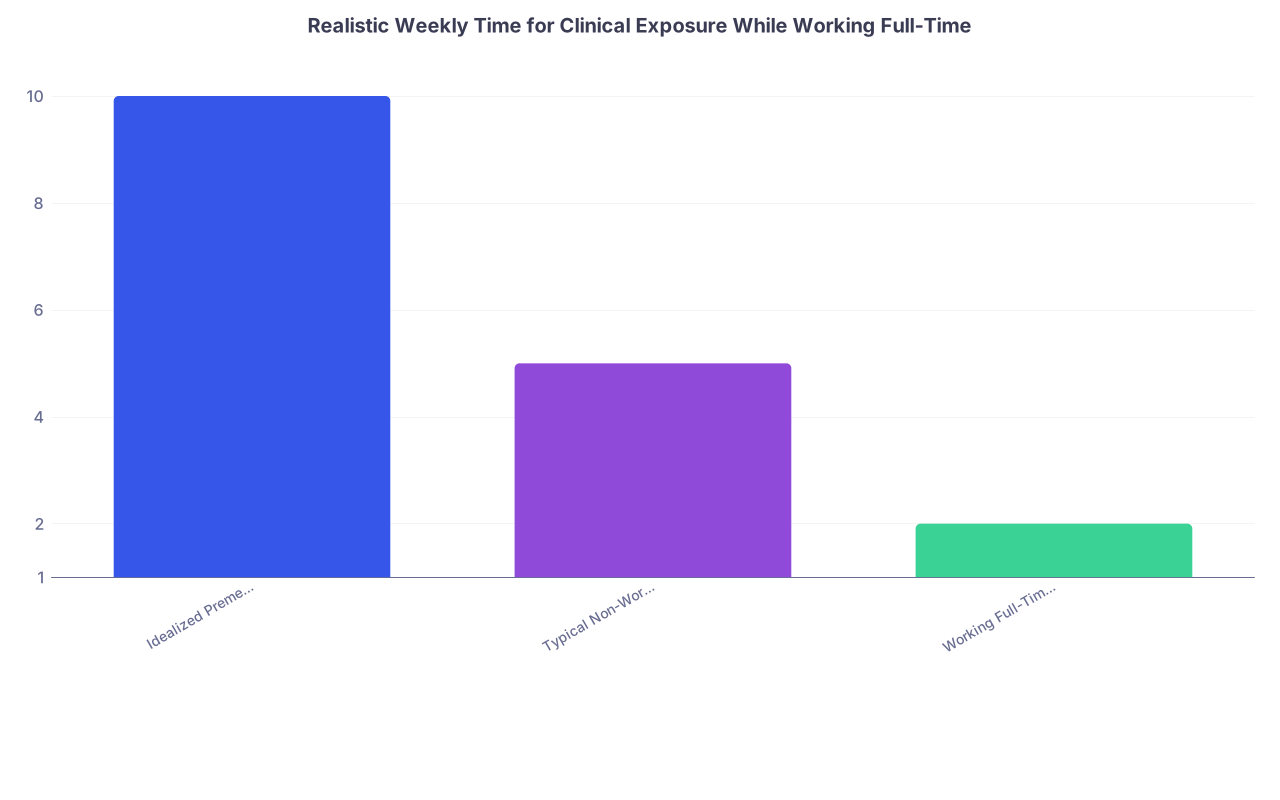
| Category | Value |
|---|---|
| Idealized Premed Advice | 10 |
| Typical Non-Working Student | 5 |
| Working Full-Time Student | 2 |
That “2” is not a joke number. It can be enough if you stick with it.
Using Short, Intense Windows Instead of Constant Availability
If your semester is chaos but you get little pockets of free time—winter break, a lighter summer session, one month where your work schedule is more stable—you can use those to build real relationships, not just random one-off shadows.
1–2 Week Shadowing Bursts
This works better than people think:
Say you have winter break and you can free up 3–4 days each week. You email a clinic or specific physicians and say:
“I’m a full-time student who also works full-time to support myself, so my semester schedule is pretty limited. But I’ll be off from [date] to [date], and I’d love to shadow you for 3–4 days over that period if possible.”
Two things happen:
- You’re being honest about your reality, which most physicians respect.
- You’re signaling that your ask is time-limited and defined.
If you end up shadowing the same person:
- 3 days over winter break
- 3–4 days over spring break
- 2–3 days in the summer
That’s 8–10 days with the same doc. That can absolutely support a letter, especially if you weren’t a wallflower.
Cold Outreach That Doesn’t Feel Completely Desperate
Cold outreach feels cringe when you’re already insecure. “Why would they want to help me? I bring nothing to the table.” That voice? It lies. But it will stop you from sending emails if you let it.
You do not have to spam every MD in a 50-mile radius with a generic message. That does suck, and it doesn’t work well.
You want targeted outreach: fewer people, better messages.
Where to find them:
- Clinic/hospital websites
- Community health center rosters
- LinkedIn (yes, doctors are on it, especially younger ones)
- Your own primary care office or urgent care
You’re looking for:
- Physicians who list “teaching” or “educator” anywhere
- People with titles like “Assistant Professor” or “Clinical Instructor”
- Docs who are part of medical schools or residency programs (they’re used to learners)
Your email should be short, specific, and honest about your situation. For example:
Dear Dr. Lopez,
My name is [Name], and I’m a full-time student at [School] working full-time at [Job] to support myself. I’m hoping to apply to medical school in [year], but my work schedule has made it hard to find shadowing and mentorship.
I’m very interested in [their specialty / patient population] and saw that you work with [clinic, population, teaching role]. If you ever allow premed students to shadow or observe, I’d be grateful for the chance, even if it’s just a few days over [very specific time window].
I understand you’re very busy, and I completely understand if it’s not possible. Thank you for considering it either way.
Best,
[Name]
[1-sentence about major/year]
That does three critical things:
- Shows you’re not lazy; you’re constrained.
- Gives them a clear, small ask.
- Gives them an easy out so they don’t feel trapped.
You will get ignored. You will get no’s. That doesn’t mean you’re unworthy. It means physicians are busy and screening for persistence.
If you send 15 good emails, and 2 people reply with “Yes, I sometimes take students,” you just created opportunity out of nowhere.
Turning Random Contact Into a Real Mentor (Not Just a LOR Machine)
Here’s the mistake: people finally meet a physician, shadow twice, and then disappear for 8 months. Then they pop back up with “Can you write me a letter?” and wonder why it’s awkward.
You don’t need weekly coffees. But you do need thread.
Once you’ve met a physician you like:
- Email them once every 1–2 months with a brief update.
- Ask 1–2 specific questions occasionally.
- Tell them your application timeline.
Something like:
“Hi Dr. Lopez,
Just a quick update: I finished this semester while still working full-time, and I’ve started studying for the MCAT for a 2026 application. I really appreciated your advice about [something specific]. If you’re ever okay with me shadowing again during [specific time window], I’d love to come back.”
You’re doing two things:
- You’re quietly building a case that you’re consistent and serious.
- You’re reminding them that you exist, so when you do ask for a letter, you’re not some ghost from 11 months ago.
What If I Literally Can’t Shadow Because of My Job?
Sometimes it’s not just hard. It’s impossible.
Rotating shifts, overnight warehouse work, caregiving responsibilities, no car, rural area. The usual “just shadow” advice becomes ridiculous.
If you’re in that camp, you need to think like this:
“I can’t do what a traditional premed does. So I need to create a coherent story that explains why, while still showing I know what medicine is and that physicians trust me.”
Your Plan B might look like:
- Non-physician but clinically meaningful mentors (NP, PA, RN)
- One physician you rarely see but know well enough for a letter
- Powerful work supervisor letter showing responsibility and character
- Heavy emphasis on your barriers in your personal statement/secondaries
Admissions doesn’t sit there and say “No two-physician letters? Automatic trash.” They look at the context.
If your file clearly shows:
- You worked 35–50 hours/week for years
- You helped support family / yourself
- You still got clinical exposure, even if limited
- Your letters scream “reliable, mature, grounded, not a flake”
You’re not disqualified. Are you less shiny than someone whose parents paid for a gap year to do global health in Costa Rica? Sure. But a lot of committees respect grind more than gloss.
How to Actually Ask for a Letter Without Throwing Up
Eventually, you’re going to have to ask a physician: “Can you write me a strong letter of recommendation?”
Not “a letter.” A strong letter.
This is scary. You’ll want to water it down because you’re afraid they’ll say no. But if they can’t write you a strong letter, you don’t want the letter.
Here’s a script you can adapt, especially once you’ve got at least some track record with them:
“Dr. Lopez, I’m planning to apply to medical school this upcoming cycle. I’ve really appreciated your mentorship and the time you’ve let me observe in clinic. Given what you’ve seen of me, would you feel comfortable writing me a strong letter of recommendation for my applications?”
If:
- They hesitate
- They say “I can write a letter, but I don’t know if it will be strong”
- They sound uncertain
You thank them and do not use that letter. That’s not a failure. That’s you dodging a bullet.
If they say yes:
Offer:
- CV
- Draft of your personal statement
- Bullet list of specific things you did with them (cases, clinics, responsibilities)
- A short reminder of your constraints (full-time work, etc.)
You’re making their life easier and shaping the narrative.
Using Your “Nontraditional” Reality As a Strength, Not a Shameful Secret
One last thing, because this messes with your head more than you realize:
You working full‑time is not a dirty detail you have to hide. It’s a structural reality that explains why you didn’t do 300 hours of shadowing at 12 different departments.
You should:
- Be honest with physicians: “I work full-time while in school, so my schedule is limited, but I’m committed.”
- Be explicit in your application: “To support myself/ my family, I worked [X] hours weekly while a full-time student.”
- Let your letters tell that story too (ask your employer/supervisor to mention it).
The story is not “I was too lazy to do things.” The story is “I had to choose, and I still chose medicine in every way I could.”
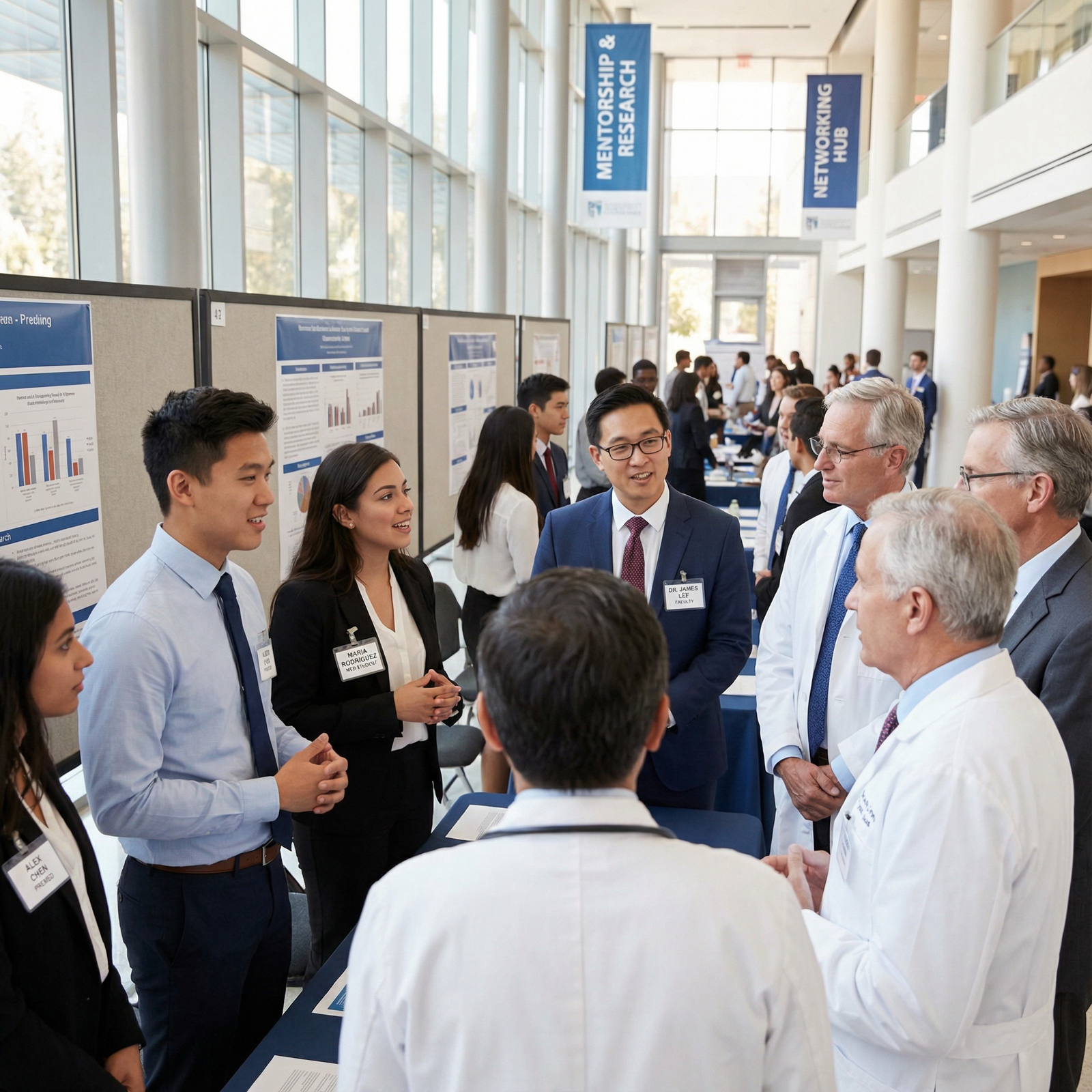

| Step | Description |
|---|---|
| Step 1 | Identify Constraints |
| Step 2 | Pick 1-2 Access Points |
| Step 3 | Show Up Consistently |
| Step 4 | Have Honest Conversation |
| Step 5 | Shadow/Work More Closely |
| Step 6 | Maintain Light Contact |
| Step 7 | Ask for Strong Letter |
Quick Reality-Check Takeaways
- You can absolutely get physician mentors and solid letters while working full-time, but you have to be strategic, not random.
- Consistency beats volume: 2 hours/week for a year with one doctor is better than 20 scattered shadowing days with strangers.
- Your constraints are part of your story, not your disqualification—own them, explain them, and build relationships that see that side of you.
You’re tired, not doomed. Keep going, but make your moves count.