
The flashy big-name letter writer almost never helps you as much as the quiet champion who actually knows you.
If you’re choosing between a famous but distant mentor and a lesser-known close advocate for your letters of recommendation, pick the close advocate 9 times out of 10. The name on the letterhead matters way less than you think. The enthusiasm and detail in the letter matter way more than you’ve been told.
Let me walk you through how to think about this like an admissions committee member, not a stressed premed comparing name brands.
What Admissions Committees Actually Look For in Letters
Forget what your classmates say. They’re mostly wrong about letters.
Admissions committees care about three things in a letter of recommendation:
- How strongly does this person recommend you?
- How specifically can they describe you?
- How credible is this person in judging your potential as a physician/scientist/student?
That’s it. The “famous vs lesser-known” question is really just a weak proxy for #3. But if you sacrifice #1 and #2 for “prestige,” you lose.
Strength of endorsement
Readers look for strength words and how quickly they appear. Things like:
- “One of the top students I’ve worked with in the past 5 years…”
- “I give my unequivocal highest recommendation…”
- “I rank her in the top 5% of students I have mentored…”
If your letter starts with: “I am writing this letter on behalf of [Name], who worked in my lab for one summer,” that already feels lukewarm. I’ve seen versions of that from Nobel-level people. Impressive name, totally forgettable letter.
Specificity and detail
Good letters don’t say “hardworking, passionate, team player” in generic language. They tell stories:
- The time you stayed late to fix a failed experiment before a grant deadline
- The way you handled a difficult patient or standardized patient encounter
- How you improved from struggling early on to leading the group by the end
If your famous recommender barely knows you, they can’t include any of this. So they default to vague praise. Which reads as faint praise.
Credibility
Here’s where “famous vs lesser-known” gets misunderstood.
Credibility doesn’t mean “have I seen this person on Twitter?” It means:
- Does this person routinely evaluate people like you?
- Do they understand what makes a good medical student, resident, or scientist?
- Do they sound like they’ve actually supervised you?
A mid-career PI at a solid state school who clearly knows you will beat a world-famous professor who barely remembers your name. Every. Single. Time.
Famous but Distant vs Lesser-Known Close: The Real Tradeoffs
Let’s be concrete. Here’s how these letters usually differ in real life.
| Factor | Famous but Distant | Lesser-Known Close Advocate |
|---|---|---|
| Strength of praise | Mild to moderate | Strong, enthusiastic |
| Specific examples | Few / generic | Many, detailed |
| Knows you personally | Weakly | Very well |
| Name recognition | High | Low to moderate |
| Impact on reader | Initially impressed, then fades | Modest name, strong lasting impact |
Most students overweight the “name recognition” row and ignore the others. Committees don’t.
The famous but distant mentor
Typical scenarios:
- You did a summer at Harvard/NIH/Top-10 lab, mostly supervised by a postdoc
- You were one of 20 undergrads in a big research group
- The PI gave a few talks, you went to some meetings, but never had a one-on-one
Can this PI write you a solid letter? Maybe. But here’s what it often looks like in practice:
- Two paragraphs about their lab and research field
- One paragraph listing your tasks (data entry, literature review, basic bench work)
- One closing line: “I believe [Name] will be a strong addition to your program.”
That’s not bad. It’s just not powerful. It reads like 100 other letters.
The lesser-known close advocate
Think:
- Your biology professor who’s seen you in office hours 20+ times
- The community physician you shadowed and later helped with a quality project
- The PI at your home institution who watched you grow for 2 years
These people can say things like:
- “I have rarely seen a student respond to critical feedback as constructively as [Name]…”
- “During a difficult clinical encounter, [Name] demonstrated empathy beyond her training level…”
- “Across three semesters and multiple roles, I have watched [Name] evolve into a leader…”
That’s gold. That’s the kind of content that makes your file jump out of the pile.
When a Famous Letter Actually Helps
There are a few real use cases where the big name is worth it. Notice the pattern: the letter writer must truly know you and be relevant to your goals.
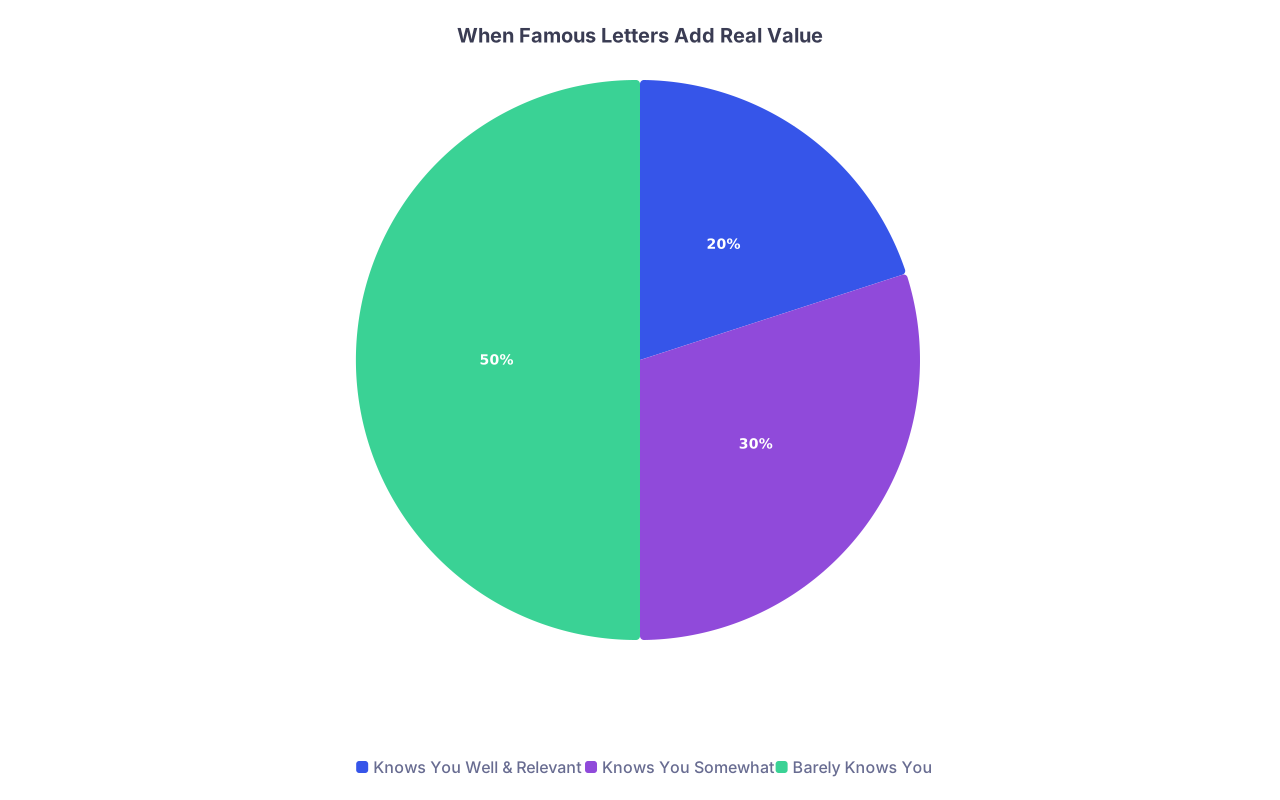
| Category | Value |
|---|---|
| Knows You Well & Relevant | 20 |
| Knows You Somewhat | 30 |
| Barely Knows You | 50 |
Famous letters help when:
The person actually supervised you directly
Not “I met them twice.” I mean they met with you regularly, critiqued your work, and can reference specific projects or interactions.They’re in a field directly tied to your application narrative
Example: You’re applying MD-PhD in immunology and the letter is from a known immunologist who can say you think like a future scientist, not just “hardworking student.”They can compare you to a high-level cohort
“Among the students I’ve mentored who’ve gone on to top MD-PhD programs, [Name] stands out because…”
If they can do those things and they know you well, great. Then you get the best of both worlds: detail + prestige.
But if you’re choosing between:
- A famous person who barely remembers you
vs - A solid, respected but not-famous mentor who knows you incredibly well
Pick the second. Every time.
How Committees Read a Letter in 30–60 Seconds
Most readers don’t slow-read every word of every letter. They skim smart.
Here’s approximately what happens:

| Step | Description |
|---|---|
| Step 1 | Open Letter |
| Step 2 | Glance at Signature & Title |
| Step 3 | Read First 2-3 Sentences |
| Step 4 | Skim for Examples |
| Step 5 | Quick Scan Then Move On |
| Step 6 | Overall Impression: Strong |
| Step 7 | Overall Impression: Neutral |
| Step 8 | Strong & Specific? |
So what matters?
- The first 2–3 lines: Does the writer sound genuinely impressed?
- The middle paragraph: Any concrete stories or just generic adjectives?
- The closing: Are they clearly endorsing you at a high level or just being polite?
A famous name at the bottom might get an initial “oh interesting” reaction. But if the content is bland, that reaction dies by line 5.
A lesser-known professor who opens with, “I would place [Name] in the top 1–2 students I have taught in my 15 years at this institution…” has already won the first 10 seconds.
A Practical Framework: How to Choose Your Letter Writers
Here’s how to decide, instead of spiraling in group chats.
Ask three questions about every potential letter writer:
- Do they know me well enough to tell specific stories?
- Do they like me enough to go to bat for me?
- Is their role/title reasonably credible for the type of letter?
If you can confidently answer “yes” to #1 and #2, and “sort of / yes” to #3, they’re a strong choice.
If you’re stuck between options, rank based on this priority order:
- Enthusiasm of support (how excited are they about you?)
- Depth of relationship (how long/how closely have they known you?)
- Relevance to medicine/science (clinician, PI, professor in relevant field)
- Prestige of name or institution
Notice “prestige” is fourth, not first.
Specific Scenarios and What You Should Do
Let’s hit some of the exact situations students get confused by.
Scenario 1: The summer big-name PI vs your long-term home PI
You: Did a 10-week summer at a top-10 med school lab with a famous PI. Mostly supervised by a postdoc.
You also: Have worked 2 years in a mid-tier university lab with a PI who knows you extremely well.
Pick: Your long-term PI as your primary research letter. If the big-name PI can also write a decent letter (even if not as detailed), they can be an extra, but they should not replace the strong advocate.
Scenario 2: Well-known lecturer vs small-class professor
You: Got an A in a huge 300-person biochem lecture with a semi-famous prof. Went to office hours twice.
You also: Took a 20-person upper-level course where the professor saw your work, your growth, and your participation every week.
Pick: The small-class professor. Every single time.
Scenario 3: Hospital department chair vs community physician preceptor
You: Shadowed a big academic department chair for a few half-days. Mostly observed quietly.
You also: Spent a whole summer with a community internist, helped on a QI project, interacted with patients, had feedback conversations.
Pick: The community physician. The chair can’t write anything meaningful about you. Your preceptor actually can.
Mixing Letter Types: Where Prestige Can Fit In
You don’t have to choose “all famous” or “all close advocates.” You can mix.
Think about your entire letter portfolio:
- For premed: typically committee letter (if available) + 2–3 individual letters
- For med school → residency: 3–4 letters, often with at least one from your chosen specialty
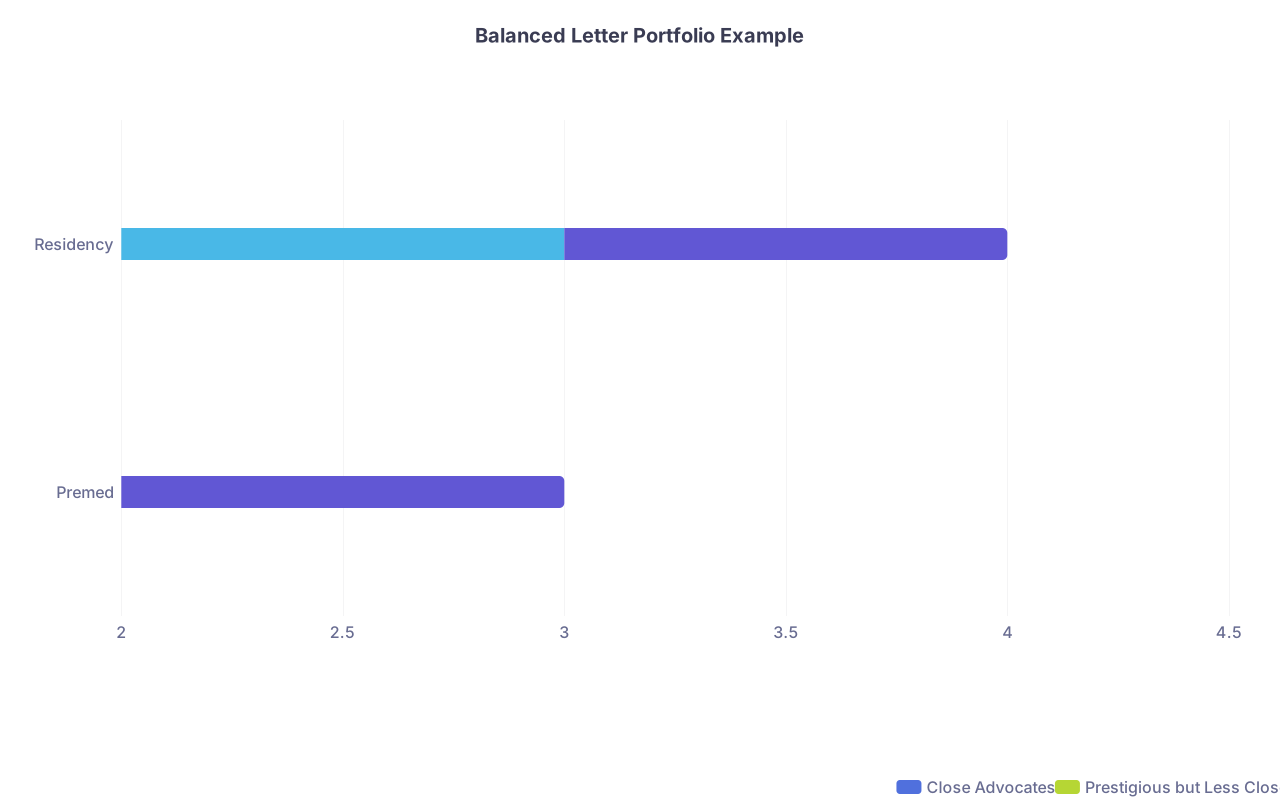
| Category | Close Advocates | Prestigious but Less Close |
|---|---|---|
| Premed | 2 | 1 |
| Residency | 3 | 1 |
Aim for:
- Majority: close advocates who know you well and will write strong, detailed, enthusiastic letters
- Minority: more “known” names, but only if they can at least write a solid, supportive letter (not just “they were present in my lab/class”)
The “famous but weak” letter should not crowd out your real champions.
How to Tell If a Letter Will Actually Be Strong
You can and should probe this. There’s a tactful way to do it.
When you ask, say something like:
“Would you feel comfortable writing me a strong, positive letter of recommendation for medical school?”
Pay attention to the response:
- “Absolutely, I’d be happy to. You’ve done excellent work…” → Good sign
- “Sure, I can write you a letter.” (Flat, noncommittal) → Red flag
- “I don’t know if I know you well enough to write a strong letter…” → Believe them
A famous person who gives you the lukewarm answer is telling you: this letter will not help you. Listen.
What If Your School or Program Explicitly Wants “Prestige”?
You’ll sometimes hear, “Top programs like to see letters from recognizable names.” Fine. But here’s the nuance: they like those letters if they’re clearly strong.
If you’re aiming for very competitive MD-PhD or top-5 residencies, yes, name can matter a bit more. The trick is not to sacrifice authenticity for it.
If you can engineer a situation where:
- You join a well-known lab early
- You work there long enough to build a real relationship
- You eventually interact directly with the PI consistently
Then that letter can be both prestigious and powerful.
What doesn’t work is throwing yourself into a name-brand lab for 8 weeks and expecting that PI to write the letter that carries your application. That’s fantasy.
Quick Reality Check: What Actually Hurts You
Let me be blunt. The worst thing you can do is:
- Choose a famous but distant writer
- Get a generic, mid-strength letter
- Then not include your close advocate because “this big name will look better”
That’s how strong applicants quietly sink.
Most admissions readers would rather see:
- Dr. Unknown, Associate Professor, Local State University, writing “top 1% in 10 years of teaching”
than
- Dr. Famous, Endowed Chair, Ivy League, writing “completed tasks reliably; I expect they will do well in medical school”
And yes, people absolutely do notice wording at that level.
A Simple Rule to Remember
If you’re sitting there thinking:
- “This person is really famous, but I’m not sure they know me that well…”
You already have your answer.
Favor the person who can:
- Tell concrete stories about you
- Use superlatives without stretching
- Speak about your growth, not just your presence
Name recognition is the tiebreaker, not the starting point.

How to Plan Earlier So You Don’t Get Stuck in This Dilemma
This is prevention, not damage control.
Starting in early premed or early med school, your goal should be: grow 3–5 real relationships with people who could eventually write you letters.
Practically, that means:
- Going to office hours and actually asking thoughtful questions
- Sticking with a research group or mentor for more than one semester
- Volunteering or working in clinical settings where you can take on responsibility
- Asking for feedback and following through on it (people remember this)
Over time, those people become your natural letter writers. You’re not scrambling to manufacture famous contacts in your last year.
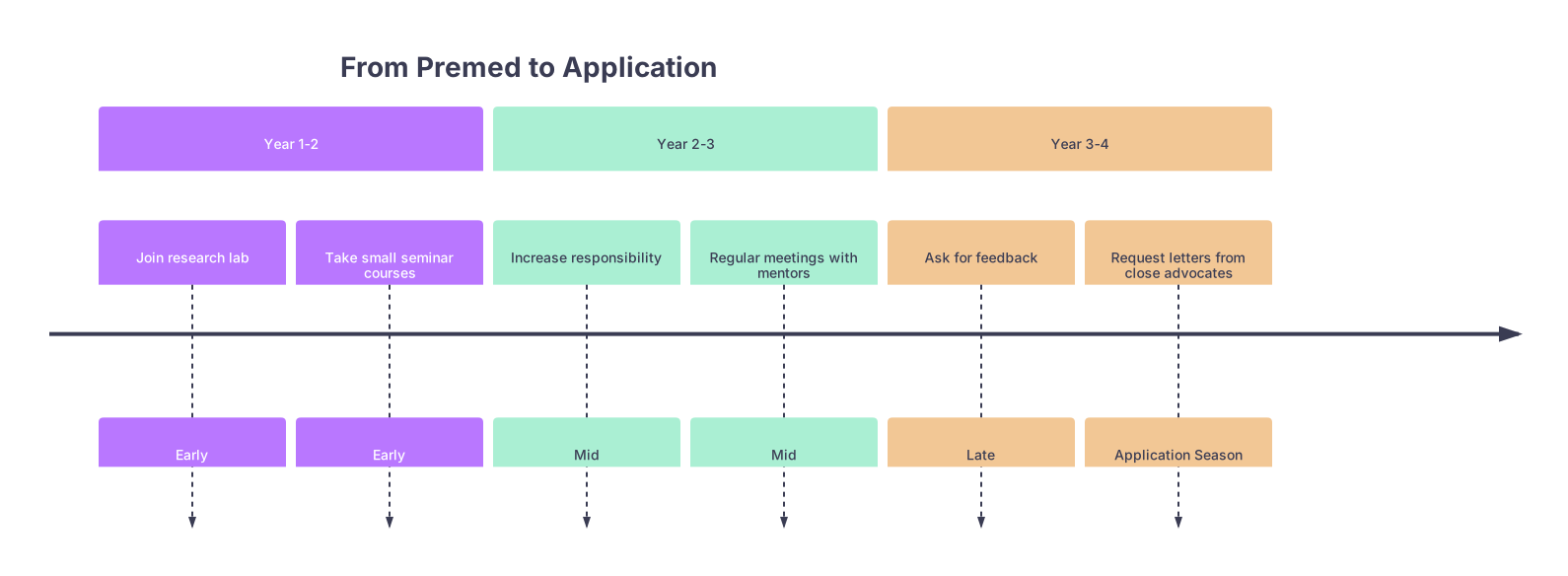
| Period | Event |
|---|---|
| Year 1-2 - Join research lab | Early |
| Year 1-2 - Take small seminar courses | Early |
| Year 2-3 - Increase responsibility | Mid |
| Year 2-3 - Regular meetings with mentors | Mid |
| Year 3-4 - Ask for feedback | Late |
| Year 3-4 - Request letters from close advocates | Application Season |

Two Final Things to Remember
Let’s keep this simple.
- A detailed, enthusiastic letter from a lesser-known but close mentor beats a generic letter from a famous name almost every time.
- The best letters come from people who’ve seen you struggle, improve, and take initiative—not people who can barely place you.
If you keep those two points front and center, you’ll choose the right letter writers, regardless of how flashy their names look on paper.