

It’s 2:13 a.m. You’re in a half-broken call room chair, refreshing your bank account between admissions. The euphoria of “I matched!” is gone. Now it’s just numbers and dread.
Your PGY-1 contract shows a salary that barely beats what your college roommate makes working remote in marketing. You’re doing Q4 call, carrying 15–20 patients, and somehow your paycheck looks like a bad joke.
And this awful thought keeps looping in your head:
“I matched into one of the lowest paid specialties. I already feel stuck. Did I just ruin my financial future before I even started?”
You start doing the math in your head. Resident salary. Low attending salary (compared to ortho, derm, gas, whatever). Loan interest. Cost of living. You don’t even want to open the AAMC loan calculator because you’re scared it’ll confirm your worst fear:
That this is it. You’re trapped. You picked “wrong.”
Let’s talk about that. Honestly. Not sugar-coated Instagram “follow your passion” nonsense. Real numbers, real tradeoffs, and what options you actually still have.
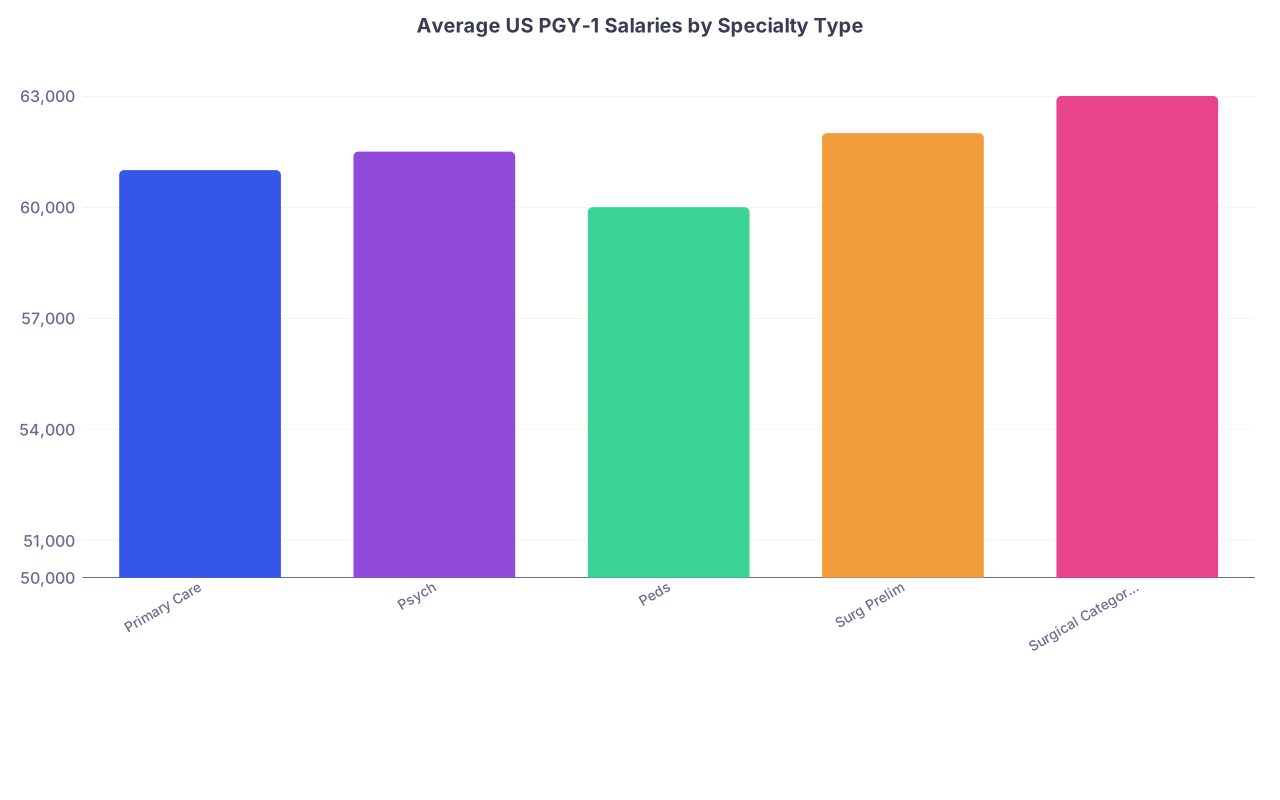
| Category | Value |
|---|---|
| Primary Care | 61000 |
| Psych | 61500 |
| Peds | 60000 |
| Surg Prelim | 62000 |
| Surgical Categorical | 63000 |
First: Are You Actually Trapped? (The Ugly Fear vs Reality)
You feel trapped for a reason. Medicine is set up to make you feel like every decision is irreversible. Choose specialty = lock in life. That’s the myth.
Here’s what’s true, even if it doesn’t feel that way right now.
You are not trapped in all of these ways:
- You are not trapped in this specific job at this specific program.
- You are not trapped in this exact geographic location forever.
- You are not automatically trapped at the bottom of the pay scale for life.
You are somewhat trapped in these ways:
- You did choose a field where, on average, the ceiling is lower than others.
- Your debt is real. Interest is real. Those don’t disappear.
- You can’t just snap your fingers and switch specialties like jobs at Target.
Both can be true. You made a choice with financial consequences. And it’s not a life sentence.
I’ve watched residents in “low-paid” fields (peds, psych, FM, gen IM, some prelims) go through the same spiral you’re in:
“Why did I not rank anesthesia higher?” “Did I waste my Step score on this?” “Am I going to be the poor doctor forever?”
Here’s the pattern I’ve seen: the people who stay frozen in that panic usually just…suffer. The ones who get out of the fear long enough to make actual moves? They create more options than they thought they had.
You’re allowed to regret. You’re allowed to be mad. Just don’t stay there.

The Money Reality: How Bad Is “Low-Paid” Really?
Let me say the thing you’re probably afraid to say out loud:
Yes, in pure numbers, you will probably earn less than some of your classmates. Maybe a lot less.
Let’s put some rough examples on the table. These are ballpark post-residency ranges, not exact offers:
| Specialty (US) | Typical Range (Yearly) |
|---|---|
| Pediatrics (General) | $190k–$260k |
| Family Medicine | $200k–$280k |
| Psychiatry | $230k–$320k |
| Internal Med (Gen) | $220k–$300k |
| Ortho Surgery | $500k–$800k+ |
| Dermatology | $450k–$700k+ |
Look at that and your brain instantly jumps to: “I picked the $200–250k lane instead of the $600k lane. I’m screwed.”
But you’re missing a few key things if you stop there:
- Most physicians don’t actually use all their money well, regardless of income. I’ve seen EM docs making $450k living paycheck to paycheck with a Tesla, private school, and a monster mortgage.
- A “low-paid” specialty where you control your hours + side income can sometimes beat a high-paid specialty where you’re burnt out and capped.
- The gap that feels impossible now can shrink a lot once you factor in:
- Location
- Overtime/moonlighting
- Loan repayment programs
- Telehealth / consulting / niche work
No, you’re not going to “out-earn” ortho on base salary. That’s fantasy. But can you still hit $300–400k total comp in some “low-paid” fields with a smart setup and side work? Yes. I’ve seen it.
Right now, though, the real issue isn’t attending salary. It’s that you’re making ~$60–70k as a resident with adult bills and six-figure loans. That feels like financial quicksand.
So let’s zoom in on what you can actually change in the short term.
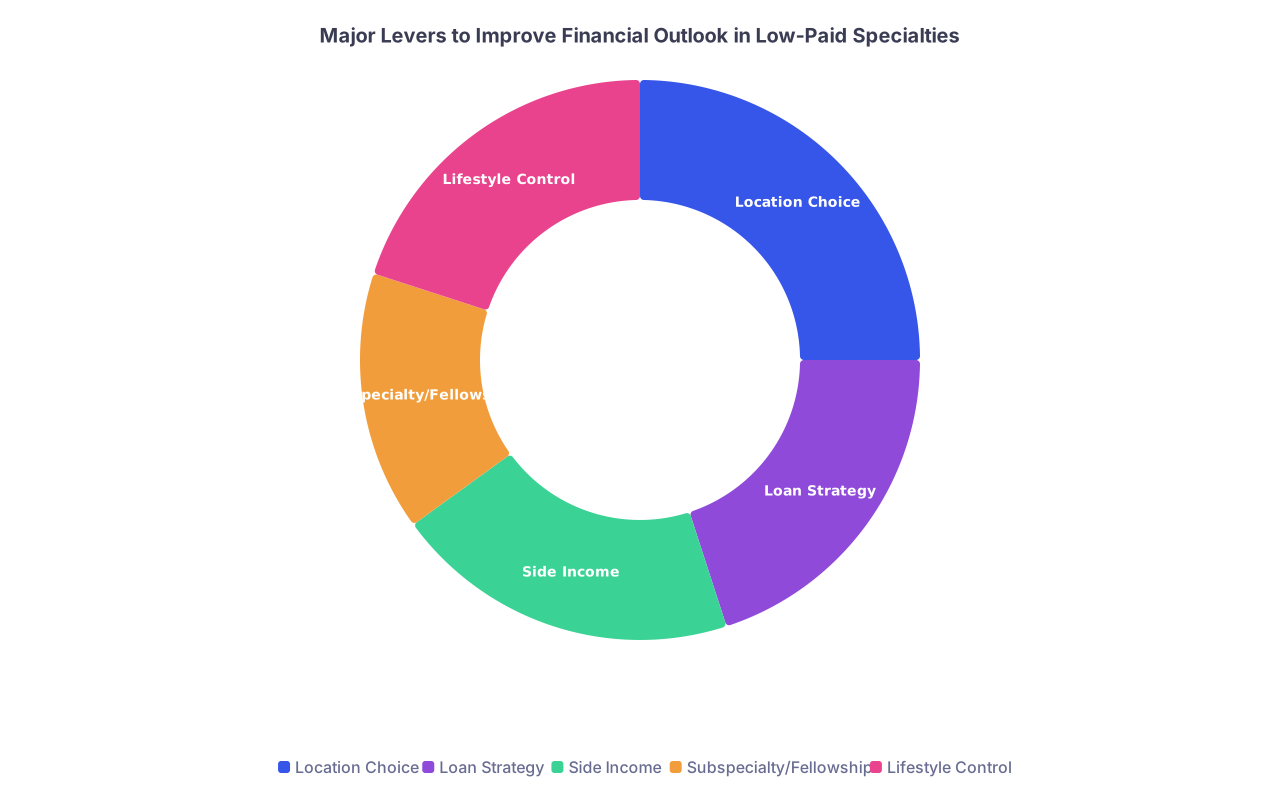
| Category | Value |
|---|---|
| Location Choice | 25 |
| Loan Strategy | 20 |
| Side Income | 20 |
| Subspecialty/Fellowship | 15 |
| Lifestyle Control | 20 |
What You Can Do During Residency So You Don’t Stay Stuck
You feel trapped now because it looks like a fixed path: low resident pay → low attending pay → endless debt → regret forever.
The path is less fixed than it looks. Not flexible like tech, but not a concrete coffin either.
Here are the main levers you actually have as a resident in a lower-paying field.
1. Decide early: are you staying in this specialty or seriously considering switching?
You can’t solve money and career regret at the same time if you don’t know your direction.
Ask yourself, aggressively honestly:
- Do I hate this specialty itself? Or do I hate my current life (call, pay, hours, stress)?
- If money were equal across all specialties, would I stay where I am?
- Have I talked to happy attendings in my field who are 5–10 years out?
If you realize, “No, this field is wrong for me on a deeper level,” then your problem isn’t low pay. It’s wrong fit. The decision tree shifts from “how do I maximize income here?” to “do I explore switching?”
If you actually like the work but hate the financial ceiling, that’s a different problem, and much more fixable.
2. Get ruthless about where you train and live
This is so underappreciated. A pediatrics attending making $230k in a low-cost area can be wealthier than a $350k hospitalist drowning in Bay Area rent.
There are three big knobs here:
- Current cost of living (during residency)
- Future cost of living (where you plan to practice)
- State taxes
You can’t always move right now. You have a contract, family, immigration issues, whatever. But you can:
- Open a spreadsheet: compare what your salary buys in your current city vs two or three realistic future practice locations.
- Talk to upper levels who moved after residency and ask, bluntly, “What’s your money situation like now versus training?”
- Stop automatically aiming for the coolest coastal city when it’s time for your first job. At least run the math on a medium city or smaller metro.
I’ve seen “low-paid” FM docs in the Midwest with paid-off houses in their 30s and peds docs in major coastal cities with roommates and nonstop money anxiety. Same field. Different map.

3. Learn the money game now, not “later when I’m an attending”
I know. You’re exhausted. The last thing you want is to think about student loan amortization and Roth vs traditional. But here’s the harsh truth:
Med school and residency train you to be clinically competent. They do almost nothing to prevent you from being financially incompetent.
If you’re in a low-paid specialty, you don’t have the luxury of being clueless about money and hoping your big paycheck saves you.
You don’t need to become a finance bro. You do need to:
- Know your exact loan numbers, interest rates, and repayment options.
- Understand PSLF (Public Service Loan Forgiveness) if you’re in the US and working for a qualifying employer.
- Understand basic investing: 401(k)/403(b), Roth IRA, and not doing stupid speculative stuff.
One evening this week, not someday:
- Log into your loan servicer.
- Write down: total debt, weighted average interest rate, repayment plan you’re on.
- Google one single trusted source (ex: White Coat Investor, financial residency podcast) and spend 30 minutes learning about your best repayment option for your specific situation.
That 60–90 minutes of anxiety will buy you years of decreased background panic.

| Step | Description |
|---|---|
| Step 1 | Feel trapped in low paid residency |
| Step 2 | Explore switching fields |
| Step 3 | Stay in field, optimize income |
| Step 4 | Talk to PD, mentors, residents in other fields |
| Step 5 | Learn loan strategy, plan side income |
| Step 6 | Target high value job/city after residency |
| Step 7 | Decide by PGY2/early PGY3 |
| Step 8 | Hate specialty or just money? |
Medium-Term: How to Make a “Low-Paid” Specialty a Lot Less Low
Let’s assume for a second that you’re staying in your specialty. You’re not just tolerating it—you mostly like the work. You just hate the numbers.
Then your real question becomes:
“How do I make this as financially non-stupid as possible without hating my life?”
Here are some real-world ways I’ve seen people in “low-paid” fields change the math.
1. Fellowship or niche skills that actually change your pay
Not all fellowships are equal financially. But some sub-specialties can bump your ceiling by a lot.
In rough terms, things like:
- Psych: interventional psych (ECT, ketamine, TMS), addiction, CL psych, forensics.
- Peds: PICU, NICU, cards, hem-onc (not all are “money makers,” but some command higher comp).
- FM/IM: sports med, urgent care leadership, hospitalist tracks, outpatient with procedures.
Don’t pick a fellowship only for money—you’ll be miserable. But if there’s something you already like clinically that also boosts pay or flexibility? That’s worth aggressively exploring.
2. Geographic arbitrage (yes, the unsexy answer)
I’ll keep saying this because it’s that important: where you practice is a bigger financial decision than what you practice, for many people.
A general pediatrician making $240k in a low-cost, no-state-tax area, working 4 days/week, can:
- Pay down loans in 5–10 years
- Actually save and invest
- Buy a non-insane house
A hospitalist making $340k in San Francisco paying $4,000+ in rent with brutal taxes can feel more trapped than you do now.
You don’t have to love the idea of moving to a smaller city. You just have to stop automatically rejecting it before you ever run the numbers or talk to people who did it.
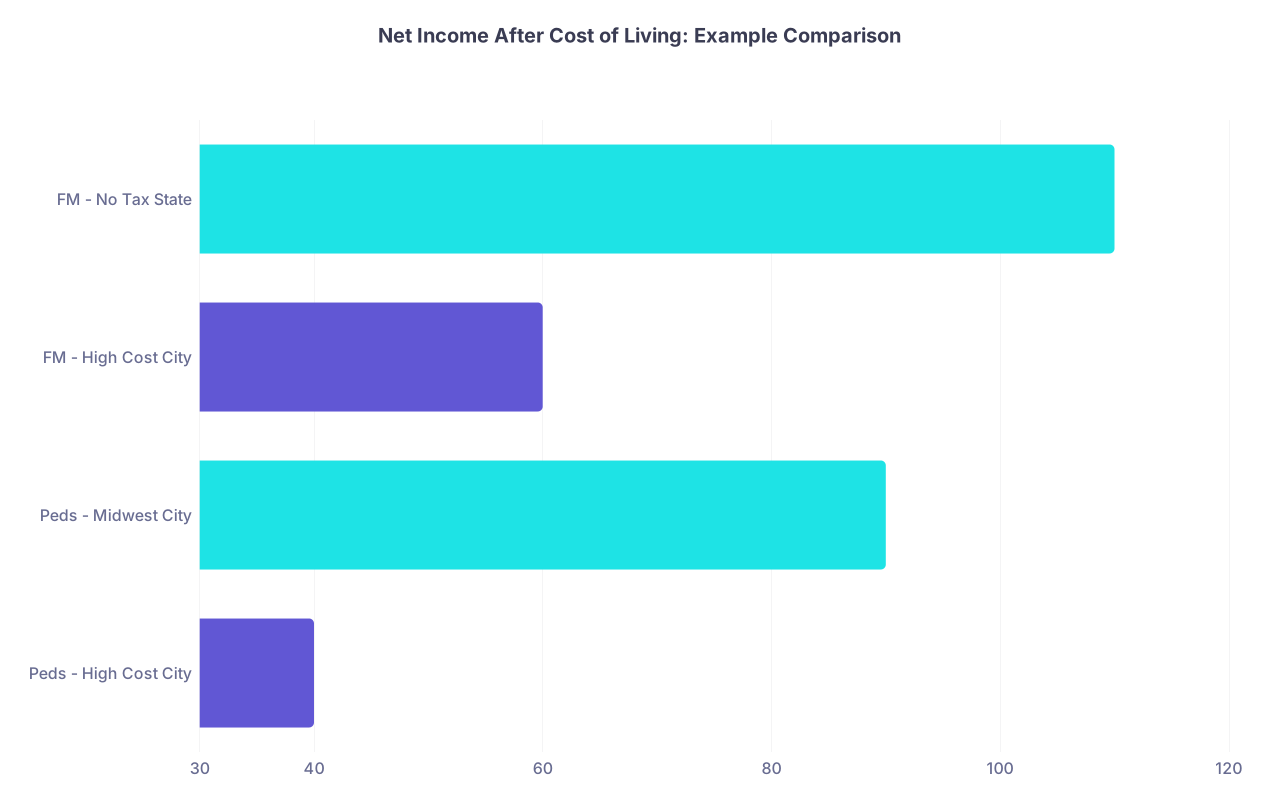
| Category | Value |
|---|---|
| Peds - High Cost City | 40 |
| Peds - Midwest City | 90 |
| FM - High Cost City | 60 |
| FM - No Tax State | 110 |
(Values are rough illustrative “leftover” thousands after typical taxes + basic living costs, not actual salary.)
3. Side income that actually makes sense for physicians
You do not need 5 “side hustles.” You are a sleep-deprived physician, not a YouTube entrepreneur.
But one or two strategic add-ons in your lane can completely change your financial picture without wrecking you.
Stuff I’ve seen work:
- Telehealth shifts (psych, FM, IM, sometimes peds/adolescent med)
- Extra urgent care shifts at a better-paying site
- For psych: forensic work, evaluations, expert witness work later in career
- For primary care: small-owner practice with procedures, cash-pay niches, or direct primary care models in the right setting
Again, not in PGY-1 when you’re drowning. But by late residency or early attending years, this can be huge.

The Emotional Part: Regret, Comparison, and “I Picked Wrong”
This is the part that actually hurts. It’s not just, “Will I be okay on paper?” It’s:
“I feel stupid. Everyone else matched something cooler or better paid. I should’ve pushed for X. I wasted my Step score. I wasted all this work.”
And then you scroll social media and see:
- The neurosurgery resident posting OR pics
- The anesthesiology fellow posting their new car
- The EM doc posting from a vacation while you’re post-call
The comparison game is brutal, and it will poison whatever specialty you’re in if you let it.
A few hard truths:
- Every specialty has people who quietly regret their choice. Even the high-paying ones. They just don’t post that part.
- Money envy never ends. You think once you’re an attending you’ll feel “fine.” You won’t automatically. You’ll find someone making more doing locums or private equity stuff and feel behind again.
- You can feel regret and still build a good life from here. You don’t have to perfectly reconcile your past decision before you start fixing your future.
You’re allowed to grieve the fantasy life you thought you’d have. The “if I’d gone into X I’d be making Y by 35.” That’s a loss. It feels real because it is real.
But once you’ve cried about that in the shower a few times (no judgment—been there), the question becomes:
“Given where I actually am, what’s the smartest way forward from here?”
That’s where your power is.
So What Do You Do Right Now?
Not in 5 years. Not after boards. Right now, in the middle of this “I feel trapped” pit.
Here’s a concrete, non-theoretical next-steps path:
Decide what exactly you’re afraid of.
- Is it: “I’ll never be able to pay these loans”?
- Or: “I’ll always feel poor compared to other doctors”?
- Or: “I’m in the wrong field and it’s too late to fix it”? Naming the actual fear helps you stop wrestling with a fog.
Schedule one brutally honest convo this week.
- Upper-level in your specialty who’s a few years ahead.
- Or a young attending in your field. Ask them: “Are you glad you stuck with this field? How’s money actually working out?”
Spend 45–60 minutes on your finances.
- Log in.
- Write down your total debt.
- Look up repayment options that fit your situation (PSLF, REPAYE/SAVE, etc.). The uncertainty is often worse than the numbers.
Write down one “escape hatch” and one “optimization” path.
- Escape hatch: “If by PGY2 I still hate this, I’ll talk to PD about switching/transfer options.”
- Optimization: “If I stay, I’ll aim for X fellowship or Y job type in Z location to improve finances.”
You don’t need your whole 20-year plan. You just need enough of a plan that your brain stops screaming “TRAPPED” every time you look at your paycheck.
FAQ (Exactly 5 Questions)
1. Did I ruin my financial future by matching a low-paid specialty?
No. You may have limited your maximum possible income compared to ultra-high-paying fields, but that’s not the same as “ruined.” With a sane cost of living, decent loan strategy, and maybe a small amount of additional income (telehealth, procedures, niche work), you can absolutely hit a stable, comfortable financial life. Not yacht-level rich, but not doomed.
2. Is it realistic to switch specialties after I’ve already matched?
It’s possible, but not easy. It depends on your evaluations, your PD’s support, available positions, and how early you recognize the mismatch. People do switch—FM to anesthesia, IM to radiology, peds to EM, etc.—but you usually need to move fast (PGY-1 or early PGY-2). If you’re even 20% serious, start quietly asking around now rather than fantasizing about it for three years.
3. Should I do a fellowship just to increase my salary?
Doing a fellowship only for money is risky. Extra years of training + potential burnout in a subspecialty you don’t actually like will crush you. But if there’s a subspecialty you’re already drawn to that also happens to pay better or offer more flexibility, that’s worth serious consideration. The right fellowship can widen your options; the wrong one just adds more training to something you already feel lukewarm about.
4. I feel embarrassed telling people my specialty because it’s “low-paid.” Is that normal?
Unfortunately, yes. The culture in med school often subtly (or not-so-subtly) glorifies certain “prestige” specialties and salaries. People joke: “Oh, you’re going to be poor but happy.” It stings. Over time, though, most physicians stop caring what med students think and care a lot more about their day-to-day life, schedule, and actual happiness. You’ll grow out of the shame faster if you surround yourself with people who respect good medicine, not just big W-2s.
5. What’s one thing I can do today to feel less trapped?
Sit down for 30 minutes and map two concrete paths:
- Path A: “If I stay in this specialty” (potential fellowships, cities, job types, approximate salaries).
- Path B: “If I decide to explore switching” (who you’d talk to, rough timeline, what you might switch to).
Getting it out of your head and onto paper turns the vague panic into actual options. Then you can start testing which path feels more like relief and less like suffocation.
Open your residency contract or offer letter right now and write three numbers on a page: your current salary, your total debt, and one target attending salary you could realistically hit in your specialty (even if it means a different city or job type). Look at those three numbers together—not in your head, actually on paper. That’s your starting point. From here, you’re not trapped; you’re just at the first square of a board where you actually know the rules now.


