
Afraid you’ll be 45, still renting, while your classmates in ortho post ‘new house’ photos on Instagram?
Yeah. That one keeps a lot of us up at night.
Especially if you’re even thinking about psychiatry, pediatrics, family med, preventive, PM&R, heme-path, anything not RVU-on-steroids. The math in your head sounds like: “Med school loans + low-paying specialty + high cost-of-living city = I will literally never own a home.”
Let me say this bluntly: if you want radiology or ortho money, no, you won’t get that in peds. But the idea that a low-paying specialty = permanent renter forever? That’s way more fear-brain than reality.
You can own a home as a lower-paid physician. The real question is: under what conditions, and what tradeoffs?
Let’s walk through it like adults actually paying bills, not like Instagram doctors.
What “low-paying” actually means in medicine (not TikTok math)
When people say “low-paying specialties,” they usually mean stuff like:
- Pediatrics
- Family medicine
- Psychiatry
- Internal medicine (non-procedural, non-hospitalist)
- Endocrine, ID, rheum, geriatrics, heme-path, etc.
You already know the rough idea: peds FM psych are “bottom of the physician barrel” salary-wise. But “bottom of the physician barrel” is still very different from “never-own-a-house broke.”
Here’s a simple comparison from recent MGMA/Medscape-type numbers. These aren’t perfect, but they’re ballpark.
| Category | Example Specialty | Typical Range (Attending) |
|---|---|---|
| Low-paid | Peds, FM, Psych | $220k–$280k |
| Mid-range | IM, Hospitalist | $260k–$350k |
| High-paying | GI, Cards, Ortho | $500k–$800k+ |
| Very high-paying | Ortho Spine, NSurg | $800k–$1M+ |
Your fear isn’t really about the number itself. It’s:
“I’ll make ‘only’ 230–260k, but I’ll owe 300k+ in loans, live in an expensive city, everything’s inflated, and then what? No house, no security, just endless rent and anxiety.”
The key thing: owning a home is not primarily about your specialty. It’s about:
- Where you practice
- How you live (lifestyle creep or not)
- What you do with your first 5–7 years of attending income
- How long your loans drag on
- Your relationship status (two incomes vs one makes a massive difference)
You’re not wrong to be worried. You’re just pointing all the blame at “low-paying specialty” instead of the full equation.
The real math: can a peds/FM/psych attending actually afford a house?
Let’s do the terrifying-but-real thing: numbers.
Scenario 1: “Classic doom” — peds in SF/NYC with big loans
- Peds salary: $230k
- Federal loans: $350k at ~6–7%
- Cost-of-living: absurd
- Want to buy: $1M+ starter condo (because that’s literally normal there)
Could this work? Technically yes. Emotionally? Miserable.
To make that work, you’d need:
- PSLF or serious loan strategy
- Almost no other major debts
- Partner with income, or you working a ton
- Comfort with being “house poor” for a while
If your internal bar is “I want a big, modern, 3-bed condo in Brooklyn and to feel relaxed about my loans by 35” as a solo low-paying specialty? That’s… unrealistic. Not because you’re in peds. Because you’re in peds in a top-3 insane housing market.
So your fear in that exact combo is actually kind of valid. Not guaranteed, but the margin is thin.
Scenario 2: Same doc, different city (this is where things change)
Same peds doc:
- Salary: $240k in a mid-sized city (Columbus, Raleigh, Kansas City, etc.)
- Home prices: $350k–$500k for a legit house, not a shoebox
- Loans: $350k
This person can:
- Rent for 2–3 years as an attending
- Aggressively attack loans or do PSLF
- Save for a down payment
- Buy a normal house by ~3–6 years out of residency
Is it stress-free? No. You’ll feel squeezed at first. But “never own a home”? No. That’s just not true in places where home price-to-income isn’t totally broken.
The trap nobody tells you about: it’s not your specialty, it’s your choices
Here’s the ugly thing I’ve seen:
I know an outpatient psych in a low-COL area making ~260k who owns a 4-bedroom house, has kids, and actually sleeps at night. I also know a cardiologist making 650k, renting at 42, stressed, no real savings.
Why? The psych guy made boring choices. The cardiologist didn’t.
Things that wreck physicians more than specialty choice:
- Putting private college + private med school on loans, then saying “I refuse to leave LA/NYC/Bay Area.”
- Buying a fancy doctor house at year 1 attending because “I’ve sacrificed so much.”
- Two new cars on loans, daycare, travel, dining out like you’re a tech VP.
- No loan plan. Just vibes and minimum payments.
Your fear that “low-paying specialty = never own a home” hides a more accurate fear:
“If I don’t make brutally honest decisions in my early attending years, I can absolutely sabotage myself financially.”
And that part? That’s real.
But it’s also fixable.
How low-paying docs actually end up owning homes
Let me describe what things actually look like for the people who pull this off.
Pattern 1: They don’t do everything at once
The peds/FM/psych people who end up okay usually accept a simple, slightly depressing reality:
You don’t get:
- Immediate dream city
- Big fancy house
- Fast loan payoff
- Private school for kids
- Tons of travel
All at once. On 230–260k.
You pick a couple priorities and let the others be “later.”
Typical order that actually works:
- First 2–3 years: cheap-ish rental, maximize loan strategy (PSLF or refinance + paydown), don’t explode lifestyle
- Parallel: set aside something for retirement (yes, early, even small)
- Years 3–7: buy a reasonable home, not your fantasy one
- Later: trade up, upgrade city/neighborhood once debt and savings are solid
That’s not sexy. That’s how adults with constraints live.
Pattern 2: They’re flexible on location
This is the part nobody wants to hear.
If you do low-paying specialty + high-debt + insist on SF/NYC/Boston/LA core urban lifestyle? You’re trying to play on “hard mode” and still win easily.
A lot of low-paying docs who are doing fine financially:
- Live in suburbs or smaller cities
- Commute a bit
- Don’t chase the “cool doctor city” vibe
If your priority #1 is “I must own a home before 40,” then priority #2 may need to be
“I will not chain myself to the top 5 most expensive zip codes on earth.”
You can’t have infinite nonnegotiables. That’s how you stay stuck.
What about student loans specifically? Aren’t they the real house-killers?
Yeah, loans are the other monster in this nightmare.
Here’s the rough truth:
- A physician with 250–400k in federal loans on a low-paying specialty income can still buy a home.
- But if you ignore your loan plan for years, they absolutely can delay or shrink what house you can afford.
A semi-sane path a lot of people use:
- During residency:
Make IDR payments (SAVE or similar), keep PSLF eligibility if you’re at nonprofits - Early attending years:
Decide: Are you doing PSLF or not?- If yes: stay at qualifying employer, accept the long game, aggressively save for house & retirement instead of overpaying loans
- If no: refinance (once stable) and treat loans like a 5–10 year project
Both those paths can coexist with buying a home. But you usually:
- Buy more modestly than you emotionally want
- Wait a few years so your balance sheet isn’t a disaster
The people who get stuck are the ones who sort of… don’t decide. They just make minimum payments, don’t plan PSLF, don’t refinance, and suddenly it’s 7 years later and their loans barely moved.
Is that terrifying? Yes. Is that inevitable? No. It’s a planning problem, not a “you chose peds” curse.
So… is your fear realistic or catastrophizing?
Let’s put it plainly.
Situations where your “never own a home” fear is pretty realistic if unchanged:
- You have 400k+ in loans
- You want peds/FM/psych/low-paid subspecialty
- You refuse to leave a crazy-expensive market
- You insist on buying in said market, early, big, and nice
- You don’t have a partner income
- You don’t want to think about money because it stresses you out
That combo? Yeah, it can absolutely result in either:
- Renting indefinitely, or
- Being so house-poor and loan-burdened that you’re exhausted and resentful
Situations where your fear is mostly catastrophizing:
- You’re willing to consider mid or low COL areas
- You’re ok starting with a smaller / modest house
- You’re willing to rent for a few years and not rush
- You’ll actually sit down and do a loan plan
- You’re not stacking every lifestyle luxury on top immediately
In that second group, the actual trajectory looks more like:
- “I won’t own my ideal home for a while.” True.
- “I might not own in my top fantasy city.” Also true.
- “I’ll be permanently locked out of home ownership.”
No. That’s your anxiety lying to you.
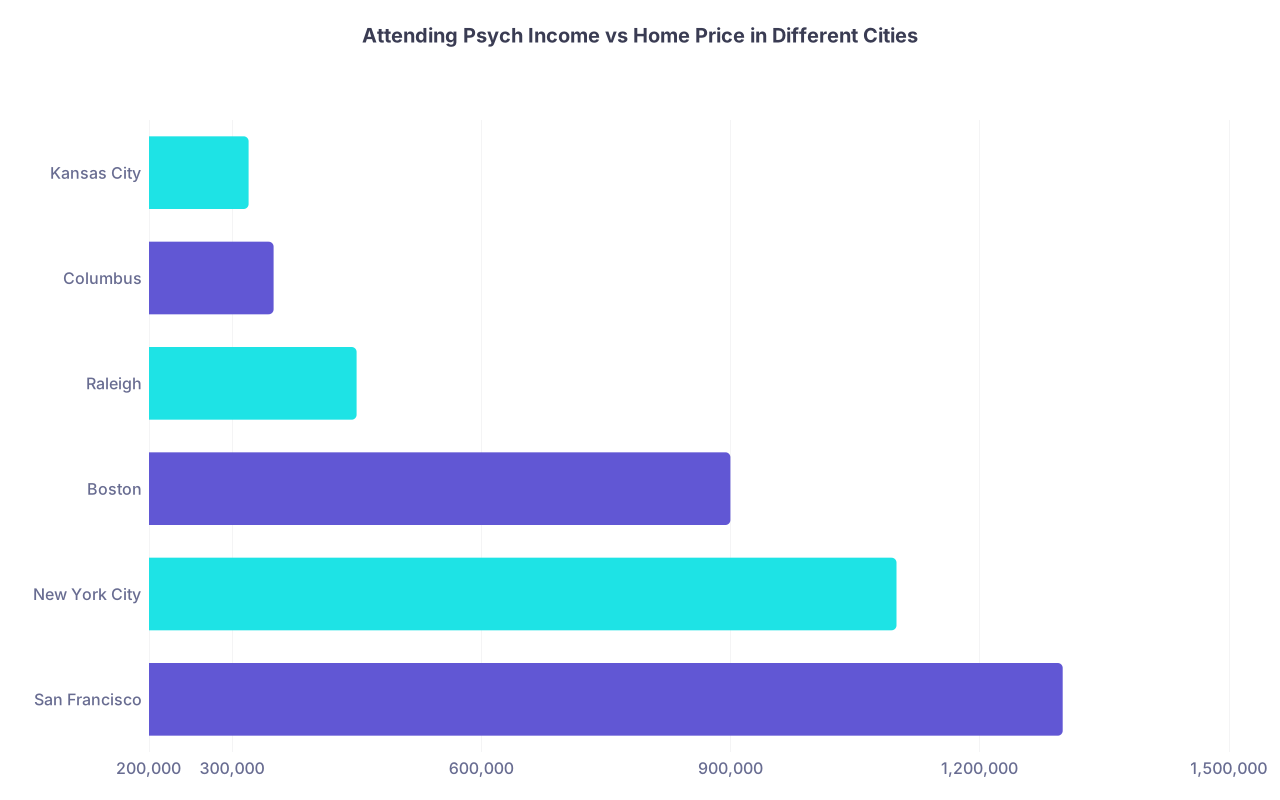
| Category | Value |
|---|---|
| San Francisco | 1300000 |
| New York City | 1100000 |
| Boston | 900000 |
| Raleigh | 450000 |
| Columbus | 350000 |
| Kansas City | 320000 |
Rough median home price comparison. Same psych income. Completely different reality.
How to think about specialty choice without money hijacking everything
Here’s the quiet, unsettling thing nobody admits:
A lot of people end up in higher-paying specialties they don’t really like because they’re terrified of this exact scenario. And some of them are absolutely miserable later.
So you’re stuck between two scary futures:
- Pick a low-paying specialty you love → fear being broke and stuck
- Pick a high-paying specialty you don’t like → fear burnout and golden handcuffs
There isn’t a zero-anxiety route here. So you have to choose which discomfort you’d rather live with.
My honest, slightly harsh view:
- If you know you’d hate a high-paying specialty, doing it “for the house” is a bad trade.
- If you’re genuinely on the fence and enjoy both, it’s fair to let money be a tiebreaker. That’s not selling out; that’s being realistic.
But telling yourself, “I’ll never own a home if I do peds” is just… false. And it’s a terrible reason to walk away from a field that actually fits you.
More accurate framing:
- “If I do peds and insist on Manhattan or SF and don’t want roommates, side gigs, or tight budgets early on, then yeah—home ownership will be hard and delayed and maybe just not worth it there.”
Very different from “never.”
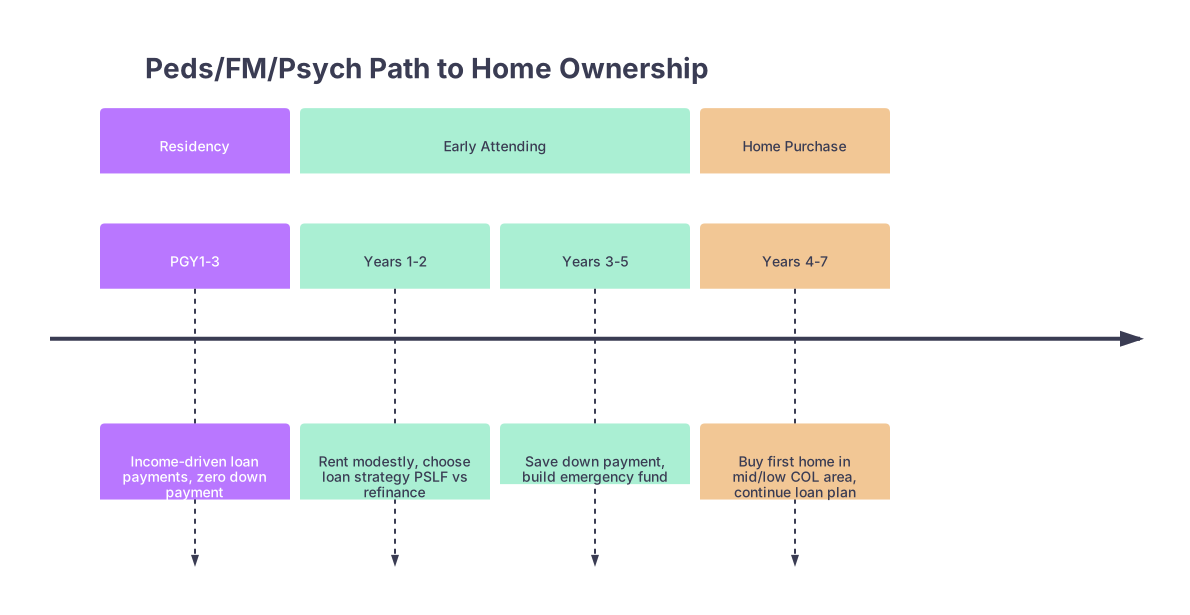
| Period | Event |
|---|---|
| Residency - PGY1-3 | Income-driven loan payments, zero down payment |
| Early Attending - Years 1-2 | Rent modestly, choose loan strategy PSLF vs refinance |
| Early Attending - Years 3-5 | Save down payment, build emergency fund |
| Home Purchase - Years 4-7 | Buy first home in mid/low COL area, continue loan plan |
If you remember nothing else, remember this
You’re not actually asking, “Can low-paid doctors ever own homes?”
You’re asking, “Will I be okay if I don’t chase the biggest salary?”
And the annoying, unsatisfying answer is:
You’ll be okay if you’re willing to be deliberate.
You’ll be stuck if you want the emotional comfort of avoiding money decisions and still somehow be fine.
Years from now, you won’t remember every number that scared you on those loan calculators. You’ll remember whether you chose a life and a specialty you can stand waking up to.
FAQ (exactly 6 questions)
1. Is it dumb to even consider peds/FM/psych if I have 300–400k in loans?
Not dumb. Risky if you layer on other rigid demands (must live in SF/NYC, must buy early, won’t consider PSLF or planning). Plenty of people with 300–400k do lower-paying specialties and end up fine by choosing lower COL areas, using PSLF or aggressive payoff strategies, and delaying the big house dream a bit. The combo isn’t doomed; it just doesn’t leave room for denial.
2. Should I pick a higher-paying specialty I like less just for financial security?
If you truly dislike it, I think that’s a bad idea. You’re signing up for decades. But if you’re neutral between, say, IM and psych, or FM and anesthesia, it’s reasonable to let money be a factor. You’re not morally obligated to ignore income. Just don’t let exaggerated fears (“I’ll never own a home in peds”) push you into something you actively dread.
3. Realistically, when do low-paid attendings usually buy their first home?
Common pattern: about 3–7 years after finishing residency. First 1–3 years, they stabilize, attack loans or commit to PSLF, and save something. Then they buy something modest, usually in a mid or low COL market. The Instagram stories of “bought a $1.5M home right out of fellowship” are from high-paying fields, wealthy families, or extreme outliers.
4. Does being single vs partnered actually change home-ownership odds that much?
Yes. Two incomes—especially if the partner isn’t also drowning in loans—is a massive multiplier. Single peds/FM/psych docs still buy homes, but they’re more often in lower COL areas, smaller homes, or they wait longer. If you’re single and dead set on an expensive city and a big place, that’s the trifecta that makes the math tight.
5. Is PSLF basically required for low-paying specialties to own a home?
No. PSLF helps a lot, especially with huge balances and academic/nonprofit careers. But many community-based low-paid attendings never use PSLF: they refinance, live below their means, and still manage loans plus a house. PSLF is a tool. Not having it doesn’t lock you out of adulthood. It just means you have to be more aggressive and realistic with loan payoff and lifestyle.
6. What’s the biggest mistake that actually keeps low-paid docs from buying homes?
It’s not the specialty. It’s lifestyle and denial. Things like signing a high-end lease right out of residency, buying a new car on payments, ignoring loans instead of choosing PSLF vs refinance, insisting on high-COL city centers, and then expecting to magically have savings. The low-paying field narrows your margin of error; it doesn’t erase the possibility of owning a home. How you handle the first 5 years after residency matters way more than the specialty label on your badge.


