

Last week I watched a pediatrics resident sit on call-room linoleum at 2 a.m., scrolling through her loan balance on her phone between pages. She laughed, but it was that brittle laugh people use when they’re trying not to cry. “I picked the lowest paid specialty with the highest emotional load,” she said. “Did I just screw myself for life?”
That’s the nightmare, right? You grind through premed, med school, Step exams, and then one day you’re ten years in… and realize you picked the “wrong” specialty financially. And now you’re stuck.
Let me say this bluntly: yes, you can end up miserable in a low-paying specialty. I’ve seen it. But I’ve also watched people in those exact same specialties build really solid lives, pay off loans, and not regret the choice for a second. The difference isn’t what specialty they picked. It’s how they picked it and what they did with it afterward.
Let’s walk through this without sugarcoating.
First: What “Low-Paying Specialty” Actually Means
You probably already know the usual suspects people whisper about in the lounge:
- Pediatrics
- Family medicine
- Internal medicine (general)
- Psychiatry
- Geriatrics
- Endocrinology, rheumatology, infectious disease, etc. (the “cognitive” subspecialties)
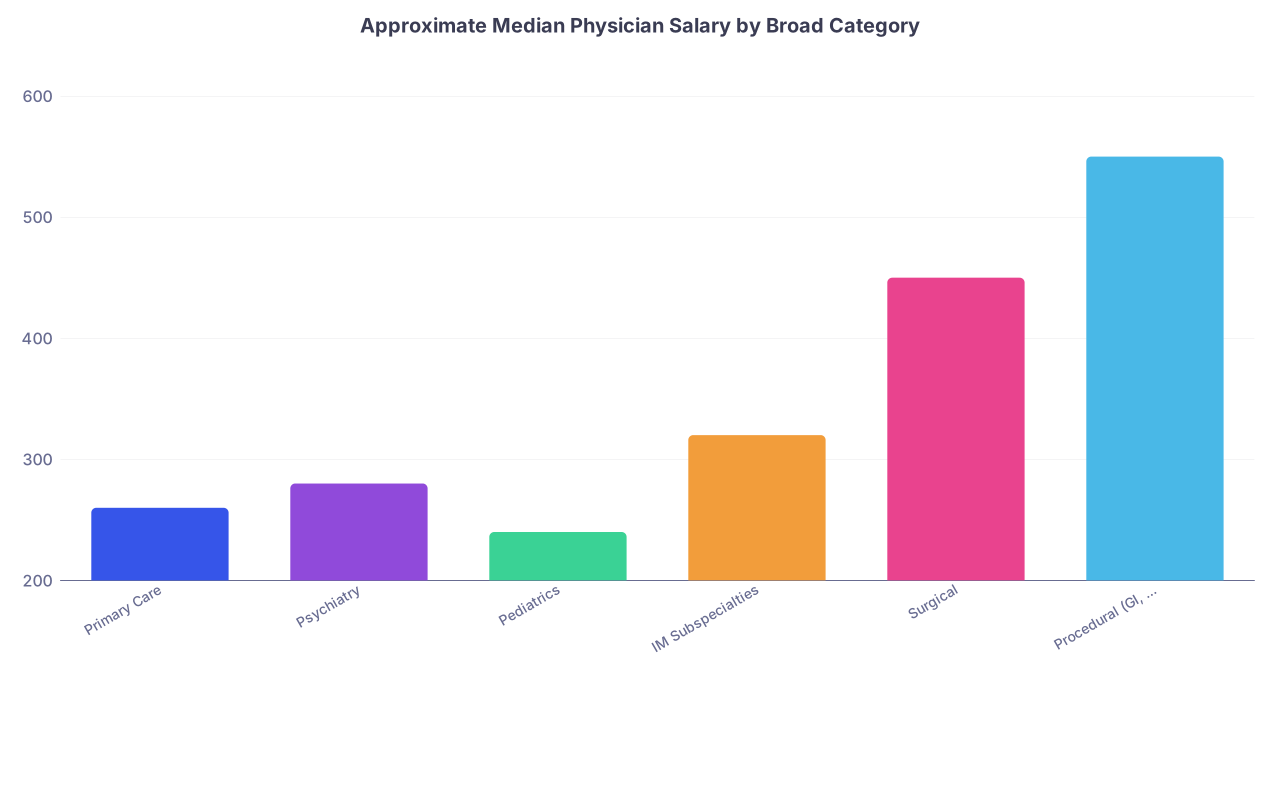
| Category | Value |
|---|---|
| Primary Care | 260 |
| Psychiatry | 280 |
| Pediatrics | 240 |
| IM Subspecialties | 320 |
| Surgical | 450 |
| Procedural (GI, Cards) | 550 |
Numbers vary by region and year, but the pattern is always the same:
- Primary care / peds / psych: lower
- Surgical / procedural: higher
- Cognitive subspecialties: in the middle but still often below procedure-heavy fields
And then there’s your loan balance sitting there like a slowly ticking time bomb. You look at something like pediatrics at ~$240k versus orthopedics at ~$600k and your brain does the math in 0.2 seconds and goes: “I’m making a terrible mistake if I go low-paid.”
That’s the anxiety talking. But it’s not completely wrong. There is real financial impact. You can’t ignore that.
The key question isn’t “Will I earn less?” because yes, you will. The real question is:
“Does ‘less’ actually equal ‘regret’ once you factor in everything else?”
The Dark Side: When Low-Paying Specialties Do Lead to Regret
Let’s not dance around this. There are absolutely scenarios where you end up hating your low-paying specialty choice.
I’ve seen regret in people who:
Chose the specialty out of fear, not attraction.
- “I’m scared of the OR, so I’ll do outpatient primary care.”
- “Subspecializing seems too competitive, I’ll just do general IM.”
Then five years in they’re bored, feel under-challenged, and resent the pay on top of it.
Thought passion would magically outweigh money… forever.
They really did love kids / psych / continuity of care. But then:- $400–600k of loans
- High cost-of-living city
- Partner with lower income
- Kids, daycare, unexpected medical bills
And that “I don’t care about money” belief starts to crack.
Didn’t understand how compensation actually works.
They imagined “I’ll start a small psych practice, work 3.5 days/week, make decent money.”
Reality: low reimbursement, admin chaos, no-show rates, burnout from trying to squeeze in more patients to pay the bills.Stayed in toxic or low-paying jobs out of fear.
One pediatrics attending I knew stayed in a badly run FQHC making well below market because she was convinced “this is just what peds pays.” She was drowning in notes, call, and low pay. Switched to another system with better RVU incentives and made $80k more with less stress.
So yeah, there are ways to really screw this up. The regret pattern usually sounds like:
“If I were at least making surgeon money, this level of stress/EMR nonsense/administrative BS would feel more worth it. But I’m not. So I just feel stupid.”
That’s the line you’re afraid you’ll say someday. I get it.
The Part Nobody Emphasizes Enough: Lifestyle, Autonomy, and Ceiling vs. Floor
Here’s what gets misunderstood:
Low-paying specialties often have a lower ceiling but a higher usable quality-of-life floor.
Translated: You won’t hit $800k, but you may be able to hit “comfortable, sane life” more reliably if you’re intentional.
Let’s put a few things side by side.
| Factor | Lower-Paid (e.g., Peds, FM, Psych) | Higher-Paid (e.g., Ortho, Cards) |
|---|---|---|
| Typical Hours | 40–60 | 50–80+ |
| Weekend/Call | Often lighter | Often heavier |
| Burnout Risk | High, but more exit options | High, fewer non-clinical exits |
| Income Range | ~$220k–$350k | ~$450k–$800k+ |
| Part-Time Flexibility | Better on average | Harder, especially early on |
I’m not pretending low-paying fields are some magical lifestyle cure. I’ve seen utterly crispy-fried, wrecked family med docs and peds attendings. But if you want:
- A realistic shot at part-time work
- Outpatient-heavy schedules
- A somewhat more predictable life (not always, but often)
…these fields are where people actually pull that off.
So the question becomes less: “Will I regret it because it’s low-paid?” and more:
“Will I use the flexibility and values-fit that come with it, or will I squander that and then resent the pay difference?”
Because someone working 0.8 FTE in psych, spending Fridays with their kids, earning ~$220k, is often happier than the orthopod making $700k and never seeing their family. I’ve heard both sides say it out loud.
Loans: The Giant Monster Under the Bed
Here’s where the late-night spirals really hit:
“How do I pay back $400k in loans on a pediatrics or family med salary without being broke forever?”
This is the part where a lot of people just panic and run to higher-paying specialties they don’t actually like, solely because of the spreadsheets in their head.
Let’s throw some structure at this.
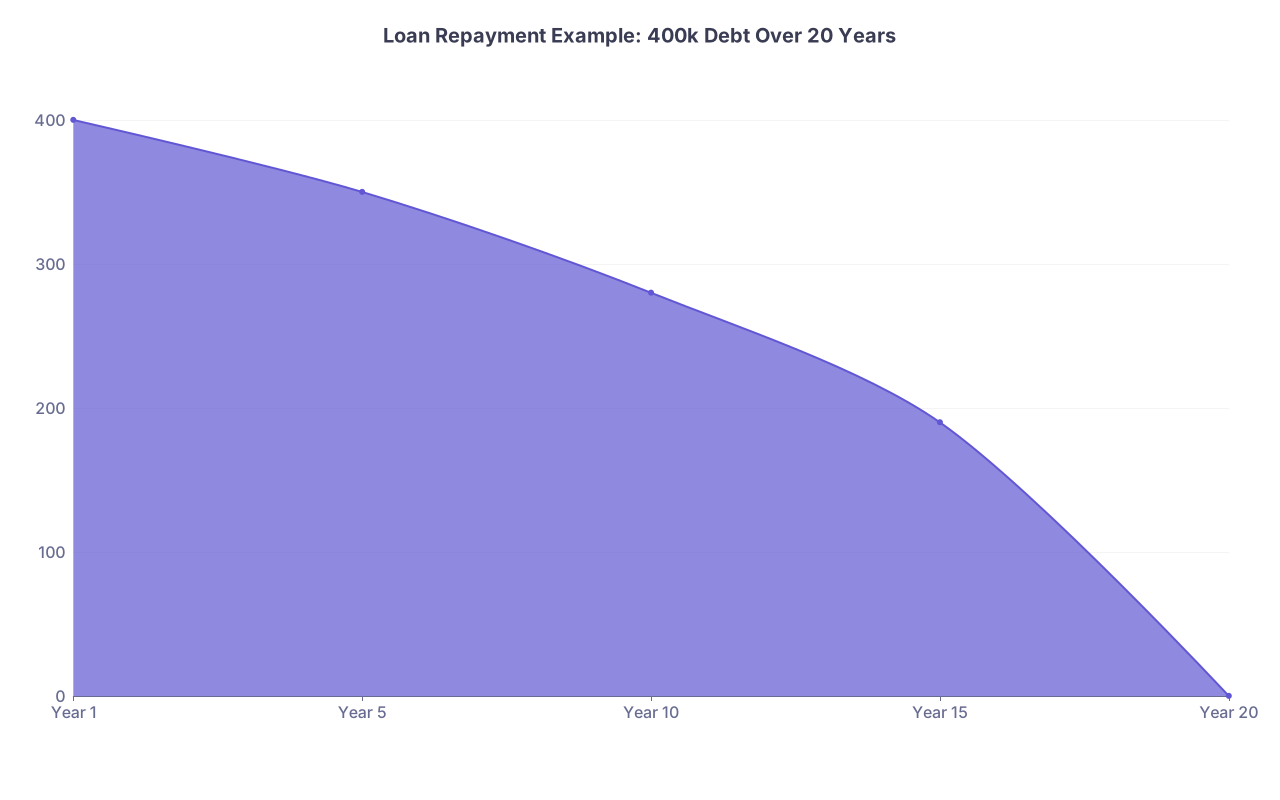
| Category | Value |
|---|---|
| Year 1 | 400 |
| Year 5 | 350 |
| Year 10 | 280 |
| Year 15 | 190 |
| Year 20 | 0 |
Things that drastically change the picture for low-paid specialties:
Public Service Loan Forgiveness (PSLF)
If you:- Work for a nonprofit hospital / academic center / FQHC
- Stay on an income-driven repayment plan
- Make 120 qualifying monthly payments
You might end up with massive forgiveness.
I’ve seen peds and IM docs have low five-figure remaining balances at year 10, forgiven tax-free. They would’ve been financially wrecked trying to do an aggressive 5–10 year payoff.
Income-driven repayment (IDR)
On a $250k salary, your IDR payment can be manageable while you still live a normal life. Not glamorous. But not “rice and beans and roommates at 38” either.Geographic arbitrage
That fancy city job? Often terrible pay-to-cost-of-living ratio.
I’ve watched a family med doc move from NYC to mid-size Midwest city, keep basically the same salary, cut living expenses deeply, buy a house, and start wiping out loans. Same specialty. Different zip code. Completely different mental health.Partner income and life goals
Brutal truth: single parent peds doc in San Francisco with no family help and $500k loans is going to have a harder time than dual-income household in a lower-cost area. That’s not your fault. But it means being extra deliberate.
If you ignore all of this and just sign whatever loan plan pops up and take the first shiny hospital job in an expensive city, then yeah, money will hurt. A lot.
But that’s not an inherent curse of the specialty. That’s planning.
The Regrets I Actually Hear From Low-Paid Specialists
When people in these fields vent regret, it’s usually some version of:
- “I underestimated how much loans would weigh on me.”
- “I didn’t realize how much admin/EMR crap would drain the joy out of patient care.”
- “I didn’t think through how it would feel watching classmates buy houses early and I’m still living like a resident.”
- “I thought choosing what I loved would be enough. It wasn’t, once life hit.”
Notice the pattern?
Not “I made $260k instead of $500k.”
It’s the mismatch between what they thought the life would feel like and what it actually feels like.
So if you’re trying to avoid regret, you need to pressure-test your fantasies now:
- Picture yourself 5–10 years out
- Add kids, partner, aging parents, your own health issues, burnout, maybe a pandemic thrown in
- Ask: Will the core work of this specialty still matter enough to me that I can accept the salary tradeoff?
If the honest answer is, “I don’t think so,” that’s important data. Not a moral failing. Just data.
The Flip Side: When Low-Paying Specialties Don’t Lead to Regret
Let me give you the pattern I see in the attendings who are content or genuinely happy in these “low-paid” fields.
They tend to:
Really like the actual day-to-day
Not the idea of the specialty. The reality.
The messy siblings in the peds clinic. The complicated med lists in geriatric IM. The slow, careful interviews in psych.
They get some satisfaction when they picture doing just that for 20–30 years.Make explicit peace with the ceiling
They literally say things like:
“I know I’ll probably top out around $250–$350k. I’m okay with that, as long as I get X, Y, Z in return.”
They define those X, Y, Zs:- Time with family
- Fewer nights/weekends
- Less OR stress
- Academic teaching, research, advocacy
Design their lives around their income, not the other way around
They’re not ashamed to drive a normal car. They pick reasonable houses. They don’t try to live like their surgeon friends.
Some of them do side hustles they actually enjoy—teaching, consulting, telehealth—without grinding themselves into dust.Are willing to change jobs early and often
They don’t stay in abusive systems. They shop around.
First job sucks? They leave.
Tech changes documentation? They renegotiate.
They won’t martyr themselves “for the kids” while a hospital wrings them dry.
They’re not saints. They complain. They have rough weeks. But when you ask, “Would you pick this specialty again?” the answer is often still yes—or at least, “Yeah, probably.”
So… Are You Going to Regret It?
Brutally honest answer:
You’re most likely to regret choosing a low-paying specialty if:
- You’re already very money-anxious
- You want a high-consumption lifestyle (big house, private schools, luxury travel)
- You carry or will carry massive debt with no plan for PSLF/IDR/geography
- You feel more “meh” than “interested” about the everyday work
- You’re picking it mostly because it’s “chill” or “less competitive,” not because it actually fits you
You’re less likely to regret it if:
- You genuinely like the typical patient population and problems
- You’re okay with being “comfortable but not rich”
- You’re willing to be strategic with loans and location
- You prioritize schedule, autonomy, and meaning over status and peak income
- You can see yourself at 45 saying, “This is good enough, and I’m not miserable”
Notice how none of those are about being a better person or “loving medicine enough to sacrifice”?
It’s just alignment. Or misalignment.
A Quick Reality Check: What Can You Actually Do Now?
If you’re mid–med school or early in training and spiraling, here’s what I’d concretely do instead of just panicking:
Shadow the “worst day”
Don’t just see the cute clinic half-day. Ask to shadow:- A peds doc on a full call day
- A psych attending on a packed outpatient Monday with no-shows and crises
- A family med doc drowning in documentation after hours
If you can look at that and think, “I could live with this if I was paid X,” that’s a good sign.
Run honest numbers
Take your projected debt, plug into federal loan simulators with:- A typical peds or FM salary
- PSLF vs no PSLF
- High- vs low-COL city
See what 10–20 years look like. Don’t just guess.
Talk to 3 attendings in that specialty
Ask them directly:- “Do you regret this specialty?”
- “What surprised you the most financially?”
- “What would you tell your MS3 self?”
Check your ego and identity
Are you more terrified of:- Being “the poor doctor” among your peers?
- Or waking up every day dreading the work but liking the paycheck?
Neither is fun, but which feels more intolerable to you, personally?
Give yourself permission to prefer money—or not
Wanting a high income doesn’t make you shallow. Wanting a lower-intensity field doesn’t make you lazy.
But pretending you don’t care about money when you actually do?
That’s how you end up resentful.

The Quiet Truth: You Can Build a Good Life in a Low-Paying Specialty
You’re not automatically doomed because you love pediatrics or psych. You really aren’t.
You’re also not automatically safe because you pick ortho or derm. I’ve seen dermatologists who are utterly miserable because they hate cosmetic work but feel trapped by the money. Golden handcuffs are still handcuffs.
Regret usually comes from lying to yourself somewhere along the line:
- About what you value
- About what your loans will feel like
- About what your day-to-day will look like
- About what kind of life you actually want at 40, not just 28
If you can be uncomfortably honest now—really honest—then you can absolutely choose a lower-paid specialty and not regret med school. You just won’t be able to live like a TV doctor and pretend the math doesn’t matter.
And yes, you’ll still have nights where you open your loan portal at 1 a.m. and feel sick. Most of us do, at least for a while.
But sick for a moment is very different from sick for decades.

| Step | Description |
|---|---|
| Step 1 | Start - Considering Low Paid Specialty |
| Step 2 | Reconsider Specialty |
| Step 3 | Explore Higher Paid Fields |
| Step 4 | Adjust plan - PSLF, move, budget |
| Step 5 | Proceed with Specialty |
| Step 6 | Do I like the day to day work |
| Step 7 | Can I accept the income level |
| Step 8 | Do loans and location pencil out |

FAQs
1. If I choose a low-paying specialty, will I ever be able to pay off my loans?
Yes, but the how matters a lot more for you than for your high-earning classmates. You’ll likely need some combination of PSLF, income-driven repayment, smart geographic choices, and realistic lifestyle expectations. If you walk into a $450k loan burden on a pediatrics salary without a plan, you’re going to feel crushed. If you pair that same salary with PSLF at a nonprofit system and a reasonable cost-of-living city, it becomes survivable—and eventually manageable.
2. Is it stupid to consider something like pediatrics or family medicine with $400k+ in debt?
Not automatically. It’s stupid to consider it without running numbers. It’s also stupid to ignore your own personality and preferences. If you’re deeply drawn to primary care or peds, and you’re open to PSLF and flexible about location, it can work. If you insist on living in a high-cost city, in private practice, with no forgiveness, and you want a high-end lifestyle? Then yes, that combination is probably a bad idea.
3. Should money ever be the main reason I pick a specialty?
If we’re being honest? It sometimes is. And those people aren’t always miserable. But if money is your only reason, and you actively dislike the work, regret is very likely. You’re signing up for decades of that work; the “new-job high” and the novelty of a big paycheck fade shockingly fast. If money is one factor among several—and you can genuinely see yourself tolerating or liking the day-to-day—that’s different.
4. Can I switch later if I realize I hate my low-paying specialty?
Switching after residency is hard, but not impossible. People do second residencies, transition to non-clinical roles (industry, consulting, informatics, admin), or shift into niches within their specialty that pay better or feel more aligned (e.g., urgent care, hospitalist work, medical directorships). But banking on “I’ll just switch if I hate it” is risky and expensive. You want to choose as if you’re stuck, then keep in the back of your mind that you’re not completely trapped.
5. Bottom line: How do I know if I’ll regret picking a low-paying specialty?
You’re most at risk of regret if your current thought process goes: “I don’t really love this, but it’s easier / chiller / less competitive, and I’ll figure out the money and fulfillment part later.” You’re safer if you: like the real work, can articulate why the tradeoff is worth it to you, have at least a draft financial plan (PSLF vs payoff vs location strategy), and can picture a future version of yourself who’s okay earning “comfortable” instead of “wealthy.” If those pieces line up, your likelihood of long-term regret drops a lot.
Key points:
- Low-paying specialties can absolutely work—but not if you ignore loans, cost of living, and what the day-to-day actually feels like.
- Regret comes less from the raw salary and more from misalignment between your expectations, your debt, and the reality of your life 5–10 years out.


