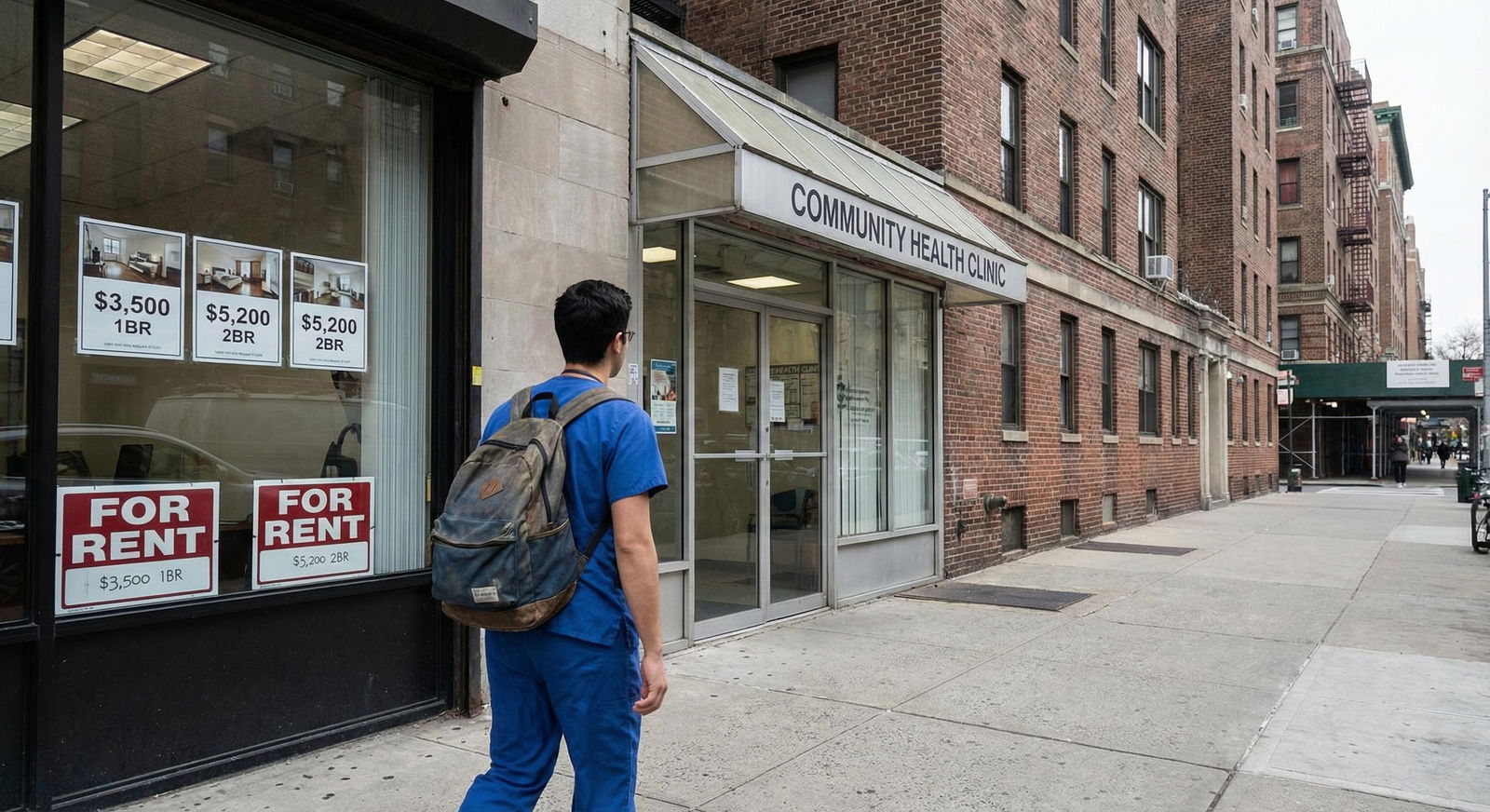
It’s 11:30 p.m. You’re on call, scrolling through Reddit between pages, and that same panic keeps bubbling up: “I love psych/peds/FM… but I’m the primary earner. Are we going to be broke forever if I pick one of the lowest paid specialties?”
Your partner’s already sacrificing. Maybe they’re home with kids, or they have a lower-paying job, or they’ve moved twice for your training. You’re staring at those salary charts that say orthopedic surgery = $650k and pediatrics = $260k and doing the mental math with your $320k student debt and your city’s rent prices.
Here’s the situation: you’re the primary or sole earner, you’re drawn to a lower-paying specialty, and you need to know if this is financially survivable without wrecking your life or your family.
Let’s walk through how to evaluate this like an adult, not like an anxious doom-scroll.
1. Get Real About “Low-Paying” – It’s Relative, Not Absolute
First thing: “lowest paid specialties” in medicine are still high earners in the general population. The problem isn’t only income. It’s timing, debt, location, lifestyle, and expectations.
When people talk about low-paying specialties, they usually mean:
- Pediatrics (especially general outpatient peds)
- Family Medicine
- General Internal Medicine (non-hospitalist, non-procedural)
- Psychiatry (yes, it’s improved, but still lower than many)
- Geriatrics
- Endocrinology, Rheum, ID (intellectually rich, financially meh compared to GI/Cards)
To ground this, here’s a rough sense of attending income. Numbers vary by region and practice type, but the hierarchy holds reasonably well.
| Tier | Example Specialties | Typical Range (USD) |
|---|---|---|
| High | Ortho, Cards, Derm, GI | $500k–$900k+ |
| Mid | EM, Anesthesia, Heme/Onc | $350k–$500k |
| Low | Peds, FM, Psych, Endo, Rheum | $220k–$320k |
Those “low” numbers are fine for a single person in a modest-cost city with normal debt. They get tight when:
- You trained/plan to work in a very high cost of living (HCOL) city
- You have $300k+ in loans
- You’re financially supporting a spouse and 1–3 kids
- You want private school, frequent travel, or rapid home-ownership in a premium market
So the real question isn’t “Is pediatrics a bad idea?” It’s “Does pediatrics + my debt + my city + my family responsibilities work?”
2. Step One: Your Household Reality Check (No Rose-Colored Glasses)
Before you decide anything about specialty, you need to know your actual numbers. Not vibes. Numbers.
You need:
Your total student debt
Federal? Private? Interest rates? Are you on or considering an income-driven repayment (IDR) plan? PSLF-eligible job or not?Your partner’s situation
- Are they working now?
- Could they work later?
- Are they staying home by choice or because childcare would cost more than their take-home?
- Are they willing to move for cheaper cost-of-living?
Your real monthly burn rate
Pull 3–6 months of statements. What do you actually spend on:- Housing
- Food
- Car/transportation
- Insurance
- Childcare (or projected childcare if pregnant/planning)
- Subscriptions and lifestyle creep stuff (you know what I mean)
Your non-negotiables
Where your partner will quietly resent you if you blow them up:- Staying near family support
- Kids in certain schools
- Religious community
- Partner’s career opportunities
Now, combine that with your likely training path.
Here’s where people screw up: they look at an “average national salary” chart and ignore where they actually intend to live and how they actually want to live.
You can’t afford that mistake as the primary earner.
3. How Much Does Specialty Choice Really Move the Needle?
Let’s quantify the difference. Suppose two scenarios:
- Scenario A: Pediatrician making $260k
- Scenario B: Orthopedic surgeon making $650k
Yes, that’s a massive spread. But the real comparison you should care about is between fields you actually would or could do.
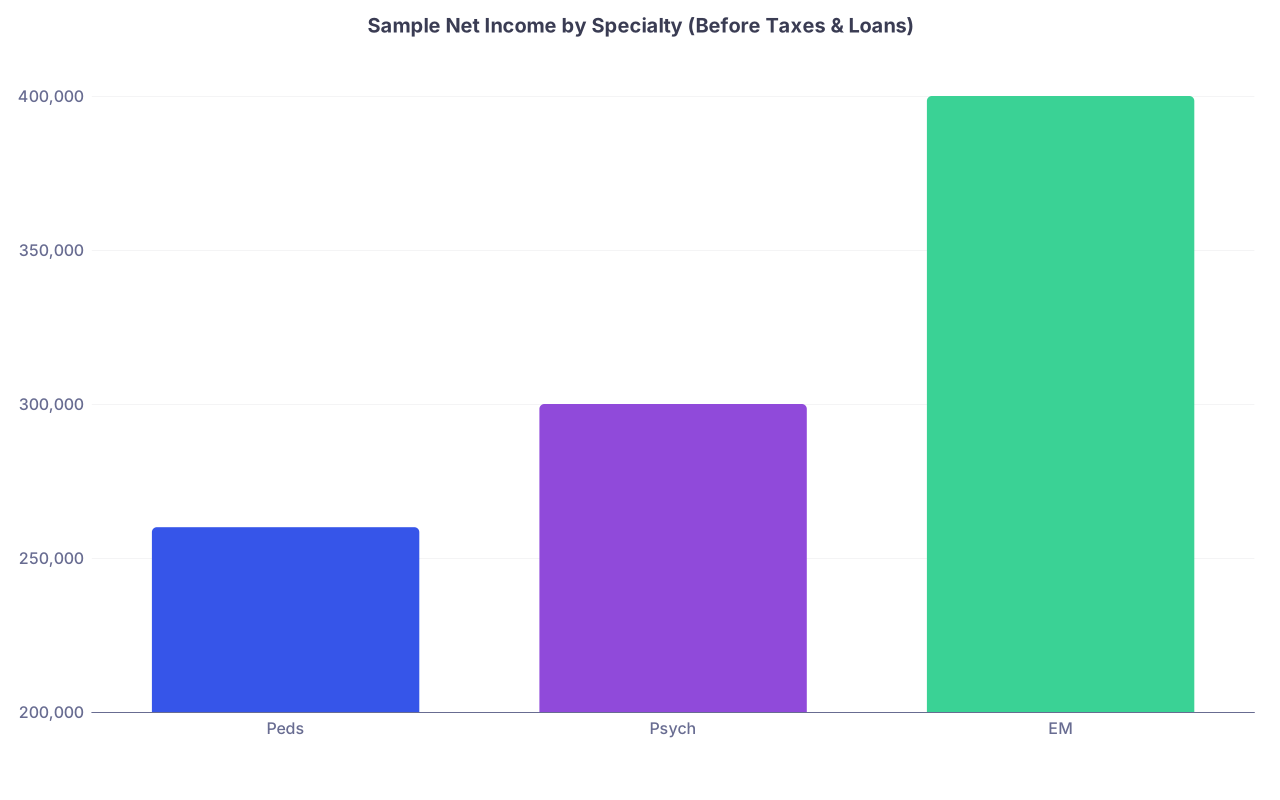
Let’s compare three realistic primary-earner candidate choices: Pediatrics, Psychiatry, and Emergency Medicine.
| Category | Value |
|---|---|
| Peds | 260000 |
| Psych | 300000 |
| EM | 400000 |
Ballpark:
- Outpatient peds: $220k–$280k
- Psych (mix of outpatient/inpatient): $250k–$350k (more with telepsych or private)
- EM: $350k–$450k (region, group, and RVU madness dependent)
Is EM “better”? On paper, yes. Extra $100k+ a year is real money.
But you have to factor:
- Burnout risk and longevity
- Call schedule impact on childcare and partner
- Job market instability (especially EM right now in some regions)
- Your risk of being a miserable attending who wants out in 5 years
If you choose EM “for the money” and then at 40 you cut back by 40% because you’re fried, the long-term financial win shrinks a lot.
On the flip side, if you choose outpatient peds, but you’re able to work for 25 years at 0.9–1.0 FTE because you actually like your work and can tolerate the days… that stability counts.
The correct question for a primary earner isn’t “What has the highest salary?”
It’s “What can I reasonably do, in a reasonably sustainable way, for 20+ years, in a location where the pay vs cost of living is sane?”
4. Low-Paying Field + Primary Earner: When It Works, When It Doesn’t
I’ve seen both sides. Residents freaking out about FM with 3 kids. Psych attendings doing just fine with big loans. Peds subspecialists stretched way thinner than they’d expected in major coastal cities.
Let’s lay it out.
Situations where a low-paying specialty often works fine
You’re usually okay if you have:
- Debt under ~$250k, mostly federal, and you’re open to PSLF or longer IDR timelines
- Willingness to live in a moderate or low cost of living (Midwest, South, secondary cities)
- A partner who can either:
- Work at least part-time, or
- Is truly okay with a non-luxurious lifestyle for 10–15 years
- Reasonable expectations:
- House, yes. 5000 sq ft in a top coastal zip code, probably not.
- Vacations, yes. Business-class Europe every year, probably not early on.
Situations where a low-paying specialty is risky as primary earner
Red flags:
- $300k–$500k in loans, no PSLF path, and you insist on HCOL markets (SF, NYC, Boston, Seattle, LA)
- Single earner supporting:
- Stay-at-home partner
- 2–3 kids
- Private school
- Above-average housing expectations
- You’re already anxious about money and tend to cope by spending, not by budgeting
- You’re dead set against taking call, moonlighting, or doing any side gigs ever
You can still do a low-paying field in those situations. But then you need to adjust something else: location, school choice, house size, timing of kids, or your partner’s work.
You do not get all the variables maxed out at once.
5. Concrete Math: Can This Specialty Support Your Household?
Let’s do a basic framework. You don’t need perfection; you need directional clarity.
Use this flow:

| Step | Description |
|---|---|
| Step 1 | Pick likely specialty |
| Step 2 | Look up realistic local salary |
| Step 3 | Estimate tax and loan payments |
| Step 4 | Compare take home to real expenses |
| Step 5 | Field likely workable |
| Step 6 | Adjust variables - location, lifestyle, partner work, PSLF |
| Step 7 | Reconsider specialty or expectations |
| Step 8 | Shortfall? |
| Step 9 | Can adjust? |
Step-by-step example: Outpatient Psych, Primary Earner, 1 Child
Assumptions:
- Psych job in mid-cost city: $290k base
- Federal loans: $280k at ~6.5%
- Married, spouse stays home with 1 toddler
- No PSLF (private group, not nonprofit hospital)
Very rough math:
- Gross income: $290k
- Taxes (federal + state + FICA) – call it ~30–35%:
- Take-home after tax: about $190k (varies by state, filing status)
- Student loans:
- On REPAYE/SAVE/another IDR: maybe $1.6k–$2.2k/month early on (depends on AGI, family size) = ~$20k/year
- Or aggressive 10-year standard: maybe $3k/month = ~$36k/year
- Net after loans:
- Conservative: $190k – $36k ≈ $154k/year → ~$12.8k/month
Can you keep your life within $9k–$11k/month (after retirement contributions and some savings)?
In many mid-cost cities, yes. In SF/NYC with private daycare and a big mortgage, no.
That’s how you need to think. Specific job type + location + real cost of your family.
6. Specialty-by-Specialty: Primary Earner Angles in Low-Paid Fields
Here’s where we get into the weeds. You want field-specific, practical angles, not generic “follow your passion” nonsense.
Pediatrics
Base issue: Pediatricians are underpaid relative to their training and responsibility. Especially in academic and major children’s hospitals.
Ways pediatrics can still work as primary earner:
- Avoid pure big-city academic outpatient jobs that pay $170k–$200k “for the mission”
- Consider:
- Community peds groups in mid-cost towns (often $230k–$280k)
- Peds hospitalist roles with shift differentials
- Certain subspecialties with slightly better comp (e.g., PICU, cardiology – but those mean longer training and often more brutal hours)
Non-negotiable here: your location and job type.
You cannot be the sole earner for a family of four in San Francisco on $190k peds salary and live like your anesthesiology friends. You can live comfortably in a place like Kansas City, Columbus, or Raleigh.
Family Medicine
FM is actually more flexible than people think.
Paths that pay better:
- Rural or semi-rural FM with OB and procedures – can push into the $300k+ range
- FQHCs/nonprofits in lower COL areas with PSLF + loan repayment programs (real value if you stick around)
- Hospital-employed FM with urgent care shifts or inpatient components
Watch out for:
- Academic FM in big cities with salaries around $190k–$210k and heavy teaching/admin. If you’re primary earner with big loans and no PSLF, that’s tight.
- Fancy affluent suburbs in HCOL areas where salaries don’t keep up with housing costs
As the primary earner, FM can absolutely work. But you can’t be picky about “cool” zip codes early in your career.
General Internal Medicine / Outpatient IM
Similar logic to FM but slightly higher pay in many systems.
Better options as primary earner:
- Hospital-employed primary care with quality bonuses and high demand
- Mix of clinic + hospitalist or urgent care shifts
- VA or academic with strong retirement and PSLF, if you commit long-term
Don’t do:
- Underpaying boutique academic primary care in an ultra-expensive city unless your partner earns well or you have PSLF and a long horizon
Psychiatry
Psych is quietly one of the more “fixable” low-mid paying specialties if you hustle a bit.
Levers you can pull:
- Mix W2 job + small amount of telepsych side work
- Group private practice after you’re established – even 1–2 extra afternoons a week can move your income by $30k–$60k/year
- Work slightly underserved areas → more negotiation power → higher base
If you’re the primary earner with kids, psych can be very doable especially outside the highest-cost cities. The psychiatry workweek is often more controllable than others, which makes side hustles and stable childcare arrangements easier.
7. The Biggest Safety Lever You Have: Location, Not Specialty
This is the part people in training chronically underestimate.
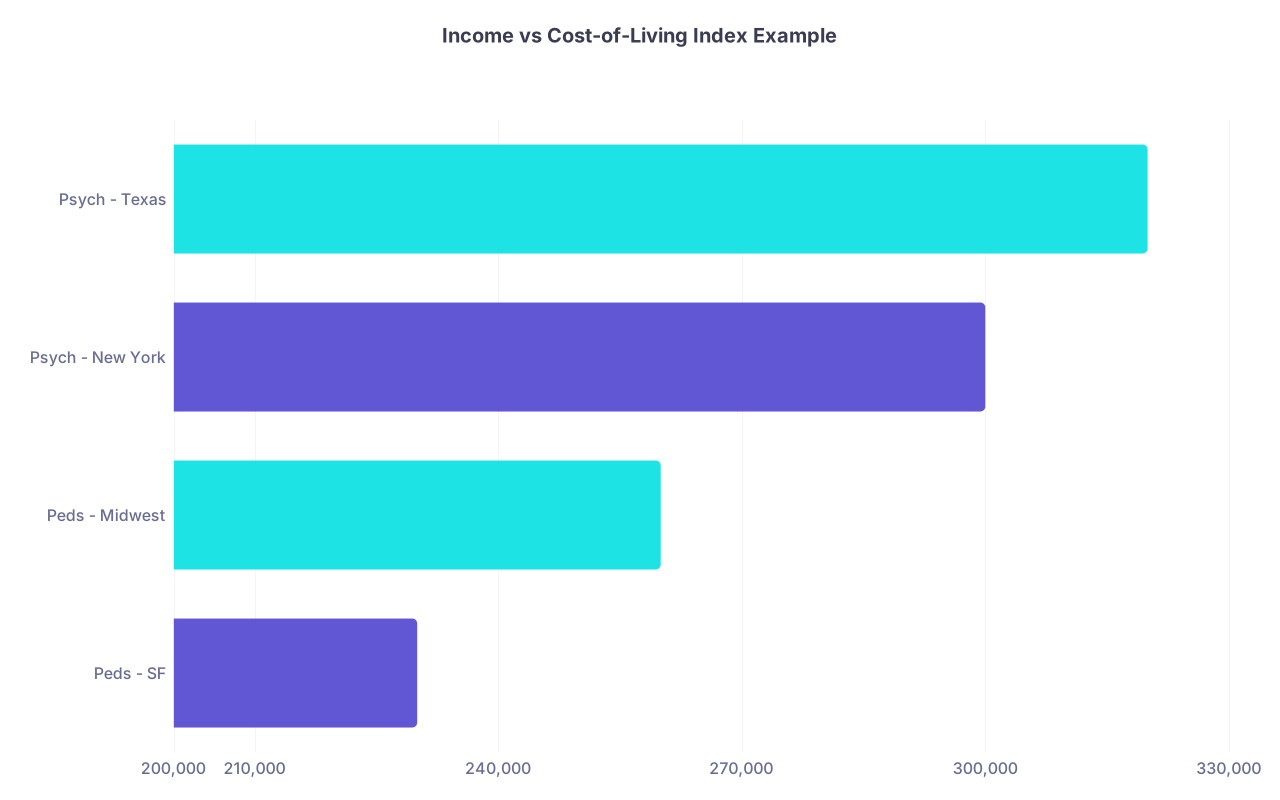
Same doctor. Same specialty. 2–3x difference in how rich or broke you feel based purely on where you work.
| Category | Value |
|---|---|
| Peds - SF | 230000 |
| Peds - Midwest | 260000 |
| Psych - New York | 300000 |
| Psych - Texas | 320000 |
Looks like not a huge spread, right? But factor in:
- Rent/mortgage factor of 2–3x
- State income taxes
- Childcare cost differences
You can squeeze a “low-paying” specialty safely into your life by choosing a city you’d never have considered in college. This is probably the single most powerful move for a primary earner who doesn’t want surgery/derm/rads/ortho.
8. Things You Should Decide Before Committing to a Low-Paying Field
If you’re early (MS3–MS4, early residency), you’ve got a window to decide a few key constraints.
You and your partner need answers to:
Are we willing to move to where this specialty pays decently?
If the answer is “We will only live in SF/NYC/Boston,” certain low-paying specialties become incredibly stressful as primary earner.Is PSLF or an IDR strategy on the table?
- If yes, academic/VA/government jobs become much more attractive.
- If no, you need higher raw cashflow or cheaper living.
What lifestyle are we actually targeting in the first 10 years out?
If your partner’s interior Pinterest board screams $2M urban house, luxury vacations, and private school, you need either:- Much higher-earning specialty, or
- Massive reality check and shared expectations reset
Kids timing and childcare
Having 2 kids in daycare at once in a HCOL area can be $4k–$5k/month. That’s essentially a giant second mortgage.
Plan for this on paper. Don’t just “hope it works out.”
9. How to Make a Low-Paying Specialty Safer as the Primary Earner
You don’t have to change who you are. You do have to use every lever you have.
Tactically:
Maximize residency moonlighting when safe/allowed
Use that money for:- Emergency fund
- Paying down high-interest loans
- Keeping your partner from burning out by giving them support (occasional childcare help, etc.)
Keep first attending house reasonable
I’ve watched too many FM and peds attendings suffocate themselves with a first house they barely qualified for. Your house is the least reversible decision.Be ruthless about subscriptions and lifestyle creep for 5–7 years
It’s not “forever.” It’s to get your debt + savings base solid so low-paying specialty doesn’t feel scary.Negotiate like you mean it
Even in low-paying fields, offers are often flexible:- Sign-on bonuses
- Loan repayment
- Relocation
- RVU/bonus structure
- Schedule flexibility that allows side work if needed
Consider niche skills that slightly move comp
For example:- FM: point-of-care ultrasound, procedures, OB
- Psych: TMS/ketamine clinic experience, forensic consults, CL psych
- Peds: sedation, hospitalist skills
None of this turns peds into ortho. But it moves you from bottom of the band to top, which matters at $30k–$60k/year over decades.
10. If You’re Already Locked In and Worried
Let’s say you’re a PGY-2 in pediatrics, $350k in debt, 6 months pregnant, and your partner just said, “I don’t understand how this ever works with you as our only income.”
You don’t need to panic-quit. You need a plan. Rough outline:

| Step | Description |
|---|---|
| Step 1 | Current PGY |
| Step 2 | Clarify debt and repayment options |
| Step 3 | Map likely salaries by location |
| Step 4 | Discuss lifestyle and move options with partner |
| Step 5 | Target jobs with PSLF or loan repayment |
| Step 6 | Plan 3-5 year budget and savings |
Key moves:
Get a real loan consult
Use a reputable student loan planner or a thorough review (not your co-resident’s cousin’s advice).
Decide: PSLF path vs refinance and pay off.Target jobs strategically
- Safety option: nonprofit hospital in lower-cost city, $240k–$260k with PSLF
- Income option: community peds group in a cheaper region paying $270k–$300k with partnership track
Delay the “forever house”
Rent somewhere reasonable for 2–3 years. Attack debt and build a real emergency fund.Get your partner in the loop early
Not as a vague “we’ll be fine,” but with numbers:- “Here’s what we’d make if we move to X.”
- “Here’s daycare/housing cost.”
- “Here’s our projected take-home each month after loans.”
Clarity calms people down way more than empty reassurance.
11. Quick Reality Check: When Choosing a Higher-Paying Field Just for Money Backfires
I should say this clearly: jumping to a field you actively dislike, purely for money, as the primary earner, is also dangerous.
I’ve watched:
- Anesthesia residents mentally crash because they hated the work but felt trapped by their new lifestyle.
- Surgical attendings cut back so drastically from burnout that they effectively ended up with “FM-level” income, plus divorce, plus kids in two houses.
You’re trading 20–30 years of your life. Your family doesn’t win if you’re rich and miserable, checked-out, or constantly escaping via work or hobbies because you can’t stand your actual job.
You need a field you can tolerate most days, that pays enough for your situation, in a place that doesn’t financially suffocate you. Not perfect. Good enough.
12. A Few Hard Truths You Should Swallow Now
To wrap the mindset piece:
- You can’t have Big HCOL Coastal City + Very Low-Paying Specialty + Single Income + Expensive Lifestyle + Massive Loans. Something has to give.
- Your choice of metro area will impact your financial life more than the difference between psych vs FM vs peds, in many cases.
- Being honest with your partner early about money and trade-offs beats surprising them with “we actually can’t afford any of the things I implied we could.”

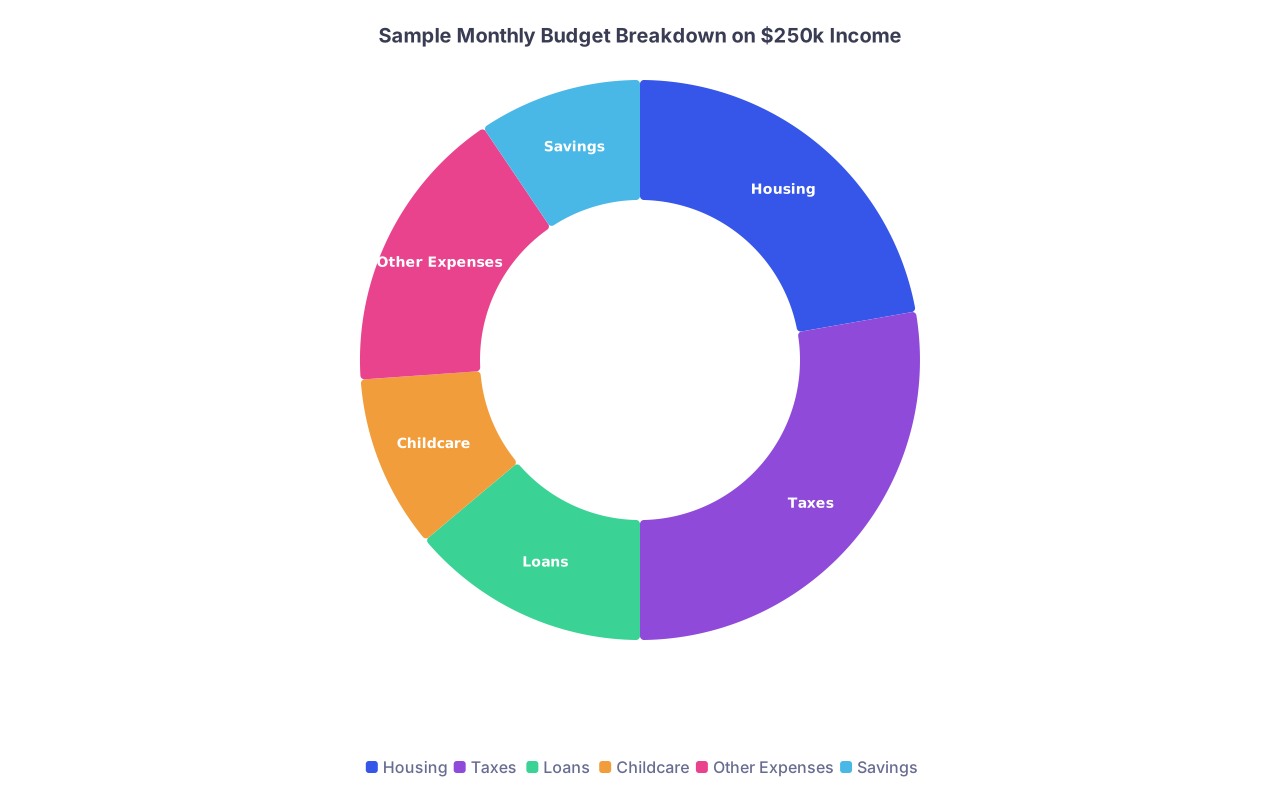
| Category | Value |
|---|---|
| Housing | 4000 |
| Taxes | 5000 |
| Loans | 2500 |
| Childcare | 1800 |
| Other Expenses | 3000 |
| Savings | 1700 |