
Your program telling you “the hospital coverage is enough” is not a reassuring answer. It’s a red flag that you need to slow down and actually understand what’s being offered before you trust your entire career to it.
Because here’s the ugly truth: people don’t realize their coverage wasn’t “enough” until something goes very, very wrong.
Let me walk through this like the anxious person I am and spell out all the “what ifs” you’re probably spiraling about—and which ones actually matter.
First, What You’re Really Afraid Of (You’re Not Crazy)
You’re not actually asking, “Is hospital coverage enough?”
You’re asking things like:
- What if I get sued years after I finish residency?
- What if the hospital throws me under the bus to protect itself?
- What if I moonlight and no one told me it wasn’t covered?
- What if one lawsuit ruins my career or bankrupts me?
And the worst one:
What if I don’t even realize I’m not protected until it’s too late?
Those are all fair. This stuff is confusing on purpose. HR says “You’re covered” and moves on. GME throws in one vague slide in orientation. No one sits down and says, “Here’s exactly what this means for you as a resident and as a future attending.”
So yes, you should be suspicious. Not paranoid—but cautious and specific.
Let’s break it down.
The 4 Big Questions You Need Answered About “Hospital Coverage”
When a program says “Our hospital coverage is enough,” that sentence is meaningless until you know the details. There are four questions I’d push on, hard.
1. Is it claims-made or occurrence?
This is the difference between “probably fine now” and “oh my god I’m exposed after I leave.”
Very short version:
Occurrence policy
Covers you for events that happen during the policy period, no matter when the claim is made.
Incident in PGY2, lawsuit filed 5 years later? Still covered.
This is the safer, simpler kind.Claims-made policy
Covers you only if:- The incident happened while the policy was active
AND - The claim is filed while the policy is still active
If you leave and don’t have tail coverage, you can be naked for past events.
- The incident happened while the policy was active
So your question to GME / HR is:
“Is our malpractice policy for residents claims-made or occurrence?”
If they say “claims-made,” immediate follow-up:
“Who pays for tail coverage when I leave—me or the hospital?”
If their answer is vague—“We usually take care of that,” “It hasn’t been an issue,” “You’ll be fine”—that’s when I personally would start getting very nervous.
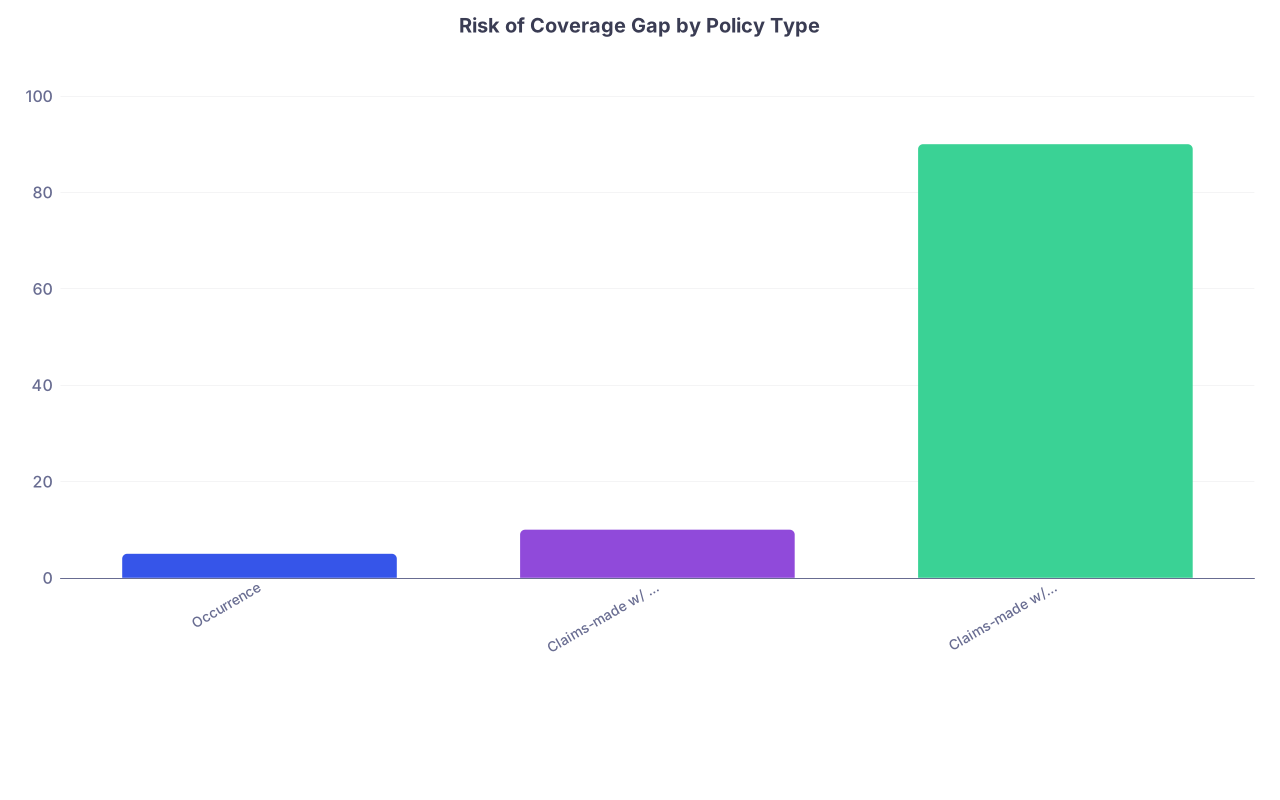
| Category | Value |
|---|---|
| Occurrence | 5 |
| Claims-made w/ Tail | 10 |
| Claims-made w/o Tail | 90 |
Rough idea: occurrence = low headache, claims-made without guaranteed tail = migraine.
2. Does it follow YOU, or does it follow the INSTITUTION?
Most residency coverage is institution-focused. You’re covered when:
- You’re acting within the scope of your duties
- For that hospital / system
- Under their supervision / employment
Which is fine… until you step one inch outside that box.
Things that may not be covered by standard hospital policies:
- Moonlighting (especially at other hospitals, clinics, telemed)
- Locums work
- Volunteer free clinics
- Medical mission trips
- Side gigs: expert witness work, forms, telehealth “side hustle,” etc.
If any of these are in your future—or even might be—you cannot just assume “the hospital covers it.”
You need them to answer:
“Is my malpractice coverage limited to my duties as a resident within this institution, or does it cover any clinical work I do as a physician?”
Spoiler: it’s almost always limited.
If they say “moonlighting is covered,” you ask:
“Can I get that in writing, specifying what kind of moonlighting and where?”
If it’s not in writing, it’s not real.
How Much Coverage Do Residents Actually Get?
Here’s what most residents think:
“I’m at a big academic center. They must have super strong coverage. I’m tiny; they’re huge. I’m fine.”
What actually matters:
- Per-claim limit – max the insurer pays per lawsuit
- Aggregate limit – max total per year for all claims
- Whether you have your own named coverage or you’re just listed under a giant system policy
A typical resident situation might look something like this:
| Situation | Per-Claim Limit | Tail Included | Follows You After Leaving? |
|---|---|---|---|
| Large academic, occurrence | $1M / $3M | Not needed | Yes (for residency period) |
| Large academic, claims-made | $1M / $3M | Usually yes | Only if tail is provided |
| Community hospital, basic | $1M / $3M | Maybe | Depends on contract |
| Moonlighting without own policy | 0 | 0 | No |
Most resident lawsuits that involve multiple parties get handled through the big institutional policy. You’re usually not the only one named. There’ll be:
- The attending
- The hospital
- Maybe the department
- Sometimes the nurse, midlevel, others
On paper, yes, the institution wants to protect its trainees. It looks bad if they don’t.
But in a crisis, everyone’s lawyers are loyal to their client, not you. Your “coverage” doesn’t guarantee your interests are #1.
The Nightmare Scenarios Everyone Is Afraid of
Let’s just say the quiet part out loud. Here are the situations that keep people up at night—and whether they’re realistic.
Scenario 1: You get sued years after you leave residency
Yes, this is real. Statutes of limitation + discovery rules mean cases can pop up years later.
If your residency coverage was:
- Occurrence – you’re generally fine for things that happened while you were a resident
- Claims-made with tail provided by hospital – you’re fine if the tail is actually in place
- Claims-made, no tail – this is the horror story. There is no way to go back and buy retroactive coverage after the incident.
This is why I care way more about tail than I do about the actual dollar limits.
Scenario 2: The hospital’s lawyers protect the hospital, not you
Also real.
The hospital counsel’s job is to minimize:
- Institutional liability
- PR damage
- Payouts that set bad precedents
You, as an individual resident, are not their core priority. Sometimes your story is inconvenient. Sometimes they’re okay with settling and attaching your name to it. Sometimes they’ll separate your defense strategy from theirs.
This is where having your own individual malpractice policy (even a cheaper one) can give you something priceless: your own lawyer whose only job is to represent you.
It’s not always necessary. But if you’re anxious and want control, this is the piece that actually helps you sleep.
Scenario 3: You moonlight and discover later it wasn’t covered
This one I’ve actually seen:
Resident works urgent care or telemed, assumes “I’m a doctor now, my hospital coverage follows me, right?”
Wrong.
Gets threatened with a claim → panic → scramble → realizes they never had coverage for that setting.
If your program “allows” moonlighting, that doesn’t equal “covers” it.
You absolutely need:
- Written confirmation from your moonlighting site about who covers malpractice
- If they say “you’re expected to have your own,” that’s your cue to buy an individual policy
No one is going to proactively protect you here. Everyone assumes someone else told you.
Should You Buy Your Own Malpractice Policy as a Resident?
This is the question under all of this:
If the program says hospital coverage is enough, do you just trust that, or do you grab your own policy anyway?
Let me be blunt:
Most residents do not carry separate personal malpractice insurance. And most never regret that.
But “most people do X” isn’t the same as “you’ll be safe doing X.”
Here’s how I’d think about it.
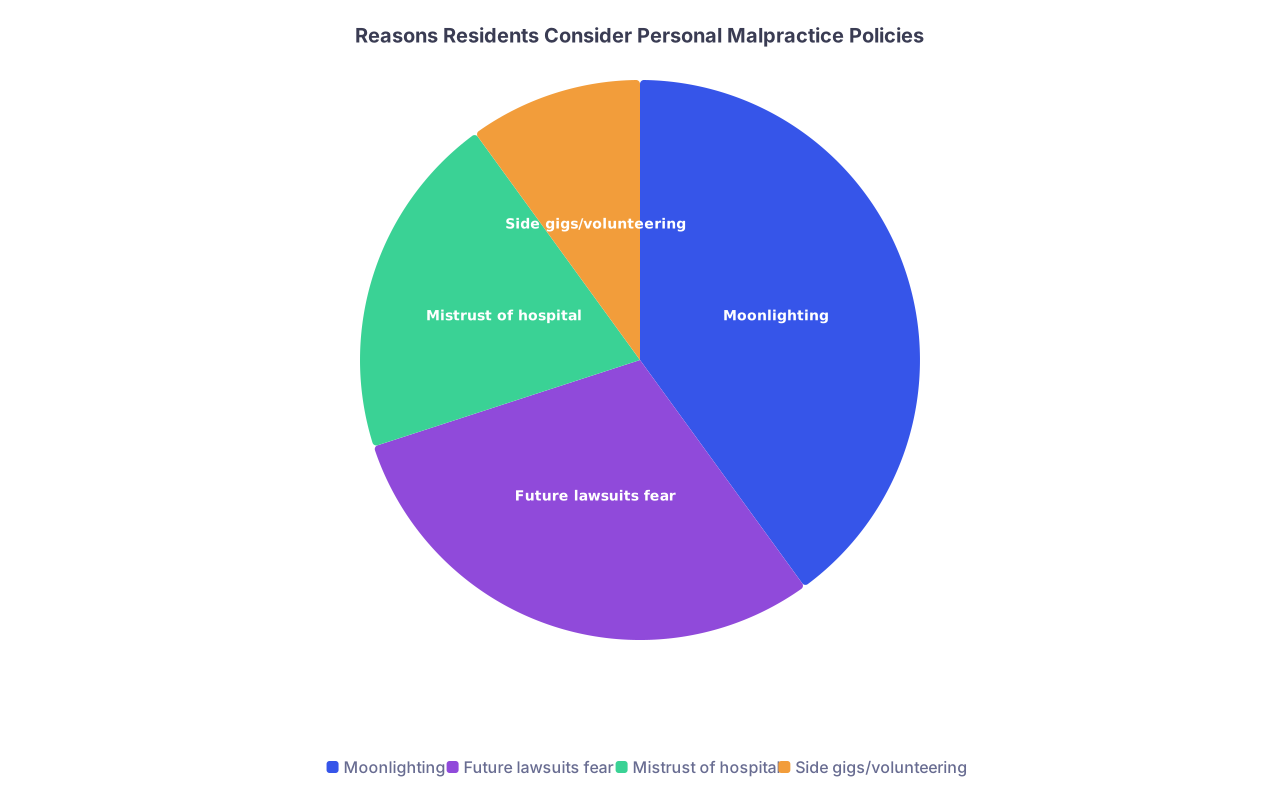
| Category | Value |
|---|---|
| Moonlighting | 40 |
| Future lawsuits fear | 30 |
| Mistrust of hospital | 20 |
| Side gigs/volunteering | 10 |
You should seriously consider an extra policy if:
- You’re doing any clinical work outside your official residency duties
- You’re in a high-risk specialty (OB, surgery, EM, etc.) and deeply anxious about being personally exposed
- Your hospital uses claims-made coverage and is cagey about tail
- You want your own lawyer, not one assigned by the hospital
You might reasonably skip buying your own policy if:
- Your coverage is occurrence-based and clearly spelled out
- Your GME office gives written confirmation that tail is fully covered for your residency service
- You’re not moonlighting and don’t plan to
- The idea of extra paperwork / cost stresses you more than reassures you
Is an individual resident policy expensive? Usually not terrible. People quote numbers like a few hundred dollars a year, sometimes less, depending on specialty and scope. That’s not nothing on a resident salary, but it’s also not insane.
How to Actually Get Concrete Answers (Without Sounding Paranoid)
I know the other anxiety:
“I don’t want to piss off my PD or look like I don’t trust the program.”
Here’s a script you can basically copy-paste in an email to GME / HR:
Hi [Name],
I’m reviewing my malpractice coverage so I understand what’s included during training and what happens after I graduate. Can you clarify a few things for me in writing?
- Is the malpractice insurance for residents claims-made or occurrence?
- If it’s claims-made, does the hospital provide tail coverage when residents leave, at no cost to us?
- Is coverage limited to activities within the scope of residency training at [Hospital], or does it cover other clinical work (e.g., moonlighting)?
- What are the per-claim and annual aggregate limits applicable to residents?
Thank you so much for your help — I just want to make sure I fully understand my protection and responsibilities.
That’s polite, professional, and not accusatory. You’re basically saying, “I’m being a grown-up about my career.”
If they answer clearly and it all looks solid? Good. Screenshot and save those emails forever.
If they dance around, give fuzzy half-answers, or avoid putting anything in writing? That’s your sign to consider your own policy or at least get advice from:
- A physician-focused insurance broker
- Your state medical society
- A mentor who’s been burned before and is now paranoid (the best kind)
A Quick Reality Check: How Often Do Residents Actually Get Personally Destroyed by This?
Not often. The vast majority:
- Never get sued at all
- If they do get named, it’s with 10 other people
- The hospital’s coverage steps in
- It’s stressful but not career-ending
So no, you’re probably not one lawsuit away from living under a bridge.
But that’s not really what you’re asking. You want to know if you’re being reckless by trusting the line “hospital coverage is enough.”
I think this is the honest answer:
- You’re not reckless for relying on solid institutional coverage if you verify the basics (claims-made vs occurrence, tail, scope).
- You are reckless if you just take a vague reassurance and never ask what’s actually in the policy—especially if you plan to moonlight or do side work.
A Simple Way to Decide What to Do Next
If you’re still spiraling, here’s a rough decision path:

| Step | Description |
|---|---|
| Step 1 | Ask GME about policy type and tail |
| Step 2 | Likely OK with hospital coverage only |
| Step 3 | Get written moonlighting coverage or buy own policy |
| Step 4 | Strongly consider own policy or legal advice |
| Step 5 | Occurrence policy? |
| Step 6 | Any moonlighting or side work? |
| Step 7 | Tail guaranteed in writing? |
What Actually Matters (So You Can Stop Doom-Scrolling)
If you remember nothing else, make it these:
Know the policy type and tail situation.
Claims-made with no guaranteed tail = real reason to worry. Occurrence or guaranteed tail = much safer.Know what activities are covered.
Don’t assume moonlighting, side gigs, or volunteer work are included. They usually aren’t unless specifically stated.If your anxiety is high, buy control.
A personal policy can be less about probability and more about peace of mind. If that’s what you need to sleep, it’s not overkill—it’s a plan.