
The myth that one bad grade can hijack your entire interview is exaggerated—and it’s messing with your head more than it’s hurting your chances.
Let me just say the scary part out loud: yes, they might see it. Yes, they might ask about it. No, it almost never “dominates” the interview unless you let your panic do that for them.
You’re not crazy for worrying. I know exactly what loop you’re in:
- “What if they only see that C and assume I’m lazy?”
- “What if every answer turns into defending my transcript?”
- “What if they compare me to perfect 4.0 robots and I look ridiculous?”
Let’s walk through what actually happens in those rooms, what interviewers really care about, and how to stop that one grade from living rent-free in your brain.
The Hard Truth: They’ve Seen Worse. Way Worse.
Before you spiral, remember this: interviewers look at hundreds of applications a year. They’ve seen:
- Early-semester Fs in orgo that turned into retakes and A’s
- Entire semesters tanked by family deaths, depression, or burnout
- Non-trads with 2.7 freshman GPAs and stellar comeback stories
To them, your horror-story blemish is… data. A single data point.
They don’t stare at your transcript for 30 minutes hunting for sin. They scan. They look at patterns:
- Overall GPA trend
- Science vs non-science performance
- Any major dips and what happened after
One grade only becomes “dominant” if:
- It’s part of a larger pattern (repeated struggle, no improvement)
- You freeze, get defensive, and make it awkward
That second one is the one you control.
What Actually Happens When They See Your Bad Grade
Let’s say you’ve got:
- A C in Organic Chemistry I
- Or a W in a core class
- Or a random D in freshman year calculus
Here’s how a typical interviewer (non-sadistic, which is ~95% of them) experiences it:
- They scan your file quickly before you walk in.
- They notice: “Hmm, mostly A’s/B’s… oh, a C in orgo, but good performance after. Fine.”
- They either:
- Don’t mention it at all, or
- Ask a quick, neutral question: “I see orgo I was a bit lower than your other grades—what was going on then?”
They’re not expecting a courtroom defense. They’re looking for:
- Self-awareness
- Ownership
- Growth
They want to know if you crumble when things go wrong, or if you adapt.
The worst-case scenario in your head is: “They’ll assume I’m stupid, challenge me question after question, and keep circling back to that C.”
Reality: that almost never happens unless the entire file is throwing red flags.
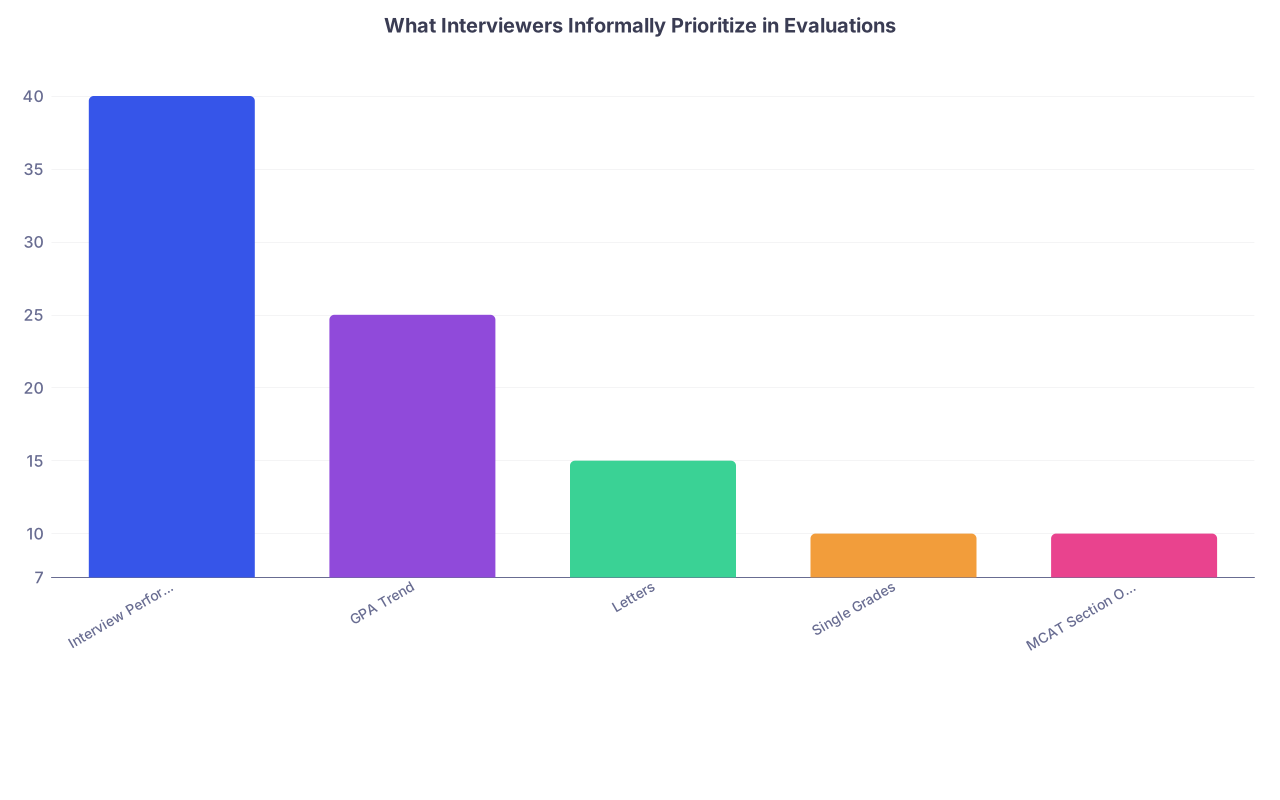
How Much Do They Actually Care? (More About Trends Than Perfection)
If you want numbers to fight your anxiety, here.
| Category | Value |
|---|---|
| Interview Performance | 40 |
| GPA Trend | 25 |
| Letters | 15 |
| Single Grades | 10 |
| MCAT Section Outliers | 10 |
Is this an exact universal formula? No. But in practice, I’ve watched interviewers talk. They obsess about:
- How you think
- How you communicate
- Whether you seem like someone they’d want on the team at 3 a.m.
They do not sit there muttering, “But that C in orgo… I just can’t get over it.”
They’re far more likely to ignore a single blip if:
- Your later semesters are stronger
- Your MCAT is solid and consistent with a strong foundation
- You don’t act like that one grade is some dark secret that will destroy you
You know what actually worries them? Flat or declining trends. No upward movement. Repeated Cs in core sciences. But a lone C or W in a sea of otherwise decent performance? That’s “explain it and move on” territory.
When One Grade Does Become a Real Concern
Let me be honest so you don’t get blindsided.
A single grade starts to matter more if:
- It’s in a repeatedly weak area (e.g., multiple low bio/chem grades)
- It’s paired with a low MCAT section in the same domain
- It contradicts your narrative (“I’ve always excelled in science” + C-/D in bio)
- It happens recently, not years ago, and with no clear rebound
Even then, it doesn’t automatically dominate the interview. It just becomes something they may be more likely to ask about.
You’ll know it’s a serious concern if:
- It appears in your advisor meetings as something to address
- It’s mentioned in secondary prompts (some schools literally ask about academic challenges)
- You see a pattern of similar issues, not a single one-off
But again, we’re talking patterns, not a sniper shot to your entire application because of one bad day in orgo.
How to Talk About Your Bad Grade Without Melting Down
Here’s where most applicants mess this up. The problem isn’t the C. It’s the explanation.
They either:
- Over-explain and sound like they’re reading from a legal brief
- Under-explain and look evasive
- Cry internally and give a 20-second mumble that screams, “I’m ashamed of this”
You want a short, clean, honest arc:
- What happened
- What you learned
- What changed afterward
Example for a C in Organic Chemistry I:
“Orgo I was my wake-up call. I came in thinking my high school study habits would be enough, and they weren’t. I spread myself too thin with extracurriculars and underestimated the course. I wasn’t proud of that C, but it forced me to completely overhaul how I studied—more active practice, office hours, and working in small groups. You can actually see that shift in my later semesters and in Orgo II, where I earned an A. I’m glad it happened when it did, because I’d rather have learned that lesson earlier than on something higher-stakes later on.”
That’s it. No drama. No 5-minute justification.
If it was something serious like a family crisis or mental health crash:
“I had a major family situation that semester that pulled a lot of my attention away from school. I didn’t handle balancing it well and my performance dropped, especially in [class]. I’m not making excuses—the grade is mine—but that was the context. What I did afterward was meet with advisors, cut down my commitments, get counseling support, and rebuild my routine. Since then, my grades have been consistently strong, and I feel much better equipped to handle stress than I was back then.”
You’re not asking for pity. You’re showing resilience.
Pre-Interview Prep: Don’t Let This Catch You Off Guard
If you’re scared that one grade is going to jump out, then prep for it like a predictable question. Because it kind of is.
Here’s what I’d do the week before interviews:
- Print or pull up your transcript and stare at it like an annoyed interviewer.
- Circle anything that might raise an eyebrow:
- Lone C/D/F in a core prereq
- W’s in key courses
- A weird off semester
- For each one, write a 3–5 sentence explanation with:
- Brief context
- Accountability
- Clear evidence of improvement
Then practice saying it out loud until it doesn’t feel like a confession. It should feel like reporting a fact.
Use the “no big deal energy” rule:
If your explanation sounds like a Netflix drama, it’s too much. If it sounds like a shrug, it’s too little. Aim for “serious but handled.”
To keep your brain from spinning into “this will dominate everything” mode, map it into your overall prep:

| Step | Description |
|---|---|
| Step 1 | Review Transcript |
| Step 2 | Write 3-5 Sentence Explanation |
| Step 3 | Move On |
| Step 4 | Practice Out Loud 5-10x |
| Step 5 | Integrate Into Mock Interview |
| Step 6 | Refocus on Main Stories |
| Step 7 | Any Obvious Blemishes? |
Notice how the flow doesn’t end at “explain bad grade.” That’s the point. It’s one node in your prep, not the whole tree.
How to Keep the Interview from Revolving Around Your Weakness
Even if they ask about your bad grade, you don’t have to camp there.
Your job is to answer cleanly and then steer them toward your strengths.
Example:
Interviewer: “Can you tell me about what happened with that C in Organic Chemistry I?”
You: “Absolutely…” [Gives concise explanation like above] “…and that experience actually pushed me to change how I approached learning science, which you can see in my later coursework and in my research in [topic]. That project in particular taught me a lot about struggling with concepts at first and then working through them over time.”
See what you did? You:
- Owned it
- Showed growth
- Gently pivoted to research and perseverance
If they want to stay on the grade, they will. But most won’t. They’ll follow the thread you gave them: growth, maturity, resilience. That’s what they actually care about.
Reality Check: What Will You Remember Later?
Years from now, most residents can’t quote their orgo grades. They remember:
- The one attending who humiliated them
- The first patient who thanked them
- The day they matched
You won’t be lying awake at 30 thinking, “That one time they asked about my C in orgo… ruined my life.”
You’ll remember whether you backed yourself or let fear run the show.
I’m not saying “don’t worry.” You’re going to worry anyway. I am saying: don’t hand your entire self-worth to a single number on a PDF.
To calm that fear right now:
- Assume they’ll see it
- Assume they might ask about it
- Decide in advance who you’re going to be when they do: panicked, or prepared
You don’t have to be perfect to be convincing. You just have to be coherent and honest.
| Situation | Impact Level |
|---|---|
| Single C with strong upward trend | Low |
| Multiple low science grades | Moderate–High |
| One bad semester with clear recovery | Low–Moderate |
| Recent poor performance without rebound | High |
| Low grade + matching low MCAT section | Moderate–High |

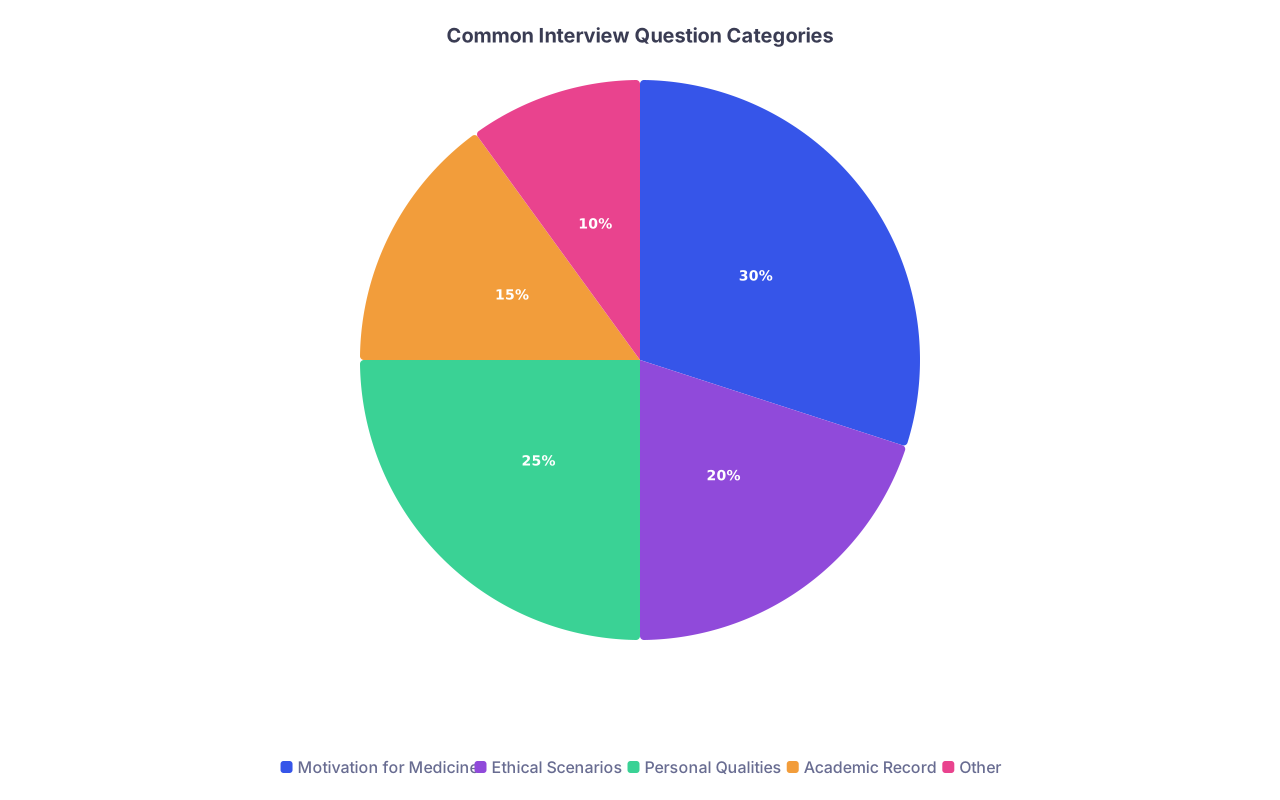
| Category | Value |
|---|---|
| Motivation for Medicine | 30 |
| Ethical Scenarios | 20 |
| Personal Qualities | 25 |
| Academic Record | 15 |
| Other | 10 |


| Stage | Activity | Score |
|---|---|---|
| Before Interview | Obsess over bad grade | 4 |
| Before Interview | Imagine worst-case questions | 5 |
| Preparation | Write explanation | 3 |
| Preparation | Practice responses | 2 |
| Interview Day | Get asked briefly | 3 |
| Interview Day | Move on to strengths | 4 |

FAQ – Exactly What Your Brain Is Probably Asking
Will one C or W automatically ruin my interview?
No. A single C or W, especially with a strong overall trend, usually becomes a 30–60 second topic at most—if it even comes up. Interviewers care far more about how you communicate, your reasoning, and whether you’ve grown from setbacks than about one outlier grade.Should I bring up my bad grade myself if they don’t ask?
Usually no. Don’t volunteer weaknesses that weren’t asked for. The only time I’d bring it up proactively is if:- They explicitly ask about academic challenges, or
- It connects naturally to a growth story you’re telling (e.g., how you rebuilt your study skills).
But you don’t open with it. You’re not there to give a confession.
What if I panic and start over-explaining in the interview?
That’s why you script and practice in advance. Write your explanation. Say it out loud 10–15 times. Time yourself—it should be under a minute. If you catch yourself rambling, mentally hit the “period” and pivot: end your sentence and connect to how you improved and what your later performance shows.What if my bad grade is recent and not just a freshman-year mistake?
Then you do need a clearer narrative. Own what happened, show what you’re actively doing to address it (tutoring, changed schedule, mental health support, fewer extracurriculars), and point to any early signs of that working. Programs don’t need you to pretend it’s fine; they need to hear that you have a plan and you’re not in denial.How do I stop thinking about this one grade 24/7 before interviews?
You probably won’t stop thinking about it completely—that’s just how an anxious brain works. But you can box it in. Do this:- Spend 30 focused minutes crafting your explanation.
- Practice it until it sounds natural.
- Then, every time the fear pops up, remind yourself: “I have an answer. It’s handled.”
And then force your attention back to preparing your main stories: why medicine, clinical experiences, ethics. That’s where most of your interview will actually live.
Years from now, you won’t measure your path in letters on a transcript; you’ll measure it in how you responded when something scared you and you showed up anyway.