
The fastest way to tank a medical school interview is not a bad answer. It is a flat, lifeless delivery that makes the committee stop listening halfway through your sentence.
You can have perfect content and still get passed over because your voice and tone put people to sleep. I have watched it happen. Applicant with a 520 MCAT, great research, solid stories. But every answer sounded like they were reading the side effects of a beta blocker. No modulation. No energy. No sense that they cared.
You are not stuck with that voice.
You can train it, like any other skill. And you do not fix it by “just being more enthusiastic.” That advice is useless. You fix it with specific drills. Reps. Feedback. Adjustments.
This is your playbook.
1. Diagnose the Problem Accurately (You Are Probably Wrong About Your Voice)
Most applicants have no idea how they actually sound. You hear your voice through bone conduction in your own skull, not how the interviewer hears it across a Zoom call.
So first: stop guessing. Measure.
Step 1: Do a 10‑Minute “Cold Interview” Recording
You will need:
- Your phone or laptop (recording app or Zoom)
- A quiet room
- 5–7 common med school questions
Use questions like:
- “Tell me about yourself.”
- “Why medicine?”
- “Tell me about a time you failed.”
- “What is your biggest weakness?”
- “Why our school?”
- “Tell me about a time you had a conflict on a team.”
Protocol:
- Set up your camera so your head and upper torso are visible.
- Hit record.
- Ask yourself each question out loud, then answer as if you are in a real interview. No pausing. No restarting.
- Do not script. Just answer.
Then walk away for 20 minutes. Come back and watch it like you are evaluating a stranger.
Step 2: Use the “Bored Committee” Checklist
Watch the recording twice.
First pass – gut reaction:
- Would you want to listen to this person for 30 minutes?
- Do they sound like they care?
- Do they sound like they are thinking in real time or reciting a memorized essay?
Second pass – structured. Rate yourself 1–5 (5 = strong) on:
- Energy: Do you sound awake, invested, purposeful?
- Variety of pitch: Does your pitch go up and down, or stay almost flat?
- Pace: Are you racing? Dragging? Or changing speed at key points?
- Pauses: Do you give listeners time to digest, or do you steamroll?
- Emphasis: Do key words get extra weight, or does everything sound identical?
- Warmth: Do you sound like a human being talking to another human being?
If you score yourself 3 or below on more than two of these, your delivery is a problem. Good. Now we know what to fix.
2. Fix the Monotone: Pitch, Pace, and Pauses Drills
Monotone is not about having a “low” or “high” voice. It is about lack of change. Same pitch, same speed, same intensity.
You will fix this with three pillars:
- Pitch control
- Pace control
- Strategic pauses
Drill 1: The “Ridiculous Exaggeration” Pitch Workout
Most people under-correct because they are afraid of sounding “over the top.” Result: no change.
You need to overshoot in practice so that in an interview, you land at “engaging,” not “theater kid.”
Do this daily for 5–10 minutes for 1–2 weeks.
Take a basic answer prompt:
Example: “Why do you want to be a doctor?”Answer it three times, each with exaggerated instructions:
Version A – “Animated Storyteller”
- Push your pitch higher and lower than feels natural.
- Over-emphasize key words.
- Think: reading a story to a child, but keep content serious.
Version B – “Deadpan Robot”
- Intentionally flatten your pitch.
- Speak slowly with no emphasis.
- This contrast helps your brain feel the difference.
Version C – “Balanced Professional”
- Now aim for the middle: more variation than you normally use, less than Version A.
- Record all three.
Watch them back:
- How much more alive does Version A feel than your normal?
- Version C should look like a toned-down Version A, not a reversion to your old baseline.
Repeat this with 3–4 common questions across several days. The point is not perfection. It is to stretch your vocal range and get comfortable inhabiting more variation.
Drill 2: The Metronome Pace Reset
Speaking too fast is the default under stress. You will not fix it by “reminding yourself to slow down.” That fails by minute three.
You need a better reference point. Use a metronome app (any free one works).
- Set the metronome to 70–80 beats per minute.
- Choose a paragraph of your own answer.
- Example: the first 3–4 sentences of “Tell me about yourself.”
- Read it out loud so that roughly each beat aligns with 1–2 syllables.
- This will feel painfully slow at first. That is fine.
- Then turn off the metronome and repeat the same paragraph, trying to keep that same slower rhythm.
Goal:
- In real interviews, you won’t count beats.
- But you will have a bodily sense of “this is what controlled pace feels like.”
Do this:
- 5 minutes a day for a week, then every other day as maintenance.
Drill 3: “Comma, Period, Paragraph” Pausing
Monotone speakers often do not pause. Or they pause randomly. You will train specific pause lengths:
- Comma pause: 0.25–0.5 seconds
- Period pause: 0.5–1 second
- Paragraph pause (transition to new idea): 1–2 seconds
Take an answer transcript (you can transcribe yourself using any app, or just write your answer fully), and mark:
- Commas where you want a mini pause.
- Periods where you want a slightly longer pause.
- Double line breaks or “//” where you change topics.
Then:
- Read the answer slowly and count in your head:
- Comma = short breath.
- Period = one mental “beat.”
- Paragraph = two beats.
- Now deliver the same answer to the camera, keeping those same pauses.
Do this for:
- “Why medicine?”
- “Tell me about yourself.”
- One behavioral question.
You are building rhythm. Interviews are more tolerable to listen to when the rhythm makes sense.
3. Add Emotional Texture Without Sounding Fake
You are not performing a monologue. You are showing that you actually felt something during the experiences you describe.
That is what separates “scripted applicant” from “this person might be a decent doctor.”
Drill 4: The Emotion Labeler
You probably flatten everything emotionally. You talk about a patient death with the same tone you use to describe an org meeting.
You will not fix this by “being more expressive.” You fix it by deciding what you want the listener to feel, sentence by sentence.
Pick one story answer where you:
- Faced a challenge with a patient or team
- Learned something important
- Changed your behavior
Now do this:
- Write out the story in 6–10 short sentences.
- Next to each sentence, assign an emotion label:
- Calm / curious / frustrated / uncertain / hopeful / proud / relieved / regretful
- Now record yourself telling the story, leaning slightly into the emotion of each sentence.
Example:
- “I was shadowing in the emergency department late one night…” → calm, setting the scene.
- “The paramedics rushed in with a middle-aged man who was barely responsive…” → tension.
- “I remember feeling useless, just standing in the corner…” → vulnerable / uncertain.
- “Later, the attending took five minutes to explain what happened and why those decisions were made…” → grateful / hopeful.
You are not acting. You are aligning tone with content. This is how normal, engaged people tell stories.
Repeat with 2–3 other stories (conflict, leadership, failure).
4. Build a Natural, Professional “Interview Voice”
This is where people often go wrong. They think “professional” means stiff, flat, jargon-heavy. That voice kills connection.
Your professional interview voice should sound like:
- You on your best clinical day
- Clear, respectful, warm
- Slightly more structured than casual conversation, but still alive
Drill 5: “Explaining to a Smart Friend” Contrast
You probably speak differently to your friends than to a committee. Good. We will use that.
Pick one question:
Example: “Why our school?”Record two versions:
Version 1 – Smart Friend Mode
- Imagine a friend who is also premed.
- Explain why you like the school in simple, direct language.
- No jargon unless you truly use it with friends.
Version 2 – Committee Mode
- Now answer as if you are in a suit, in a conference room.
- Keep the same core ideas, but tighten structure slightly and clean up slang.
Watch both. The goal:
- Keep the clarity, warmth, and energy of the friend version.
- Add only enough structure and polish to make it professional.
If your committee version sounds like a robot reading a brochure, you went too far. Reset. Rebuild from the friend version and add just 20–30% more formality, not 100%.
Drill 6: “One Breath, One Point”
Rambling destroys the impact of your voice. You lose people; you sound unsure. You also lose control of your tone because you are scrambling for content.
This drill forces you to:
- Deliver one idea per breath
- Land the thought cleanly
- Reset tone before the next idea
Protocol:
- Take a complex question:
Example: “Tell me about a time you faced an ethical dilemma.” - Outline your answer in clear points:
- Brief context
- The dilemma
- Options you considered
- What you did
- What you learned
- Now record yourself answering with these rules:
- Each breath = one point (or one clause of a point)
- Finish the sentence, pause for a second, then take your next breath and begin the next idea
This creates:
- Natural segmentation
- Built‑in pauses
- Moments to reset your tone and emphasis
Train on 3–4 behavioral questions this way.
5. Non‑Verbal Alignment: Face, Hands, and Posture
Here is the harsh truth: if your face looks dead, your voice will almost always follow. The brain links them.
You can boost engagement without saying a word, but you can also sabotage it if your non‑verbals fight your message.
Drill 7: The “Silent Interview”
This one feels strange but works.
- Take two questions:
- “Tell me about yourself.”
- “Why medicine?”
- Record yourself answering them silently. Mouth the words, but do not vocalize. Full facial expression. Natural hand gestures.
- Watch the recording:
- Do you look like you care?
- Are your eyebrows, eyes, and mouth expressing anything?
- Do your hands help or distract?
Then:
4. Immediately record the same answers with full voice.
Focus on matching the facial and body energy from the silent version.
Applicants who do this consistently for a week see a dramatic jump in both non‑verbal and vocal engagement.
Drill 8: “Upper Body Checkpoints”
Before any mock or real interview, run this 60‑second checklist in a mirror or camera:
- Shoulders down and slightly back, not hunched.
- Feet grounded, both planted if sitting.
- Hands visible in frame for virtual interviews (not hidden under the table).
- Chin level, not tilted too high or collapsed into your neck.
- Gentle half‑smile reset at the start of each answer.
Then say one sentence out loud:
- “Thank you for that question.”
Listen to it. That tiny line tells you:
- If your voice is tight
- If you are mumbling
- If you need one deeper breath
Reset before the actual answer.
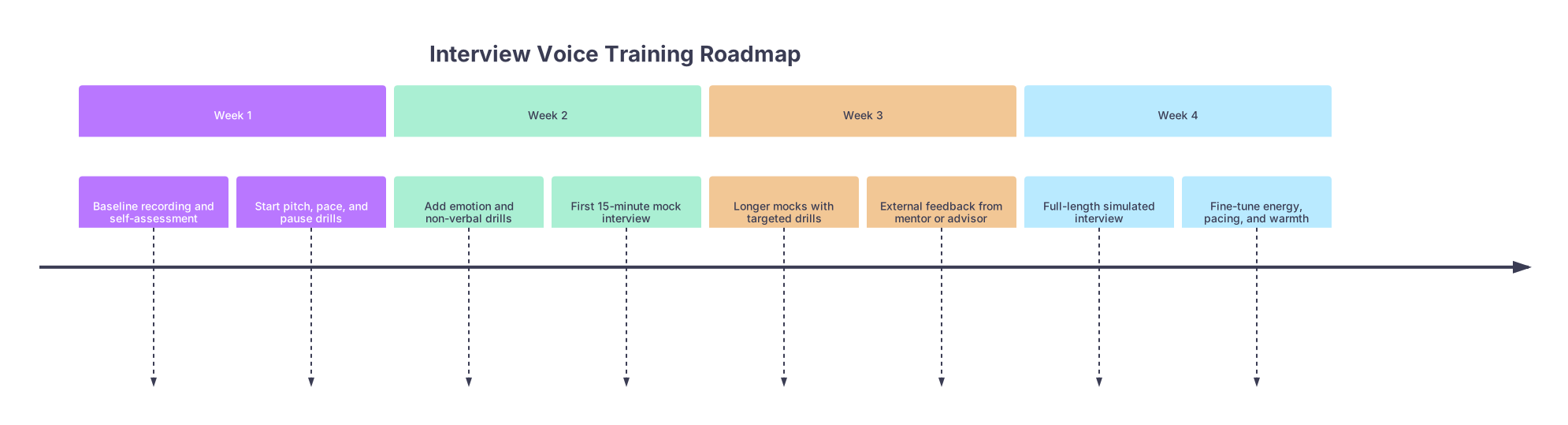
6. Practice Structure: Weekly Plan for 3–4 Weeks Before Interviews
You do not need to devote your life to this. But you cannot cram vocal and tone changes the night before an interview. Your nervous system needs repetition.
Here is a simple 3–4 week structure.
| Day | Focus | Duration |
|---|---|---|
| Mon | Pitch + Pauses (Drills 1 & 3) | 25–30 min |
| Wed | Pace + Emotion (Drills 2 & 4) | 25–30 min |
| Fri | Professional Voice + One Mock Question (Drills 5 & 6) | 30–40 min |
| Sat | Non-verbal + 3-Question Mini-Mock (Drills 7 & 8) | 30–40 min |
How to Use This Plan
Week 1–2: Foundation
- Stick closely to the schedule.
- Record at least part of each session (even 5 minutes).
- Do one full 10–15 minute mock at the end of Week 2 and compare to your original baseline recording.
Week 3–4: Simulation and Refinement
- Keep the same structure but:
- Replace single‑question drills on Friday with a 20–25 minute mock interview.
- Have a friend, mentor, or advisor ask 6–8 questions.
- After each mock:
- Identify 1–2 specific issues (e.g., pace drifts faster after minute 10, energy drops on “weakness” questions).
- Pick drills targeting those issues for the next week.
You are not trying to become an actor. You are tuning an instrument.
7. Dealing With Anxiety Without Losing Your Voice
Anxiety pushes you back into monotone. Your body goes into survival mode: just get through the answer without messing up.
You need simple, repeatable pre‑interview and mid‑interview tactics.
Pre‑Interview: 5‑Minute Vocal Warmup
Do this in your car, hallway, or bathroom stall. Yes, really. Singers warm up. So should you.
Breathing reset (1 minute)
- Inhale for 4 seconds through your nose.
- Hold for 2 seconds.
- Exhale for 6 seconds through pursed lips.
- Repeat 4–5 times.
Lip trills or humming (1–2 minutes)
- Lightly buzz your lips or hum up and down in pitch.
- You are not making music; you are waking up vocal cords.
Articulation (1–2 minutes)
- Exaggerate mouth movement while saying: “Red leather, yellow leather” and “Unique New York.”
- Then say: “My name is [Name], it is very nice to meet you today” with clear consonants.
Energy line (30 seconds)
- Say one confident line three times, each slightly more energized:
- “I am looking forward to speaking with you today.”
- Say one confident line three times, each slightly more energized:
You will walk in sounding more awake, even if you slept terribly.
Mid‑Interview: 10‑Second Reset Between Questions
When they ask the next question:
- Do not start speaking immediately.
- Take one comfortable breath in and out.
- Mentally label the category: “Okay, this is a failure story” or “This is ‘Why our school.’”
- In your head, say: “First point.” Then start.
Those 5–10 seconds:
- Slow your pace
- Give you time to set tone (serious, reflective, enthusiastic)
- Keep you from blurting out half‑formed answers in a panicked monotone
8. Get Real‑World Feedback That Actually Helps
If you rely on friends saying, “You sounded fine,” you will not improve. Vague compliments are useless.
You need structured, tough feedback from at least two sources:
- One non‑medical person (focus on engagement)
- One medically savvy person (focus on content and professionalism)
How to Run a High‑Yield Mock Interview
Send your mock interviewer this instruction (you can literally copy and paste):
“I am working specifically on voice and tone for interviews. Please:
- Rate each answer 1–5 on: energy, clarity, and engagement.
- After 3–4 questions, tell me:
- One moment where you felt really drawn in.
- One moment where you zoned out or got bored.
- Be blunt. I am not looking for compliments.”
Record the mock.
Afterwards:
- Write down 3–4 exact phrases they used (“you sped up here,” “you sounded flat when you talked about research,” “this story really came alive when you described the patient’s face”).
- Choose one issue to target with drills over the next week. Do not try to fix everything at once.
Then run another mock with the same person 1–2 weeks later and ask, “Did you notice a difference in [X]?” If they say no, your drills are off or you are not practicing enough.
9. What “Good” Actually Sounds Like: Concrete Targets
Let me be explicit about what you are aiming for. A strong, engaging interview voice usually has:
- Energy level: 7/10
- You sound awake and purposeful, not hyper.
- Pitch variation: noticeable but not dramatic
- A natural rise on key points, a drop when you conclude.
- Pace: slightly slower than your casual conversation
- Fast enough to show you are thinking, slow enough to be followed.
- Pauses: deliberate
- Tiny pause after the question.
- Clear beats between examples and conclusions.
- Warmth: consistent
- You sound like you like people, not like you are defending a dissertation.
If you want a simple sanity check: record a 2‑minute answer, then ask yourself:
- Would I trust this person to explain a difficult diagnosis to my family?
- If this voice were reading an audiobook, would I stay with it or switch to another narrator?
If the answer is “I would switch,” you have more work to do. Which is fine. Most people do.
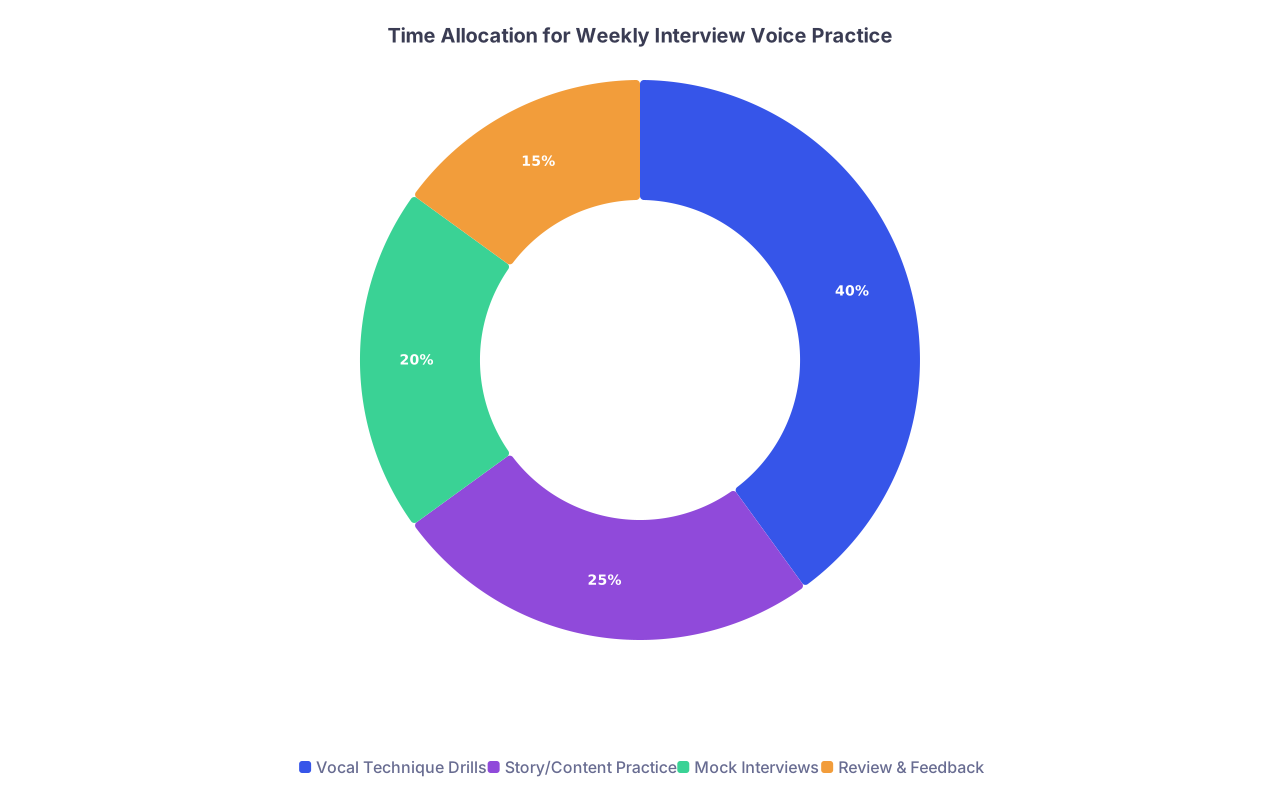
| Category | Value |
|---|---|
| Vocal Technique Drills | 40 |
| Story/Content Practice | 25 |
| Mock Interviews | 20 |
| Review & Feedback | 15 |
10. A Simple Daily Micro‑Routine (Under 10 Minutes)
If you are in the thick of classes or rotations and can not do the full weekly plan yet, at least do this:
Daily 8–10 minute routine:
- 2 minutes – Breathing + articulation warmup (from Section 7).
- 3 minutes – One answer in Animated Storyteller mode (Drill 1).
- 3 minutes – Same answer in Balanced Professional mode (Drill 5).
- 1–2 minutes – Quick self‑rating (1–5) on energy, pace, and pauses.
Five days of this is already 40–50 reps per week. That is enough to shift long‑standing habits.
You do not need to be naturally charismatic to be engaging in an interview. You need control. Over pitch. Over pace. Over pauses. Over how your face and voice match your stories.
That control is built, not gifted.
Here is your concrete next step:
Today, within the next hour, record a 10‑minute cold interview answering “Tell me about yourself,” “Why medicine?”, and one failure story. Watch it once, rate yourself on energy, pitch variety, pace, pauses, emphasis, and warmth. Then choose one weakness and run the exact drill that targets it for 10 minutes.
Do that three times this week, and your interview voice will not be the same person who hit record today.