
The last questions you ask in an interview can help you more than anything you said in the previous 30 minutes.
Most applicants waste this moment. They ask, “So… what’s the call schedule like?” or “I think you covered everything.” That’s forgettable. Or worse, it makes you look uninterested, unprepared, or self-focused.
Let me walk you through what actually impresses interviewers at the end of the visit—and give you word-for-word examples you can steal.
The Real Job of Your “Any Questions for Me?” Moment
That final segment is not about extracting information. You could Google 90% of what people ask.
It’s about signaling three things:
- You’ve done your homework on the program/school.
- You’re thinking like a future colleague, not a passive student.
- You care about fit, growth, and contribution—not just “will you take me?”
So the questions that impress:
- Are specific to them, not generic.
- Show insight into training, culture, or education.
- Tie back to something you discussed earlier.
- Invite the interviewer to share their perspective, not just facts.
Categories of Questions That Actually Impress
If you remember nothing else, remember this: ask about growth, contribution, and culture.
I’ll break this into practical buckets with examples you can literally read from your notes.
1. Questions About Growth and Development (Gold Standard)
These are almost never wrong. Interviewers love applicants who care about how they’ll grow, not just how they’ll survive.
Examples for medical school interviews:
- “If you think about the students who grow the most here from M1 to M4, what do they tend to do differently?”
- “How does the school support students who want to push themselves academically—whether that’s research, advanced electives, or dual degrees?”
- “Can you tell me about a student you’ve seen really transform during their time here? What made the difference for them?”
Examples for premed-level (like early pipeline or post-bac):
- “What habits do your most successful students build early on?”
- “How do advisors here help students shape a realistic but ambitious plan for med school applications?”
These impress because they:
- Treat the interviewer like a mentor, not a gatekeeper.
- Show you’re coachable and serious about improving.
- Signal that you’re already thinking ahead about who you’ll become, not just getting in.
2. Questions About Culture and Mentorship (What Programs Brag About)
Most brochures talk about “supportive culture” and “open-door mentorship.” Make them prove it.
Medical school examples:
- “If I asked your students what the culture is really like here on a bad week of exams, what do you think they’d say?”
- “How do students typically find mentors? Are there any formal programs that actually work well, or is it more organic?”
- “What do you see as unique about how students and faculty interact here compared to other schools you know?”
Residency-type framing (for future reference, if you’re premed now):
- “Among your residents, what kind of people seem happiest here?”
- “If a trainee is struggling—academically or personally—what does help actually look like here, beyond the brochure language?”
These land well because they:
- Show you care about being in a healthy environment.
- Push beyond marketing into reality (interviewers who like their programs enjoy this).
- Signal maturity: you understand that culture affects your ability to thrive.
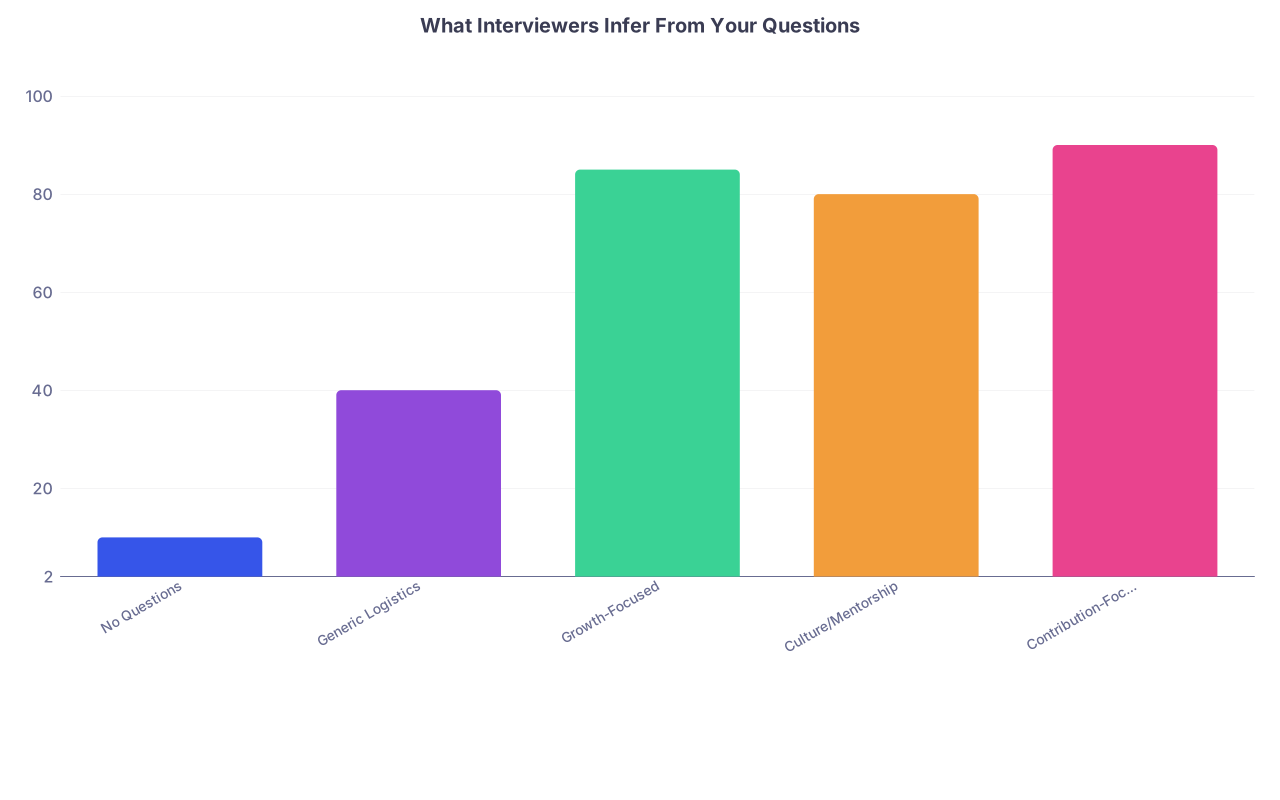
| Category | Value |
|---|---|
| No Questions | 10 |
| Generic Logistics | 40 |
| Growth-Focused | 85 |
| Culture/Mentorship | 80 |
| Contribution-Focused | 90 |
Questions That Make You Sound Like a Future Colleague
This is where you separate yourself from the pack.
3. Questions About Contribution, Not Just Benefits
Most applicants ask: “What can you do for me?”
Stronger applicants also ask: “How can I be useful here?”
Examples:
- “Where do you see room for students to add value to the school—whether that’s in curriculum development, outreach, or student life?”
- “Have students here started any initiatives you’re particularly proud of? How did the school support that?”
- “If I were a student here and I wanted to leave the place better than I found it, where would you suggest I start?”
Why interviewers like this:
- It frames you as someone who builds, not just consumes.
- It aligns with what schools sell to accreditors: “our students improve our institution.”
- It makes you seem like someone they’d actually want on committees, projects, etc.
4. Questions That Build on Something They Already Said
Lowest-risk, highest-return category: listen during the interview, then circle back.
Interview example:
Interviewer earlier: “We’re revamping our pre-clinical curriculum to integrate earlier patient exposure.”
You at the end:
- “You mentioned you’re revamping the pre-clinical curriculum with earlier patient exposure. How are students involved in shaping or giving feedback on those changes?”
- “What pushed the school to make that shift—was it student input, outcomes data, or something else?”
Another example:
Interviewer earlier: “I advise several students doing longitudinal research.”
You later:
- “You said you advise students in longitudinal research. For someone who doesn’t have a strong research background yet, what do you think makes a student a good fit for those projects?”
This does three things:
- Proves you were actually listening.
- Shows you can track complex ideas and follow up meaningfully.
- Makes the conversation feel like a genuine human interaction, not a script.

| Step | Description |
|---|---|
| Step 1 | Listen During Interview |
| Step 2 | Note Interesting Topic |
| Step 3 | Identify Deeper Angle Growth, Culture, or Contribution |
| Step 4 | Connect to Your Perspective or Future Goals |
| Step 5 | Ask Open-Ended Question |
Specific Example Questions You Can Use (And When)
Let’s get very tactical. Here’s a set of plug-and-play questions organized by your priority.
| Goal | Example Question Type |
|---|---|
| Show growth mindset | Ask how students develop over M1–M4 |
| Signal interest in culture | Ask what students say on a bad week |
| Highlight contribution | Ask where students add value to the school |
| Show preparation | Ask about specific program initiatives |
| Build rapport | Ask about interviewer’s own career path |
If you want to emphasize curiosity and coachability
- “From your perspective, what separates a good student here from a truly outstanding one?”
- “If you could give one piece of advice to someone starting here next year, what would it be?”
If you want to show you did your research
You reference something specific from the website, brochure, or recent news.
- “I read about your new community health track. How have students responded to the longitudinal clinic experiences?”
- “I saw that your school recently expanded its simulation center. How has that changed early clinical training for students?”
Simple rule: if a question could be asked at any school, it’s weaker. If it only makes sense at this school, it’s stronger.
If you want to build a personal connection
- “You mentioned you’ve been here for 12 years. What’s kept you here?”
- “When you think back to your own training, what do you wish you’d had that students here now do have?”
You’re letting the interviewer talk about themselves (people rarely mind that) while still learning about the place.
Questions That Hurt You (Or At Least Don’t Help)
Let’s be blunt: some questions are actively bad.
1. Overly Self-Focused or Entitled
- “How likely is it that I’d be able to live off-campus?” (if it’s all over the website)
- “How much time off do students usually get to travel?”
- “What are your board scores and match lists like?” asked with an aggressive consumer vibe
You’re allowed to care about lifestyle and outcomes. But if that’s your only focus, it shows.
Better:
- “How do you think the curriculum here helps students prepare for Step/Level while still learning to think like clinicians?”
- “What kind of support do students get when they’re going through applications and planning for residency?”
2. Questions That Reveal You Didn’t Prepare
- “So… do you have research?” (it’s in bold on the homepage)
- “Is there a hospital affiliated with the school?”
- “What’s your class size?” (two clicks away)
If it’s a basic fact, Google it. Use the interview to ask about experiences and perspectives, not brochure bullet points.
3. Traps Disguised as “Honest Questions”
You’ve maybe heard people say, “Ask about weaknesses, it shows critical thinking.”
Careful.
Asking, “What are the weaknesses of this program?” can put the interviewer on the defensive. Some are fine with it, many aren’t.
A better angle:
- “Every school has areas it’s still working on. What are the things you’re most actively trying to improve here?”
- “If you had unlimited resources and no constraints, what’s one thing you’d change or add to this program?”
Same idea, less combative.
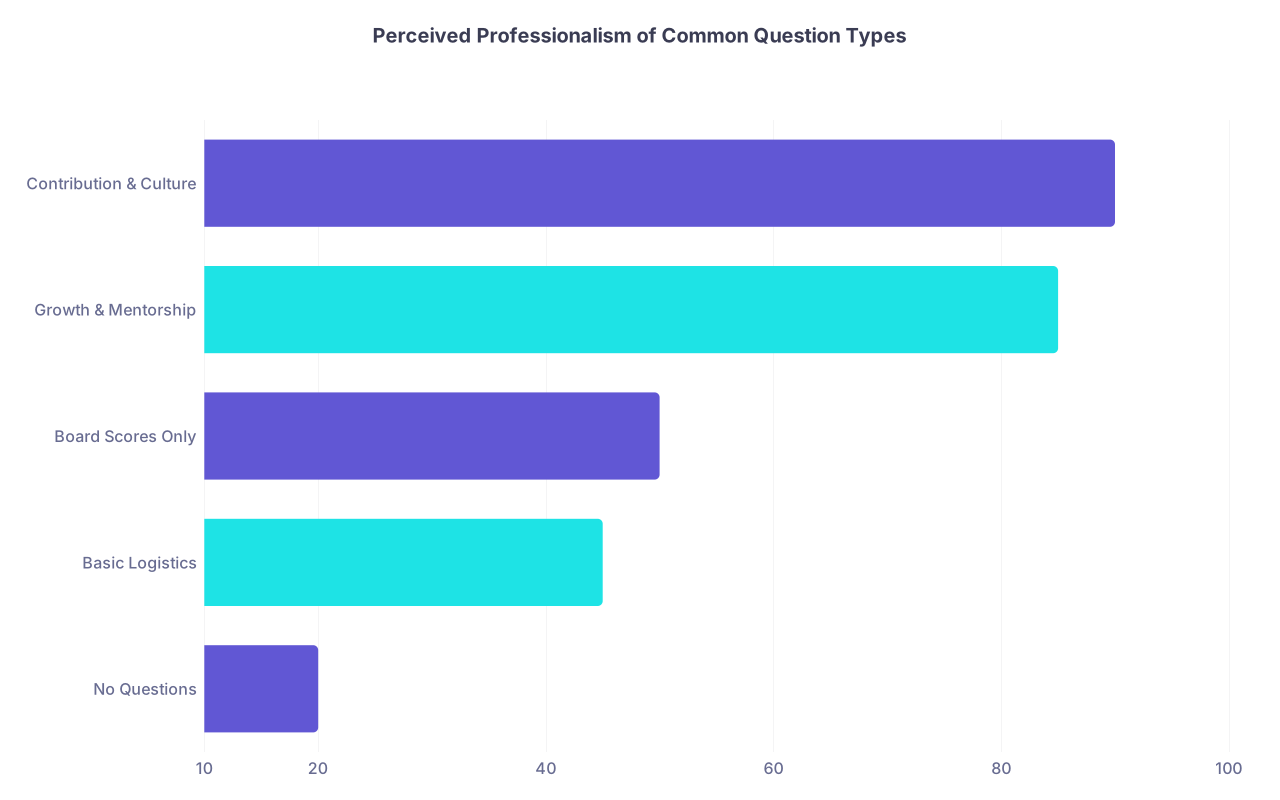
| Category | Value |
|---|---|
| No Questions | 20 |
| Basic Logistics | 45 |
| Board Scores Only | 50 |
| Growth & Mentorship | 85 |
| Contribution & Culture | 90 |
How Many Questions Should You Ask? And How Long?
Target 2–4 strong questions. Not 10.
Rule of thumb:
- Always have 4–6 written down in a small notebook or on your phone (check them quickly before the interview, not during).
- Use 2–3, depending on time and how naturally the conversation is flowing.
- Make them answerable in 1–3 minutes each.
If you’re short on time, say something like:
“I have a couple more I’m curious about, but I also want to be respectful of your schedule. Would you prefer I ask one more, or should I email the admissions office later?”
Shows awareness and respect. No one will penalize that.

Simple Framework to Build Your Own Great Questions
Here’s a quick formula you can literally use the night before:
Do 20–30 minutes of research per school. Skim: homepage, curriculum, unique tracks, any recent news.
For each school, fill these prompts:
- “I’m curious how this school helps students grow in ______.”
- “I’m wondering how students fit into ______ (initiative, track, community program).”
- “I’d like to know what the culture is actually like around ______ (exams, clerkships, wellness).”
Turn each into an open-ended question.
Examples:
“I’m curious how this school helps students grow in leadership.” →
“Are there particular leadership opportunities that students here tend to find especially transformative, whether that’s formal roles or more informal initiatives?”
“I’m wondering how students fit into the free clinic program.” →
“How do students typically get involved with the free clinic, and what responsibilities do they take on as they progress through school?”
Make them sound like you. Not like a script you copied.

Quick Do/Don’t Checklist Before Your Next Interview
Do:
- Walk in with 4–6 written questions organized by theme (growth, culture, contribution, specifics about that school).
- Listen carefully during the interview and be ready to swap in a follow-up question based on what they say.
- Ask questions that treat them like a mentor with insight, not a customer service rep.
- Aim for questions that only make sense at this specific school or with this specific person.
Don’t:
- Say “I think you’ve covered everything” unless time is legitimately over and you’ve already asked something.
- Ask for easily searchable facts.
- Only ask about lifestyle, call, time off, and scores. One of those is fine; three of those is a red flag.
- Turn the final minutes into an interrogation or a complaint session.

FAQ: Smart End-of-Interview Questions
1. Is it bad if I don’t have any questions at the end?
Yes, it usually looks bad. It signals either lack of preparation or lack of genuine interest. Even if they covered a lot, you can ask perspective-based questions like, “What do you think makes students happiest here?” which don’t get “covered” in a presentation.
2. Can I ask about Step scores, match lists, or ranking?
You can, but don’t make it your only focus. Frame it professionally: “How do you feel the school’s curriculum prepares students for boards and residency applications?” They know outcomes matter, but they don’t want to feel like you see them purely as a step to a prestigious match.
3. Is it okay to read my questions from a notebook?
Yes. Glancing at a small notebook is totally fine and often looks organized. Just don’t bury your face in pages and read mechanically. Look down briefly, then ask naturally.
4. Should I tailor questions to each interviewer (faculty vs student vs admin)?
Ideally, yes. With students, ask about day-to-day reality and culture. With faculty, ask about curriculum, mentorship, and growth. With administrators, ask about program direction and support structures. But if you can’t keep it all straight, at least make them specific to the school.
5. Can I ask “Did I do okay?” or “Are there any concerns about my application?” at the end?
Don’t. It puts the interviewer in an awkward position and often violates their policies. If you want feedback, a better version is: “Is there anything you’d recommend I focus on during medical school to become a strong applicant for [X specialty/goal]?” That’s forward-looking and more professional.
Bottom line:
Ask questions that show you care about growth, culture, and contribution.
Make them specific—to the school, to the interviewer, and to what’s been said.
Use those last minutes to sound like a future colleague, not a nervous applicant trying to fill time.