

The first 7 days of a clerkship decide whether you coast to “Pass” or quietly lock in “Honors.” Most students waste them. You will not.
This is a day‑by‑day, clerkship‑by‑clerkship setup manual. At each point I will tell you: do this now, so that weeks 3–6 are easy and your eval basically writes itself.
Global Rules: Before Day 1 of Any Clerkship
At this point (the weekend before you start), you should:
Clarify expectations in writing (15–20 minutes)
- Open your school’s clerkship syllabus.
- Skim for:
- Grading breakdown (shelf %, clinical eval %, OSCE, assignments).
- Required procedures / numbers (pelvic exams, peds well visits, surgical cases, etc.).
- Required logs (patients, diagnoses, procedures).
- Put the actual numbers into a 1‑page personal tracking sheet.
Create a clerkship “dashboard”
- One sheet (digital or paper) with:
- Rotation dates and sites.
- Required experiences / minimum numbers.
- Names/emails of clerkship director and site coordinator.
- Exam date and major assignment due dates.
- This becomes the control center. You will look at it daily.
- One sheet (digital or paper) with:
Pre-load core references
- Surgery: DeVirgilio, Pestana, or NMS cases.
- Internal Medicine: Step‑Up to Medicine or UWorld IM questions.
- OB/GYN: UWise or Blueprints OB/GYN.
- Pediatrics: BRS Peds or PreTest Peds.
- Family Med: Case Files FM + ambulatory UWorld sets.
- Psych: First Aid for Psych clerkship or Case Files Psych.
- Download an antibiotic guide (Sanford, Hopkins ABX) and an ECG app.
Plan your study cadence
- Decide now:
- Weekdays: 10–20 UWorld / shelf questions or 1–2 cases.
- Weekends: 40–60 questions, plus reviewing incorrects.
- Block this on your calendar like a class. Not “if I have time.”
- Decide now:
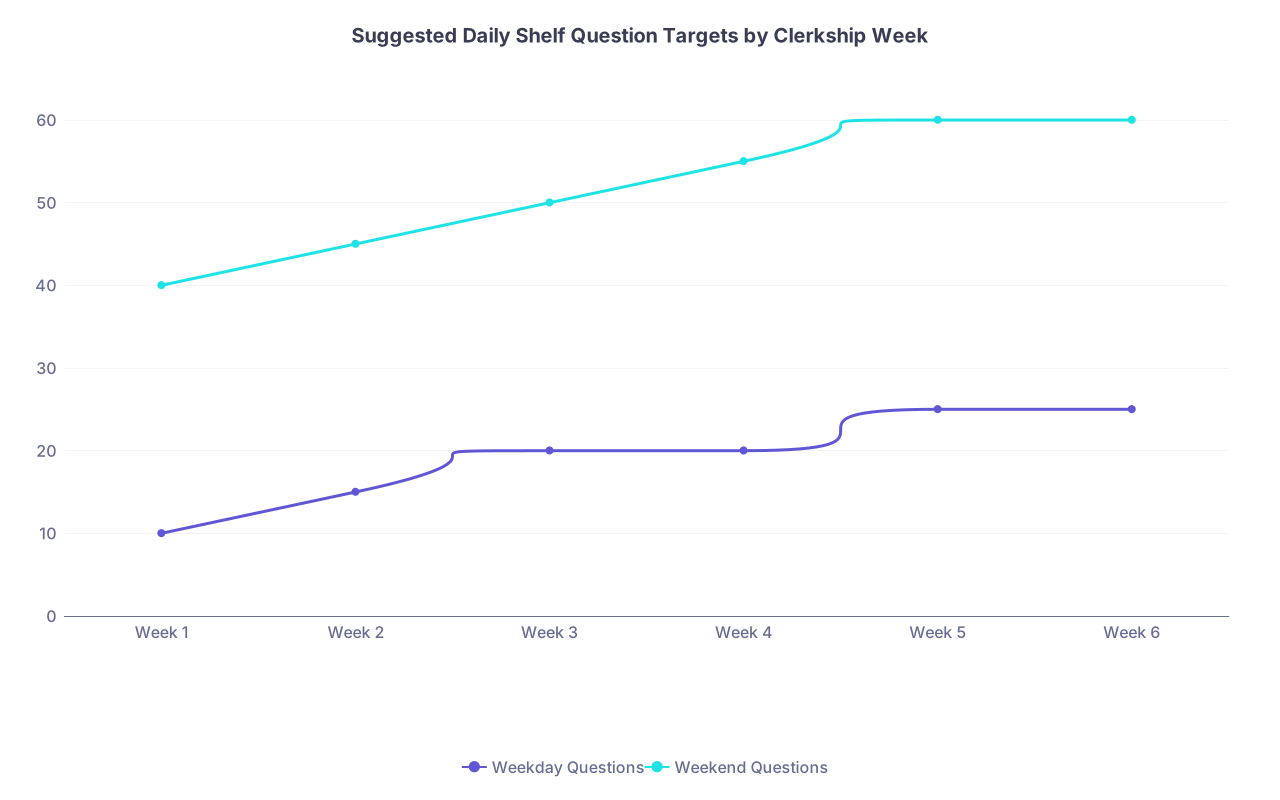
| Category | Weekday Questions | Weekend Questions |
|---|---|---|
| Week 1 | 10 | 40 |
| Week 2 | 15 | 45 |
| Week 3 | 20 | 50 |
| Week 4 | 20 | 55 |
| Week 5 | 25 | 60 |
| Week 6 | 25 | 60 |
Day 1: Make Your First Impression and Map the Terrain
Day 1 is not for showing how smart you are. It is for showing you are low‑maintenance, teachable, and organized.
Morning: Introductions and Expectations
At this point, you should:
Arrive early. Actually early.
- Surgery / IM inpatient: 45–60 minutes before first scheduled event.
- Outpatient / clinics: 20–30 minutes early.
- Find:
- Workroom.
- Bathrooms.
- Where the team prints lists.
- Where notes are written (shared office, on wheeled computers, etc.).
Introduce yourself with purpose
- To residents and attendings:
- “Hi, I’m [Name], MS3 on [service] for the next [X] weeks. I’m really hoping to improve my [X skill, e.g., presentations, procedures]. Anything you prefer from students so I can be as helpful as possible?”
- This does two things:
- Signals self-awareness.
- Gives them permission to coach you.
- To residents and attendings:
Ask 4 key questions early Ask your senior resident/fellow:
- “How do you like presentations structured here?”
- “What time do you want students to pre-round and have notes done?”
- “What are students usually responsible for on this service?”
- “What do Honors‑level students usually do differently?” Listen. Write it down. This is your grading rubric in human language.
Afternoon: Learn Systems, Not Medicine
The content will come. Your job on Day 1 is to understand workflow:
- How to:
- Print patient lists.
- Find overnight notes, labs, imaging.
- Enter orders (even if you cannot sign).
- Write notes (which templates, how long is acceptable).
- Page consults appropriately.
By the end of Day 1, you should have:
- Access to:
- EMR.
- Pager or secure messaging.
- Shared drives / reading materials.
- A rough sense of:
- Rounding order.
- Typical daily schedule (pre-round, round, post‑round, conferences, OR/clinic times).
Do not leave without asking: “Who is on call when, and which days should I stay late to see admissions/cases?”
Days 2–3: Build Your Personal Workflow
Now you show that Day 1 was not a fluke. At this point, your goal is simple: become predictably useful.
Morning Routine: Pre‑Round and Present
For inpatient-heavy clerkships (IM, surgery, OB, peds inpatient):
By Day 3, you should have a repeatable pre‑round routine:
Pre‑round checklist (per patient)
- Overnight events / new notes.
- Vitals and trends (HR, BP, RR, O2, temp).
- I/Os (especially on surgery, ICU, nephro).
- Labs: focus on changes, not just numbers.
- Imaging / consult notes added overnight.
- Focused exam: 3–7 minutes max.
Presentation structure Stick to the team’s requested format. If they did not specify, default:
- IM / Peds:
- ID + overnight events.
- Subjective (symptoms, pain, complaints).
- Objective (vitals, exam, key labs).
- Assessment (1–3 problems).
- Plan (organized by problem).
- Surgery:
- ID + POD # / procedure.
- Overnight events (pain, nausea, vomiting, fevers, drains, outputs).
- Vitals / exam (esp. abdomen/wound).
- Labs.
- Plan: diet, pain control, fluids, DVT prophylaxis, dispo.
- IM / Peds:
One improvement per day After rounds, ask your senior: “One specific thing I can do to make my presentations better tomorrow?” And then actually change it.
Afternoon: Learn Micro‑Skills per Clerkship
At this point, target one or two clerkship‑specific tasks and get competent quickly.
Internal Medicine
- Start drafting notes before rounds; update after.
- Practice framing problems:
- “This is acute decompensated heart failure likely precipitated by dietary/salt indiscretion and poor med adherence, improving with IV diuresis.”
- Read 10–15 minutes per problem you saw that day (e.g., heart failure, COPD, DKA).
Surgery
- Learn how to:
- Pull up imaging in the OR.
- Cut sutures correctly.
- Help with positioning and prepping.
- Show up to every case your resident is on, early.
- Know the indication, basic steps, and key anatomy for tomorrow’s cases by the night before.
- Learn how to:
OB/GYN
- Learn triage flow (who gets seen first, who keeps the labor room).
- Practice brief labor progress notes and post‑op C‑section notes.
- Ask to do every speculum exam possible. Early. Numbers matter here.
Pediatrics
- Get comfortable with peds dosing references.
- Learn age‑appropriate milestones for the common age groups you see.
- Practice talking to both parent and child in each encounter.
Psych
- Master the mental status exam template.
- Observe how attendings ask about suicidal ideation, psychosis, substance use.
- By Day 3, you should be able to lead large parts of the psych interview.
Family Medicine
- Learn health maintenance schedules: vaccines, cancer screening, basic labs.
- Watch how preceptors manage time in 15‑minute visits.
- Take ownership of 1–2 full visits per half‑day (history, physical, plan draft).

Days 4–5: Become Reliable and Start Collecting Wins
By now, the team has decided whether you are “extra work” or “helpful.” You want to be the latter so they invest in you.
Formalize Your Role
At this point, you should have 2–4 “your” patients (inpatient) or a clear visit target (outpatient). Your tasks:
Own your patients
- Know:
- Reason for admission.
- Hospital day, post‑op day.
- Antibiotics, anticoagulation, major interventions.
- Anticipate:
- “If we are not discharging today, what are the barriers?”
- Common next steps for that condition.
- Know:
Ask for clear responsibilities
- “For the patients I’m following, can I be responsible for:
- Drafting daily notes.
- Placing order sets for you to review.
- Calling family/PCP for collateral (psych, peds, FM)?”
- “For the patients I’m following, can I be responsible for:
Start tracking required experiences
- Open your personal dashboard.
- By Day 5, you should have at least some progress in:
- Procedures (pelvics, rectals, suturing, pap smears).
- Patient type exposure (well child checks, prenatal visits, psychiatric emergencies).
- If one category is at zero, tell your resident:
- “I need at least [X] of [pelvic exams/well child checks/OR cases]. Can you let me know when those are happening so I can scrub in / join?”
| Clerkship | Patients Owned by Day 5 | Key Experiences Started |
|---|---|---|
| Internal Medicine | 3–4 | At least 1 admission, 1 discharge |
| Surgery | 3–5 | 3+ cases scrubbed, 1 simple closure |
| OB/GYN | 2–3 | 1–2 pelvic exams, 1 L&D patient |
| Pediatrics | 3–4 | 1 well visit, 1 acute visit |
| Family Med | 4–6 per half-day | 2 independent visits (supervised) |
| Psychiatry | 3–4 | 1 full psych interview led by you |
Start Documenting Your Value
At this point, you are not just learning medicine; you are building evidence for Honors‑level comments.
Begin a simple daily log (3–4 bullet points per day):
- “Evaluated new admission for CHF; presented to senior; incorporated feedback about problem‑based A/P.”
- “First assisted in lap chole; closed 2 port sites with 4‑0 monocryl.”
- “Conducted full psych interview for new admission with MDD; wrote initial note with attending edits.”
This does two things:
- Helps you fill out end‑of‑rotation self‑evaluations with specifics.
- Reminds you to keep stretching, not coasting.
Day 6: Fix Problems Early, Double Down on Feedback
By now, any major issues with your performance are already visible to your team. You fix them this weekend, not in week 5.
Mid‑Week Feedback Check
At this point, explicitly ask for brief feedback from someone who actually sees your work (usually your senior resident or main preceptor):
- “I want to make sure I am on track for the level you expect. Can you give me 2 things I am doing well and 2 things I should change this week?”
And then do not argue. Just write it down.
Common early‑week problems you can fix:
- Presentations too long → Start timing yourself and lead with assessment.
- Notes too detailed → Use templates, cut fluff, highlight changes.
- Too passive → Volunteer: “Can I see the next admission?” “Can I start the H&P in the ED?”
- Weak fund of knowledge → Start a focused reading habit every night based on your patients.
Shelf & Studying: Hard Reset
By Day 6, your studying pattern is either solid or nonexistent. Correct course now.
You should, by this point:
- Have completed:
- 80–120 questions or equivalent cases minimum across the first week.
- Be tracking:
- Incorrect questions by topic.
Use the weekend (Day 6–7) as your first mini‑reset:
- Do a 40–60 question block or 5–8 cases. Timed.
- Review
- For every missed question:
- One‑liner: “Missed because I forgot X / misread Y / did not know Z.”
- Add recurring topics to a 1‑page “Weak Areas” list.
- For every missed question:
- Micro‑plans for next week
- Example: “Missed all COPD questions → read 2–3 pages on COPD tonight + redo 5 COPD questions tomorrow.”
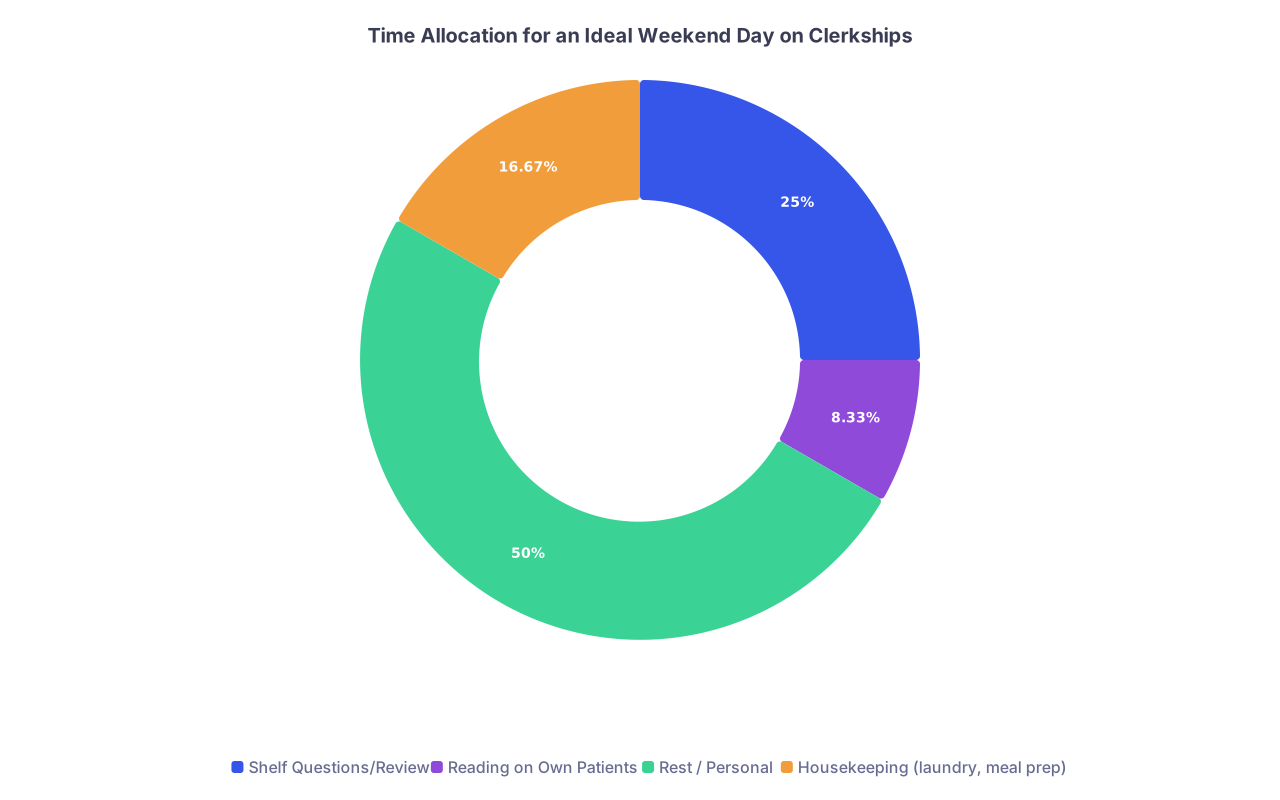
| Category | Value |
|---|---|
| Shelf Questions/Review | 180 |
| Reading on Own Patients | 60 |
| Rest / Personal | 360 |
| Housekeeping (laundry, meal prep) | 120 |
(Values are minutes: yes, you can still have a life.)

Day 7: Recalibrate, Plan Week 2, and Start Acting Like Honors
Day 7 is usually a Sunday. Use it like an operations officer, not a victim.
Morning: Weekly Review
At this point, sit down with your dashboard and ask:
Am I actually on track for Honors? Look at:
- Required experiences: any zeros that worry you?
- Questions/cases done: on pace or behind?
- Feedback themes from residents?
What does my team think of me right now? Be honest:
- Would they say “reliable, improving, engaged”?
- Or “quiet, shows up, not sure what they know”? If you do not like the answer, you fix it this week, not later.
Update your log
- 7 entries, one per day.
- Flag 2–3 high‑impact contributions so far.
Midday: Set Specific Week 2 Targets
Now you plan concrete goals. Not vague intentions.
For each clerkship, sample Week 2 goals:
- Internal Medicine
- “Lead the H&P and initial plan on at least 1 new admission.”
- “Present at least 1 mini‑talk (5 minutes) on a topic relevant to our patients (e.g., diuretic choices in HF).”
- Surgery
- “Close at least 3 skin incisions.”
- “Know indications and complications cold for the 3 most common cases on our service.”
- OB/GYN
- “Perform at least 3 pelvic exams and 2 cervical checks under supervision.”
- “Be primary on at least 1 labor patient from admission to delivery.”
- Pediatrics
- “Lead well‑child visit including counseling on vaccines and development.”
- “Get comfortable with peds medication dosing for common meds (amoxicillin, acetaminophen, ibuprofen, albuterol).”
- Psych
- “Independently conduct at least 2 full psych interviews start‑to‑finish, present to attending.”
- “Be able to explain first‑line treatments for depression, schizophrenia, bipolar, and anxiety without notes.”
- Family Medicine
- “Own 4+ patients per half‑day, including plan drafts.”
- “Give 1 short evidence‑based counseling talk (e.g., statin initiation, smoking cessation).”
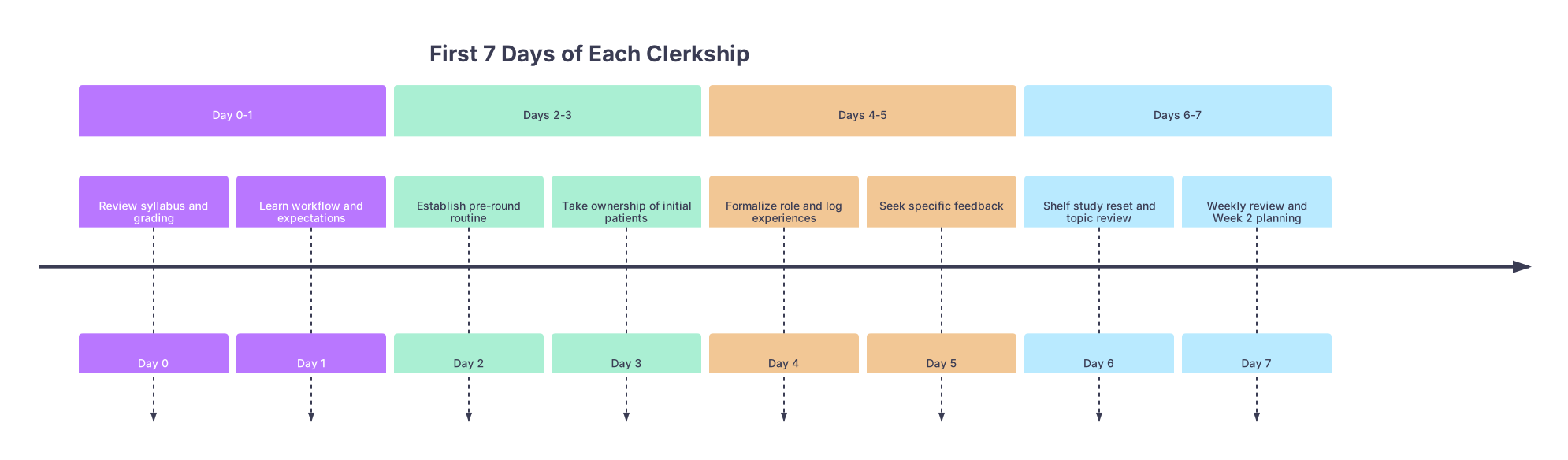
| Period | Event |
|---|---|
| Day 0-1 - Review syllabus and grading | Day 0 |
| Day 0-1 - Learn workflow and expectations | Day 1 |
| Days 2-3 - Establish pre-round routine | Day 2 |
| Days 2-3 - Take ownership of initial patients | Day 3 |
| Days 4-5 - Formalize role and log experiences | Day 4 |
| Days 4-5 - Seek specific feedback | Day 5 |
| Days 6-7 - Shelf study reset and topic review | Day 6 |
| Days 6-7 - Weekly review and Week 2 planning | Day 7 |
Evening: Script Your Week 2 “Version 2.0”
You should go into Monday as a visibly upgraded version of yourself. Decide in advance:
- How you will:
- Start volunteering more: “Can I try writing this note?” “Can I see the next consult?”
- Ask one good question per day that shows you read (not “What is CHF?” but “Why are we using metoprolol instead of carvedilol here?”).
- Raise your ceiling: scheduling a brief 5‑minute teaching with an attending.
And send yourself one short email or note titled: “Week 2: [Clerkship] – What Honors Level Looks Like.” Three bullets. That is your standard.

Putting It All Together: The First 7 Days Pattern
By this point, you see the structure:
- Day 1: Learn people and systems.
- Days 2–3: Build your own workflow.
- Days 4–5: Own patients and document your value.
- Days 6–7: Correct, reset, and plan for the next level.

Final Tight Summary
- The first week is not a warm‑up. It is where your reputation and grade trajectory are set. Act like it.
- Every day should add structure: specific responsibilities, documented experiences, and clearer feedback.
- If you use Days 6–7 to reset study habits and recalibrate with honest feedback, you will walk into Week 2 already looking like an Honors‑level student while everyone else is still “figuring it out.”


