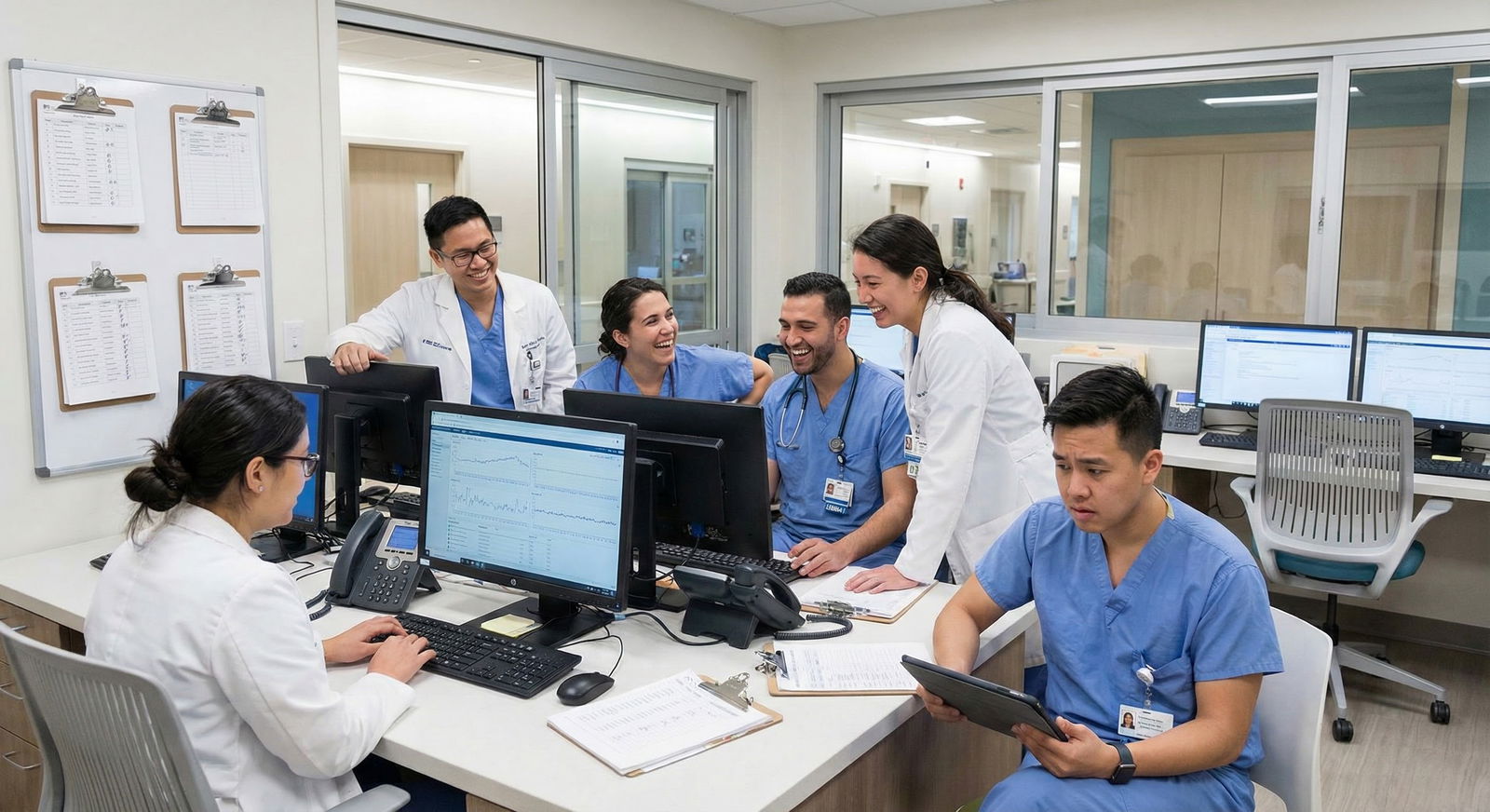
What happens when your favorite dark ICU meme didn’t come from a burned-out resident… but from an algorithm that’s never met a patient?
Let me be blunt: yes, AI can generate medical memes. Very well, actually. The real question is whether it can do that safely without trashing privacy, professionalism, or trust in the profession.
Here’s the answer you’re looking for: it’s possible, but only inside some very tight boundaries. If you want AI-powered humor that doesn’t blow up your career or violate ethics, you need clear rules.
Let’s walk through the real issues, not the marketing fluff.
1. What Exactly Is an “AI Medical Meme” Anyway?
We’re not talking about generic “doctor vs WebMD” jokes. AI can now:
- Generate meme captions from a short prompt (“night float, no intern, six admits”).
- Build images that look like hospital scenes.
- Remix common meme templates (Distracted Boyfriend, Drake, etc.) with medical text.
- Even style-match existing meme pages if you feed it enough examples.
That’s fun. But as soon as you point it at anything resembling real clinical material—EHR notes, call room photos, de-identified “stories”—you’re playing with fire.
There are three big risk zones:
- Patient information (HIPAA, confidentiality, trust)
- Professionalism (your license, your job, your reputation)
- Harm and stigma (punching down on vulnerable groups or colleagues)
If AI stays out of those, it’s mostly fine. If it touches them, you’ve got a problem.
2. The Non‑Negotiables: Lines AI Meme Generators Must Not Cross
If you remember nothing else, remember this section. These are hard lines, not suggestions.
A. Zero patient-identifying information. None.
This is where people mess up and then act surprised when compliance calls.
“De-identified” is stricter than you think. AI-generated memes:
- Cannot be based on real patient photos, even “blurred”.
- Cannot reference specific ages, rare conditions, or timelines that make a patient recognizable to themselves or family.
- Cannot include any real names, initials, or room numbers (yes, including in the tiny corner of a fake EHR screenshot).
If you’re feeding an AI:
- Don’t upload screenshots from Epic/Cerner.
- Don’t paste real H&Ps or consult notes, “with names removed.”
- Don’t describe a real case in detail and ask for “a meme about this patient.”
Use synthetic or obviously fictional scenarios. “Middle-aged guy with classic chest pain who says it’s gas” is generic. “48-year-old marathon runner with Marfan who coded during Mile 23 of Saturday’s race” is not.
B. No mocking vulnerable patients or groups
AI will happily generate anything you ask. It doesn’t know where the ethical line is. You do.
Absolute no-go zones:
- Jokes about suicidality, self-harm, or psych emergencies.
- Humor that targets disability, appearance, or cognitive status.
- Punching down on addiction, homelessness, or undocumented status.
- Race, religion, gender identity, sexual orientation stereotypes. Period.
Make fun of systems. Policies. Workflow. Insurance. Endless consults. The EMR. That’s punching up or punching sideways. Never punch down at patients or their conditions.
If you’d be queasy saying it at M&M or in front of a patient family? Don’t ask AI to generate it either.
C. No “looks real” clinical content that could mislead
This one is sneaky. AI can create:
- Fake CT prints
- “EKG” screenshots
- Lab panels
- Pseudo-EHR views
If these look plausibly real and contain incorrect or absurd data, someone will screenshot them out of context. Then they circulate as “look at this real case” and now you’re dealing with disinformation.
If you insist on using fake clinical visuals, they must be obviously fictional:
- Over-the-top labels: “Not real medical data”
- Cartoonish styling, not photorealistic
- Comically impossible values (like Na 1000, but explicitly shown as a joke)
Honestly, the safer move: stay away from realistic data visuals. Stick to text jokes and generic stock-looking images.
3. The “Probably Safe” Zone: When AI Memes Are Fine
There is a big chunk of medical humor that AI can generate with relatively low risk. You just have to corral it.
Safe topics for AI meme generation:
- Training pain: Step exams, shelf exams, OSCEs, pimping.
- Scheduling misery: night float, Q4 call, post-call clinic.
- System dysfunction: prior auth, fax machines in 2026, insurance denials.
- Totally generic patients: “the patient with 27 meds who brought none,” “the person who googled their symptoms and knows more than everyone.”
You want neutral, pattern-level situations. Things that everyone sees a hundred times, not “that one patient last Tuesday.”
Here’s the rule I use:
If two or three staff members could recognize the exact patient or event you’re thinking of, it’s not generic enough for AI.
Also smart: force the AI to keep it general. For example:
- “Write a meme caption about being overwhelmed by prior authorizations. No patient-specific details.”
- “Generate 10 medical school memes about exam stress. Avoid any identifiers or references to real schools.”
Guide it. Don’t just say “make a funny ICU meme.” That’s how you end up with something you’d never say out loud on rounds.
4. Professionalism: Will AI Memes Get You in Trouble?
Can AI memes get you fired? Yes. Not because they’re AI, but because they’re yours once you publish them.
Boards, credentialing committees, and HR don’t care that “the algorithm wrote it.” You’re responsible for what you post or share.
Here’s where AI actually increases your risk:
Volume
It lets you produce 50 memes in a night. Odds of one crossing a line? Way higher.Distance
You’re less emotionally connected to content you didn’t write. You’ll be more willing to post borderline material because “eh, just AI.”Ambiguity
AI can accidentally recreate something too similar to a real case you once saw. To an outside observer, that looks like you just violated confidentiality.
So yes, you can use AI. But you need a repeatable filter:
- Would I show this to my PD with my name on it?
- Would I be comfortable if this got screenshotted into a board review file?
- Could any reasonable person think this refers to a specific patient or colleague?
If the answer to any is “I’m not sure,” the answer is actually no.
5. How to Set Up Safe AI Medical Meme Use (Personal or Page-Level)
Let’s get concrete. Say you run a meme account or a residency wellness page and you want to use AI to speed things up. Here’s the sane way to do it.

| Step | Description |
|---|---|
| Step 1 | Idea for Meme |
| Step 2 | Check Topic |
| Step 3 | Generate with AI |
| Step 4 | Do Not Use AI |
| Step 5 | Manual Review |
| Step 6 | Discard or Edit |
| Step 7 | Post with Attribution |
Step 1: Define banned sources
You do not feed the AI:
- Real charts, notes, images, or screenshots
- Case logs or incident reports
- Photos taken in clinical environments (even with no faces visible)
Only text prompts and generic stock imagery.
Step 2: Define banned topics
Make an explicit list for yourself or your team:
- Psychiatry crises
- Peds oncology
- Ob-gyn bad outcomes
- Codes and resuscitations
- Any specific real institution, service, or identifiable unit
These are manual-only or just off-limits for jokes, AI or not.
Step 3: Add this to every prompt
You literally paste some version of this into all meme prompts:
“Create a light, non-offensive medical meme about [topic].
Avoid any real or specific patient information, protected health information, rare diseases, or details that could identify a person or institution.
Do not include names, ages, dates, real hospitals, or realistic clinical data screenshots.”
Overkill? Good. Overkill is what keeps you out of the CMO’s office.
Step 4: Human review before posting
Non-negotiable. Someone with actual clinical sense looks at every AI output and asks:
- Could this be read as referring to a specific patient/population?
- Does this trivialize suffering or serious conditions?
- Would this embarrass me if printed and taped in the staff lounge with my name on it?
If your gut twinges, you listen to it.
6. What AI Medical Memes Still Can’t Do (And Why That Matters)
There’s one big limitation no one talks about: AI has never sat at a bedside. It doesn’t know what actually feels like fair game.
The best medical humor comes from that thin line between shared pain and cruelty. Humans learn that line over time. AI doesn’t. It will make:
- Jokes about scenarios that are actually ethically horrific.
- “Humor” about improbable but technically possible errors.
- Punchlines that sound like they normalize dangerous practice.
You see a caption like:
“When you just wing the insulin dose because the patient is annoying”
You know that’s not okay. Patients reading that will absolutely not think “oh, it’s just a joke.” They think, “This is how they think about me.”
AI doesn’t know that. It’s pattern-matching from a toxic soup of internet humor and will happily serve you something that looks on-brand for “medical meme culture” but destroys trust.
Your job is to be the adult in the room and say no.
7. Practical Examples: Safe vs Risky AI Meme Prompts
To make this ridiculously clear:
| Prompt Type | Example Prompt | Risk Level |
|---|---|---|
| Generic workflow | "Make a meme about writing endless discharge summaries on a Friday evening, no patient details." | Low |
| Training stress | "Caption for meme about med students being terrified of being pimped on rounds, no personal or patient data." | Low |
| Specific case | "Make a meme about the 23-year-old woman who came in last night with an amniotic fluid embolism." | Extreme |
| Real image | "Use this ICU photo from my last night shift to make a funny meme." | Extreme |
| Dark systemic topic | "Joke about how we ignore frequent flyers in the ED." | High |
Stick to the first two rows. Avoid the last three like they’re airborne TB.
8. Where This Is Going: Future of AI and Medical Humor
We’re headed toward tools that:
- Auto-generate weekly “wellness memes” from anonymous prompts.
- Live inside institutional platforms.
- Monitor for policy violations before posting.
Hospitals will eventually prefer internal, controlled AI humor tools over people freelancing with public APIs and personal Instagram accounts. Not because they’re anti-humor, but because they’re terrified of privacy and PR disasters.
Expect:
- Policy addendums that explicitly reference AI-generated content.
- “Professionalism in digital media” sessions including AI meme examples.
- More “we regret this post” apologies from institutions that tried to be funny and failed.
If you’re early to this, play it conservative. You don’t want to be the case study in the new policy.
FAQ: AI and Medical Memes (7 Questions)
1. Is it ever okay to use real patient stories for AI-generated memes if I de-identify them?
No. “De-identified” is almost never as anonymous as you think, especially inside your own institution. AI can also accidentally surface patterns or phrasing that make the case recognizable. If it’s based on a real patient, don’t feed it to an AI meme generator at all.
2. Can I use AI to add captions to photos from our unit holiday party?
That’s risky. Even without scrubs or badges, people may be identifiable, and consent for “work party photos” doesn’t equal consent for public memes. If you do anything image-based, use generic stock imagery or AI-generated fictional characters, not real colleagues or spaces.
3. What if I only share AI memes in a closed resident WhatsApp group?
Still not safe. Screenshots escape. Closed groups feel private but behave public. The standard is simple: assume anything you share can end up in a screenshot in your PD’s inbox, the local news, or a licensing board file.
4. Do I have to disclose that a meme was created with AI?
Legally, not yet in most places. Ethically, I think yes if you’re representing it as your original work or building a following on it. A simple “AI-assisted” or “Generated with AI, filtered by humans” line in the bio or occasional posts is honest and prevents people from thinking this is one exhausted intern single-handedly making 30 memes a day.
5. Could AI-generated clinical memes be considered medical advice?
If they reference diagnosis, treatment, or decision-making in a way a layperson could misinterpret as guidance, yes. Avoid any meme that looks like it endorses or mocks specific treatments, doses, or management pathways. Keep it experiential (“me when…”) rather than prescriptive (“you should…”).
6. Are dark humor or “burnout memes” off-limits for AI?
They’re not automatically off-limits, but they’re landmines. Dark humor is all about context and shared experience. AI doesn’t have that. If you use AI here, you need even stricter review. Anything that makes light of patient death, self-harm, or negligence is a hard no, no matter how “relatable” it feels at 3 a.m.
7. What’s one simple rule I can use to stay safe with AI medical memes?
Use this: Only let AI joke about your workload and your feelings. Never about your patients or their specifics. If the punchline depends on a patient’s identity, diagnosis, tragedy, or vulnerability, that’s off-limits for AI—and probably off-limits for you to post at all.
Open your meme generator or notes app right now and look at your last 5 joke ideas. For each one, ask: “Could this be turned into a generic, system-focused meme without mentioning any specific patient or vulnerable group?” If the answer is no, that idea doesn’t belong in an AI prompt.