
The usual interview-season “self-care” advice is delusional. You are not doing sunrise yoga in every city. You’re eating airport pretzels at 10 p.m. and pretending you still have a circadian rhythm.
So let’s be honest—and organized.
You can stay mostly sane during interview season, but only if you treat your time, energy, and humor like limited resources. I’m going to walk you month by month, then week by week, and finally day by day through what you should actually be doing—and laughing about—so you come out of this circus tired, not broken.
Big Picture: The Interview Season Timeline
Here’s the rough pattern you’re up against:
- August–September: Applications out, the quiet dread phase
- October: First trickle of invites, light chaos
- November: Peak chaos, travel Tetris, Zoom fatigue season
- December: Burnout flirtation, weird holiday energy
- January: Final push, emotional whiplash
- February–early March: Rank list spiral + existential comedy hour
We’ll layer humor and sanity onto that skeleton.
August–September: Set Up Your Sanity (and Your Jokes)
Right now, you’re not actually interviewing yet. This is the planning phase. At this point you should be building the systems that future, sleep‑deprived you will be grateful for.
At this point you should…
- Create your “Interview War Room” file
- One spreadsheet. Not five. Not “I’ll just remember.” You won’t.
- Columns:
- Program
- City/Time zone
- Interview date
- Platform (Zoom/Teams/In‑house cursed proprietary)
- Coordinator email
- Pre‑interview social link
- Notes (red flags, green flags, “PD made a joke, not totally robotic”)
- Vibe score (1–10, purely unscientific but very useful later)
- Add one more column: “What made me laugh?”
Future you will need this when programs blur together.
| Column | Purpose |
|---|---|
| Program | Name of residency |
| Interview Date | Scheduled day |
| Time Zone | Prevent missed starts |
| Platform | Zoom/Teams/In-person |
| Coordinator Email | For rescheduling/thanks |
| Notes | Fit, red/green flags |
| Vibe Score (1-10) | Gut feeling |
Pre-write your humor-safe answers You’re not doing stand-up, but you also do not want to sound like ChatGPT in a necktie.
This month, draft short bullet versions of:
- “Tell me about yourself” – one serious version, one 10% lighter version
- A non‑trauma failure story with a small self-deprecating laugh line
- A hobby answer that isn’t just “I like to read” (unless you can say “I doomscroll PubMed and it’s a problem” with a straight face)
Example tweak:
- Boring: “I enjoy running.”
- Useful: “I run slowly but consistently—my Strava is mostly proof I don’t quit easily.”
Set your “humor boundaries” Decide now:
- You will not joke about: politics, religion, patients, COVID conspiracies, or making fun of other specialties by name.
- You can safely joke about:
- Yourself (mildly)
- Weather/travel mishaps
- Being a learner/not knowing everything
- The universal EMR misery
Commit this to memory:
If you wouldn’t say it in front of your dean, don’t say it in front of a PD.Build a bare‑minimum travel/housing plan Even for a mostly-virtual season, some in‑person events sneak in.
At this point you should:
- Pick 1–2 hotel chains or booking sites you’ll default to. Decision fatigue is real.
- Assemble your “go bag”:
- Portable charger
- Extra charging cable
- Blue-light glasses (optional, but your corneas will thank you)
- Snacks that are not just sugar (mixed nuts, protein bars)
- Black socks (you will forget once; this prevents the second time)
October: The Invite Trickles – Build Your System Now
This is when your email suddenly matters more than your renal function. Invites start dripping in at random times, and everyone in your group chat is screenshotting them like rare Pokémon.
At this point you should be doing three things: scheduling fast, protecting your calendar, and not losing your mind when GroupMe explodes.
Week-by-week in October
Week 1: Create your scheduling rules
Define your “no more than” rule
- Decide your cap:
- Maximum virtual interviews per week: 4–5
- Maximum in‑person interviews per week: 2–3
- Write it at the top of your calendar:
“If I say yes to everything, I will hate life. Pick strategically.”
- Decide your cap:
Block “fake days off”
- Pick at least:
- 2 half-days per week as “No Interviews”
- 1 full weekend day as “Human Day” (friends, sleep, laundry, collapse)
- Label it something honest in your calendar:
- “I will become intolerable if I book over this”
- “Scheduled mental health reboot” You’re more likely to respect your own calendar if it sounds dramatic.
- Pick at least:
Week 2–3: Build your communication templates
At this point you should have your email templates ready, because nothing is more painful than drafting a fresh email when you’re on post-call brain.
Create quick templates for:
- Accepting an interview date
- Asking politely about alternate dates
- Thanking coordinators after a reschedule
Keep them in a Notes app or text expander.
Example “alternate date” email (friendly, not groveling):
Dear [Coordinator Name],
Thank you very much for the interview invitation to [Program]. I’m very excited about the opportunity to learn more about your residency.
I’m currently already scheduled for another interview on [original date]. If there is any flexibility for an alternate date or time, I’d be grateful. If not, I completely understand and will do my best to adjust.
Best regards,
[Your Name], [Med School]
Notice: no paragraphs about your lifelong dream. Save that for the actual interview.
Week 4: Humor check with friends
Do a quick mock interview specifically to test your humor:
- 30 minutes with a classmate or resident
- Ask them to only give feedback on:
- Where you sound robotic
- Where your jokes are risky, cringey, or just not landing
If they hesitate? Fix it now.
November: Peak Chaos – Protect Your Brain (and Back)
This is where things get ugly. Stacked interviews, weird time zones, and the constant, low‑grade panic that an email invite is coming while you’re on a plane.
At this point you should be focusing on: energy management, tactical laziness, and pre‑planned decompression.
Weekly game plan for November
Every Sunday night: “Week-at-a-glance reality check”
Spend 15 minutes:
- Look at:
- How many interviews this week
- How many evenings are hijacked by pre‑interview socials
- When you’ll travel, if at all
- Decide:
- One non-medical thing you’ll protect this week (family call, gym, trash TV)
- One thing you will intentionally half‑ass (meal prep? reading for fun? You can’t do everything.)
Pre‑recorded sanity boosters
At this point you should have:
- One 10–15 minute playlist of videos you know will make you laugh
- Stand-up bits
- Ridiculous TikToks or Reels
- Old meme compilation that you’ll still laugh at at 1 a.m.
- One low‑effort comfort show you can fall asleep to without shame:
- I’ve seen students cycle The Office, Brooklyn Nine‑Nine, Bluey (no judgment), or cooking shows.
Keep these on your phone downloaded for Wi‑Fi disasters.
December: Holiday Lights, Existential Dread
December hits different. Fewer interviews some weeks, but you’re tired, your friends outside medicine are posting “cozy holiday” content, and you’re trying to look enthusiastic on Zoom #14 for the month.
At this point you should be managing: reflection, selective enthusiasm, and avoiding the comparison trap.
Early December: Mid-season evaluation
Take one afternoon (yes, a whole afternoon) to look at your spreadsheet:
- Programs you’ve already interviewed at
- Programs still upcoming
- Your “vibe score” notes
Ask yourself, out loud if you have to:
- “If I got into only these places, could I be okay?”
- “Which programs made me feel relaxed enough to make a joke?” (These tend to be better fits.)
If you realize you’re over-committed and hating life:
- It is allowed to cancel low-interest interviews.
- Do it respectfully and as early as possible. PDs notice courtesy more than people think.
Mid-to-late December: Manage the holiday weirdness
At this point you should:
Plan a real off-call block
Even 2–3 days with zero interviews around the holidays is gold.
Mark them as:- “No interviews – family hostage situation”
- “No interviews – mandatory couch time”
Prepare a one-liner for family/friends questions People will ask:
- “So where are you going next year?”
- “Did you get into Harvard?” (for EM. Sure, Aunt Linda.)
Have a stock answer:
- “Right now I’m still doing interviews and gathering information. The match results come out in March, so mid‑anxiety until then.”
- Or lighter: “I’ll find out in March, so currently I’m professionally touring Zoom backgrounds.”
This prevents you from re‑living your stress at every dinner.
January: Final Surge – Don’t Lose the Thread
This is often the last big block of interviews before rank lists are due. Your stories are polished, but your enthusiasm is running on fumes.
At this point you should be focused on: consistency, documentation, and not sounding dead inside.
Weekly rhythm for January
48 hours before each interview:
- Re‑skim:
- Program website
- Your own notes about them
- Any emails that hinted at their “culture”
- Write on a sticky note:
- 2 things you genuinely like about the program
- 1 question that is specific and not Googleable
Put that sticky next to your screen. This keeps you from defaulting to: “So… what’s the call schedule like?” for the seventh time.
Immediately after each interview:
At this point you should spend 5–7 minutes jotting:
- What did I actually feel?
- Who stood out (PD, residents)?
- Any red flags? (Residents looked exhausted and scared to speak? PD humble-bragged about malignant training?)
- Did I laugh at least once with anyone?
The “did I laugh” question matters. You’re not joining a monastery. You’re joining a team you’ll be stuck with at 3 a.m.
February–Early March: Rank List Panic with Punchlines
Interviews are slowing or done. The temptation now is to endlessly re-sort your list like it’s a fantasy football draft. That’s how people drive themselves insane.
At this point you should: structure your decision-making, use your notes, and weaponize your humor to see through your own fear.
Step-by-step rank list timeline
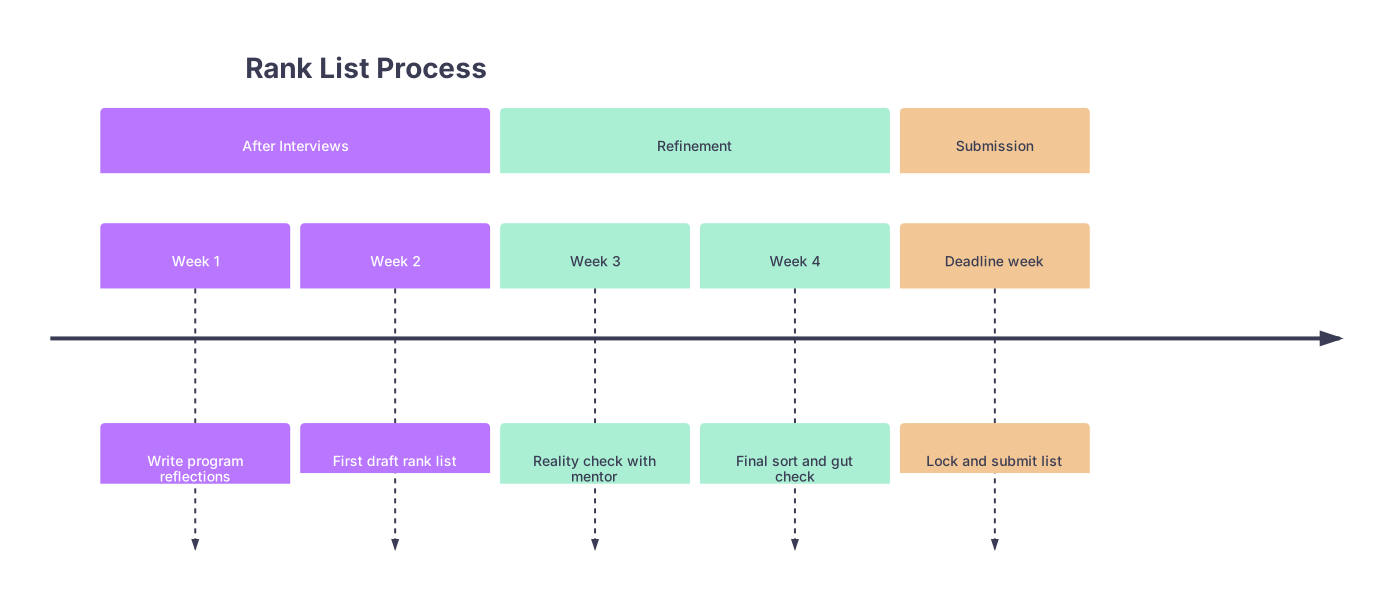
| Period | Event |
|---|---|
| After Interviews - Week 1 | Write program reflections |
| After Interviews - Week 2 | First draft rank list |
| Refinement - Week 3 | Reality check with mentor |
| Refinement - Week 4 | Final sort and gut check |
| Submission - Deadline week | Lock and submit list |
Week 1 after your last interview: Reflection dump
At this point you should:
- Re-read every row of your spreadsheet.
- For each program, write 3–4 sentences in normal, human language:
- “Residents seemed tired but still joked with each other.”
- “PD kept saying ‘We’re a family’ but residents were silent.”
- “City: would require me to learn winter. Unclear if I’m ready.”
Week 2: First draft rank list
Sort your list once based on:
- Personal fit (could I be myself here?)
- Training quality
- Location/social support
Then do a gut check:
- Anywhere you’re about to rank higher only because of name prestige?
Mark it with a tiny “P” in your notes. Prestige. Not always a bad reason—but dangerous if it is the only reason.
Week 3: Sanity meeting with a trusted human
At this point you should:
- Walk a mentor or trusted upper resident through your top 5–10
- Tell them honestly:
- “Here’s where I felt most like myself.”
- “Here’s the program I’m scared to rank lower because it’s ‘fancy’.”
Good mentors can usually sniff out when you’re lying to yourself.
Week 4 (deadline week): Make it boring
You’ll feel like rewriting everything. Don’t.
Implement the “3-day rule”:
- 3 days before the deadline: Set your final draft.
- For the next 3 days: You’re only allowed to change the order if:
- You remember a major red flag, or
- You were actually mistaken about something factual.
Not because you woke up mildly more anxious about snow.
Day-by-Day: What To Do On Interview Days (and The Night Before)
Now let’s zoom all the way in.
The night before an interview
At this point you should:
Set up your “stage” in 15 minutes
- Check:
- Camera angle (no up-the-nose shots)
- Lighting (face visible, window in front not behind)
- Background (remove laundry mountain and that one weird poster)
- Check:
Pre-pack your desk
- Water bottle
- Small snack (that isn’t crumb-spray chaos)
- Printed or digital:
- Program notes
- Your CV
- 3–4 questions
Choose one “reset” joke for yourself
- Something you’ll think about to relax between rooms:
- That one time you blanked and said “Good morning” at 4 p.m.
- The meme your class made about interview suits
It’s not for them. It’s for you.
- Something you’ll think about to relax between rooms:
Hard stop on doomscrolling
- 1 hour before bed: No Reddit, no Student Doctor Network, no class GroupMe.
- You gain nothing from seeing someone else post “Got an invite from X!!!” at 11 p.m.
Morning-of script
At this point you should:
Wake up at least 90 minutes before the interview. No, you’re not “fine” with 20. Your face will disagree.
Light warmup:
- 2–3 tongue-twister lines (sounds silly, works):
- “Red leather, yellow leather.”
- “Unique New York.”
- Not for perfection. Just to avoid mumbling through “gastroenterology.”
- 2–3 tongue-twister lines (sounds silly, works):
Dress code:
- Full outfit. Not just the top. People have stood up on camera. I’ve seen it.
- Comfortable shoes even if no one sees them. It affects your posture and voice.
Hour-by-Hour: During the Interview Day
10–15 minutes before start
At this point you should:
- Log in early to make sure your tech works. Then mute. Camera off until appropriate.
- Have one grounding move:
- 4 deep breaths
- Or 10 slow shoulder rolls
- Or quietly saying: “They already like you enough to interview you.”
During interviews: Where humor lives safely
Your humor should be:
- Brief
- Self-aware
- Never the main event
Safe moments:
- When they ask how interview season is going:
- “My frequent flyer status is going up, but my sleep score is… aspirational.”
- When discussing hobbies:
- “I bake, but I’m mostly known for overestimating how much dessert a call room needs. No one has complained yet.”
Watch resident reactions. If they laugh or smile, you can gently match energy. If they stare blankly? Shift to more straightforward tone and move on.
Between sessions
At this point you should:
- Physically stand up and move.
- Take 3–5 sips of water, even if you’re not thirsty.
- Write down any names you remember. Don’t trust your memory.
After the Interview: Same Day Decompression
Within 1–2 hours (before your brain wipes everything):
At this point you should jot down:
- 3 words that describe the vibe (e.g., “warm, tired, honest”)
- One moment that stood out—in a good or bad way
- Whether you laughed with anyone and how that felt
Then do one non-interview thing:
- Walk
- Trash TV
- Group chat venting with dark humor and memes
Do not immediately compare yourself to others:
- You have no idea how anyone else’s interviews really went.
- You definitely don’t know how programs scored you.
Using Humor Without Self-Destructing
Let me be blunt: the goal isn’t to be “the funny applicant.” The goal is to be the human applicant who is clearly competent and also not a robot.
At this point in the season (whenever you’re reading this), set three rules:
I will not punch down.
No jokes about:- Patients
- Colleagues
- Nurses, staff, or other specialties
I will keep jokes short.
One line. Maybe two. Then back to the question.I will default to sincerity.
If you’re not sure a joke will land? Don’t say it. Use authenticity instead:- “Honestly, this season has been tiring but also really energizing when I meet teams like this.”
Track Your Sanity Like a Data Point
You track your interviews and invites. You should also track your energy and stress.
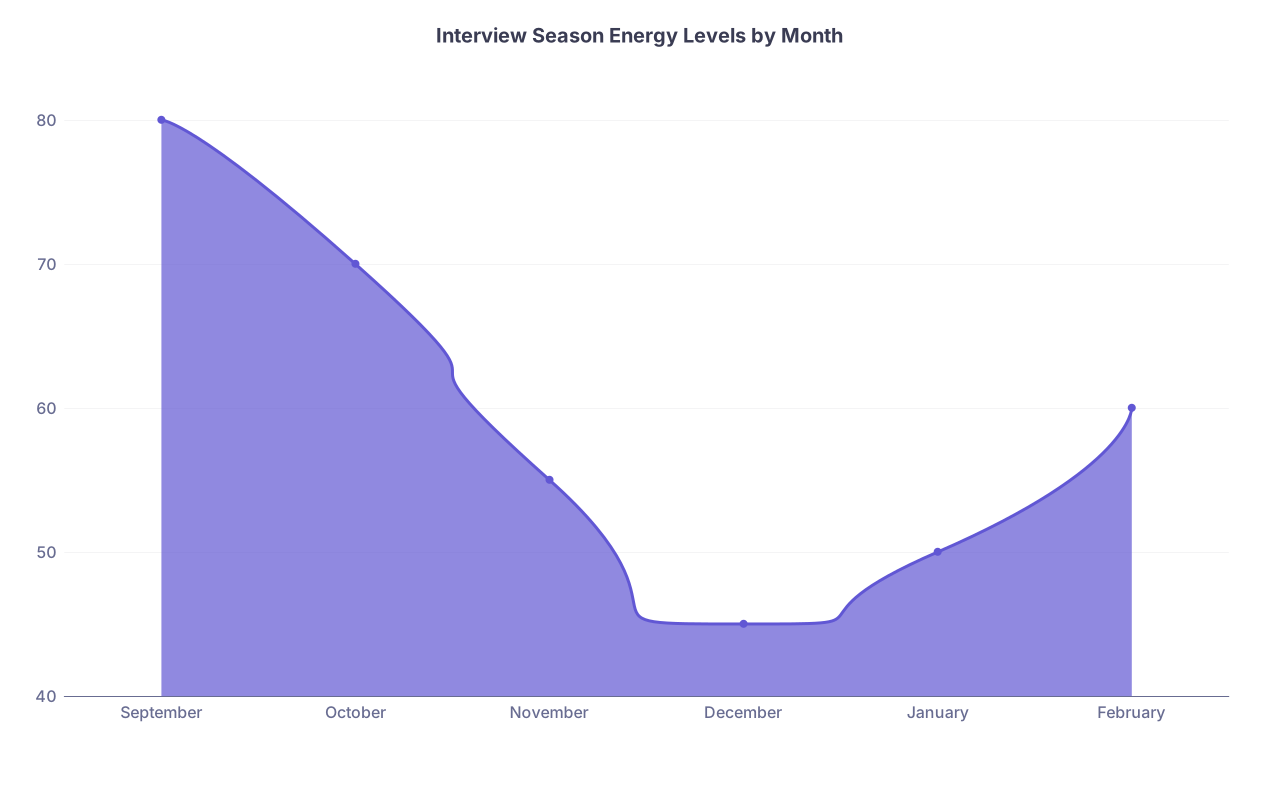
| Category | Value |
|---|---|
| September | 80 |
| October | 70 |
| November | 55 |
| December | 45 |
| January | 50 |
| February | 60 |
If you notice your internal graph dropping under “functioning human”:
- Cut one low‑priority interview
- Protect a real day off
- Talk to someone who remembers you exist outside your CV
Your Next Step Today
Open your calendar and your interview spreadsheet right now. Block off one non‑negotiable “Human Day” for the next two weeks and label it exactly that. Then, under your notes column for the last program you interviewed with, add one line: “What made me laugh here, if anything?”
That’s how you keep your sense of humor—and your sanity—through interview season. One blocked day and one honest sentence at a time.