
The belief that you can say anything and erase it with “just kidding” is dangerous—and in medicine, it can end careers.
Humor in healthcare is not the problem. Lazy, boundary-violating humor is.
You’re in a field where:
- People are terrified
- Bodies are exposed
- Power dynamics are wildly unequal
That’s gasoline. Your words are the match.
Let’s talk about how “I was just joking” keeps people from trusting you, gets reported to HR, and follows you in ways you will not be able to “laugh off.”
The Lie of “Just Kidding”
You know this scenario. I’ve watched it in clinics, ORs, call rooms.
Resident makes a comment:
- To a patient: a “joke” about weight, sex life, fertility, appearance
- To a med student: a “funny” comment about their body, race, accent, or school
- To a nurse: a suggestive or belittling remark “everyone here knows is a joke”
Person looks uncomfortable. Silence. Awkwardness. Then the resident throws in:
“Relax, I’m just kidding.”
Here’s what people hear when you say “just kidding” in a professional environment:
- “I said something risky and now I’m trying to dodge responsibility.”
- “If you’re offended, that’s your fault, not mine.”
- “You’re the problem, not what I said.”
“Just kidding” is not a reset button. It’s a red flag.
Why “just kidding” makes things worse
The mistake is thinking intent erases impact. It does not.
Common failures:
- You assume shared context that isn’t actually shared.
You think you’re among “friends” or “people who know how I joke.” You’re not. You’re at work. - You confuse coping humor with punching-down humor.
Laughing with colleagues to survive brutal shifts is different from mocking patients or vulnerable coworkers. - You underestimate who’s listening.
Patients’ families in the hallway. A med student in the corner. A nurse charting quietly. People don’t disappear just because you forget they’re there.
Once you say it, it’s out there. “Just kidding” doesn’t undo the words. It just tells everyone that if they push back, you’ll treat them like they’re oversensitive.
Where Physicians Cross the Line Most Often
Let’s be blunt. There are predictable hot zones where humor goes bad.
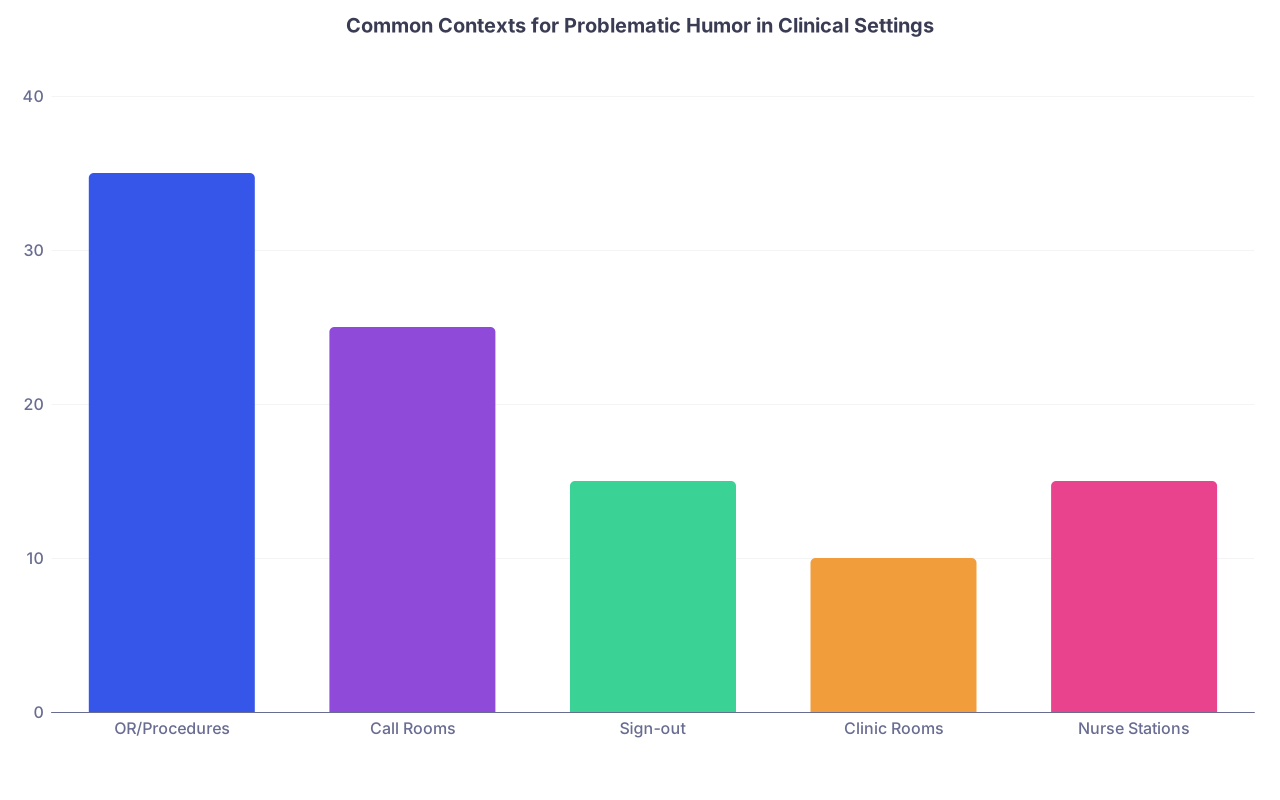
| Category | Value |
|---|---|
| OR/Procedures | 35 |
| Call Rooms | 25 |
| Sign-out | 15 |
| Clinic Rooms | 10 |
| Nurse Stations | 15 |
These are the high-risk areas I see over and over.
1. Jokes about bodies and appearance
Do not joke about:
- Weight
- Smell
- Hair
- Scars
- Genitals
- Breasts
- Skin color
- Age (“you’re basically geriatric” jokes hurt more than you think)
To:
- Patients
- Staff
- Students
- Colleagues
It doesn’t matter how “close” you feel to them. You’re in a position of authority. The power imbalance means your “joke” can land as:
- Shaming
- Sexualized
- Threatening
- Degrading
And the worst part? People rarely call you out directly. They:
- Tell their friends
- Tell their program director
- Tell HR
- Switch clinics
- Avoid you quietly
You won’t always know you crossed a line. But your reputation will.
2. “Dark humor” that isn’t about you
There’s a huge difference between:
- Trauma-bonding with colleagues over the emotional toll of code blues
vs. - Making sarcastic comments about patients, families, or how “ridiculous” their expectations or beliefs are.
Dark humor that punches:
- Up: at systems, absurd policies, your own exhaustion → usually safer internally
- Down: at patients, nurses, med students, techs, marginalized groups → not okay
If your joke relies on:
- Mocking the patient’s intelligence, culture, or language
- Dehumanizing their body (“train wreck,” “whale,” “dumpster fire”)
- Reducing them to their disease or “poor choices”
You’re not coping. You’re being cruel. And someone in the room will remember it.
Humor, Power, and the “Everyone’s Fine With It” Illusion
You’re not just a person at work. You’re:
- Doctor
- Future attending
- Evaluator
- Team lead
People are grading you. But you’re also grading them—on rotations, evals, reference letters, schedule requests. They know that. You may pretend it’s casual. It isn’t.

The silent pressure to laugh
Here’s the mistake: assuming laughter = comfort.
In real life:
- The med student laughs because they’re terrified of being labeled “difficult.”
- The nurse gives a half smile because this physician controls their life at 3 am.
- The intern chuckles and then documents what you said in a “just in case” file.
A forced laugh is not consent. It’s survival.
I’ve watched students:
- Laugh at a resident’s inappropriate joke about a patient
- Then document it that night because they were so uncomfortable
- Then bring it to the clerkship director at the end of the rotation
Resident’s defense? “We always joke like that, nobody complained.”
Wrong. People did complain. Just not to your face.
Situations That Get Reported (And You Think They Won’t)
Let me outline the repeat offenders that end up in:
- Professionalism committees
- HR files
- “Quiet conversations” with program leadership
| Scenario Type | Risk Level |
|---|---|
| Sexual or suggestive comments | Very High |
| Jokes about race/culture | Very High |
| Mocking patients or families | High |
| Insults framed as humor | High |
| Self-deprecating, contained | Low |
| System-focused (policies, EMR) | Moderate |
1. Sexual or suggestive jokes
This will sink you fastest.
Examples I’ve actually heard:
- “You’re going to make the patients fall in love with you in that dress.”
- “If this OB case goes well, drinks at my place?”
- “Careful, he looks like your type.”
Then:
“I’m just kidding, relax.”
No. That’s textbook unprofessional at best, harassment at worst. And no, your specialty doesn’t “get a pass” because “we all joke like this in surgery/EM/OB.” That line is how people end up on remediation or worse.
2. Jokes about race, accent, or nationality
“Playful” impressions of how patients or staff talk. Calling something “ghetto,” “third world,” “oriental,” or similar. Mocking a patient’s beliefs as “backwards.”
You might think:
- “We’re all friends here.”
- “I joke like this with my own group.”
- “They know I don’t mean it.”
Doesn’t matter. You’re at work. In a hospital. With policies. And with someone in the room who’s too junior to tell you you’re out of line.
3. “Roasting” colleagues who can’t opt out
This one hides under the banner of “team culture.”
- Roasting the intern in sign-out
- Making a med student the running joke for the week
- Laughing about a nurse’s mistake long after it’s been addressed
If the target:
- Can’t safely say “stop”
- Depends on you for evaluation
- Is clearly uncomfortable
then it’s not “teasing,” it’s bullying with a punchline.
Patients: The Line You Cannot Cross
Patients are not your audience for edgy humor. They’re not your friends on a group chat. They’re scared, sick, or exhausted.
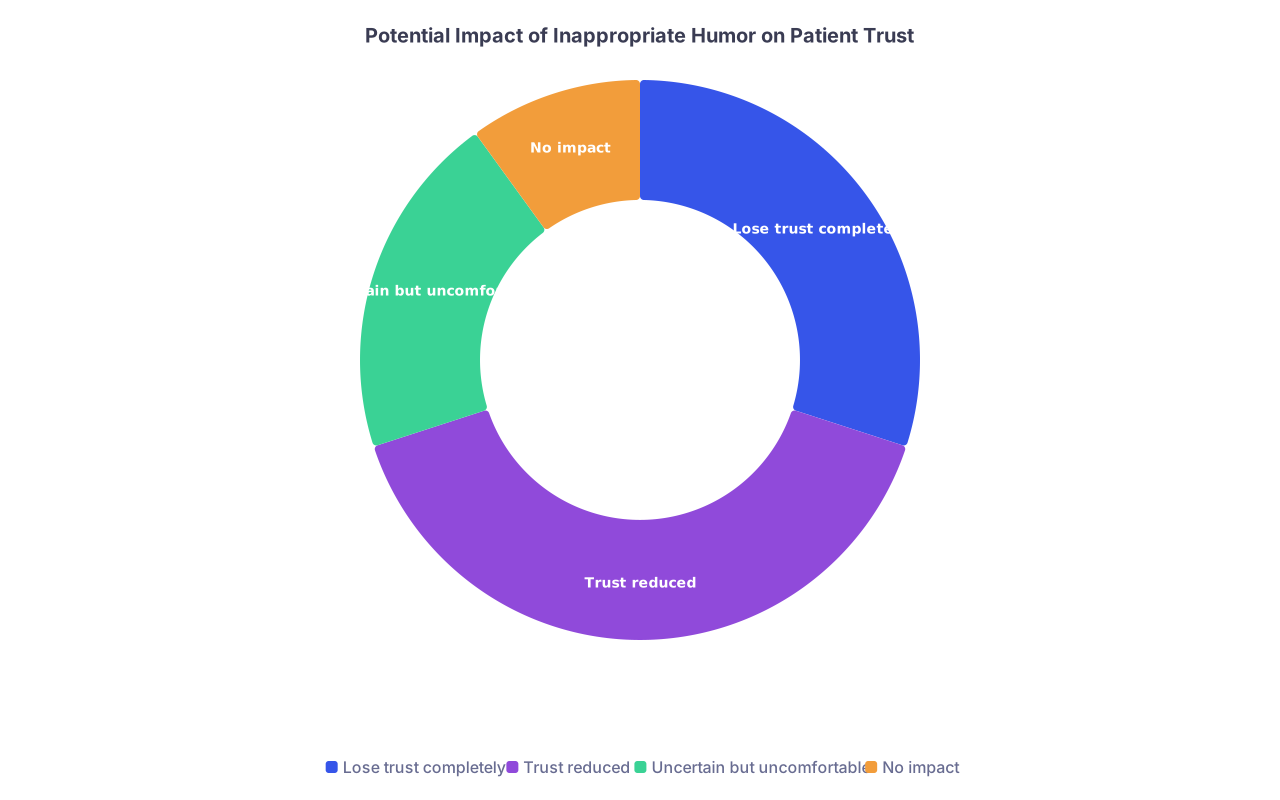
| Category | Value |
|---|---|
| Lose trust completely | 30 |
| Trust reduced | 40 |
| Uncertain but uncomfortable | 20 |
| No impact | 10 |
Common patient-facing mistakes
Joking about their condition in a minimizing way
- “Well, at least you’re not dead!”
- “Good news, you’re not the worst I’ve seen today.”
You think you’re being light. They hear: “Your suffering is a joke.”
Trying stand-up comedy during physical exams
- Comments about underwear, tattoos, piercings, grooming
- “I’ve seen worse” thrown at the wrong time
Never comment on intimate areas in a way that could be sexualized. Ever.
Using humor to dodge serious conversations
- Patient asks, “Am I going to die?”
You deflect with a joke instead of sitting in the discomfort.
That’s not kindness. That’s avoidance.
- Patient asks, “Am I going to die?”
If you’re not sure the patient will find it funny, don’t say it. You are not Robin Williams in Patch Adams. You are the person they’re trusting with their body.
Healthy Humor vs. Career-Ending Humor
You should not be a humorless robot. That’s not the goal. The goal is knowing where the edges are.

Here’s the difference.
Healthy, safe humor usually:
- Targets you, not them
“I had caffeine instead of blood on my last call night.” - Targets systems, not vulnerable people
“If the EMR goes down one more time, I’m going to go back to paper charts.” - Aims to connect, not to shock
Light sarcasm about yourself, exaggerated frustration with universal medical nonsense. - Stops immediately if someone isn’t laughing
You sense discomfort? You shut it down and adjust.
Problem humor usually:
- Targets people with less power
- Depends heavily on stereotypes
- Requires other people to pretend they’re okay with it
- Ends with you saying, “Just kidding, don’t be so sensitive”
If the joke needs “just kidding” at the end, that’s your sign it wasn’t a good joke.
How To Use Humor Without Getting Burned
Let me give you something more useful than “be careful.” You need actual tools.

| Step | Description |
|---|---|
| Step 1 | Have a joke |
| Step 2 | Do not say it |
| Step 3 | Dial it down or skip |
| Step 4 | Say it and watch reactions |
| Step 5 | Quick sincere apology |
| Step 6 | Move on |
| Step 7 | Is the target yourself or system? |
| Step 8 | Could this be sexual, racist or mocking? |
| Step 9 | Are patients or juniors present? |
| Step 10 | Anyone look uncomfortable? |
1. Pre-filter: Mental red flags
Before you talk, ask yourself:
- Would I say this in front of:
- My program director?
- HR?
- A camera recording?
- Would I be okay if this ended up in a complaint email word-for-word?
- Does this rely on race/sex/body/identity for the punchline?
If you hesitate even slightly, skip it. You’ll never regret not telling a risky joke at work.
2. When you screw up (because you will)
At some point, you will say something that lands wrong. The mistake is not the misfire; it’s the cover-up.
Wrong response:
- “Come on, it was just a joke.”
- “You know me, I wasn’t serious.”
- “Nobody else minded.”
Better response:
- “I’m sorry—that came out wrong and I shouldn’t have said it.”
- “I realize that may have been inappropriate. I apologize.”
- “Thanks for letting me know that bothered you. I’ll be more careful.”
You don’t need a TED Talk apology. Short, clear, no defense. Then change your behavior.
The Future: Humor in a Recorded, Reportable World
Stop pretending it’s 1995. It’s not.
Today:
- Patients record visits on phones.
- Hospitals have formal professionalism tracking.
- Staff have anonymous reporting channels.
- Med students talk to each other. A lot. On group chats. With screenshots.
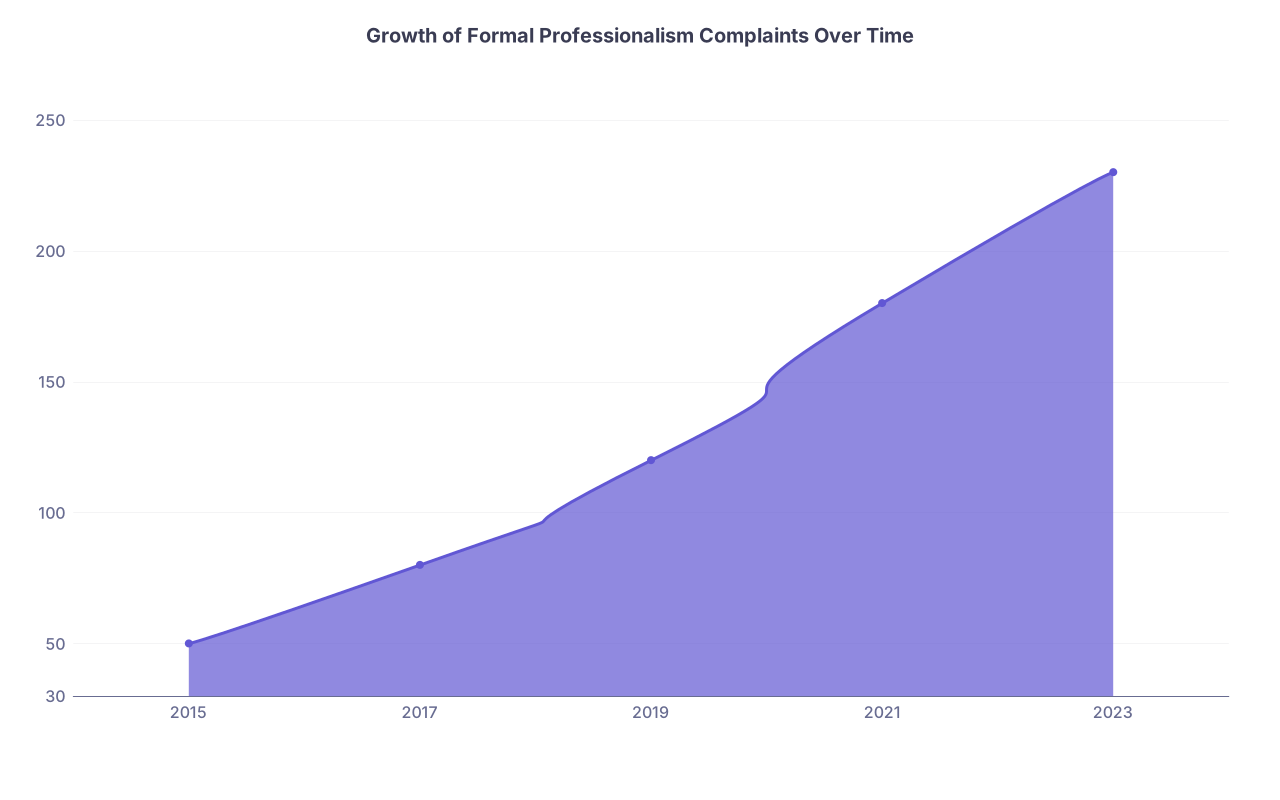
| Category | Value |
|---|---|
| 2015 | 50 |
| 2017 | 80 |
| 2019 | 120 |
| 2021 | 180 |
| 2023 | 230 |
Humor that might have once been brushed off is now:
- Documented
- Shared
- Escalated
Not because “everyone is too sensitive now,” but because the culture is (slowly) correcting behavior that should never have been normalized in the first place.
Future medicine will not tolerate:
- Jokes that sexualize colleagues
- Comments that stereotype patients
- “Banter” that excludes or humiliates team members
And honestly? That’s good. You don’t need those crutches to be funny, human, or connected.

Concrete Rules You Can Actually Use
Here’s the no-nonsense list. If you remember nothing else, remember this:
- Never use “just kidding” as a shield.
If you feel tempted to say it, ask why. - Never joke about bodies or identity at work.
No exceptions. Not patients. Not staff. Not trainees. - Don’t make jokes that rely on people being too junior to object.
If they need your evaluation, they can’t truly consent to being your punchline. - If patients or families are within earshot, keep humor neutral and clean.
Light, kind, self-deprecating. That’s it. - If someone looks uncomfortable, believe them and pivot.
No arguing, no explaining your intent. Just adjust. - Assume you’re always being observed.
By someone who might later decide if you get a letter, a job, or a committee role.
This isn’t about being scared. It’s about being smart.
FAQ (Exactly 3 Questions)
1. Is all dark humor bad in medicine?
No. Dark humor among peers, in private, about your own stress and emotional load can be a coping mechanism. The line you don’t cross is using dark humor that dehumanizes patients or targets people with less power than you. If the joke only works because someone is vulnerable or can’t push back, it is not safe.
2. What if my team already jokes like this and nobody seems to mind?
That’s what you think. Every team has people who laugh along and then privately feel gross. The fact that nobody has confronted you does not mean everyone’s fine with it. It usually means the risk of speaking up feels higher than the discomfort of staying quiet. Be the one who raises the standard, not the one who drags the bar down because “this is just how we are.”
3. How do I respond when someone else crosses the line with a “joke”?
You don’t need a full morality speech. Try:
- In the moment: “Hey, let’s not go there.” or “Not cool, let’s focus on the patient.”
- After: “That comment earlier landed a bit off. I know you meant it as a joke, but it might not be taken that way.” You’re not the humor police. You’re the person who refuses to stand there silently while lines get crossed.
Open your notes app right now and write a single line:
“Would I be okay if this joke was quoted in a complaint email with my name on it?”
Read that before your next shift. And the next time your brain feeds you a risky one-liner, let that question be the reason you keep your career—and your integrity—intact.