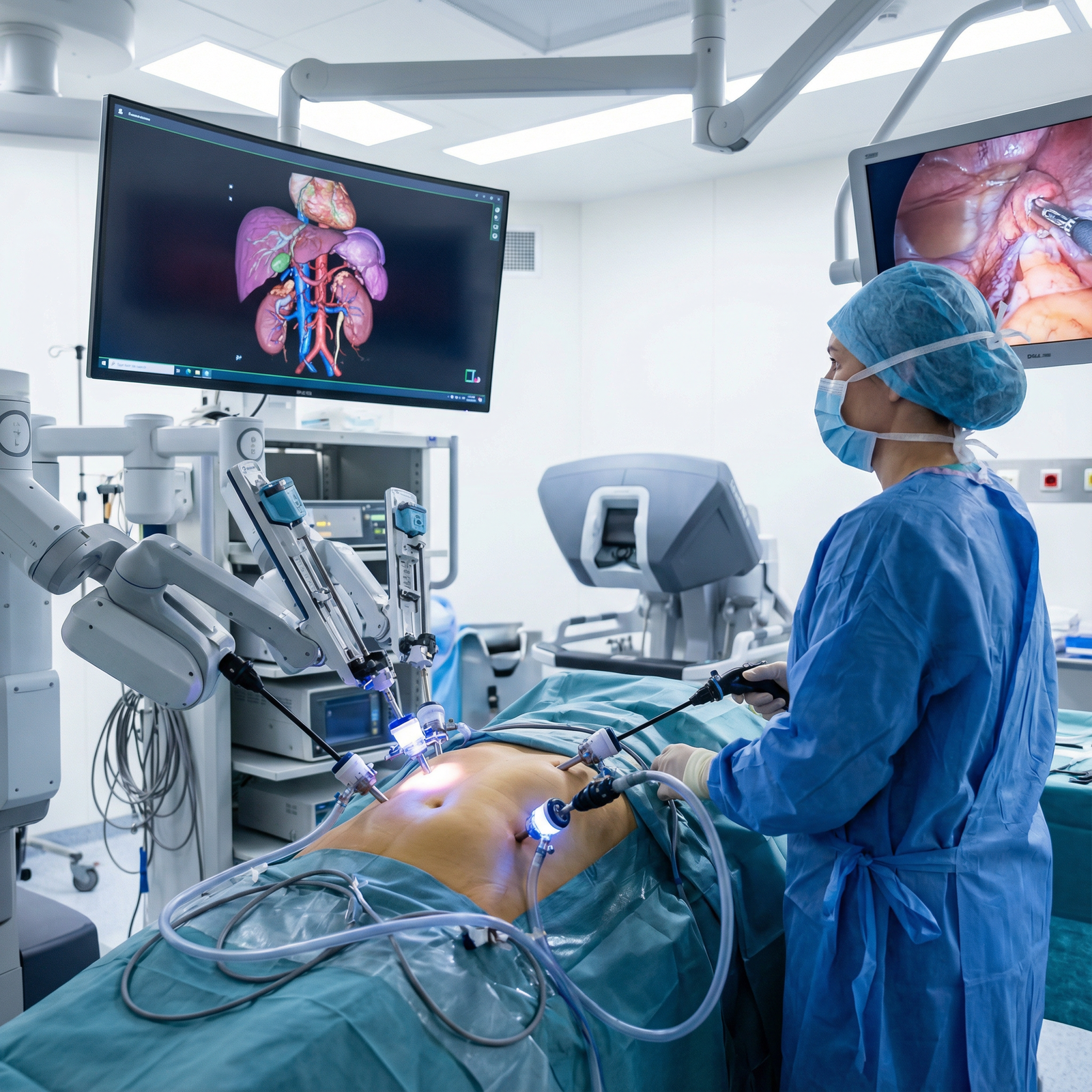
The way hospitals choose new surgical robots is far more political than technical. The glossy brochures and “clinical value” slide decks are the window dressing. The real decisions are made in side conversations, committee backchannels, and quiet deals between surgeons, administrators, and vendors.
Let me walk you through how it actually happens inside the building, not how the marketing department pretends it works.
The Real Power Structure Behind Robot Decisions
Everyone thinks “the hospital” chooses a robot. Wrong. People with very specific incentives choose it, then the hospital machinery rubber‑stamps or fights it.
In most mid‑to‑large hospitals, surgical robot decisions are driven by a small cluster:
- A few key surgeons (often urology, GYN, colorectal, general surgery)
- The OR director and perioperative leadership
- The CFO or a high‑level finance exec
- Supply chain / value analysis committee
- A very persistent industry rep who knows exactly whom to court
Residents, junior attendings, and medical students? You’re not in the room when the real decisions are made. At best, you’re data points (“our residents feel more comfortable with X system”). At worst, you’re props for demos.
Here’s the unvarnished truth: if a hospital already has one dominant robot platform—say, the usual big name—you’re not just evaluating a new robot. You’re challenging a technology fiefdom that some senior surgeons have built careers, reputations, and referral networks around.
Those surgeons are not neutral.
They’re the “informal veto” you never see on the org chart.
What Actually Triggers “We Need a New Robot”
Hospitals don’t wake up one day and think, “Innovation! Let’s buy a robot.” There are a few common triggers that set the whole machine in motion:
Competitor envy.
A nearby hospital starts advertising “latest robotic platform,” “enhanced 3D visualization,” or “smaller ports, faster recovery.” Marketing brings this to leadership and says, “We’re losing cases.” Suddenly, innovation becomes an urgent priority.Surgeon recruitment and retention.
A high‑volume surgeon they want to recruit says, “I operate on Platform Y. I’m not coming unless you get it.” I’ve watched a hospital buy a robot essentially as a signing bonus. They’ll dress it up as a “strategic investment in minimally invasive care,” but internally everyone knows it’s to keep one surgeon happy.Aging equipment and expiring contracts.
The existing robot is 8–10 years old, maintenance costs are creeping up, or the capital lease is expiring. This is when competitors pounce with aggressive pricing, “trade‑in” offers, and fancy demos.Payer or regulatory pressure for outcomes and cost.
Sometimes the finance people finally ask, “Show me, in actual numbers, what this robot has done for LOS, complications, downstream revenue.” If the data doesn’t look great, they become more open to alternative platforms that claim lower per‑case cost.Teaching and prestige.
Academic centers, especially, don’t want to be the last residency program still training on a system everyone else considers outdated. The residents talk. Applicants ask during interviews. Chairs don’t like being embarrassed.
That’s the “why.” The “how” is dirtier.
Step‑By‑Step: The Shadow Process You Don’t See
On paper, hospitals love to show a clean, rational procurement process: needs assessment, RFP, evaluation, scoring, decision. In reality, it looks more like this.

| Step | Description |
|---|---|
| Step 1 | Vendor plants idea |
| Step 2 | Champion surgeon buys in |
| Step 3 | Informal talks with OR leadership |
| Step 4 | Finance looped in quietly |
| Step 5 | Demo and site visit |
| Step 6 | Value analysis committee |
| Step 7 | Negotiation and ROI deck |
| Step 8 | Delayed or killed |
| Step 9 | Rubber stamp at executive level |
| Step 10 | Champion still pushing |
Take a look at that diamond: “Champion still pushing.” That box is where more robots die than anywhere else. If the champion loses enthusiasm, gets busy, or feels politically exposed, the deal slows and often fades.
There are three roles that matter more than any spreadsheet:
The champion surgeon.
Usually a high‑volume, politically connected attending. They want the robot either for their own practice, academic profile, or recruitment leverage.The quiet blocker.
Equally important. This might be an older surgeon who is heavily invested in the incumbent platform—or open surgery—and who sees a new robot as a threat to their control of the OR schedule and referrals.The numbers person.
Sometimes the CFO, sometimes a VP of perioperative services. They don’t care which robot wins. They care whether they can defend the decision to the board, and whether it lines up with 5‑year capital plans.
If you understand what each of these three actually wants, you can usually predict the outcome months before any “final vote.”
What Vendors Really Do (That You Don’t See on the Tour)
Industry is not naïve. They know exactly how political this is. They’ve built entire playbooks for it.
You’ve seen the visible part: lunch presentations, brochures, “education dinners,” and slick OR demos.
Here’s the invisible part:
- They study your hospital’s payer mix, surgical volumes, and referral patterns years before first contact.
- They know who your high‑volume urologists and GYN oncologists are, and where they trained.
- They know which of your leaders has a known grudge against the incumbent vendor.
- They quietly fund surgeon travel to “observe centers” that are heavy users of their platform.
I’ve seen vendor reps schedule “education sessions” that are basically scouting missions. They’re watching who asks questions, who looks intrigued, who keeps their arms folded. Those people go onto lists: potential champions, neutral, likely blockers.
If you’re a resident, here’s the part you don’t realize: sometimes you’re the data point they weaponize.
“Your residents will be better prepared for the job market.”
“Residents at Hospital X now prefer this console.”
“Look at these case logs from programs using our platform.”
They’ll bring logs, quotes, even survey data from other institutions to sway your PD or chair. And they’re not wrong that training matters. But don’t kid yourself: that’s still part of a sales strategy.
How the Money Really Gets Justified
Let’s talk dollars, because that’s often where the ethical discomfort hides.
Hospitals do not buy a robot because a paper shows a 5% reduction in LOS. That’s the window dressing. Here’s what actually goes into the finance discussion.
| Question Type | What They Are Really Asking |
|---|---|
| Capital cost | Can we afford this in our 5-year plan? |
| Disposable cost | Will we bleed cash on every single case? |
| Case volume | Can we grow referrals and keep them in-house? |
| OR time | Will this slow us down or speed us up? |
| Competitive impact | Will we lose/gain market share locally? |
Then they build an ROI deck. It almost always has:
- Projected case volume growth (“if we capture X% of regional prostatectomies…”)
- Modeled LOS reductions (often very optimistic)
- Conversion of open/lap cases to robotic “premium” cases
- “Strategic value” slide that is mostly hand‑waving about brand, recruitment, innovation
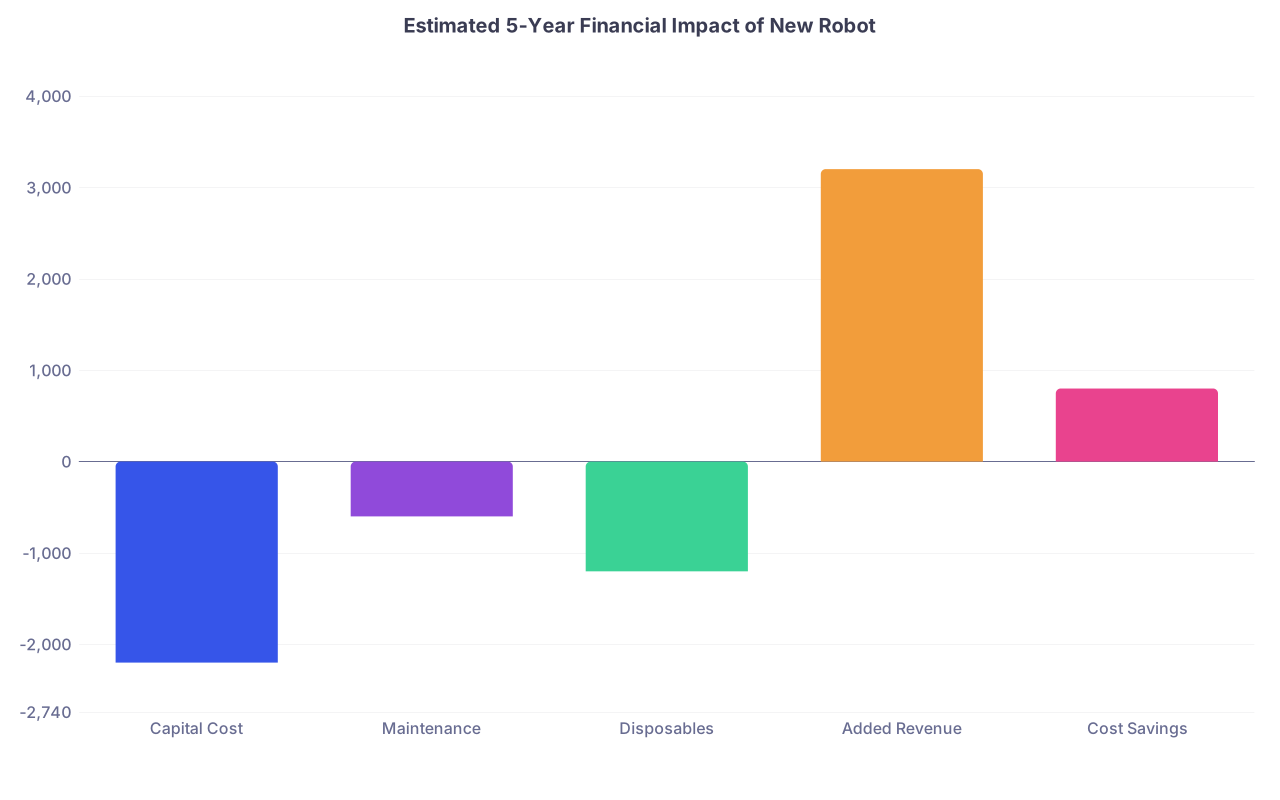
| Category | Value |
|---|---|
| Capital Cost | -2200 |
| Maintenance | -600 |
| Disposables | -1200 |
| Added Revenue | 3200 |
| Cost Savings | 800 |
(Values in thousands, and yes, these models are often that rosy.)
Here’s the secret: almost nobody goes back 5 years later and checks whether any of this was true.
The CFO might glance at utilization and revenue trends, but a full, honest “we promised X, we got Y” analysis? Rare. By then, the champions have moved on to the next toy, and the cost has been normalized into the base budget.
Ethically, this is where some of you will start to feel queasy. Because it’s very easy to talk yourself into aggressive assumptions when you want a new machine. You can hide a lot behind “strategic value.”
Clinical Evidence vs. Ego: Which Wins?
Let me be blunt: when it comes to new robot platforms, the evidence is usually muddy, incremental, and mixed. Vendors highlight a few favorable studies. Skeptics point to meta‑analyses showing small or no differences in outcomes vs. laparoscopy.
Inside the hospital, what actually happens looks like this:
- The evidence gets selectively quoted to support whatever side people are already on.
- High‑volume surgeons testify with “I feel” and “in my hands,” and that carries more weight than three RCTs.
- Residents and fellows talk about ergonomics, learning curves, and case logs—often leaning toward whatever makes their lives easier.
Does anyone sit down and say, “Ok, if this robot gives us 2% fewer complications but costs $700 more per case in disposables, is that an ethically defensible tradeoff in our ecosystem?”
Almost never. That kind of explicit value judgment is uncomfortable. So it gets buried under phrases like “standard of care,” “patient expectations,” and “market position.”
Yet that’s exactly what should be asked.
The Ethical Friction Points No One Puts in the Minutes
You’re in medicine, so you’re already thinking about where this collides with ethics. Let’s stop pretending it’s abstract.
Here’s where the real friction lives:
1. Patient benefit vs. marketing benefit
There’s a quiet but constant tension between doing what is clinically superior and doing what is marketable. A hospital might know that for certain cases, laparoscopy or open surgery is just as good or better—yet the billboard shows the robot.
That pressure seeps into case selection. “We bought this thing, we need to use it.” Suddenly, marginal indications expand. Complex open cases magically become “robot‑eligible.”
2. Resident training vs. institutional branding
Training programs face a nasty tradeoff. If you train residents only on one dominant platform, they’re very employable now. But what if the market fragments? What if payers start pushing back on robotic premiums, or alternative platforms with different ergonomics take off?
I’ve heard PDs say, in closed meetings, “We’re not a sandbox for vendors. We train surgeons, not brand loyalists.” Then I’ve watched their chairs negotiate “center of excellence” agreements that lock them into one ecosystem.
There’s tension there. They rarely resolve it honestly.
3. Industry influence at the individual level
This is the part most people underestimate. The dinners, the conferences, the honoraria, the KOL talks on podiums with subtle product highlights. Surgeons are not immune to flattery, status, or the thrill of being “first to use” a new device.
Ethically, every one of those relationships needs scrutiny. Not just form‑based disclosure. Actual internal self‑interrogation: “Would I be arguing this hard for this platform if they never invited me to a single meeting?”
Many never ask themselves that question.
Where You Fit In: Residents, Students, Young Attendings
You’re not powerless in this mess, but your influence is specific. You’re not going to decide which robot the hospital buys. You can, however, shape how ethically it’s used and how honestly the conversations happen.
A few hard truths and opportunities:
Your voice on training actually matters.
When PDs and chairs are pitched, vendors will argue “residents love this platform.” If that is not your experience, say so. Calmly. With specifics: docking time, console ergonomics, haptics, and learning curve.You can ask the questions people are avoiding.
“How will this affect our ability to do open cases?”
“Will there be explicit criteria for robot vs. lap vs. open?”
“What’s our plan if the data does not show improvement after 2 years?”
They might brush you off in the moment. But those questions land. They get repeated in smaller rooms.
Protect your training breadth.
Do not let your residency become “all robot, all the time” for core cases where other approaches are standard elsewhere. You’ll pay for that as an attending when you’re somewhere without that machine… or with an entirely different platform.Be brutally honest with patients.
If you’re in the room when the robot is mentioned, avoid the hype. Explain pros, cons, and alternatives like a clinician, not a marketing intern. Patients deserve the difference.
How Programs That Do This Well Actually Operate
Most hospitals limp through this process and hope for the best. A minority do it with discipline and some integrity. You notice a pattern in those places.
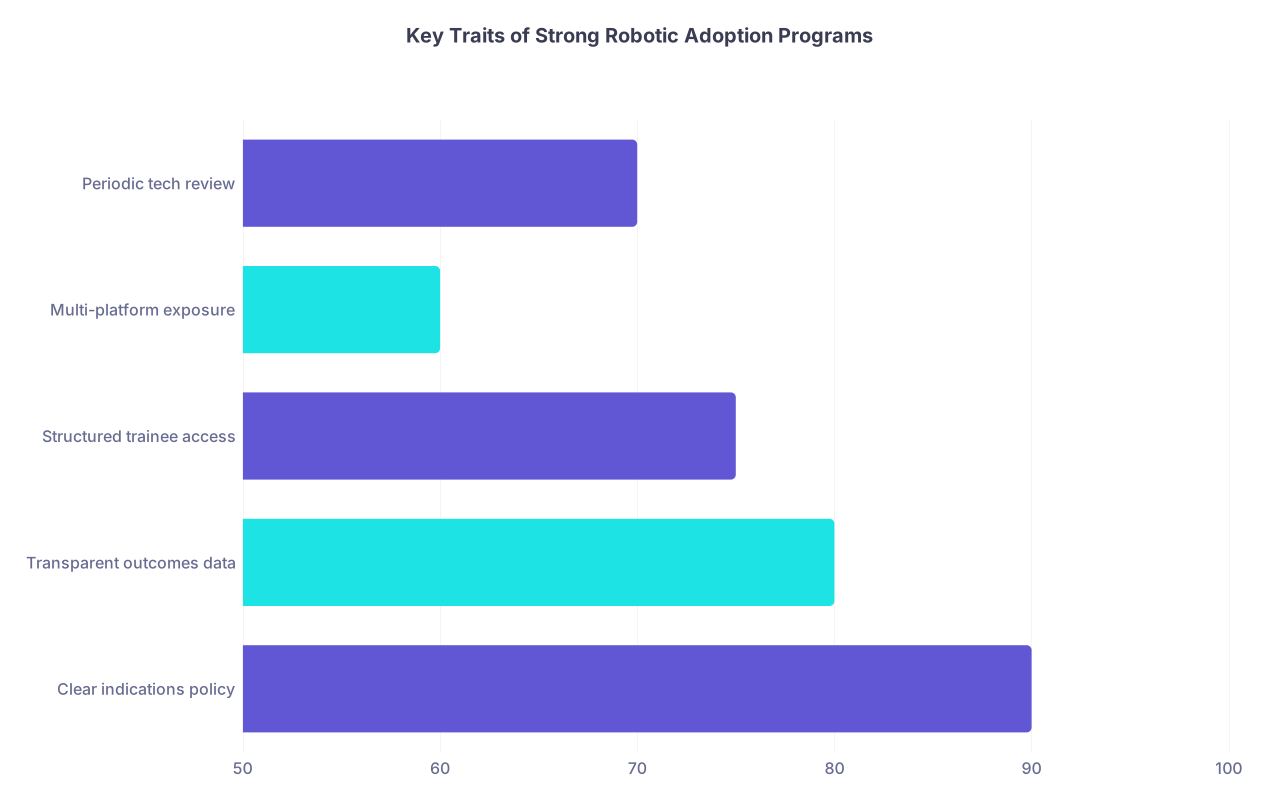
| Category | Value |
|---|---|
| Clear indications policy | 90 |
| Transparent outcomes data | 80 |
| Structured trainee access | 75 |
| Multi-platform exposure | 60 |
| Periodic tech review | 70 |
These programs usually:
- Have a written indications framework for which cases are robotic vs. lap vs. open. It’s not perfect, but it exists and is revisited.
- Track real outcomes by approach and by surgeon, not just volume and “robot utilization.”
- Make sure residents log cases across platforms and open approaches, not just chase the shiny console.
- Re‑evaluate technology every few years, rather than letting one platform become an unquestioned religion.
You’ll know you’re in one of these places when someone in leadership can say, out loud, “There are cases where the robot is overkill, and we should not use it just because we bought it.”
That sentence is rarer than you think.
Personal Development: Who You Become Around This Technology
This is supposed to sit at the intersection of innovation, ethics, and your own professional growth. So let’s zoom back to you.
You’re going to spend a career surrounded by persuasive technology pitches. Robots, navigation systems, AR overlays, AI decision support. It won’t stop.
The question is not “Is this cool?” The question is, “Who am I in this conversation?”
You can be the surgeon who:
- Falls in love with the machine, then reverse‑engineers justifications for every case.
- Treats each device as a tool, not an identity, and maintains wide technical range.
- Becomes the quiet voice in committee meetings who asks, “Show me the data and the tradeoffs, not the tagline.”
That doesn’t sound glamorous, but it’s the difference between being a technician and being a steward.
You’re going to forget the spec sheets of whatever current robot you trained on. You’ll remember the habits you built: questioning hype, insisting on real outcomes, and protecting your own skill diversity when everyone else is racing toward the latest console.
Years from now, you won’t remember which vendor’s lunch had the best sushi. You’ll remember whether you were the kind of surgeon who could stand in a room full of bright screens and shiny arms and still say, “Slow down. Let’s talk about what this really costs and who it really helps.”
That’s the voice people actually need.