
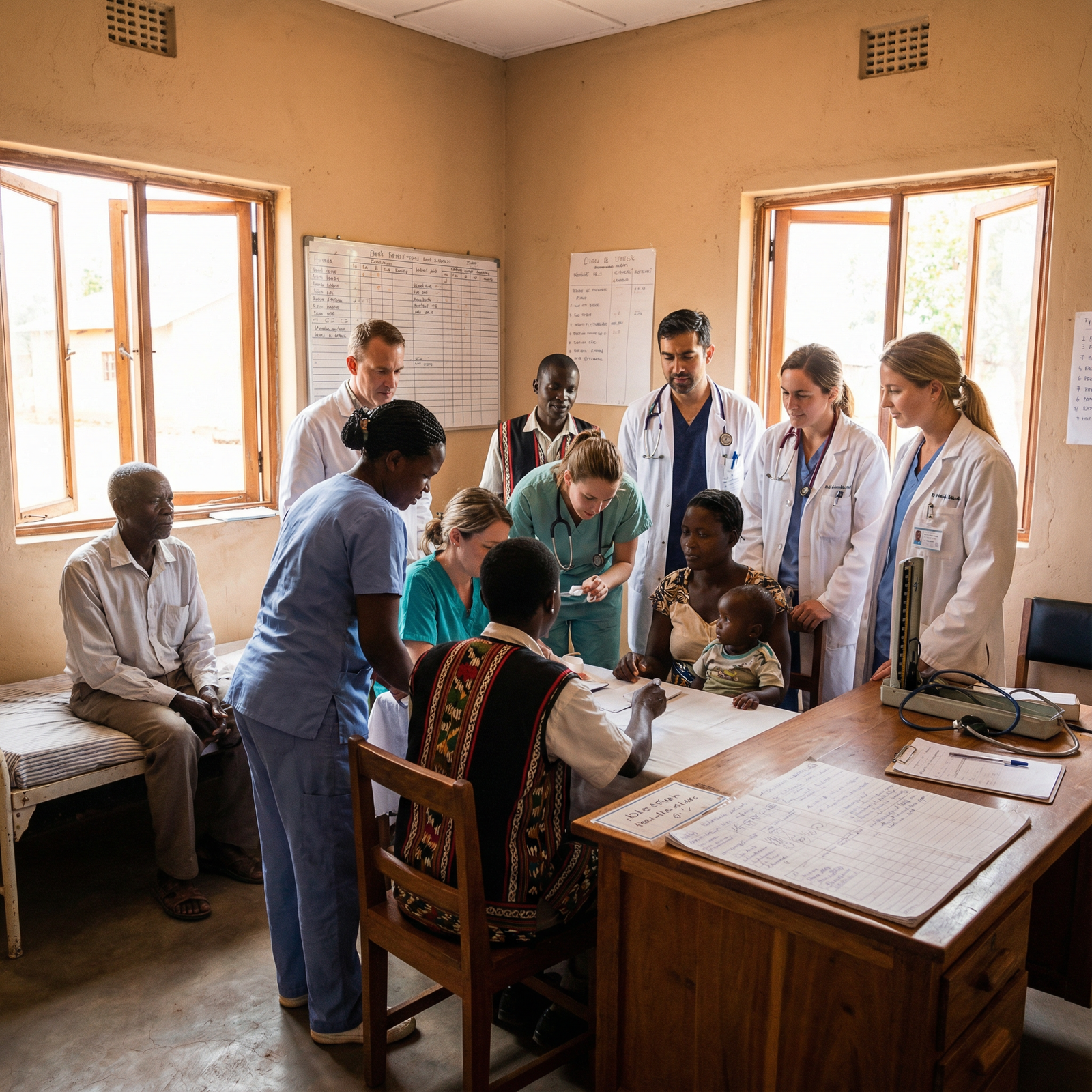
Introduction: Medical Missions in the Pursuit of Global Health Equity
In an era of unprecedented connectivity, profound gaps in health outcomes, access, and quality of care still divide communities and countries. From preventable maternal deaths and untreated chronic diseases to lack of basic surgical services, these disparities highlight a central challenge in Global Health: how to move from charity-based care to true Health Equity.
Medical missions have long been one of the most visible ways clinicians engage in addressing these gaps. Teams of health professionals travel across borders to provide direct care, education, and support to underserved populations. Yet the role of medical missions in Global Health and Health Equity is complex: they can be transformative, but also risk unintended harm if they are poorly designed or not grounded in sustainable healthcare principles.
This expanded guide explores the evolving role of medical missions in Global Health Equity, with a particular focus on what students, residents, and early-career physicians should understand as they consider participating. We will examine:
- What medical missions are and how they have evolved
- How missions can advance (or hinder) Health Equity and Community Health
- Key ethical challenges and sustainability concerns
- Real-world examples of more sustainable approaches
- Practical guidance for learners considering global medical work
Understanding Modern Medical Missions
Defining Medical Missions in a Global Health Context
Medical missions are organized efforts to deliver healthcare services across borders—often from high-resource to low-resource settings—to populations with limited access to care. They may be organized by NGOs, academic medical centers, faith-based groups, or professional societies. Today, missions typically fall into three broad models:
Short-term medical missions (STMMs)
- Duration: days to a few weeks
- Focus: direct clinical care (e.g., mobile clinics, surgical camps, vaccination drives)
- Common participants: students, residents, attending physicians, nurses, pharmacists, allied health professionals
- Strengths: rapid deployment, high visibility, immediate relief in crisis or high-need settings
Long-term or embedded programs
- Duration: months to years
- Focus: capacity building, systems strengthening, training local clinicians, public health interventions, and developing sustainable healthcare services
- Common structures: twinning partnerships between hospitals, academic collaborations, local non-profit clinics with external support
- Strengths: continuity, deep integration with local health systems, potential for lasting impact
Hybrid or longitudinal mission models
- Combine periodic short-term visits with year-round local staffing and follow-up systems
- Use telemedicine, ongoing mentorship, and joint research or quality improvement
- Aim to avoid “fly-in, fly-out” care by linking each visit to a broader Community Health strategy
When planned thoughtfully, missions can be embedded into local health priorities, support sustainable healthcare delivery, and promote Health Equity. When poorly designed, they risk creating dependency, fragmenting care, or reinforcing power imbalances.
Historical Roots and Ethical Evolution
Modern medical missions trace back to the late 19th and early 20th centuries, when Western physicians—often linked to religious or colonial institutions—traveled to colonized or economically disadvantaged regions. These early efforts:
- Emphasized charity or evangelical goals more than partnership
- Framed local populations as passive recipients rather than equal collaborators
- Frequently ignored or undervalued indigenous health knowledge and systems
Over time, successive global health movements—including primary healthcare (Alma-Ata Declaration), the human rights-based approach to health, and the rise of local expertise—have reshaped expectations. Today, ethical medical mission work increasingly:
- Prioritizes local leadership and ownership
- Emphasizes Health Equity and social determinants of health
- Aims for sustainable healthcare systems rather than isolated episodes of care
- Recognizes the importance of decolonizing global health, avoiding paternalistic or extractive practices
For trainees and early-career clinicians, understanding this history is essential to engaging in Global Health work with humility and accountability.
How Medical Missions Contribute to Global Health Equity
Expanding Access to Essential Healthcare Services
Many low- and middle-income countries (LMICs), and even marginalized communities within high-income countries, face significant barriers to care:
- Geographic isolation and lack of transportation
- Severe shortages of trained healthcare professionals
- Underfunded infrastructure (clinics, laboratories, operating rooms)
- Limited access to essential medicines and diagnostics
Thoughtfully designed medical missions can help narrow these gaps by:
Providing essential clinical services
- Primary care: assessment and management of acute and chronic conditions
- Surgical care: hernia repair, cleft lip/palate, cataract surgery, obstetric procedures
- Preventive services: immunizations, antenatal care, family planning
- Dental, mental health, and rehabilitation services, often overlooked in fragile health systems
Supporting infrastructure and equipment
- Repairing or upgrading existing facilities rather than creating parallel systems
- Supplying appropriate, maintainable equipment and training local staff on its use
- Helping facilities adopt protocols for infection prevention, triage, or emergency care
For example, a surgical mission that partners with a district hospital to introduce safe surgery checklists, train anesthetists, and establish referral pathways contributes more to long-term Health Equity than a one-time surgical “camp” with no follow-up.
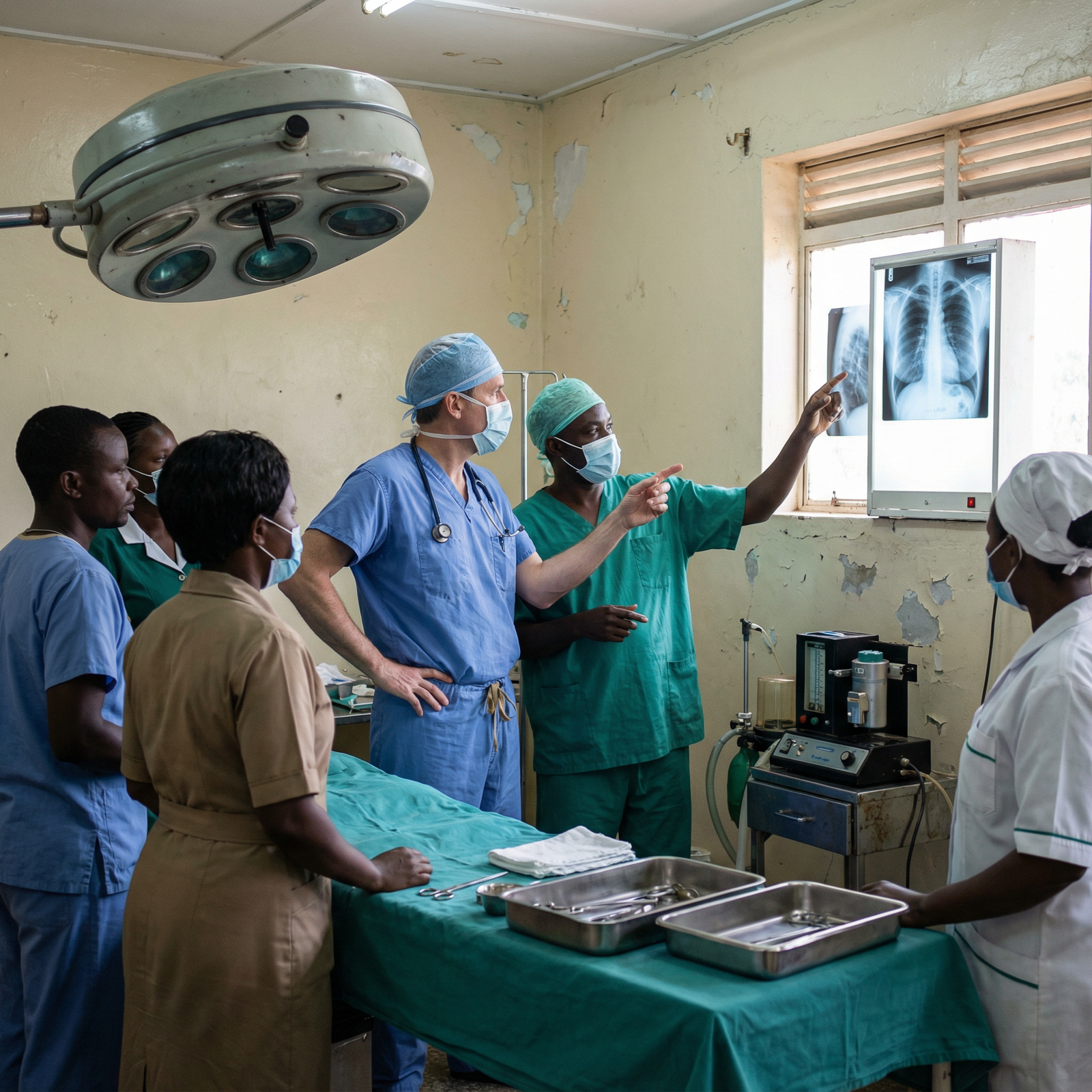
Building Local Capacity Through Education and Mentorship
One of the most powerful contributions of medical missions lies not in the number of patients seen, but in how they strengthen local human resources for health.
Training and upskilling local providers
- Bedside teaching on clinical reasoning, ultrasound, or evidence-based protocols
- Workshops on emergency obstetric care, neonatal resuscitation, or trauma management
- Training mid-level cadres (nurses, clinical officers, community health workers) to expand effective coverage
Community Health Education
- Group sessions on hygiene, nutrition, vaccination, maternal health, and non-communicable disease management
- Collaborating with community leaders, teachers, and religious institutions to reinforce health messages
- Using local languages and culturally relevant examples to improve understanding and retention
Longitudinal mentorship and academic partnerships
- Tele-mentoring, virtual case conferences, and shared morbidity and mortality (M&M) rounds
- Joint research or QI projects that answer locally relevant questions
- Support for training programs (e.g., residency development, nurse educator training, public health degrees)
These strategies strengthen Community Health and help ensure that advances persist long after international teams depart.
Promoting Cultural Humility and Bidirectional Learning
Effective Global Health work requires more than clinical competence; it demands cultural humility—the acknowledgment that no clinician fully understands another’s cultural context and that learning is continuous.
Medical missions can:
Expose visiting teams to different health beliefs and systems
- Understanding the role of traditional healers, herbal medicine, or faith-based practices
- Recognizing how gender dynamics, social hierarchies, or stigma shape health-seeking behavior
Highlight local innovation and resilience
- Low-cost diagnostic algorithms developed in resource-limited settings
- Community-based models of chronic disease care or maternal health
- Task-shifting strategies that optimize limited human resources
When visiting teams approach missions with curiosity and respect, medical missions become bidirectional exchanges, where all participants—local and international—gain knowledge and skills. This fosters Health Equity not only abroad but also in how returning clinicians practice in their home institutions with diverse patient populations.
Strengthening Global Partnerships and Health Systems
Sustainable global health work is relational, not transactional. Medical missions often serve as the entry point for longer-term collaborations that:
Align with national and local health priorities
- Supporting Ministry of Health strategies rather than creating parallel programs
- Integrating with existing referral networks and data systems
- Participating in local health cluster meetings and coordination forums
Share resources and expertise responsibly
- Supporting local leadership in setting agendas and defining success
- Providing technical assistance in areas requested by local partners (e.g., infection control, data management, quality improvement)
- Engaging in policy advocacy for improved funding, workforce development, and health system reforms
When partnerships focus on mutual trust and long-term commitments, they shift medical missions from isolated actions to integral components of sustainable healthcare and Health Equity agendas.
Delivering Emergency Relief and Supporting Recovery
During crises—pandemics, conflicts, natural disasters, or mass displacement—medical missions can provide critical surge capacity:
Acute emergency response
- Rapid deployment of trauma teams, field hospitals, and mobile clinics
- Support for overwhelmed local systems with triage, surgery, obstetric, and neonatal care
- Mental health and psychosocial support to affected communities and local staff
Transition to recovery and reconstruction
- Helping rebuild or restore health facilities and supply chains
- Training local providers in emergency preparedness and disaster risk reduction
- Supporting surveillance systems and public health infrastructure
Organizations such as Médecins Sans Frontières (Doctors Without Borders) have refined models for emergency medical missions that prioritize neutrality, independence, and close collaboration with local actors to maximize impact and respect.
Ethical Challenges and Limitations of Medical Missions
While medical missions can be powerful tools for Global Health Equity, they are not inherently ethical or effective. Learners and clinicians must grapple with key challenges to ensure their involvement does more good than harm.
Sustainability, Continuity of Care, and Avoiding Dependency
Short-term missions often face issues such as:
- Lack of follow-up for chronic conditions or post-operative patients
- Introduction of medications or interventions that cannot be maintained locally
- Parallel services that draw patients away from local providers, undermining their trust and livelihoods
To promote sustainable healthcare, missions should:
- Partner with existing clinics/hospitals and route all care through them
- Use locally available medications and diagnostics whenever possible
- Ensure clear handover plans, documentation, and contact points for follow-up
- Support local providers in leading clinics, with international staff in supportive roles
Cultural Misalignment and Power Imbalances
Without deliberate attention to ethics and communication, missions may:
- Disrespect or disregard local customs, beliefs, or decision-making structures
- Impose Western-centric models of care that are misaligned with local realities
- Engage in photography or storytelling that objectifies patients or communities
Ethically grounded missions:
- Seek guidance from local leaders, clinicians, and community representatives
- Provide interpreters and cultural mediators, and avoid making assumptions
- Ask permission before taking photographs and prioritize patient dignity in all narratives
- Center local voices in decision-making, evaluation, and representation of the work
Scope of Practice and Educational Ethics
Global Health settings can tempt learners to work beyond their usual level of training or licensure. This raises serious ethical concerns:
- Performing procedures or managing conditions without adequate supervision
- Using low-resource settings as a place to “practice” rather than to genuinely serve
- Inadequate preparation for the emotional and ethical complexity of the work
Responsible programs ensure:
- Clear role definitions that mirror or are more conservative than home-scope
- Direct supervision by qualified professionals and robust pre-departure training
- Structured debriefing to address moral distress, vicarious trauma, and burnout
Volunteer Fatigue and Emotional Impact
Medical missions can be physically and emotionally intense:
- Long hours in resource-constrained environments
- High burden of preventable suffering and mortality
- Ethical dilemmas when resources are insufficient
To protect both volunteers and communities:
- Programs should offer pre-departure preparation in resilience, self-care, and ethics
- On-site support, reasonable schedules, and rest periods should be built in
- Post-mission debriefings should normalize emotional reactions and encourage ongoing reflection, supervision, or counseling when needed
Case Studies: Models of More Sustainable Medical Missions
Operation Smile: Surgical Care and Capacity Building
Operation Smile provides cleft lip and palate surgery in resource-limited settings worldwide. Over time, their model has evolved from purely short-term surgical missions to:
- Establishing local cleft centers and training local surgeons, anesthetists, and nurses
- Implementing standardized protocols and quality measures
- Supporting long-term follow-up for speech therapy, dental care, and psychosocial support
Their programs illustrate how focused surgical missions can contribute to Health Equity by blending direct care with capacity building and long-term partnership.
Project HOPE: Maternal, Child Health, and System Strengthening
Project HOPE collaborates with Ministries of Health and local organizations to:
- Improve maternal and child health through training midwives, nurses, and community health workers
- Support Community Health programs that address nutrition, immunization, and safe delivery
- Integrate mission activities into national strategies and existing care networks
This systems-level approach exemplifies how medical missions can be part of broader Community Health and sustainable healthcare strategies rather than isolated interventions.
Médecins Sans Frontières (Doctors Without Borders): Emergency Medicine and Advocacy
MSF operates in some of the world’s most complex humanitarian crises, providing:
- Emergency medical and surgical care in conflict zones, refugee settings, and epidemics
- Robust data collection and research on neglected diseases and crisis-affected populations
- Strong advocacy for access to essential medicines, vaccines, and humanitarian protections
Their work demonstrates how missions can couple clinical care with health policy advocacy, influencing the structural determinants of Global Health Equity.
Practical Guidance for Students and Residents Considering Medical Missions
Choosing Ethical and Sustainable Programs
Before joining a mission, evaluate potential organizations by asking:
Partnership and leadership
- Is there a long-term relationship with local institutions or communities?
- Are local leaders involved in decision-making and program design?
Sustainability and follow-up
- How is continuity of care ensured after the team leaves?
- Are interventions aligned with local resources and guidelines?
Training and supervision
- Is there structured pre-departure orientation (clinical, cultural, ethical, safety)?
- Are roles and scopes of practice clearly defined and appropriately supervised?
Monitoring and evaluation
- Does the program collect data and feedback from local partners?
- Are they transparent about outcomes, limitations, and areas for improvement?
Preparing Professionally and Personally
To contribute effectively and ethically:
- Strengthen clinical fundamentals relevant to the setting (e.g., tropical medicine, obstetrics, pediatrics, emergency care)
- Learn basic phrases in local languages and review cultural norms and history
- Study the country’s health system structure and major health challenges
- Reflect on your motivations and expectations; focus on service, humility, and learning
Leveraging Your Experience for Long-Term Impact
After a mission:
- Share insights with your home institution to improve training and systems
- Continue relationships through remote mentorship, research, or educational collaborations
- Advocate for Health Equity and better care for marginalized populations in your own community
- Consider long-term career paths in Global Health, humanitarian medicine, or public health policy
In this way, a single mission can catalyze a lifelong commitment to Global Health Equity and Community Health, both abroad and at home.
FAQs About Medical Missions, Global Health, and Health Equity
1. How do medical missions differ from long-term Global Health work?
Medical missions are typically time-limited deployments, whereas Global Health work can involve long-term engagement in research, policy, education, or systems strengthening. Ethical medical missions should ideally be situated within longer-term partnerships and strategies. For learners, a mission can be a starting point, but sustainable impact usually requires ongoing collaboration and commitment.
2. Are short-term medical missions actually helpful, or do they cause more harm than good?
Short-term missions can be beneficial if they are:
- Integrated with local health systems
- Focused on clearly defined needs identified by local partners
- Designed to support, not replace, local providers
- Committed to continuity of care and appropriate follow-up
They can cause harm when they operate independently, ignore local priorities, or allow clinicians to practice beyond their training. The key is careful program selection, ethical preparation, and long-term partnership.
3. How can medical missions promote sustainable healthcare rather than dependency?
Missions promote sustainable healthcare when they:
- Prioritize training and mentorship of local providers
- Use locally available resources and evidence-based guidelines
- Strengthen existing infrastructure and systems
- Support local leadership and ownership of programs
Rather than being the centerpiece, visiting teams should see themselves as temporary reinforcements within a locally-led health ecosystem.
4. What skills and preparation do I need before participating in a medical mission as a trainee?
Essential preparation includes:
- Solid grounding in core clinical skills within your level of training
- Orientation to the epidemiology and health system of the host country
- Cultural humility training and basic communication in local languages
- Clear understanding of your scope of practice and supervision structure
- Personal readiness for resource limitations, ethical complexity, and emotional impact
Many academic centers offer pre-departure Global Health courses or electives that are strongly recommended.
5. How can I support Global Health Equity if I’m unable to travel?
You can contribute meaningfully without traveling by:
- Participating in tele-education or remote mentorship programs
- Supporting research, data analysis, or quality improvement projects with global partners
- Advocating for fair global access to medicines, vaccines, and health technologies
- Working to address Health Equity in your own community—caring for migrants, refugees, uninsured patients, or underserved neighborhoods
Global Health is not defined by crossing borders; it is defined by a commitment to equitable health for all, wherever you practice.
By approaching medical missions with humility, ethical rigor, and a focus on sustainable partnership, clinicians and trainees can help move the needle from episodic charity toward enduring Global Health Equity and stronger Community Health systems worldwide.


