
The way most attendings give feedback to struggling residents is broken. Vague comments, rushed hallway chats, a “just fix it” tone—and then everyone acts surprised when nothing changes.
You can do better than that. And you do not need a PhD in education theory to do it.
This is a practical, step‑by‑step framework you can actually use on service tomorrow. It respects patient safety, protects you legally, helps the resident grow, and does not eat your entire life.
Step 1: Get Specific Before You Get “Supportive”
Residents do not improve from adjectives. They improve from behaviors.
“Your presentations are weak” is useless. “Your clinical reasoning worries me” is vague and demoralizing. “Your attitude is bad” is a lawsuit waiting to happen.
You need concrete, observable, time‑stamped behaviors. If you are not already collecting them, start.
Build a running log (takes 2 minutes a day)
Open a simple document or note on your phone labeled: “PGY-2 – Dr. Patel – Feedback log.”
Every time something concerning happens, jot:
- Date / time
- Setting (rounds, night float, clinic, OR)
- What you saw or heard (exact words if you remember)
- Impact on patient care or the team
- Whether you corrected it in real time
Example entries:
- 1/5 – ICU rounds – Presented septic shock patient but left out MAP, pressor requirements, urine output. Needed 4 follow‑up questions to get basic hemodynamics. Delay in decision about increasing norepinephrine.
- 1/7 – Night float – Missed critical potassium of 2.7 at 02:00. Lab called; note in EMR at 02:05. Potassium ordered at 04:15 after nurse re‑paged. No documented reason for delay.
- 1/9 – Pre-op clinic – Did not know anticoagulation plan for tomorrow’s case. Said, “I think anesthesia handles that.” Did not check guidelines when prompted.
You are building a pattern, not a prosecution. But do not rely on memory. You will forget details, and details are your power.
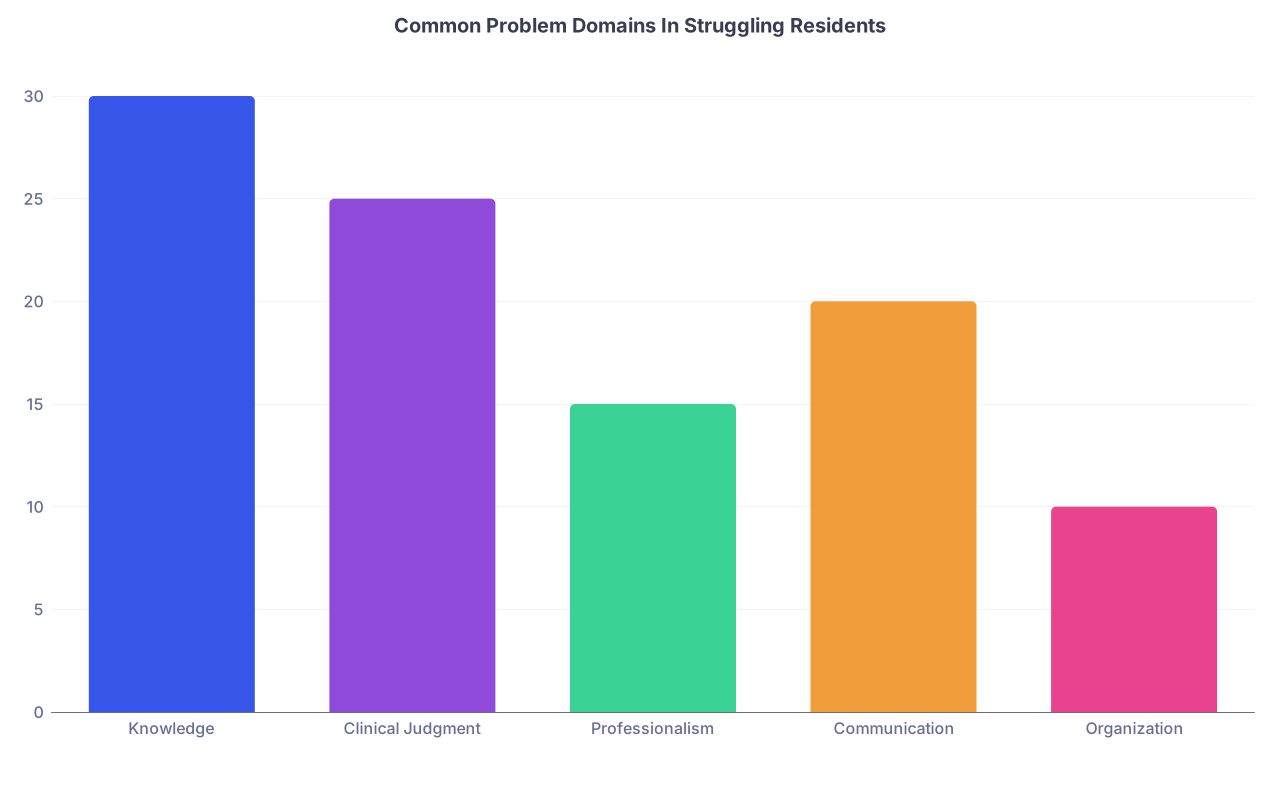
| Category | Value |
|---|---|
| Knowledge | 30 |
| Clinical Judgment | 25 |
| Professionalism | 15 |
| Communication | 20 |
| Organization | 10 |
Once you have 5–10 specific data points, you can see real trends. Then you can give feedback on problems instead of taking wild swings at personality.
Convert concerns into behavior statements
Before meeting the resident, rewrite your concerns as behavior statements tied to impact. Use this formula:
“When you [observable behavior], it leads to [specific impact]. I need you to [desired behavior].”
Examples:
- “When you present without vital trends, labs, and overnight events, the team cannot make safe decisions efficiently. I need you to use a structured template and include those elements every time.”
- “When you delay responding to critical lab results, patient care is delayed and risk increases. I need you to respond to critical values within 15 minutes and document your actions.”
If you cannot put a concern into that structure, it is probably too vague or too personality-based.
Step 2: Set the Stage Like You Are Handling a Procedure
You would not place a central line in the hallway between two angry family members. Yet people try to deliver sensitive feedback at the chart rack between pages. Then wonder why it goes badly.
Treat serious feedback like a clinical procedure. Controlled, deliberate environment.
Choose the right time and place
Minimum standard for a “real” feedback meeting:
- Private room with a door
- Both of you seated
- Phones silenced, pager covered if possible
- At least 20–30 uninterrupted minutes
If it is performance impacting patient safety, you do it this week. Not “at the end of the rotation.”
Open the meeting with clarity and safety
Do not ambush. Do not start with five minutes of small talk and then drop the hammer.
Try something like:
“I want to talk today about some specific concerns regarding your performance on this rotation. The goal is for us to be very clear on what is going well, what is not, and exactly what needs to change. This is about helping you succeed and keeping patients safe.”
You have done three things with that one opening:
- Named the purpose (performance concerns, not vague “check‑in”)
- Set a collaborative tone
- Put patient safety on the table early (this matters later if things escalate)
Then you ask permission in a way that is not really optional but still respectful:
“Is this an OK time to have that conversation?”
If they say they are in personal crisis (“My parent is in the ICU”), you reschedule within 24–48 hours and document that you tried. Otherwise, you continue.
Step 3: Use a Simple, Repeatable Feedback Structure
Use structure. Structure keeps you calm, keeps the resident grounded, and prevents you from going off on a 20‑minute tangent about “work ethic these days.”
Here is a practical framework that works for struggling residents:
- Headline – A clear summary of your overall concern
- Evidence – Specific examples from your log
- Impact – How this affects patient care, team, training
- Resident perspective – Hear their explanation, not excuses
- Expectations – Concrete, measurable standards
- Plan – Skills, supports, and follow‑up checkpoints
- Consequences – What happens if change does not occur
Walk through it stepwise.
1. Give the “headline” first
You do not let the resident sit for 15 minutes wondering how bad this is.
Examples:
- “My overall concern is that your clinical reasoning and day‑to‑day reliability are below the expected level for your training year.”
- “My main concern is that your documentation and follow‑through are inconsistent enough that I am worried about patient safety.”
You are not sugar‑coating. You are not attacking. You are stating the clinical impression.
2. Present evidence like you are presenting a case
Calm. Factual. Chronological if helpful.
“Let me give you a few specific examples so you can see what I am seeing.”
Then 3–5 of your best examples, tying each to impact.
Do not read your entire log. Hit the major patterns. For instance:
- Missed or delayed responses to critical values
- Repeatedly incomplete presentations despite correction
- Unprofessional interactions with nurses, documented by multiple staff
3. Tie behavior to impact
Residents tune out when feedback feels “personal” or purely evaluative. They re‑engage when they see concrete consequences.
Examples:
- “When the potassium of 2.7 was not addressed for 2 hours, that put the patient at risk for arrhythmia. I am ultimately responsible, but this is the level of vigilance we expect you to develop.”
- “When sign‑out lacks pending labs and active concerns, the night team misses issues and either has to call you or the patient may suffer.”
Make the link explicit. Patients. Team workload. Trust. Their future.
4. Ask for their perspective, but do not debate reality
You must give them a chance to speak. You do not need to accept every explanation as valid.
Simple prompt:
“Tell me how you see these situations. What is going on from your side?”
You will get a mix of:
- Valid context (sleep deprivation, unclear expectations, personal crises)
- Skill gaps they actually recognize (“I am not confident about managing complex ICU patients”)
- Defensiveness or blame (“The nurses never tell me things on time”)
Your job:
- Acknowledge real context without letting it erase responsibility
- Redirect blame back to controllable actions
- Watch for insight vs. lack of insight
If the response is:
- “I did not realize that delay could be that dangerous. I should have responded sooner. I need a better system.” → You have something to work with.
- “I do not think that was a big deal. People overreacted.” → That is a different level of risk.
Document these reactions. They matter.
Step 4: Turn Vague Advice into a Written, Measurable Plan
“Improve your presentations.”
“Be more proactive.”
“Read more.”
All garbage feedback. Impossible to measure. Impossible to defend when promotion decisions hit.
You need a mini‑remediation plan, even if it is “informal.”
Define 3–5 specific goals
Think of them like orders. Clear, time‑bound, and measurable.
| Domain | Vague Goal | Measurable Goal |
|---|---|---|
| Presentations | Improve presentations | Use a written template; by end of week, 90% of presentations include vitals, overnight events, key labs, and problem‑based plan without prompting |
| Response to critical results | Be more responsive | Respond to all critical labs within 15 minutes, document action in EMR for 100% of pages over next 2 weeks |
| Professionalism | Have a better attitude | No further incidents of raised voice or dismissive language toward staff; if conflict occurs, document attempt to resolve and inform chief within 24 hours |
You do not need a spreadsheet. You need criteria you and the resident can both point to and say, “Yes, that happened” or “No, it did not.”
Co‑create the how
Do not just tell them what must improve; help build how they will do it.
Examples of “how” elements:
- Use a printed or digital rounding template every morning
- Pre‑chart on all patients by 07:00 with labs and imaging reviewed
- Set an alarm on your phone: check inbox and critical results every 30–60 minutes
- Daily 15‑minute debrief with senior resident focusing on 1–2 patients and reasoning
- Specific reading: one guideline, one UpToDate topic, or one chapter per call day, tied to cases from that day
Ask them:
“What concrete steps can you take tomorrow to start meeting these expectations?”
Force specificity:
- Not “I will read more,” but “I will spend 30 minutes after sign‑out each day writing out problem‑based assessments on my two sickest patients and review them with you or the senior.”
Write it down. Shared document or email. Same day.
Step 5: Build Short, Frequent Follow‑Up Instead of One Big Judgment Day
The other big mistake: Feedback is a single dramatic meeting and then radio silence until the end of the block. That is lazy and unfair.
Struggling residents need short feedback cycles. Think “daily vitals,” not “annual physical.”
Set a follow‑up schedule before the meeting ends
Spell it out:
“We are going to check in briefly on this plan three times per week for the next two weeks. Ten minutes, tops. Then we will decide whether you are meeting expectations or if we need a more formal remediation.”
Then stick to it. Even if you are tired. Especially if you are tired.
Types of check‑ins:
- 5–10 minutes post‑rounds: “Let us look at your sickest patient and your note.”
- End‑of‑day huddle: “How many critical labs paged you today? How quickly did you respond?”
- Weekly 20‑minute sit‑down: review progress against written goals.

| Step | Description |
|---|---|
| Step 1 | Identify Concerns |
| Step 2 | Collect Specific Examples |
| Step 3 | Formal Feedback Meeting |
| Step 4 | Define Measurable Goals |
| Step 5 | Implement Support and Coaching |
| Step 6 | Short Frequent Check ins |
| Step 7 | Document Progress and Graduate Expectations |
| Step 8 | Escalate to Formal Remediation |
| Step 9 | Program Director Involvement |
| Step 10 | Possible Extension or Non Renewal |
| Step 11 | Improvement? |
This does three things:
- Shows you are invested, not just punitive
- Creates more data points—positive or negative
- Gives the resident repeated chances to internalize expectations
Use a simple “micro‑feedback” script
You do not need to reinvent the wheel at each check‑in. Use a tight loop:
- “What went better since we last spoke?”
- “What still feels hard or did not go well?”
- “Here are 1–2 things I saw that you did better / need to tighten.”
- “What is one concrete thing you will do differently tomorrow?”
No lectures. No monologues. 10 minutes and done.
Step 6: Calibrate the Level of Support (And Know When to Escalate)
Not all struggling residents are the same. Some need mild course correction. Some need a rescue mission. A few should not graduate without serious remediation.
Think in levels.
| Level | Pattern | Your Action |
|---|---|---|
| 1 – Mild | Isolated incidents, insight present, rapid improvement | One conversation, informal goals, brief follow‑up |
| 2 – Moderate | Repeated issues in one domain, partial insight | Structured feedback meeting, written goals, regular follow‑ups, notify chief or associate PD |
| 3 – Severe | Multidomain problems, patient safety risk, poor insight | Formal documentation, immediate PD involvement, potential formal remediation or extension |
If you are at Level 2 or 3 and you are “handling it quietly” alone, you are making a mistake. And you are putting yourself and your department at risk.
When to bring in leadership
Involve program leadership early if:
- Multiple attendings or nurses have similar concerns
- There is any serious patient safety event linked to resident behavior
- You see patterns across rotations, not just yours
- The resident reacts with anger, denial, or accusations
- You are unsure what the next step should be
Loop them in with facts and your written log, not gossip. Example email (de‑identified here, you would use names):
“I have ongoing concerns about Dr. X’s performance this month on inpatient medicine. Main issues: delayed response to critical labs, incomplete presentations despite coaching, and difficulty accepting feedback. I have had one formal feedback meeting on [date] with written goals and am doing thrice‑weekly check‑ins. I would appreciate guidance on whether we should consider a more formal remediation process.”
Do not decide alone whether someone should repeat a year or be put on probation. That is the PD’s job.
Step 7: Protect Psychological Safety Without Lowering the Bar
You are not a drill sergeant. You are also not a therapist. You are an educator responsible for competence.
The balance: resident must feel safe enough to be honest and to try new behaviors, but must also feel the real pressure of standards and consequences.
How to keep feedback firm but humane
Use these principles:
- Sit on the same side of the table, literally if you can. Not across like a disciplinary hearing.
- Separate the person from the behavior.
- “You are lazy” → unacceptable
- “You arrived after sign‑out three times this week; that is below expectations.” → acceptable
- Name your intent clearly:
- “I am pushing you hard on this because graduates from this program manage critically ill patients independently. You need to be safe for that responsibility.”
- Hold silence on purpose. Say your concern, then stop talking. Let them process. Let the discomfort do its job.
And yes, sometimes they will cry. Sometimes they will get angry. You keep your seat, lower your voice, and stay on script:
“I can see this is very upsetting. I am not questioning your desire to do well. I am saying that your current performance is not at the expected level, and we must address that together.”
You validate emotion. You do not retreat from the standard.
Step 8: Document Like You Will Be Deposed Later
Ugly reality: some of these cases end up as HR issues, legal issues, or board questions. Your memory will not hold up three years from now.
You must document three things clearly:
- What the problems were (with examples)
- What you communicated (content of feedback, level of concern)
- What plan you agreed on (goals, follow‑up schedule, consequences discussed)
Basic documentation structure (stored securely, in accordance with your institution’s policy):
- Date and duration of feedback meeting
- Summary of concerns and level (mild / moderate / severe)
- 3–5 key examples presented
- Resident’s reaction and insight level
- Written goals and timeline
- Follow‑up meeting dates and brief outcome notes
If the resident improves: you document that too. If they do not: you already have a trail demonstrating you tried reasonable educational interventions.
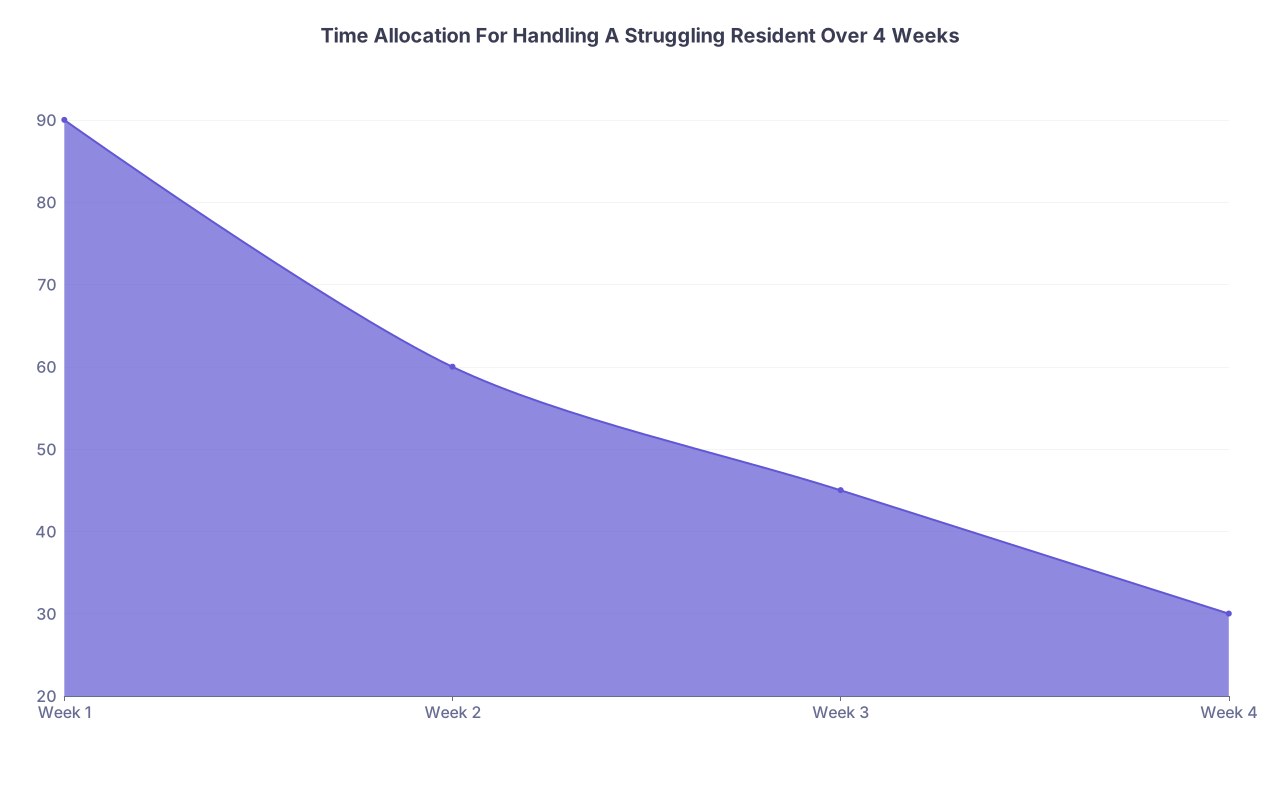
| Category | Value |
|---|---|
| Week 1 | 90 |
| Week 2 | 60 |
| Week 3 | 45 |
| Week 4 | 30 |
It looks burdensome. It is not as bad as it seems. A 15‑minute note once per week can save you from months of institutional chaos later.
Step 9: Use Common Scenarios As Templates
Let me walk through three real‑world archetypes and how this framework plays out.
Scenario 1: The Disorganized but Motivated PGY‑1
Pattern:
- Chronically behind on notes
- Forgets to follow up on labs
- Good attitude, cares about patients, clearly overwhelmed
Approach:
- Level 2 concern (moderate, single domain – organization)
- Focus on systems, not “effort”
Plan elements:
- Shared list template with columns: Task / Owner / Due time / Done
- “Power hour” scheduled daily 14:00–15:00 for pure admin and follow‑ups
- Senior or attending to review list at 13:45 daily for 1 week, then every other day
Goals:
- 100% of notes done by 18:00 for 5 consecutive weekdays
- No missed critical results over 2 weeks
- All patients with clear, updated daily problem list
Result:
- Most of these residents improve dramatically once you give them a structure and permission to protect admin time.
Scenario 2: The Knowledge‑Light but Overconfident PGY‑2
Pattern:
- Makes confident but wrong plans
- Does not call for help
- Pushes back aggressively on feedback
Approach:
- Level 3 concern (multidomain: knowledge, judgment, insight)
- Early PD involvement
Plan elements:
- Mandatory case‑based discussions daily on their primary patients
- Require verbal articulation of differential and backup plans for each problem
- Explicit “must call” criteria list for overnight and weekends
Goals:
- For 2 weeks, present at least two cases per day with articulated differential and reasoning without major gaps after pre‑reading
- No episodes of unilateral major care decisions (e.g., starting pressors, changing DNR, discharging high‑risk patients) without discussing with senior/attending
If they cannot or will not meet this with coaching, you are moving toward formal remediation or extension. You are not hoping it gets better by fellowship.
Scenario 3: The Interpersonally Toxic but Technically Strong Resident
Pattern:
- Great notes, good plans
- Nurses and juniors avoid working with them
- Eye rolls, sarcasm, raised voice, undermining colleagues
Approach:
- Level 2 or 3 depending on severity
- You must protect staff and learners. Full stop.
Plan elements:
- Direct feedback with specific quotes and reports from staff
- Expectation: zero further episodes of disrespectful language or tone
- Required conflict management or professionalism coaching through GME
- Possibly 360 evaluations to track progress
Goals:
- 0 additional nursing complaints over next 4 weeks
- Documented positive interactions or thanks from at least 2 staff per week (yes, you can ask for simple feedback)
- Self‑reflection piece (brief, one page) on impact of behavior, shared with PD—not as punishment, but as a tool to assess insight
If they insist all staff are “too sensitive” and refuse to adjust, you have your answer about their suitability for independent practice.
Step 10: Do a Post‑Mortem on Yourself
After each tough feedback case, ask yourself three blunt questions:
- Did I act early enough? Or did I wait until this became a disaster?
- Was I specific enough? Or did I hide behind “concerned about professionalism”?
- Did I give them a real chance to improve? Or did I throw some vague advice at them and hope?
You are training yourself too. Every difficult resident is practice for the next one. If you refine your system each time, these encounters become less draining and more effective.
Three Things to Remember
- Specific behaviors, not adjectives. If you cannot describe what they did and why it matters, you are not ready for a feedback conversation.
- Written, measurable plan with short follow‑up cycles. No more vague “please improve” talks. Concrete goals, scheduled check‑ins, documented progress.
- Firm standards, humane delivery, early escalation. You can be kind without being soft, and you protect everyone—including the resident—when you involve leadership before it becomes unfixable.