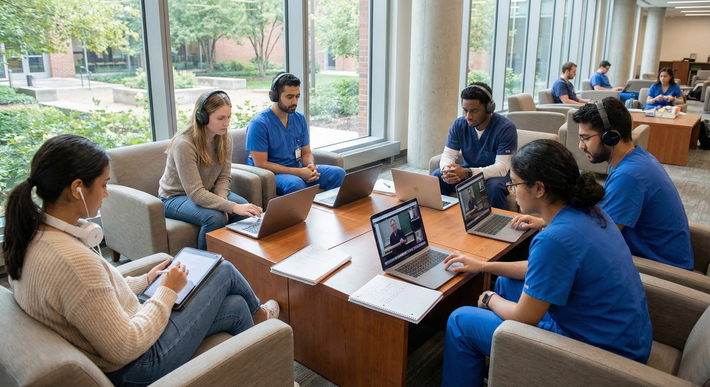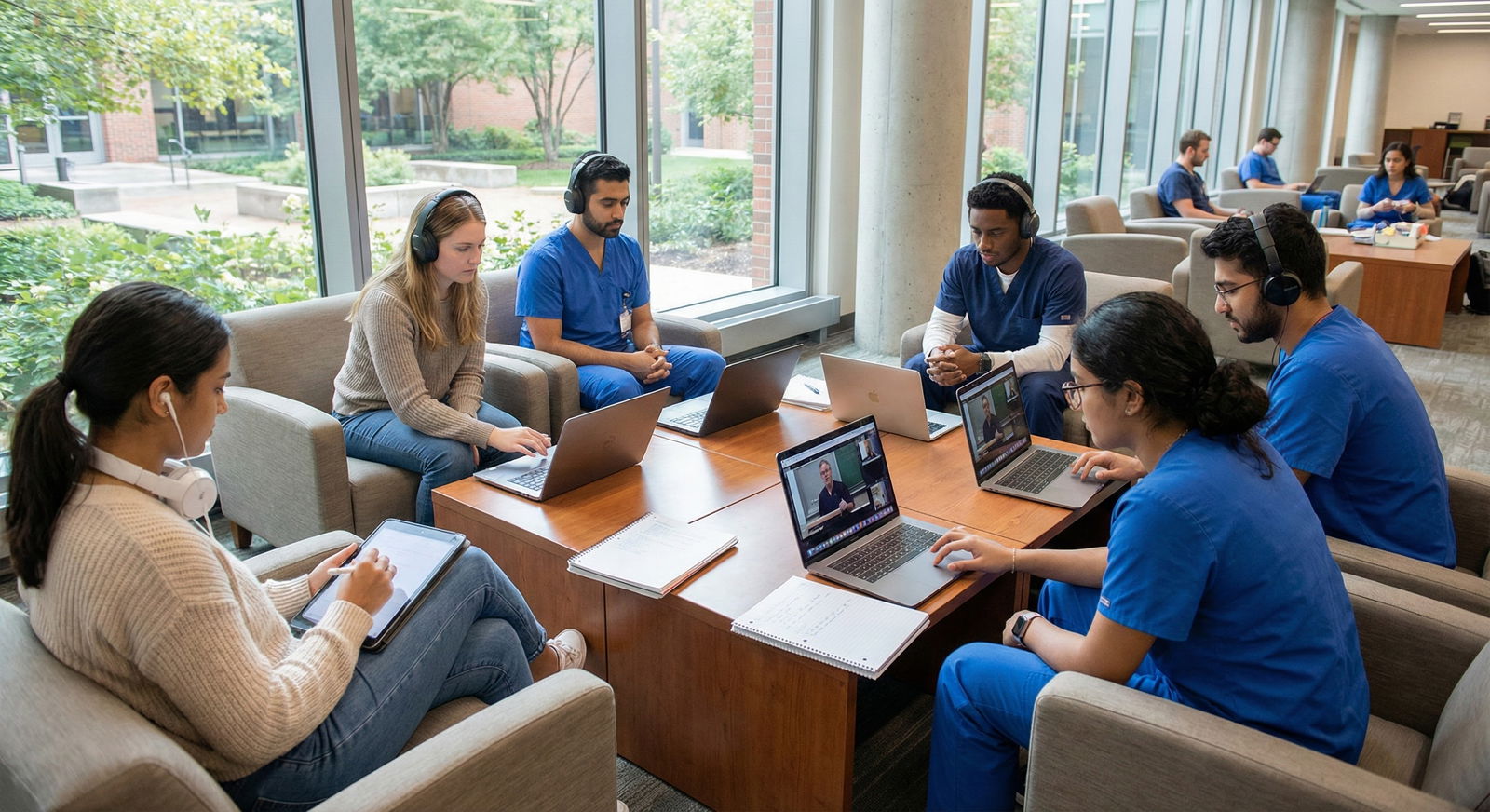
If live lectures are so superior, why do exam scores keep going up in courses where students quietly stop showing up to class and watch recordings instead?
That’s the uncomfortable question nobody in medical education likes to touch. Faculty swear by “real” in‑person teaching. Students vote with their feet. And the research data? It’s nowhere near as friendly to the “live or bust” crowd as they think.
Let’s break the myth cleanly: the idea that online lectures are inherently inferior to live teaching is not supported by the bulk of high‑quality evidence. What is supported is something more annoying and nuanced:
- Bad online teaching is terrible.
- Bad in‑person teaching is also terrible.
- Well‑designed online teaching routinely matches or beats traditional lectures on knowledge outcomes.
You don’t have to like that. But pretending it’s not true just makes your course worse.
What the Evidence Actually Shows (Not What People Repeat)
First, forget anecdotes like “my students don’t learn as well online.” That’s usually code for: “I moved my 60‑slide monologue to Zoom and everyone hated it.” That’s not an indictment of online teaching. It’s an indictment of lazy design.
Let’s look at some actual data.
Meta-analyses: Online vs In-person
Multiple meta-analyses and systematic reviews across higher education—and specifically in health professions education—tell the same story:
- Online or blended learning is at least as effective as traditional face‑to‑face teaching for knowledge outcomes.
- Often, well-designed online formats lead to better performance on exams and knowledge tests.
A few key patterns:
- A 2010 U.S. Department of Education meta-analysis of over 1,000 studies found that students in online learning conditions performed modestly better than those receiving face‑to‑face instruction. Not worse. Better.
- In health professions, including medicine and nursing, multiple systematic reviews show no meaningful difference or a small advantage for blended/online models over traditional lectures when it comes to knowledge and, in some cases, skills.
Are there studies that show live is better? Of course. Education research is noisy. But when you look at large bodies of data instead of cherry‑picking a favorite paper, the myth “online is inferior” just does not hold.
Here’s the catch: many of the stronger “online wins” studies use:
- Structured modules
- Embedded quizzes
- Short segments
- Deliberate practice
In other words, not just “Zoom + PowerPoint while I talk nonstop.”
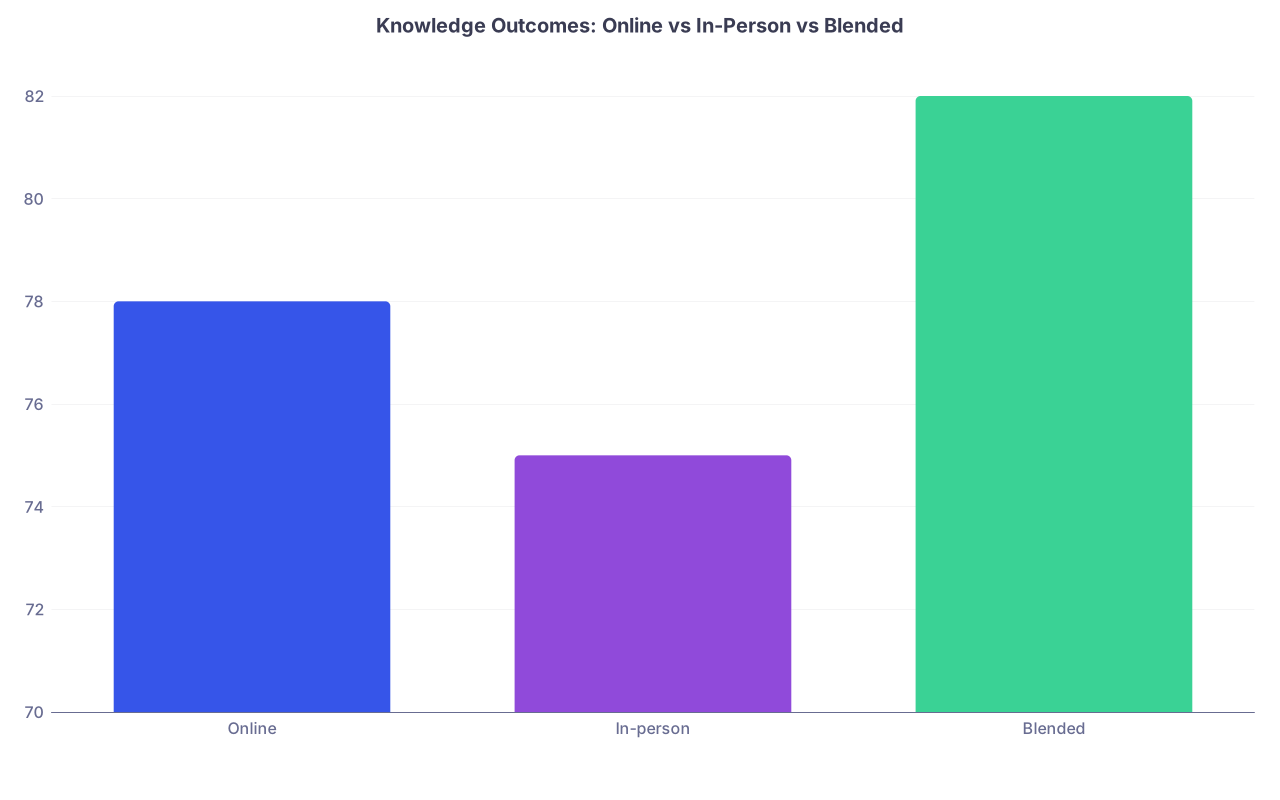
| Category | Value |
|---|---|
| Online | 78 |
| In-person | 75 |
| Blended | 82 |
The Real Issue: Most People Compare Bad Online to Idealized Live
Here’s the dirty secret of these debates: when faculty say “live is better,” they’re usually comparing an imagined, ideal version of their best teaching day to the worst version of online they’ve seen.
Let’s be concrete. In real life, “live teaching” in medical education often means:
- A 50–90 minute monologue with 60+ slides
- Lights down, presenter reading text
- No cold-calling, no accountability
- Students physically present, mentally absent
We both know you’ve seen this a hundred times. You may even have given one. I certainly have.
Now compare that to a well-designed online module:
- 8–12 minute segments, each with a clear objective
- Embedded MCQs with explanations
- Pausable, rewritable content at the learner’s pace
- Analytics on who watched, what they missed, and where they got stuck
Which one is actually more likely to support learning for a sleep‑deprived MS2 trying to understand heart failure at 11:30 p.m. after call?
The question isn’t “online vs live.” It’s “thoughtful design vs autopilot tradition.”
What Studies in Medical Education Specifically Show
You want medicine-specific evidence. Good. Let’s go there.
Across med schools and residency programs, research repeats a few patterns:
Online lectures vs live lectures for basic science content
When you compare traditional didactic lectures to recorded or online formats:- Knowledge outcomes are usually equivalent.
- Student satisfaction is often higher with online, mostly because of flexibility and control over pacing.
- Attendance to live lectures tends to drop sharply when recordings are available, yet exam scores don’t fall—and often rise.
Blended learning models in clinical skills and procedural teaching
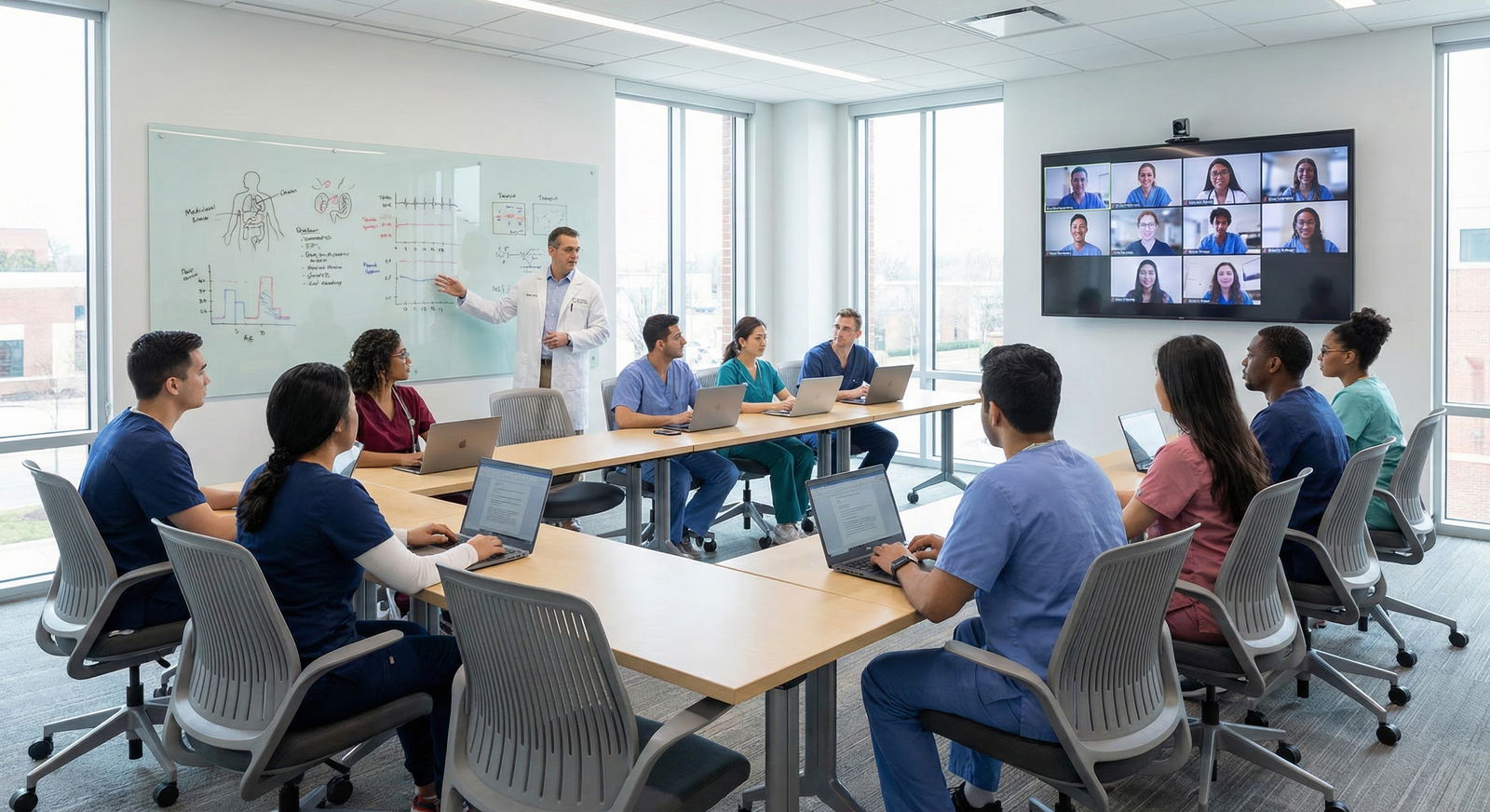
When online content is used before in-person practice:- Learners come to sessions with higher baseline knowledge.
- In-person time can be used for hands-on practice, feedback, and nuance rather than basic transmission.
- Several studies show improved procedural performance (e.g., suturing, central lines, resuscitation skills) when pre‑work is online and structured.
Flipped classroom models
Students consume didactic content online, then apply it live:- Generally leads to better exam scores and higher engagement.
- Students complain more about workload, but not about learning.
- Faculty complain because flipped models require actual design, not copy‑paste of last year’s slides.
In other words: in medical education, online isn’t the weak link. Lazy pedagogy is.
The Myths That Won’t Die (And Why They’re Wrong)
Let’s burn through the greatest hits.
Myth 1: “Students don’t pay attention online.”
They don’t pay attention in the back row of your lecture hall either.
Attention is not about location. It’s about:
- Cognitive load
- Interactivity
- Relevance
- Fatigue
Do students multitask more online? Yes, if you give them a 75‑minute passive stream with no accountability. But the same thing happens in person—phones under desks, laptops, whispered side conversations. You just can’t see it as easily.
What the data shows: shorter online segments with interaction points (questions, prompts, checks for understanding) foster attention better than long live monologues, especially in fatigued learners.
Myth 2: “You can’t teach clinical reasoning online.”
You absolutely can. Many programs already do:
- Case-based modules
- Virtual patients
- Scripted branching scenarios
- Annotated reasoning walk-throughs
Is this a substitute for real patients? No. But neither is your chalk talk on “approach to chest pain.” Clinical reasoning is pattern recognition + structured thinking. Both can be modeled, practiced, and assessed in online environments surprisingly well.
Where online fails is when people dump old slide decks into a recording without thinking: “How do I show my thinking process here?” That’s not a platform problem. That’s a design problem.
Myth 3: “Online teaching destroys professionalism and human connection.”
If your only notion of professionalism and human connection is “we sit in the same room,” then yes, online feels threatening.
But again—reality check. In many traditional large-group lectures:
- The lecturer doesn’t know most students’ names.
- Students don’t speak.
- No relationship is formed at all.
Online small groups, office hours, 1:1 virtual meetings, and feedback sessions can create more connection than a 120‑person auditorium ever did. I’ve seen quiet students find their voice in typed chat and small Zoom breakouts who never once raised a hand in a lecture hall.
Do some students feel isolated online? Yes. That’s a design and support issue. It’s not baked into the format.
Where Online Teaching Does Struggle (If You’re Honest)
Now, I’m not saying everything can or should be online. That’s equally lazy thinking. There are real frictions.
1. Procedural and hands-on skills
You can prep a learner’s brain online. You can’t replace:
- Palpating an abdomen
- Using a laryngoscope
- Doing a lumbar puncture
- Reading a real patient’s nonverbal cues
What works best here is blended models:
- Pre‑session video + quizzes for cognitive prep
- In-person deliberate practice with supervision
- Post‑session online reflection/assessment
Anyone selling “fully online clinical skills” as equivalent to real patient encounters is kidding themselves.
2. Equity and access
Online can improve equity (asynchronous access, recordings, no commute). But it can also widen gaps:
- Poor internet access
- Limited devices
- Crowded or chaotic home environments
Programs that treat online as “everyone has a MacBook and fiber at home” are delusional. If you shift online, you must plan for device loans, quiet spaces on campus, and graceful failure modes when tech collapses.
3. Cognitive overload and burnout
When faculty move everything online and keep all the old expectations, you get:
- Infinite recorded lectures
- Discussion forums
- Online quizzes
- Synchronous Zoom sessions
Stacked on top of clinical duties. Students burn out, not because online is worse, but because nobody curates or prunes.
Online forces an uncomfortable question: “What is actually essential?” Many departments dodge it and dump everything into the LMS instead. That’s not a platform flaw. That’s cowardice in curriculum design.
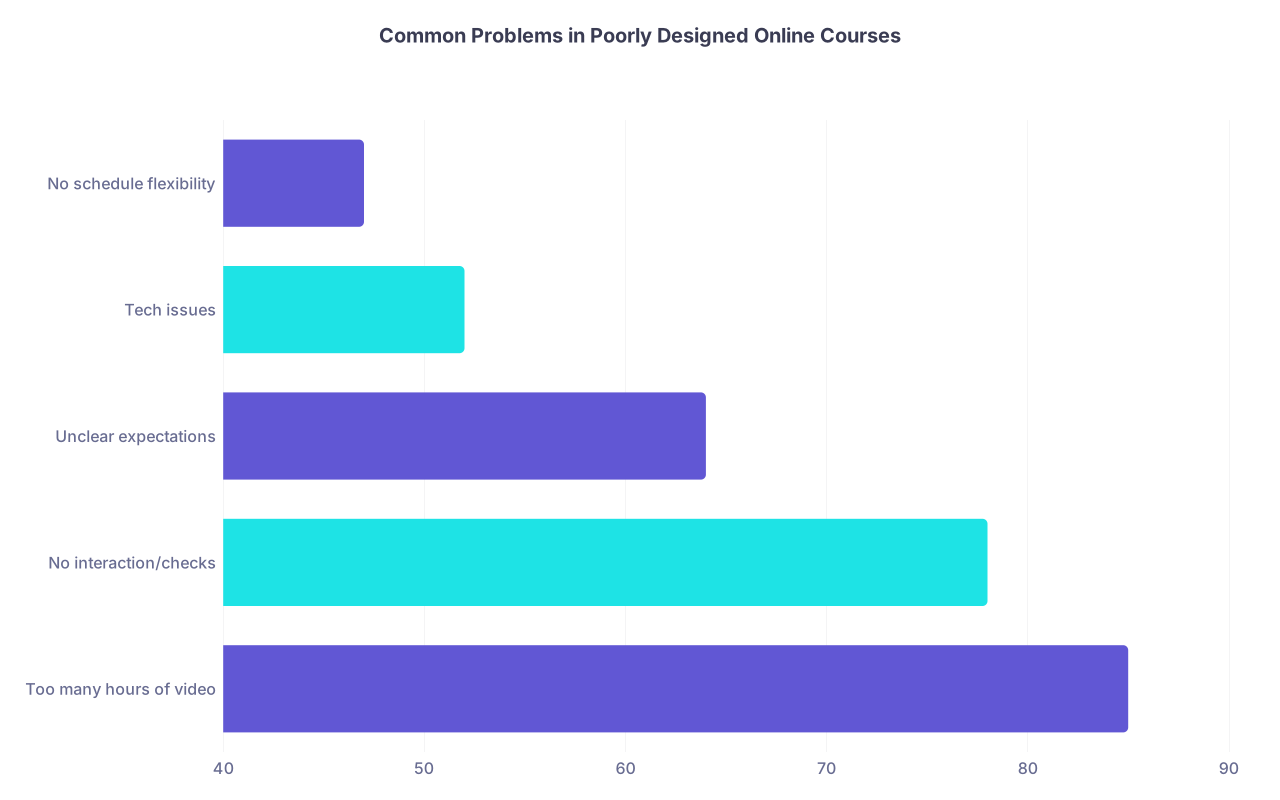
| Category | Value |
|---|---|
| Too many hours of video | 85 |
| No interaction/checks | 78 |
| Unclear expectations | 64 |
| Tech issues | 52 |
| No schedule flexibility | 47 |
How to Make Online Equal or Better Than Live (Without Magic)
If you’re in medical education—faculty, clerkship director, program director—and you actually care whether your teaching works, not just how it feels to you, here’s what the evidence-based playbook looks like.
1. Stop recording 60–90 minute blocks
All the attention and learning science says:
- 6–12 minute segments beat long lectures.
- Each segment should have one clear objective.
- Learners should do something every few minutes—answer a question, predict, pause and write, etc.
If you must record an hour, chop the recording into smaller labeled segments. It’s crude, but still better than a monolith.
2. Build interaction into the content, not around it
The question isn’t “Do you use online polling?” It’s “Does every 5–10 minutes of instruction ask something of the learner?”
That can be:
- MCQs with explanations
- Short “stop and think” prompts
- Annotating images
- Clicking through a decision tree
Don’t put all the interaction at the end as an afterthought quiz. Integrate it into the flow.
3. Use analytics like an adult, not a cop
Most LMS platforms will tell you:
- Who watched what
- Which questions most students missed
- Where learners drop off
You can react in two ways:
- Policing: “You must watch 95% of every video, or else.”
- Improvement: “Everyone failed question 3; my explanation or example here is garbage, I should fix it.”
Guess which one leads to better learning and less resentment.
| Aspect | Live Teaching Strengths | Online Teaching Strengths |
|---|---|---|
| Knowledge transfer | Real-time clarification | Self-paced, rewinding, better for review |
| Skills/procedures | Hands-on coaching, psychomotor practice | Pre-learning and reinforcement |
| Clinical reasoning | Case discussions, role modeling | Structured cases, branching scenarios |
| Flexibility | Fixed time, location | Any time, any place |
| Data for improvement | Anecdotal, course evals | Clickstream, quiz data, fine-grained analytics |
For Different Roles: What This Means in Practice
If you’re a medical student or resident
Here’s the blunt truth: online vs live is not your main problem. Your strategy is.
Online lectures are usually better for:
- Initial exposure when you’re exhausted
- Review before exams or boards
- Pausing to look up things you don’t understand
Live sessions are usually better for:
- Asking nuanced questions
- Getting feedback on reasoning or plans
- Practicing communication and skills
So use each for what it’s good at. Don’t cling to the fantasy that suffering through a live lecture equals deeper learning. It doesn’t.
(See also: Why some clinicians get protected teaching time for more.)
If you’re faculty
You have two options:
- Keep defending a nostalgic version of your early career teaching environment.
- Accept that the world changed, and design around how people actually learn now.
If your live lecture is literally just reading slides, be honest: a clear, well‑produced 12‑minute video segment is probably an upgrade for your learners. That frees up your live time for Q&A, case discussions, and nuance—things that recordings struggle to replicate.
(Related: How promotions really work in medical academia)
You’re not being “replaced by video.” You’re being repositioned to do the parts humans are uniquely good at.
If you’re an educational leader
Stop asking, “Should we go back to live?” and start asking:
- Which learning objectives need hands-on practice?
- Which can be mastered asynchronously?
- Where do we need live interaction for reasoning/professionalism?
- Where could we use data from online modules to refine the curriculum?
The worst move is the one many schools are making now: forcing “mandatory in-person attendance” for content that students already know they can learn just as well—or better—online. That’s how you get disengagement, resentment, and performative but hollow “professionalism.”

| Step | Description |
|---|---|
| Step 1 | Define objective |
| Step 2 | Plan in-person skills session |
| Step 3 | Design interactive live session |
| Step 4 | Create online module with checks |
| Step 5 | Use analytics to improve |
| Step 6 | Needs hands-on practice |
| Step 7 | Needs rich real-time discussion |
The Bottom Line: Are Online Lectures Inferior?
No. Not inherently. And the more you look at actual data instead of nostalgia, the clearer that becomes.
Three takeaways:
Format is not destiny. Thoughtful online design routinely matches or outperforms traditional lectures on knowledge outcomes in medical education. Bad teaching is bad in any medium.
Blended usually wins. Use online for what it’s good at (knowledge transfer, flexibility, data) and protect live time for what only humans can do well together (skills, reasoning, mentorship).
The real fight isn’t online vs live—it’s lazy vs intentional. If you keep treating “online” as just a recording of your old lecture, you will keep “proving” that it doesn’t work. The moment you design around how people actually learn, the myth that online is inferior falls apart.