
The brutal truth: most physicians are under-skilled for the tech-driven future they’re walking into.
You do not need to become a software engineer. But if you finish residency and stay “just a clinician,” you’re putting a ceiling on your career, your income options, and your influence over how medicine is changing—often without you.
Let’s cut the fluff. Here’s exactly which tech skills you should prioritize after residency, and in what order, depending on your career goals.
1. The Non‑Negotiables: Tech Skills Every Post‑Residency Physician Needs
These are table stakes now. If you don’t have them, you’ll be slower, more frustrated, and less valuable than you could be.
1.1 EHR Power-User Skills (Not Just “I Can Click Around”)
Most physicians stop learning their EHR the day they can get through a basic note and order set. That’s a mistake.
You should be able to:
- Build and edit smart phrases / templates
- Create and refine order sets and preference lists
- Use filters, dashboards, and in-basket rules
- Pull simple reports on your own panel (e.g., uncontrolled diabetics, patients overdue for cancer screening)
- Use messaging and task routing efficiently with your team
If you’re on Epic, there are “physician builder” or “power user” trainings. Do them. Same idea applies for Cerner, Meditech, etc.
Why this matters:
You’re going to spend 2–4 hours per day interacting with an EHR. A 15–20% efficiency gain is equivalent to gaining back weeks of time every year.
1.2 Data Literacy: Read and Question the Numbers
You do not need to be a data scientist. But you absolutely need to be data literate.
That means you can:
- Understand what a dashboard is actually showing (denominator, time window, inclusion criteria)
- Recognize garbage metrics (e.g., “door to provider” as a proxy for actual care)
- Ask good questions of analysts: “Is this risk-adjusted?”, “Which patients are excluded?”, “Is this per encounter or per patient?”
- Interpret basic visualizations: run charts, bar graphs, histograms, control charts
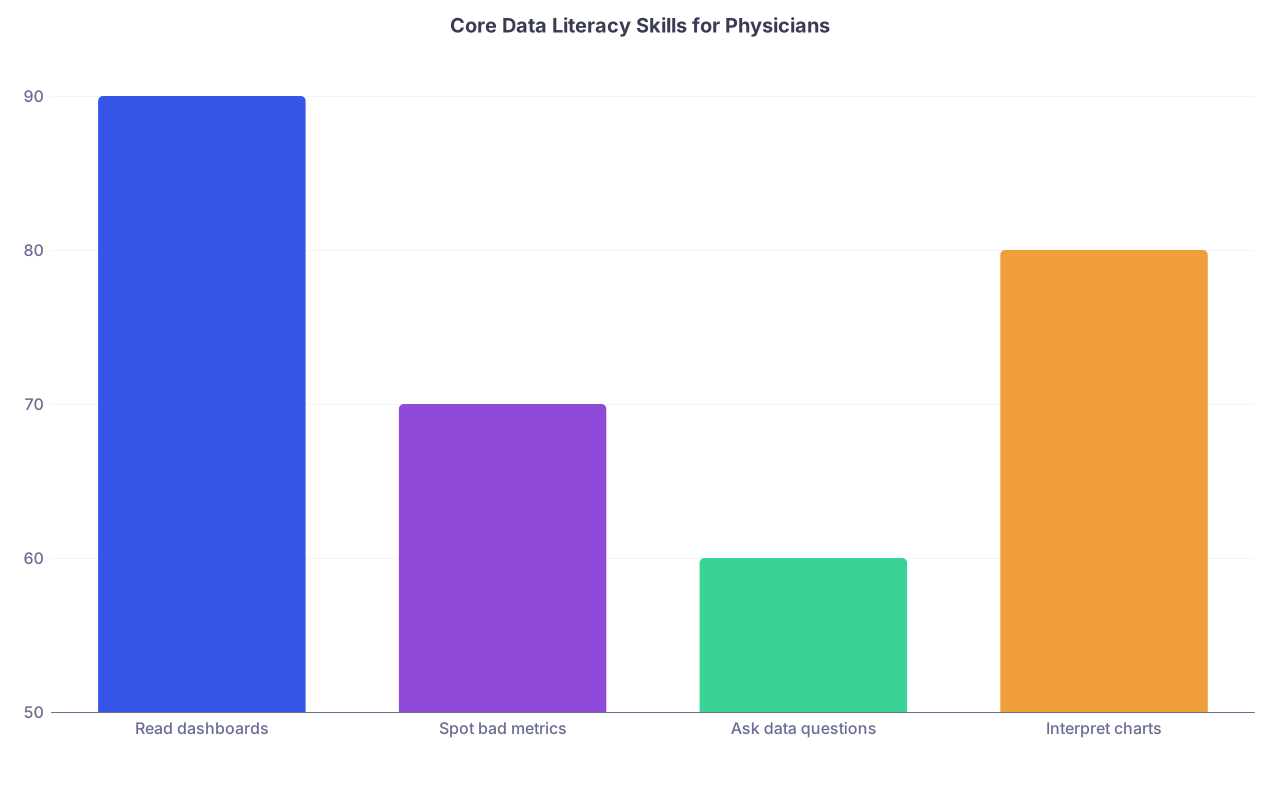
| Category | Value |
|---|---|
| Read dashboards | 90 |
| Spot bad metrics | 70 |
| Ask data questions | 60 |
| Interpret charts | 80 |
The physicians who understand data shape quality programs, reimbursement models, and care redesign. The ones who don’t end up just complaining about “admin” decisions.
1.3 Clinical Communication Tech: Telemedicine & Asynchronous Care
Telehealth is not a pandemic fad. It’s now infrastructure.
You should be comfortable with:
- Running efficient video visits (lighting, audio, scripting, prioritizing)
- Asynchronous care: structured questionnaires, e-visits, messaging-based care
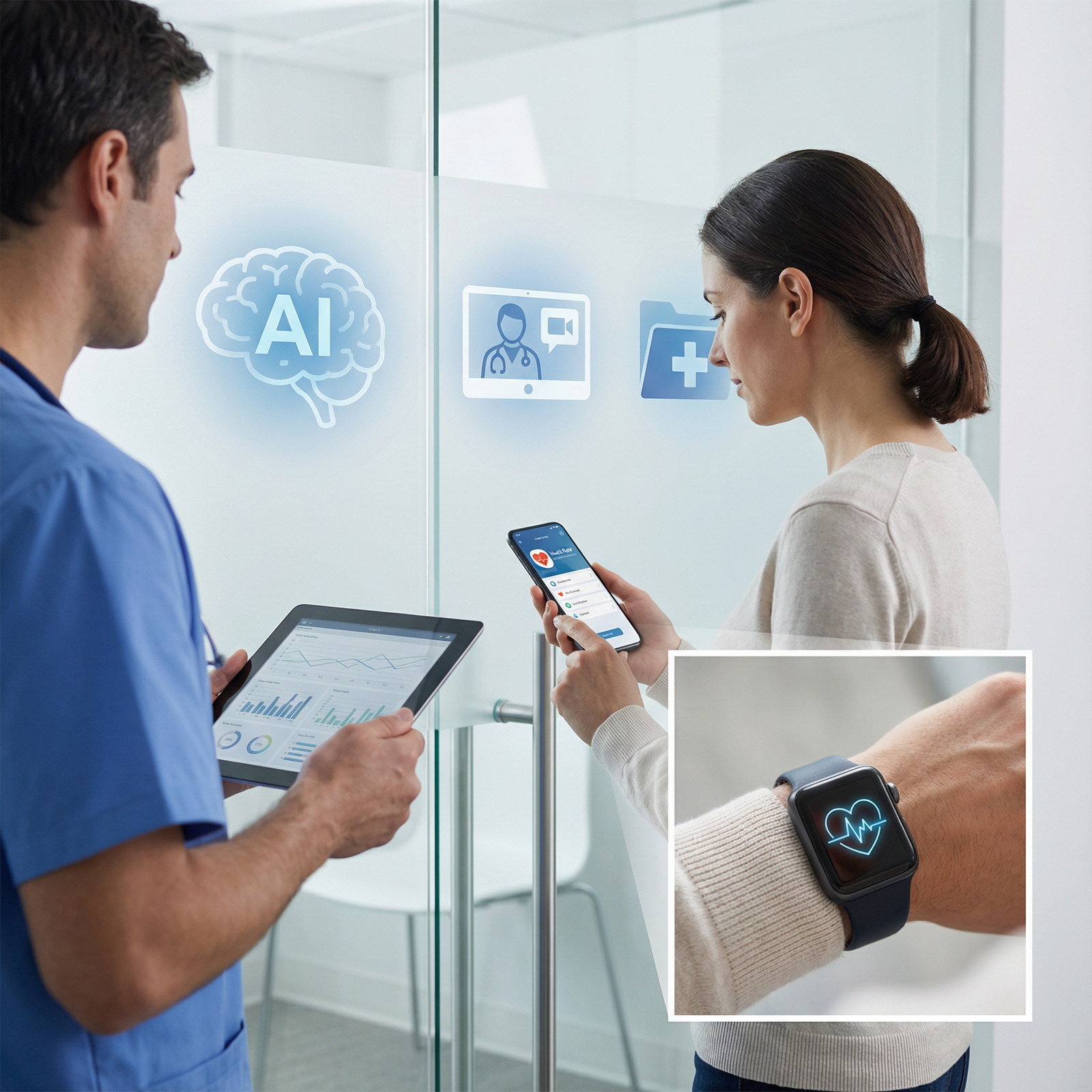
- Remote monitoring platforms (BP cuffs, glucometers, wearables) and how alerts are triaged
- Documenting tele-visits cleanly and billing appropriately
If you’re still treating video visits as “phone calls with video,” you’re leaving both quality and revenue on the table.
2. The “Next Level” Skills: Choose Based on Your Career Track
After the basics, your priorities depend on where you want to go. You’re not going to master everything. Pick the right lane.
I’ll break it into four common tracks:
- Clinical leader / medical director
- Physician builder / informatics-oriented
- Physician-entrepreneur / startup-curious
- Side-gig and leverage seeker (content, consulting, non-clinical income)
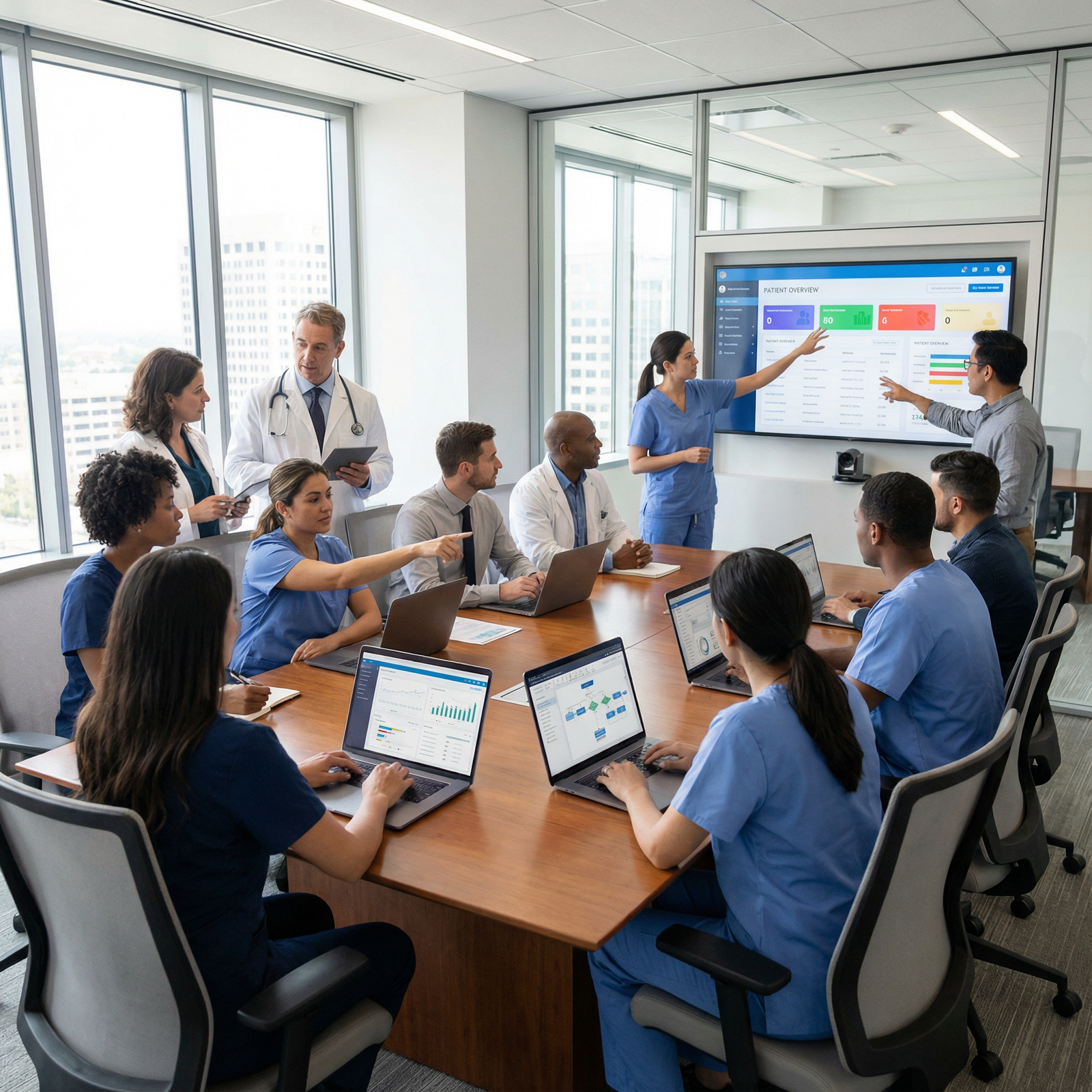
3. Track 1 – Clinical Leader: Tech Skills for Medical Directors and Chiefs
If you see yourself as a department chief, medical director, or CMO one day, prioritize these.
3.1 Quality & Operations Analytics
You should know how clinical work translates into metrics and money.
Learn:
- Basics of value-based care, bundled payments, shared savings models
- How length of stay, readmissions, and throughput are measured and reported
- How to interpret risk-adjusted outcomes and benchmarking reports
- How to work with a data team to build and refine service-line dashboards
| Skill Area | Practical Use Case |
|---|---|
| Dashboards | Monitor LOS, readmissions, throughput |
| Risk Adjustment | Compare outcomes fairly across clinicians |
| Cost/Utilization | Identify unnecessary tests or admissions |
| Quality Metrics | Improve sepsis, VTE, HCAHPS performance |
You don’t have to build the dashboards, but you must know what to ask for and how to call BS on misleading visuals.
3.2 Workflow & Process Design Tools
You will spend a surprising amount of time in:
- Visio / Lucidchart for process mapping
- Project tools like Asana, Trello, or Jira
- Shared documentation tools: Confluence, Notion, or just well-structured shared drives
Know how to map a patient journey from ED arrival to discharge. Where are the delays? Who is responsible? Where is tech helping or hurting?
3.3 Change Management with Tech
You’ll be leading:
- EHR or order set changes
- New device rollouts
- Telehealth expansions
- Documentation and coding changes
So you need working knowledge of:
- Pilot design (small tests, measured outcomes)
- Stakeholder mapping (who’ll block you, who’ll help you)
- Training strategies (10-minute just-in-time videos beat 2-hour lectures)
That combination—analytics + workflows + change management—is what actually gets you into leadership roles, not just “being a good clinician.”
4. Track 2 – Physician Builder / Informatics-Oriented: Tech Skills to Go Deeper
If you like tweaking the EHR, asking “why is this screen like this?”, or building tools, lean into it. This track is in high demand.
4.1 Advanced EHR Configuration
Go beyond power-user.
Get into:
- Building smart forms, order sets, and specialty workflows
- Designing clinical decision support: alerts, best-practice advisories, pathways
- Understanding how data is stored and structured (tables, fields, encounters, flowsheets)
Many hospitals support “physician builder” certification (Epic) or equivalent. If your eyes light up when you see these courses, that’s a signal.
4.2 Intro Programming & Scripting (Enough to Be Dangerous)
No, you don’t need to become a professional programmer. But some basic skills will 10x your conversations with IT and vendors.
Focus on:
- Python basics: data structures, loops, functions
- Simple data work with pandas (think: CSVs, filtering, grouping)
- Basic SQL: SELECT, WHERE, GROUP BY, JOIN
- Using Jupyter notebooks for quick analysis and prototyping
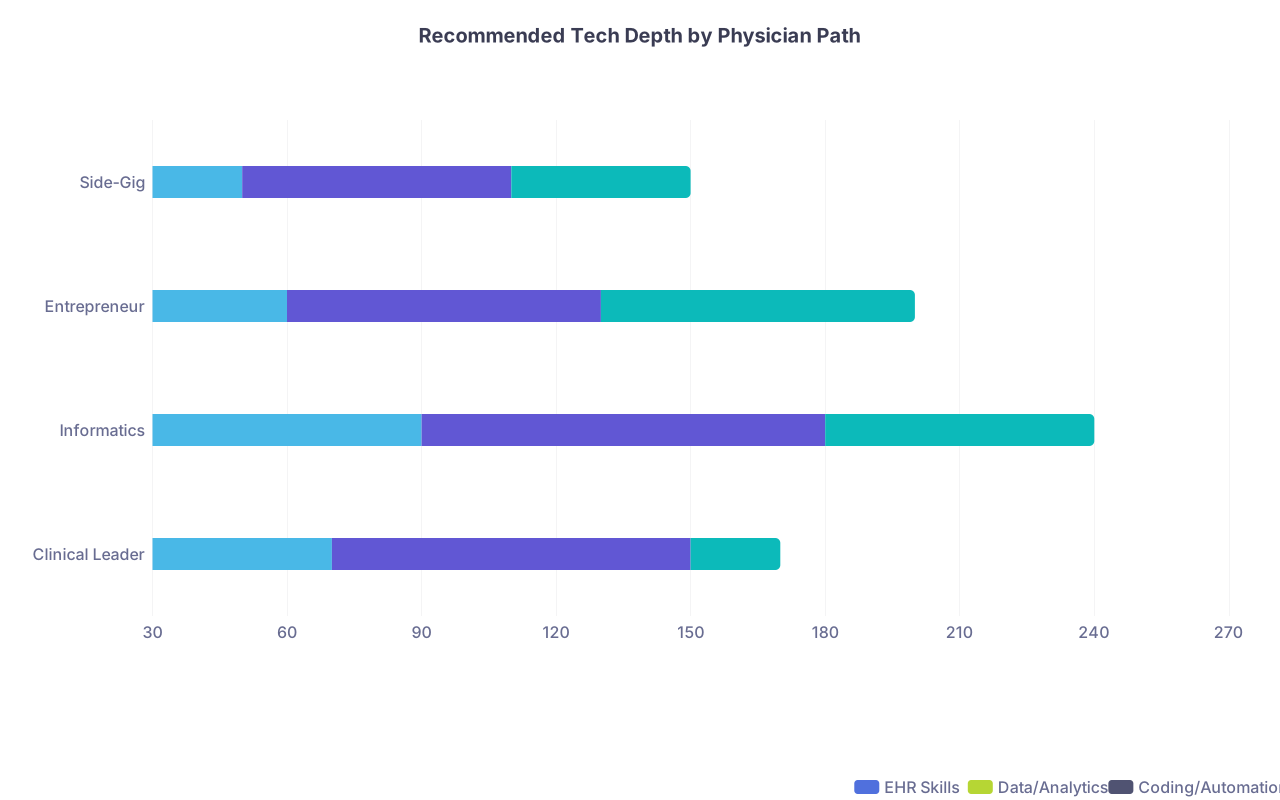
| Category | EHR Skills | Data/Analytics | Coding/Automation |
|---|---|---|---|
| Clinical Leader | 70 | 80 | 20 |
| Informatics | 90 | 90 | 60 |
| Entrepreneur | 60 | 70 | 70 |
| Side-Gig | 50 | 60 | 40 |
Once you can pull a small dataset and answer a question yourself (e.g., “How many patients with eGFR < 30 are still on metformin?”), you stop waiting months for IT tickets to come back.
4.3 Clinical Decision Support & Evaluation
Learn the mechanics:
- Types of decision support: alerts, order sets, documentation helpers, risk scores
- Human factors: how many alerts are too many, interruptive vs passive, alert fatigue
- Evaluation: A/B testing, pre/post analysis, adoption metrics
This is what modern clinical informatics fellowships teach. You can start picking it up piecemeal now.
5. Track 3 – Physician-Entrepreneur: Tech Skills for Startups and Innovation
If you’re startup-curious or want to work with digital health companies, your priorities shift a bit.
5.1 Product Thinking
You must learn to think like a product person, not just a clinician.
Key concepts:
- Problem–solution fit: What problem, for whom, how painful is it?
- User personas: patient, nurse, front-desk staff, billing—what each actually cares about
- User journeys: how someone discovers, starts, and uses the tool in real workflows
- MVP (minimum viable product): what is the smallest version that delivers real value?
You’re no longer just saying, “Wouldn’t it be nice if…?” You’re evaluating: “Will this actually get used on a Tuesday afternoon by an overworked MA?”
5.2 No-Code / Low-Code Tools
You can build usable prototypes yourself now.
Tools worth learning:
- Bubble, Glide, or Adalo for web/mobile app prototypes
- Zapier or Make for automations (linking EHR exports, email, spreadsheets, CRMs)
- Airtable / Notion databases for lightweight data collection and dashboards
You’re not waiting for an engineer to validate your idea. You test it with 10 clinicians and 30 patients this month.
5.3 Basics of AI and Machine Learning in Healthcare
You don’t need to build models, but you must understand:
- The difference between traditional software rules and ML models
- What training data, test data, bias, and drift mean in a clinical context
- Where AI/ML actually works today: imaging triage, coding, documentation, risk prediction, chat-based education
- Regulatory and ethical framing: FDA SaMD, explainability, fairness issues
If you’re the “clinical brains” in a startup and can’t speak this language, you’ll either be sidelined or, worse, lend your MD to something unsafe.
6. Track 4 – Side Gigs & Leverage: Content, Personal Brand, and Online Presence
If you want optionality—consulting, speaking, courses, writing, industry advisory roles—these tech skills matter more than you think.
6.1 Content Creation Tech
At minimum, learn:
- How to record decent audio and video (mic, lighting, framing)
- Basics of video editing (CapCut, Descript, ScreenFlow, or similar)
- Simple slide design (Keynote, PowerPoint, Canva)
You don’t need to become a YouTuber, but if you can turn your expertise into a clean 10-minute explainer with slides and audio, you have leverage.
6.2 Basic Web and Email Infrastructure
Understand:
- How to set up a simple website with a builder (Squarespace, Webflow, Ghost)
- How email lists work (ConvertKit, Mailchimp, etc.)
- How to publish and share on LinkedIn, Substack, or a blog
This is how future opportunities find you. Recruiters, industry leaders, media—all search online first.

| Step | Description |
|---|---|
| Step 1 | Finish Residency |
| Step 2 | Deep EHR + Analytics |
| Step 3 | EHR Build + Coding Basics |
| Step 4 | Product + No Code |
| Step 5 | Content + Web Skills |
| Step 6 | Dashboards and Quality Projects |
| Step 7 | Physician Builder Role |
| Step 8 | Prototype and Pilot Tools |
| Step 9 | Public Presence and Consulting |
| Step 10 | Primary Goal |
7. What To Learn First (Sequenced, Not Scattershot)
Here’s a practical sequence for your first 12–18 months out of residency.
Step 1: Maximize EHR and Workflow Efficiency (0–3 months)
- Take every “physician efficiency” class your system offers
- Build or refine your core templates and order sets
- Learn 10+ shortcuts or workflow tricks that save minutes every hour
Result: less burnout, more time for everything else on this list.
Step 2: Get Comfortable With Data (3–6 months)
- Ask for a few key dashboards for your panel or service
- Sit with a data analyst once or twice to understand how reports are built
- Practice asking sharper questions about metrics in your meetings
Step 3: Pick ONE “Tech Track” to lean into (6–18 months)
- Leader route → ask to join quality or IT governance committees
- Informatics route → seek physician builder time or a formal role
- Entrepreneur route → build one tiny prototype or pilot with a no-code tool
- Side-gig route → publish one high-quality piece of content per month for 6 months
Do not try to become an expert in AI, product design, SQL, and video production all at once. Depth in one area beats shallow awareness of everything.
8. Skills that Are Overrated (For Most Physicians)
Let me be blunt about a few things that are usually not worth prioritizing early:
- Full-stack software engineering – if you enjoy it, great, but it’s not required for impact
- Learning every new AI buzzword – focus on concrete use cases, not hype
- Deep cybersecurity concepts – understand the basics and defer to specialists
- Fancy blockchain-in-healthcare ideas – 99% of it has gone nowhere clinically useful
If you have limited time (you do), put it toward skills that directly change your daily work, your leadership opportunities, or your ability to build/test real solutions.
9. How to Learn Without Burning Out
You’re already working a full job. So the learning strategy has to be lightweight and pragmatic.
Use this rule: no learning without a live project.
Examples:
- Want data literacy? Volunteer to help improve one quality metric and demand access to the data.
- Curious about no-code? Build a simple symptom tracker your clinic MAs can test.
- Thinking about content? Turn one recurring patient explanation into a video or PDF handout.
Micro-learning works here: 2–4 hours per week, every week, for 6–12 months beats a single big weekend course you never apply.
FAQ (Exactly 5 Questions)
1. Do I really need to learn programming as a physician?
No, not in the “software engineer” sense. Most physicians will never need more than basic scripting skills, if that. If you’re going into clinical informatics, digital health, or you just enjoy tinkering, learning Python and some SQL is a good investment. If your main goal is to be a strong clinician and leader, prioritize EHR mastery, analytics literacy, and workflow design instead. Those pay bigger dividends for most people.
2. Is it worth doing a clinical informatics fellowship just for tech skills?
Only if you want a career where a significant chunk of your time is spent on systems design, EHR build, data projects, or digital health strategy. A fellowship gives you structure, credibility, and deeper skills. But if you only want to be “better with tech” in your day job, you can get 60–70% of the value through targeted courses, internal roles (physician builder, medical director for IT), and project-based learning without committing two years.
3. I’m already burned out. How can I add tech learning without making things worse?
Start by learning only what reduces your current pain. If charting is killing you, invest in EHR shortcuts, templates, and workflow tweaks. If messaging is overwhelming, learn how to set up smart routing and use team-based inbox management. Once you’ve reclaimed some time and mental space, then layer in next-level skills. Tech that doesn’t immediately make your life easier shouldn’t be step one.
4. Which tech certifications actually help physicians’ careers?
Meaningful ones: Epic Physician Builder, board certification in Clinical Informatics (if you’re going that route), project management certs like PMP or Lean Six Sigma (for leadership/operations roles), and sometimes basic cloud/data certifications (AWS Cloud Practitioner, for example) if you’re deep into data/AI work. Fluff: generic “AI in healthcare” certificates with no real projects, or one-day workshops that don’t connect to actual responsibilities.
5. What’s one concrete thing I can do this month to move forward?
Pick a single workflow that annoys you daily—clinic notes, call coverage, medication refills, messaging, discharge summaries. Book 1–2 hours with your EHR trainer or super-user, plus 1 focused YouTube/online course session, and redesign that one workflow. Build templates, adjust order sets, learn keyboard shortcuts, tweak routing rules. Prove to yourself that tech skills buy back time. Then reinvest that reclaimed time into your next skill.
Open your calendar right now and block a single recurring 1-hour slot each week labeled “Tech Skill Upgrade.” Protect it. Next week, fill that hour by fixing one concrete EHR or workflow pain point. That’s how this stops being theory and starts compounding.