
False. And not just a little false. Cartoonishly false.
The internet narrative that “RVUs will ruin your life as a new attending” is loud, emotional, and half‑informed. It usually comes from two groups: people who got absolutely torched by a terrible RVU contract they never understood, and people who have never actually worked under one but repeat horror stories like campfire ghost tales.
RVU‑based pay can absolutely be abusive. It can also be the only reason a young, fast, efficient attending out-earns their slower partners by six figures.
The truth is messier: structure and details matter more than the RVU label itself.
Let’s dismantle the myths, then I’ll show you how to read an RVU offer like a shark, not a victim.
Quick primer: what RVUs really are (and are not)
Work RVUs (wRVUs) are a productivity metric, not a magical evil currency invented by hospital administrators. Medicare assigns each CPT code a wRVU based on time, complexity, and intensity. Your compensation system then decides: “We’ll pay you X dollars per wRVU.”
Three pieces matter:
- How many wRVUs the work actually generates (volume + case mix)
- The conversion factor: dollars per wRVU
- What protections exist: base, guarantee, floor, caps, call pay, etc.
| Scenario | wRVUs | Rate per wRVU | Total Pay |
|---|---|---|---|
| Low volume | 4,000 | $50 | $200,000 |
| Medium volume | 6,000 | $50 | $300,000 |
| High volume | 8,000 | $50 | $400,000 |
Same person. Same skills. Different volume or coding accuracy. Completely different paycheck.
The RVU system doesn’t “care” if you’re new or 30 years in. The contract structure determines whether you get crushed or rewarded.
Myth: “RVU pay always screws new attendings”
This is the headline myth, and it rests on a half-truth:
- As a brand-new attending, you start with zero panel.
- It takes time to build referrals, a clinic, or procedural volume.
- If your pay is pure eat-what-you-kill RVU with no support, yes, first-year income can be rough.
That’s not an RVU problem. That’s a contract design problem.
Most large systems already know you won’t hit full productivity month one. So they offer:
- A guaranteed base for 1–3 years, sometimes called an income guarantee or salary floor.
- RVU threshold above which you earn a bonus.
- Later conversion to full RVU model once your volume stabilizes.
The danger zone is when any of these are true:
- The guarantee is low compared to regional norms.
- The wRVU expectations are wildly unrealistic for your setting.
- The RVU rate is garbage compared to MGMA/AMGA benchmarks.
- The “reconciliation” clause claws back pay after year one if you miss targets.
That last one is where I’ve seen people get wrecked. Example I’ve personally seen in a community hospital:
- Year 1: Guaranteed $320k, expected 6,000 wRVUs.
- Actual: 4,200 wRVUs (new clinic, limited referral base).
- Contract says: at 12 months, they “true up” and you owe back the difference between what you were paid and what you “earned” at the RVU rate.
- Surprise: doc owes ~$60k on paper. Nightmare.
Same structure, remove clawback? Suddenly it’s just a normal ramp-up year with institutional risk, not individual.
When RVU-based pay actually favors new attendings
You almost never hear this story because people quietly cash the checks and move on with their lives.
RVU models are good for you when:
You’re efficient and hungry.
If you can see slightly more patients, work through notes faster, and handle a bit more complexity than your peers, RVUs pay you for that. Flat salary with “equal share” of revenue does not.You’re joining an understaffed or high-demand service.
Think hospitalist in a perpetually short-staffed program, outpatient psych in a region with 6-month waitlists, GI with 3 colonoscopy rooms running full tilt. Volume flows to you automatically.Your group is legacy-slow and you’re the outlier.
I’ve seen this in radiology and EM. Older partners comfortable at X volume, department drowning, new attendings clean up the backlog → RVU checks balloon.The group isn’t gaming the schedule.
Key: you actually get books filled, procedure time, fair distribution of new patients. RVU model with manipulated scheduling is a different beast.
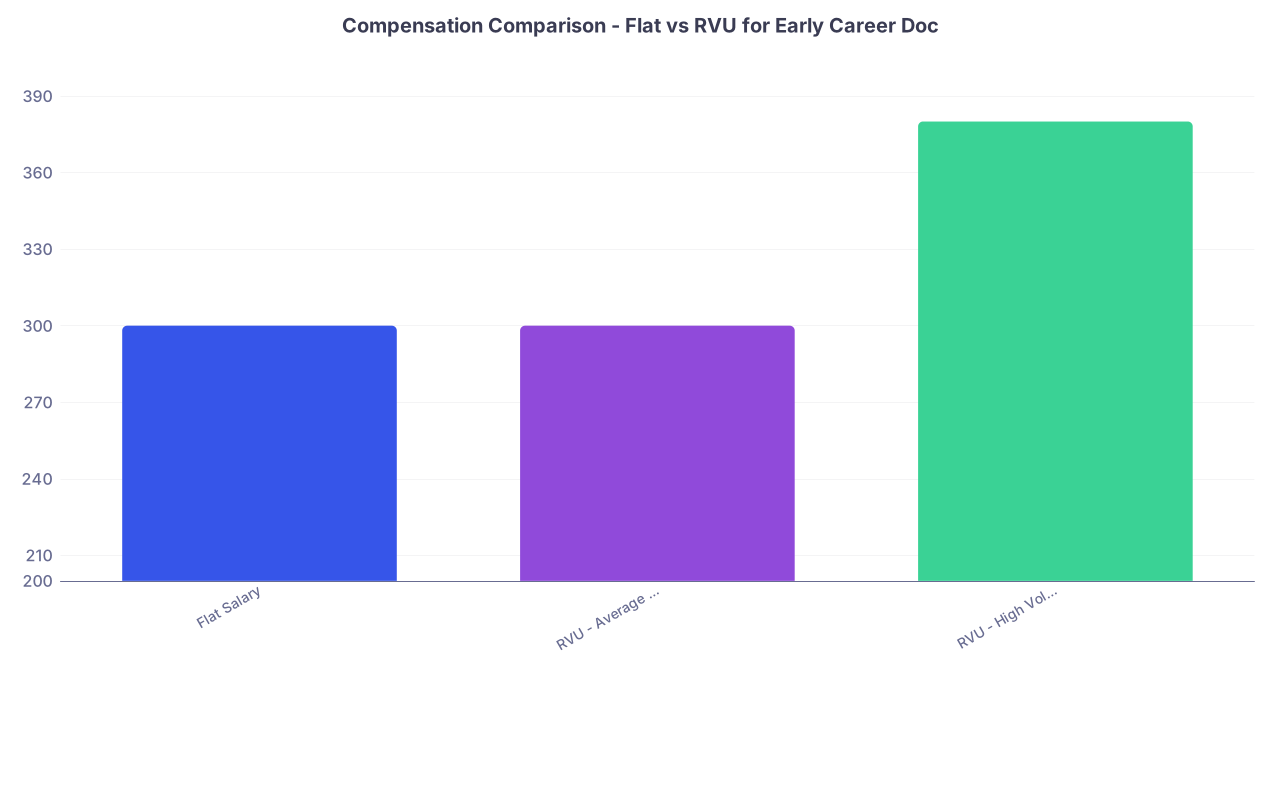
Look at a crude comparison:
| Category | Value |
|---|---|
| Flat Salary | 300 |
| RVU - Average Volume | 300 |
| RVU - High Volume | 380 |
Same person. Same job description. Only difference is: are you allowed to turn extra work into extra pay?
RVU pay is not inherently the villain. It just makes the incentives brutally visible.
The real enemies: bad benchmarks and hidden assumptions
Most new attendings get stuck because they negotiate the number (“$250k sounds fine”) and ignore the scaffolding under it.
You should be interrogating:
- What RVU target is this “based on”?
- What RVU rate are they using?
- What productivity do current docs actually hit?
| Item | Good Sign | Red Flag |
|---|---|---|
| RVU target | Matches median productivity | Above 75th percentile |
| RVU rate | Near MGMA median for region | Much lower than market |
| Ramp-up | 1–2 yr guarantee, no clawback | Immediate pure RVU or clawback |
| Transparency | Shows partner data | “We don’t really track that” |
I’ve literally heard this sentence in contract meetings: “Don’t worry about the RVU details, everyone makes great money here.”
Translation: “We either don’t know our own numbers or we’re hoping you don’t ask.”
If they won’t show you de-identified productivity and comp for partners in your exact role, that’s not a quirk. That’s your sign to slow down.
Where RVU-based models truly are bad for new attendings
There are situations where an RVU-heavy model is almost guaranteed to hurt you early on. No sugarcoating.
1. Pure RVU in a low-volume setting
Classic mistake in rural or poorly developed clinics:
- Small town, no existing referral network.
- Minimal marketing support.
- Short clinic hours, limited support staff.
- Yet they quote you targets pulled from an urban academic center.
You’re not lazy. The volume literally doesn’t exist.
2. RVU + “citizenship” expectations that aren’t compensated
I’m talking about: hospital committees, teaching, quality projects, protocol development, “we’d like you to help build this service line,” all wrapped inside your base expectations.
None of that pays RVUs directly. If everyone else is on a flat salary and you’re on RVUs, you’re subsidizing the system with your unpaid time.
If leadership wants you to build, fix, or lead? Fine. Put a stipend on it. Or a protected-hours component that isn’t RVU-tied.
3. Gaming of schedules and cherry-picking
By far the ugliest version:
- Senior partners grab high-RVU cases and new patient slots.
- You get “problem follow-ups,” no-shows, and low-complexity visits.
- Call pool may be equal, but daytime earning opportunities are not.
I’ve watched a young cardiologist doing mostly follow-ups and phone work while one senior guy took every cath and new consult. On a straight RVU split, that’s legalized theft.
If you’re stepping into a group like that on a heavy RVU model, yeah—run.
How to stress-test an RVU offer like an adult
You don’t need a health economics PhD. You need to ask specific, annoying questions and do simple math.
Start with three buckets:
Reality check of expectations
- What wRVU number is this “median” or “target” they keep citing?
- What percentile is that compared to MGMA/AMGA for your specialty?
- What do current attendings in this group actually produce? Average? Range?
If the target is at or above 75th percentile productivity but they’re paying you at 25–50th percentile dollars per wRVU, you’re subsidizing someone.
Your realistic volume early on
Ask:
- How many clinic sessions per week? How long are visits? New vs follow-up mix?
- What is the no-show rate?
- How long does it take to get a new patient into clinic right now?
- How many procedures per week did the last person in this role actually do?
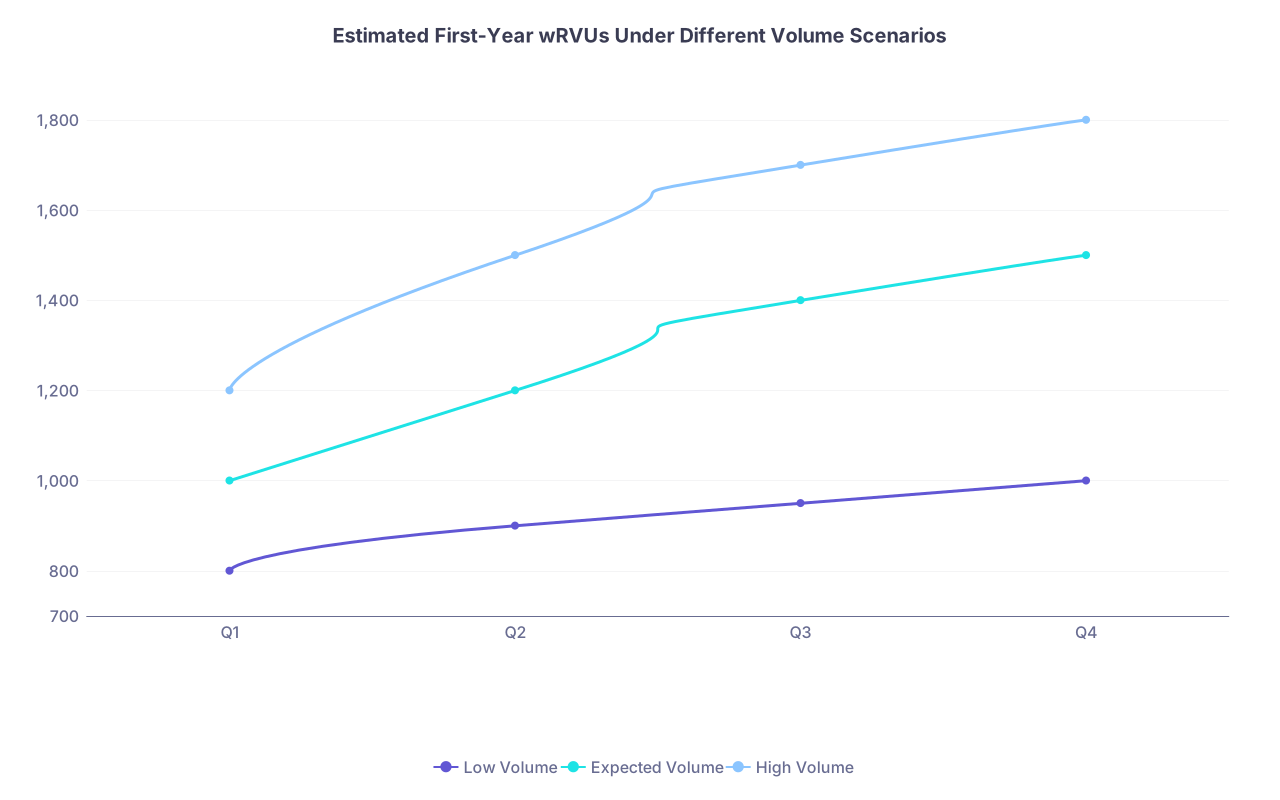
Then run worst-case, base-case, optimistic scenarios.
| Category | Low Volume | Expected Volume | High Volume |
|---|---|---|---|
| Q1 | 800 | 1000 | 1200 |
| Q2 | 900 | 1200 | 1500 |
| Q3 | 950 | 1400 | 1700 |
| Q4 | 1000 | 1500 | 1800 |
Multiply by their RVU rate. That’s your starting sanity check against their shiny “you could make up to $450k!” brochure line.
- Protections and downside limits
You want clarity on:
- Guarantee period and exact amount.
- Whether there’s any clawback. (If they hedge, assume yes.)
- What happens after the guarantee ends. Full RVU? Hybrid? Partnership track?
- Any productivity floor before termination.
Non-glamorous details. The ones that decide if you sleep at night.
Academic vs private vs employed: RVUs play differently
New attendings often lump these together as “RVU jobs.” They’re not.
| Job Type | How RVUs Are Used | Typical Risk to New Attending |
|---|---|---|
| Academic | Benchmark, bonus, internal fairness | Low–moderate |
| Hospital-employed | Major pay driver, plus base | Moderate, very contract dependent |
| Private group | Core of partner track and profit | High if opaque or adversarial |
In academic centers, you’ll often see a modest RVU target tied to a relatively fixed salary. Go a bit over, get a small bonus. Go under, maybe you get a performance talk. The real wage theft there is often in uncompensated teaching and admin, not RVUs themselves.
In hospital-employed roles, RVUs usually matter a lot. But you at least have some administrative guardrails and standardized compensation plans. The risk is more about unrealistic targets and slow practice ramp, not outright manipulation.
Private groups are where RVUs can be amazing or predatory, depending entirely on culture and transparency. A well-run group that shares the numbers and gives you access to volume? You can do extremely well. A protectionist group that treats you like cheap labor? You’ll be the “RVU mule” for a few years.
Two patterns I see over and over (and what they really mean)
Pattern 1: The “don’t worry, everyone exceeds target easily” line
Translation: “We don’t want you to ask what the actual numbers are.”
If it’s true, they can prove it in five minutes with de-identified partner reports. If they won’t, assume it’s not true.
Pattern 2: The bait-and-switch bonus structure
They dangle a “$50/wRVU bonus after 5,000 wRVUs!” on top of a “competitive base,” but:
- Base is secretly priced as if you’re already hitting 5,000.
- Target is above what any current doc actually hits.
- Or they set a minimum threshold that you’ll never reach in your first year or two.
So you walk in thinking, “Cool, safe base with upside.” In reality you’ve traded away guaranteed money for a bonus structure that almost no one collects.
A few concrete, non-fluffy rules of thumb
Not universal, but they’ll save you from the worst nonsense:
- If they refuse to share de-identified productivity and compensation data for existing attendings in your exact role, walk.
- If the first-year guarantee has a clawback based on RVU shortfall, be very cautious. Those are written to protect the institution, not you.
- If the RVU target lines up at 70–80th percentile productivity but the dollars per RVU line up at 25–50th percentile compensation, you’re getting underpaid for high output.
- If they want you to “build a service line” or “develop a new clinic” while paying you almost entirely on RVUs, that’s a joke. Builders need either salary protection or explicit non-RVU stipends.
And yes, if you’re conflict-avoidant and never going to push back on schedule manipulation, chronic overbooking, or unfair distribution of cases, then an aggressive RVU model in a cutthroat group probably is bad for you. But again, that’s team culture plus your temperament—not a cosmic law about RVUs.
The bottom line: is RVU‑based pay always bad for new attendings?
No. What’s bad is signing an RVU-heavy contract you do not understand, in a system that doesn’t care whether you can realistically hit their targets.
RVU models can hurt new attendings when:
- There’s no real ramp-up protection.
- Volume simply doesn’t exist.
- Senior docs hoard high-value work.
- The math is stacked with unrealistic benchmarks and low conversion rates.
They can help new attendings when:
- There’s a sane guarantee without clawbacks.
- The practice is busy or understaffed.
- The schedule and case mix are fairly distributed.
- You’re efficient and willing to work a bit harder than the median.
If you remember nothing else:
- RVUs are just math. Demand to see the inputs: real volumes, real partner data, real benchmarks.
- The presence of RVUs in a contract is not the problem; the structure and transparency are.
- The worst RVU stories are almost always about people who signed on trust and vibes instead of numbers and clauses. Don’t be the next one.