
The biggest mistake people make about compensation is simple: they think salary is the number that matters. The data says otherwise.
Across major employers, non-cash benefits routinely add 20–45% on top of base pay. In healthcare and large tech especially, you can see two people with the same salary but a 5‑figure difference in total compensation once you price out health insurance, retirement match, paid leave, and equity. If you look only at salary, you are flying blind.
Let me walk you through how the benefits value actually stacks up, where different industries win or lose, and how to put hard numbers on offers so you stop guessing.
1. The compensation stack: what actually has dollar value
Before comparing employers, you need a clean framework. Otherwise, you end up comparing a $250k “all in” hospitalist job with a $250k tech salary that hides another $80k in stock and benefits.
For any employer, I break comp into five buckets:
Cash:
- Base salary
- Guaranteed bonuses / stipends (call stipends, shift differentials, sign‑on)
Performance / variable:
- RVU bonuses, productivity incentives
- Annual performance bonuses
- Commission (for some industry / pharma roles)
Employer-paid benefits:
- Health, dental, vision
- Disability, life insurance
- Retirement match or pension
- Employer‑paid payroll taxes (often ignored but real)
Time-based value:
- Paid time off (vacation + sick + holidays)
- Parental leave
- CME days (for clinicians)
- Administrative time vs. pure clinical shift work
Equity / long-term:
- RSUs, stock options, ESPP discount
- Deferred compensation
- Loan repayment programs
Only the first category shows up cleanly in your offer letter. Most HR “total rewards” statements will show pieces of the others, but they use rough estimates and often understate the true financial upside of equity or generous leave.
To get useful comparisons, I treat everything in annual dollars, then calculate:
- Total compensation = salary + bonus + employer‑paid benefits + equity (annualized)
- Benefit load = (total compensation − salary) ÷ salary
That last number is the real story. A 0.25 benefit load means your package is 25% richer than salary alone.
2. What the aggregate data says about benefits vs salary
The Bureau of Labor Statistics (BLS) publishes employer cost of employee compensation. It is dry, but it is gold. Recent data show:
- Average employer cost for civilian workers:
- ~70–72% wages
- ~28–30% benefits
For higher‑paid professional roles (physicians, advanced practitioners, tech, finance), the percentages shift upward for benefits, often into the 30–40% range. Large employers with strong health plans and retirement matches are at the high end.
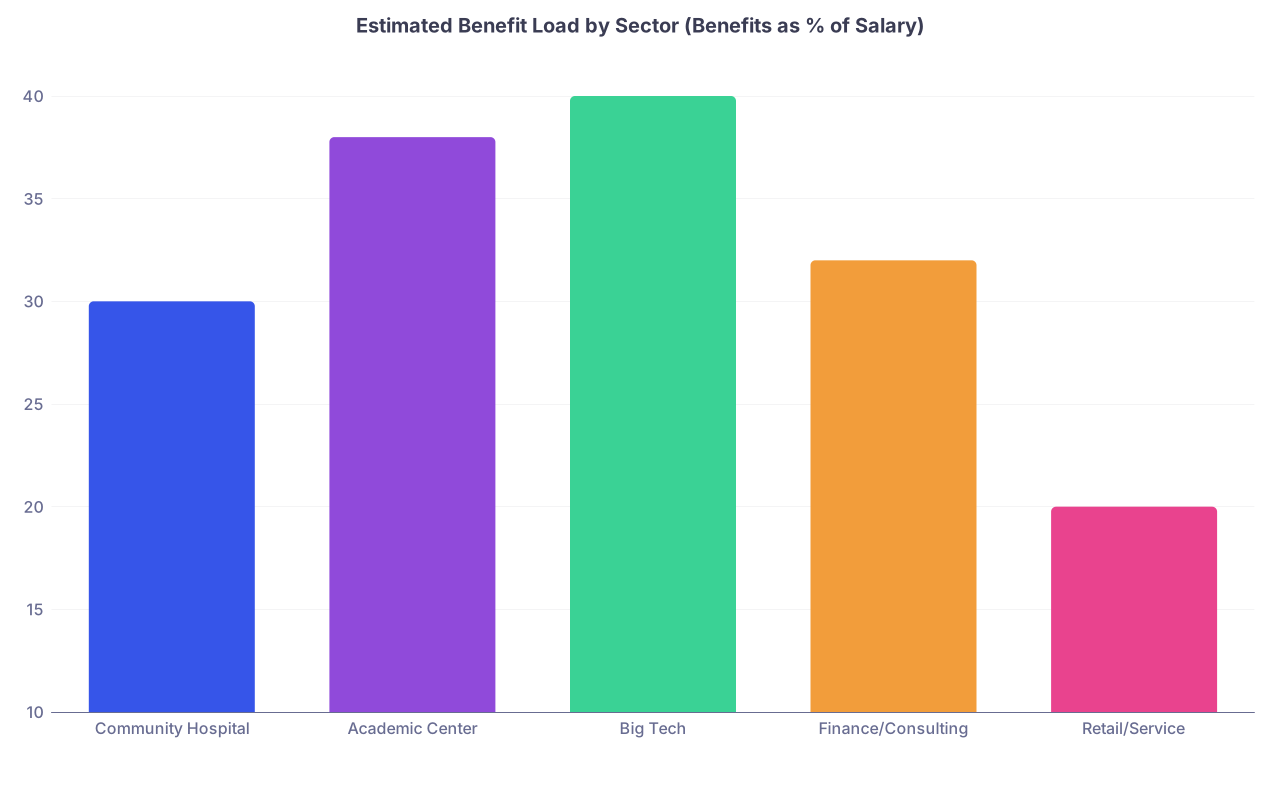
Here is a simplified, realistic comparison of typical benefit loads by sector for mid- to high‑skill roles:
| Category | Value |
|---|---|
| Community Hospital | 30 |
| Academic Center | 38 |
| Big Tech | 40 |
| Finance/Consulting | 32 |
| Retail/Service | 20 |
So when you see a $220k hospitalist job at a community hospital and a $210k academic appointment:
- Community: $220k salary × 1.30 ≈ $286k total comp
- Academic: $210k salary × 1.38 ≈ $290k total comp
On salary alone, the community job “wins.” On total comp, the academic job is actually slightly better, and often with stronger retirement and more PTO.
3. Concrete employer archetypes: how the numbers stack
Let us get specific and compare four archetypal employers using realistic numbers:
- A: Community hospital system
- B: Academic medical center
- C: Big Tech employer
- D: Large non‑medical corporate (Fortune 500, non‑tech)
Assume a senior professional / early attending‑level role at each.
| Employer Type | Base Salary | Bonus/Variable | Employer Benefits Value | Equity (Annualized) | Total Compensation |
|---|---|---|---|---|---|
| Community Hospital (A) | $250,000 | $15,000 | $80,000 | $0 | $345,000 |
| Academic Center (B) | $230,000 | $10,000 | $95,000 | $0 | $335,000 |
| Big Tech (C) | $210,000 | $25,000 | $70,000 | $80,000 | $385,000 |
| Large Corporate (D) | $190,000 | $20,000 | $60,000 | $20,000 | $290,000 |
Now compute benefit loads (everything except base salary divided by base salary):
- A: ($345k − $250k) ÷ $250k = 38%
- B: ($335k − $230k) ÷ $230k ≈ 45%
- C: ($385k − $210k) ÷ $210k ≈ 83% (equity heavy)
- D: ($290k − $190k) ÷ $190k ≈ 53%
Notice three things:
- Academic looks weaker on salary but very strong on benefits. You see this pattern over and over. Rich retirement, more paid leave, robust health plans.
- Big Tech’s salary can look modest next to physician pay, but equity doubles the picture. Many clinicians who “switch to tech” underestimate how powerful a 4‑year RSU grant becomes if the stock appreciates.
- Large non‑medical corporates often land in the middle: solid salary, moderate bonus, decent benefits, small equity.
If you only eyeball salary, you would rank these: A > B > C > D. On total compensation, the actual ranking is: C > A ≈ B > D.
4. Where the real benefit dollars usually hide
The big dollars in benefits are not in free coffee, gym reimbursement, or “culture.” They are in four line items: health coverage, retirement, paid leave, and equity. Let’s quantify them.
4.1 Health insurance: one of the largest hidden transfers
For a family coverage PPO, a realistic annual employer cost in a good plan:
- Premium total: $25k–$30k
- Employee share: maybe $4k–$6k
- Employer share: $20k–$24k
The difference between a strong plan and a weak one can easily be $8k–$10k in employer spend and thousands in your out‑of‑pocket costs.
Example:
- Employer X: Rich plan, employer pays $22k, low deductibles
- Employer Y: High‑deductible, minimal employer contribution, pays $12k
That is a $10k/year difference in benefit value. On a $200k salary, that alone is a 5% swing in effective compensation.
I have seen attending physicians jump to a small private practice for a $30k salary bump, then realize their family health coverage went from $300/month to $1,500/month with a $7k higher deductible. Net effect: they gave back most of the raise in health costs.
4.2 Retirement match and pensions: the comp you forget until age 55
A 401(k) or 403(b) match sounds small when HR says “up to 5%.” In dollars it is not small.
On a $220k salary:
- 5% match = $11,000
- 10% contribution (seen in some academic or public systems through pension + contribution) = $22,000
Layer that over 10 years at a modest 5% annual return and you are looking at six figures in difference between a mediocre plan and an excellent one.
Quick comparison:
- Employer A: 3% match → $6,600 per year
- Employer B: 10% total employer contribution → $22,000 per year
Over 10 years with 5% growth:
- A: ≈ $83k future value
- B: ≈ $276k future value
Roughly a $200k difference. That is real money you cannot “make up later” without meaningfully higher savings rate.
4.3 Paid time off: salary divided by actual work days
PTO is chronically undervalued because people do not convert it to equivalent dollars per hour.
Two jobs:
- Job 1: $250k salary, 2 weeks vacation, 6 holidays → 16 paid days off
- Job 2: $230k salary, 4 weeks vacation, 10 holidays → 30 paid days off
Assume 5‑day weeks and ~48 working weeks for Job 1 vs ~44 for Job 2. Annual workdays:
- Job 1: 5 × (52 − 2 − ~1 for holidays) ≈ 245 days actually worked
- Job 2: 5 × (52 − 4 − 2) ≈ 230 days
Effective daily rate:
- Job 1: $250k ÷ 245 ≈ $1,020/day
- Job 2: $230k ÷ 230 ≈ $1,000/day
On a daily basis, that $20k “higher” salary is barely a rounding error once you factor PTO. Add in burnout risk, moonlighting potential on your extra days off, and the lower salary can actually win.
The same applies to shift-based work. A 0.9 FTE with full benefits versus 1.0 FTE with minimal benefits often narrows to parity when you look at pay per clinical hour.
5. How major employer categories typically structure benefits
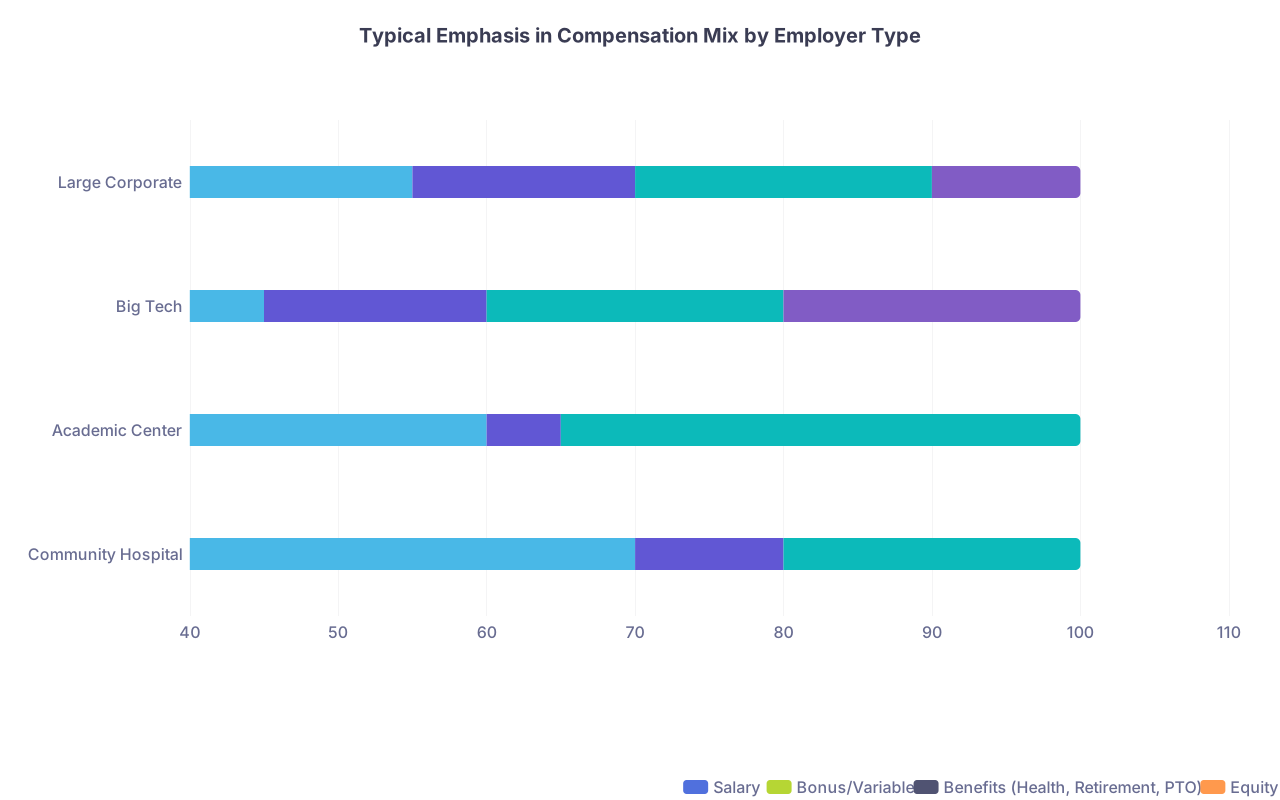
Let me generalize, based on consistent patterns across systems and sectors. These are not absolutes, but they are directionally correct.
| Category | Salary | Bonus/Variable | Benefits (Health, Retirement, PTO) | Equity |
|---|---|---|---|---|
| Community Hospital | 70 | 10 | 20 | 0 |
| Academic Center | 60 | 5 | 35 | 0 |
| Big Tech | 45 | 15 | 20 | 20 |
| Large Corporate | 55 | 15 | 20 | 10 |
Interpretation:
Community hospitals:
- Heavy on salary and cash call stipends
- Solid but not elite benefits
- Limited or no equity
- Benefit load typically 25–35%
Academic medical centers:
- Lower salary than community for many specialties
- Strong health coverage, robust retirement (often 8–12% equivalent with pension + match), more PTO
- Extra non‑cash “value” in title, research time, academic resources
- Benefit load 35–45%
Big Tech:
- Base salary often lower than physician comp
- Heavy equity (20–60% of total comp for senior roles)
- Good but not usually extraordinary health and retirement
- Benefit load (excluding equity) 25–30%, with equity ~40–80% load on top
Large non‑tech corporates:
- Moderate salary, moderate bonus
- Decent benefits, modest equity (ESPP, small RSU grants)
- Benefit load 30–50% depending on retirement plan generosity
You can see why so many physicians get misled when they compare numbers:
- A $300k private practice offer with bare‑bones benefits vs a $240k academic job with 12% retirement and gold‑plated health insurance.
- On paper, one is “higher pay.” In reality, total comp might be roughly equal once you actually price the benefits.
6. A simple, numbers-first method to compare two offers
If you want to get serious, you need a spreadsheet. But the logic is simple enough to run roughly in your head.
Let’s walk through a concrete side‑by‑side comparison. Call them Offer 1 (Hospital System) and Offer 2 (Tech Company Clinical Role).
6.1 Raw offer data
Offer 1 – Hospital System (Attending):
- Salary: $260,000
- Bonus: up to $20,000 (realistically averages $10k based on partner data)
- Health: employer cost estimate $22,000/year, you pay $4,000
- Retirement: 6% match = $15,600
- PTO: 3 weeks vacation, 1 week CME, 6 holidays (26 days)
- No equity
Offer 2 – Tech Company (Clinical Product role):
- Salary: $210,000
- Bonus: target 15% = $31,500 (assume 80% payout on average → $25,200)
- Health: employer cost ~$18,000/year, you pay $5,000
- Retirement: 4% match = $8,400
- PTO: 4 weeks vacation, 10 holidays (30 days)
- Equity: $80,000 RSUs vesting over 4 years = $20,000/year at grant value
6.2 Annualized, realistic compensation
Hospital System:
- Salary: $260,000
- Bonus (realistic): $10,000
- Health employer share: ~$18,000 net of your share
- Retirement: $15,600
- PTO valuation: approximate. Use salary ÷ working days to convert.
- Assume 5‑day weeks, 52 weeks, minus 26 days PTO ≈ 230 workdays
- Daily pay rate: $260,000 ÷ 230 ≈ $1,130/day
- 26 paid days off worth ≈ $29,400 (already “in” your salary, but matters for comparison to jobs with less PTO)
- Total comp excluding PTO double-counting: $260k + $10k + $18k + $15.6k ≈ $303.6k
- Benefit load (excluding PTO): ≈ 16.8%
Tech Company:
- Salary: $210,000
- Bonus (realistic): $25,200
- Health employer share: ~$13,000
- Retirement: $8,400
- Equity: $20,000/year (at grant; could be more or less with stock movement)
- Total: $210k + $25.2k + $13k + $8.4k + $20k ≈ $276.6k
- Benefit + variable + equity load: ($276.6k − $210k) ÷ $210k ≈ 31.7%
On total compensation at grant value, Hospital > Tech by about $27k. That is not a huge gap. If the tech company’s stock doubles over a few years, your realized equity could easily push Tech > Hospital in effective comp. If it halves, the opposite.
The key point: the raw salary made the hospital look 24% richer. After you quantify the rest, the gap shrinks to about 10%. That is a very different decision problem.
7. Physician-specific twist: moonlighting and benefit tradeoffs
Since this sits in the “Moonlighting and Benefits” bucket, let me call out something I see repeatedly with residents and early attendings.
You get offered:
- Core job with strong benefits but lower base
- Side moonlighting / locum work with very high hourly rates but no benefits
The rational question is: how much can you give up on salary if you can recapture that with moonlighting, without blowing up your life?
Example:
Job A – Academic Core:
- Salary: $220k
- Benefits load: 40% → $88k in employer‑paid benefits value
- Total comp: $308k
Job B – Private Hospitalist:
- Salary: $270k
- Benefits load: 20% → $54k
- Total comp: $324k
Difference in total comp: $16k in favor of Job B. But Job A has:
- More stable schedule, better PTO, lighter call
- Stronger retirement and health plan
If you can moonlight 1–2 shifts a month at $1,500/shift under Job A without burning out, that is:
- 18 shifts/year × $1,500 ≈ $27,000
Suddenly:
- Job A + moonlighting ≈ $335k total
- Job B alone ≈ $324k total
And you still keep superior core benefits. The math flips fast once you quantify hourly rates and rest periods.
Moonlighting is basically you buying back salary in a targeted, flexible way while keeping the better benefit platform. But you only see that once you stop obsessing about base salary and start doing line‑by‑line comparisons.
8. A tactical way to evaluate your next offer
If you want a repeatable process, here is the stripped‑down flow that I use with people.

| Step | Description |
|---|---|
| Step 1 | Receive Offer |
| Step 2 | Record Base and Bonus |
| Step 3 | Estimate Health Employer Share |
| Step 4 | Calculate Retirement Match |
| Step 5 | Annualize Equity Grants |
| Step 6 | Convert PTO to Dollar Value |
| Step 7 | Sum Total Compensation |
| Step 8 | Compute Benefit Load |
| Step 9 | Accept or Negotiate |
| Step 10 | Counter or Decline |
| Step 11 | Compare Across Offers |
You do not need perfection. Even rough estimates usually tell you which offer is genuinely higher value by $20–$50k, and which is just flashing a bigger salary while quietly underfunding everything else.
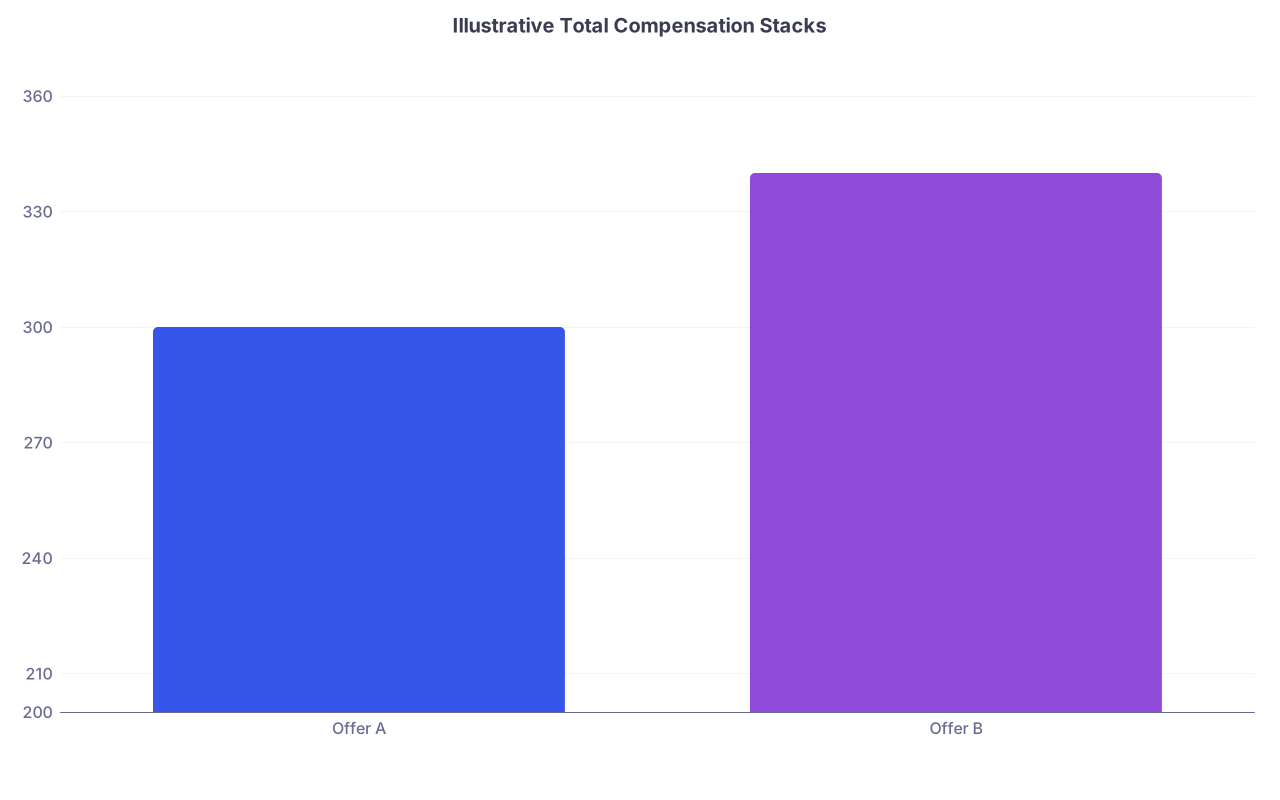
If you want a quick visual way to think about it, imagine every employer as a stacked bar of dollars: salary at the bottom, then benefits, then bonus, then equity on top.
| Category | Value |
|---|---|
| Offer A | 300 |
| Offer B | 340 |
Now mentally break the extra $40k of Offer B into “is this more salary, more benefits, or more equity risk?” The shape of that bar matters as much as the height.
The bottom line is blunt: salary is just the visible tip of your compensation iceberg. Across major employers, the submerged 20–45% in benefits—health coverage, retirement, PTO, equity—is where most people leave money on the table or misjudge “good” offers.
Once you start treating benefits as a hard-dollar line item and not an afterthought, job negotiations look different. That academic role stops looking “underpaid.” That shiny private offer with weak insurance starts to look less impressive. And that industry pivot with “lower salary” but strong equity and PTO stops being so scary.
With that mindset and a simple spreadsheet, you can evaluate offers like an actuary, not like a stressed-out applicant staring at a single number. And once you have that under control, then you can start asking the next question that actually changes your trajectory: not just “who pays me more,” but “which path gives me the best return on my time and optionality over the next 10 years?”
That is where this moves from arithmetic to strategy. And that strategy conversation is the next step in your journey.